

P0116 on 2019-2020 Ram 3500: Engine Coolant Sensor Performance Fixes
On a 2019-2020 Ram 3500, P0116 is most often caused by a stuck-open thermostat or a faulty Engine Coolant Temperature (ECT) sensor. However, multiple TSBs indicate a PCM software update from a dealer can be the required fix, so check for this before replacing parts, especially if other seemingly unrelated codes are present.
- Before buying any parts for a P0116 code, contact a Ram dealer with your VIN to check for available PCM software updates, as this is a very common fix for this specific truck.
- The most likely hardware failures are a stuck-open thermostat or a bad Engine Coolant Temperature (ECT) sensor.
- The repair differs by engine: the 6.4L Hemi has an integrated sensor/thermostat housing, while the 6.7L Cummins has separate components.
- Always check your coolant level first; a low level or air in the system can also trigger this code.
What's Unique About the 2019-2020 Ram 3500
On the 5th generation Ram 3500 (2019+), P0116 is not always a straightforward component failure. The manufacturer has issued multiple Technical Service Bulletins that group P0116 with other seemingly unrelated codes. In these cases, the root cause is often overly sensitive software logic in the PCM, and the official fix is a software update (reflash) from a dealership, not a part replacement. This is a critical first check before spending money on hardware, particularly if the code appears in very cold weather or with a cluster of other codes.
Diagnostic Flowchart
Tap your situation to follow the diagnostic path that matches what you're seeing on this vehicle.
Symptoms You May Notice
- Check Engine Light is on
- Temperature gauge behaving erratically, not moving, or reading lower than normal
- Engine taking a very long time to warm up
- Reduced fuel economy
- Difficulty starting the engine, especially when cold.
- Cooling fans running constantly or not turning on when needed.
- Black or dark exhaust smoke.
- Replacing the ECT sensor or thermostat without first checking if a PCM software update is the actual required fix per the numerous TSBs, especially when multiple codes are present.
- Replacing parts without first checking for a simple issue like low coolant or air in the system.
- Confusing a stuck thermostat with a bad sensor. A slow-to-warm temperature reading points to the thermostat, while an erratic or illogical reading points to the sensor.
Most Likely Causes
- Stuck-Open Thermostat 🔴 High Probability → Shop Integrated Thermostat Housing Assembly This is a common failure on many vehicles, including the Ram HD. A stuck-open thermostat prevents the engine from warming up at the rate the PCM expects, triggering a performance code. It's a frequent cause for the companion code P0128 as well.
How to confirm: Monitor the live ECT data on a scan tool while driving. If the engine warms up very slowly, never reaches the normal operating range (approx. 190-210°F), or the temperature drops significantly at highway speeds, the thermostat is likely stuck open. The upper radiator hose will also feel only lukewarm when it should be hot.
Typical fix: Replace the thermostat. On the 6.4L Hemi, this requires replacing the entire thermostat housing assembly. On the 6.7L Cummins, the thermostat can be replaced individually. The coolant will need to be partially drained and then refilled and bled of air.
Est. part cost: $40-$150 - Faulty Engine Coolant Temperature (ECT) Sensor 🔴 High Probability → Shop Engine Coolant Temperature Sensor On the 6.4L Hemi, the ECT sensor is integrated into the thermostat housing, so a failure of either part requires replacing the whole unit, making it a common repair. On the 6.7L Cummins, it's a separate, common failure item located on the driver's side of the cylinder head.
How to confirm: With the engine cold for at least 8 hours, compare the ECT sensor reading to the Intake Air Temperature (IAT) sensor reading on a scan tool. They should be within a few degrees of each other (typically within 10-18°F). If the ECT reading is illogical (e.g., -40°F or 250°F on a cold engine) or doesn't change smoothly as the engine warms up, the sensor is bad.
Typical fix: On the 6.4L Hemi, replace the entire thermostat housing assembly. On the 6.7L Cummins, replace the individual sensor.
Est. part cost: $20-$70 for the sensor (Cummins), $70-$200 for the housing assembly (Hemi). - PCM Software Update Needed 🟡 Medium Probability As documented in multiple TSBs (e.g., 18-044-26, 1800724), the factory PCM calibration may be too sensitive, falsely triggering P0116, especially in cold weather or with other codes present. The updates widen the acceptable parameters for sensor readings.
How to confirm: Contact a Ram dealership or a qualified shop with access to OEM service information (like wiTECH). Provide your VIN and ask if there are any open TSBs or software updates related to code P0116 or engine controls. This is the most likely cause if many unrelated codes appear at once.
Typical fix: A technician will use a factory scan tool to reflash the Powertrain Control Module with the updated software. This is typically a one-hour labor charge.
Est. part cost: $0 (parts), Labor for flashing is typically 1 hour. - Low Engine Coolant Level / Air in System ⚪ Low Probability → Shop Engine Coolant / Antifreeze Not specific to this vehicle, but a universal cause. If the coolant level drops, the sensor can be exposed to an air pocket, causing erratic readings.
How to confirm: Visually inspect the coolant reservoir and radiator (when cold). If the level is low, there is a leak that must be found. If the system was recently serviced, an air pocket may be trapped near the sensor, causing erratic readings.
Typical fix: Top off the coolant with the correct type (Mopar OAT - Organic Additive Technology) and properly bleed the cooling system to remove all air pockets. Find and repair any leaks.
Est. part cost: $20-$40 for coolant.
Rare But Worth Checking
- Wiring Harness or Connector Issue: Corrosion on the connector pins or a damaged wire (chafing, breaks) can cause an intermittent or incorrect signal from the ECT sensor, leading to a P0116 code. Inspect the harness near the sensor for any signs of rubbing against the engine or other components. A multimeter can be used to check for continuity and shorts in the signal and ground wires back to the PCM.
- Faulty Powertrain Control Module (PCM): This is very rare. The PCM should only be considered after all other possibilities, including software updates, sensors, thermostat, and wiring, have been exhaustively ruled out.
Diagnosis Steps
- Check for Technical Service Bulletins (TSBs). Contact a dealer with your VIN to see if a software update is the primary fix, especially if multiple DTCs are stored.
- With the engine completely cold, check the coolant level in the reservoir and radiator. Top off if necessary with the correct Mopar OAT coolant.
- Let the vehicle 'cold soak' for at least 8 hours. Connect a scan tool with the key on, engine off. Compare the Engine Coolant Temperature (ECT) and Intake Air Temperature (IAT) readings. They should be within 5-10°F (3-6°C) of each other. A larger difference points to a faulty sensor.
- Start the engine and monitor the ECT reading on the scan tool. It should rise smoothly and steadily as the engine warms up to operating temperature (around 190-210°F).
- If the temperature rises very slowly, never reaches operating temp, or drops significantly at highway speeds, suspect a stuck-open thermostat.
- If the temperature reading is erratic, jumps around, or is clearly wrong from the start (e.g., reads 250°F on a cold engine), suspect a faulty ECT sensor or wiring issue.
- Inspect the ECT sensor's electrical connector and wiring for any signs of damage, corrosion, or looseness. Check for chafing against other components.
- If the sensor, thermostat, and coolant level are all good, and a software update has been performed or is not available, the cooling system may need to be professionally bled to remove a stubborn air pocket.
Parts You'll Likely Need
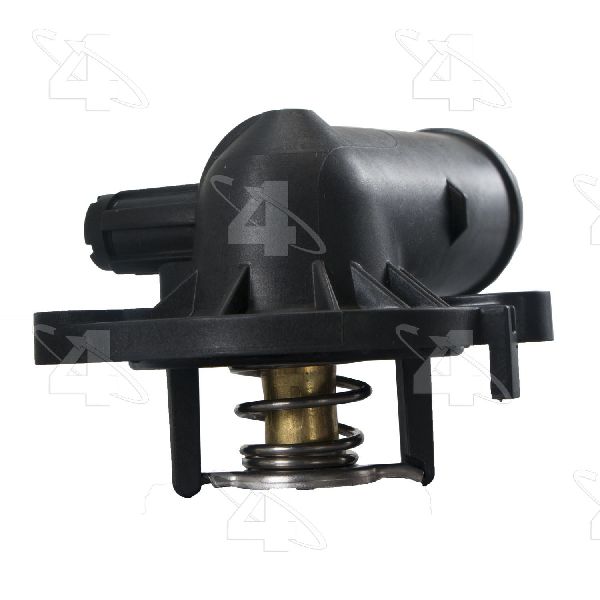
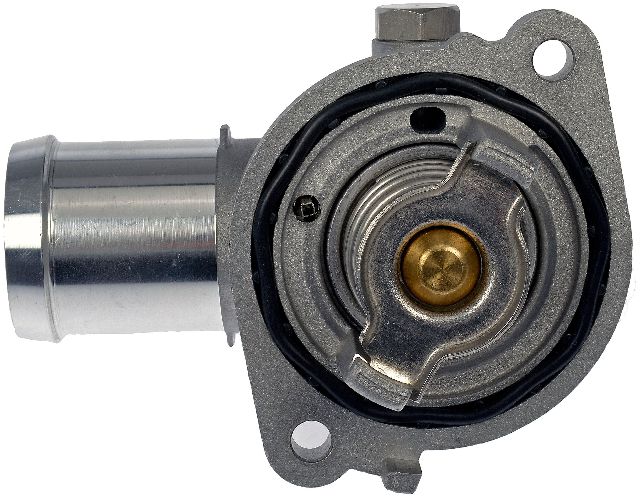
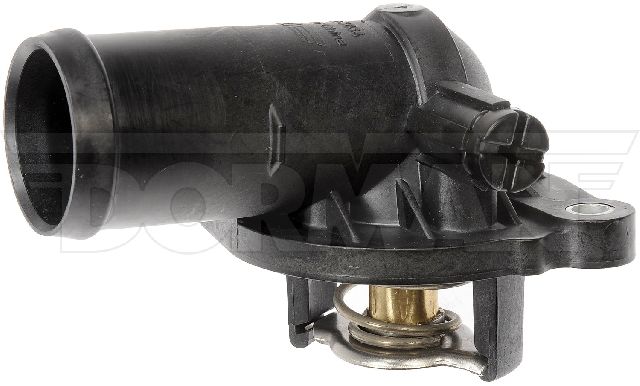
- Thermostat Housing Assembly (6.4L Hemi)
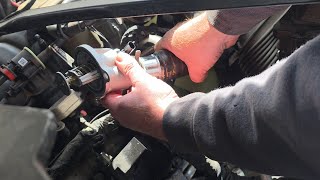
(OEM #04893177AD)— On the 6.4L Hemi engine, the ECT sensor is integrated into the thermostat housing. A failure of either the mechanical thermostat or the electronic sensor requires replacing the entire assembly. 🎬 Watch: Step-by-step thermostat replacement on a 6.4L Hemi engine.
Trusted brands: Mopar
OEM price range: $120-$200
Aftermarket price range: $70-$150 - Engine Coolant Temperature (ECT) Sensor (6.7L Cummins)
(OEM #5149077AB)— On the 6.7L Cummins, the ECT sensor is a separate component and a common failure point that is relatively easy to replace.
Trusted brands: Mopar, Bosch, Delphi, NTK
OEM price range: $50-$80
Aftermarket price range: $20-$60
Related Codes That Often Appear With This One
- P0128 — P0128 (Coolant Temperature Below Thermostat Regulating Temperature) is very common with P0116, as both are often caused by a stuck-open thermostat preventing the engine from reaching operating temperature in the time expected by the PCM.
- P0106, P0420, P1507, P05BD, P062B — The provided NHTSA TSBs show that P0116 often appears with a group of other codes. [Bulletin #1800724, #1800824, #18-056-22, #18-044-26] If you see these codes together, a PCM software update is a very likely solution, as it's improbable that all these systems failed simultaneously.
- P0117 / P0118 — These codes indicate a specific circuit failure (Low/Short or High/Open) for the ECT sensor. If P0116 is present with one of these, it strongly points to a wiring or sensor electrical fault rather than a mechanical thermostat issue.
Technical Service Bulletins (TSBs) & Recalls
- 18-044-26
- 1800724
- 1800824
- 18-056-22
- 1805622
- 18-101-22
Platform-Specific Known Issues
- A significant number of TSBs have been issued for the 2019-2020 Ram 3500 that include P0116 as one of many codes that can be resolved by a PCM software update. This is the most critical vehicle-specific issue to be aware of before replacing parts.
- On the 6.4L Hemi, owners are often surprised to find the ECT sensor is not sold separately but is part of the thermostat housing assembly (P/N 04893177AD), requiring replacement of the entire unit even for a sensor-only failure.
- For the 6.7L Cummins, the P0116 code can appear in very cold weather due to software sensitivity, where the PCM flags a valid slow warm-up as a performance fault. TSBs often address this by widening the acceptable warm-up time.
Mechanic-Grade Diagnostic Values
- ECT Sensor Resistance vs. Temperature — expected: Resistance is inversely proportional to temperature. A common reference is 2,000 - 3,000 Ω at 68°F (20°C). Another source provides ~2,830 Ω at 77°F (25°C) and ~245 Ω at 194°F (90°C).. Failure: A reading that is infinite (open circuit), near-zero (short circuit), or does not change smoothly as the sensor is heated or cooled indicates a faulty sensor.
- ECT vs. IAT/Ambient Sensor Rationality Check (Cold Soak) — expected: After an 8-hour cold soak with no block heater active, the ECT, Intake Air Temperature (IAT), and Ambient Air Temperature sensor readings on a scan tool should all be within 18°F (10°C) of each other.. Failure: If the ECT reading is more than 18°F (10°C) different from the other temperature sensors, it points to a faulty ECT sensor or a wiring circuit issue.
- ECT Sensor Circuit Voltage (Key On, Engine Off) — expected: The PCM supplies a 5-volt reference to the sensor. The return signal voltage should be between 0.5V and 4.5V, and will vary with temperature (higher voltage when cold, lower voltage when hot).. Failure: A voltage reading of 0V or 5V indicates a short or open in the circuit. A fixed voltage that doesn't change as the engine warms up points to a sensor or wiring problem.
Scan Tool Commands That Help
- wiTECH (or equivalent professional scanner): Powertrain Verification Test — This is a standard procedure to be run after a repair, such as replacing the ECT sensor or thermostat, to confirm the fix and allow the PCM to verify the system is functioning correctly.
- wiTECH: PCM Reprogram/Flash — Used to apply software updates from a TSB. This is a critical step when P0116 is accompanied by a cluster of unrelated codes, as the root cause is often overly sensitive diagnostic logic in the PCM.
Wiring & Ground Locations
- (K2) ECT Sensor Signal Circuit (6.7L Cummins) — This is the signal wire running from the ECT sensor connector back to the Powertrain Control Module (PCM).. An open, short to ground, or high resistance in this specific wire will cause the PCM to receive an incorrect temperature reading, directly leading to a P0116, P0117, or P0118 code.
- (K914) Sensor Ground Circuit (6.7L Cummins) — This wire provides the ground reference for the ECT sensor, originating from the PCM.. A poor connection or break in this ground wire will skew the sensor's voltage reading, causing the PCM to misinterpret the engine temperature and set a performance code.
- Main Engine-to-Body/Frame Ground Strap — Typically a braided strap connecting the engine block to the firewall or frame rail. On Ram trucks, one key ground is often located on the passenger side fender/wheel well area, near the alternator.. Corrosion or a loose connection at this primary ground point can create intermittent and difficult-to-diagnose electrical problems across multiple sensors, including the ECT, causing phantom codes.
Real Owner Repair Stories
- Cumminsforum.com user (2019 Ram 3500 6.7L Cummins) — Check engine light with code P0116. The user noted that the temperature gauge seemed to be working correctly.
❌ Tried (didn't work) Replaced the ECT sensor.
✅ What actually fixed it Replacing the thermostat resolved the P0116 code. The user noted the new thermostat part number was 68442242AA.
OEM Part Supersession History
5149096AB→5149077AB— Standard part revision and consolidation by Mopar.4893177AB, 4893177AC→04893177AD— Standard part revision for the 6.4L Hemi thermostat housing assembly.
Helpful Videos

We Have This Part in Stock


The information in this article is provided for general reference and educational purposes only. Vehicle specifications, procedures, and part compatibility can vary by production date, trim level, and region. Always consult your vehicle's factory service manual and verify part numbers before purchasing or performing repairs. Safety-critical components such as airbags, seat belts, and braking systems should be installed by a qualified professional.
- Ram 3500:
- 🧭 Diagnostic Flowchart
- 🎬 Helpful Videos
- 🛍️ Shop This Part
- What's Unique About the 2019-2020 Ram 3500
- Symptoms You May Notice
- Most Likely Causes
- Rare But Worth Checking
- Diagnosis Steps
- Parts You'll Likely Need
- Related Codes That Often Appear With This One
- Technical Service Bulletins (TSBs) & Recalls
- Platform-Specific Known Issues
- Mechanic-Grade Diagnostic Values
- Scan Tool Commands That Help
- Wiring & Ground Locations
- Real Owner Repair Stories
- OEM Part Supersession History
- 🎟️ Get 5% Off