

P0116 on 2006-2010 Saab 9-5: Engine Coolant Temperature Performance Fixes
On a 2006-2009 Saab 9-5, code P0116 is almost always caused by a thermostat that is stuck open. This prevents the engine from warming up properly. It's a common DIY fix, and most owners replace the coolant temperature sensor at the same time. Using a genuine OEM thermostat is highly recommended as aftermarket units are known to cause issues.
- For a 2006-2009 Saab 9-5, P0116 is almost certainly a stuck-open thermostat. Replace it with a genuine part.
- It is best practice to replace the ECT sensor at the same time as the thermostat.
- Symptoms beyond the check engine light include a low-reading temperature gauge, poor heat, reduced MPG, and the radiator fan running constantly.
- The 2010 model is a different platform (GM Epsilon II) with more complex diagnostics but similar root causes.
What's Unique About the 2006-2010 Saab 9-5
For the first-generation Saab 9-5 (2006-2009) with the B235 engine, this code is overwhelmingly linked to the thermostat failing in the open position. Unlike codes that point to a direct electrical fault with the sensor (like P0117/P0118), P0116 indicates a performance issue. The Trionic 7 ECU specifically monitors for a slow warm-up, which is a direct symptom of a stuck-open thermostat. The 2010 model year marks a complete platform change to the GM Epsilon II architecture. Its diagnostic logic is more advanced, relying heavily on comparing the ECT to the Intake Air Temperature (IAT) after a cold soak of 8 hours or more to verify sensor accuracy before starting the engine.
Generation note: The 2006-2010 range covers two distinct generations: - 2006-2009 (First Generation, YS3E): Most information and common causes relate to these models, powered by the 2.3L B235 4-cylinder engine. The primary cause is a stuck thermostat, and owners strongly recommend using an OEM part. - 2010 (Second Generation, YS3G): A complete redesign based on the GM Epsilon II platform. Engines include Ecotec 4-cylinders and a 2.8L V6. While the causes are similar, the diagnostic logic within the ECU is more advanced and compares multiple temperature sensors during a cold soak.
Symptoms You May Notice
- Check Engine Light is on
- Temperature gauge reads low or takes a very long time to reach the middle (9 o'clock position)
- Temperature gauge drops towards cold when driving at highway speeds
- Temperature gauge intermittently drops to zero.
- Noticeable decrease in fuel economy
- Heater may not blow very hot air
- Radiator fan runs continuously when the ignition is on
- A/C system may be disabled by the ECU
- Replacing only the ECT sensor when the thermostat is the actual cause. Because the code names the sensor circuit, many people replace the sensor first, only for the code to return.
- Using a cheap, aftermarket thermostat. Many Saab owners report that non-OEM thermostats do not operate at the correct temperature or fail quickly, causing the P0116 code to return.
Most Likely Causes
- Thermostat Stuck Open 🔴 High Probability → Shop Integrated Thermostat Housing Assembly The thermostat is a common wear item designed to fail in the open position as a 'fail-safe' to prevent overheating. This failure mode directly causes the slow warm-up condition that triggers P0116. Many owners in forums report that non-OEM thermostats often fail prematurely or do not regulate temperature correctly, making a genuine Saab/OES part the recommended fix.
How to confirm: Monitor the temperature gauge. If it is slow to warm up and drops at highway speeds, the thermostat is almost certainly stuck open. You can also use a scan tool to watch the live coolant temperature data; it will rise very slowly and may not reach the target of ~89°C (192°F).
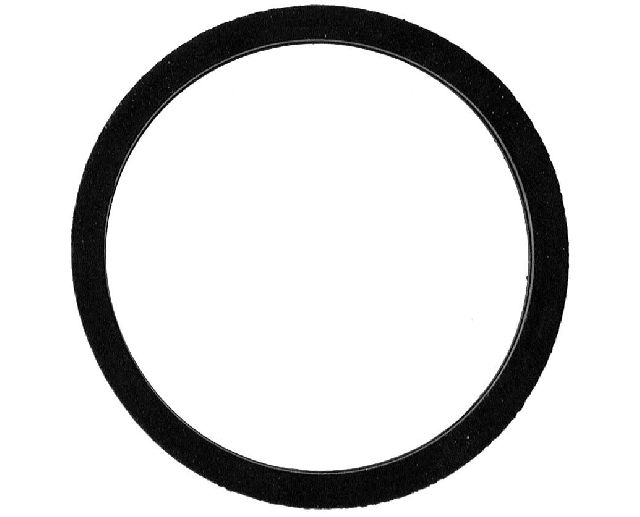
Typical fix: Replace the engine coolant thermostat and its gasket. It is highly recommended to replace the ECT sensor at the same time. Use a genuine Saab or OES (Wahler) thermostat for best results.
Est. part cost: $30-$70 - Faulty Engine Coolant Temperature (ECT) Sensor 🟡 Medium Probability → Shop Engine Coolant Temperature Sensor While the sensor itself is fairly reliable, it can fail or become inaccurate over time, sending readings that are out of range or do not align with the engine's actual operating state, triggering the 'performance' fault.
How to confirm: With a cold engine (after sitting overnight), use a scan tool to compare the ECT reading with the Intake Air Temperature (IAT) reading. They should be within a few degrees of each other. If the ECT reading is significantly different, the sensor is faulty. An owner on Saabnet.com reported their gauge dropping to zero during their commute, which pointed to a failing sensor or connection.
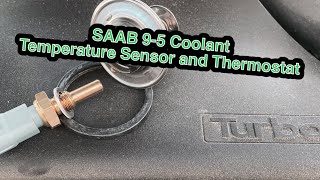
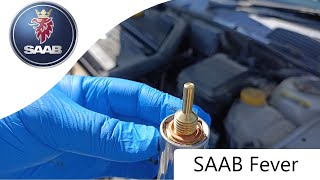
Typical fix: Replace the ECT sensor. 🎬 See this walkthrough for replacing the coolant temperature sensor. This is often done preventatively during a thermostat replacement due to its low cost and shared location. The job requires a 19mm deep socket.
Est. part cost: $15-$40 - Low Engine Coolant or Air in the System ⚪ Low Probability → Shop Engine Coolant / Antifreeze
How to confirm: Check the coolant level in the expansion tank when the engine is cold. If it is low, there is a leak that needs to be addressed. Air pockets can cause the sensor to read air instead of coolant, leading to erratic readings and triggering the code.
Typical fix: Top off the coolant with the correct type (GM Dex-Cool compatible OAT coolant) and inspect for leaks. Bleed the cooling system according to service procedures, ensuring the thermostat's jiggle valve is positioned at the top during installation to help air escape.
Rare But Worth Checking
- Wiring or Connector Issue: Corrosion or damage to the ECT sensor's connector or wiring can cause erratic or lost signals. Wiggle the connector while monitoring live data on a scan tool; if the temperature reading jumps, the connection is faulty. The ECU may enter a fail-safe mode, running the radiator fan continuously if it detects an open circuit.
- Faulty Engine Control Module (ECM): This is extremely rare. The Trionic 7 ECM is robust. It should only be considered after all other possibilities, including the thermostat, sensor, and wiring, have been definitively ruled out.
Diagnosis Steps
- Verify the code with an OBD-II scanner. Note any other codes, like P0119.
- Observe the temperature gauge behavior during a drive. Does it warm up slowly and/or drop at speed? This strongly points to a bad thermostat.
- With the engine cold (ideally after sitting overnight), use the scanner to view live data. Compare the Engine Coolant Temperature (ECT) and Intake Air Temperature (IAT). They should be nearly identical (within 9°C / 16°F on 2010+ models). If not, the ECT sensor is likely bad.
- Check the coolant level in the expansion tank (when cold). Ensure it is at the 'MAX' line.
- Listen for the radiator fan. If it runs continuously as soon as the ignition is turned on (with a cold engine), this is a fail-safe response by the ECU to a detected ECT circuit fault.
- Inspect the ECT sensor connector and nearby wiring for any signs of corrosion, damage, or loose connections.
- Based on the symptoms, the most likely repair is replacing the thermostat. It is best practice to also replace the ECT sensor at the same time. Insist on a genuine Saab/OES thermostat.
- After the repair, top off the cooling system with a 50/50 mix of GM Dex-Cool compatible OAT coolant and distilled water.
- Clear the code with the scanner and perform a drive cycle to ensure the problem is resolved.
Parts You'll Likely Need
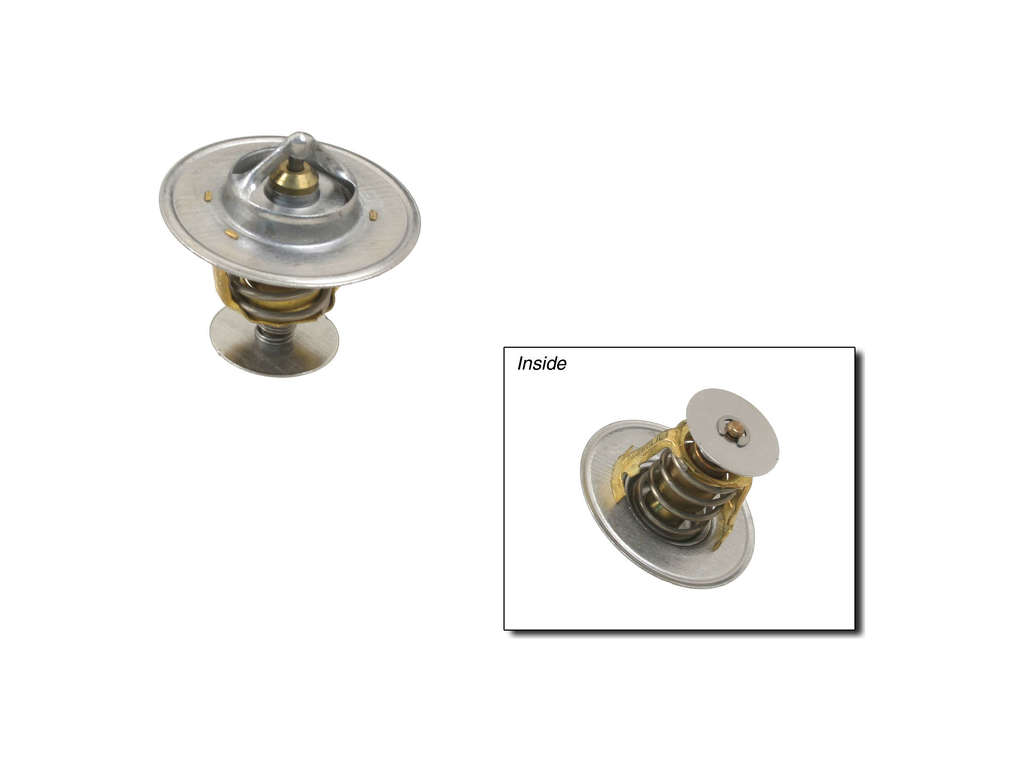
- Engine Coolant Thermostat Kit (88°C or 89°C)
(OEM #93174208 (Supersedes 30577561))— This is the most common cause of P0116 on the 2006-2009 Saab 9-5, as it fails in the open position, causing a slow engine warm-up. Owner consensus strongly favors OEM/OES parts.
Trusted brands: Saab (Genuine), Wahler (415488D), Motorad (8817538)
OEM price range: $45-$70
Aftermarket price range: $25-$45 - Engine Coolant Temperature (ECT) Sensor
(OEM #15393755 (Supersedes 9177213, 4773586))— This sensor provides the temperature reading to the ECU. It's often replaced with the thermostat as a preventative measure due to its low cost and proximity.
Trusted brands: Bosch, Delphi, Hella
OEM price range: $25-$40
Aftermarket price range: $15-$30
Related Codes That Often Appear With This One
- P0119: Often appears with P0116, indicating an intermittent fault in the same ECT circuit. 🎬 Watch: Diagnosing the P0119 code and temperature sensor issues.
Platform-Specific Known Issues
- Aftermarket Thermostat Unreliability: → Shop Integrated Thermostat Housing Assembly A recurring theme in Saab forums is the poor performance of aftermarket thermostats. Many owners who installed cheaper, non-OEM thermostats found that the P0116 code returned quickly. The consensus is to use a genuine Saab thermostat or a high-quality OES equivalent (like Wahler) that is specified for the correct 88°C or 89°C opening temperature to ensure proper engine operation.
- ECU Fail-Safe Mode: When the Trionic 7 ECU detects an irrational or missing signal from the ECT sensor (which can be caused by the sensor itself or wiring), it initiates a fail-safe strategy. This typically involves running the radiator cooling fan(s) continuously and disabling the air conditioning compressor to prevent any possibility of overheating. If you hear the fan running on a cold start, it's a strong clue pointing to an ECT circuit problem.
Mechanic-Grade Diagnostic Values
- ECT Sensor Resistance — expected: Approximately 2,000 - 3,000 Ω at 20°C (68°F). Failure: Significantly higher or lower resistance, or an open/short circuit.
- ECT Sensor Resistance — expected: Approximately 250 - 350 Ω at 80°C (176°F). Failure: Resistance does not drop to this range as the engine warms up.
- ECT Sensor Signal Voltage (Key On, Engine Cold) — expected: Approximately 3.0V - 3.5V at 20°C (68°F). Failure: Voltage is significantly outside this range, indicating a sensor or wiring issue.
- ECT Sensor Signal Voltage (Engine at Operating Temp) — expected: Approximately 1.0V - 1.3V at 80°C (176°F). Failure: Voltage does not drop to this level as the engine warms, often indicating a stuck-open thermostat.
- Trionic 7 P0116 Fault Trigger (Test 1) — expected: Coolant temperature must change by more than 1°C.. Failure: The code is set if the sensor value changes by less than 1°C after a counter tracking 400 seconds of engine load (mass air flow > 10 g/s) is reached.
Hidden / Shadow Codes Worth Checking
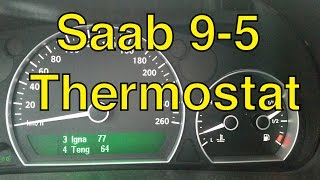
- OpenSID: Not a shadow code, but a feature that can be enabled in the Trionic 7 ECU software. It allows the driver to view extensive live engine data, including coolant temperature (Teng), requested air mass (mReq), actual air mass (mAir), and fault codes (FCOD) directly on the Saab Information Display (SID). This provides dealer-level data without a Tech2 scanner. (see via Requires flashing the ECU with modified software using tools like a JohnC Combi Adapter and T7Suite software. Once enabled, it's accessed by pressing the '+' and '-' buttons on the SID simultaneously.)
Wiring & Ground Locations
- ECT Sensor Connector — On the side of the cylinder head, near the thermostat housing, below the main upper radiator hose. It is a 2-pin connector, often blue.. This is the primary connection point for the sensor. Corrosion, spread pins, or wire damage at this connector will cause incorrect or intermittent signals, leading to P0116.
- G7 — For 4-cylinder petrol engines (B235), this ground point is located on the side of the intake manifold, near cylinder 4.. This is a major engine management ground point. While the ECT sensor may ground through its body to the chassis, a poor G7 ground can cause electrical noise and erratic behavior in multiple sensors, potentially contributing to performance codes like P0116.
- G2 / G25 — G2 is the main battery ground on the left-hand structural member behind the headlamp. G25 is the battery ground on the gearbox. A redundant ground cable runs between them.. Poor main battery or engine block grounds can cause a host of difficult-to-diagnose electrical issues, including incorrect sensor readings. Verifying these connections are clean and tight is a fundamental step in any electrical diagnosis.
Real Owner Repair Stories
- YouTube channel 'SwedeSource Canada' (2008 Saab 9-5) — Check Engine Light with codes P0116 and P0119.
✅ What actually fixed it The owner replaced both the engine coolant thermostat and the ECT sensor at the same time to resolve the codes. The video documents the entire process, including removing the sensor with a 19mm deep socket. - YouTube channel 'QS' (2004 Saab 9-5 Arc Wagon 2.3T) — Implied Check Engine Light, needed to replace the CTS.
✅ What actually fixed it Replaced the ECT sensor. The owner noted the new part was inexpensive (around $8 on eBay) and that the job required removing the upper radiator hose for access and using a 19mm deep socket.
OEM Part Supersession History
Multiple (e.g., 9177213, 4773586, 5959283)→15393755— Part consolidation and updates over the vehicle's production life.
Heads up: The listed part numbers are generally interchangeable for the specified Saab 4-cylinder engines (B205, B235).30577561→93174208— Standard part update by the manufacturer.
Heads up: Both are typically 88°C or 89°C thermostats and should be compatible. However, the strong forum consensus is to use a Genuine Saab or OES Wahler part regardless of the specific number to avoid performance issues.
Model Year Variations Within This Range
- 2010 (YS3G Generation): The diagnostic logic in the GM Epsilon-based 2010 model is significantly different. It performs a 'cold soak' rationality check. After the vehicle has been off for a minimum of 8 hours, the ECM compares the ECT and IAT sensor readings at startup. It also compares the current cold start ECT reading to a modeled value based on the previous shutdown conditions. A P0116 code will set if the ECT is skewed warmer than expected (e.g., by more than 10°C / 18°F) before the engine has had a chance to warm up.
Diagnostic Flowchart
Used vs. New Parts: Buying Guide for This Vehicle
When a used part is the smart pick: For this specific repair, using used parts is generally not recommended. The primary failure components (thermostat, sensor) are low-cost wear items. A used wiring harness pigtail or a used Trionic 7 ECU could be considered, but only after extensive diagnostics have definitively proven them to be the cause of the fault, which is rare.
Donor-vehicle mileage cap: roughly under 75000 miles for the part to have meaningful remaining life.
What to inspect on the donor part:
- For a wiring pigtail: Check for flexible, uncracked insulation. Ensure the connector lock tab is intact and there is no green corrosion on the pins.
- For an ECU: Ensure the case is not damaged and there are no signs of water intrusion. Note that a replacement Trionic 7 ECU must be 'married' to the vehicle using a Tech2 scanner.
OEM-only on this vehicle (don't cheap out):
- Engine Coolant Thermostat: This is the most critical part to buy new from a genuine or high-quality OES source like Wahler. Aftermarket thermostats are widely reported in Saab communities to fail quickly or operate at the wrong temperature, causing the P0116 code to return.
Aftermarket brands forum-validated for this vehicle:
- ECT Sensor: Bosch, Delphi, Hella.
- Thermostat: Wahler, Mahle Behr.
Brands owners have reported issues with on this vehicle:
- Thermostat: Unbranded or generic 'white box' thermostats are frequently cited as unreliable for this application.
Real Owner Stories
Aggregated from forums and TSBs cited above. Mileages and costs reflect what owners reported in those sources.
2008 9-5
Symptoms: The Check Engine Light was on for P0116. After warming up normally, the coolant temperature gauge suddenly dropped to zero during expressway driving and did not move for the rest of the 25-mile trip.
What fixed it: The owner was in the process of diagnosing the issue; a final fix was not reported in the source thread.
Source hint: Saabnet.com thread titled 'P0116 and Failed Temp Sensor - Saab 9-5 Bulletin Board - Saabnet.com'
2007 9-5
Symptoms: The owner reported that the temperature gauge was dropping to zero during their commute.
What fixed it: The symptoms pointed to an intermittent sensor or circuit fault, but a final fix was not detailed in the source.
Source hint: saabnet.com: In a thread titled 'P0116 and Failed Temp Sensor'
Related OBD-II Codes
Frequently Asked Questions
Why is it so important to use a genuine Saab or OES thermostat for my 9-5?
My radiator fan runs constantly, even on a cold start. Is this related to the P0116 code?
My A/C stopped working when the Check Engine Light came on. Why?
Should I replace the ECT sensor when I replace the thermostat?
My temperature gauge drops to zero while driving. Is that the thermostat or the sensor?
What type of coolant should I use to top off my Saab 9-5?
Helpful Videos
We Have This Part in Stock

The information in this article is provided for general reference and educational purposes only. Vehicle specifications, procedures, and part compatibility can vary by production date, trim level, and region. Always consult your vehicle's factory service manual and verify part numbers before purchasing or performing repairs. Safety-critical components such as airbags, seat belts, and braking systems should be installed by a qualified professional.
- Saab 9-5:
- 🧭 Diagnostic Flowchart
- 🎬 Helpful Videos
- 🛍️ Shop This Part
- What's Unique About the 2006-2010 Saab 9-5
- Symptoms You May Notice
- Most Likely Causes
- Rare But Worth Checking
- Diagnosis Steps
- Parts You'll Likely Need
- Related Codes That Often Appear With This One
- Platform-Specific Known Issues
- Mechanic-Grade Diagnostic Values
- Hidden / Shadow Codes Worth Checking
- Wiring & Ground Locations
- Real Owner Repair Stories
- OEM Part Supersession History
- Model Year Variations Within This Range
- Used vs. New Parts: Buying Guide for This Vehicle
- Real Owner Stories
- 2008 9-5
- 2007 9-5
- Related OBD-II Codes
- Frequently Asked Questions
- 🎟️ Get 5% Off