

P0116 on 2002-2008 Toyota Corolla: Engine Coolant Temperature Sensor and Thermostat Guide
On a 2002-2008 Toyota Corolla, code P0116 is almost always caused by a stuck-open thermostat or a failing engine coolant temperature (ECT) sensor. Replacing the thermostat is the most common fix, as it's a frequent failure item. Expect to pay $15-$30 for a new thermostat and $20-$50 for a new ECT sensor.
- P0116 means your Corolla's engine isn't warming up as fast as the computer expects.
- The most likely cause is a thermostat stuck in the open position. The second most likely cause is a bad Engine Coolant Temperature (ECT) sensor.
- Always check your coolant level first; it's a simple check that can sometimes be the issue.
- This is a good DIY repair. Both the thermostat and ECT sensor are inexpensive and relatively easy to replace with basic tools.
- When replacing the thermostat, it's a good idea to replace the ECT sensor at the same time since you're already working in that area.
What's Unique About the 2002-2008 Toyota Corolla
For the 9th generation Corolla with the 1ZZ-FE engine, this code is a very common and well-documented issue. The cooling system components, particularly the thermostat and ECT sensor, are known to be the primary failure points. Unlike more complex electronic issues, the diagnosis for P0116 on this platform is typically straightforward, almost always leading back to one of these two mechanical or simple electronic parts. The parts are inexpensive and easily accessible, making it a frequent DIY repair for owners. The Toyota Matrix and Pontiac Vibe share the same 1ZZ-FE engine and cooling system design, and they exhibit the exact same failure pattern for P0116.
Symptoms You May Notice
- Check Engine Light is on
- Engine temperature gauge reads lower than normal, doesn't move, or fluctuates erratically
- Decreased fuel economy
- Heater may not blow hot air
- Rough idle or hesitation, especially when cold
- Engine cooling fans run constantly, even when the engine is cold
- Replacing the ECT sensor when the thermostat is actually the problem. Because a stuck-open thermostat is the most frequent cause, it's often the first part to check and replace. Many owners choose to replace both at the same time due to the low cost of parts and overlapping labor. 🎬 Watch: How to replace both the thermostat and sensor together.
Most Likely Causes
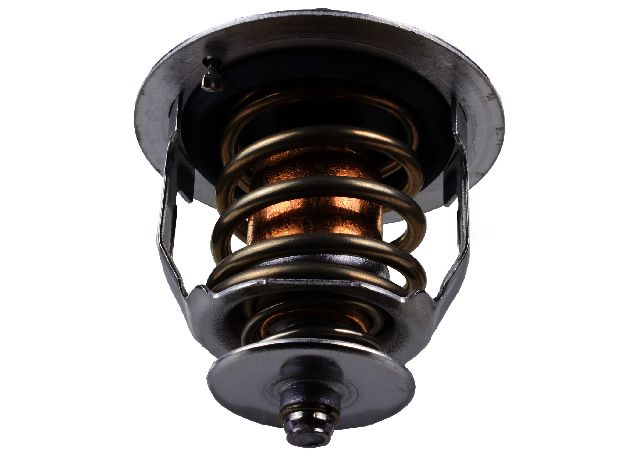
- Stuck-Open Thermostat 🔴 High Probability → Shop Integrated Thermostat Housing Assembly Thermostats are wear items that commonly fail by sticking in the open position after 100,000+ miles. This allows coolant to circulate through the radiator constantly, preventing the engine from reaching its optimal operating temperature of 82°C (180°F) in a timely manner.
How to confirm: With a scan tool, monitor the live engine coolant temperature data from a cold start. If the engine warms up very slowly and struggles to reach or maintain the normal operating temperature of ~180-195°F (82-90°C), the thermostat is likely stuck open. You can also feel the upper radiator hose; it should remain cool for several minutes and then get hot suddenly when the thermostat opens. If it warms up gradually from the moment the engine starts, the thermostat is open.
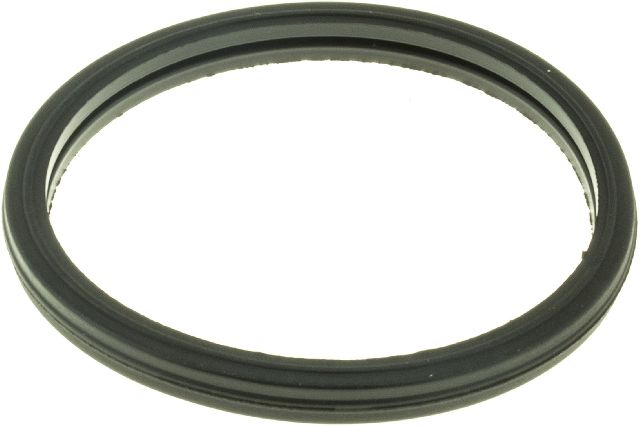
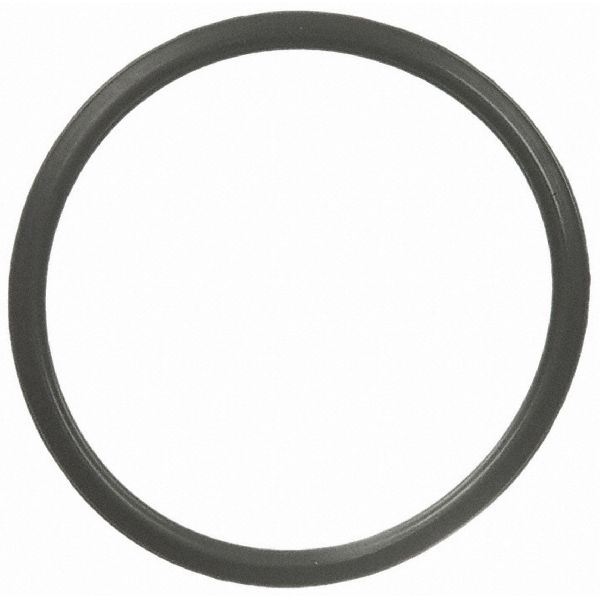
Typical fix: Replace the thermostat and its gasket. 🎬 See this walkthrough for removing and installing a new thermostat. It's recommended to drain and refill the coolant at the same time. Ensure the new thermostat's jiggle valve is installed in the upward position to allow air to bleed from the system.
Est. part cost: $15-$35 - Faulty Engine Coolant Temperature (ECT) Sensor 🟡 Medium Probability → Shop Engine Coolant Temperature Sensor The ECT sensor is a thermistor that can degrade over time, leading to inaccurate or erratic resistance readings. This sends false temperature data to the ECM, triggering the code.
How to confirm: With the engine cold for several hours, use a scan tool to compare the ECT reading with the Intake Air Temperature (IAT) reading. They should be within a few degrees of each other. If the ECT reading is significantly different (e.g., shows -40°F or 250°F on a cold engine) or jumps erratically while monitoring live data, the sensor is bad. You can also test the sensor with a multimeter; resistance should be 2,000-3,000 ohms 🎬 Watch: Professional diagnostic steps for the P0116 code and ECT sensor. at room temperature (~68°F/20°C).
Typical fix: Replace the ECT sensor. This is a simple procedure, but be prepared for a small amount of coolant to leak when the old sensor is removed.
Est. part cost: $20-$60 - Low Engine Coolant Level ⚪ Low Probability → Shop Engine Coolant / Antifreeze While not specific to this car, any leak in the cooling system can cause this code if the level drops enough for the ECT sensor to be exposed to an air pocket instead of coolant, leading to irrational readings.
How to confirm: Visually inspect the coolant level in the overflow reservoir and the radiator (only when the engine is completely cold). If the level is low, top it off and inspect for leaks from hoses, the radiator, or the water pump.
Typical fix: Top off the cooling system with Toyota Super Long Life (Pink) coolant and repair any leaks found.
Est. part cost: $15-$30 (for coolant)
Rare But Worth Checking
- Damaged ECT Sensor Wiring or Connector: → Shop Engine Coolant Temperature Sensor Although less common than sensor or thermostat failure, wiring can become frayed, corroded, or damaged, causing an intermittent or lost signal. Wiggle the connector and wiring harness while watching live data on a scan tool to see if the temperature reading jumps erratically, which would indicate a wiring fault.
- Air Pockets in the Cooling System: If the cooling system was recently serviced (e.g., thermostat or radiator replacement) and not bled properly, an air pocket can get trapped near the ECT sensor, causing inaccurate readings. The system must be properly bled by running the engine with the radiator cap off and heater on high until all bubbles are purged.
Diagnosis Steps
- Check for other DTCs. If codes like P0115, P0117, or P0118 are present, diagnose them first as they point to a direct sensor/wiring fault.
- Visually inspect the engine coolant level in the reservoir and radiator (when cold). Top off if low and check for visible leaks.
- Connect an OBD-II scanner and view live data. With a cold engine (off for 5+ hours), compare the Engine Coolant Temperature (ECT) and Intake Air Temperature (IAT) readings. They should be within 5°F (3°C) of each other. A large discrepancy points to a bad ECT sensor.
- Start the engine and monitor the ECT reading as it warms up. The temperature should rise steadily. If it rises very slowly, plateaus, or fails to reach ~180°F (82°C), the thermostat is likely stuck open.
- If the temperature rises normally to about 180-195°F (82-90°C) and stays there, the thermostat is likely working. If the ECT reading on the scanner was erratic or incorrect during the test, the ECT sensor is the primary suspect.
- Inspect the ECT sensor's wiring harness and connector for any signs of damage, corrosion, or loose connections. Wiggle the harness while observing live data to check for intermittent faults.
- If the ECT sensor is suspected, test its resistance with a multimeter. Unplug the sensor and measure across the terminals. It should read between 2,000 and 3,000 ohms at ~68°F (20°C). If it's out of spec, replace it.
- If the thermostat is suspected, replace it. It is an inexpensive part and the most common cause of P0116 on this vehicle.
- After any repair, clear the code and properly bleed the cooling system to remove any air pockets.
Parts You'll Likely Need
- Engine Coolant Thermostat
(OEM #90916-03129 (Superseded by 90916-A3003))— This is the most common cause of P0116, as they often fail by sticking open, which prevents the engine from warming up correctly. The correct temperature is 82°C (180°F).
Trusted brands: Toyota (OEM), Aisin, Stant
OEM price range: $25-$40
Aftermarket price range: $15-$30 - Engine Coolant Temperature (ECT) Sensor
(OEM #89422-35010)— This sensor provides the temperature reading to the ECU. An internal failure can cause it to send incorrect or irrational data, triggering the code. It is also referred to as a Water Temperature Sensor.
Trusted brands: Denso (OEM supplier), NTK, Toyota (OEM)
OEM price range: $40-$60
Aftermarket price range: $20-$45 - Toyota Super Long Life Coolant (Pink)
(OEM #00272-SLLC2)— You will lose coolant when replacing the thermostat or sensor, and it's critical to refill the system with the correct OEM-spec 50/50 pre-mixed coolant to prevent corrosion and other issues.
Trusted brands: Toyota, Aisin
OEM price range: $25-$35 per gallon
Aftermarket price range: $20-$30 per gallon (for compatible Asian vehicle coolant)
Related Codes That Often Appear With This One
- P0128 — P0128 (Coolant Temperature Below Thermostat Regulating Temperature) is very similar and is also most often caused by a stuck-open thermostat. Seeing both codes together strongly points to a thermostat issue.
- P0115, P0117, P0118 — These codes indicate a general circuit malfunction, low input, or high input from the ECT sensor. If you see these with P0116, it points directly to a faulty sensor or a wiring problem, not a thermostat. Toyota service information advises troubleshooting these codes first.
Platform-Specific Known Issues
- Thermostat is the Primary Culprit: → Shop Integrated Thermostat Housing Assembly Forum discussions consistently show that for the 9th generation Corolla, a stuck-open thermostat is the cause of P0116 in the vast majority of cases. Many owners report replacing the thermostat fixed the issue after initially suspecting the sensor.
- Easy DIY Access: Both the thermostat housing and the ECT sensor are located on the driver's side of the engine
Mechanic-Grade Diagnostic Values
- ECT Sensor Resistance — expected: ~2,200 - 3,520 Ω at 20°C (68°F); ~250 - 332 Ω at 80°C (176°F). Failure: Readings are infinite (open circuit), near zero (short circuit), or do not decrease smoothly as the engine warms up.
- ECT Sensor Signal Voltage (at sensor connector, key on, engine off) — expected: ~3.0V - 3.5V on a cold engine (~20°C / 68°F). Failure: Voltage is near 5V (open circuit/bad ground) or near 0V (short to ground).
- ECT Sensor Signal Voltage (at sensor connector, engine at operating temp) — expected: ~1.0V - 1.3V at normal operating temperature (~80°C / 176°F). Failure: Voltage stays high (e.g., above 2.0V) even when the engine is warm, indicating the sensor isn't registering the temperature change.
Scan Tool Commands That Help
- Toyota Techstream: Data List & Freeze Frame Data — Crucial for P0116. Freeze frame data shows the exact ECT, IAT, and other sensor values at the moment the fault was triggered. The Data List allows for real-time monitoring of the ECT vs. IAT on a cold soak and tracking the warm-up curve to differentiate a sensor from a thermostat problem.
- Toyota Techstream: Active Test: Control the Electric Cooling Fan — While not a direct test for P0116, if symptoms include fans running constantly or not at all, this command allows you to manually operate the fans to confirm the fan motors and control circuit are working. This helps isolate the problem to the temperature-sensing part of the system.
Wiring & Ground Locations
- EC — On the cylinder head.. This is a primary engine ground point. A loose or corroded ground here can cause erratic readings for sensors that ground to the block or head, including the ECT sensor.
- Engine Harness Ground (Firewall) — A ground point for the engine harness located on the firewall, often above the alternator.. This is another critical ground for the engine's sensor array. It is sometimes overlooked during engine or transmission work and can cause various sensor-related trouble codes if not properly secured.
- ECT Sensor Wires (at ECM) — The two wires from the ECT sensor run directly to the Engine Control Module (ECM).. A continuity test from the sensor connector to the corresponding pins at the ECM connector can definitively rule out a wiring break, which is a rare but possible cause of P0116.
Real Owner Repair Stories
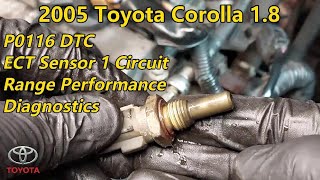
- YouTube user '2005 Toyota Corolla 1.8 - P0116 DTC' (2005 Toyota Corolla 1.8L 1ZZ-FE) — Check Engine Light with code P0116.
❌ Tried (didn't work) The owner had already replaced the thermostat about a year or two prior with an OEM part, so it was not the initial suspect.
✅ What actually fixed it The Engine Coolant Temperature (ECT) sensor was replaced. Even though the old sensor tested within a plausible resistance range, the code was intermittent, and replacing the sensor resolved the P0116 code.
OEM Part Supersession History
90916-03129→90916-A3003— Standard part evolution and consolidation. The new part number is the current OEM replacement for the 1ZZ-FE engine within this year range.89422-20010→89422-35010— Part consolidation across multiple Toyota models.
Heads up: Part 89422-35010 is the correct and widely used sensor for many Toyota vehicles from this era, including the Corolla 1ZZ-FE.
Diagnostic Flowchart
Other Known Issues on This Vehicle
Issues unrelated to this code that are worth knowing about as an owner of this generation:
- Excessive Oil Consumption 🔴 High — Common on 2002-2005 models with the 1ZZ-FE engine. Caused by a design flaw in the pistons and piston rings. Toyota addressed the issue in production starting in mid-2005. (Ref: A Technical Service Bulletin (TSB EG050-06) was issued for the later 2AZ-FE engine, but the 1ZZ-FE issue was primarily handled under warranty extensions for early models.)
- Timing Chain Tensioner Oil Leak 🟠 Medium — The O-ring on the timing chain tensioner is known to degrade and cause a significant oil leak on the passenger side of the engine. It's a common issue, especially on higher-mileage vehicles.
- Starter Failure 🟡 Low — The starter motor can fail, typically after 100,000 miles, resulting in a no-start condition often preceded by a clicking or clunking sound when turning the key.
- Intake Manifold Gasket Failure 🟡 Low → Shop Engine Intake Manifold — The intake manifold gaskets can fail, causing a vacuum leak that leads to a rough idle, hesitation, and sometimes a check engine light for lean codes (e.g., P0171).
- Cracked Engine Control Module (ECM) Solder Joints 🟠 Medium — Some 2005-2007 models can experience cracked solder joints within the ECM, leading to harsh shifting, hesitation, or failure to shift. This was subject to a warranty enhancement program. (Ref: Toyota ZT2 Warranty Enhancement Program)
Used vs. New Parts: Buying Guide for This Vehicle
When a used part is the smart pick: For this specific repair, using a used part is NOT recommended. Both the thermostat and the ECT sensor are low-cost wear-and-tear items. The risk of a used part failing soon after installation is high, and the cost savings are minimal compared to the labor of doing the job twice.
What to inspect on the donor part:
- Not applicable as new parts are strongly advised.
OEM-only on this vehicle (don't cheap out):
- While not strictly 'OEM-only', using an OEM Toyota or OEM-supplier (Aisin for thermostat, Denso for sensor) part is highly recommended. The cost difference is small, and these parts have a proven track record of reliability that some cheaper aftermarket alternatives lack.
Aftermarket brands forum-validated for this vehicle:
- Aisin (Thermostat - OEM supplier)
- Denso (ECT Sensor - OEM supplier)
- Stant (Thermostat)
- NTK (ECT Sensor)
Brands owners have reported issues with on this vehicle:
- Unnamed, 'white-box' or ultra-low-cost parts from online marketplaces should be avoided, as their quality control, temperature accuracy, and longevity are often questionable.
Real Owner Stories
Aggregated from forums and TSBs cited above. Mileages and costs reflect what owners reported in those sources.
2005 Toyota Corolla 1.8L
Symptoms: The owner diagnosed a P0116 DTC. They had previously replaced the thermostat but the code persisted or returned.
What fixed it: Replacing the Engine Coolant Temperature (ECT) sensor resolved the code.
Source hint: YouTube - 2005 Toyota Corolla 1.8 - P0116 DTC
2002-2008 Toyota Corolla 1ZZ-FE — ~115000 miles
Symptoms: Check Engine Light on; thermostat failed by sticking in the open position.
What fixed it: Replacing the thermostat and its gasket, as thermostats on this vehicle commonly fail after 100,000+ miles.
Source hint: ToyotaNation Forums
2003-2008 Toyota Matrix
Symptoms: P0116 issue caused by either a stuck thermostat or a faulty ECT sensor; the vehicle shares the identical cooling system as the Corolla.
What fixed it: Replacing the thermostat or ECT sensor.
Source hint: ToyotaNation Forums
Documented NHTSA Reports
Toyota Sienna (Cross-Model Reference)
Symptoms: An owner reported that the airbag light came on in the dashboard. Upon taking the vehicle to a dealer, it was diagnosed with code P0116 (NHTSA ODI #10485990).
What fixed it: The repair required a two-part replacement of the left-front side airbag assembly and the wiring harness, costing over $1,100.
Source hint: NHTSA ODI #10485990
Related OBD-II Codes
Frequently Asked Questions
What is the normal operating temperature for my 1ZZ-FE engine according to the thermostat specifications?
I have a P0116 code on my 2005 Corolla; should I replace the sensor or the thermostat first?
Is there a specific way to install the thermostat gasket on this vehicle?
What type of coolant should I use to top off my 2002-2008 Corolla if the level is low?
Can I test the ECT sensor on my Corolla with a multimeter before buying a new one?
Does the P0116 issue also affect the Toyota Matrix and Pontiac Vibe?
Helpful Videos
We Have This Part in Stock


The information in this article is provided for general reference and educational purposes only. Vehicle specifications, procedures, and part compatibility can vary by production date, trim level, and region. Always consult your vehicle's factory service manual and verify part numbers before purchasing or performing repairs. Safety-critical components such as airbags, seat belts, and braking systems should be installed by a qualified professional.
- Toyota Corolla:
- 🧭 Diagnostic Flowchart
- 🎬 Helpful Videos
- 🛍️ Shop This Part
- What's Unique About the 2002-2008 Toyota Corolla
- Symptoms You May Notice
- Most Likely Causes
- Rare But Worth Checking
- Diagnosis Steps
- Parts You'll Likely Need
- Related Codes That Often Appear With This One
- Platform-Specific Known Issues
- Mechanic-Grade Diagnostic Values
- Scan Tool Commands That Help
- Wiring & Ground Locations
- Real Owner Repair Stories
- OEM Part Supersession History
- Other Known Issues on This Vehicle
- Used vs. New Parts: Buying Guide for This Vehicle
- Real Owner Stories
- 2005 Toyota Corolla 1.8L
- 2002-2008 Toyota Corolla 1ZZ-FE — ~115000 miles
- 2003-2008 Toyota Matrix
- Documented NHTSA Reports
- Toyota Sienna (Cross-Model Reference)
- Related OBD-II Codes
- Frequently Asked Questions
- 🎟️ Get 5% Off