

P0116 on 2011-2016 Toyota Sienna: Engine Coolant Temperature Sensor Causes and Fixes
On the 2011-2016 Toyota Sienna, code P0116 is most often caused by a failing engine coolant temperature (ECT) sensor or a stuck-open thermostat. For 2011 models, a simple ECU software update might be the fix. Otherwise, expect to replace the ECT sensor, which is a labor-intensive job.
- For a 2011 Toyota Sienna, first check if TSB T-SB-0116-11 applies and has been performed before replacing any parts.
- The most likely cause is a faulty Engine Coolant Temperature (ECT) sensor, followed by a stuck-open thermostat.
- Use a scan tool to watch the live temperature data. If it's erratic or nonsensical, suspect the sensor. If it warms up extremely slowly, suspect the thermostat.
- Always check the coolant level first; a low level or air in the system can mimic sensor or thermostat failure.
- Both the sensor and thermostat are difficult to access on this engine, so DIY replacement requires patience and the right tools.
What's Unique About the 2011-2016 Toyota Sienna
For the 2011-2016 Sienna, the primary causes are straightforward: a bad sensor or thermostat. However, early production 2011 models are subject to a Technical Service Bulletin (TSB T-SB-0116-11) where the ECM's monitoring logic was too sensitive, causing the code to be set erroneously. In these specific cases, the fix is a software update, not a part replacement. Accessing both the thermostat and ECT sensor on the 2GR-FE engine is known to be difficult, making a correct diagnosis important to avoid unnecessary labor.
Symptoms You May Notice
- Check Engine Light is on
- Inaccurate or erratic temperature gauge readings
- Reduced fuel economy
- Engine is hard to start, especially when cold
- A/C may not blow cold at idle due to incorrect cooling fan operation
- Rough running when the engine is cold
- Failed emissions test
- Replacing the thermostat when the ECT sensor is actually faulty.
- Replacing the ECT sensor when the thermostat is actually stuck open.
- Replacing parts before checking for low coolant or air in the system.
Most Likely Causes
- Faulty Engine Coolant Temperature (ECT) Sensor 🔴 High Probability → Shop Engine Coolant Temperature Sensor Sensors can fail over time due to thermal stress and age. A faulty sensor can cause symptoms like the A/C not cooling at idle because the cooling fans aren't commanded to turn on. Denso is the original equipment supplier.
How to confirm: Use a scan tool to monitor live ECT data. If the reading is erratic, stuck at an extreme value (e.g., -40°F or 284°F), or doesn't change as the engine warms up, the sensor is likely bad. You can also test the sensor's resistance with a multimeter; at 68°F (20°C), it should be between 2.2k-3.0k ohms. Wiggling the connector while watching live data can also expose a wiring fault.
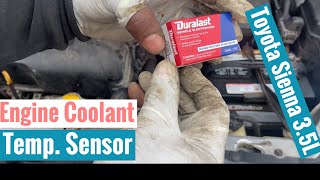
Typical fix: Replace the Engine Coolant Temperature sensor. The sensor is located on the rear coolant crossover between the cylinder heads, and access is very tight. 🎬 Watch: Step-by-step guide to replacing a faulty ECT sensor. The job requires removing the V-bank cover, windshield wiper motor and link assembly, outer cowl panel, and the air cleaner assembly to gain access.
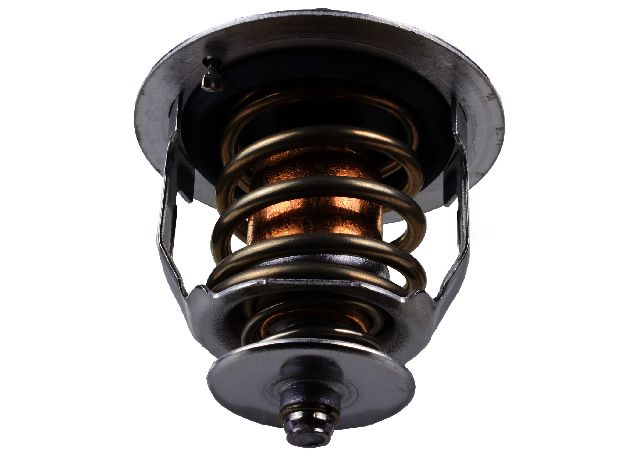
Est. part cost: $30-$100 - Stuck-Open Thermostat 🟡 Medium Probability → Shop Integrated Thermostat Housing Assembly Thermostats can wear out and fail in the open position, preventing the engine from reaching operating temperature in the time expected by the ECM.
How to confirm: Monitor the ECT data on a scan tool while driving. If the engine temperature rises very slowly and struggles to reach the normal operating temperature (typically 176-183°F), the thermostat is likely stuck open. The temperature may drop significantly when driving at highway speeds.
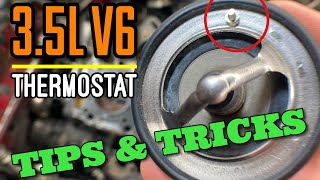
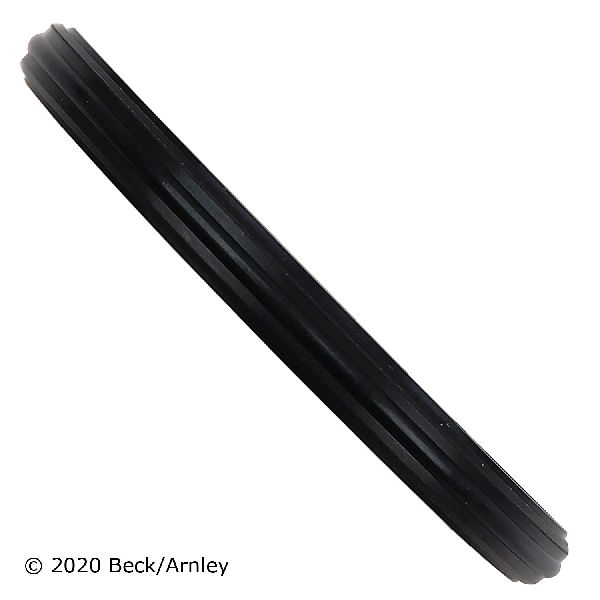
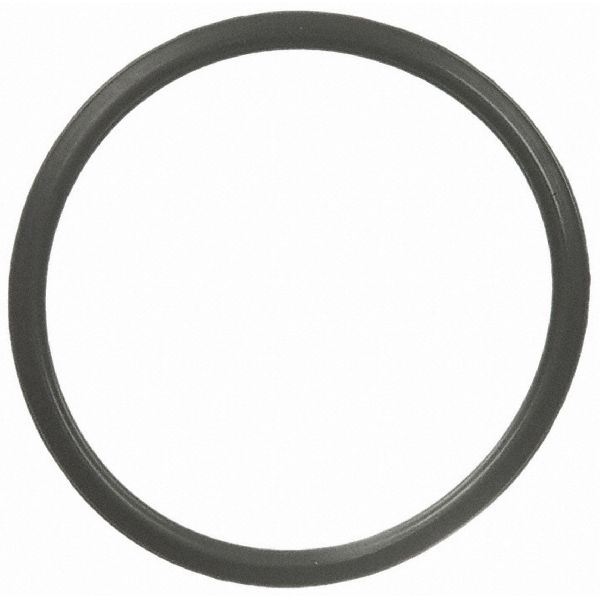
Typical fix: Replace the thermostat and gasket. It is highly recommended to use a genuine Toyota (OEM) thermostat. 🎬 See these expert tips for a smoother thermostat replacement.
Est. part cost: $20-$40 - Low Engine Coolant Level / Air in System ⚪ Low Probability → Shop Engine Coolant / Antifreeze
How to confirm: Visually inspect the coolant level in the overflow reservoir and radiator (when the engine is cold). If the level is low, the sensor may not be submerged in coolant, leading to inaccurate readings. Air pockets can also cause erratic readings.
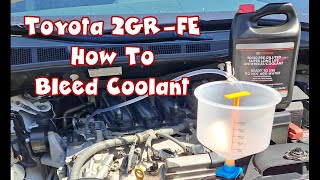
Typical fix: Top off the coolant to the correct level and bleed the cooling system to remove any air pockets. 🎬 Watch: How to properly flush and bleed the cooling system. Investigate and repair the source of the coolant leak.
Est. part cost: $15-$30 for Toyota Super Long Life Coolant - Faulty Wiring or Connector ⚪ Low Probability
How to confirm: Visually inspect the ECT sensor's wiring and connector for damage, corrosion, or loose pins. Use a multimeter to check for the correct reference voltage (typically 5V) and ground at the connector.
Typical fix: Repair the damaged section of the wiring harness or replace the connector pigtail.
Est. part cost: $10-$30
Rare But Worth Checking
- Outdated ECM Software (2011 Models): For some early 2011 Sienna models, the ECM logic for monitoring the ECT sensor was too sensitive. Toyota issued TSB T-SB-0116-11 to address this. The fix is a software reflash, not a hardware replacement. Check with a dealer or capable shop to see if this TSB applies and has been performed.
Diagnosis Steps
- Check for any Technical Service Bulletins (TSBs), especially T-SB-0116-11 for 2011 models.
- Visually inspect the cooling system. Check the coolant level in the reservoir and radiator (only when the engine is completely cool).
- Connect an OBD-II scanner and check for any other codes. Prioritize diagnosis of codes like P0117 or P0118 if present.
- Using the scanner's live data function, observe the Engine Coolant Temperature reading. With a cold engine, it should be very close to the Intake Air Temperature (IAT) reading.
- Start the engine and continue to monitor the ECT reading. It should climb steadily to around 180°F and stabilize. If it climbs very slowly or not at all, suspect a stuck thermostat.
- If the temperature reading is erratic, nonsensical (e.g., -40°F), or jumps around, the ECT sensor or its wiring is the primary suspect.
- If the sensor is suspected, inspect its connector and wiring for any signs of damage or corrosion. Wiggle the harness and connector while watching live data to see if the reading jumps, indicating a wiring fault.
- If wiring appears okay, test the sensor itself with a multimeter or replace it.
- If the thermostat is suspected, replace it. Using an OEM thermostat is strongly recommended.
- After any repair, properly bleed the cooling system to remove all air pockets.
Parts You'll Likely Need
- Engine Coolant Temperature Sensor
(OEM #89422-33030)— This sensor is the most common failure point for code P0116, providing illogical readings to the computer.
Trusted brands: Denso (OEM), NTK, Beck/Arnley
OEM price range: $70-$100
Aftermarket price range: $30-$80 - Engine Coolant Thermostat
(OEM #90916-A3003)— A thermostat stuck open will prevent the engine from warming up correctly, causing a range/performance fault. It's the second most likely cause.
Trusted brands: Toyota (Genuine), Aisin
OEM price range: $20-$35
Aftermarket price range: $15-$30
Related Codes That Often Appear With This One
- P0128 — P0128 (Coolant Temperature Below Thermostat Regulating Temperature) is very similar and often points directly to a stuck-open thermostat. Seeing both codes together strongly suggests a thermostat issue rather than a sensor issue.
- P0117 / P0118 — These codes indicate a specific circuit failure (low or high input) for the ECT sensor. If you see these along with P0116, it almost certainly confirms the problem is with the sensor itself or its wiring, not the thermostat. Toyota service information recommends diagnosing these codes first.
Technical Service Bulletins (TSBs) & Recalls
- T-SB-0116-11: MIL 'ON' DTC P0116 - For some 2011 Sienna 2GR-FE vehicles, the ECM logic has been modified to address this condition.
Platform-Specific Known Issues
- TSB T-SB-0116-11: Some 2011 Sienna models may set this code due to overly sensitive ECM logic. The fix is a dealer-installed software update, not a part replacement.
- Potential for Rubber Oil Cooler Line Failure: Some 2011 models may have been built with a rubber section in the VVT-i/engine oil cooler line that is prone to rupturing with age, which can cause catastrophic oil loss. A Reddit user with a 2011 Sienna V6 experienced this exact failure. Owners should inspect for and consider upgrading to the all-metal line.
Mechanic-Grade Diagnostic Values
- ECT Sensor Resistance vs. Temperature — expected: Approx. 90k-100kΩ at -40°C, 8k-10kΩ at 0°C, 2.2k-3.0kΩ at 20°C (68°F), 250-350Ω at 80°C (176°F), and 180-250Ω at 100°C (212°F).. Failure: Readings that are infinite (open circuit), near zero (short circuit), or do not correspond smoothly with temperature changes indicate a faulty sensor.
- ECT Sensor Signal Voltage (Key On, Engine Off) — expected: With a cold engine at approx. 20°C (68°F), voltage should be between 3.0V and 3.5V.. Failure: Voltage near 5V may indicate an open circuit or unplugged sensor. Voltage near 0V indicates a short to ground.
- ECT Sensor Signal Voltage (Engine at Operating Temp) — expected: At normal operating temperature (approx. 80°C / 176°F), voltage should drop to between 1.0V and 1.3V.. Failure: Voltage that stays high (e.g., above 2.5V) when the engine is fully warmed up suggests a stuck-open thermostat or a faulty sensor that isn't changing its resistance.
Scan Tool Commands That Help
- Toyota Techstream: Active Test: Control the Coolant Fan — After confirming the ECT sensor is providing a plausible reading, you can command the cooling fans on and off manually. This helps verify if the fan control module and fan motors are working, isolating the problem to the sensor/thermostat/wiring if the fans respond correctly to commands but not to actual engine temperature.
- Toyota Techstream: Data List: Coolant Temp vs. Intake Air Temp — On a cold-soaked engine (left overnight), the 'Coolant Temp' and 'Intake Air Temp' values in the Data List should be within a few degrees of each other. A significant difference points to a skewed ECT sensor right from the start.
Wiring & Ground Locations
- Engine Harness Ground (Rear) — On the side of the rear cylinder head (the one closer to the firewall), located underneath the throttle body assembly.. The ECT sensor is located on the coolant crossover between the heads. A poor ground connection at this point can introduce voltage offsets and instability into the sensor's signal, causing erratic readings that trigger P0116 even with a good sensor.
- Engine Harness Ground (Front) — On a boss on the side of the front cylinder head, near the front valve cover.. The ECT sensor circuit relies on a clean ground path back to the ECM. While the rear ground is closer, corrosion or looseness at any primary engine ground can affect sensor readings. Both should be inspected for tightness and corrosion.
- ECT Sensor Connector — A 2-pin gray connector on the sensor body, located on the rear coolant crossover pipe between the cylinder heads, below the intake manifold.. This is the direct connection point. The pins can corrode or the locking tab can break, leading to a poor connection. The two terminals are the signal wire (THW) and a ground wire (E2) that goes back to the ECM.
Real Owner Repair Stories
- SiennaChat Forum user (2011 Toyota Sienna XLE) — Check engine light on with code P0116. Temperature gauge would take a very long time to move off 'C' and would drop back down during highway driving in cool weather.
❌ Tried (didn't work) Initially suspected the ECT sensor due to some online advice, but did not replace it.
✅ What actually fixed it The owner monitored live data and confirmed the engine was warming up extremely slowly. They replaced the engine thermostat with a genuine Toyota OEM part (90916-A3003). After the replacement and a coolant bleed, the engine warmed up to 180°F within 5-7 minutes and the code did not return. - NHTSA ODI #10485990 — An owner reported that while their vehicle was being diagnosed for an airbag light, the dealer also diagnosed code P0116. In this instance, the repair involved a wiring harness replacement.
OEM Part Supersession History
90916-03084, 90916-03129→90916-A3003— Part consolidation and potential minor design updates by Toyota.
Heads up: The newer part number 90916-A3003 is the correct and current replacement for the entire 2011-2016 model year range.N/A→N/A— The ECT sensor part number 89422-33030 has been stable for this application without major supersessions noted.
Model Year Variations Within This Range
- 2011: Early production 2011 models are subject to TSB T-SB-0116-11, where the ECM's monitoring logic was too sensitive and could set P0116 erroneously. Later models in the range (2012-2016) have the updated logic from the factory.
- 2011-2012 (primarily): Some early Gen 3 models were equipped with engine oil cooler lines that included a rubber section. This section is known to degrade and rupture, causing rapid oil loss. Later models use an all-metal line. While not directly related to P0116, it's a critical inspection point on these model years when working on the engine.
Diagnostic Flowchart
Other Known Issues on This Vehicle
Issues unrelated to this code that are worth knowing about as an owner of this generation:
- Power Sliding Door Failure 🔴 High — Very common across the 2011-2016 model years. Can occur at any mileage. Problems include fraying cables, broken latches, and doors opening while driving. (Ref: NHTSA Recall 16V-858 (door may open while driving). A class-action settlement led to Customer Support Program ZKD, extending warranty coverage for the door cable sub-assembly to 10 years.)
- Rubber VVT-i / Oil Cooler Line Rupture 🔴 High — Most common on pre-2011 2GR-FE engines, but some 2011 models still came with the problematic rubber hose which can rupture without warning, causing rapid and catastrophic oil loss. Failure can occur with age. (Ref: Toyota issued a warranty enhancement for earlier models, but owners of 2011+ vehicles should visually inspect for a rubber hose section and consider replacing it with the all-metal line (Part No. 15772-31030) as a preventative measure.)
- Automatic Transmission Hesitation or Failure 🟠 Medium — Some owners report harsh shifting, shuddering, or premature failure. Issues can be exacerbated by lack of fluid changes or heavy loads, as the transmission can be sensitive to overheating.
- Water Pump Failure 🟠 Medium → Shop Engine Water Pump — The water pump is a known wear item on the 2GR-FE engine. An updated part was introduced around 2010, but failures can still occur, typically after 80,000 miles, leading to coolant leaks and potential overheating.
- Rear Differential Noise (AWD Models) 🟡 Low — Primarily affects 2011-2013 AWD models. Owners may hear loud whirring or groaning noises from the rear of the vehicle, often traced to a worn viscous coupler in the differential.
Used vs. New Parts: Buying Guide for This Vehicle
When a used part is the smart pick: A used wiring harness pigtail from a junkyard is a viable option if only the connector is damaged. Most other components related to this repair are not recommended to be purchased used.
Donor-vehicle mileage cap: roughly under 100000 miles for the part to have meaningful remaining life.
What to inspect on the donor part:
- For a connector pigtail, inspect for non-corroded pins, flexible wiring (not brittle or cracked), and an intact locking tab.
OEM-only on this vehicle (don't cheap out):
- Engine Coolant Thermostat: Aftermarket thermostats for Toyota vehicles are notoriously unreliable and often have slightly different opening temperatures or flow rates, which can cause the P0116 code to persist or return. Always use a genuine Toyota (OEM) or Aisin (often the OEM manufacturer) part.
- Engine Coolant Temperature Sensor: While some high-quality aftermarket brands like Denso (who is the OEM) or NTK are acceptable, the ECM is calibrated to the specific resistance curve of the OEM sensor. Using a cheap, unbranded sensor can lead to inaccurate readings and persistent issues. Given the high labor cost to access it, using an OEM part is a wise investment.
Aftermarket brands forum-validated for this vehicle:
- Denso (for ECT Sensor - OEM supplier)
- Aisin (for Thermostat - often OEM supplier)
- NTK (for ECT Sensor)
Brands owners have reported issues with on this vehicle:
- Unbranded 'white-box' sensors and thermostats from online marketplaces.
- Store-brand thermostats with a reputation for failing prematurely or having incorrect temperature ratings.
Real Owner Stories
Aggregated from forums and TSBs cited above. Mileages and costs reflect what owners reported in those sources.
2013 Toyota Sienna 2GR-FE 3.5L V6
Symptoms: A/C blowing warm at idle and the radiator fans were not operating.
What fixed it: Replacement of the Engine Coolant Temperature (ECT) sensor, which required extensive labor to access.
Source hint: 2CarPros Forum: 2013 Sienna P0116 with A/C issues
2011 Toyota Sienna 2GR-FE 3.5L V6
Symptoms: The rubber section of the VVT-i/engine oil cooler line ruptured while driving, causing a major oil leak.
What fixed it: Repaired with updated all-metal lines to prevent engine seizure.
Source hint: Reddit (r/ToyotaSienna): Oil cooler lines FYI - Gen 3 (2011-20)
Related OBD-II Codes
Frequently Asked Questions
I have a 2011 Toyota Sienna with code P0116. Is there a specific software update for this?
Why is my A/C blowing warm at idle when my Sienna has a P0116 code?
What is the specific resistance for the ECT sensor on the 2GR-FE engine?
Is the thermostat replacement on the 2011-2016 Sienna a difficult DIY job?
Where is the ECT sensor located on my 3.5L V6 Sienna?
Should I use aftermarket parts for the cooling system on my Sienna?
Helpful Videos
We Have This Part in Stock


The information in this article is provided for general reference and educational purposes only. Vehicle specifications, procedures, and part compatibility can vary by production date, trim level, and region. Always consult your vehicle's factory service manual and verify part numbers before purchasing or performing repairs. Safety-critical components such as airbags, seat belts, and braking systems should be installed by a qualified professional.
- Toyota Sienna:
- 🧭 Diagnostic Flowchart
- 🎬 Helpful Videos
- 🛍️ Shop This Part
- What's Unique About the 2011-2016 Toyota Sienna
- Symptoms You May Notice
- Most Likely Causes
- Rare But Worth Checking
- Diagnosis Steps
- Parts You'll Likely Need
- Related Codes That Often Appear With This One
- Technical Service Bulletins (TSBs) & Recalls
- Platform-Specific Known Issues
- Mechanic-Grade Diagnostic Values
- Scan Tool Commands That Help
- Wiring & Ground Locations
- Real Owner Repair Stories
- OEM Part Supersession History
- Model Year Variations Within This Range
- Other Known Issues on This Vehicle
- Used vs. New Parts: Buying Guide for This Vehicle
- Real Owner Stories
- 2013 Toyota Sienna 2GR-FE 3.5L V6
- 2011 Toyota Sienna 2GR-FE 3.5L V6
- Related OBD-II Codes
- Frequently Asked Questions
- 🎟️ Get 5% Off