

P0116 on 2001-2009 Volvo S60: Engine Coolant Temperature Sensor Causes and Fixes
On a 2001-2009 Volvo S60, code P0116 is most often caused by a faulty thermostat that is stuck open, preventing the engine from warming up properly. Replacing the thermostat and the coolant temperature sensor (which is in the same housing) is the most common fix. Expect to pay $100-$200 for parts.
- P0116 on a 2001-2009 S60 almost always points to a bad thermostat that is stuck open.
- The main symptom will be the temperature gauge taking a very long time to reach the middle, or never reaching it at all. A constantly running radiator fan is another key indicator.
- For a complete and lasting repair, it is highly recommended to replace both the thermostat and the ECT sensor at the same time.
- Before buying parts, use a scan tool to watch the live coolant temperature data to confirm if the engine is warming up too slowly (thermostat) or if the signal is erratic (sensor/wiring).
What's Unique About the 2001-2009 Volvo S60
The first-generation Volvo S60 (P2 platform) is particularly prone to this code due to thermostat failures. Owners frequently report that the engine is very slow to warm up, a classic sign of a thermostat stuck in the open position. Because the ECT sensor is located in the thermostat housing, most owners and mechanics recommend replacing both the thermostat and the sensor at the same time to avoid a repeat repair job. The cooling fan running constantly is a common failsafe symptom on these Volvos; when the ECM cannot trust the temperature signal, it runs the fan continuously to protect the engine from a potential overheat condition.
Symptoms You May Notice
- Check Engine Light is on
- Engine temperature gauge is slow to rise or never reaches the normal operating position (middle of the gauge).
- Radiator fan runs constantly, even after the engine is turned off.
- Reduced fuel economy.
- Difficulty starting when the engine is warm, may require long cranking times.
- Heater output may be weak or only lukewarm, especially in cold weather.
- Replacing only the ECT sensor when the thermostat is the actual cause of the slow warm-up condition.
- Replacing the thermostat when an erratic ECT sensor or wiring fault is the true cause of illogical temperature readings.
Most Likely Causes
- Faulty Engine Coolant Thermostat 🔴 High Probability → Shop Integrated Thermostat Housing Assembly Thermostats on this platform are known to fail by sticking in the open position, which directly causes the slow warm-up condition that triggers P0116. This is the most common cause reported by owners.
How to confirm: Use an OBD-II scanner to monitor live coolant temperature data from a cold start. If the engine takes an excessively long time (e.g., more than 15-20 minutes of driving) to reach operating temperature (approx. 195°F / 90°C), the thermostat is almost certainly stuck open. Poor heater performance on a cold day is another strong indicator.
Typical fix: Replace the thermostat and its housing. It is highly recommended to replace the integrated Engine Coolant Temperature (ECT) sensor at the same time, as the labor is identical.
Est. part cost: $50-$120 - Faulty Engine Coolant Temperature (ECT) Sensor 🟡 Medium Probability → Shop Engine Coolant Temperature Sensor The sensor is a thermistor that can degrade over time, leading to inaccurate or erratic readings. This can also be the primary failure, even if the thermostat is functioning correctly.
How to confirm: Monitor live coolant temperature data on a scan tool. If the reading is nonsensical from a cold start (e.g., stuck at -40°F or 250°F) or jumps around erratically as the engine warms up, the sensor is bad. A faulty sensor can also cause hard starting when warm.
Typical fix: Replace the ECT sensor. Since it is located in the thermostat housing, it is often replaced along with the thermostat as a preventative measure.
Est. part cost: $30-$70 - Low Engine Coolant Level ⚪ Low Probability → Shop Engine Coolant / Antifreeze
How to confirm: Visually inspect the coolant expansion tank when the engine is cold. If the level is below the 'MIN' mark, there is a leak in the system. Air pockets created by low coolant can cause the ECT sensor to give false readings as it may be measuring air temperature instead of coolant temperature.
Typical fix: Find and repair the source of the coolant leak, then top off and properly bleed the cooling system to remove any air pockets.
Est. part cost: $20-$100+ - Wiring or Connector Issue ⚪ Low Probability
How to confirm: Visually inspect the wiring and electrical connector at the ECT sensor for signs of corrosion, damage, or loose pins. You can gently wiggle the connector while watching live data on a scan tool; if the temperature reading jumps, you've found the problem. A multimeter can be used to check for the 5-volt reference signal at the connector and for continuity back to the ECM.
Typical fix: Repair or replace the damaged wiring or connector. Clean corroded terminals with electrical contact cleaner.
Est. part cost: $10-$50
Diagnosis Steps
- Check the coolant level in the expansion tank (when the engine is cold) and inspect for any visible leaks. Top up if necessary.
- Connect an OBD-II scanner and check for any other stored codes. Codes like P0117 (Circuit Low) or P0118 (Circuit High) would point more directly to a sensor or wiring failure.
- View the live data stream for the Engine Coolant Temperature (ECT) sensor. 🎬 Watch: How to diagnose a faulty Volvo coolant temperature sensor
- With a cold engine, the ECT reading should be very close to the Intake Air Temperature (IAT) and ambient outside temperature. A reading of -40°F indicates a sensor or circuit fault.
- Start the engine and monitor the ECT reading as it warms up. The temperature should rise steadily and smoothly.
- If the temperature rises extremely slowly and struggles to reach ~195°F (90°C), the thermostat is the primary suspect.
- If the temperature reading is erratic, jumps wildly, or is stuck at an illogical value, the ECT sensor or its wiring is the likely culprit.
- If the sensor/wiring is suspected, turn the engine off and inspect the ECT sensor's electrical connector and harness for corrosion or damage. Check for a stable 5-volt reference at the connector with a multimeter.
Parts You'll Likely Need
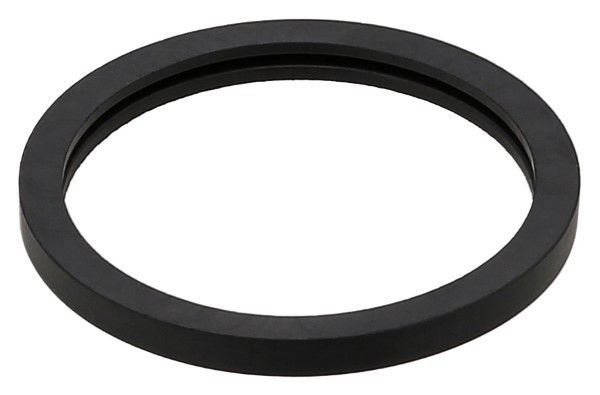
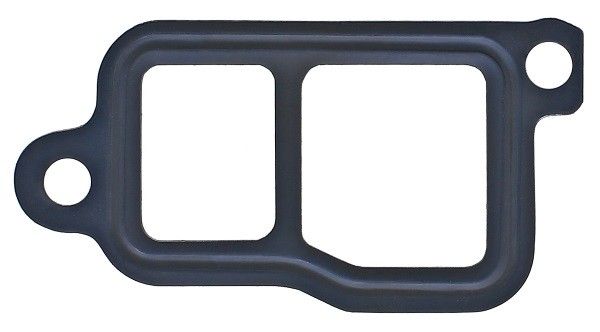
- Engine Coolant Thermostat Kit
(OEM #31293699)— This is the most common failure part for a P0116 code on this vehicle, typically failing in the open position. The kit usually includes the housing, thermostat, and a new ECT sensor.
Trusted brands: Volvo (OEM), Wahler, Behr, Mahle
OEM price range: $80-$120
Aftermarket price range: $50-$90 - Engine Coolant Temperature (ECT) Sensor
(OEM #9186486)— This sensor provides the temperature reading to the ECM. It can fail and send erratic signals. It is located in the thermostat housing and is wise to replace at the same time.
Trusted brands: Volvo (OEM), Bosch
OEM price range: $40-$60
Aftermarket price range: $20-$40
Related Codes That Often Appear With This One
- P0128 — This code for 'Coolant Temperature Below Thermostat Regulating Temperature' is often set for the exact same reason as P0116: a thermostat that is stuck open.
- P0117 — Indicates 'Engine Coolant Temperature Sensor Circuit Low Input', pointing to a short in the sensor or wiring. This electrical fault can trigger the P0116 performance code.
- P0118 — Indicates 'Engine Coolant Temperature Sensor Circuit High Input', pointing to an open circuit or break in the wiring. This can cause the erratic readings that lead to a P0116 code.
Platform-Specific Known Issues
- Real Owner Experience: Slow Warm-up and Constant Fan: An owner on the Volvo Owners Club Forum reported a P0116 code, very slow warm-up in temperatures below 40°F, and the radiator fan running after the engine was shut off. Another user confirmed the fan runs as a failsafe because the ECU can't trust the sensor signal. The original poster replaced the thermostat, which resolved the issue.
- Real Owner Experience: Hard Starting When Warm: On Matthews Volvo Site, an owner of a 2004 XC90 (a platform mate) with P0116, P0118, and P0128 codes experienced an erratic temperature gauge and severe difficulty starting the engine when warm (e.g., after stopping for gas). Live data showed the ECT sensor reading -40°F on a hot restart, causing the ECM to inject too much fuel. This points to a sensor/wiring issue rather than a mechanical thermostat problem.
Diagnostic Flowchart
Other Known Issues on This Vehicle
Issues unrelated to this code that are worth knowing about as an owner of this generation:
- Electronic Throttle Module (ETM) Failure 🔴 High — Very common on 1999-2002 models. Volvo extended the warranty to 10 years/200,000 miles, but this has since expired. Failure causes erratic idle, stalling, and 'limp mode'. (Ref: Warranty Extension (Expired))
- Automatic Transmission Issues (B4 Servo Cover / Valve Body) 🔴 High — Common on earlier (approx. 2001-2003) models with the Aisin AW55-50/51SN transmission. Causes harsh shifts, flares between gears (especially 2-3), or loss of gears. A B4 servo cover update kit can often fix this. (Ref: Multiple TSBs exist regarding the B4 servo cover.)
- Clogged PCV / Crankcase Breather System 🟠 Medium — The breather box and hoses can become clogged with sludge over time, typically after 100k miles. This builds crankcase pressure, forcing oil out of seals (like cam or main seals). Replacement requires removing the intake manifold.
- Front Upper Strut Mount Failure 🟠 Medium — The upper strut mounts and spring seats are common wear items that fail, causing clunking or popping noises from the front suspension when going over bumps or turning.
- AWD Angle Gear Collar Sleeve Failure 🔴 High — On All-Wheel Drive models, the splined collar sleeve connecting the transmission to the angle gear (transfer case) is a known weak point that can strip, resulting in a loss of AWD. The part was improved on later models (approx. 2006+).
Real Owner Stories
Aggregated from forums and TSBs cited above. Mileages and costs reflect what owners reported in those sources.
2001-2009 Volvo S60
Symptoms: Very slow warm-up in temperatures below 40°F, and the radiator fan running after the engine was shut off.
What fixed it: Replaced the thermostat.
Source hint: Volvo Owners Club Forum (volvoforums.com) - Thread 'OBD Code P0116'
2004 Volvo XC90
Symptoms: Erratic temperature gauge and severe difficulty starting the engine when warm (e.g., after stopping for gas). Live data showed the ECT sensor reading -40°F on a hot restart.
What fixed it: Identified as a sensor/wiring issue rather than a mechanical thermostat problem.
Source hint: Matthews Volvo Site - Thread 'Thermostat/ECT problem'
Related OBD-II Codes
Frequently Asked Questions
Why does my radiator fan keep running after I turn off my S60, and is it related to code P0116?
My 2004 S60 is having a hard time starting after I stop for gas. Could this be the coolant sensor?
Should I replace the ECT sensor when I replace the thermostat on my S60?
How long should it take my S60 to reach operating temperature?
Can a low coolant level in the expansion tank trigger a P0116 code?
Is there a specific transmission issue I should look out for on my early 2000s S60 while fixing this code?
Helpful Videos

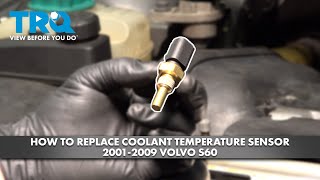

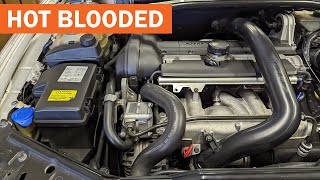
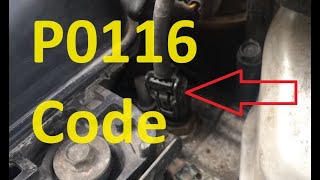
We Have This Part in Stock
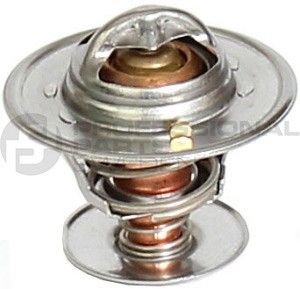

The information in this article is provided for general reference and educational purposes only. Vehicle specifications, procedures, and part compatibility can vary by production date, trim level, and region. Always consult your vehicle's factory service manual and verify part numbers before purchasing or performing repairs. Safety-critical components such as airbags, seat belts, and braking systems should be installed by a qualified professional.
- Volvo S60:
- 🧭 Diagnostic Flowchart
- 🎬 Helpful Videos
- 🛍️ Shop This Part
- What's Unique About the 2001-2009 Volvo S60
- Symptoms You May Notice
- Most Likely Causes
- Diagnosis Steps
- Parts You'll Likely Need
- Related Codes That Often Appear With This One
- Platform-Specific Known Issues
- Other Known Issues on This Vehicle
- Real Owner Stories
- 2001-2009 Volvo S60
- 2004 Volvo XC90
- Related OBD-II Codes
- Frequently Asked Questions
- 🎟️ Get 5% Off