

P0117 on 2009-2012 Audi A4 2.0T: Engine Coolant Sensor (G62) Circuit Low Causes and Fixes
On the 2009-2012 Audi A4 2.0T, P0117 is almost always a failed Engine Coolant Temperature (ECT) sensor, called the G62. This often causes cooling fans to run constantly and the temp gauge to max out. The sensor is cheap (~$25), but it's located under the intake manifold, making labor the main cost (~$200-$400). Crucially, this code is often an electrical symptom of a leaking plastic water pump, a very common and well-documented failure on this engine, which drips coolant onto the sensor's wiring
- P0117 on this Audi means the main coolant sensor (G62) circuit has failed, causing the ECU to think the engine is overheating.
- The most obvious symptoms are the cooling fans running at full speed and the temperature gauge being maxed out, even when the car is cold.
- The root cause is often a leaking plastic water pump, a very common problem on this engine. Look for signs of pink coolant residue under the intake manifold.
- The repair is labor-intensive (DIY difficulty 4/5) because the sensor and water pump are located under the intake manifold.
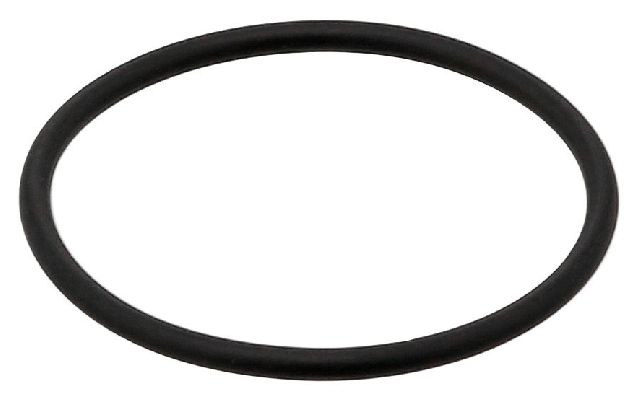
- When performing the repair, it is highly recommended to replace the sensor, O-ring, clip, and intake manifold gasket. If a leak is present, replace the entire water pump assembly.
What's Unique About the 2009-2012 Audi A4
On the 2.0T TFSI EA888 Gen2 engine used in the B8 Audi A4, the P0117 code has a very specific and common context. The primary ECT sensor (G62) is not easily accessible; it's integrated into the plastic water pump and thermostat housing assembly, which is located under the intake manifold. This entire plastic assembly is a well-documented, high-failure-rate component prone to cracking and leaking coolant. Therefore, a P0117 code on this vehicle is frequently an early electrical symptom of a physical coolant leak from the water pump. The leaking coolant drips directly onto the G62 sensor or its wiring harness connector, causing a short circuit that triggers the code. A diagnosis must always include a careful inspection for pink, crusty coolant residue in this area.
Symptoms You May Notice
- Cooling fans running constantly at high speed, even when the engine is cold.
- Temperature gauge on the dashboard is maxed out to HOT, even on a cold start.
- Temperature gauge does not move at all or flashes a warning light.
- Check Engine Light is illuminated.
- Engine is difficult to start, especially when warm.
- Reduced fuel economy and rough engine performance.
- A/C compressor may not engage or work correctly.
- Replacing the cooling fans or fan control module. While the fans run constantly, it's a symptom commanded by the ECM due to the false high temperature reading, not a failure of the fan system itself.
- Replacing the thermostat alone. A bad thermostat typically causes different codes (like P0128 or P2181) related to cooling performance, not an electrical circuit fault like P0117.
- Replacing the wrong temperature sensor. Some models have a second sensor (G83) at the radiator outlet. P0117 specifically refers to the G62 sensor on the engine.
Most Likely Causes
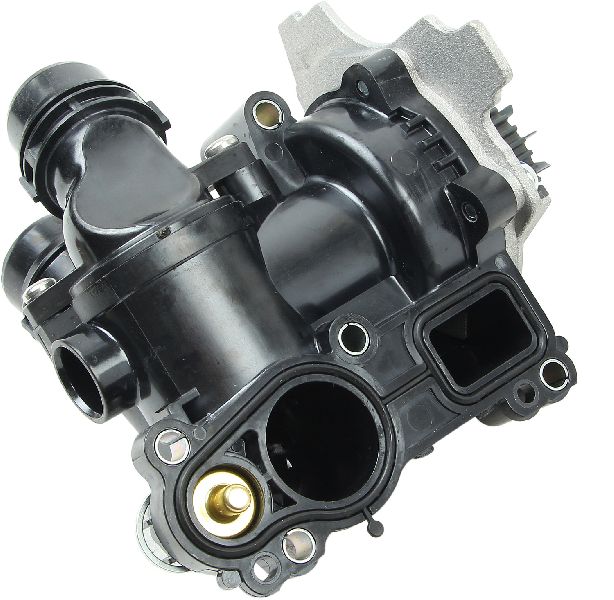
- Leaking Water Pump / Thermostat Assembly Very High Probability → Shop Integrated Thermostat Housing Assembly The original water pump assembly is made of plastic that becomes brittle and cracks from constant heat cycles. It is the most notorious failure point on the EA888 Gen2 engine. Leaking coolant drips directly onto the G62 sensor and its wiring connector below, causing a short to ground that triggers P0117. The leak is often the root cause, not just the sensor itself.
How to confirm: Visually inspect the top of the transmission bellhousing and the area under the intake manifold for signs of pink, crusty residue from dried G12/G13 coolant. A pressure test of the cooling system will confirm the leak.
Typical fix: Replace the entire water pump and thermostat assembly. It is strongly recommended to replace the G62 sensor at the same time. Many owners and shops upgrade to a more durable cast aluminum housing assembly to prevent future failures.
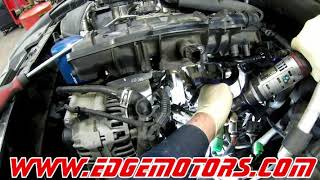
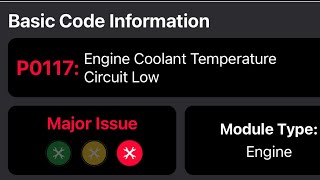
Est. part cost: $150-$500 - Failed Engine Coolant Temperature (ECT) Sensor (G62) 🔴 High Probability → Shop Engine Coolant Temperature Sensor The sensor itself can fail internally, creating a short circuit. This is often precipitated by a slow, undetected coolant leak from the water pump above it, which contaminates the sensor over time. 🎬 Watch: Diagnosing a P0117 code and G62 sensor failure
How to confirm: With the ignition on, unplug the sensor. If a scan tool's live data reading flips from max hot (~140°C) to max cold (~-40°C), the sensor is bad. If no leak is visible, this is the most likely direct cause.
Typical fix: Replace the ECT sensor (G62), its O-ring, and retaining clip. Due to its location, this requires removing the intake manifold. Given the labor, it's wise to replace the water pump at the same time.
Est. part cost: $20-$60 - Damaged Wiring or Connector 🟡 Medium Probability The engine harness in this area is exposed to heat and, more importantly, direct coolant contamination from a leaking water pump. The connector pins corrode or the wire insulation degrades, causing a short to ground.
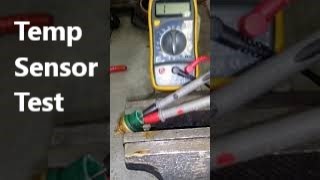
How to confirm: If the temperature reading remains high after unplugging the sensor, it indicates a short to ground in the wiring harness between the sensor connector and the ECM. Visually inspect the connector for green/white corrosion or swollen wires. A continuity test with a multimeter is required. 🎬 See: How to test an Audi coolant temperature sensor
Typical fix: Repair the damaged section of the wiring harness or replace the connector pigtail. The source of the leak (water pump) must be fixed to prevent a repeat failure.
Est. part cost: $10-$100
Rare But Worth Checking
- Failed Engine Control Module (ECM): → Shop Engine Control Module (ECM) This is very unlikely. The ECM should only be considered if the sensor, wiring, and water pump have all been confirmed to be in good condition and the short-circuit fault persists.
Diagnosis Steps
- Connect an OBD-II scanner. Confirm the P0117 code is present.
- View live data for the Engine Coolant Temperature. If it reads a static, impossibly high value (e.g., 140°C / 284°F) on a cold engine, proceed.
- CRITICAL FIRST STEP: With a strong flashlight and mirror, carefully inspect the area under the intake manifold and on top of the transmission for any signs of pink, crusty coolant residue. If found, the water pump assembly has failed and is the root cause. The entire assembly needs replacement.
- If no leaks are visible, locate the G62 sensor's electrical connector on the water pump housing.
- Turn the ignition on (engine off). Disconnect the sensor's electrical connector.
- Re-check the live data on the scan tool. The temperature reading should now show a very low value (e.g., -40°C) and may set a P0118 code. This confirms the wiring and ECM are likely okay and the sensor itself has failed internally.
- If the temperature reading remains high after unplugging the sensor, this indicates a short to ground in the wiring harness. The harness must be inspected for coolant contamination and repaired.
Parts You'll Likely Need
- Water Pump & Thermostat Assembly
(OEM #06H121026DD (latest revision for plastic))— A leaking water pump is the most common root cause for the sensor/wiring failure. Due to the high labor cost to access this area, it's often replaced as the primary repair. Many owners upgrade to a metal housing version. 🎬 Watch: Step-by-step 2.0T water pump and thermostat replacement
Trusted brands: Graf (metal housing), Geba (metal housing), INA, OEM Audi/VW
OEM price range: $350-$500
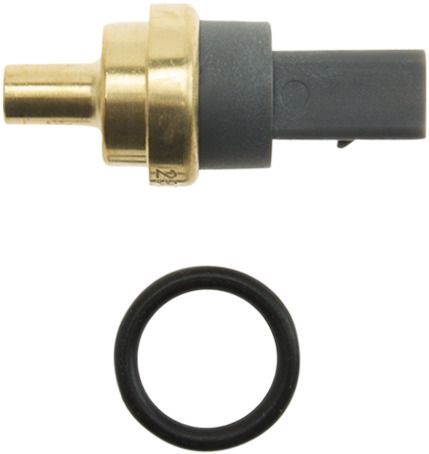
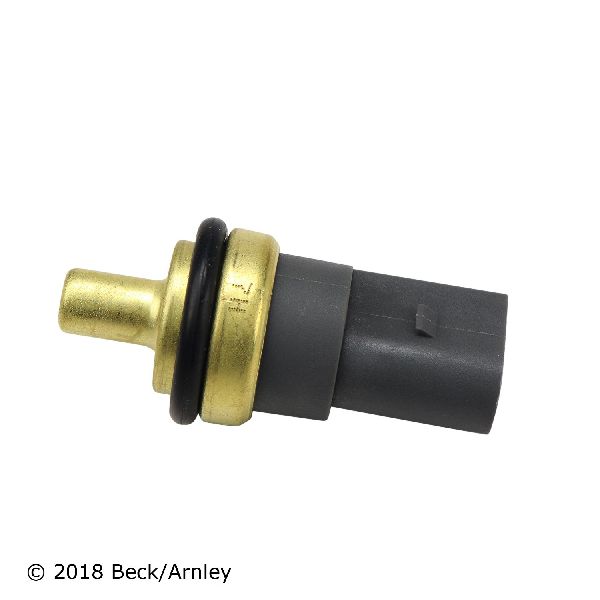
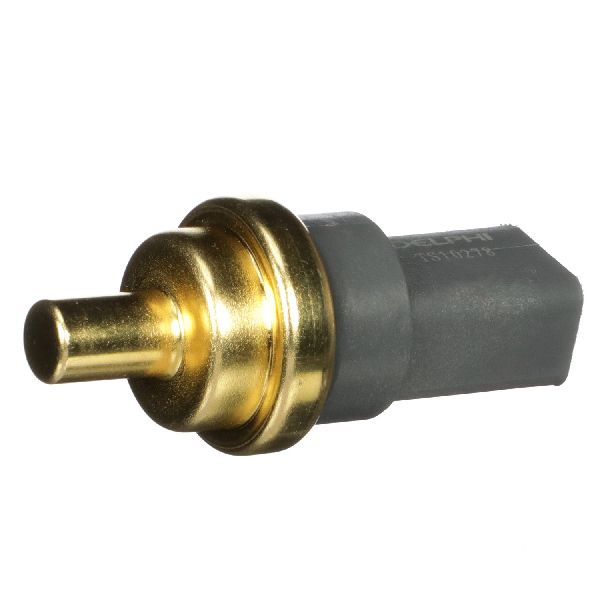
Aftermarket price range: $150-$300 - Engine Coolant Temperature Sensor (G62)
(OEM #06A919501A)— This sensor is the most common direct cause of the P0117 electrical fault, often failing due to contamination from the leaking water pump. It should always be replaced with the water pump.
Trusted brands: Bosch, Hella, Meyle, OEM Audi
OEM price range: $40-$60
Aftermarket price range: $15-$35 - Intake Manifold Gasket
(OEM #06F129717D)— The intake manifold must be removed to access the G62 sensor and water pump. The gasket is a single-use item and must be replaced to prevent vacuum leaks.
Trusted brands: Victor Reinz, Elring, OEM Audi
OEM price range: $20-$40
Aftermarket price range: $10-$20
Related Codes That Often Appear With This One
- P0118 — Engine Coolant Temperature Sensor 1 Circuit High. This code may appear during diagnosis when you unplug the sensor, which is a good sign that the wiring is intact.
- P2181 — Cooling System Performance. If the water pump or thermostat is mechanically failing (in addition to leaking and causing the P0117), this code may also be present.
- P0299 — Turbo/Super Charger Underboost. In some cases, coolant from a leaking water pump can contaminate the N649 switch valve, causing this code to appear alongside cooling system faults.
Technical Service Bulletins (TSBs) & Recalls
- TSB 2071515/1 (19 23 44): While for later models, this TSB addresses coolant leaks from the pump on 2.0L TFSI engines, acknowledging the issue. It advises technicians to precisely locate leaks to avoid repeat repairs.
- TSB 2027733/5: This TSB for a different engine (3.0T) also details procedures for identifying coolant leaks from the water pump, noting that minor seepage can be normal, but significant leaks require replacement. The diagnostic logic is relevant.
Platform-Specific Known Issues
- The plastic water pump/thermostat housing on the EA888 Gen2 engine is a well-known, high-failure-rate component that frequently causes coolant leaks. These leaks are a primary cause of the P0117 code on this specific vehicle.
- Audi has faced class-action lawsuits regarding premature water pump failures on various engines, highlighting the systemic nature of the problem with their plastic cooling components.
Mechanic-Grade Diagnostic Values
- G62 Sensor Resistance (disconnected) — expected: Approx. 2000-3000 Ω at 20°C (68°F) and 200-300 Ω at 90°C (194°F).. Failure: Significantly different readings or an open/short circuit (infinite or zero ohms) indicates a failed sensor.
- G62 Signal Wire Voltage (Sensor Unplugged, Key On) — expected: Approx. 5.0V.. Failure: If the voltage is near 0V, it indicates the signal wire is shorted to ground in the harness between the connector and the ECM.
- G62 Signal Wire Voltage (Sensor Plugged In, Key On, Engine Cold) — expected: Approx. 3.0V - 3.5V at 20°C.. Failure: A voltage reading persistently below ~0.2V indicates a short circuit, triggering the P0117 code.
- VCDS Live Data (Cold Engine) — expected: Engine Coolant Temperature should be nearly identical to Intake Air Temperature.. Failure: A reading of ~140°C while the engine is cold confirms the P0117 fault condition.
Hidden / Shadow Codes Worth Checking
- P0118 (Circuit High): This is not a shadow code, but a diagnostic confirmation. When troubleshooting P0117 (Circuit Low), unplugging the sensor connector should cause the ECM to see an open circuit and log P0118. If this happens, it strongly suggests the wiring from the connector to the ECM is intact and the G62 sensor itself is the source of the short. (see via Generic OBD-II scanner or VCDS after unplugging the G62 sensor with the key on.)
Scan Tool Commands That Help
- VCDS (VAG-COM): Read Measuring Value Block (MVB) - Group 001 or 004 — To view the live Engine Coolant Temperature as seen by the ECM. On many B8 models, Group 004, Display Zone 3, shows the G62 sensor reading directly. This is the first step to confirm the fault; a reading of ~140°C on a cold engine indicates the P0117 condition.
- VCDS (VAG-COM): Read Measuring Value Block (MVB) - Groups 130-134 — These groups provide a broader overview of the cooling system, allowing comparison between the G62 (engine outlet) and G83 (radiator outlet, if equipped) sensors. This is useful to check if the G62 is reading erratically compared to other system temperatures.
Wiring & Ground Locations
- G62 Sensor Connector — On the plastic water pump housing, under the intake manifold on the driver's side of the engine.. This is the primary point of inspection. The connector is a 2-pin setup. Pin 1 is the signal wire to the ECM, and Pin 2 is the sensor ground provided through the harness. Coolant from a leaking water pump often contaminates this connector, causing the short.
- ECM Pin T55/45 — At the Engine Control Module (ECM).. On related VAG engines, the signal wire from the G62 sensor (often Gray/Brown) terminates at pin 45 on the 55-pin connector (T55/45). This is the endpoint for testing harness continuity. This should be verified with a model-specific wiring diagram but provides a strong starting point.
- Sensor Ground (Internal Harness) — The ground for the G62 sensor is typically provided via a wire (often Green/Black) that terminates at a crimped connection inside the main engine wiring harness, not directly to the chassis.. A fault here is less common but can cause erratic sensor readings. If the sensor and signal wire test good, the integrity of this internal ground connection should be investigated.
- Ground Point G12 — On the left rear of the engine compartment, near the firewall.. While the sensor itself has a dedicated ground within the harness, a corroded or loose main engine-to-chassis ground can cause floating voltages and unpredictable electrical issues across multiple sensors, including the G62.
Real Owner Repair Stories
- AudiWorld Forums, user with a 2012 A4 Avant (2012 Audi A4 Avant 2.0T, ~120,000 miles) — Temperature gauge on the dashboard does not respond at all, and cooling fans are running on high constantly. No Check Engine Light was on initially, but it was expected to appear.
❌ Tried (didn't work) The user did not report trying other fixes first, as the symptoms pointed directly to the G62 sensor. The main question was about the difficulty of the repair.
✅ What actually fixed it The community consensus immediately identified the G62 Engine Coolant Temperature sensor as the cause. The fix is to replace the sensor, which is located on the water pump housing under the intake manifold. The user was advised that the sensor can be replaced without removing the entire water pump, but some coolant will be lost in the process.
When the Usual Fixes Don't Work
- While a failed sensor or leaking water pump is the cause over 90% of the time, there are cases where the fault lies in the wiring harness. One owner of a 2014 A4 (B8.5 with Gen3 engine, but same code logic) replaced the thermostat housing and sensor, but the P0117 code would not clear. This points to a persistent short-to-ground in the wiring between the sensor connector and the ECM, which can be caused by chafing or corrosion unrelated to a water pump leak. In these cases, a continuity test and visual inspection of the entire harness path is required.
OEM Part Supersession History
06H121026 (various early suffixes like AB, AF, BA, BP, CF)→06H121026DD (latest common plastic revision)— Revisions were made to address the high failure rate of the plastic housing, which was prone to cracking and leaking. However, all plastic versions remain a significant failure point.
Heads up: The most important 'supersession' is the aftermarket upgrade to a cast aluminum water pump assembly from brands like Graf (PA1233) or Geba. This is a widely accepted permanent fix for the OEM plastic part's design flaw and is strongly recommended over replacing with another plastic OEM unit.
Model Year Variations Within This Range
- 2009-2012: There are no significant variations for this specific P0117 fault within the 2009-2012 model years. All these vehicles use the B8.0 platform with the EA888 Gen2 engine, which features the G62 sensor located on the plastic water pump under the intake manifold. The failure mode and diagnostic process are consistent across this range.
Diagnostic Flowchart
Other Known Issues on This Vehicle
Issues unrelated to this code that are worth knowing about as an owner of this generation:
- Excessive Oil Consumption 🔴 High — Extremely common on pre-2012 models. Often appears between 60,000-80,000 miles. Caused by faulty piston ring design. (Ref: A class-action lawsuit led to a settlement and warranty extensions for this issue, but it has since expired for most vehicles.)
- Timing Chain Tensioner Failure 🔴 High — Common on early B8 models (up to ~2012). The original tensioner can fail without warning, allowing the chain to jump teeth, causing catastrophic engine damage. (Ref: No official recall, but an updated tensioner part was released. Considered a critical preventative maintenance item.)
- Carbon Buildup on Intake Valves 🟠 Medium — Inevitable on all direct-injection engines like the 2.0T. Typically requires cleaning every 60,000-100,000 miles to restore performance and prevent misfires.
- PCV / Oil Separator Failure 🟠 Medium — The PCV diaphragm can tear, leading to a large vacuum leak, rough idle, and increased oil consumption. A relatively common and inexpensive fix.
Used vs. New Parts: Buying Guide for This Vehicle
When a used part is the smart pick: For this repair, used parts are generally not recommended for the core components. However, a used wiring harness pigtail for the G62 sensor can be a smart choice if the original connector is corroded or damaged during removal. A used intake manifold could also be an option if the original is damaged during the repair, but this is rare.
Donor-vehicle mileage cap: roughly under 50000 miles for the part to have meaningful remaining life.
What to inspect on the donor part:
- For a wiring pigtail: Check for brittle insulation, corrosion on pins, and ensure there is enough wire length for splicing.
- For an intake manifold: Inspect for cracks, especially around mounting points, and ensure all threaded inserts are intact.
OEM-only on this vehicle (don't cheap out):
- Intake Manifold Gasket: Always use a new, high-quality gasket to prevent vacuum leaks. The cost is minimal compared to the labor to re-do the job.
Aftermarket brands forum-validated for this vehicle:
- Water Pump Assembly: Graf, Geba, INA (for metal housing upgrades). These are forum-validated alternatives that solve the OEM plastic failure.
- ECT Sensor (G62): Bosch, Hella, Meyle. These are reputable OEM suppliers.
- Intake Gasket: Victor Reinz, Elring.
Brands owners have reported issues with on this vehicle:
- Avoid unbranded, 'white-box' water pump assemblies and sensors from online marketplaces. The quality control is often poor, and failure rates are high, making the significant labor required for the job a waste of time and money.
Real Owner Stories
Aggregated from forums and TSBs cited above. Mileages and costs reflect what owners reported in those sources.
2014 Audi A4 (Gen3 engine)
Symptoms: Code P0117 not clearing and cooling fans running non-stop. The owner attempted to fix it by replacing the G83 sensor at the radiator and the thermostat housing, but the issue persisted.
What fixed it: The context notes this as a common misdiagnosis where the wrong sensor or components are replaced without resolving the specific G62 circuit fault.
Source hint: AudiWorld Forums - Thread 'Code P0117 not clearing and fans running non-stop.'
Audi A4 (B8) 2.0T
Symptoms: P0117 code present with visible pink, crusty residue found under the intake manifold.
What fixed it: Replacing the leaking plastic water pump assembly which was contaminating the G62 sensor.
Source hint: Audizine - Multiple threads confirming the link between P0117 and a leaking water pump.
Related OBD-II Codes
Frequently Asked Questions
Is there a TSB for the water pump leaks causing P0117 on my 2.0L TFSI engine?
Why are my cooling fans running at high speed even when my Audi A4 is cold?
Can I just replace the G62 sensor to fix the P0117 code?
Does the P0117 code affect my Audi's air conditioning?
Why is the G62 sensor so expensive to replace in terms of labor?
Has Audi addressed the plastic water pump failures legally?
Helpful Videos
We Have This Part in Stock


The information in this article is provided for general reference and educational purposes only. Vehicle specifications, procedures, and part compatibility can vary by production date, trim level, and region. Always consult your vehicle's factory service manual and verify part numbers before purchasing or performing repairs. Safety-critical components such as airbags, seat belts, and braking systems should be installed by a qualified professional.
- Audi A4:
- 🧭 Diagnostic Flowchart
- 🎬 Helpful Videos
- 🛍️ Shop This Part
- What's Unique About the 2009-2012 Audi A4
- Symptoms You May Notice
- Most Likely Causes
- Rare But Worth Checking
- Diagnosis Steps
- Parts You'll Likely Need
- Related Codes That Often Appear With This One
- Technical Service Bulletins (TSBs) & Recalls
- Platform-Specific Known Issues
- Mechanic-Grade Diagnostic Values
- Hidden / Shadow Codes Worth Checking
- Scan Tool Commands That Help
- Wiring & Ground Locations
- Real Owner Repair Stories
- When the Usual Fixes Don't Work
- OEM Part Supersession History
- Model Year Variations Within This Range
- Other Known Issues on This Vehicle
- Used vs. New Parts: Buying Guide for This Vehicle
- Real Owner Stories
- 2014 Audi A4 (Gen3 engine)
- Audi A4 (B8) 2.0T
- Related OBD-II Codes
- Frequently Asked Questions
- 🎟️ Get 5% Off