

P0117 on 2008-2017 Audi A5 2.0T TFSI: Engine Coolant Temperature Sensor Causes and Fixes
On a 2008-2017 Audi A5 2.0T, code P0117 is almost always caused by a failed Engine Coolant Temperature (ECT) sensor, also known as the G62 sensor. This results in the cooling fans running constantly and the temp gauge reading max hot. The sensor itself is inexpensive (~$20-$60), but labor can be 1-2 hours due to its difficult location. On EA888 engines, it is critical to also inspect for leaks from the plastic water pump/thermostat housing, as dripping coolant is a common cause of the sensor's f
- P0117 on your A5 2.0T almost always means the main ECT sensor (G62) has failed.
- The key symptoms are the cooling fans running on high constantly and the temperature gauge reading max hot, even when the engine is cold.
- The most reliable diagnostic test is to unplug the sensor and see if the temperature reading on a scan tool flips from max-hot to max-cold.
- The repair is more difficult than on many cars due to the sensor's location under the intake manifold, so budget for 1-2 hours of labor if not doing it yourself.
- Always replace the sensor's O-ring and retaining clip at the same time and top off the coolant with the correct Audi-specific fluid.
What's Unique About the 2008-2017 Audi A5
The 2.0T TFSI EA888 engine in the B8/B8.5 generation A5 is known for cooling system issues, particularly a failure-prone plastic water pump/thermostat housing that can crack and leak. While leaks are common, a P0117 code without visible coolant loss usually points directly to an internally shorted ECT sensor. However, a coolant leak from the housing is a very frequent root cause of the sensor or its wiring shorting out. The primary challenge on this platform is the sensor's location. On EA888 Gen2 engines (approx. pre-2013), the G62 sensor is tucked into the water pump assembly under the intake manifold. On EA888 Gen3 engines (approx. 2013+), it was moved to the back of the cylinder head near the firewall, which is also very difficult to access.
Generation note: The 2008-2017 vehicle range covers the entire first generation of the Audi A5 (B8) and its mid-cycle facelift (B8.5). While the 2.0T TFSI engine was updated from the EA888 Gen2 to Gen3 during this time, the cause, symptoms, and diagnosis for code P0117 remain consistent. The primary ECT sensor (G62) is the culprit in both versions, though its location changed from the water pump (Gen2) to the rear of the cylinder head (Gen3).
Symptoms You May Notice
- Cooling fans running constantly at maximum speed, even immediately after a cold start.
- Temperature gauge on the instrument cluster immediately shoots to the maximum 'H' reading.
- Check Engine Light is illuminated.
- Warning message on the driver information display such as 'Engine Overheating' or 'Coolant Temp Too High'.
- Noticeably poor fuel economy.
- Engine may be difficult to start, especially when cold.
- Black smoke from the exhaust, indicating a rich fuel mixture.
- In some cases, the temperature gauge may not move at all, flashing instead.
- Replacing the thermostat. A faulty thermostat typically causes performance-related codes like P2181 ('Cooling System Performance') or P0128, not a 'Circuit Low' code like P0117.
- Replacing the water pump. While the water pump is a known failure point on the 2.0T engine, it usually causes coolant leaks or performance codes. It would not directly cause a P0117 unless it leaked coolant directly onto the sensor wiring, which should be visually evident and investigated as the primary fault.
Most Likely Causes
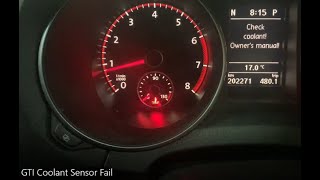
- Failed Engine Coolant Temperature (ECT) Sensor (G62) 🔴 High Probability → Shop Engine Coolant Temperature Sensor The sensor is a common failure item across many VW/Audi models. 🎬 Watch a diagnostic walkthrough of this sensor failure on a similar VW engine It can develop an internal short circuit or crack, allowing coolant to seep inside and disrupt the signal.
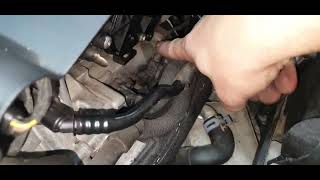
How to confirm: Using a scan tool, observe the live data for Engine Coolant Temperature. If it reads an extremely high value (e.g., 140°C) on a cold engine, unplug the sensor. If the reading then drops to an extremely low value (e.g., -40°C, triggering a P0118 code), the sensor is bad. 🎬 See how to test and replace a faulty ECT sensor
Typical fix: Replace the ECT (G62) sensor, its O-ring, and the retaining clip. Top off lost coolant with the correct G12/G13 specification fluid.
Est. part cost: $20-$60 - Wiring Harness Short to Ground 🟡 Medium Probability The engine bay is compact, and wiring can become brittle from heat cycles. More commonly, a coolant leak from the plastic water pump/thermostat housing can drip onto the sensor wiring, causing a short.
How to confirm: Unplug the sensor. If the scan tool's temperature reading remains stuck at the maximum value instead of dropping to a low value, the signal wire in the harness is shorted to ground somewhere between the connector and the ECM. Visually inspect the harness for coolant residue, especially below the thermostat housing.
Typical fix: Inspect the wiring harness running from the ECT sensor back to the ECM. Locate and repair the damaged/corroded section of wire. If the damage is from a leak, the source of the leak (e.g., water pump) must also be repaired.
Est. part cost: $5-$50 for wiring repair supplies - Corroded or Damaged Sensor Connector ⚪ Low Probability Coolant leaks from the nearby water pump or the sensor's own failed seal can contaminate the connector, leading to corrosion and a short circuit. The connector pins can become wet and green.
How to confirm: Visually inspect the inside of the ECT sensor electrical connector for green or white corrosion, bent pins, or signs of coolant intrusion.
Typical fix: Clean the connector terminals with electrical contact cleaner. If corrosion is severe, the connector pigtail may need to be cut off and a new one spliced in.
Est. part cost: $15-$40 for a new connector pigtail
Rare But Worth Checking
- Failed Fan Control Module: A failed fan control module can cause the fans to run continuously, but it will not typically cause a P0117 code on its own. However, if a user is diagnosing based on the 'fans always on' symptom, this could be a possibility if no P0117 is present.
- Failed Engine Control Module (ECM): → Shop Engine Control Module (ECM) This is extremely rare. Before condemning the ECM, all other possibilities (sensor, wiring, connectors) must be exhaustively ruled out by a qualified technician.
Diagnosis Steps
- Connect an OBD-II scanner and confirm P0117 is the primary code. Note any other codes present.
- Access the live data stream on the scanner. With the engine cold and off, check the 'Engine Coolant Temperature' reading. A P0117 will cause the ECT to show a very high, implausible reading (e.g., 140°C / 284°F).
- CRITICAL STEP: With a flashlight, thoroughly inspect the plastic water pump/thermostat housing assembly on the front of the engine for signs of pink/white crusty residue from a coolant leak. A leak here is a very common root cause.
- Turn the ignition off. Locate the ECT/G62 sensor. On Gen2 EA888 engines it's on the water pump under the intake; on Gen3 it's on the back of the cylinder head near the firewall.
- Visually inspect the sensor's connector and nearby wiring for any signs of damage, melting, or coolant contamination.
- Disconnect the sensor's electrical connector. Turn the ignition back on (engine off).
- Re-check the live data. The ECT reading should now show a very low value (e.g., -40°C / -40°F) and may set a P0118 code. If it does, this confirms the wiring and ECM are likely okay and the sensor itself has failed. Proceed to replace the sensor.
- If the temperature reading remains high after unplugging the sensor, this indicates a short to ground in the wiring harness. The harness must be inspected and repaired.
- If replacing the sensor, ensure you also replace the O-ring and a new retaining clip to prevent future leaks.
- After the repair, clear the codes and perform a drive cycle to ensure the fix was successful.
Parts You'll Likely Need
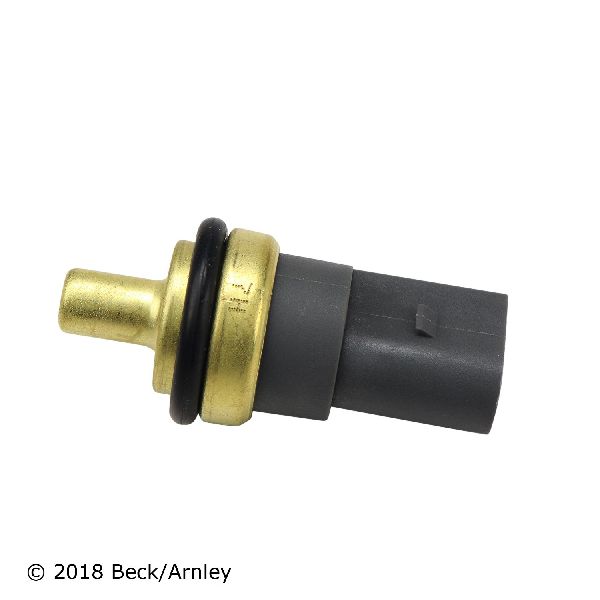
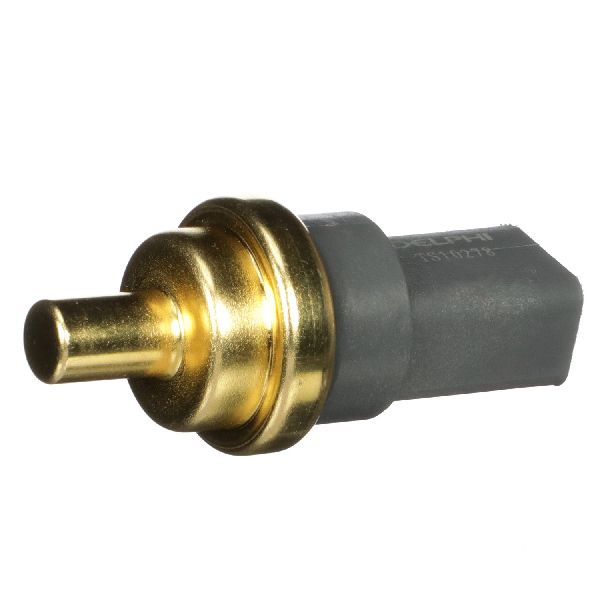
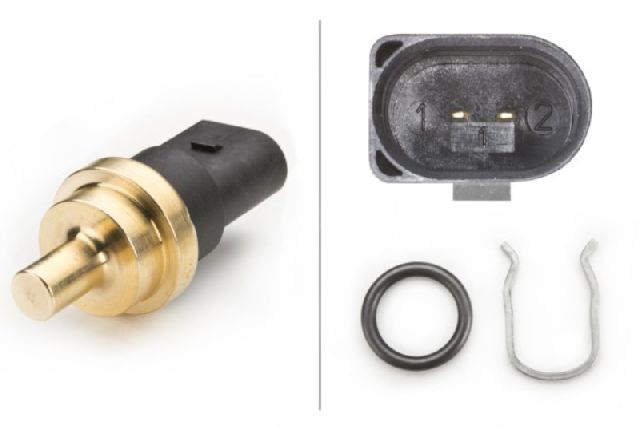
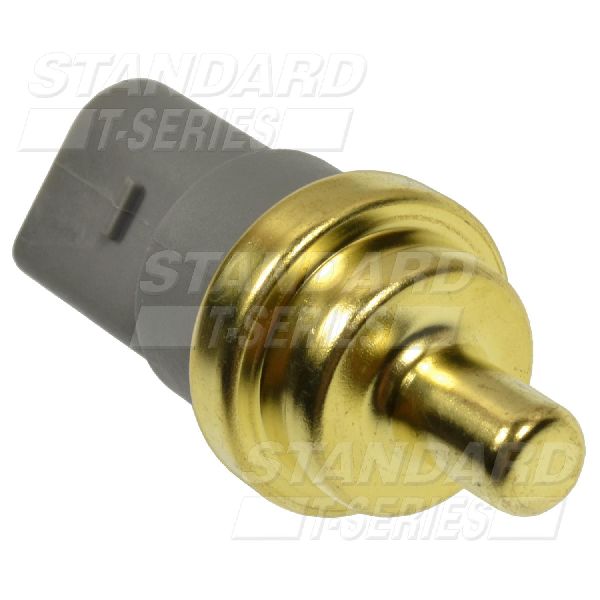
- Engine Coolant Temperature Sensor (G62)
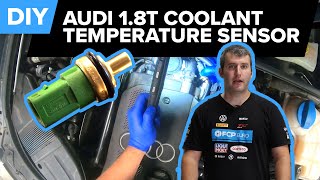
(OEM #06A919501A)— This sensor is the most common point of failure, developing an internal short that triggers the P0117 code. This part number is widely used across many VW/Audi vehicles. 🎬 Watch this step-by-step Audi coolant temperature sensor replacement guide
Trusted brands: Bosch, Hella, Delphi, Vemo, URO Parts
OEM price range: $40-$70
Aftermarket price range: $20-$50 - Sensor O-Ring and Retaining Clip
(OEM #O-Ring: N90316801 or N90316802, Clip: 032121142)— The O-ring provides the seal and the plastic clip holds the sensor in place. They become brittle with age and should always be replaced with the sensor to prevent leaks. The new sensor often includes these parts, but it's critical to verify.
Trusted brands: OEM, Vaico
OEM price range: $5-$15
Aftermarket price range: $2-$10
Related Codes That Often Appear With This One
- P0118 — This code for 'Circuit High Input' can appear intermittently if the sensor or wiring has an erratic connection, sometimes shorting (P0117) and sometimes opening the circuit (P0118). It will also typically appear after unplugging the sensor during diagnosis.
- P2681 — This code for 'Engine Coolant Bypass Valve Control Circuit/Open' points to a fault in the electronically controlled thermostat assembly. Since a leaking thermostat housing is a common cause of the P0117 short, these codes can appear together.
Technical Service Bulletins (TSBs) & Recalls
- While no TSB is specifically for P0117, Audi TSB 19-19-99 / 2052657/3 addresses the leaking thermostat housing, which is a common root cause for the P0117 code on the EA888 engine.
- Audi TSB 2011732/10 addresses s
Platform-Specific Known Issues
- A recall (NHTSA 18V-229, Audi code 19M1/19N4) was issued for the auxiliary electric coolant pump on many 2013-2017 A5 2.0T models, which could short and pose a fire risk. While this is a separate part from the ECT sensor, it highlights the importance of maintaining the cooling system.
Mechanic-Grade Diagnostic Values
- G62 Sensor Resistance (Cold) — expected: 2,000 - 3,000 Ω (2.0-3.0 kΩ) at 20°C (68°F).. Failure: A reading significantly outside this range, or showing an open circuit (infinite resistance) or a dead short (near zero resistance), indicates a failed sensor.
- G62 Sensor Resistance (Hot) — expected: 275 - 375 Ω at 80°C (176°F).. Failure: If the resistance does not drop into this range as the engine warms up, the sensor is not responding correctly to temperature changes.
- G62 Sensor Signal Voltage (Key On, Engine Off) — expected: The voltage should be between 0.5V and 4.5V, corresponding to the current coolant temperature.. Failure: A P0117 is triggered when the voltage is persistently low, typically below 0.2V, indicating a short to ground.
- G62 Signal Wire Voltage (Sensor Unplugged, Key On) — expected: Approximately 5.0V.. Failure: If the voltage is near 0V, it indicates the signal wire itself is shorted to ground somewhere in the harness. If the voltage is correct, it confirms the ECU and wiring up to the connector are likely good.
Scan Tool Commands That Help
- VCDS (VAG-COM) or ODIS: Read Measuring Value Block (MVB) — This is the primary method for diagnosing the G62 sensor. On a cold engine, the temperature reading should match the Intake Air Temp sensor. A P0117 fault will cause this value to show an implausible maximum (e.g., 140°C).
- VCDS (VAG-COM) or ODIS: Access MVB Group 004, Display Zone 3. — This specific block and field directly displays the coolant temperature as read by the G62 sensor, which is the value the ECU uses for engine management.
- VCDS (VAG-COM) or ODIS: Access MVB Group 130. — On later models (especially Gen3 engines), this group can be used to compare the G62 (engine outlet temp) and G83 (radiator outlet temp) sensors. This is more for diagnosing thermostat performance (like for code P2181) but can help confirm if the G62 is reading erratically compared to other sensors.
Wiring & Ground Locations
- G62 Sensor Connector — On EA888 Gen2 (pre-2013), it's on the water pump under the intake manifold. On EA888 Gen3 (2013+), it's on a coolant flange on the back of the cylinder head near the firewall.. This is the primary point of failure and inspection. Coolant leaks from the water pump (Gen2) or the flange itself can contaminate the connector and wiring, causing the short circuit that triggers P0117.
- Engine Block Ground Strap — There are several ground points. A key one is often located near the alternator or on the left front engine cross member.. While the sensor grounds through the ECU, a poor main engine ground can cause floating voltages and erratic sensor behavior across the entire engine management system. This should be checked if multiple, seemingly unrelated electrical faults are present.
- G671 — Ground connection on the left front long member/cross member.. This is a chassis ground point for several engine bay components. Corrosion or looseness here can contribute to electrical issues.
Real Owner Repair Stories
- AudiWorld Forums user '142 guy' (2014 Audi A4 1.8T TFSI (CJE Engine - EA888 Gen3)) — P0117 code would not clear, cooling fans running constantly, heat gauge not moving.
❌ Tried (didn't work) Replaced the coolant temperature sensor (the one at the radiator, G83, was replaced by mistake first)., Replaced the coolant expansion tank., Replaced the complete thermostat housing assembly.
✅ What actually fixed it The final fix was not posted, but expert diagnosis in the thread pointed to two critical, overlooked issues: 1) The scan log showed a terminal 30 voltage of only 10.2V with the engine running, indicating a severe electrical system problem that needed to be fixed first. 2) The user had replaced the wrong sensor (G83 at the radiator) instead of the primary G62 sensor at the rear of the cylinder head, which is the source for P0117. The advice was to fix the voltage issue, then diagnose the correct G62 sensor circuit for wiring damage.
"I Checked Everything" — The Actual Cause
- For a circuit code like P0117, the equivalent of a 'smoke test clean' scenario is when the sensor is replaced, but the code persists. In one documented case, a user replaced the sensor and the entire thermostat housing without resolving the P0117. Further diagnosis revealed a systemic low voltage problem (10.2V) that was preventing various modules from operating correctly, which was the likely root cause rather than a specific component failure in the coolant sensor circuit.
OEM Part Supersession History
Various older green or blue top sensors→06A919501A— This part number has become the standard service replacement for a wide range of VW/Audi engines from this era, consolidating previous color-coded versions.
Heads up: The current black sensor (06A919501A) is the correct replacement. It is critical to also replace the O-ring (N90316802) and retaining clip (032121142) as they are not always included and the old ones are prone to breaking or leaking upon reinstallation.
Model Year Variations Within This Range
- 2008-~2013 (EA888 Gen2): The G62 ECT sensor is located on the plastic water pump/thermostat assembly, which is mounted to the front of the engine block, underneath the intake manifold. A coolant leak from the pump housing is a very common cause of the sensor or its wiring shorting out.
- ~2013-2017 (EA888 Gen3): The G62 ECT sensor was relocated to a coolant flange on the rear of the cylinder head, near the firewall. Additionally, a second sensor (G83) was added at the radiator outlet for more precise cooling system monitoring, though P0117 still refers specifically to the G62 circuit.
Diagnostic Flowchart
Other Known Issues on This Vehicle
Issues unrelated to this code that are worth knowing about as an owner of this generation:
- Excessive Oil Consumption 🔴 High — Very common on pre-2013 EA888 Gen2 engines due to piston ring design. Can affect engines up to 2017. Often requires new pistons/rings to properly fix. (Ref: Multiple class-action lawsuits settled (e.g., Gonzalez v. Volkswagen, Asghari v. Volkswagen).)
- Timing Chain Tensioner Failure 🔴 High — A critical issue on early EA888 engines (approx. before 2013). The original tensioner design can fail, allowing the chain to jump time, leading to catastrophic engine damage. (Ref: Subject of a class-action lawsuit (e.g., Zimand, et al v. Volkswagen Group of America). An updated tensioner part is available.)
- Water Pump / Thermostat Housing Failure 🔴 High → Shop Integrated Thermostat Housing Assembly — Extremely common across all 2.0T EA888 engines in this range. The plastic housing becomes brittle, cracks, and leaks coolant. Often fails between 40k-80k miles. (Ref: Audi TSB 19-19-99 / 2052657/3 exists for this issue. Many owners upgrade to an all-metal housing.)
- Intake Valve Carbon Buildup 🟠 Medium — Inherent to all direct-injection engines. Requires media-blasting (walnut blasting) to clean the intake valves, typically every 60k-80k miles, to restore performance and prevent misfires.
- PCV Valve Failure 🟠 Medium — The diaphragm in the Positive Crankcase Ventilation (PCV) valve frequently tears, causing a large vacuum leak, rough idle, and potential oil consumption. It's a common failure item, often around 60k-80k miles. (Ref: The part has been updated multiple times by VW/Audi; the latest revision is often recommended.)
Used vs. New Parts: Buying Guide for This Vehicle
When a used part is the smart pick: A used part is almost never a good choice for this repair, with one exception: a wiring connector pigtail. If the original connector is corroded or damaged, a used pigtail from a salvage yard is a cost-effective and reliable solution.
Donor-vehicle mileage cap: roughly under 150000 miles for the part to have meaningful remaining life.
What to inspect on the donor part:
- For a connector pigtail, inspect for any signs of green or white corrosion on the metal pins.
- Check that the plastic is not brittle or cracked.
- Ensure there are at least 4-6 inches of wire attached to allow for easy splicing.
OEM-only on this vehicle (don't cheap out):
- Water Pump / Thermostat Housing Assembly: This is a known high-failure part made of plastic. Installing a used assembly is extremely risky and likely to fail again. Always purchase a new, updated OEM or high-quality OEM-supplier (e.g., Mahle, Pierburg) part.
Aftermarket brands forum-validated for this vehicle:
- ECT Sensor: Bosch, Hella, Delphi, NGK.
Brands owners have reported issues with on this vehicle:
- Avoid unbranded, 'white-box' electronic sensors. While no specific brand is universally cited as poor, the low cost often correlates with poor accuracy and longevity, leading to repeat repairs.
Real Owner Stories
Aggregated from forums and TSBs cited above. Mileages and costs reflect what owners reported in those sources.
2014 Audi A4 1.8T (Gen3 EA888)
Symptoms: P0117 code would not clear and the cooling fans were running non-stop. The owner initially replaced the G83 radiator sensor and the thermostat housing without success.
What fixed it: The discussion highlighted that the primary G62 sensor on the engine was the likely culprit, rather than the radiator sensor, and noted that low system voltage needed to be addressed.
Source hint: AudiWorld Forums: 'Code P0117 not clearing and fans running non stop.'
2012 Volkswagen GTI (Mk6) 2.0T TSI
Symptoms: The temperature gauge immediately shot to full scale (maximum 'H' reading) and a cooling system warning message appeared.
What fixed it: Replacement of the G62 Engine Coolant Temperature sensor; the old sensor was found to have a crack and was leaking coolant internally, causing a short.
Source hint: YouTube: 'MK6 GTI Coolant Temperature Sensor Failure P0117 G62?'
Audi A5 2.0T (Gen3 EA888)
Symptoms: Difficulty finding the correct sensor location for the G62 versus the G83 radiator sensor.
What fixed it: Replacement of the G62 sensor located on the back of the head near the firewall, which required removing the battery for access.
Source hint: YouTube: 'P0117 Engine Coolant Temperature Sensor (G62) Part 1'
Related OBD-II Codes
Frequently Asked Questions
Is there a recall for the cooling system on my 2013-2017 Audi A5 2.0T that might be related to P0117?
My 2014 A5 is throwing P0117; is there a TSB for the common water pump leaks on the EA888 engine?
Where is the G62 Engine Coolant Temperature sensor located on a Gen3 EA888 engine?
What specific coolant should I use when topping off my Audi A5 after replacing the ECT sensor?
Why are my radiator fans running at maximum speed even when I first start my Audi A5 in the morning?
Helpful Videos
We Have This Part in Stock


The information in this article is provided for general reference and educational purposes only. Vehicle specifications, procedures, and part compatibility can vary by production date, trim level, and region. Always consult your vehicle's factory service manual and verify part numbers before purchasing or performing repairs. Safety-critical components such as airbags, seat belts, and braking systems should be installed by a qualified professional.
- Audi A5:
- 🧭 Diagnostic Flowchart
- 🎬 Helpful Videos
- 🛍️ Shop This Part
- What's Unique About the 2008-2017 Audi A5
- Symptoms You May Notice
- Most Likely Causes
- Rare But Worth Checking
- Diagnosis Steps
- Parts You'll Likely Need
- Related Codes That Often Appear With This One
- Technical Service Bulletins (TSBs) & Recalls
- Platform-Specific Known Issues
- Mechanic-Grade Diagnostic Values
- Scan Tool Commands That Help
- Wiring & Ground Locations
- Real Owner Repair Stories
- "I Checked Everything" — The Actual Cause
- OEM Part Supersession History
- Model Year Variations Within This Range
- Other Known Issues on This Vehicle
- Used vs. New Parts: Buying Guide for This Vehicle
- Real Owner Stories
- 2014 Audi A4 1.8T (Gen3 EA888)
- 2012 Volkswagen GTI (Mk6) 2.0T TSI
- Audi A5 2.0T (Gen3 EA888)
- Related OBD-II Codes
- Frequently Asked Questions
- 🎟️ Get 5% Off