

P0117 on 2012-2018 Audi A6 3.0T: Engine Coolant Temperature Circuit Low Causes and Fixes
On the Audi A6 3.0T, code P0117 is almost always a failed Engine Coolant Temperature (ECT) sensor. The repair is unusually expensive because the sensor is located under the supercharger, requiring 4-6 hours of labor. Expect a shop bill of $900-$1500, with most of the cost being labor. It is standard practice to replace the thermostat, water pump, and PCV valve at the same time.
- P0117 on an Audi A6 3.0T means the main engine coolant temp sensor (G62) has failed or its wiring is shorted.
- The primary symptom is the temperature gauge shooting to MAX and cooling fans running constantly, even when the engine is cold.
- The sensor is located under the supercharger, making this a very labor-intensive and expensive repair.
- It is critical to replace the thermostat, water pump, and PCV valve at the same time to avoid paying for the same high labor costs again in the near future.
- This is not a beginner-friendly DIY repair; professional service is strongly recommended.
What's Unique About the 2012-2018 Audi A6
The key challenge for this code on the Audi A6 3.0T Supercharged V6 is the location of the ECT sensor. Unlike many engines where the sensor is easily accessible, here it is buried deep in the engine valley, underneath the supercharger. This turns a simple, inexpensive part replacement into a major, labor-intensive repair. Because of the high labor cost to remove the supercharger, it is standard and highly recommended practice to replace other known failure points in the valley at the same time, such as the thermostat, water pump, and PCV valve.
Symptoms You May Notice
- Check Engine Light is illuminated
- Temperature gauge on the dashboard immediately goes to maximum (Hot) after starting, even when the engine is cold
- Engine cooling fans run constantly at high speed
- Noticeably poor fuel economy
- Black smoke from the exhaust, especially on a cold start
- Rough idle or difficulty starting
- AC may stop working as the system prioritizes engine cooling.
- Replacing only the ECT sensor without inspecting the wiring. If the connector or harness is damaged, a new sensor will not fix the problem.
- Confusing the primary ECT sensor (G62, under the supercharger) with the radiator outlet temperature sensor (G83), which is more accessible but will not fix a P0117 code.
Most Likely Causes
- Failed Engine Coolant Temperature (ECT) Sensor (G62) 🔴 High Probability → Shop Engine Coolant Temperature Sensor The sensor itself is the most common point of failure for this code. While not uniquely prone to failure, its inaccessible location makes the repair significant and costly.
How to confirm: Using a diagnostic scanner, observe the live data for Engine Coolant Temperature. If it reads an impossibly high value (e.g., 140°C) immediately on a cold start, the sensor or its circuit is faulty.
Typical fix: Replace the ECT sensor. Due to the labor involved, it is highly recommended to also replace the thermostat, water pump, and PCV valve at the same time.
Est. part cost: $25-$75 for the sensor itself. - Wiring Harness or Connector Damage 🟡 Medium Probability The engine valley can be a harsh environment. Oil leaks from the frequently failing PCV valve or valve covers can saturate the harness, while heat makes wiring and connectors brittle over time, leading to a short to ground.
How to confirm: After removing the supercharger, visually inspect the wiring and connector for the ECT sensor. Check for frayed wires, corrosion in the connector pins, or signs of melting or oil saturation. Perform a continuity test on the signal wire to check for a short to ground.
Typical fix: Repair the damaged section of the wiring harness or replace the connector pigtail.
Est. part cost: $15-$50 for a connector pigtail. - Leaking Thermostat Housing or Water Pump ⚪ Low Probability → Shop Integrated Thermostat Housing Assembly The 3.0T engine is known for coolant leaks from the plastic thermostat and water pump housings located in the engine valley. While this typically causes other codes (like P2181), a significant leak could saturate the nearby ECT sensor connector, causing a short circuit and triggering P0117.
How to confirm: When the supercharger is removed, look for signs of pink/white crusty coolant residue around the thermostat, water pump, and ECT sensor.
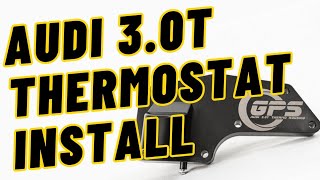
Typical fix: Replace the leaking component (thermostat, water pump) and the compromised ECT sensor and connector. Many owners upgrade to an aftermarket aluminum thermostat housing to prevent future failure. 🎬 See this walkthrough for replacing the thermostat
Est. part cost: $200-$500 for a thermostat and water pump kit.
Rare But Worth Checking
- Faulty Engine Control Module (ECM): → Shop Engine Control Module (ECM) This is extremely rare. Before condemning the ECM, all other possibilities, including the sensor, wiring, and connectors, must be exhaustively tested and ruled out.
Diagnosis Steps
- Connect an OBD-II scanner and confirm the presence of P0117.
- View live data from the Engine Coolant Temperature sensor (G62). If the engine is cold, the reading should be close to the ambient air temperature. If it reads 140°C or the maximum value, a circuit low fault is confirmed.
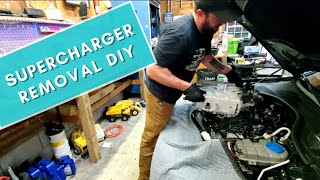
- Plan for supercharger removal. This is a required step to access the sensor and its wiring.
- Once the supercharger is removed, disconnect the ECT sensor connector. Inspect the connector and the sensor for damage, corrosion, or signs of coolant/oil contamination.
- Inspect the wiring harness leading to the sensor for any breaks, chafing, or signs of heat damage. Pay close attention to areas near the PCV valve which may be oil-soaked.
- If the wiring looks good, replace the ECT sensor. It is strongly advised to also replace the thermostat, water pump, PCV valve, and all related gaskets and seals at this time to prevent future failures that would require the same labor.
- If wiring damage is found, repair the harness and replace the connector if necessary.
- Reassemble all components, using new supercharger gaskets. Refill and bleed the cooling system according to the manufacturer's procedure.
- Clear the fault codes and perform a test drive to ensure the repair was successful.
Parts You'll Likely Need
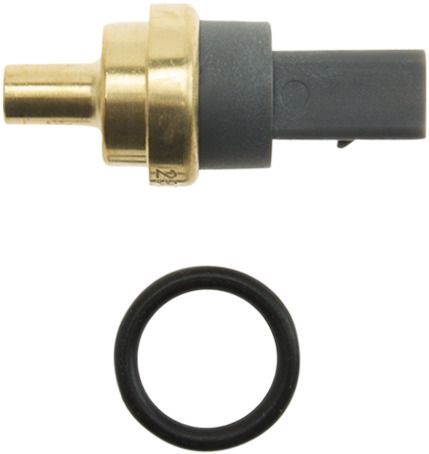
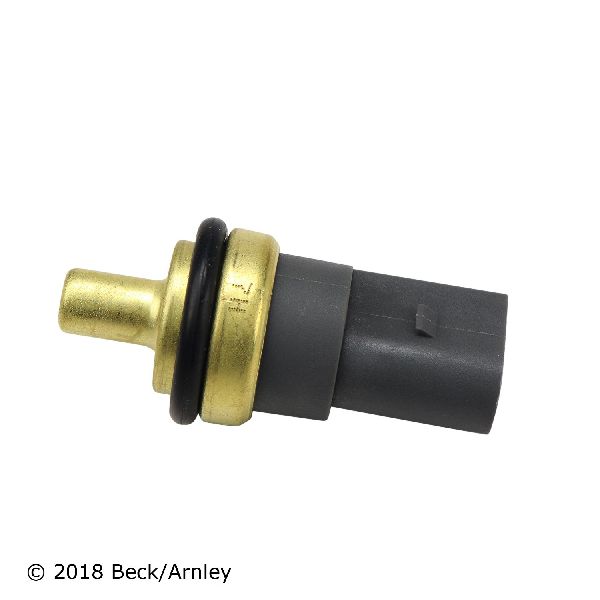
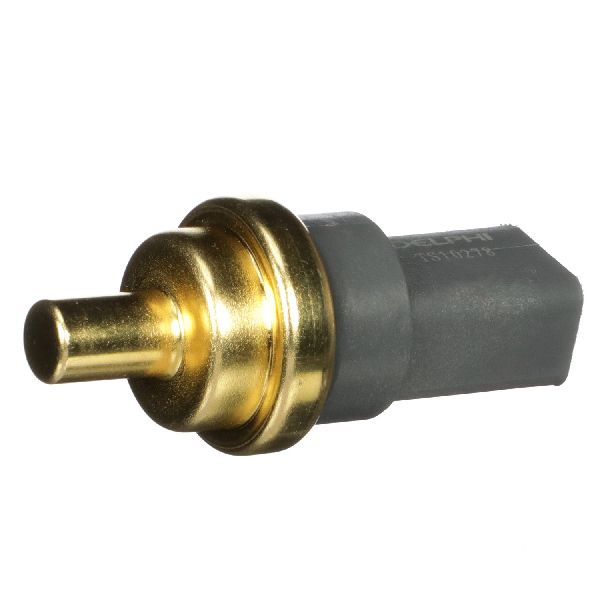
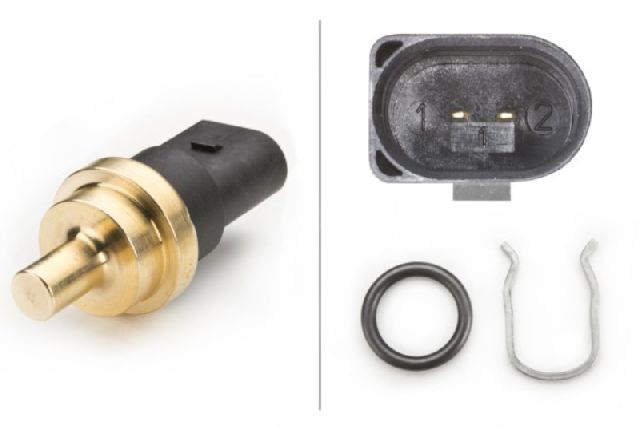
- Engine Coolant Temperature Sensor (G62)
(OEM #079919523J)— This is the component that has most likely failed internally, causing the circuit low fault.
Trusted brands: Bosch, Hella, Delphi, Vemo
OEM price range: $50-$100
Aftermarket price range: $25-$60 - Thermostat and Water Pump Kit
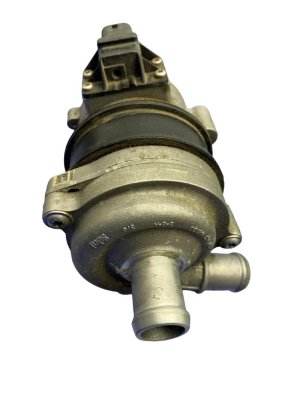
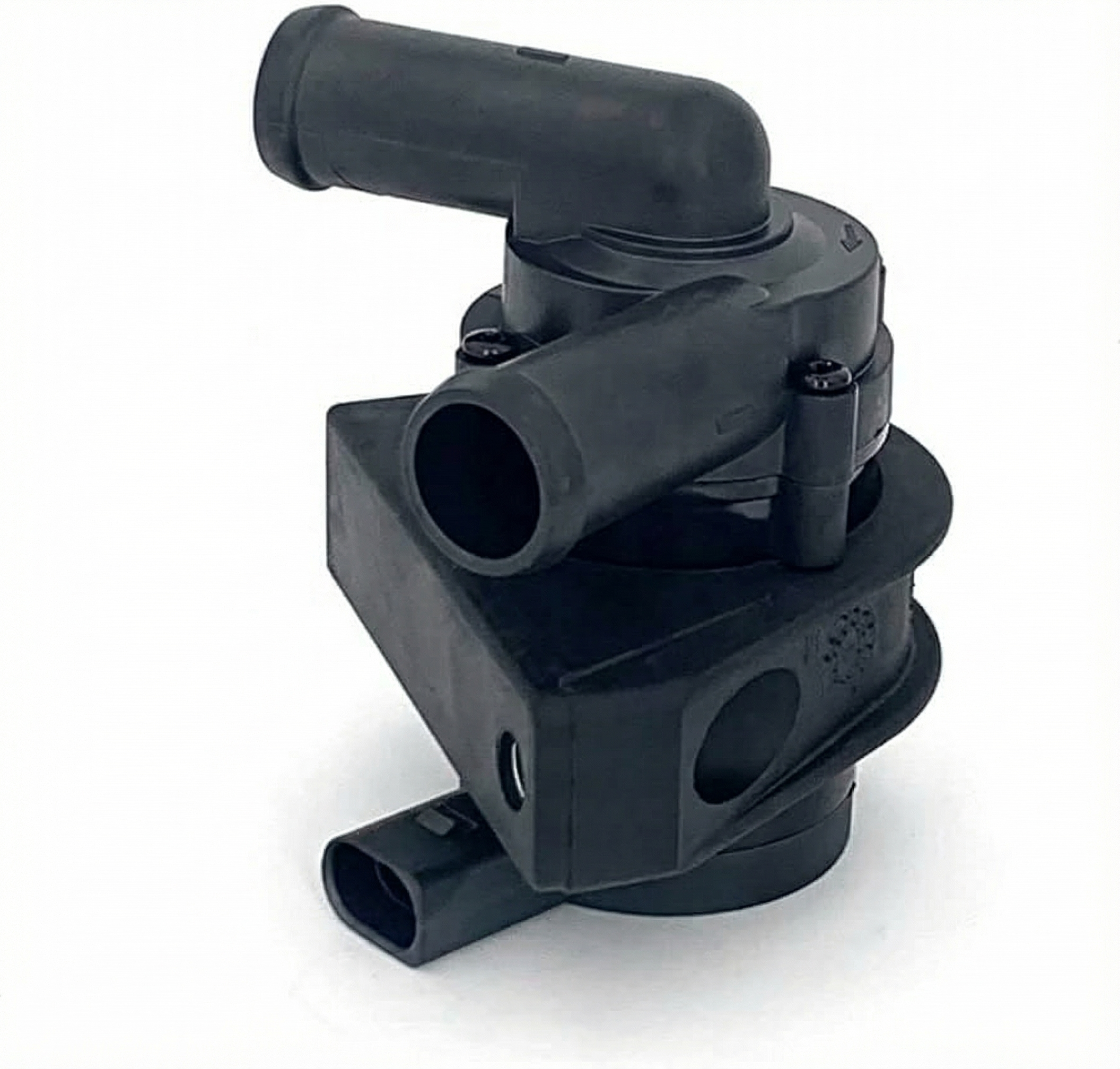
(OEM #06E121111AL (Thermostat))— Due to the extreme labor required to access this area, it is considered essential preventative maintenance to replace these common failure items at the same time as the ECT sensor.
Trusted brands: Graf, INA, Mahle
OEM price range: $400-$600
Aftermarket price range: $250-$450 - PCV Valve / Oil Separator
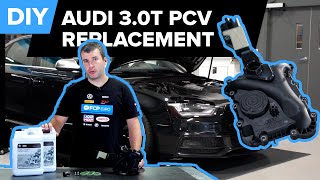
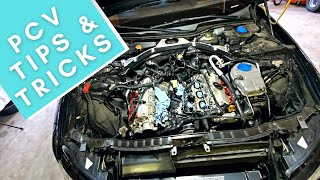
(OEM #06E103547Q)— Another extremely common failure item located under the supercharger. A failed PCV can cause oil leaks that damage wiring. It should be replaced during this service 🎬 Watch: Helpful tips for replacing the PCV valve as preventative maintenance.
Trusted brands: Audi Genuine, Vaico
OEM price range: $150-$250
Aftermarket price range: $80-$150 - Supercharger Gasket Kit — The supercharger must be removed for this repair, and its gaskets are single-use and must be replaced.
Trusted brands: Audi Genuine, Elring
OEM price range: $80-$150
Aftermarket price range: $50-$100
Related Codes That Often Appear With This One
- P0118 — This is the opposite fault ('Circuit High') for the same sensor. Seeing both can indicate an intermittent connection problem or wiring issue.
- P0128 — This code indicates the thermostat is stuck open or the engine is not reaching operating temperature. Since the thermostat is a common failure item on the 3.0T and is located next to the ECT sensor, these issues often arise together.
- P2181 — This code for 'Cooling System Performance' often points directly to a failing thermostat. It's very common to see this code appear before or alongside P0117, as the underlying component failures are in the same location.
Technical Service Bulletins (TSBs) & Recalls
- Audi TSB 2025278/7: Addresses issues with the MAP-controlled engine thermostat, a related component that is often replaced during a P0117 repair.
Mechanic-Grade Diagnostic Values
- Engine Coolant Temperature Sensor (G62) Resistance — expected: Approximately 2,000-3,000 Ohms at 20°C (68°F), decreasing to 275-375 Ohms at 80°C (176°F).. Failure: Near-zero resistance (short circuit), infinite resistance (open circuit), or values that do not correspond to the current coolant temperature indicate a failed sensor.
- G62 Sensor Connector Voltage (Key-On, Engine-Off) — expected: With the sensor disconnected, the reference voltage from the ECM should be ~5.0V. With the sensor connected, voltage should be ~2.5-3.5V on a cold engine, dropping to ~0.5-1.0V at full operating temperature.. Failure: A P0117 fault is triggered by a signal voltage that is too low (short to ground), which the ECM interprets as a temperature of ~140°C. A reading of 0V indicates a short to ground in the harness; a constant 5V indicates an open circuit.
- VCDS Live Data - Coolant Temperature Plausibility Check — expected: In VCDS, monitor Measuring Value Block (MVB) group 131 (Engine Outlet Temp - G62) and compare it to group 130 (Radiator Outlet Temp - G83). On a cold-soaked engine, they should be nearly identical to each other and to the Intake Air Temp.. Failure: If the G62 reading is pegged at 140°C while the G83 and IAT sensors show ambient temperature, the G62 sensor or its circuit is confirmed to be at fault.
Hidden / Shadow Codes Worth Checking
- 16501: This is the VAG-specific fault code equivalent to the generic OBD-II code P0117. It means 'Engine Coolant Temperature Sensor (G62): Signal too Low'. (see via This code is displayed by VAG-specific diagnostic tools like VCDS (VAG-COM) or ODIS.)
Scan Tool Commands That Help
- VCDS (VAG-COM) or ODIS: Read Measuring Value Block (MVB) - Group 004 — To observe the live coolant temperature reading as seen by the Engine Control Module. A technician would watch this block while starting a cold engine to see if the value is plausible or if it immediately jumps to a maximum reading, confirming the fault.
- VCDS (VAG-COM) or ODIS: Advanced Measuring Blocks - Compare G62 and G83 — To perform a plausibility check between the main engine outlet temperature sensor (G62) and the radiator outlet temperature sensor (G83). This helps definitively isolate the fault to the G62 circuit when its reading is irrational compared to other temperature sensors on the vehicle.
Wiring & Ground Locations
- Engine Block Ground — On the right side of the engine compartment, near the alternator.. A poor main engine ground can cause floating or incorrect readings from multiple sensors, including the ECT sensor. While not a common cause for an isolated P0117, it's a fundamental check for any electrical fault.
- 306 (Ground Connection) — This is an earth connection point specifically for the ignition coils, located within the engine pre-wiring harness.. While primarily for ignition, issues within this shared engine harness could potentially affect other sensor grounds or signals that are routed nearby. It indicates a specific, documented ground point within the engine harness itself.
- G62 Sensor Connector — On the thermostat housing, located in the 'V' of the engine, underneath the supercharger. It is a 2-pin connector.. This is the direct connection point for the failing component. Damage here from heat, oil, or leaking coolant is a primary cause of the fault. The pins must be inspected for corrosion or for having backed out of the housing.
Real Owner Repair Stories
- YouTube user 'Fixing cars and stuff' (Volkswagen with 2.0T engine (similar wiring principles)) — P0118 code (Circuit High), temperature gauge not working.
❌ Tried (didn't work) Initial diagnosis was confusing as the fault persisted.
✅ What actually fixed it The root cause was not a failed sensor, but a wire that had backed out of the sensor's electrical connector housing. The fix was to push the pin back into place until it clicked and secure the back of the connector with epoxy to prevent it from backing out again.
When the Usual Fixes Don't Work
- While a failed ECT sensor (G62) is the overwhelming cause of P0117, the actual root cause is not always the sensor's internal failure. In cases where a new sensor does not fix the issue, the problem is almost certainly in the wiring or connector. A common scenario is a pin backing out of the connector housing, creating a fault that mimics a bad sensor. Another possibility is a short-to-ground caused by coolant or oil saturating the connector from a nearby leak (thermostat housing or PCV valve). In these instances, replacing the sensor without repairing the wiring or stopping the leak will result in the fault returning.
OEM Part Supersession History
079919523B→079919523J— Revision to improve reliability or manufacturing.Older PCV/Oil Separator (pre-2012)→06E103547Q (and later revisions)— Early PCV valves used a higher pressure regulation valve and were more prone to failure, leading to oil consumption and leaks in the engine valley that could damage sensor wiring.
Model Year Variations Within This Range
- 2016-2018: These facelift models (C7.5) use the 'CREC' engine code. A key difference is the addition of a dual injection system (direct and port injection) and a supercharger with a 4-bolt pulley, unlike the press-on pulley of earlier 3.0T engines. While the P0117 fault is the same, some parts like the thermostat housing may have different part numbers for Gen 1 vs. Gen 2 (CREC) engines.
- 2012-2015: These pre-facelift models (C7) use engine codes like CGXB. They feature a press-on supercharger pulley and direct injection only. They are more prone to issues with the original-design PCV valve and thermostat.
Diagnostic Flowchart
Other Known Issues on This Vehicle
Issues unrelated to this code that are worth knowing about as an owner of this generation:
- Premature Water Pump & Thermostat Failure 🔴 High → Shop Integrated Thermostat Housing Assembly — Common between 60,000-100,000 miles. The original plastic components become brittle and crack, leading to coolant leaks in the engine valley. This issue is so widespread that class action lawsuits have been filed. (Ref: Audi TSB 2025278/7 addresses thermostat faults, but no recall has been issued for the water pump itself.)
- PCV Valve Failure 🔴 High — Very common, often occurring around 50,000-80,000 miles. The diaphragm inside the PCV (oil separator) tears, causing a large vacuum leak. Symptoms include a loud whistling noise from the engine, high idle, and excessive oil consumption.
- Upper Timing Chain Tensioner Wear 🔴 High — Becomes a concern on higher-mileage engines (typically over 100,000 miles). The primary symptom is a metallic rattle from the back of the engine for 1-2 seconds on a cold start. If ignored, it can lead to jumped timing and catastrophic engine failure.
- Carbon Buildup on Intake Valves 🟠 Medium — A consequence of the direct injection design, typically requiring cleaning every 60,000-80,000 miles. Symptoms include a gradual loss of power, rough idle, and potential misfires as airflow into the cylinders is restricted.
- Supercharger Clutch/Isolator Issues 🟡 Low — Less common, but can occur at higher mileage. May present as a rattling or grinding noise from the front of the supercharger or a lack of boost under acceleration.
Used vs. New Parts: Buying Guide for This Vehicle
When a used part is the smart pick: For this specific repair, buying used parts is generally not recommended as the primary failure components (sensor, thermostat, water pump, PCV) are all wear-and-tear items. The only exception might be major structural parts like the supercharger housing itself if it were damaged during the repair, but this is highly unlikely.
Donor-vehicle mileage cap: roughly under 70000 miles for the part to have meaningful remaining life.
What to inspect on the donor part:
- Verify the donor vehicle was not in a front-end collision.
- Look for service history indicating recent replacement of cooling system components.
- Avoid parts from vehicles with signs of major oil or coolant leaks in the engine bay.
OEM-only on this vehicle (don't cheap out):
- Engine Coolant Temperature Sensor (G62): For critical electronic sensors, OEM or a documented OE-supplier (e.g., Bosch, Hella, Vemo) is strongly advised to ensure accurate readings and longevity.
- PCV Valve / Oil Separator: Given the extreme labor cost to access this part, using a genuine Audi part is the safest bet to avoid a premature failure and a repeat of the entire job.
Aftermarket brands forum-validated for this vehicle:
- Thermostat Housing: Upgrading the failure-prone OEM plastic housing to a billet aluminum version from brands like ECS Tuning or German Performance Solutions is a highly recommended and popular modification.
Brands owners have reported issues with on this vehicle:
- Unnamed or 'white-box' electronic sensors. The potential for inaccurate readings or early failure is not worth the small cost savings compared to the labor involved.
Real Owner Stories
Aggregated from forums and TSBs cited above. Mileages and costs reflect what owners reported in those sources.
2012-2018 Audi A6 3.0T Supercharged V6
Symptoms: Loud fans running constantly and the AC cutting out.
What fixed it: Performed a DIY repair involving supercharger removal to replace the thermostat and related cooling components.
Cost: $1,000-$1,500
Source hint: AudiWorld Forums
2019 Audi Q7 3.0T (EA837 engine family)
Symptoms: Failed PCV valve requiring replacement of components located under the supercharger.
What fixed it: Replacement of the PCV valve (oil separator).
Cost: $3,400-$3,400
Source hint: Reddit r/Audi
Related OBD-II Codes
Frequently Asked Questions
Why does my 2012-2018 Audi A6 3.0T temperature gauge jump to maximum immediately on a cold start?
Does Audi TSB 2025278/7 apply to my P0117 repair?
Can I replace the G62 coolant sensor on my A6 3.0T without removing the supercharger?
Why did my AC stop working at the same time the Check Engine Light came on for P0117?
Is there a recommended 'while you are in there' list for this repair?
Could an oil leak from my PCV valve cause the P0117 code?
Helpful Videos
Used OEM Parts in Stock
New Aftermarket Parts Available


The information in this article is provided for general reference and educational purposes only. Vehicle specifications, procedures, and part compatibility can vary by production date, trim level, and region. Always consult your vehicle's factory service manual and verify part numbers before purchasing or performing repairs. Safety-critical components such as airbags, seat belts, and braking systems should be installed by a qualified professional.
- Audi A6:
- 🧭 Diagnostic Flowchart
- 🎬 Helpful Videos
- 🛍️ Shop This Part
- What's Unique About the 2012-2018 Audi A6
- Symptoms You May Notice
- Most Likely Causes
- Rare But Worth Checking
- Diagnosis Steps
- Parts You'll Likely Need
- Related Codes That Often Appear With This One
- Technical Service Bulletins (TSBs) & Recalls
- Mechanic-Grade Diagnostic Values
- Hidden / Shadow Codes Worth Checking
- Scan Tool Commands That Help
- Wiring & Ground Locations
- Real Owner Repair Stories
- When the Usual Fixes Don't Work
- OEM Part Supersession History
- Model Year Variations Within This Range
- Other Known Issues on This Vehicle
- Used vs. New Parts: Buying Guide for This Vehicle
- Real Owner Stories
- 2012-2018 Audi A6 3.0T Supercharged V6
- 2019 Audi Q7 3.0T (EA837 engine family)
- Related OBD-II Codes
- Frequently Asked Questions
- 🎟️ Get 5% Off