

P0117 on 2012-2018 Audi A7 3.0T: Engine Coolant Temperature Sensor Circuit Low Causes and Fixes
On the Audi A7 3.0T, code P0117 is almost always caused by a failed Engine Coolant Temperature (ECT) sensor. However, the primary sensor (G62) is located under the supercharger, making replacement a labor-intensive and costly job. Expect high labor costs (3-5 hours) if this is the failed sensor. Due to the required labor, it is highly recommended to also replace the thermostat, water pump, and PCV valve at the same time.
- P0117 on an Audi A7 3.0T indicates a 'Circuit Low' fault, most commonly from the primary ECT sensor (G62).
- The biggest issue with this repair is that the G62 sensor is located under the supercharger, making it a very labor-intensive job (3-5 hours).
- Symptoms include a Check Engine Light, fans running constantly, and an inaccurate temperature gauge (often pegged at maximum).
- Do not confuse the primary G62 sensor with the more accessible G83 sensor on the radiator hose; replacing the wrong one will not fix the code.
- Due to the complexity of removing the supercharger, this repair is not recommended for novice DIY mechanics.
What's Unique About the 2012-2018 Audi A7
The key challenge for this code on the Audi A7 3.0T (and its platform mates) is not the diagnosis, but the repair. The engine uses multiple temperature sensors, and the primary one that triggers P0117 (referred to as G62) is located on a coolant crossover pipe in the engine valley, underneath the supercharger. This makes what would be a simple repair on many cars a significant, labor-intensive job requiring the removal of the supercharger assembly. Because of the extensive labor, owners and mechanics strongly advise replacing other common failure items located in the same area, such as the thermostat, water pump, and PCV valve, to avoid redundant future repairs.
Symptoms You May Notice
- Check Engine Light is on
- Inaccurate temperature gauge (may show max temperature immediately after a cold start)
- Cooling fans running constantly at high speed
- Difficulty starting the engine, especially when cold
- Rough or irregular idle
- Poor fuel economy
- Black smoke from the exhaust due to a rich fuel mixture
- Engine overheating
- A/C may stop working as the system tries to reduce engine load.
- Replacing the thermostat. While a faulty thermostat can cause overheating or slow warm-up (P0128), it will not directly cause a P0117 'Circuit Low' code, which is an electrical fault. However, it is often replaced at the same time due to its location.
- Replacing the wrong temperature sensor. The 3.0T engine has at least two ECT sensors. The G83 sensor at the radiator outlet is easy to access, but P0117 almost always refers to the G62 sensor under the supercharger. Replacing the G83 will not fix a G62 fault.
Most Likely Causes
- Failed Engine Coolant Temperature (ECT) Sensor (G62) 🔴 High Probability → Shop Engine Coolant Temperature Sensor The primary ECT sensor is a common failure point across many VW/Audi vehicles. On the 3.0T engine, its location under the supercharger exposes it to extreme heat cycles, but the main issue is the labor required for replacement.
How to confirm: Use a scan tool to monitor live data for the ECT sensor (G62). If it reads an impossibly high temperature (e.g., 250°F+ or 140°C+) immediately on a cold start, the sensor or its circuit is faulty. The reading should be close to ambient air temperature on a cold engine.
Typical fix: Replace the Engine Coolant Temperature sensor (G62). Due to its location under the supercharger, this is a labor-intensive job. The supercharger, intake manifolds, and fuel lines must be removed. It is strongly recommended to replace the thermostat, water pump, PCV valve, and supercharger gaskets at the same time.
Est. part cost: $25-$75 - Damaged Wiring or Connector 🟡 Medium Probability Wiring in the engine valley is exposed to high heat from the engine and supercharger, which can make it brittle and prone to cracking or melting over time, leading to a short to ground.
How to confirm: Visually inspect the wiring harness leading to the ECT sensor for any signs of melting, chafing, or corrosion. This is difficult without removing the supercharger. Test for a short to ground in the signal wire using a multimeter. If the P0117 code is present even with the sensor unplugged, a short in the harness is likely.
Typical fix: Repair the damaged section of the wiring harness or replace the connector pigtail. This repair still requires removing the supercharger to gain access.
Est. part cost: $15-$50 - Failed Radiator Outlet Coolant Temperature Sensor (G83) ⚪ Low Probability → Shop Engine Coolant Temperature Sensor This vehicle uses multiple temperature sensors. While P0117 almost always points to the primary G62 sensor, a fault in another sensor circuit is theoretically possible. However, a G83 failure typically sets its own specific code, such as P1290.
How to confirm: A professional-grade scan tool is needed to read data from specific sensors. The G83 sensor is located on the lower radiator hose and is much easier to access and test. If the G83 reads logically and P0117 is present, the fault lies with the G62 circuit.
Typical fix: Replace the G83 sensor, its O-ring, and retaining clip. This is a much simpler repair than the G62 sensor.
Est. part cost: $20-$60
Rare But Worth Checking
- Faulty Engine Control Module (ECM): → Shop Engine Control Module (ECM) This is extremely rare. The ECM should only be considered after all other possibilities, including the sensor and wiring, have been exhaustively tested and ruled out.
Diagnosis Steps
- Connect an OBD-II scanner and confirm P0117 is the active code. Note any other codes.
- Using the scanner's live data function, observe the 'Engine Coolant Temperature' reading on a cold engine. If it reads a very high, fixed value (e.g., 250°F / 120°C or higher) instantly, the sensor or its circuit is shorted.
- If possible with your scan tool, check readings for both G62 (Engine Coolant Temperature) and G83 (Radiator Outlet Temperature) sensors to confirm the fault is with the G62 circuit.
- Due to the G62 sensor's location under the supercharger, a visual inspection of its wiring is difficult and requires significant disassembly.
- Inspect the wiring and connector for the more accessible G83 sensor (at the radiator outlet) for any obvious damage as a preliminary check.
- If live data conclusively points to a short in the G62 circuit, the next step is to begin disassembly to access the sensor. This involves removing the supercharger.
- Once accessed, disconnect the sensor. With the key on, the scan tool reading should change to an extremely low temperature (e.g., -40°F/C), and a P0118 (Circuit High) code may set. This indicates the wiring from the connector to the ECM is likely intact and the original sensor was faulty.
- If the code remains P0117 even with the sensor disconnected, there is a short to ground in the wiring harness between the sensor and the ECM. The harness must be inspected and repaired.
- If the circuit tests good, replace the ECT sensor (G62). Given the labor involved, it is standard practice to also replace the thermostat, water pump, and PCV valve at this time.
Parts You'll Likely Need
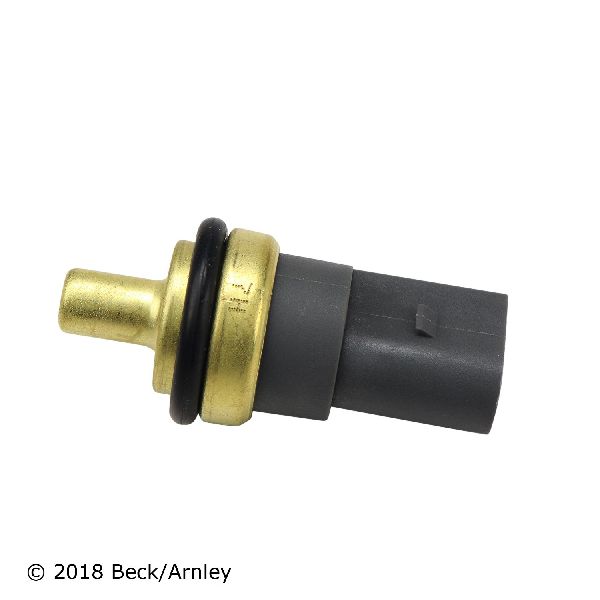
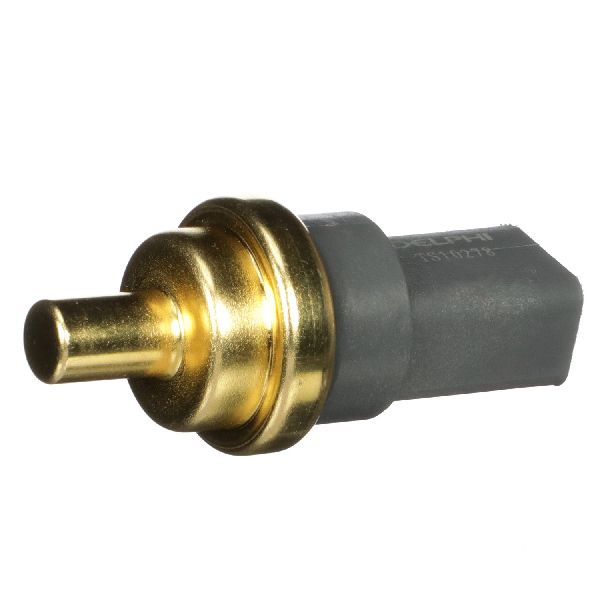
- Engine Coolant Temperature Sensor (G62)
(OEM #06A919501A)— This is the most common failure part for code P0117. It is the primary 2-pin sensor that provides the temperature reading to the ECU for engine management.
Trusted brands: Audi (OEM), Bosch, Hella, Delphi
OEM price range: $40-$70
Aftermarket price range: $25-$50 - Supercharger Gasket Kit
(OEM #06E198012B)— These gaskets and seals are single-use and must be replaced when the supercharger is removed to access the ECT sensor. Kits are available that include all necessary seals.
Trusted brands: Audi (OEM), Elring, Victor Reinz
OEM price range: $60-$100
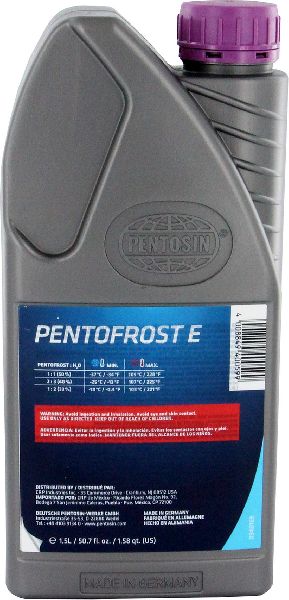
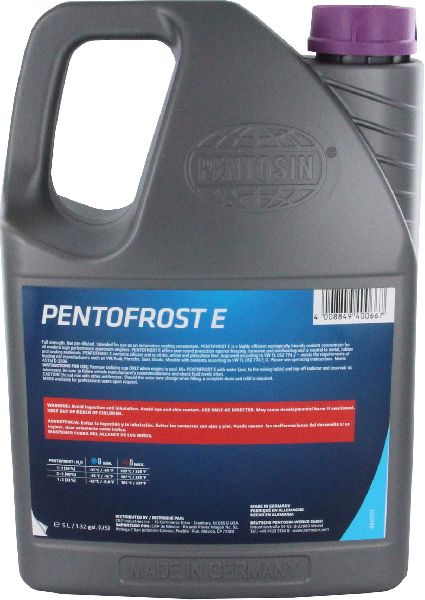
Aftermarket price range: $40-$70 - Engine Coolant — The cooling system will need to be drained and refilled. Use only Audi-specified G12++, G13, or newer G12evo coolant, mixed 50/50 with distilled water.
Trusted brands: Audi (OEM), Pentosin
OEM price range: $25-$40 per gallon
Aftermarket price range: $20-$35 per gallon - Thermostat, Water Pump, PCV Valve — 'While you're in there' parts. These are common failure items also located under the supercharger. Replacing them during this job saves significant future labor costs.
Trusted brands: Audi (OEM)
OEM price range: $400-$700 (for all three)
Aftermarket price range: $250-$500 (for all three)
Related Codes That Often Appear With This One
- P0118 — P0118 (ECT Circuit High) is the opposite code for an open circuit. If you disconnect the sensor to test it, you may trigger a P0118, which can help confirm the rest of the circuit is likely okay.
- P0128 — P0128 (Coolant Thermostat - Coolant Temperature Below Thermostat Regulating Temperature) can appear if the thermostat is stuck open. The G62 sensor is often replaced preventatively during a P0128 repair job because the labor overlaps completely.
- P2181 — This code for 'Cooling System Performance' is a more general code that can be triggered by a faulty thermostat or sensor, often appearing alongside P0128.
Platform-Specific Known Issues
- The 'while you're in there' philosophy is critical for this job. Forum users on AudiWorld and Audizine consistently advise that any repair requiring supercharger removal should include replacement of the thermostat, water pump, PCV valve, and the G62 sensor to prevent repeated, costly labor.
- Early (2010-2012) 3.0T engines had more frequent issues with plastic water pumps and thermostats, making their replacement even more critical if the supercharger is off for any reason.
Mechanic-Grade Diagnostic Values
- G62 ECT Sensor Resistance (cold) — expected: 2,000 - 3,000 Ω at 20°C (68°F).. Failure: A reading of near-zero ohms indicates a short, while infinite resistance indicates an open circuit.
- G62 ECT Sensor Resistance (hot) — expected: 275 - 375 Ω at 80°C (176°F).. Failure: Resistance not decreasing significantly as the sensor is heated indicates a faulty thermistor.
- G62 ECT Sensor Signal Wire Voltage (KOEO, sensor unplugged) — expected: ~5.0 Volts reference from ECU.. Failure: 0V on the signal wire suggests a short to ground in the harness or a faulty ECU driver. No voltage on the supply wire points to a harness or ECU power issue.
- G62 ECT Sensor Signal Wire Voltage (KOEO, sensor plugged in, cold engine) — expected: ~2.5 - 3.5 Volts.. Failure: A voltage near 0V indicates a short circuit, which triggers P0117.
- Wiring harness continuity from G62 connector to ECM connector — expected: Max 1.5 Ω.. Failure: Resistance higher than 1.5 Ω indicates corrosion or a partial break in the wire, requiring harness repair.
Hidden / Shadow Codes Worth Checking
- 16501: Ross-Tech VCDS / VAG-COM equivalent code for P0117, 'Engine Coolant Temperature Sensor (G62): Signal too Low'. (see via Audi/VW-specific diagnostic tools like VCDS or ODIS.)
- 00522: A VAG-specific code for 'Engine Coolant Temp. Sensor (G62): Break in wiring / short circuit to positive'. While P0117 is short to ground (low), this related code may appear during testing. (see via Audi/VW-specific diagnostic tools like VCDS or ODIS.)
Scan Tool Commands That Help
- VCDS (VAG-COM): Engine-01 -> Measuring Blocks -> Group 004 — To view basic engine data, including the primary coolant temperature reading from G62 in display zone 3.
- VCDS (VAG-COM): Engine-01 -> Adv. Measuring Values -> Select G62 and G83 — To simultaneously graph or log the engine outlet temperature (G62) and radiator outlet temperature (G83). On a cold start, G62 should rise steadily while G83 stays at ambient temperature until the thermostat opens.
- VCDS (VAG-COM): Engine-01 -> Measuring Blocks -> Groups 130-136 — To observe detailed, independent temperature readings for 'engine outlet' vs 'radiator outlet', which correspond to the G62 and G83 sensors. This helps confirm which sensor circuit is faulty.
Wiring & Ground Locations
- J623 (Engine Control Module) — Located in the electronics box in the engine compartment's plenum chamber, on the left (driver's) side.. This is the destination for the G62 sensor's wiring. Testing for continuity or shorts must be done between the sensor connector and the pins on this module.
- G62 Sensor Pins at ECM — On the C7 platform, the G62 sensor wires connect to the 56-pin connector T56c at the J623 ECM. Pin 11 is the signal (SIG) and Pin 15 is the ground (GND).. Knowing these exact pin locations is essential for definitively testing the wiring harness for shorts or open circuits, ruling out the harness as the cause of P0117.
- Engine Block Ground Strap — A primary ground strap connects the engine block to the chassis frame rail, often on the right (passenger) side of the engine compartment near the alternator or engine mount.. While not a primary cause, a corroded or loose main engine ground can create a poor ground path for multiple sensors, including the G62, leading to erratic or incorrect voltage readings.
Real Owner Repair Stories
- Reddit user on r/Audi (2018 Audi A6 3.0T (CREC Engine)) — Leaking water pump.
❌ Tried (didn't work) N/A, pre-repair diagnosis.
✅ What actually fixed it The owner's shop noted that on the CREC engine (2016+), the water pump can be replaced without removing the supercharger. However, the thermostat and PCV valve still require supercharger removal. The shop recommended only replacing the water pump for now and waiting for the thermostat or PCV to fail before undertaking the larger job. This highlights a key model-year difference in repair strategy. - AudiWorld Forums (adapted from a similar engine) (2014 Audi A4 1.8T) — P0117 code would not clear, fans running constantly, temperature gauge not moving.
❌ Tried (didn't work) Replaced the temperature sensor at the radiator (G83)., Replaced the thermostat housing., Replaced the coolant expansion tank.
✅ What actually fixed it The thread resolution was inconclusive, but a master technician pointed out two critical diagnostic errors: 1) The user replaced the wrong sensor (G83 instead of G62). 2) The scan log showed a system voltage of 10.2V. Such low voltage can cause numerous, unpredictable electronic faults. The final advice was to fix the voltage problem first before chasing sensor issues. This serves as a crucial reminder to always check the basics like battery health and alternator output before diagnosing specific sensor circuits.
OEM Part Supersession History
06E121111P (and others like AD)→06E121111AL (or newer)— The Thermostat Assembly has been revised multiple times to improve the durability of its plastic housing and reduce the likelihood of it sticking open or closed.
Heads up: Always use the latest available revision. Older versions are known to be failure-prone.06E103547C, F, Q, S, H, AC→06E103547AH (or newer)— The PCV (Crankcase Vent / Oil Separator) assembly has undergone numerous revisions to improve durability, preventing torn diaphragms (causing vacuum leaks and whistling) and cracked plastic housings (causing coolant leaks).
Heads up: It is critical to use the latest available OEM part number for this component to ensure longevity. Aftermarket versions are not recommended due to high failure rates.
Model Year Variations Within This Range
- 2016-2018 (C7.5 facelift with CREC engine): On the updated CREC 3.0T engine, the water pump is externally driven by the accessory belt and can be replaced without removing the supercharger. This is a major labor savings compared to earlier engines. However, the G62 sensor (which causes P0117), thermostat, and PCV valve are all still located under the supercharger, meaning the repair for P0117 remains a high-labor job across all model years.
Diagnostic Flowchart
Other Known Issues on This Vehicle
Issues unrelated to this code that are worth knowing about as an owner of this generation:
- PCV Valve / Oil Separator Failure 🔴 High — Common around 60,000-100,000 miles. Can cause high oil consumption, rough idle, and a whistling noise.
- Thermostat & Water Pump Failure 🔴 High → Shop Integrated Thermostat Housing Assembly — Very common failure item, especially on pre-2013 models with plastic components. Can cause overheating or engine running too cool. Often fails between 60,000-80,000 miles. (Ref: Some early models had service actions/bulletins related to thermostat updates.)
- Timing Chain Tensioner Wear 🔴 High — Less common than other issues but extremely expensive to fix. Characterized by a 'death rattle' from the back of the engine on cold starts. Typically a concern over 100,000 miles. Repair is an engine-out service.
- Carbon Buildup on Intake Valves 🟠 Medium — A consequence of all direct-injection engines. Performance degradation becomes noticeable around 80,000-100,000 miles, requiring manual cleaning (walnut blasting).
- Upper Timing Chain Cover Oil Leaks 🟡 Low — Gaskets on the upper timing covers at the rear of the engine can leak oil over time. It's a less critical leak but can be messy and requires some labor to reseal.
Used vs. New Parts: Buying Guide for This Vehicle
When a used part is the smart pick: For this specific repair, using used parts is strongly discouraged. The primary failed part (ECT sensor) is inexpensive, and the associated 'while you're in there' parts (water pump, thermostat, PCV) are common failure items. The extremely high labor cost to access these components means that the risk of a used part failing prematurely far outweighs any initial cost savings.
What to inspect on the donor part:
- Not applicable; do not use used parts for this repair.
OEM-only on this vehicle (don't cheap out):
- PCV Valve / Oil Separator: Aftermarket versions are known for high and rapid failure rates. Use only Genuine Audi parts with the latest part number revision.
- Thermostat Assembly: Due to the plastic construction and critical function, OEM is highly recommended to avoid premature failure and a repeat of the 5+ hour labor job.
- Water Pump: While some quality aftermarket options exist, the risk associated with the high labor cost makes OEM the safest choice.
Aftermarket brands forum-validated for this vehicle:
- ECT Sensor (G62): Bosch, Hella, Delphi (often the original OEM supplier)
- Supercharger Gaskets: Elring, Victor Reinz
Brands owners have reported issues with on this vehicle:
- Unbranded or 'white-box' electronic sensors from online marketplaces.
- Any aftermarket PCV valve assembly for this engine.
Real Owner Stories
Aggregated from forums and TSBs cited above. Mileages and costs reflect what owners reported in those sources.
2013 Audi A7 3.0T — 32000 miles
Symptoms: The owner needed to replace a failed PCV valve and noted that the thermostat is a common failure point that should be addressed during the disassembly.
What fixed it: Replacement of the PCV valve and thermostat while the supercharger was removed.
Source hint: BobIsTheOilGuy: '2013 Audi A7 3.0T PCV replacement *pics*'
2014 Audi A6 3.0T — 65000 miles
Symptoms: Loud cooling fans running and the A/C cutting out to reduce engine load.
What fixed it: Thermostat replacement (often performed alongside the G62 sensor due to shared labor).
Source hint: AudiWorld Forums: 'Warning: 3.0T Thermostat'
Related OBD-II Codes
Frequently Asked Questions
Why are my cooling fans running at high speed even though I just started my 2012 Audi A7?
Can I just replace the G62 sensor myself on the 3.0T Supercharged V6?
What other parts should I replace while fixing the P0117 code on my A7?
Is there a difference between the G62 and G83 sensors on my Audi?
Why is my A7 having trouble starting when the engine is cold?
Are early 2012 Audi A7 models more prone to these cooling issues?
Helpful Videos

Used OEM Parts in Stock
New Aftermarket Parts Available


The information in this article is provided for general reference and educational purposes only. Vehicle specifications, procedures, and part compatibility can vary by production date, trim level, and region. Always consult your vehicle's factory service manual and verify part numbers before purchasing or performing repairs. Safety-critical components such as airbags, seat belts, and braking systems should be installed by a qualified professional.
- Audi A7:
- 🧭 Diagnostic Flowchart
- 🎬 Helpful Videos
- 🛍️ Shop This Part
- What's Unique About the 2012-2018 Audi A7
- Symptoms You May Notice
- Most Likely Causes
- Rare But Worth Checking
- Diagnosis Steps
- Parts You'll Likely Need
- Related Codes That Often Appear With This One
- Platform-Specific Known Issues
- Mechanic-Grade Diagnostic Values
- Hidden / Shadow Codes Worth Checking
- Scan Tool Commands That Help
- Wiring & Ground Locations
- Real Owner Repair Stories
- OEM Part Supersession History
- Model Year Variations Within This Range
- Other Known Issues on This Vehicle
- Used vs. New Parts: Buying Guide for This Vehicle
- Real Owner Stories
- 2013 Audi A7 3.0T — 32000 miles
- 2014 Audi A6 3.0T — 65000 miles
- Related OBD-II Codes
- Frequently Asked Questions
- 🎟️ Get 5% Off