

P0117 on 2012-2020 Chevrolet Sonic: Engine Coolant Sensor Circuit Low Causes and Fixes
P0117 on a Chevy Sonic almost always means the primary Engine Coolant Temperature (ECT) sensor has failed. The ECU thinks the engine is severely overheating, causing fans to run constantly and the temperature gauge to max out. Replacing the sensor, which costs about $20-$50 for the part, is the most common fix. This is a well-documented issue on both the 1.4L and 1.8L engines.
- P0117 on your Sonic is almost certainly a bad engine coolant temperature sensor (ECT Sensor 1).
- Symptoms are dramatic: fans running constantly and a maxed-out temperature gauge are common.
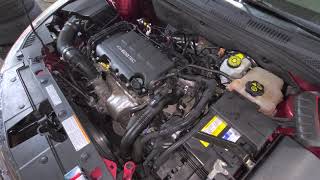
- The repair is straightforward for a DIYer with basic tools. The sensor is held in by a clip and is located on the thermostat housing on the driver's side of the engine.
- Be careful to buy the correct sensor; there is a second sensor on the radiator that is often confused but does not cause this code.
- While you're working in the area, inspect the plastic thermostat housing for any signs of hairline cracks or coolant leaks, as this is a very common failure point on the Sonic.
What's Unique About the 2012-2020 Chevrolet Sonic
The Chevrolet Sonic, like its platform-mates the Cruze and Trax, is known for having brittle plastic cooling system components that fail with age and heat cycles. While P0117 is an electrical code for the sensor itself, the sensor is located in the plastic thermostat housing which is a very common failure point for cracks and leaks on both the 1.4L and 1.8L engines. This often leads to mechanics replacing the entire thermostat housing assembly, which includes a new sensor, to prevent a future leak. Many owners opt for upgraded aluminum thermostat housings from brands like Dorman or Mishimoto to prevent repeat failures of the plastic part. Be aware that there are two coolant temperature sensors on many Sonics: one on the engine/thermostat housing (Sensor 1, which causes P0117) and one on the radiator (Sensor 2).
Symptoms You May Notice
- Check Engine Light is on
- Cooling fans run constantly at high speed, even when the engine is cold
- Temperature gauge is maxed out or reads erratically, sometimes immediately after startup
- "Engine Hot, A/C Off" message appears on the driver information center
- Poor fuel economy
- Rough or hesitant idle
- Difficulty starting the engine, especially when cold
- Black smoke from the exhaust on startup (due to a rich fuel mixture)
- Replacing the thermostat. A thermostat stuck open or closed will cause actual cooling problems and usually sets code P0128, not P0117.
- Replacing the radiator coolant temperature sensor. Many Sonics have a second sensor on the radiator outlet. P0117 specifically refers to Sensor 1, which is on the engine/thermostat housing.
Most Likely Causes
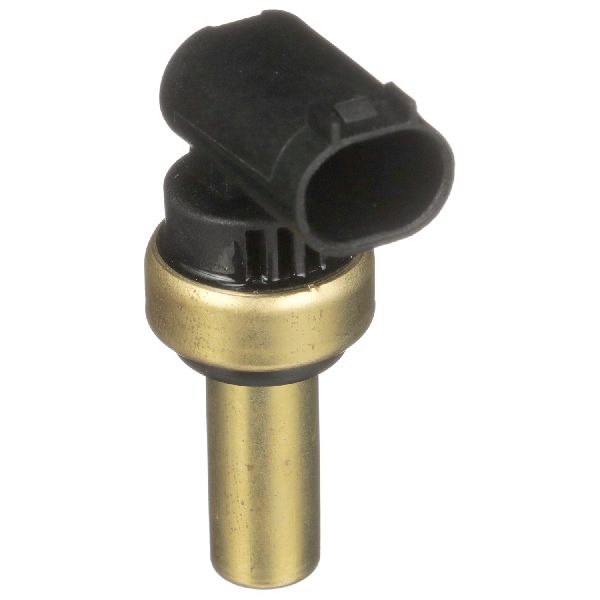
- Failed Engine Coolant Temperature (ECT) Sensor 🔴 High Probability → Shop Engine Coolant Temperature Sensor The sensor is a very common failure item. It is a thermistor that shorts internally, causing the low voltage reading. Its location in the plastic thermostat housing subjects it to constant, high-temperature fluctuations that can degrade the sensor and its integrated seal over time.
How to confirm: Use an OBD-II scanner to view live data. If the coolant temperature reads an impossibly high value (e.g., 284°F) or a default low value (e.g., -40°F) immediately after a cold start, the sensor is bad. Unplugging the sensor should force the reading to -40°F; if this happens, it confirms the wiring to the ECM is likely okay and the sensor itself is the culprit.
Typical fix: Replace the ECT sensor. It is held into the thermostat housing by a small clip. Some coolant will be lost during the swap. This is a common DIY repair. 🎬 Watch this step-by-step ECT sensor replacement walkthrough
Est. part cost: $20-$50 - Damaged Wiring or Connector 🟡 Medium Probability The engine bay is a harsh environment. Wires can become brittle and crack, or the connector pins can corrode. A short to ground on the signal wire will cause the voltage to drop to zero, triggering P0117. In some Chevrolet vehicles, P0117 can appear alongside communication codes like U0073 or U0100 if there is a broader electrical or harness issue, as noted in Bulletin #PIT5713A.
How to confirm: Visually inspect the wiring harness and pigtail leading to the ECT sensor for any signs of damage, melting, or corrosion. Wiggle the connector while observing the live data on a scan tool; if the temperature reading changes wildly, the connector or wiring is faulty. If unplugging the sensor does not cause the scan tool to read -40°F, a short to ground is likely present in the harness.
Typical fix: Repair the damaged section of wire or replace the pigtail connector. The ACDelco pigtail is part number PT2183.
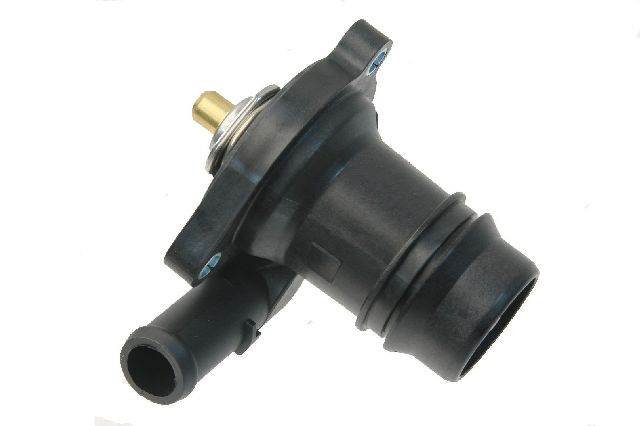
Est. part cost: $10-$25 - Leaking or Cracked Thermostat Housing ⚪ Low Probability → Shop Integrated Thermostat Housing Assembly This is a very common failure on the Sonic, but it does not directly cause the P0117 electrical code. However, a coolant leak can cause an actual overheat, and the work to replace the housing often includes a new sensor. Many owners on forums recommend upgrading to an aluminum housing to prevent future cracks.
How to confirm: Visually inspect the thermostat housing (driver's side of the engine) for white or pink crusty residue (dried coolant) or active drips. A pressure test of the cooling system will confirm a leak.
Typical fix: Replace the entire thermostat housing assembly. Many owners opt for an upgraded aluminum housing (e.g., Dorman 902-033, Mishimoto) over the OEM plastic. 🎬 See how to install the upgraded aluminum housing
Est. part cost: $40-$150
Rare But Worth Checking
- Faulty Engine Control Module (ECM): → Shop Engine Control Module (ECM) This is extremely rare. The ECM should only be considered after all other possibilities, including the sensor and all circuit wiring, have been thoroughly tested and ruled out.
Diagnosis Steps
- Connect an OBD-II scanner and confirm P0117 is the active code. Note any other codes like P0118 or P00B6.
- View live data for Engine Coolant Temperature (ECT). On a cold engine, it should match the ambient air temperature. If it reads a fixed high value like ~284°F or a fixed low value like -40°F, the sensor or circuit has failed.
- Turn the engine off. Locate the ECT sensor on the thermostat housing (driver's side of the engine for both 1.4L and 1.8L).
- Inspect the connector and wiring for visible damage, corrosion, or looseness.
- Disconnect the ECT sensor. The live data reading on the scanner should now default to -40°F. If it does, the wiring from the connector to the ECM is good, and the sensor itself is the problem.
- If the live data does not change or remains high after unplugging the sensor, there is likely a short to ground in the wiring harness between the connector and the ECM.
- As a final sensor test, you can use a multimeter. At room temperature (~68°F/20°C), the sensor's resistance should be between 2,000-3,000 ohms. 🎬 Watch how to test and replace the sensor Resistance will decrease as temperature increases.
- If the sensor and wiring test good, check the coolant level and condition. While less likely to cause P0117, low coolant from a leak elsewhere (water pump, reservoir, etc.) can cause erratic readings and must be addressed.
Parts You'll Likely Need
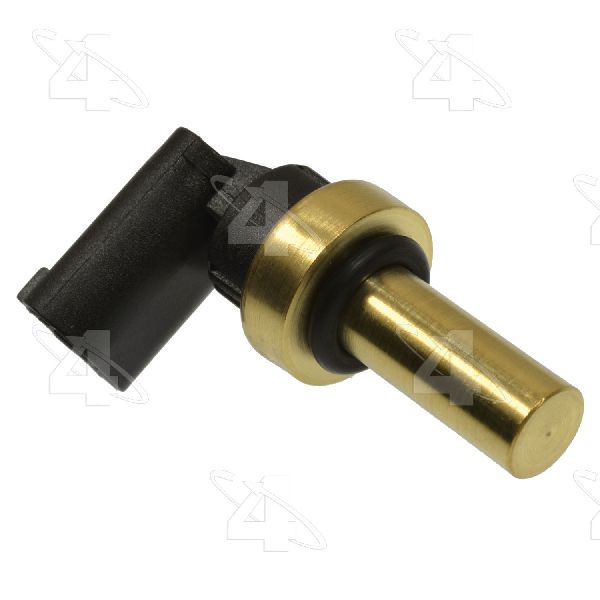
- Engine Coolant Temperature Sensor
(OEM #55591401 (replaces 55353807))— This is the most common failure point for code P0117. It directly provides the temperature reading to the ECM.
Trusted brands: ACDelco (GM Genuine Parts), Delphi, NTK
OEM price range: $30-$50
Aftermarket price range: $15-$35 - Thermostat Housing Assembly
(OEM #25200455 (example for some models))— While not a direct cause of the electrical code, the OEM plastic housing is a frequent source of leaks. Since replacing it requires accessing the same area and draining coolant, and new housings often include a new sensor, it's a common related repair and preventative measure.
Trusted brands: Dorman (offers plastic and aluminum versions, e.g., 902-033), ACDelco (OEM plastic), Mishimoto (Aluminum upgrade), ZZP (Aluminum upgrade)
OEM price range: $60-$100
Aftermarket price range: $40-$150
Related Codes That Often Appear With This One
- P0118 — This code is for 'ECT Circuit High Input'. It's the opposite of P0117. Seeing them together intermittently can point to a failing sensor or a wiring problem that is shorting and opening randomly. GM TSB PIP5162D suggests this can be caused by a poor seal in the thermostat housing.
- P0128 — This code means 'Coolant Temperature Below Thermostat Regulating Temperature'. If the ECT sensor is providing erratic readings, the ECM may also trigger a P0128 if it believes the engine is not reaching operating temperature in the expected time. TSB PIP5162D also links this code to thermostat housing seal issues.
- P00B6 — This code for 'Radiator Coolant Temperature Sensor Performance' can appear alongside P0117 if the ECM detects a major discrepancy between the engine ECT sensor and the radiator outlet ECT sensor, further indicating one of the sensors has failed.
Technical Service Bulletins (TSBs) & Recalls
- PIP5162D: Addresses intermittent P0117, P0118, and/or P0128 codes that may be caused by a poor seal between the thermostat and the housing, leading to erratic readings. The fix is to replace the thermostat housing assembly.
- Bulletin #PIT5713A: Notes that P0117 may be displayed along with various communication codes (such as U0100 or U0128) and warning messages, indicating potential harness or module communication issues.
Platform-Specific Known Issues
- The plastic thermostat housing (coolant outlet) is a notorious weak point on both the 1.4L and 1.8L engines, frequently developing cracks that lead to coolant leaks. Many owners on forums proactively replace it with an aluminum version during any cooling system service.
- There is a known issue where a poor seal between the thermostat and the housing can cause erratic temperature readings, potentially triggering P0117, P0118, and/or P0128. GM issued TSB PIP5162D for this, recommending replacement of the thermostat housing assembly.
Mechanic-Grade Diagnostic Values
- ECT Sensor Resistance (disconnected) — expected: ~2,000 - 3,000 Ω. Failure: A reading near 0 Ω indicates a shorted sensor. A reading that doesn't change with temperature is also a failure.
- ECT Sensor Resistance (disconnected, hot engine) — expected: ~200 - 300 Ω. Failure: If resistance does not drop significantly as the engine warms to operating temperature (~194°F / 90°C), the sensor is faulty.
- ECT Sensor Signal Voltage (Key On, Engine Off, Cold Engine) — expected: ~2.0V - 4.5V. Failure: A voltage reading below 0.5V, especially near the 0.14V threshold for P0117, indicates a short to ground or an internally shorted sensor.
- ECT Sensor Connector Pinout (at sensor) — expected: Pin A: Low Reference (Ground from ECM). Pin B: ECT Signal (to ECM).. Failure: A short between Pin A and Pin B, or Pin B shorted to chassis ground, will cause P0117.
- ECT Signal Wire at ECM Connector — expected: Pin 74 (Yellow wire) on the blue/red ECM plug for some models.. Failure: Checking for continuity to ground on this pin with the sensor unplugged can confirm a harness short.
Scan Tool Commands That Help
- GDS2 / Professional Scan Tool: ECT Sensor Simulated Voltage Test — This bidirectional control allows a technician to command a specific voltage (e.g., 2.0V) to the ECM. If the ECM's data display matches the commanded value, it proves the ECM and its internal logic are working correctly, isolating the fault to the sensor or wiring.
Wiring & Ground Locations
- G101 / G106 — Located at the front of the engine, lower block area, sometimes jumpered to a ground on the front frame cross rail.. This is a primary engine block and ECM ground. A corroded or loose connection here can create a floating ground, causing erratic voltage readings for multiple sensors, including the ECT sensor, leading to incorrect codes.
- ECT Sensor Connector — On the driver's side of the engine, plugged into the plastic thermostat housing/water outlet.. The two wires are the 5V low reference (ground provided by ECM) and the signal wire. A short between these two wires, or a short from the signal wire to the engine block, will pull the voltage low and set P0117.
Real Owner Repair Stories
- CruzeTalk forum user (platform mate) (2014 Chevy Cruze 1.4L) — Check engine light with P0117, fans running constantly, temp gauge maxed out.
❌ Tried (didn't work) Replaced the ECT sensor itself.
✅ What actually fixed it The code returned shortly after replacing only the sensor. The user then replaced the entire plastic thermostat housing assembly (which included another new sensor and a new thermostat). This permanently fixed the issue, suggesting the problem was related to the housing's seal or an intermittent connection issue exacerbated by the housing's condition, consistent with GM TSB PIP5162D. - NHTSA ODI #10980210 — An owner of a platform-mate vehicle reported that their dealership identified a need to replace both the coolant thermostat sensor and the housing after the car displayed error codes P0118 and P0117, noting it appeared to be a common problem that could lead to engine overheating.
OEM Part Supersession History
55353807→55591401— Part revision and consolidation by GM.
Heads up: The new part number (55591401) is a direct replacement for the old one and is fully compatible.
Diagnostic Flowchart
Other Known Issues on This Vehicle
Issues unrelated to this code that are worth knowing about as an owner of this generation:
- PCV System Failure (1.4L Turbo) 🔴 High — Very common. A torn diaphragm in the valve cover or a failed check valve in the intake manifold can occur at various mileages, often after 50,000 miles. (Ref: TSB PIP5197M, Special Coverage N202299080 extends warranty to 10 years/120,000 miles for some model years.)
- Water Pump Failure (1.4L & 1.8L) 🔴 High → Shop Engine Water Pump — Common failure item, often occurring between 40,000 and 80,000 miles. The 1.4L is prone to gasket leaks, while the 1.8L can suffer from broken plastic impellers. (Ref: TSB 14371A / Special Coverage extended warranty to 10 years/150,000 miles for leaking water pumps on some 1.4L models.)
- Cracked Plastic Cooling System Components 🔴 High — Extremely common across all model years. The thermostat housing, coolant reservoir, and various plastic fittings become brittle and crack, causing leaks.
- Oil Cooler / Oil Filter Housing Gasket Leaks (1.8L & 1.4L) 🟠 Medium — A frequent source of oil leaks, often misdiagnosed as a leaking oil pan. The gaskets between the cooler and the engine block degrade over time. Can also cause oil to mix with coolant.
- Valve Cover Gasket Oil Leak (1.4L Turbo) 🟠 Medium — Common issue where the gasket leaks oil directly into the spark plug tubes, fouling the ignition coils and causing misfires (P0301, etc.).
- Timing Belt Replacement (1.8L) 🔴 High — This is a required maintenance item, not a failure. The belt must be replaced at the service interval (97,500 miles) to prevent catastrophic engine failure.
Used vs. New Parts: Buying Guide for This Vehicle
When a used part is the smart pick: For this repair, using a used part is generally not recommended. The primary failure parts, the ECT sensor and the plastic thermostat housing, are inexpensive new and are known wear items. A used plastic housing carries the same risk of cracking as the part being replaced.
Donor-vehicle mileage cap: roughly under 40000 miles for the part to have meaningful remaining life.
What to inspect on the donor part:
- If considering a used aluminum thermostat housing, inspect thoroughly for any cracks, especially around weld points and mounting holes.
- Ensure all threaded holes are clean and not stripped.
- Verify the donor vehicle was not in a front-end collision that could have stressed the component.
OEM-only on this vehicle (don't cheap out):
- While not strictly 'OEM-only', using a GM Genuine or ACDelco Professional ECT sensor is highly recommended due to its low cost and the critical role it plays. Off-brand sensors can have incorrect resistance curves, leading to persistent issues.
Aftermarket brands forum-validated for this vehicle:
- Dorman (specifically the aluminum thermostat housing, part # 902-033)
- Mishimoto (Aluminum thermostat housing)
- ZZP (Aluminum thermostat housing)
- ACDelco / Delphi / NTK (for the ECT sensor itself)
Brands owners have reported issues with on this vehicle:
- No-name, unbranded ECT sensors from online marketplaces can be unreliable and are best avoided given the low cost of a quality part.
Real Owner Stories
Aggregated from forums and TSBs cited above. Mileages and costs reflect what owners reported in those sources.
2012-2020 Chevrolet Sonic 1.4L/1.8L
Symptoms: Intermittent P0117, P0118, and/or P0128 codes caused by erratic temperature readings.
What fixed it: Replacement of the thermostat housing assembly as per TSB PIP5162D.
Source hint: TSB PIP5162D
Chevrolet Sonic 1.4L Turbo — ~50000 miles
Symptoms: Torn diaphragm in the valve cover or failed check valve in the intake manifold.
What fixed it: Repair covered under Special Coverage N202299080 (10 years/120,000 miles).
Source hint: TSB PIP5197M, Special Coverage N202299080
Chevrolet Sonic 1.4L/1.8L — ~60000 miles
Symptoms: Coolant leaks from the water pump.
What fixed it: Water pump replacement; some 1.4L models covered under Special Coverage 14371A for 10 years/150,000 miles.
Source hint: TSB 14371A / Special Coverage
Chevrolet Sonic (All Models)
Symptoms: Plastic thermostat housing, coolant reservoir, and fittings becoming brittle and cracking, leading to leaks.
What fixed it: Proactive replacement of the plastic thermostat housing with an aluminum version (e.g., Dorman 902-033).
Source hint: https://www.reddit.com/r/ChevySonic/comments/y8576u/replaced_the_gm_plastic_thermostat_with_an/
Related OBD-II Codes
Frequently Asked Questions
My 2012-2020 Chevrolet Sonic is showing P0117 and the temperature gauge is maxed out. Is there a TSB for this?
I've heard the plastic thermostat housing on the 1.4L and 1.8L engines is a weak point. What do owners recommend?
If I need to replace the ECT sensor pigtail on my Sonic, what part do I need?
Can a bad ECT sensor cause my Sonic to have trouble starting when it's cold?
Is there any extended warranty coverage for cooling system issues on the 1.4L Turbo Sonic?
Helpful Videos

We Have This Part in Stock


The information in this article is provided for general reference and educational purposes only. Vehicle specifications, procedures, and part compatibility can vary by production date, trim level, and region. Always consult your vehicle's factory service manual and verify part numbers before purchasing or performing repairs. Safety-critical components such as airbags, seat belts, and braking systems should be installed by a qualified professional.
- Chevrolet Sonic:
- 🧭 Diagnostic Flowchart
- 🎬 Helpful Videos
- 🛍️ Shop This Part
- What's Unique About the 2012-2020 Chevrolet Sonic
- Symptoms You May Notice
- Most Likely Causes
- Rare But Worth Checking
- Diagnosis Steps
- Parts You'll Likely Need
- Related Codes That Often Appear With This One
- Technical Service Bulletins (TSBs) & Recalls
- Platform-Specific Known Issues
- Mechanic-Grade Diagnostic Values
- Scan Tool Commands That Help
- Wiring & Ground Locations
- Real Owner Repair Stories
- OEM Part Supersession History
- Other Known Issues on This Vehicle
- Used vs. New Parts: Buying Guide for This Vehicle
- Real Owner Stories
- 2012-2020 Chevrolet Sonic 1.4L/1.8L
- Chevrolet Sonic 1.4L Turbo — ~50000 miles
- Chevrolet Sonic 1.4L/1.8L — ~60000 miles
- Chevrolet Sonic (All Models)
- Related OBD-II Codes
- Frequently Asked Questions
- 🎟️ Get 5% Off