

P0117 on 2008-2014 Dodge Avenger 2.4L: Engine Coolant Sensor Causes and Fixes
On a 2008-2014 Dodge Avenger with the 2.4L engine, code P0117 is most often caused by a failed Engine Coolant Temperature (ECT) sensor. The sensor's signal to the computer shorts to ground, causing an erroneously high temperature reading. Replacing the sensor is a simple DIY job, with an aftermarket part costing around $15-$30 and an OEM Mopar part costing about $40-$65. The connector pigtail is also a common failure point.
- P0117 on your Avenger almost always points to the Engine Coolant Temperature (ECT) sensor.
- Before buying parts, check the live data on a scan tool. A very high temperature reading on a cold engine is a key indicator.
- The sensor is located on the driver's side of the engine in a plastic housing and is relatively easy to replace with basic tools.
- While replacing the sensor, carefully inspect the electrical connector for cracks or corrosion, as it is also a known point of failure.
- This is a very budget-friendly DIY repair that can be completed in under an hour, saving significant labor costs.
What's Unique About the 2008-2014 Dodge Avenger
The 2.4L World Engine in this generation of Dodge Avenger is known for having a relatively straightforward and accessible Engine Coolant Temperature (ECT) sensor. It's located on a coolant adapter housing on the driver's side of the engine, making it easier to access than on some V6 models. While the sensor itself is a common failure point, the electrical connector pigtail can also become brittle from heat cycles and fail, a common issue on Chrysler products from this era. Additionally, on some platform mates like the 2011 Dodge Journey, a TSB (05-002-12) was issued because the brake booster vacuum hose was routed too close to the ECT sensor, causing chafing and damage to the wiring.
Symptoms You May Notice
- Check Engine Light is on
- Temperature gauge on the dashboard is inaccurate (may shoot to HOT immediately or not move at all)
- Engine cooling fans run constantly, even when the engine is cold
- Engine may overheat if the fans fail to activate properly
- Reduced fuel economy
- Rough idle or hesitation during acceleration
- Black smoke from the exhaust in rare cases due to a rich fuel mixture
- Hard starting, especially when the engine is warm
- Replacing the thermostat. While it's good practice to replace the thermostat during a cooling system service, a stuck thermostat is more likely to cause a P0128 code (Coolant Temperature Below Thermostat Regulating Temperature), not a P0117.
Most Likely Causes
- Faulty Engine Coolant Temperature (ECT) Sensor 🔴 High Probability → Shop Engine Coolant Temperature Sensor The sensor is a common wear-and-tear component that can fail over time due to thermal stress. It is the most frequent cause of P0117 across the Dodge/Chrysler/Jeep platform with the 2.4L engine.
How to confirm: With a scan tool, observe the ECT reading with the engine cold; it may show an impossibly high temperature (e.g., 280°F). A more definitive test is to disconnect the sensor; if the code changes to P0118 (Circuit High), the sensor is almost certainly bad. You can also test the sensor's resistance with a multimeter; at 68°F (20°C), it should be between 2,000 and 3,000 ohms.
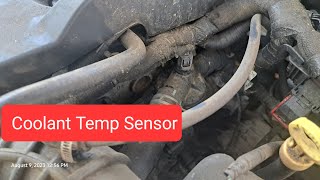
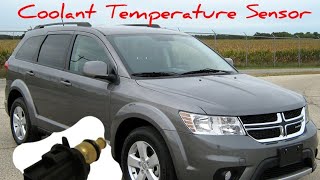
Typical fix: Replace the Engine Coolant Temperature sensor. It is a twist-in style sensor held by a small clip, located on the driver's side of the engine.
Est. part cost: $15-$65 - Damaged Wiring or Connector 🟡 Medium Probability The plastic connector can become brittle from heat cycles and crack, and wires can corrode or short to ground. On some models using this engine, the brake booster vacuum hose was routed too close, causing wire chafing (TSB 05-002-12).
How to confirm: Visually inspect the ECT sensor's electrical connector and wiring for cracks, corrosion, or frayed wires. Wiggle the connector with the engine running (and scan tool connected) to see if the temperature reading fluctuates wildly. Check for a short to ground on the signal wire (K2 circuit) using a multimeter.
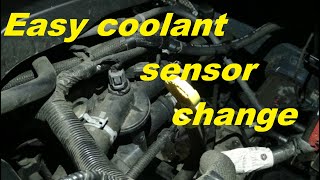
Typical fix: Repair the damaged section of wire or replace the connector pigtail. A common aftermarket pigtail part number is Standard Motor Products S-1933 or Dorman 645-203. 🎬 See this 2.4L coolant temperature sensor replacement walkthrough
Est. part cost: $15-$35 - Low Engine Coolant or Air in System ⚪ Low Probability → Shop Engine Coolant / Antifreeze
How to confirm: Check the coolant level in the reservoir and radiator (when the engine is cold). If the level is low, the sensor may be exposed to air instead of coolant, causing an incorrect reading. This usually triggers overheating symptoms before or alongside a P0117 code.
Typical fix: Top off the coolant with the correct type (Mopar OAT) and bleed the cooling system to remove any air pockets. Investigate and repair the source of the coolant leak.
Est. part cost: $15-$25 for coolant
Rare But Worth Checking
- Faulty Powertrain Control Module (PCM): → Shop Engine Control Module (ECM) This is extremely rare and should only be considered after all other possibilities, including wiring, have been exhaustively checked and ruled out. A faulty PCM is the last resort in diagnosis.
Diagnosis Steps
- Scan for Codes: Use an OBD-II scanner to confirm P0117 is the active code. Note any other codes present.
- Check Live Data: With the scanner, view the live data for the Engine Coolant Temperature. If the engine is cold but the scanner shows a very high temperature (e.g., 250°F+), this points strongly to a sensor or circuit issue.
- Visual Inspection: Open the hood and locate the ECT sensor on the driver's side of the engine, on the plastic coolant adapter housing. Inspect the sensor's connector and the surrounding wires for any signs of damage, corrosion, or loose connections. Check the routing of the nearby brake booster vacuum hose for any signs of chafing against the sensor wiring.
- Disconnect Test: Disconnect the ECT sensor's electrical connector. Turn the ignition to the 'On' position (engine off) and check the codes again. The code should change to P0118 (Circuit High). If it does, the wiring is likely okay and the sensor itself has failed. If P0117 remains, you have a short in the wiring harness.
- Test the Circuit (if P0117 remains): With the sensor disconnected, use a multimeter to check the signal wire in the harness connector for a short to ground. This is the K2 circuit.
- Test the Sensor: If you suspect the sensor, you can test its resistance. At room temperature (around 68°F/20°C), the resistance between the two pins should be between 2k-3k Ohms.
- Check Coolant Level: Ensure the engine is completely cool, then check the coolant level in the overflow reservoir and the radiator. Low coolant can cause erratic readings.
- Replace the Faulty Component: Based on your findings, replace the ECT sensor or repair the wiring.
Parts You'll Likely Need
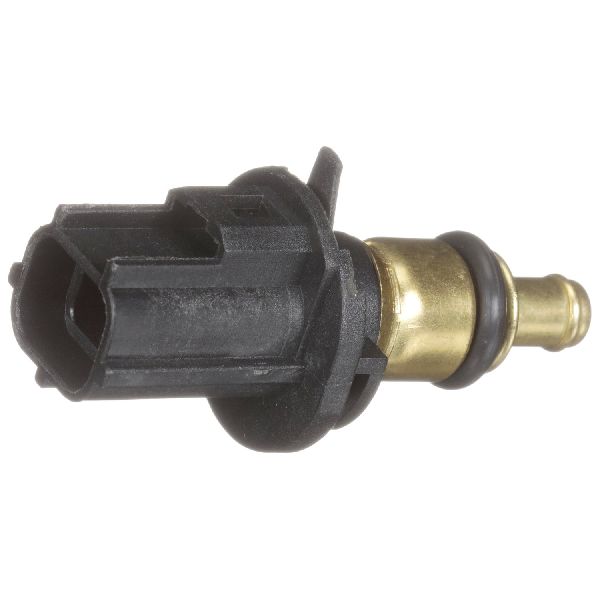
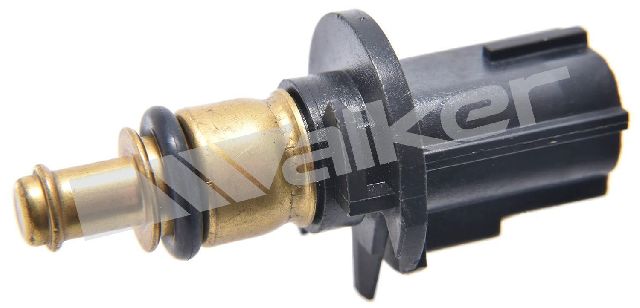
- Engine Coolant Temperature Sensor
(OEM #5269870AB)— This is the most common component to fail and trigger code P0117.
Trusted brands: Mopar, Delphi, NTK, Standard Motor Products
OEM price range: $40-$65
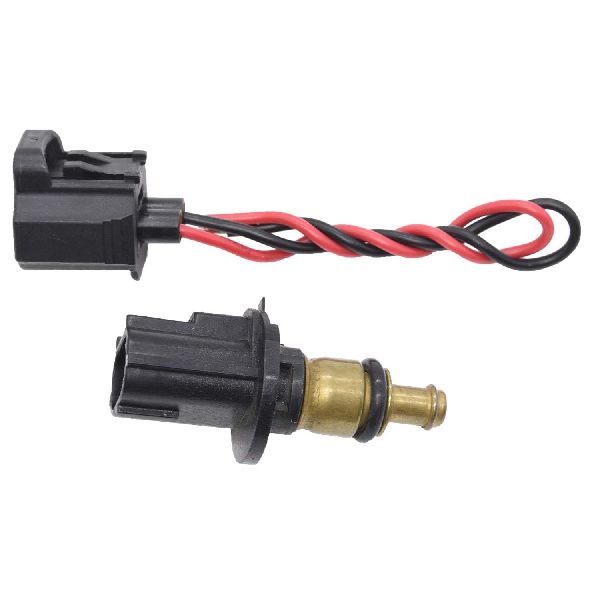
Aftermarket price range: $15-$30 - Engine Coolant Temperature Sensor Connector
(OEM #68064983AA (Verify by VIN))— The original connector can become brittle and fail, causing a poor connection. It's often replaced if it breaks during sensor removal or if the wiring is corroded. Aftermarket pigtails are widely available.
Trusted brands: Standard Motor Products (S-1933), Dorman (645-203), Walker
OEM price range: N/A
Aftermarket price range: $15-$35
Related Codes That Often Appear With This One
- P0118 — P0118 is 'ECT Circuit High'. This code may appear if you disconnect the sensor to test it, or if the wiring has an open circuit instead of a short. 🎬 Watch: How to solve code P0118 and replace the sensor
- P0128 — P0128 is 'Coolant Temperature Below Thermostat Regulating Temperature'. While less common to see together, a failing ECT sensor can provide erratic data that might lead the PCM to set both codes.
Technical Service Bulletins (TSBs) & Recalls
- TSB 05-002-12: For 2011 Dodge Journey models with the 2.4L engine, this bulletin addresses P0117/P0118 codes caused by the brake booster vacuum hose being routed too close to the ECT sensor connector, causing damage. While for the Journey, it's a relevant check for the Avenger which shares the same engine and general layout.
Platform-Specific Known Issues
- Real Owner Experience with P0117: A Dodge Journey owner on Reddit with the same 2.4L engine experienced overheating, which was followed by a P0117 code. After replacing a broken heater hose assembly and the thermostat housing to no avail, they found the P0117 code. This highlights that while the sensor is a common cause, it can also be triggered by other cooling system failures that lead to extreme temperatures or air pockets.
- Diagnostic Confusion: A Dodge Ram owner on DodgeForum.com reported a P0117 code after his engine stalled and blew steam. Initially, his digital temp gauge showed no reading ('---'), but after cooling down, it showed a temperature. This shows how a failing sensor circuit can present itself intermittently before total failure, confusing the diagnosis.
Mechanic-Grade Diagnostic Values
- ECT Sensor Resistance (cold engine) — expected: 2,000 - 3,000 Ohms (Ω) at 20°C / 68°F. Failure: A resistance value near 0 Ohms indicates an internal short. An infinite reading indicates an open circuit.
- ECT Sensor Resistance (hot engine) — expected: 200 - 300 Ohms (Ω) at 90°C / 194°F. Failure: Resistance does not drop as the engine warms up, or remains near 0 Ohms.
- ECT Signal Wire (K2) Voltage — expected: Approx. 0.5V (hot) to 4.5V (cold), supplied by a 5V reference from the PCM.. Failure: Voltage is below 0.14V, indicating a short to ground.
- Resistance between K2 Signal and K900 Ground circuits — expected: High resistance (Mega-Ohms). Failure: Resistance is below 5.0 Ohms, indicating a short between the two wires in the harness.
Wiring & Ground Locations
- K2 — Wire running from the ECT sensor connector to the Powertrain Control Module (PCM).. This is the ECT 1 Signal Circuit. A short to ground on this wire is the direct electrical cause for a P0117 code when the sensor itself is good.
- K900 — Wire running from the ECT sensor connector to the Powertrain Control Module (PCM).. This is the Sensor Ground circuit provided by the PCM. While less likely to be the sole cause, a fault in this wire can cause erratic sensor readings. A short between K2 and K900 will trigger P0117.
- G302 — Located at the left kick panel area.. This is a major body ground. While not directly for the ECT sensor (which is grounded through the PCM), a poor body ground can cause a variety of strange electrical issues and is a good-practice item to check when diagnosing any electrical fault.
OEM Part Supersession History
5269870AB→N/A— This part number appears to be stable and has not been superseded according to available parts catalogs.
Model Year Variations Within This Range
- 2011-2014: The Dodge Avenger received a major refresh in 2011. While the 2.4L engine and the P0117 diagnostic procedure remained largely the same, be aware that wiring harnesses and module locations could have minor differences from pre-refresh (2008-2010) models. However, the ECT sensor part number and its location on the 2.4L engine are consistent across the entire generation.
Diagnostic Flowchart
Other Known Issues on This Vehicle
Issues unrelated to this code that are worth knowing about as an owner of this generation:
- Electronic Throttle Body (ETB) Failure 🔴 High — Very common, often occurs between 60,000 and 120,000 miles. Causes limp mode (ETC light flashing).
- Alternator Failure 🟠 Medium — Fails more frequently than on other vehicles, often around 80,000-100,000 miles. The decoupler pulley can also fail and create noise.
- Front/Rear Subframe Corrosion 🔴 High — Common in salt-belt states. Can become structurally unsafe. (Ref: Warranty Extension (X69) / TSB 23-007-17 REV. B for similar platforms.)
- Heater Core Blockage / Blend Door Failure 🟡 Low — Widespread issue, often presents as heat on the driver's side but cold air on the passenger side.
- Transmission Shifting Problems 🟠 Medium — Common across the model years, particularly with the 6-speed automatic.
Used vs. New Parts: Buying Guide for This Vehicle
When a used part is the smart pick: A used wiring connector pigtail from a salvage yard is a smart choice if the original plastic connector is cracked or broken. It is often much cheaper than buying a new pigtail from a parts store.
Donor-vehicle mileage cap: roughly under 50000 miles for the part to have meaningful remaining life.
What to inspect on the donor part:
- Check that the plastic is still flexible and not brittle.
- Ensure the locking tab clicks firmly and is not broken.
- Look for clean, corrosion-free metal terminals inside the connector.
- Verify the attached wires are not frayed or have cracked insulation.
OEM-only on this vehicle (don't cheap out):
- Powertrain Control Module (PCM) - Remanufactured or used PCMs for Chrysler vehicles of this era can have high failure rates or programming issues. It is strongly recommended to use a properly sourced and programmed OEM unit if the PCM is condemned.
Aftermarket brands forum-validated for this vehicle:
- NTK
- Delphi
- Standard Motor Products (SMP)
Real Owner Stories
Aggregated from forums and TSBs cited above. Mileages and costs reflect what owners reported in those sources.
2013 Dodge Journey 2.4L
Symptoms: The vehicle experienced overheating issues followed by a P0117 code. The owner had already replaced a broken heater hose assembly and the thermostat housing.
What fixed it: The P0117 code was identified as the remaining issue after other cooling system failures (heater hose and thermostat housing) had caused extreme temperatures or air pockets.
Source hint: Reddit r/MechanicAdvice thread titled '2013 Dodge Journey overheating...Next steps?'
Dodge Ram (4th Gen)
Symptoms: The engine stalled and blew steam. The digital temperature gauge initially showed no reading ('---'), but after the engine cooled down, it began showing a temperature again.
What fixed it: Diagnosis of a failing sensor circuit that presented intermittently before total failure.
Source hint: DodgeForum.com thread titled 'Engine Trouble assist? - Temp Sensor code P0117'
Documented NHTSA Reports
Dodge Journey Platform Report
Symptoms: An owner reported that the vehicle died out and would not crank back up. A diagnostic scan revealed several error codes, including P0117, P0420, P0340, P0197, P1D83, and P2181.
What fixed it: This report highlights that P0117 can appear alongside multiple electrical and sensor codes during a total vehicle stall event.
Source hint: NHTSA ODI #11496504
Related OBD-II Codes
Frequently Asked Questions
Could the brake booster vacuum hose on my Dodge Avenger be causing the P0117 code?
Where is the ECT sensor located on the 2.4L Dodge Avenger?
How can I tell if the P0117 code is a bad sensor or a wiring problem?
What should the resistance be for a healthy ECT sensor on this vehicle?
Why are my cooling fans running constantly even when the engine is cold?
What type of coolant should I use if I need to top off the system during repair?
Helpful Videos
We Have This Part in Stock



The information in this article is provided for general reference and educational purposes only. Vehicle specifications, procedures, and part compatibility can vary by production date, trim level, and region. Always consult your vehicle's factory service manual and verify part numbers before purchasing or performing repairs. Safety-critical components such as airbags, seat belts, and braking systems should be installed by a qualified professional.
- Dodge Avenger:
- 🧭 Diagnostic Flowchart
- 🎬 Helpful Videos
- 🛍️ Shop This Part
- What's Unique About the 2008-2014 Dodge Avenger
- Symptoms You May Notice
- Most Likely Causes
- Rare But Worth Checking
- Diagnosis Steps
- Parts You'll Likely Need
- Related Codes That Often Appear With This One
- Technical Service Bulletins (TSBs) & Recalls
- Platform-Specific Known Issues
- Mechanic-Grade Diagnostic Values
- Wiring & Ground Locations
- OEM Part Supersession History
- Model Year Variations Within This Range
- Other Known Issues on This Vehicle
- Used vs. New Parts: Buying Guide for This Vehicle
- Real Owner Stories
- 2013 Dodge Journey 2.4L
- Dodge Ram (4th Gen)
- Documented NHTSA Reports
- Dodge Journey Platform Report
- Related OBD-II Codes
- Frequently Asked Questions
- 🎟️ Get 5% Off