

P0117 on 2008-2013 Dodge Challenger: Engine Coolant Temp Sensor Causes and Fixes
On a 2008-2013 Dodge Challenger, code P0117 is most often caused by a failed Engine Coolant Temperature (ECT) sensor. It's an affordable part, typically costing $20-$45 for an aftermarket replacement and $50-$95 for an OEM Mopar part. Replacement is a straightforward DIY job (Difficulty 2/5) on the 5.7L Hemi, but more difficult on the 3.5L V6 due to sensor location.
- P0117 on your Challenger almost always points to a bad Engine Coolant Temperature (ECT) sensor or its wiring.
- The most likely fix is replacing the ECT sensor, which is a simple job on the 5.7L Hemi but difficult on the 3.5L V6.
- Driving with this code is not recommended as the car is in a failsafe mode and you cannot monitor the true engine temperature.
What's Unique About the 2008-2013 Dodge Challenger
For the 2008-2013 Challenger, the key difference regarding this code depends on the engine. The 5.7L Hemi V8 has an easily accessible ECT sensor located on the front of the engine near the thermostat housing, making for a simple repair that requires basic hand tools like a 19mm deep socket. In contrast, the 3.5L V6 (2009-2010 models) has the sensor placed on the lower intake manifold, toward the rear of the engine near the firewall, which is much harder to reach. While the code's meaning is the same for both, the difficulty and labor time for the repair vary significantly between the two engines.
Symptoms You May Notice
- Check Engine Light is on
- Engine cooling fans run constantly, even when the engine is cold
- Temperature gauge on the dashboard reads unusually high or doesn't move at all
- Reduced fuel economy due to a rich fuel mixture
- Engine runs rough, hesitates, or idles poorly
- Black smoke from the exhaust due to unburnt fuel
- Difficulty starting the engine, especially when cold
- Heater may not blow warm air
- Replacing the thermostat. A stuck thermostat typically causes a P0128 code ('Coolant Temperature Below Thermostat Regulating Temperature'). P0117 is an electrical circuit code, pointing to the sensor or its wiring, not the mechanical thermostat.
Most Likely Causes
- Faulty Engine Coolant Temperature (ECT) Sensor 🔴 High Probability → Shop Engine Coolant Temperature Sensor Like any electronic sensor, the internal thermistor can fail over time, providing an incorrect resistance reading to the PCM. This is the most common point of failure for this code.
How to confirm: After confirming the wiring is intact, replacing the sensor is the most direct fix. A more advanced test involves checking the sensor's resistance with a multimeter. At an ambient temperature of 68°F (20°C), the resistance should be between 2,000 and 3,000 ohms. If the reading is outside this range, the sensor is bad. 🎬 Watch: How to test and replace the ECT sensor
Typical fix: Replace the ECT sensor. This involves partially draining the coolant (or being prepared for some spillage), unscrewing the old sensor, and installing the new one. On the 5.7L Hemi, this is easily accessible on the front of the engine. 🎬 Watch: 5.7L Hemi coolant temperature sensor replacement guide
Est. part cost: $20-$95 - ECT Sensor Circuit Wiring or Connector Issue 🟡 Medium Probability → Shop Engine Coolant Temperature Sensor Engine bay heat and vibrations can cause wiring to become brittle, insulation to crack, or connectors to corrode over time, leading to a short to ground.
How to confirm: Visually inspect the wiring harness and connector for any signs of damage, corrosion, or loose pins. A P0117 code indicates a short to ground, so you would likely see 0 volts on the signal wire with the key on and sensor disconnected. Wiggling the harness while monitoring voltage can help identify an intermittent short.
Typical fix: Repair the damaged section of the wiring harness or replace the connector pigtail. Ensure the connection is clean, secure, and protected from heat.
Est. part cost: $10-$30 - Low Engine Coolant or Air in the System ⚪ Low Probability → Shop Engine Coolant / Antifreeze This is not specific to the vehicle but a general cooling system issue. If the sensor's tip is exposed to an air pocket instead of coolant, it can send erratic signals to the PCM, though this more commonly causes other codes.
How to confirm: Check the coolant level in the radiator (when the engine is cold) and the overflow reservoir. If the level is low, there is a leak that needs to be addressed.
Typical fix: Top off the coolant with the correct Mopar-approved type and properly bleed the cooling system to remove any air pockets. Find and repair the source of any coolant leaks.
Est. part cost: $15-$30 for coolant
Rare But Worth Checking
- Faulty Powertrain Control Module (PCM): → Shop Engine Control Module (ECM) This is very rare. The PCM's internal circuit for reading the ECT sensor can fail. All other possibilities, especially the sensor and wiring, should be exhaustively ruled out before considering PCM replacement. This is a last resort.
Diagnosis Steps
- Scan for Codes: Use an OBD-II scanner to confirm P0117 is the active code. Note any other codes present.
- Visual Inspection: With the engine off and cool, check the engine coolant level. Inspect the ECT sensor's electrical connector and wiring for obvious damage, corrosion, or loose connections.
- Check Live Data: With the scanner, view the live data for the ECT sensor. A P0117 will typically show an extremely high temperature (e.g., 280°F / 140°C or higher) even when the engine is cold, which is a clear sign of a circuit low/short-to-ground issue.
- Test the Circuit: Disconnect the ECT sensor. With the ignition on (engine off), the scan tool reading should now show an extremely low temperature (e.g., -40°F), and the voltage at the signal wire should be approximately 5 volts. If the voltage is near zero with the sensor disconnected, you have a short to ground 🎬 Watch: How to diagnose and fix a P0117 circuit code in the signal wire that needs to be repaired. If the temperature reading on the scan tool does not change when disconnected, the wiring is likely shorted to ground between the sensor and the PCM.
- Test/Replace the Sensor: If the 5-volt reference is present when disconnected and the live data reading drops to -40°F, the wiring is likely okay, and the sensor itself is the culprit. At this point, replacing the sensor is the most common and effective repair.
- Clear Codes and Test Drive: After the repair, clear the trouble codes with the scanner and perform a test drive to ensure the code does not return and the temperature gauge reads normally.
Parts You'll Likely Need
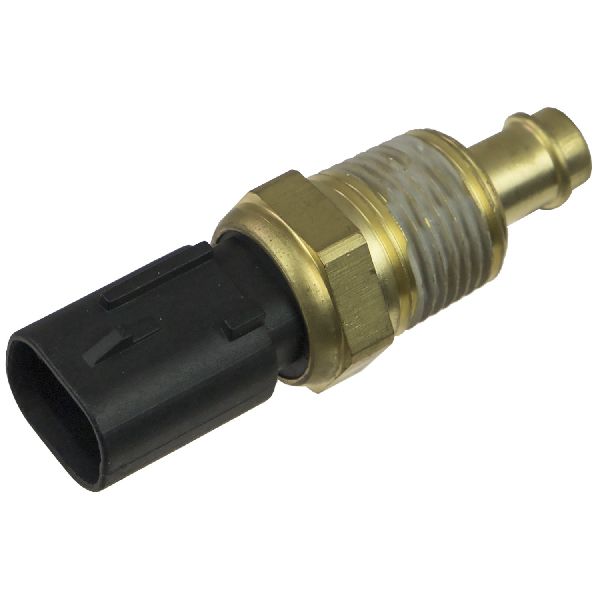
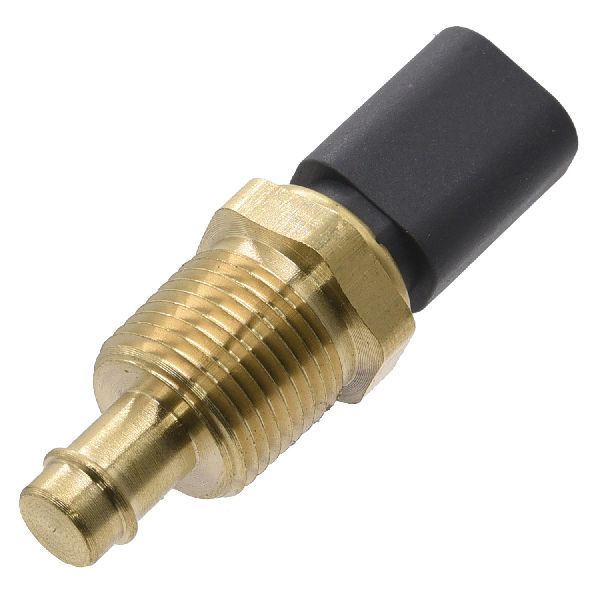
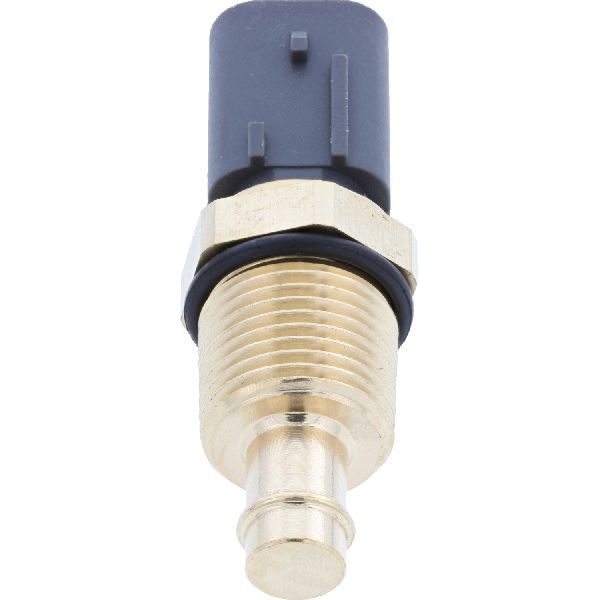
- Engine Coolant Temperature Sensor
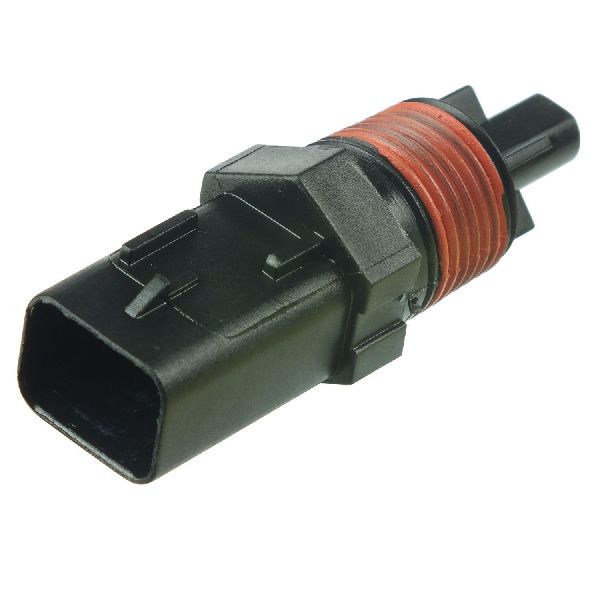
(OEM #5149077AB)— This sensor is the most common failure point for a P0117 code. Its internal thermistor degrades over time, leading to incorrect readings. The OEM part number 5149077AB is widely used across many Chrysler/Dodge/Jeep vehicles and supersedes older part numbers like 5149096AB.
Trusted brands: Mopar, Delphi, Standard Motor Products (SMP), NTK
OEM price range: $50-$95
Aftermarket price range: $20-$45
Related Codes That Often Appear With This One
- P0118 — This code means 'ECT Circuit High Input'. Seeing it alongside P0117 can indicate an intermittent wiring problem or a failing sensor that is sending erratic signals from one extreme to the other.
- P0128 — This code means 'Coolant Thermostat Rationality'. If the ECT sensor is faulty and causes the fans to run constantly, the engine may not reach operating temperature as quickly as the PCM expects, triggering P0128.
Platform-Specific Known Issues
- Repair Difficulty Varies by Engine: The repair is significantly easier on the 5.7L Hemi V8, where the sensor is on the front of the engine by the thermostat housing. For the 3.5L V6, the sensor is located under the lower intake manifold near the firewall, making access much more challenging and time-consuming.
Mechanic-Grade Diagnostic Values
- ECT Sensor Resistance vs. Temperature — expected: At 20°C (68°F): ~2,200-3,000Ω. At 80°C (176°F): ~250-350Ω. At 100°C (212°F): ~180-250Ω.. Failure: Readings significantly outside these ranges indicate a faulty sensor.
- ECT Signal Wire Voltage (Key On, Engine Off, Sensor Connected) — expected: Cold Engine (~20°C/68°F): ~3.0-3.5V. Warm Engine (~80°C/176°F): ~1.0-1.3V.. Failure: A reading below 0.1V, and specifically below 0.078V for more than 2.8 seconds, will trigger the P0117 code. This indicates a direct short to ground.
- ECT Signal Wire Voltage (Key On, Engine Off, Sensor Disconnected) — expected: ~5.0 Volts.. Failure: If the voltage is near 0V with the sensor disconnected, the signal wire is shorted to ground somewhere in the harness.
Scan Tool Commands That Help
- Professional Scan Tool (e.g., WiTech): Powertrain Verification Test — After a repair (like replacing the sensor or fixing a wire), this guided procedure is used to operate the vehicle under specific conditions to confirm the fault is gone and allow the PCM to clear the code.
- OBD-II Scanner with Live Data & Jumper Wire: Manual Harness Integrity Test — To definitively rule out a bad sensor and confirm the wiring harness and PCM are working. Disconnect the sensor: live data should read -40°F. Jumper the two pins in the harness connector: live data should read an extremely high temp (e.g., 302°F). If both happen, the harness is good and the sensor is bad.
Wiring & Ground Locations
- K2 — Wire running from the ECT sensor connector to the PCM connector.. This is the ECT Signal circuit. A short to ground on this specific wire is the direct electrical cause of a P0117 code.
- K900 / K914 — Wire running from the ECT sensor connector to the PCM connector.. This is the Sensor Ground circuit provided by the PCM. While less likely to cause P0117, an open in this wire would cause a P0118 (Circuit High) code. A short between the K2 and K900/K914 wires would also cause P0117.
- G102 / G109 — G102 is located on the right side of the engine compartment. G109 is on the right side of the engine block (for 3.5L).. These are primary engine ground points. While the ECT sensor ground is provided by the PCM (sensor return), a poor main engine or PCM ground can cause floating voltages and erratic sensor readings across the system.
- PCM Connector — Located at the right rear of the engine compartment.. Corrosion or pushed-out pins at the PCM connector itself can cause a P0117 by creating a short on the K2 circuit pin. This should be inspected if a wiring short is suspected but cannot be found in the main harness.
Real Owner Repair Stories
- Composite of forum user experiences (ChallengerTalk, LXForums) (2011 Dodge Challenger R/T 5.7L Hemi) — Check engine light on, cooling fans running constantly, temperature gauge pegged on Hot instantly after starting, even when cold.
❌ Tried (didn't work) Initially replaced the ECT sensor, but the P0117 code returned immediately after clearing.
✅ What actually fixed it Upon closer inspection of the ECT sensor connector, the insulation on the signal wire (K2 circuit) was found to be brittle and had flaked off about an inch back from the connector. The bare wire was intermittently touching a metal bracket, causing a short to ground. The fix was to replace the connector pigtail, using heat-shrink butt connectors to splice it into the harness. This resolved the short and the code did not return.
OEM Part Supersession History
5149096AB→5149077AB— Part consolidation and potential minor internal revisions for reliability across the Chrysler/Dodge/Jeep lineup.
Heads up: The parts are fully interchangeable. If you have an older vehicle that used 5149096AB, the correct replacement from a dealer will be 5149077AB.
Model Year Variations Within This Range
- 2011-2013 (5.7L Hemi): While earlier 5.7L Hemi models (2008-2010) typically have the ECT sensor on the thermostat housing, some documentation for 2011-2013 models indicates the sensor may be located on the water pump. Physical verification before starting the repair is recommended.
Diagnostic Flowchart
Other Known Issues on This Vehicle
Issues unrelated to this code that are worth knowing about as an owner of this generation:
- 5.7L Hemi Camshaft/Lifter Failure ('Hemi Tick') 🔴 High — Common on 2009+ models, often appearing between 70,000-130,000 miles. Caused by lifter roller failure, which damages the camshaft. Extensive idling is a suspected contributor.
- Alternator Failure 🔴 High — Very common on 2011-2014 models, leading to recalls. The alternator can fail suddenly, causing the vehicle to stall. (Ref: NHTSA 14V-634 / Chrysler P60, T36)
- Totally Integrated Power Module (TIPM) Failure 🟠 Medium — Prone to failure, causing a wide range of bizarre electrical issues like random horn activation, starter problems, or fuel pump issues.
- Exhaust Manifold Bolt Failure 🟡 Low — Common across all Hemi V8 models. The bolts, especially on the passenger side, break and cause an exhaust leak, resulting in a ticking noise that often disappears as the engine warms up.
- Timing Chain Failure (Early 5.7L V8) 🔴 High — Reported in 2009-2013 models due to premature wear of plastic timing chain guides, leading to chain slack and potential breakage.
- Water Pump Failure 🟠 Medium → Shop Engine Water Pump — Failures can occur prematurely, sometimes as early as 30,000-50,000 miles, leading to coolant leaks and overheating.
Used vs. New Parts: Buying Guide for This Vehicle
When a used part is the smart pick: For this specific repair, using a second-hand part is NOT recommended. The Engine Coolant Temperature (ECT) sensor is a low-cost, critical electronic component. The risk of a used part failing soon after installation far outweighs the minimal cost savings.
Donor-vehicle mileage cap: roughly under 15000 miles for the part to have meaningful remaining life.
What to inspect on the donor part:
- If forced to use a salvaged part, choose one from the lowest-mileage vehicle possible.
- Inspect the connector pins for any signs of green or white corrosion.
- Ensure the plastic connector housing isn't brittle or cracked.
OEM-only on this vehicle (don't cheap out):
- Powertrain Control Module (PCM) - While refurbished units are available, they must be from a reputable source and professionally programmed to the vehicle's VIN. Avoid generic used PCMs from a junkyard without a clear programming plan.
Aftermarket brands forum-validated for this vehicle:
- Mopar (OEM)
- NTK
- Delphi
- Standard Motor Products (SMP)
Brands owners have reported issues with on this vehicle:
- No-name, unbranded sensors from online marketplaces often have poor quality control and may fail prematurely or provide inaccurate readings out of the box.
Real Owner Stories
Aggregated from forums and TSBs cited above. Mileages and costs reflect what owners reported in those sources.
2010 Dodge Challenger 3.5L V6
Symptoms: Owner was looking for the location of the ECT sensor because it is buried under the intake manifold.
What fixed it: Replacing the ECT sensor located under the lower intake manifold near the firewall.
Source hint: Reddit r/Cartalk thread titled 'coolant temperature sensor location dodge'
2009-2013 Dodge Challenger 5.7L Hemi V8
Symptoms: Owners discussing P0117 and related cooling codes; noted the need for specific tools for the DIY fix.
What fixed it: Replacing the ECT sensor using a 19mm deep socket.
Source hint: ChallengerTalk Forums
Documented NHTSA Reports
Dodge Platform Electrical Failure
Symptoms: A vehicle stalled out and would not crank back up. A diagnostic scan revealed multiple error codes including P0117, P0420, P0340, P0197, P1D83, and P2181, with several codes appearing as permanent or pending.
What fixed it: NHTSA ODI #11496504 describes this scenario where multiple electrical and cooling codes occurred simultaneously, leading to a no-crank condition.
Related OBD-II Codes
Frequently Asked Questions
Where is the ECT sensor located on my 2010 Challenger with the 3.5L V6?
Is the ECT sensor easy to replace on the 5.7L Hemi V8?
What is the correct resistance for a new Mopar ECT sensor (P/N 5149077AB)?
Could my P0117 code be related to the alternator recall on my 2011 Challenger?
Why are my cooling fans running constantly even when I first start my Challenger?
Does the 2008 Dodge Magnum share the same ECT sensor issues as the Challenger?
Helpful Videos

![How to Fix P0117 Engine Code in 3 Minutes [2 DIY Methods / Only $7.43]](https://img.youtube.com/vi/0PE930ETa4Y/mqdefault.jpg)
We Have This Part in Stock


The information in this article is provided for general reference and educational purposes only. Vehicle specifications, procedures, and part compatibility can vary by production date, trim level, and region. Always consult your vehicle's factory service manual and verify part numbers before purchasing or performing repairs. Safety-critical components such as airbags, seat belts, and braking systems should be installed by a qualified professional.
- Dodge Challenger:
- 🧭 Diagnostic Flowchart
- 🎬 Helpful Videos
- 🛍️ Shop This Part
- What's Unique About the 2008-2013 Dodge Challenger
- Symptoms You May Notice
- Most Likely Causes
- Rare But Worth Checking
- Diagnosis Steps
- Parts You'll Likely Need
- Related Codes That Often Appear With This One
- Platform-Specific Known Issues
- Mechanic-Grade Diagnostic Values
- Scan Tool Commands That Help
- Wiring & Ground Locations
- Real Owner Repair Stories
- OEM Part Supersession History
- Model Year Variations Within This Range
- Other Known Issues on This Vehicle
- Used vs. New Parts: Buying Guide for This Vehicle
- Real Owner Stories
- 2010 Dodge Challenger 3.5L V6
- 2009-2013 Dodge Challenger 5.7L Hemi V8
- Documented NHTSA Reports
- Dodge Platform Electrical Failure
- Related OBD-II Codes
- Frequently Asked Questions
- 🎟️ Get 5% Off