

P0117 on 2015-2020 Ford Edge: Causes, Symptoms, and Fixes
P0117 on a 2015-2020 Ford Edge most often indicates a faulty Engine Coolant Temperature (ECT) sensor or a problem with its wiring/connector. This is especially common on the 2.7L EcoBoost engine, where Ford issued TSB SSM 48991 advising replacement of both the ECT sensor and the knock sensor wiring harness it's integrated into. The sensor is often under the intake manifold, making replacement a multi-hour job. Replacing the sensor is a common fix, with parts costing between $20 and $75.
- P0117 on a 2015-2020 Ford Edge means the computer sees a short circuit or fault in the Engine Coolant Temperature sensor circuit, causing it to think the engine is overheating.
- For the 2.7L EcoBoost engine, immediately check the ECT sensor's electrical connector to ensure it is fully seated, as this is a known issue cited in Ford TSBs.
- The most common fixes are replacing the ECT sensor itself or repairing a damaged wire/connector.
- Do not drive the vehicle, as the engine's cooling fans will likely run constantly and the computer cannot properly manage engine performance or detect a real overheating event.
What's Unique About the 2015-2020 Ford EDGE
For the 2015-2020 Ford Edge, particularly those with the 2.7L EcoBoost engine, this code is frequently linked to specific known issues. Ford has issued Technical Service Bulletin (TSB) SSM 48991 which acknowledges that P0117 (often with other codes like P0330 Knock Sensor) can be caused by a failure in the ECT sensor or the knock sensor wiring harness, which are integrated. The official fix is to replace both components. Earlier TSBs (SSM 47791, SSM 46906) also pointed to a poorly seated ECT sensor connector. This makes checking the wiring and connector just as important as checking the sensor itself, and on the 2.7L, a harness replacement is the likely repair.
Diagnostic Flowchart
Tap your situation to follow the diagnostic path that matches what you're seeing on this vehicle.
Symptoms You May Notice
- Check Engine Light is on
- Engine Coolant Over Temperature warning light is on
- Temperature gauge reads extremely high, often immediately after a cold start
- Engine cooling fans run constantly at high speed
- Difficulty starting the engine, especially when cold
- Rough idle or poor engine performance
- Reduced fuel economy
- Engine may enter a failsafe or 'limp' mode
- Replacing the thermostat. A faulty thermostat typically causes a P0128 code (Thermostat Rationality) or actual overheating, not a P0117 circuit code.
Most Likely Causes
- Faulty Engine Coolant Temperature (ECT) Sensor 🔴 High Probability → Shop Engine Coolant Temperature Sensor Sensors can fail over time. TSB SSM 48991 specifically calls for the replacement of the ECT sensor to correct this code on 2.7L engines, often in conjunction with the wiring harness.
How to confirm: With a scan tool, check the live data for the ECT sensor. If it reads a maximum value (e.g., 284°F / 140°C) on a cold engine, the sensor or its circuit is faulty. You can also test the sensor's internal resistance with a multimeter; at 68°F (20°C), resistance should be between 2,000 and 3,000 ohms.
Typical fix: Replace the ECT sensor and its O-ring or seal. On the 2.7L engine, this is done along with the knock sensor harness per TSB 48991.
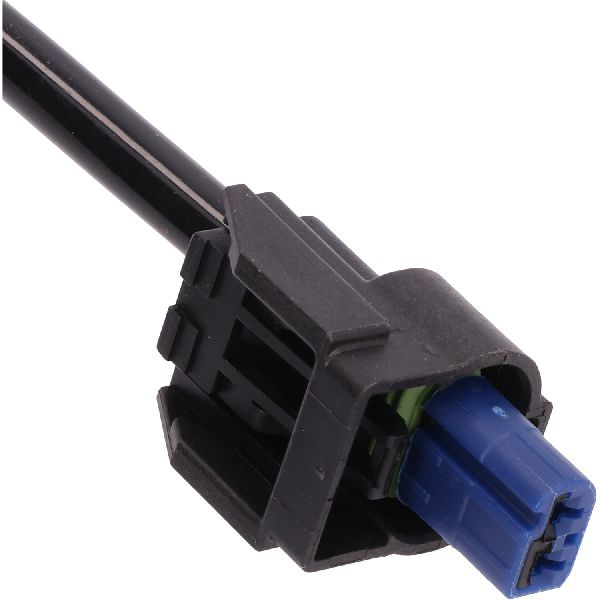
Est. part cost: $20-$75 - Wiring or Connector Issue 🔴 High Probability On 2.7L engines, the ECT sensor wiring is integrated into the knock sensor harness, which is located in the hot engine valley and can degrade. TSB SSM 48991 identifies this harness as a primary failure point. TSBs SSM 47791 and SSM 46906 also explicitly state that a connector that is not fully seated is a potential cause.
How to confirm: Visually inspect the ECT sensor's electrical connector for looseness, corrosion, or pushed-out pins. Check the wiring harness for any signs of damage, chafing, or melting. Test for a short to ground on the signal wire using a multimeter.
Typical fix: Reseat the connector securely, clean any corrosion, or repair the damaged section of the wiring harness. For the 2.7L engine, the entire knock sensor harness (which includes the ECT connector) is typically replaced.
Est. part cost: $5-$50 for a new pigtail connector if needed, or $50-$100 for the 2.7L knock sensor harness. - Low Engine Coolant Level / Air in System ⚪ Low Probability → Shop Engine Coolant / Antifreeze While less likely to cause a 'Circuit Low' code than a performance code (P0116), severe coolant loss or large air pockets can cause erratic sensor readings. Some 2.0L EcoBoost engines in this year range have known issues with coolant intrusion into the cylinders, which would cause a low coolant level and potentially misfires.
How to confirm: Check the coolant level in the reservoir when the engine is cool. If it is low, top it off and inspect the system for leaks. If the system was recently serviced, it may need to be properly bled to remove trapped air.
Typical fix: Top off coolant and bleed the system. If a leak is present, the leaking component (hose, radiator, water pump, etc.) must be repaired or replaced.
Est. part cost: $15-$30 for coolant
Rare But Worth Checking
- Faulty Powertrain Control Module (PCM): → Shop Engine Control Module (ECM) This is very rare. The PCM should only be considered after the sensor, connector, and all wiring have been thoroughly tested and confirmed to be working correctly.
Diagnosis Steps
- Verify the code with an OBD-II scanner.
- Using the scanner's live data function, observe the Engine Coolant Temperature reading with the engine cold. If it shows a very high temperature (e.g., 280°F or higher), proceed with diagnosis.
- Check the engine coolant level and condition. Ensure it is full and clean.
- Locate the ECT sensor. On the 2.0L EcoBoost, it's on the driver's side of the cylinder head, near the thermostat housing and is relatively accessible. On the 3.5L V6 and 2.7L V6 EcoBoost, it is located in the engine valley under the intake manifold, requiring significant disassembly to access.
- Thoroughly inspect the ECT sensor's electrical connector for damage, corrosion, or a loose fit. Per Ford TSBs, ensure it is fully seated.
- Inspect the wiring harness leading to the sensor for any signs of chafing, melting, or breaks. On the 2.7L, this is the knock sensor harness.
- If wiring looks good, test the circuit. Disconnect the sensor. With the key on, you should have a 5-volt reference on one wire and a good ground on the other. Check the signal wire for a short to ground. Disconnecting the sensor should set a P0118 code; if it doesn't, a short to ground is likely present in the harness.
- If the circuit tests okay, the ECT sensor itself is the most likely culprit. If it's a 2.7L engine, it is highly recommended to replace both the sensor and the knock sensor harness at the same time per TSB SSM 48991.
Parts You'll Likely Need
- Engine Coolant Temperature (ECT) Sensor
(OEM #DY1145 (Motorcraft) / 9U2Z-12A648-A (Ford))— This sensor is the most common point of failure for this code.
Trusted brands: Motorcraft, Bosch, Delphi
OEM price range: $40-$75
Aftermarket price range: $20-$50 - Knock Sensor Wiring Harness (2.7L EcoBoost)
(OEM #FT4Z-6C038-A)— For the 2.7L engine, TSB SSM 48991 identifies this harness (which includes the ECT sensor wiring) as the primary causal part. It is strongly recommended to replace it with the sensor.
Trusted brands: Ford
OEM price range: $50-$100 - Intake Manifold Gaskets — Required when replacing the ECT sensor on the 2.7L and 3.5L V6 engines, as the intake manifold must be removed.
Trusted brands: Fel-Pro, Mahle, Ford
OEM price range: $40-$80
Aftermarket price range: $20-$50
Related Codes That Often Appear With This One
- P0118 — The opposite of P0117, indicating a high circuit voltage (open circuit). It can appear if you disconnect the sensor to test the circuit.
- P1299 — A Ford-specific code indicating a cylinder head over-temperature condition was detected. The PCM may set this based on the faulty high-temperature reading from the P0117 fault.
- P0330 — Knock Sensor 2 Circuit Malfunction. On the 2.7L EcoBoost, this code is specifically mentioned in TSB SSM 48991 alongside P0117 because the ECT sensor wiring is part of the knock sensor harness. A fault in this harness can trigger both codes.
- P0116 — Indicates an issue with the ECT sensor's performance or range, often seen with circuit faults.
- P0217 — A generic code for Engine Overtemperature Condition, which can be triggered by the false high reading from the P0117 fault.
Technical Service Bulletins (TSBs) & Recalls
- SSM 48991: Addresses MIL illumination with multiple DTCs including P0117 on 2.7L engines, pointing to the ECT sensor or knock sensor wiring. The fix is to replace both the sensor and the harness. 🎬 Watch: 2.7L ECT relocation kit and TSB repair walkthrough
- SSM 47791: Notes that on 2.7L engines, DTCs including P0117 can be caused by an ECT sensor connector that is not fully seated.
- SSM 46906: Similar to SSM 47791, points to a poorly seated ECT sensor connector on 2.7L engines as a cause for P0117.
Platform-Specific Known Issues
- TSB SSM 48991: For 2015-2020 Edge models with the 2.7L EcoBoost, this TSB notes that P0117 (and other codes) can be caused by the ECT sensor or its wiring harness, and recommends replacing both the ECT sensor and the knock sensor harness (part # 12A699 in Ford-speak).
- TSB SSM 47791 & SSM 46906: For 2015-2017 Edge models with the 2.7L engine, these bulletins highlight that the P0117 code may be due to an ECT sensor connector that is not fully seated.
- Sensor Location Difficulty: On the 2.7L and 3.5L V6 en
Mechanic-Grade Diagnostic Values
- ECT Sensor Signal Voltage — expected: Typically 1.0V - 3.5V during operation. A 5V reference is supplied to the circuit.. Failure: A voltage reading below 0.2V (or 0.14V) will trigger code P0117, indicating a short to ground.
- ECT Sensor Resistance vs. Temperature — expected: Resistance is inversely proportional to temperature. A general Ford chart shows approx. 37,000 Ohms at 50°F (10°C), 9,500 Ohms at 104°F (40°C), and 2,000 Ohms at 176°F (80°C).. Failure: A reading near zero ohms indicates a shorted sensor. An open circuit (infinite resistance) would cause a P0118.
- ECT Resistance to Temperature Formula (Ford) — expected: A known formula for some Ford sensors is: Temperature (°F) = -0.0222 * (Resistance in Ohms) + 260.. Failure: A measured resistance that does not correlate with the known coolant temperature using this formula points to a faulty sensor.
Scan Tool Commands That Help
- Ford IDS (Integrated Diagnostic System): Datalogger — To monitor the live ECT sensor voltage (PID: ECT_V) and temperature (PID: ECT) to confirm the fault. A reading pegged at maximum temperature (e.g., 284°F) with a cold engine confirms a circuit low fault.
- Ford IDS (Integrated Diagnostic System): Power Balance Test — To observe if the PCM is disabling fuel injectors on certain cylinders as part of a fail-safe strategy due to the perceived overheating condition. This can help confirm the PCM is reacting to the faulty signal.
- Ford IDS (Integrated Diagnostic System): Reset KAM (Keep Alive Memory) — After replacing the ECT sensor or repairing the wiring, this function should be used to clear the PCM's learned adaptive values, forcing it to relearn with the new, correct sensor data.
Wiring & Ground Locations
- PCM Connector (2.7L Engine) — The Powertrain Control Module on the 2.7L engine utilizes connector C1551B.. This is the main connector where the ECT sensor signal terminates. Testing for continuity and shorts between the sensor connector and the pins on C1551B is a definitive way to check the wiring harness integrity.
- PCM Connector (3.5L Engine) — The Powertrain Control Module on the 3.5L engine utilizes connector C175B.. Similar to the 2.7L, this is the harness destination for the ECT sensor circuits. Pinpoint tests will reference pins on this connector.
- Engine Ground Strap — A primary ground connection runs from the negative battery terminal to the vehicle's chassis and a thick ground strap connects the chassis to the engine block/transmission case.. While less common than a sensor or signal wire fault, a poor engine ground can cause floating voltages and erratic behavior on multiple sensors that use the block for their ground path, including the ECT sensor.
- 2.7L Knock Sensor / ECT Harness — Located in the engine valley, underneath the intake manifold.. This specific harness, which contains the wiring for both the knock sensors and the ECT sensor, is the subject of TSB SSM 48991 and is a known failure point due to heat exposure in the engine valley. Damage here is a primary cause of P0117 on the 2.7L engine.
Real Owner Repair Stories
- Ford F150 Forum user 'cihmagnum' (2019 F-150 with 2.7L EcoBoost (17,000 miles)) — Rumble noise 'like rumble strips' while driving, check engine light on, temperature gauge pegged to hot, and cooling fans running at full speed even after sitting for two hours.
❌ Tried (didn't work) Initial thought was a transmission failure due to the rumble noise.
✅ What actually fixed it The dealer performed TSB 21-2168, which involved installing an ECT sensor relocation wiring assembly (Part # ML3Z-14A411-H). The PCM was shutting off fuel to three cylinders as a limp-home strategy, causing the rumble. The issue was entirely due to the failed ECT sensor circuit.
OEM Part Supersession History
E1AZ-12A648-A, F4TZ-12A648-A, F1AZ-12A648-B→9U2Z-12A648-A (Motorcraft DY1145)— Part consolidation and potential design updates over many model years.
Model Year Variations Within This Range
- 2018-2020: For models with the 2.7L EcoBoost engine, Ford introduced TSB 21-2168 and an associated ECT relocation kit (ML3Z-14A411-H) for some vehicle lines (like the F-150). This allows a technician to bypass the failed sensor under the intake and install a new one in a heater hose, drastically reducing labor time from over 5 hours to around 2. While not explicitly documented for the Edge, it's a known fix for the identical engine and issue.
Helpful Videos

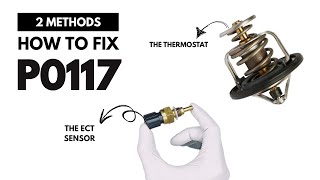
![How to Fix FORD P0117 Engine Code in 3 Minutes [2 DIY Methods / Only $7.43]](https://img.youtube.com/vi/HE0ShHfUSoI/mqdefault.jpg)

We Have This Part in Stock


The information in this article is provided for general reference and educational purposes only. Vehicle specifications, procedures, and part compatibility can vary by production date, trim level, and region. Always consult your vehicle's factory service manual and verify part numbers before purchasing or performing repairs. Safety-critical components such as airbags, seat belts, and braking systems should be installed by a qualified professional.
- Ford EDGE:
- 🧭 Diagnostic Flowchart
- 🎬 Helpful Videos
- 🛍️ Shop This Part
- What's Unique About the 2015-2020 Ford EDGE
- Symptoms You May Notice
- Most Likely Causes
- Rare But Worth Checking
- Diagnosis Steps
- Parts You'll Likely Need
- Related Codes That Often Appear With This One
- Technical Service Bulletins (TSBs) & Recalls
- Platform-Specific Known Issues
- Mechanic-Grade Diagnostic Values
- Scan Tool Commands That Help
- Wiring & Ground Locations
- Real Owner Repair Stories
- OEM Part Supersession History
- Model Year Variations Within This Range
- 🎟️ Get 5% Off