

P0117 on 2006-2010 Ford Explorer 4.0L: ECT Sensor Circuit Low Causes and Fixes
For the 2006-2010 Ford Explorer 4.0L, code P0117 almost always means the Engine Coolant Temperature (ECT) sensor has failed or its wiring is shorted to ground. The PCM interprets the resulting low voltage as an extremely high temperature (over 280°F), causing cooling fans to run constantly and the temp gauge to max out. It's a low-cost clip-in sensor on the notoriously failure-prone plastic thermostat housing. Replacing the sensor is a simple DIY fix, costing around $20-$40 for the part.
- P0117 on this Explorer is almost always a bad Engine Coolant Temperature (ECT) sensor.
- The fix is typically inexpensive and easy, involving the replacement of a clip-in sensor on the front of the engine.
- Always use a new O-ring with the new sensor to prevent coolant leaks.
- While you're working in the area, inspect the plastic thermostat housing for cracks or leaks, as it's a very common failure point on this engine.
What's Unique About the 2006-2010 Ford Explorer
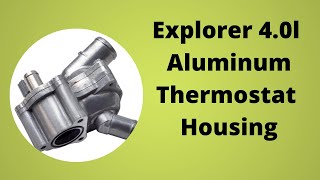
The 4.0L SOHC V6 in this generation Explorer uses a clip-in style ECT sensor located on a plastic thermostat housing. This housing is a notorious weak point, prone to cracking along its seams and causing coolant leaks. While a leak is more likely to cause other codes like P0128, the frequent need to service the housing means the ECT sensor is often disturbed. The sensor's O-ring can fail after being reseated, causing leaks, and the sensor itself is a very common failure point due to age and heat cycles. Many owners opt to replace the entire plastic housing with a more durable aluminum aftermarket version 🎬 See why mechanics recommend this aluminum housing upgrade during any related service.
Symptoms You May Notice
- Check Engine Light is on
- Temperature gauge on the dashboard may read full hot, or drop to cold suddenly
- Cooling fans run continuously, even when the engine is cold
- Engine is difficult to start, especially when cold
- Reduced fuel economy
- Engine runs rough or hesitates, especially when warming up
- A/C may blow warm air as the system prioritizes engine cooling
- Black smoke from exhaust on cold start (due to excessively rich fuel mixture)
- An "Engine Coolant Over Temperature" warning may appear on the instrument cluster
- Replacing the thermostat. While the thermostat is a common failure item on this engine, it typically causes code P0128 (Coolant Temperature Below Thermostat Regulating Temperature), not P0117.
- Replacing the wrong sensor. This engine has a two-wire ECT sensor for the PCM and a separate one-wire temperature sender for the dashboard gauge. P0117 is specifically for the two-wire sensor that provides data to the computer.
Most Likely Causes
- Failed Engine Coolant Temperature (ECT) Sensor 🔴 High Probability → Shop Engine Coolant Temperature Sensor The sensor is a very common failure item due to age and constant heat cycles. It can short internally, causing the 'Circuit Low' condition where voltage drops below the specified threshold. Manufacturer Bulletin #SSM 49407 notes that this code, along with over-temperature warnings, can be directly caused by a faulty ECT sensor.
How to confirm: With a scan tool, check the live data for the ECT sensor on a cold engine. A reading that is stuck at a very high temperature (e.g., 280°F / 140°C or higher) immediately upon a cold start confirms a failed sensor or shorted circuit. Alternatively, test the sensor's resistance when cold; it should be around 58,750 Ohms at 68°F (20°C).
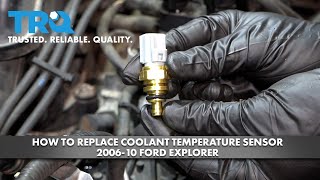
Typical fix: Replace the ECT sensor. It is held into the thermostat housing by a small clip. Ensure the new O-ring is properly seated and lubricated with clean coolant to prevent leaks.
Est. part cost: $20-$45 - Wiring or Connector Issue 🟡 Medium Probability The wiring harness is located at the top front of the engine and is exposed to heat and vibration. Wires can become brittle and short to each other or to ground, or the connector pins can corrode. Manufacturer Bulletin #SSM 47791 highlights that an ECT sensor connector that is not fully seated can also trigger this DTC.
How to confirm: Visually inspect the ECT sensor connector and its wiring for any signs of damage, corrosion (green crust), or chafing. With the key on and sensor unplugged, use a multimeter to check for ~5V reference voltage on one pin and a good ground on the other. Wiggling the harness while watching live data can also reveal intermittent shorts.
Typical fix: Repair the damaged section of wiring or replace the connector pigtail (Motorcraft WPT-1254). Ensure repairs are sealed against moisture.
Est. part cost: $15-$35 - Low Engine Coolant / Air in System ⚪ Low Probability → Shop Engine Coolant / Antifreeze The plastic thermostat housing is a very common source of coolant leaks on this engine. While a leak typically causes P0128 or overheating symptoms, severe overheating from low coolant can damage the sensor or wiring, leading to a P0117. Air pockets in the system can also cause erratic readings.
How to confirm: Check the coolant level in the overflow reservoir and radiator (when cold). Visually inspect the thermostat housing, water pump, and hoses for signs of pink/white crusty residue or active leaks.
Typical fix: Find and repair the source of the coolant leak (e.g., replace the thermostat housing, often with an aluminum upgrade). Refill and properly bleed the cooling system to remove any air pockets.
Est. part cost: $40-$120 for a new thermostat housing assembly
Rare But Worth Checking
- Faulty Powertrain Control Module (PCM): → Shop Engine Control Module (ECM) This is very rare. The PCM's internal circuit for the ECT sensor could fail, but this should only be considered after all other possibilities, especially the sensor and wiring, have been exhaustively ruled out.
Diagnosis Steps
- Connect a scan tool and confirm P0117 is the primary code. 🎬 Watch: How to test and diagnose P0117 sensor codes
- View the live data for the Engine Coolant Temperature (ECT) sensor. If it reads an extremely high, fixed value (e.g., 284°F / 140°C) on a cold engine, the sensor or its circuit is shorted.
- Visually inspect the ECT sensor's electrical connector and wiring harness for any signs of corrosion, damage, or loose connections. The sensor is located on the plastic thermostat housing at the front of the engine, just below the throttle body.
- If the wiring looks good, the most likely culprit is the ECT sensor itself. Given its low cost, replacement is often the most efficient next step.
- If a new sensor does not fix the issue, perform circuit testing. Disconnect the sensor. With the Key On, Engine Off (KOEO), use a multimeter to check the connector's terminals. One wire should have a 5-volt reference signal from the PCM, and the other should show a good ground.
- If 5V and ground are present, the wiring is likely good, pointing back to a faulty new sensor or an intermittent issue. If 5V or ground is missing, trace the respective wire back toward the PCM to find the short or open in the harness.
Parts You'll Likely Need
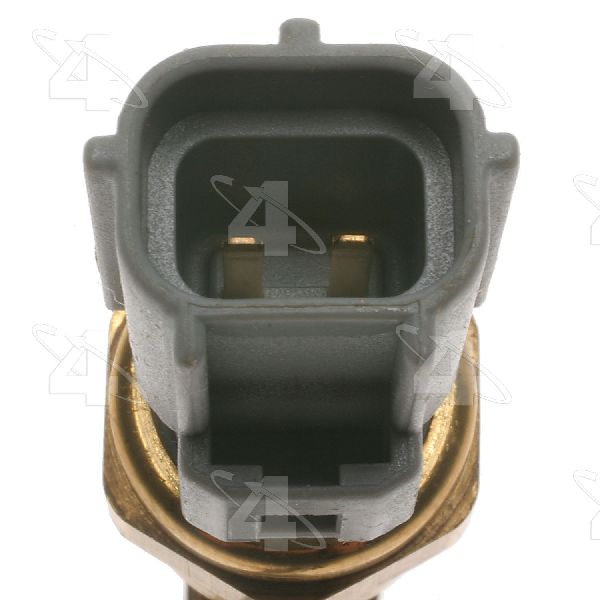
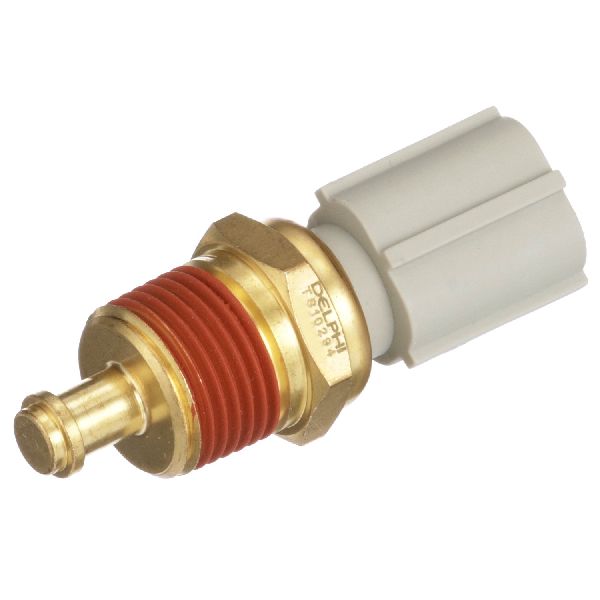
- Engine Coolant Temperature Sensor
(OEM #3L8Z-12A648-A (supersedes 1L2Z-12A648-AA, 3L8Z-12A648-BA))— This is the most common cause of P0117. The sensor fails internally, causing a short circuit.
Trusted brands: Motorcraft (DY1269), Bosch (0261231011), Delphi (TS10261), Standard Motor Products (TX123)
OEM price range: $25-$45
Aftermarket price range: $15-$30 - ECT Sensor Retaining Clip
(OEM #YL8Z-14197-AA)— The original plastic clip can become brittle from heat and break during sensor replacement. It's wise to have a new one on hand as they are inexpensive.
Trusted brands: Ford, Dorman
OEM price range: $5-$10
Aftermarket price range: $2-$5 - ECT Sensor Connector Pigtail
(OEM #Motorcraft WPT-1254)— If the connector itself is corroded, melted, or the locking tab is broken, replacing the pigtail is the correct repair.
Trusted brands: Motorcraft, Dorman
OEM price range: $25-$40
Aftermarket price range: $10-$20
Related Codes That Often Appear With This One
- P0118 — P0118 is 'ECT Circuit High'. If there is an intermittent wiring problem, the circuit could short to ground (P0117) at one moment and have an open circuit or poor connection (P0118) the next.
Platform-Specific Known Issues
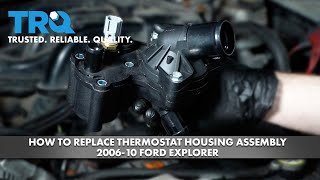
- The plastic thermostat housing on the 4.0L SOHC engine is a well-documented failure point, frequently cracking and causing coolant leaks. Many owners choose to replace the entire housing with an upgraded aluminum version when servicing any part of it, including the ECT sensor, to prevent future failures.
- When replacing the thermostat housing, it is critical to also replace the O-ring on the ECT sensor if it is being reused, or simply install a new sensor with a new O-ring to prevent leaks from the sensor port.
Mechanic-Grade Diagnostic Values
- ECT Sensor Resistance — expected: ~58,750 Ohms at 68°F (20°C) and ~1,180 Ohms at 212°F (100°C).. Failure: A reading of near-zero ohms indicates an internal short (P0117). An open circuit/infinite resistance would trigger P0118.
- ECT Sensor Signal Voltage at PCM — expected: Approximately 3.52V on a cold engine, dropping to ~0.28V when hot.. Failure: A voltage reading below the specified threshold, often under 0.20V, will trigger the P0117 code.
- ECT Sensor Connector Voltage (KOEO) — expected: One pin should have a ~5.0 volt reference (VREF) from the PCM. The other pin is the signal return (ground) and should read < 0.1 volts.. Failure: Absence of the 5V reference points to a wiring issue or a faulty PCM. Voltage on the ground wire indicates a bad ground.
- PCM Pin Voltage (KOEO, Sensor Connected) — expected: At PCM connector C175e, Pin 38 (Light Green/Red wire) should show voltage corresponding to temperature (e.g., ~3.0-3.5V at 70°F). Pin 35 (Grey/Red wire) is the signal return/ground.. Failure: Testing at the PCM connector helps differentiate between a wiring fault and a faulty PCM. If voltage is correct at the sensor but incorrect at the PCM, there is a harness issue.
Wiring & Ground Locations
- G106 — On the right side of the engine compartment.. This is a primary ground point for engine components. While wiring diagrams show the ECT sensor ground (signal return) terminates at the PCM, a poor main engine ground at G106 can cause floating voltages and erratic sensor readings across the system.
- ECT Sensor Connector — On the plastic thermostat housing at the front of the engine.. This is the primary point of failure for wiring issues. The two wires are the ECT signal (Light Green/Red) and the Signal Return/Ground (Grey/Red). A short between these two wires will cause a P0117.
- PCM Connector C175e — At the Powertrain Control Module (PCM), located on the right side of the engine bulkhead/firewall.. This is the termination point for the ECT circuit. Pin 38 is the ECT signal, and Pin 35 is the signal return. Testing here is the final step to confirm if the fault is in the wiring or the PCM itself.
OEM Part Supersession History
1L2Z-12A648-AA→3L8Z-12A648-BA, then 3L8Z-12A648-A— Standard part revision and consolidation by Ford.
Heads up: The latest part number, 3L8Z-12A648-A (also sold as Motorcraft DY1269), is the correct service replacement for the entire 2006-2010 model range and is fully backward compatible.
Diagnostic Flowchart
Other Known Issues on This Vehicle
Issues unrelated to this code that are worth knowing about as an owner of this generation:
- Timing Chain Cassette Rattle / Failure 🔴 High — Very common, especially on higher mileage engines or those with poor oil change history. A startup rattle for 1-2 seconds is a key symptom. The issue stems from plastic timing chain guides and hydraulic tensioners. (Ref: Multiple TSBs were issued for earlier models (e.g., 99-26-05), but the fundamental design remained prone to wear throughout its life.)
- Cracked Plastic Thermostat Housing 🔴 High → Shop Integrated Thermostat Housing Assembly — Extremely common. The plastic housing develops cracks along its seams, causing significant coolant leaks. Often fails after 100,000 miles.
- 5R55S Automatic Transmission Failure 🔴 High — Common, with issues like harsh shifting, delayed engagement, and complete failure often appearing after 50,000-100,000 miles. Worn servo bores in the aluminum case are a primary cause.
- Cracked Exhaust Manifolds 🟠 Medium — A ticking noise, especially on a cold start that goes away as the engine warms, is a classic symptom. The cast iron manifolds are prone to cracking.
- Intake Manifold Gasket Leaks 🟠 Medium → Shop Engine Intake Manifold — The gaskets between the plastic upper intake and the engine can fail, causing vacuum leaks that lead to a fluctuating idle.
- Blend Door Actuator Failure 🟡 Low — Results in an inability to change cabin temperature from hot to cold (or vice-versa). A clicking or thumping sound from the dashboard is a common indicator.
Used vs. New Parts: Buying Guide for This Vehicle
When a used part is the smart pick: For this repair, a used part is generally not recommended for the sensor itself due to its low cost and high failure rate. However, sourcing a used OEM aluminum thermostat housing from a later model Ford/Mercury/Mazda vehicle at a junkyard can be a cost-effective upgrade over buying a new plastic one.
Donor-vehicle mileage cap: roughly under 120000 miles for the part to have meaningful remaining life.
What to inspect on the donor part:
- For a used thermostat housing, inspect carefully for any hairline cracks, especially around the seams and sensor ports.
- Ensure all threaded holes are clean and not stripped.
- Check for heavy corrosion or pitting on the coolant sealing surfaces.
- Verify it is the correct housing; the 4.0L SOHC had several variations over its life, but they were consistent from 2006-2010.
Aftermarket brands forum-validated for this vehicle:
- For the ECT sensor: Motorcraft, Bosch, Delphi, Standard Motor Products (SMP).
- For an upgraded aluminum thermostat housing: Dorman, Mitzone, Miliparts, and other brands offer aluminum replacements for the failure-prone plastic original.
Brands owners have reported issues with on this vehicle:
- No-name, unbranded electronic sensors from online marketplaces should be avoided, as their thermistor accuracy and longevity can be questionable, leading to a repeat failure.
Real Owner Stories
Aggregated from forums and TSBs cited above. Mileages and costs reflect what owners reported in those sources.
2007 Ford Explorer 4.0L V6
Symptoms: The P0117 code appeared along with the temperature gauge dropping to cold, the A/C blowing warm air, and the traction control light activating.
What fixed it: Replaced a warped thermostat and a leaking thermostat housing.
Source hint: 2carpros.com: A detailed owner experience from 2018 describes a P0117 code accompanied by the temp gauge dropping to cold, A/C blowing warm, and the traction control light activating.
2008 Ford Explorer 4.0L SOHC V6 — ~100000 miles
Symptoms: The plastic thermostat housing developed cracks along its seams, leading to coolant leaks and erratic sensor readings.
What fixed it: Upgraded the plastic thermostat housing to an all-metal (aluminum) aftermarket unit.
Source hint: explorerforum.com: A thread titled 'All Metal 08' Explorer Thermostat Housing' discusses the common failure of the plastic housing
Ford Ranger 4.0L SOHC V6
Symptoms: P0117 code persisted even after diagnostic steps; owner experienced confusion between the ECT sensor and the gauge sender during troubleshooting.
What fixed it: Diagnostic process included replacing the sensor and testing the circuit for shorts.
Source hint: ranger-forums.com: A thread titled 'Troubleshooting help needed, P0117 won't go away.' details a user's diagnostic process
Ford Owner Report
Symptoms: An owner reported that P0117 was traced to a known issue involving engine overheating, which can lead to cylinder head cracks and leaks into the oil (NHTSA ODI #11613716).
What fixed it: The repair involved addressing the underlying overheating condition as described in related manufacturer recalls.
Related OBD-II Codes
Frequently Asked Questions
My 2007 Explorer's temp gauge dropped to cold and the A/C stopped working. Is this related to P0117?
Is there a specific connector pigtail I should use for the ECT sensor wiring repair?
Should I replace the plastic thermostat housing while fixing the P0117 code?
What should the resistance of the ECT sensor be on my 4.0L SOHC V6?
Why is my Explorer blowing black smoke on cold starts with this code?
Can I just replace the O-ring if I'm reusing my old sensor?
Helpful Videos
We Have This Part in Stock


The information in this article is provided for general reference and educational purposes only. Vehicle specifications, procedures, and part compatibility can vary by production date, trim level, and region. Always consult your vehicle's factory service manual and verify part numbers before purchasing or performing repairs. Safety-critical components such as airbags, seat belts, and braking systems should be installed by a qualified professional.
- Ford Explorer:
- 🧭 Diagnostic Flowchart
- 🎬 Helpful Videos
- 🛍️ Shop This Part
- What's Unique About the 2006-2010 Ford Explorer
- Symptoms You May Notice
- Most Likely Causes
- Rare But Worth Checking
- Diagnosis Steps
- Parts You'll Likely Need
- Related Codes That Often Appear With This One
- Platform-Specific Known Issues
- Mechanic-Grade Diagnostic Values
- Wiring & Ground Locations
- OEM Part Supersession History
- Other Known Issues on This Vehicle
- Used vs. New Parts: Buying Guide for This Vehicle
- Real Owner Stories
- 2007 Ford Explorer 4.0L V6
- 2008 Ford Explorer 4.0L SOHC V6 — ~100000 miles
- Ford Ranger 4.0L SOHC V6
- Ford Owner Report
- Related OBD-II Codes
- Frequently Asked Questions
- 🎟️ Get 5% Off