

P0117 on 2009-2019 Ford Flex 3.5L: Cylinder Head Temperature Sensor Causes and Fixes
P0117 on a Ford Flex means the Cylinder Head Temperature (CHT) sensor circuit has a low voltage fault, which the computer interprets as an overheating engine. The most common fix is replacing the CHT sensor itself. On 3.5L Duratec (non-turbo) engines, this is a difficult job requiring intake manifold removal; on 3.5L EcoBoost engines, it is more accessible.
- P0117 on a Ford Flex points to a problem with the Cylinder Head Temperature (CHT) sensor circuit, not a traditional coolant sensor.
- The most likely cause is a failed CHT sensor, followed by a wiring short.
- The repair is significantly more difficult and costly on the 3.5L Duratec (non-turbo) engine because the sensor is buried under the intake manifolds.
- On the 3.5L EcoBoost (twin-turbo) engine, the sensor is more accessible on the back of the passenger-side cylinder head.
- Verify which engine you have before ordering parts or estimating repair time, as the gaskets and labor involved are completely different.
What's Unique About the 2009-2019 Ford Flex
The key challenge on the Ford Flex 3.5L platform is that it uses a Cylinder Head Temperature (CHT) sensor buried in the engine, not an easy-to-access coolant sensor. The repair difficulty varies dramatically between the two available engines. On the naturally aspirated 3.5L Duratec V6, the sensor is located deep in the engine valley between the cylinder heads, and replacing it requires removing the upper and lower intake manifolds—a significant labor-intensive job. On the 3.5L EcoBoost V6, the sensor is on the rear of the passenger-side cylinder head and can be accessed from the top by lying on the engine or through the passenger-side wheel well, making it a much more straightforward repair.
Generation note: The Ford Flex was produced in a single generation from 2009 to 2019, with a major facelift in 2013. For this specific code, the primary difference is not the model year but which 3.5L V6 engine the vehicle is equipped with (naturally aspirated Duratec vs. twin-turbo EcoBoost), as the sensor location and repair procedure are completely different.
Symptoms You May Notice
- Check Engine Light is illuminated
- Cooling fans run constantly at high speed, even when the engine is cold
- Temperature gauge on the dashboard may instantly peg to maximum (Hot) or drop to minimum (Cold)
- Engine may be difficult to start, especially when cold
- Rough idle or hesitation, particularly before the engine warms up
- Noticeably reduced fuel economy
- Black smoke from the exhaust due to a rich fuel mixture
- Engine may start and then immediately die
- An "Engine Coolant Over Temperature" warning may appear on the instrument cluster (as noted in TSB Bulletin #TSB 21-2168).
- Replacing the thermostat. While a stuck thermostat can cause overheating or overcooling issues, it will not cause a 'Circuit Low' fault code like P0117.
- Replacing the coolant. Old or low coolant can cause performance issues but will not directly cause a sensor circuit fault code.
Most Likely Causes
- Failed Cylinder Head Temperature (CHT) Sensor 🔴 High Probability → Shop Engine Cylinder Head The sensor is a thermistor that can fail internally over time, developing a short that sends an incorrect low voltage signal. Manufacturer documentation such as TSB Bulletin #TSB 21-2168 indicates that an intermittent drop in the engine coolant temperature signal can trigger P0117 and related cooling system warnings.
How to confirm: With a scan tool, observe the live engine temperature data. If it reads an impossibly high temperature (e.g., 280°F+) or an impossibly low temperature (e.g., -40°F) immediately after a cold start, the sensor is almost certainly bad. You can also test the sensor's resistance with a multimeter; it should be around 37,000 Ohms (37 kΩ) at room temperature (approx. 68°F/20°C). A reading near 0 Ω indicates a shorted sensor.
Typical fix: Replace the CHT sensor. This is a high-effort job on the 3.5L Duratec engine requiring intake manifold removal and gasket replacement. It is a moderate-effort job on the 3.5L EcoBoost.
Est. part cost: $25-$50 for the sensor, plus $50-$150 for intake gaskets if applicable. - Shorted Wiring Harness 🟡 Medium Probability The wiring harness, especially on the Duratec engine where it is routed under the intake manifold, can become brittle from heat cycles or damaged by rodents, causing the signal wire to short to ground.
How to confirm: Disconnect the CHT sensor connector. Inspect the harness for visible damage like chafing, melting, or cracks. Use a multimeter to check for continuity between the signal wire at the PCM connector and ground. If there is continuity, a short exists in the harness.
Typical fix: Locate the short in the wiring harness and repair the damaged section. This may require removing sections of loom and tape. It is often wise to replace the connector pigtail at the same time due to heat degradation.
Est. part cost: $5-$20 for wiring repair supplies. - Damaged or Corroded Connector ⚪ Low Probability The connector is exposed to engine heat and vibration, which can cause the plastic to become brittle or the pins to lose tension or corrode. Manufacturer service bulletin #SSM 47791 notes that on similar Ford platforms, P0117 can be caused by an engine coolant temperature sensor connector that is not fully seated.
How to confirm: Visually inspect the CHT sensor connector for broken plastic, pushed-out pins, or green/white corrosion. Ensure it 'clicks' firmly into place.
Typical fix: Clean the connector pins with electrical contact cleaner or replace the connector pigtail if it is damaged.
Est. part cost: $15-$30 for a new pigtail connector.
Rare But Worth Checking
- Faulty Powertrain Control Module (PCM): → Shop Engine Control Module (ECM) This is extremely rare. Before condemning the PCM, all other possibilities (sensor, wiring, connectors) must be exhaustively ruled out. A faulty PCM might not be sending the correct 5-volt reference signal to the sensor.
Diagnosis Steps
- Connect an OBD-II scanner and verify P0117 is the active code. Note any other codes present.
- View live data on the scanner. Check the Engine Coolant Temperature (or CHT) reading. If it shows an extreme value (e.g., >280°F or <-30°F) on a cold engine, the sensor or its circuit is faulty.
- Turn the engine off. Locate the CHT sensor. On the 3.5L Duratec, this requires removing the intake manifold. On the 3.5L EcoBoost, it's on the back of the passenger cylinder head.
- Inspect the sensor's electrical connector and wiring for any signs of damage, corrosion, or rodent activity. Ensure the connector is fully seated, as an unseated connector is a known cause for this code (Ref: Bulletin #SSM 47791).
- Disconnect the sensor. With the key on and engine off, use a multimeter to check for a 5-volt reference on one wire and a good ground on the other at the connector.
- If the 5V reference or ground is missing, there is a wiring issue between the connector and the PCM.
- If 5V and ground are present, the wiring is likely okay. The fault is almost certainly the CHT sensor itself.
- Replace the CHT sensor. On Duratec engines, you must also replace the upper and lower intake manifold gaskets.
- After replacement, clear the codes with the scanner and perform a test drive to ensure the temperature reads normally and the code does not return.
Parts You'll Likely Need
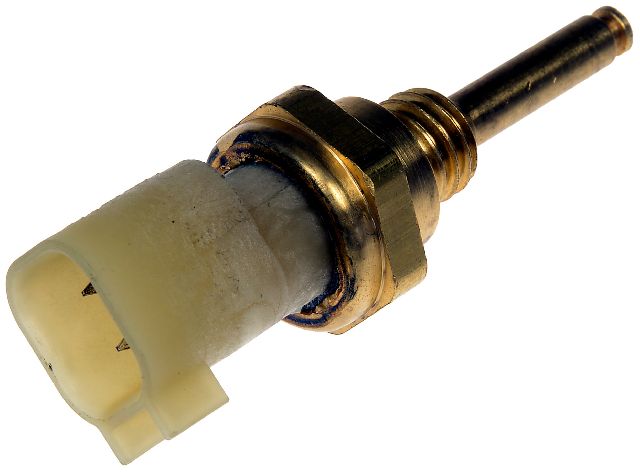
- Cylinder Head Temperature (CHT) Sensor
(OEM #9L8Z-6G004-E)— This sensor is the most common failure point for code P0117. It directly measures the engine temperature that the PCM relies on.
Trusted brands: Motorcraft, Standard Motor Products (SMP), Delphi
OEM price range: $25-$45
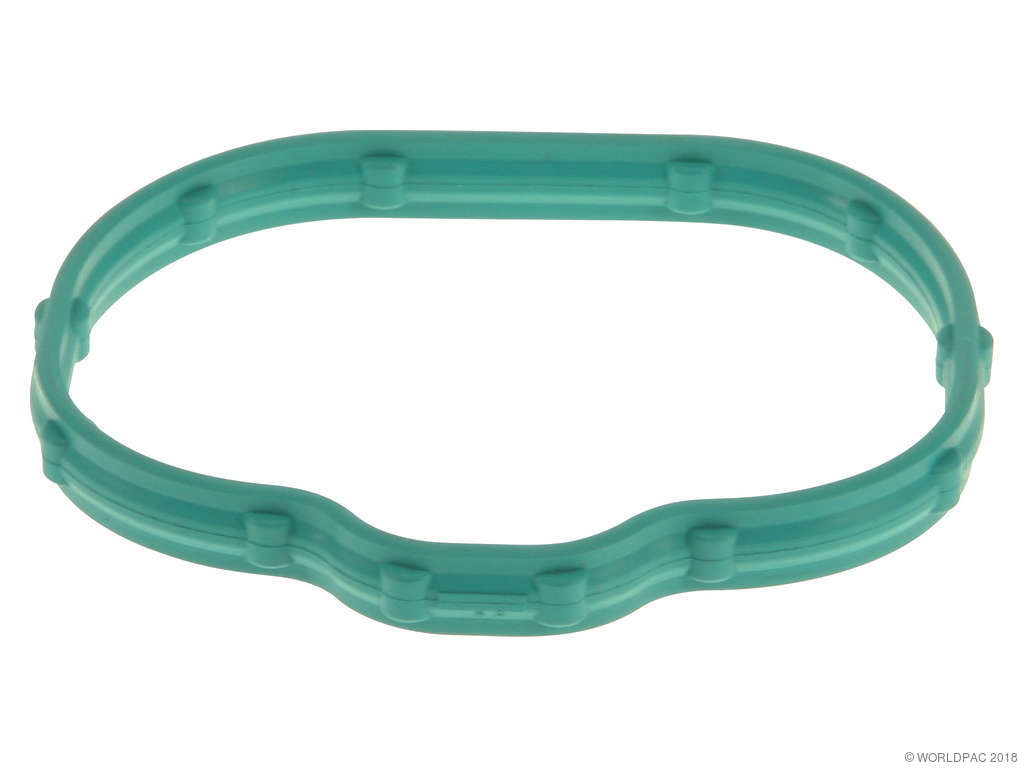
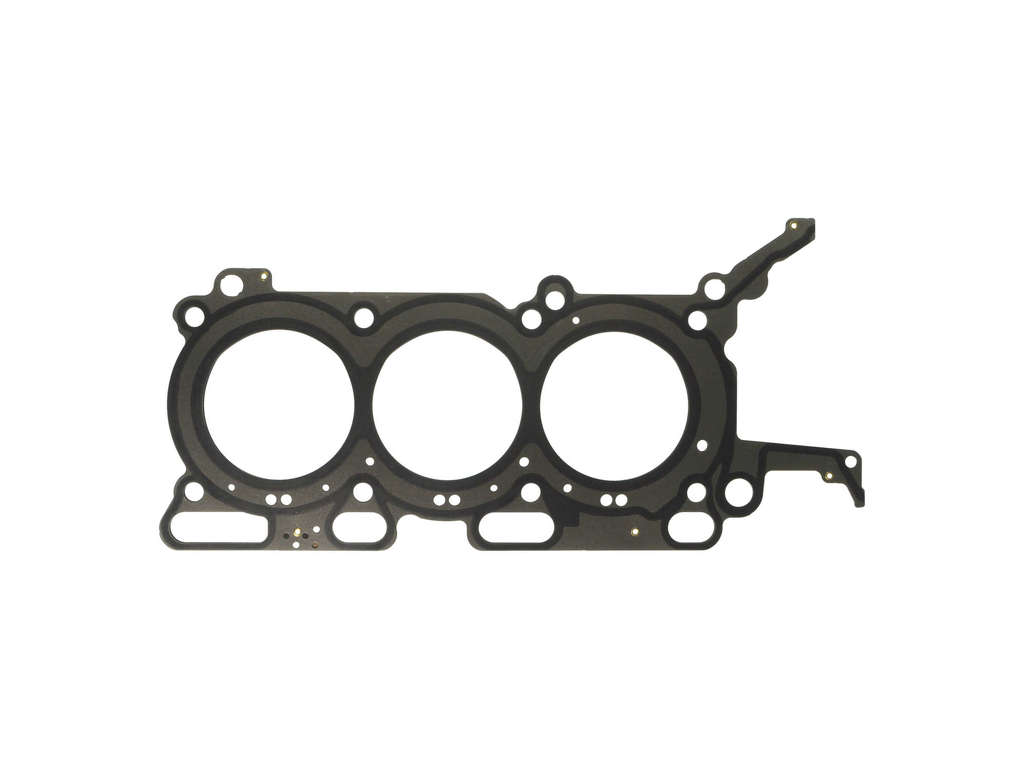
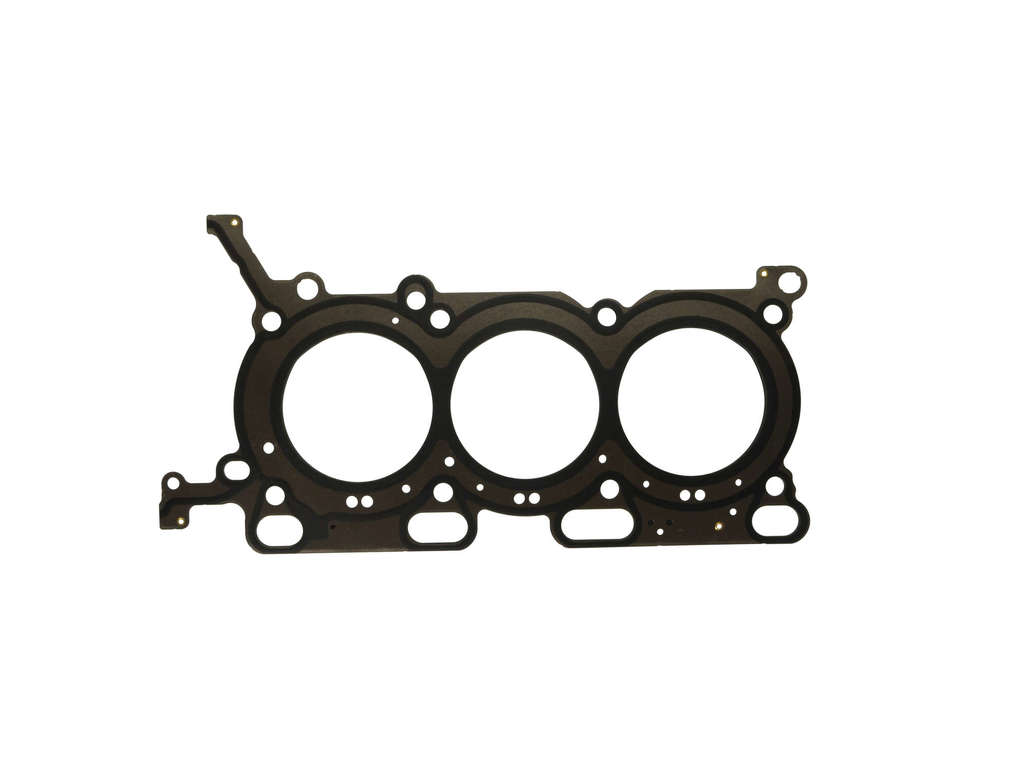
Aftermarket price range: $15-$30 - Upper and Lower Intake Manifold Gasket Set — Required for replacing the CHT sensor on the 3.5L Duratec (naturally aspirated) engine, as the intake manifolds must be removed for access.
Trusted brands: Motorcraft, Fel-Pro, Mahle
OEM price range: $80-$150
Aftermarket price range: $40-$90
Related Codes That Often Appear With This One
- P0118 — This code is for 'CHT Sensor Circuit High Input'. It's the opposite of P0117 and points to an open circuit or a different type of sensor failure. Seeing them intermittently together could indicate a failing sensor or loose connection.
- P1289 — This is a Ford-specific code for 'Cylinder Head Temperature Sensor Circuit High Input', functionally similar to P0118. It indicates the PCM is seeing a signal voltage above the expected range.
- P1299 — This is a Ford-specific code for 'Cylinder Head Temperature Sensor Detected Engine Overheating Condition'. The PCM may set this code based on the faulty high-temperature reading from the P0117 fault, even if the engine is not actually overheating.
Platform-Specific Known Issues
- The labor cost for this repair is significantly higher on the 3.5L Duratec engine compared to the 3.5L EcoBoost engine due to the inaccessible location of the CHT sensor under the intake manifolds.
- DIY difficulty for the Duratec engine is high (5/5) and requires significant disassembly, while the EcoBoost is more manageable for an experienced DIYer (2/5).
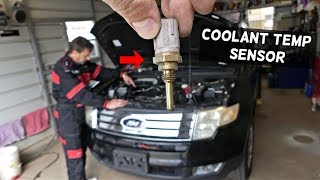
- A YouTube video by 'COOLANT TEMPERATURE SENSOR LOCATION REPLACEMENT 3.5 FORD EDGE FLEX TAURUS FUSION LINCOLN MKX MKZ' provides a detailed walkthrough of the difficult replacement process on the 3.5L Duratec engine, showing the intake manifold removal.
Mechanic-Grade Diagnostic Values
- CHT Sensor Resistance (Cold Engine) — expected: ~37,000 Ω (37 kΩ) @ 68°F (20°C). Failure: A resistance near 0 Ω indicates a shorted sensor, which causes P0117. Infinite resistance (open circuit) would cause P0118.
- CHT Sensor Resistance (Warm Engine) — expected: ~2,400 Ω (2.4 kΩ) @ 176°F (80°C) or ~1,100 Ω (1.1 kΩ) @ 212°F (100°C). Failure: Resistance does not decrease as the engine warms, or the value is drastically different.
- CHT Sensor Circuit Voltage (Key On, Engine Off, Cold) — expected: ~3.0V - 4.0V. Failure: A voltage below 0.2V indicates a short to ground in the wiring or a shorted sensor, triggering P0117.
- Reference Voltage (VREF) at Harness Connector — expected: 5 Volts DC (with sensor unplugged, key on, engine off). Failure: Missing or low reference voltage points to a problem with the PCM or the wiring between the PCM and sensor.
Wiring & Ground Locations
- CHT Sensor Connector — On the 3.5L Duratec, it is under the lower intake manifold. On the 3.5L EcoBoost, it is on the rear of the passenger-side cylinder head.. This is the primary connection point to test. It is a 2-wire connector. One wire is the signal, the other is the signal return (ground) from the PCM. The connector itself can fail from heat and vibration.
- CHT Sensor Pigtail Connector — Connects the engine wiring harness to the CHT sensor.. The plastic can become brittle and fail, or wires can fray near the connector. Replacing the pigtail (Standard Motor Products HP3945 or equivalent) is often done when replacing the sensor, especially on the high-labor Duratec engine.
- Engine Block Ground — The main engine ground is typically a strap from the chassis to a stud on the side of the engine block.. While the CHT sensor uses a dedicated signal return to the PCM, a poor main engine ground can cause a variety of electrical issues and voltage offsets that could potentially interfere with sensor readings. Ensuring this ground is clean and tight is a good practice during any electrical diagnosis.
Real Owner Repair Stories
- Ford Truck Enthusiasts Forum (Ford Truck with Mini Maxx tuner (engine not specified, but symptoms and code are identical)) — Check engine light, P0117 code, scan tool reading 302°F on a cold engine, engine in de-fueling/limp mode.
❌ Tried (didn't work) Replacing the ECT (CHT) sensor, Replacing the EGR valve and housing
✅ What actually fixed it The user was advised that since the problem persists with a new sensor and occurs instantly with the key on (engine off), the issue is a short circuit to ground in the wiring harness between the sensor and the PCM, or a rare internal PCM fault. The final fix was not posted, but the diagnosis pointed definitively to a wiring short. - NHTSA ODI #11613716 — An owner reported pulling code P0117 and traced the issue to concerns regarding cylinder head overheating, which can lead to cracks and leaks into the oil.
OEM Part Supersession History
9L8Z-6G004-E→Motorcraft DY-1145— This is the standard Motorcraft service part number that corresponds to the OEM engineering number.
Heads up: Ford recommends that if the CHT sensor is removed for any reason, it must be replaced with a new one, as the act of removal can damage it.
Diagnostic Flowchart
Other Known Issues on This Vehicle
Issues unrelated to this code that are worth knowing about as an owner of this generation:
- Internal Water Pump Failure (3.5L Duratec) 🔴 High → Shop Engine Water Pump — Common after 80,000-120,000 miles. Failure is catastrophic as it leaks coolant directly into the engine oil, destroying timing components. (Ref: No recall, but numerous complaints and a class-action lawsuit have been filed regarding this design.)
- Power Transfer Unit (PTU) Failure (AWD Models) 🔴 High — Commonly fails due to fluid overheating and breakdown. The unit is not easily serviceable ('fill for life'), leading to failure often between 60,000-100,000 miles.
- Timing Chain Rattle on Startup (3.5L EcoBoost) 🟠 Medium — Prevalent in early (pre-2016) EcoBoost engines. Caused by stretched timing chains and/or failing VCT phasers. Often appears on cold starts. (Ref: Multiple TSBs exist, including TSB 18-2305 and 23-2143, which outline procedures for replacing chains and VCT units.)
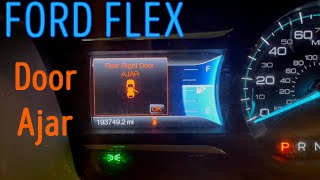
- Door Ajar Sensor Failure 🟡 Low — Extremely common across many Ford models of this era. The switch inside the door latch fails, causing the 'door ajar' light to stay on, draining the battery, and causing the alarm to go off randomly. (Ref: No recall, but it is a widely documented problem with many DIY workarounds and repair guides available.)
- Electric Power Steering Assist (EPAS) Failure 🔴 High — More common on 2011-2013 models. The power steering assist can fail intermittently or completely while driving, making the vehicle very difficult to steer. (Ref: Subject to recalls and extended warranty programs for certain model years.)
Used vs. New Parts: Buying Guide for This Vehicle
When a used part is the smart pick: For this repair, using a used part is almost never a smart choice. The CHT sensor is an inexpensive electronic component that degrades with heat cycles. The primary cost of the repair, especially on the Duratec engine, is the significant labor to access the sensor. Installing a used sensor with unknown remaining life creates a high risk of having to repeat the entire labor-intensive job in the near future.
What to inspect on the donor part:
- Not applicable. Do not use a used CHT sensor for this repair.
OEM-only on this vehicle (don't cheap out):
- While not strictly OEM-only, using a high-quality part is critical. Given the labor involved, the small price difference between a questionable aftermarket part and an OEM Motorcraft or top-tier aftermarket brand is not worth the risk.
Aftermarket brands forum-validated for this vehicle:
- Motorcraft (OEM)
- Standard Motor Products (SMP)
- Walker Products
- Delphi
Brands owners have reported issues with on this vehicle:
- Avoid unbranded, 'white-box' parts from online marketplaces, as their reliability is unverified and the labor cost of a premature failure is too high.
Real Owner Stories
Aggregated from forums and TSBs cited above. Mileages and costs reflect what owners reported in those sources.
2011 Ford Flex 3.5L Duratec
Symptoms: Owner confirmed the P0117 code and noted the high labor cost associated with the repair due to the location of the sensor.
What fixed it: Replacing the CHT sensor and removing the intake manifold.
Source hint: https://www.fordflex.net/forums/viewtopic.php?t=14281
Ford Flex 3.5L V6
Symptoms: The owner described symptoms of constant fan operation and a temperature gauge that was pegged to the maximum.
What fixed it: Replacing the CHT sensor.
Source hint: https://www.fordflex.net/forums/viewtopic.php?t=20841
Ford Escape Owner (Cross-Platform Reference)
Symptoms: An owner reported code P0117 (NHTSA ODI #11613716) and noted concerns about cylinder head overheating causing cracks and leaks into the oil.
What fixed it: The owner traced the issue to a Ford recall (13V583000) related to engine overheating.
Frequently Asked Questions
Why is the repair cost so much higher for my 2011 Ford Flex with the 3.5L Duratec compared to an EcoBoost model?
My 2013 Flex has a P0117 code and the cooling fans are screaming on high even when I first start it. Is this normal for this code?
Can I just replace the sensor myself on my 3.5L Duratec Flex?
Is there a TSB for the timing chain rattle I'm hearing along with my temperature sensor issues on my EcoBoost Flex?
What should the resistance be for a healthy CHT sensor on my Ford 3.5L engine?
Helpful Videos

![How to Fix FORD P0117 Engine Code in 3 Minutes [2 DIY Methods / Only $7.43]](https://img.youtube.com/vi/HE0ShHfUSoI/mqdefault.jpg)




We Have This Part in Stock


The information in this article is provided for general reference and educational purposes only. Vehicle specifications, procedures, and part compatibility can vary by production date, trim level, and region. Always consult your vehicle's factory service manual and verify part numbers before purchasing or performing repairs. Safety-critical components such as airbags, seat belts, and braking systems should be installed by a qualified professional.
- Ford Flex:
- 🧭 Diagnostic Flowchart
- 🎬 Helpful Videos
- 🛍️ Shop This Part
- What's Unique About the 2009-2019 Ford Flex
- Symptoms You May Notice
- Most Likely Causes
- Rare But Worth Checking
- Diagnosis Steps
- Parts You'll Likely Need
- Related Codes That Often Appear With This One
- Platform-Specific Known Issues
- Mechanic-Grade Diagnostic Values
- Wiring & Ground Locations
- Real Owner Repair Stories
- OEM Part Supersession History
- Other Known Issues on This Vehicle
- Used vs. New Parts: Buying Guide for This Vehicle
- Real Owner Stories
- 2011 Ford Flex 3.5L Duratec
- Ford Flex 3.5L V6
- Ford Escape Owner (Cross-Platform Reference)
- Frequently Asked Questions
- 🎟️ Get 5% Off