

P0117 on 2008-2011 Ford Focus 2.0L: CHT Sensor Causes and Fixes
On a 2008-2011 Ford Focus, P0117 is almost always caused by a failed Cylinder Head Temperature (CHT) sensor. This sensor is located between the spark plugs and can be replaced without draining the coolant. Expect the part to cost $25-$50. A special extra-deep 19mm socket is often required for the job.
- P0117 on a 2008-2011 Focus refers to the Cylinder Head Temperature (CHT) sensor, not a traditional coolant sensor.
- The most likely cause is a failed CHT sensor, which is an affordable and DIY-friendly repair.
- You do not need to drain the coolant to replace this sensor, but you will likely need a special extra-deep 19mm socket.
- While you're replacing the sensor, inspect the valve cover for oil leaks, as this can cause the new sensor to fail prematurely.
- A scan tool showing a maxed-out temperature reading on a cold engine is a definitive sign of this sensor circuit failure.
What's Unique About the 2008-2011 Ford Focus
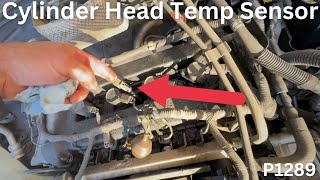
Unlike many vehicles that use an Engine Coolant Temperature (ECT) sensor submerged in coolant, the 2.0L Duratec engine in this Focus uses a Cylinder Head Temperature (CHT) sensor. This sensor threads directly into the metal of the cylinder head between the #2 and #3 spark plugs and infers coolant temperature from the engine's metal temperature. A major advantage of this design is that the sensor can be replaced without draining the entire cooling system, making the repair much cleaner and simpler. 🎬 Watch this easy how-to for replacing the CHT sensor. This design also provides a more direct reading of engine metal temperature, which can help the PCM protect the engine during a sudden coolant loss event.
Symptoms You May Notice
- Check Engine Light is on
- Temperature gauge reads maximum (hot) or fluctuates erratically
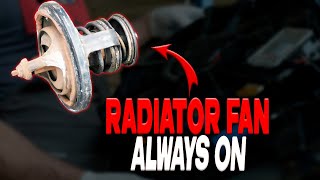
- Cooling fans run continuously, even when the engine is cold 🎬 See why your radiator fan might be running constantly.
- Air conditioning may not work correctly or may be intermittent
- Engine may run rough or hesitate
- Hard starting, especially when the engine is cold
- Reduced fuel economy
- Engine enters 'limp mode' (reduced power), often accompanied by code P1299
- Replacing the thermostat without diagnosing the sensor circuit first. P0117 is an electrical code, not a mechanical temperature code like P0128.
- Assuming the engine is actually overheating without verifying with a scan tool. The code indicates a sensor circuit failure that *reports* high heat, which may not be real.
- Replacing the wrong sensor. This car uses a CHT, not a traditional ECT sensor in a coolant passage.
Most Likely Causes
- Faulty Cylinder Head Temperature (CHT) Sensor 🔴 High Probability → Shop Engine Cylinder Head This is the most common failure component for this code on this platform, as documented by countless owner experiences and parts replacement guides. The sensor can fail internally, causing a short circuit that the PCM reads as an extremely high temperature.
How to confirm: Using a scan tool, check the live data for the CHT. If it reads a maximum temperature (e.g., 280°F+) when the engine is cold, the sensor is likely shorted internally. Disconnecting the sensor should cause the reading to drop to a default low (-40°F), confirming the wiring is likely intact 🎬 Watch: How to test and replace the temperature sensor. and the sensor is the fault. A good sensor should have a resistance of around 58,750 ohms when cold and drop to around 1,180 ohms when hot.
Typical fix: Replace the Cylinder Head Temperature (CHT) sensor.
Est. part cost: $25-$50 - Damaged CHT Sensor Wiring or Connector 🟡 Medium Probability The sensor is located on top of the engine, where heat can make the wiring and connector brittle over time. Oil leaks from the valve cover gasket can also contaminate and damage the connection. Ford issued TSB 11-10-5 for corrosion in the CHT sensor connector (C1164) due to water intrusion, which can cause this code. Manufacturer service bulletin SSM 47791 also notes that across various Ford platforms, P0117 can be triggered by a sensor connector that is not fully seated.
How to confirm: Visually inspect the wiring harness and connector for cracks, corrosion, oil saturation, or breaks. Check for a short to ground on the signal wire using a multimeter. Specifically check for signs of water and corrosion as noted in TSB 11-10-5.
Typical fix: Repair the damaged section of wiring or replace the pigtail connector. The Motorcraft pigtail is part number WPT-985.
Est. part cost: $20-$40 - Stuck Thermostat or Other Cooling System Issue ⚪ Low Probability → Shop Integrated Thermostat Housing Assembly While not a direct cause of the electrical fault code P0117, an actual overheating event from a stuck thermostat or low coolant can, in some rare cases, damage the sensor or wiring, leading to the code. However, P0117 specifically points to an electrical circuit fault (short to ground), making this an unlikely primary cause. Manufacturer bulletin TSB 21-2168 notes that an intermittent drop in engine coolant temperature can sometimes be associated with P0117 and related codes.
How to confirm: If the engine is genuinely overheating (steam, boiling sounds), address the mechanical cooling system issue first. A P0117 code is for a circuit low (short), which is the opposite of what would be expected from a simple overheating scenario.
Typical fix: Replace the thermostat and housing; bleed the cooling system.
Est. part cost: $40-$80
Rare But Worth Checking
- Faulty Powertrain Control Module (PCM): → Shop Engine Control Module (ECM) This is extremely rare. The PCM should only be considered after all other possibilities, including the sensor and wiring, have been thoroughly tested and ruled out. One forum user reported a dealer incorrectly blaming the PCM/engine block when the sensor was the actual issue.
Diagnosis Steps
- Connect an OBD-II scanner and confirm P0117 is the active code. Note if P1299 is also present.
- View the live data stream for the Cylinder Head Temperature (CHT). With a cold engine, it should be close to the ambient air temperature. If it reads an abnormally high temperature (e.g., 250°F or higher), proceed to the next step.
- Locate the CHT sensor. It is on top of the cylinder head, between the spark plugs for cylinders #2 and #3, under the plastic engine cover and a small rubber boot.
- Visually inspect the sensor's connector (C1164) and wiring for any signs of damage, corrosion, or oil contamination from a leaking valve cover gasket. Pay close attention to signs of water intrusion as described in TSB 11-10-5.
- With the key on and engine off, disconnect the CHT sensor's electrical connector. The temperature reading on the scan tool should immediately drop to a very low default value (like -40°F).
- If the temperature drops as expected when disconnected, the wiring and PCM are likely good, and the CHT sensor has failed internally (shorted). Replace the sensor.
- If the temperature reading does not change when disconnected, there is likely a short to ground in the wiring harness between the sensor and the PCM. Inspect the harness carefully and repair as needed. The pigtail connector is a common point of failure.
- If the sensor and wiring are confirmed to be good, the issue may be with the PCM, but this is highly unlikely.
Parts You'll Likely Need
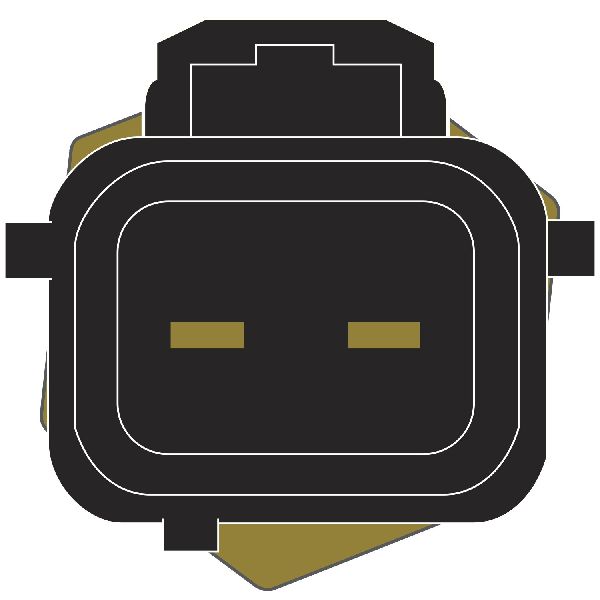
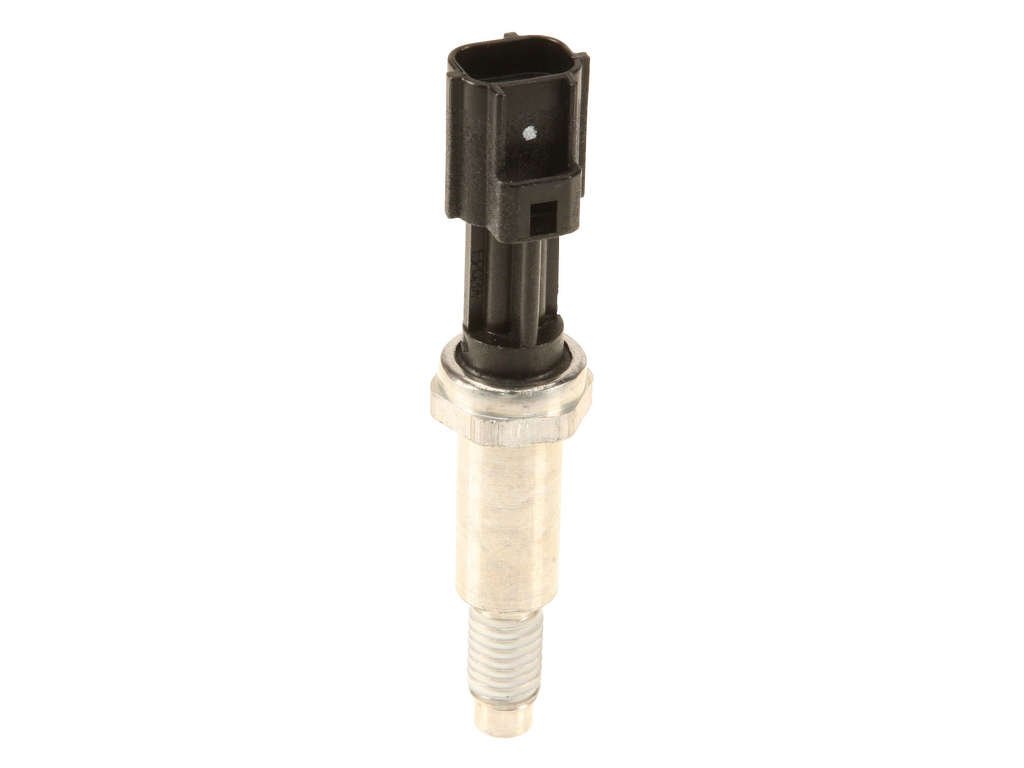
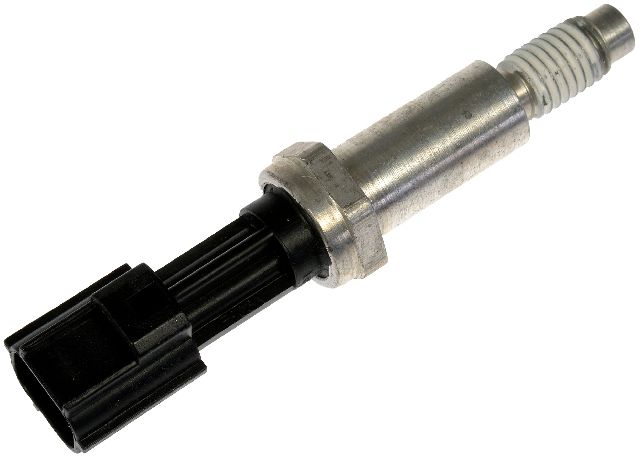
- Cylinder Head Temperature (CHT) Sensor
(OEM #9L8Z-6G004-B (superseded by 9L8Z-6G004-E))— This is the component that fails most frequently to cause a P0117 code on this engine.
Trusted brands: Motorcraft (DY-1145), Standard Motor Products (TS-640), Dorman, NGK/NTK
OEM price range: $40-$60
Aftermarket price range: $25-$45 - CHT Sensor Pigtail Connector
(OEM #WPT-985 (also appears as 3U2Z-14S411-JYA))— If the connector or wiring is damaged by heat, oil, or water corrosion (per TSB 11-10-5), it will need to be replaced.
Trusted brands: Motorcraft, Dorman (645-246), Standard Motor Products (S-816)
OEM price range: $30-$45
Aftermarket price range: $15-$30 - Extra-Deep 19mm (or 3/4") Socket — A standard deep socket is often not long enough to reach the CHT sensor and fit over its tall body. This special tool is frequently required to remove and install the sensor.
Aftermarket price range: $10-$20
Related Codes That Often Appear With This One
- P1299 — This code indicates 'Cylinder Head Over-temperature Protection Active'. The PCM sets this when it receives the (potentially false) high-temperature signal from the CHT sensor that caused the P0117, and it puts the engine into a limp mode to protect it.
- P0118 — This code is for 'CHT Sensor Circuit High Input'. It's the opposite of P0117 and indicates an open circuit (unplugged sensor or broken wire). It can sometimes appear intermittently along with P0117 if there is a loose connection or a failing sensor with an erratic internal connection.
- P0128 — This code means 'Coolant Thermostat (Coolant Temperature Below Thermostat Regulating Temperature)'. While P0117 is an electrical fault, if a thermostat issue is also present or misdiagnosed, this code might appear. However, they point to different root causes (electrical vs. mechanical).
Technical Service Bulletins (TSBs) & Recalls
- TSB 11-10-5: Addresses MIL on with DTCs P1285, P1299, and/or P0128 due to corrosion at the CHT sensor connector (C1164) from water contamination. Affects 2010-2012 Transit Connect 2.0L and other Ford models. The fix involves inspecting, cleaning, or replacing the connector pigtail and sensor if needed.
- TSB 21-2168: Notes that vehicles may exhibit an illuminated MIL and/or Engine Coolant Over Temperature warning with DTC P0117, potentially caused by an intermittent drop in engine coolant temperature.
- SSM 47791: Indicates that P0117 may be triggered by an engine coolant temperature (ECT) sensor connector which is not fully seated.
Platform-Specific Known Issues
- A leaking valve cover gasket is a common issue on this engine and can cause oil to pool in the spark plug wells, potentially contaminating and damaging the CHT sensor and its electrical connector.
- Water intrusion into the CHT sensor connector (C1164) can cause corrosion and lead to P0117. Ford TSB 11-10-5 addresses this issue, recommending inspection, cleaning, and possible replacement of the connector pigtail.
Mechanic-Grade Diagnostic Values
- CHT Sensor Resistance (disconnected) — expected: Approx. 58,750 Ω when cold (e.g., 20°C/68°F), dropping to approx. 1,180 Ω when at operating temperature (e.g., 100°C/212°F).. Failure: A reading near zero ohms indicates a shorted sensor, which is the direct cause of P0117. An infinitely high reading (open circuit) would cause P0118.
- CHT Sensor Signal Voltage at PCM (Key On, Engine Off) — expected: Voltage varies with temperature. Examples: ~4.29V at 86°F (30°C), ~2.1V at 198°F (92°C).. Failure: A voltage reading below ~0.2V indicates a short to ground in the circuit or a shorted sensor, triggering P0117.
- CHT Sensor Signal Return (Ground) Wire Voltage — expected: Below 100mV (0.1V) with the key on.. Failure: Voltage significantly higher than 100mV indicates a poor ground connection for the sensor circuit.
Scan Tool Commands That Help
- Ford IDS / FORScan / Professional Scan Tool: Live Data PID Monitoring (CHT, CHT_V) — This is the primary diagnostic function. Monitor the CHT temperature and voltage PIDs while performing tests. When the sensor is disconnected with the key on, the temperature should drop to -40°F/°C and the voltage should read high (approx. 5V). If it does, the wiring is likely good and the sensor is bad. If the reading stays pegged high (temp) and low (voltage), a short to ground exists in the harness.
Wiring & Ground Locations
- CHT Sensor Connector (C1164) — On top of the engine, between spark plugs #2 and #3, connected to the CHT sensor.. This is the most common point for wiring failure due to heat, oil contamination, or water intrusion as noted in TSB 11-10-5.
- CHT Signal Wire to PCM — Runs from the sensor connector to Pin 2K of the PCM connector.. A short to ground anywhere along this wire will cause a P0117 code. A continuity test from this pin to ground (with both ends disconnected) is a definitive test for a wiring short.
- PCM Grounds (C175B) — The PCM has multiple grounds. On the 2008 Focus, primary grounds are located at Pins 50, 69, and 70 of connector C175B. The wire color is typically Gray with a Yellow stripe.. While a bad PCM ground would likely cause many other codes, a poor ground connection can lead to inaccurate sensor readings. This should be checked if sensor and signal wire tests are inconclusive.
Real Owner Repair Stories
- YouTube channel 'The Auto Teacher' (2009 Ford Focus SES 2.0L) — Running poorly, check engine light on.
❌ Tried (didn't work) Initial thought was a compression issue or spit-out spark plug.
✅ What actually fixed it The original CHT sensor had physically snapped in two. It was replaced with a new OEM Ford part. The video notes that the new OEM sensor was made of aluminum, while the broken original was made of a copper/brass material, highlighting a design change in the superseding part.
OEM Part Supersession History
9L8Z-6G004-B→9L8Z-6G004-E— Standard part revision/update.
Heads up: The new part (9L8Z-6G004-E / Motorcraft DY-1145) may be visually different from the original, with an aluminum body instead of brass/copper. It is functionally equivalent and the correct replacement.
Model Year Variations Within This Range
- 2000-2007: Owners of older (1st generation) Ford Focus models with the Zetec engine may find DIY guides showing the CHT sensor in a different, much harder-to-reach location on the *back* of the cylinder head, often requiring removal of the alternator for access. For the 2008-2011 Focus with the 2.0L Duratec, the sensor is easily accessible on top of the head between the spark plugs.
Diagnostic Flowchart
Used vs. New Parts: Buying Guide for This Vehicle
When a used part is the smart pick: For this specific repair, a used part from a salvage yard is NOT recommended. The CHT sensor is a low-cost electronic component with a known failure rate. The risk of a used sensor failing shortly after installation outweighs the minimal cost savings.
What to inspect on the donor part:
- Not applicable as buying used is not advised.
OEM-only on this vehicle (don't cheap out):
- While not strictly required, using the OEM Motorcraft sensor (DY-1145 / 9L8Z-6G004-E) is a safe choice, especially given the documented change in part material from the original. This ensures the PCM receives the exact expected signal.
Aftermarket brands forum-validated for this vehicle:
- Standard Motor Products (TS-640)
- NGK/NTK (EJ0011)
Brands owners have reported issues with on this vehicle:
- No-name, unbranded sensors from online marketplaces should be avoided due to the critical function of this sensor in engine management and protection.
Real Owner Stories
Aggregated from forums and TSBs cited above. Mileages and costs reflect what owners reported in those sources.
2008-2011 Ford Focus Duratec 2.0L
Symptoms: Had a P0117 code and was told by a dealer that a new engine block was needed.
What fixed it: Replacing the CHT sensor resolved the issue, proving the dealer diagnosis incorrect.
Source hint: Reddit r/FocusST - P0117 code and dealer misdiagnosis
2010 Ford Focus Duratec 2.0L
Symptoms: Check Engine Light on with codes P0117 and P1299 after driving in heavy rain. The temperature gauge was erratic.
What fixed it: Found corrosion inside the CHT sensor connector (C1164) from water intrusion. Replacing the connector pigtail (WPT-985) and the sensor fixed the problem.
Source hint: TSB 11-10-5
2009 Ford Focus Duratec 2.0L
Symptoms: P0117 code was present along with a noticeable oil leak. Oil was found pooled in the spark plug wells and had saturated the CHT sensor connector.
What fixed it: Replaced the leaking valve cover gasket, then cleaned the oil from the CHT sensor and its connector to restore a proper connection.
Source hint: Vehicle-specific issue: Leaking valve cover gasket
Documented NHTSA Reports
Ford Manufacturer Reference
Symptoms: An owner reported overheating of the cylinder head causing cracks and leaks into the oil, pulling code P0117 which was traced to a Ford recall (13V583000).
Source hint: NHTSA ODI #11613716
Related OBD-II Codes
Frequently Asked Questions
Where is the CHT sensor located on my 2008-2011 Focus 2.0L engine?
My temperature gauge is maxed out and the fans are always on, but the engine is cold. Is this P0117?
I found oil around the CHT sensor. Could a leaking valve cover gasket cause this P0117 code?
Is there a TSB for this problem, and what does it say?
How can I quickly test if the CHT sensor is the problem or if it's the wiring?
Should I buy a cheap CHT sensor online or get one from a junkyard?
Helpful Videos
We Have This Part in Stock


The information in this article is provided for general reference and educational purposes only. Vehicle specifications, procedures, and part compatibility can vary by production date, trim level, and region. Always consult your vehicle's factory service manual and verify part numbers before purchasing or performing repairs. Safety-critical components such as airbags, seat belts, and braking systems should be installed by a qualified professional.
- Ford Focus:
- 🧭 Diagnostic Flowchart
- 🎬 Helpful Videos
- 🛍️ Shop This Part
- What's Unique About the 2008-2011 Ford Focus
- Symptoms You May Notice
- Most Likely Causes
- Rare But Worth Checking
- Diagnosis Steps
- Parts You'll Likely Need
- Related Codes That Often Appear With This One
- Technical Service Bulletins (TSBs) & Recalls
- Platform-Specific Known Issues
- Mechanic-Grade Diagnostic Values
- Scan Tool Commands That Help
- Wiring & Ground Locations
- Real Owner Repair Stories
- OEM Part Supersession History
- Model Year Variations Within This Range
- Used vs. New Parts: Buying Guide for This Vehicle
- Real Owner Stories
- 2008-2011 Ford Focus Duratec 2.0L
- 2010 Ford Focus Duratec 2.0L
- 2009 Ford Focus Duratec 2.0L
- Documented NHTSA Reports
- Ford Manufacturer Reference
- Related OBD-II Codes
- Frequently Asked Questions
- 🎟️ Get 5% Off