

P0117 on 2008-2012 Honda Accord: Engine Coolant Temperature Sensor Causes and Fixes
On a 2008-2012 Honda Accord, code P0117 is almost always a failed Engine Coolant Temperature (ECT) Sensor 1. This causes the cooling fans to run constantly and the temperature gauge to read high. Replacing the sensor is a common DIY fix, with an OEM-quality part costing around $45-$70.
- P0117 on this Accord almost always points to a bad ECT Sensor 1 on the engine, not the one on the radiator.
- A key symptom is the cooling fans running constantly, even when the engine is cold.
- Before buying parts, check the coolant level. Low coolant can also trigger this code and will often be accompanied by a lack of cabin heat.
- Use an OBD-II scanner to check live data. A temperature reading of 280°F+ on a cold engine is a dead giveaway of a bad sensor or shorted circuit.
What's Unique About the 2008-2012 Honda Accord
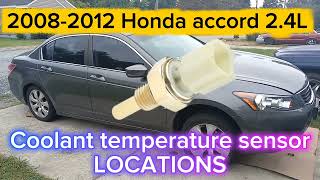
The 8th generation Honda Accord (both 2.4L K24 and 3.5L J35 engines) uses two separate coolant temperature sensors. ECT Sensor 1, which triggers the P0117 code, is located on the cylinder head and gives the primary temperature reading to the computer for fuel and timing calculations. ECT Sensor 2 is located at the bottom of the radiator and is mainly used for controlling the cooling fans. Owners and technicians must not confuse the two, as P0117 specifically points to a fault with ECT Sensor 1 or its circuit. Replacing the wrong sensor is a common misdiagnosis.
🎬 Watch: Locate both coolant temperature sensors on your AccordSymptoms You May Notice
- Cooling fans run constantly, even immediately after a cold start
- Check Engine Light is on
- Temperature gauge on the dashboard reads full HOT, even when the engine is cold
- Noticeably poor fuel economy
- Engine may be difficult to start, especially when cold
- Heater may blow cold or lukewarm air if the root cause is a very low coolant level creating an air pocket.
- Engine may run rough or blow black smoke from the tailpipe due to an overly rich fuel mixture.
- Replacing the ECT Sensor 2 at the bottom of the radiator. This sensor is for the cooling fans and will not fix a P0117 code.
- Replacing the thermostat. While a faulty thermostat can cause overheating issues, it will not cause the specific electrical 'Circuit Low Input' fault of a P0117. A stuck thermostat usually triggers other codes like P0128.
- Assuming the engine is actually overheating without verifying with a scan tool. The P0117 code indicates an electrical fault, not a true high temperature reading.
Most Likely Causes
- Failed Engine Coolant Temperature (ECT) Sensor 1 🔴 High Probability → Shop Engine Coolant Temperature Sensor The sensor is a thermistor that can fail over time by shorting internally, causing it to send a constant low-voltage signal. This is the most frequent cause for this specific code on this platform.
How to confirm: With a cold engine, use an OBD-II scanner to view live data for 'ECT Sensor 1'. A reading of 280°F (140°C) or higher instantly confirms a failed sensor or a shorted circuit. The voltage will typically read below 0.2V.
Typical fix: Replace the ECT Sensor 1 located on the cylinder head. Ensure the cooling system is bled of air afterward.
Est. part cost: $20-$70 - Wiring or Connector Issue 🟡 Medium Probability Engine bay heat and vibration can cause wiring insulation to become brittle or the two-pin connector to corrode or loosen over time.
How to confirm: Visually inspect the wiring harness and two-pin connector going to ECT Sensor 1 for any signs of damage, corrosion, or loose pins. A short circuit between the signal and ground wires will cause this code. Water intrusion into an uncovered fuse box has also been reported to cause this issue.
Typical fix: Repair the damaged section of the wiring harness or replace the connector pigtail. Ensure all connections are clean and secure.
Est. part cost: $10-$30 - Low Engine Coolant or Air in System ⚪ Low Probability → Shop Engine Coolant / Antifreeze This is most likely to occur after a recent cooling system service (e.g., coolant flush, thermostat/hose replacement) if the system was not properly bled. A coolant leak can also introduce air.
How to confirm: Check the coolant level in the radiator (when the engine is completely cold) and the overflow reservoir. If it is low, the sensor may be exposed to an air pocket, preventing an accurate reading and causing a lack of heat from the vents.
Typical fix: Identify and repair any leaks. Top off the coolant to the correct level and properly bleed the cooling system to remove all air pockets. This often involves running the engine with a spill-free funnel attached to the radiator until the fans cycle multiple times.
Est. part cost: $15-$30 for Honda Type 2 coolant
Rare But Worth Checking
- Faulty Powertrain Control Module (PCM): → Shop Engine Control Module (ECM) This is extremely rare. The PCM's internal circuit for reading the ECT sensor can fail, but all other possibilities (sensor, wiring, coolant level) should be exhausted before considering PCM replacement.
Diagnosis Steps
- Check Coolant Level: Before anything else, ensure the engine is completely cold and check the coolant level in the radiator and overflow tank. A low level can cause this code and a lack of cabin heat.
- Scan Live Data: Connect an OBD-II scanner. Turn the key to the 'ON' position without starting the engine. View the live data for ECT Sensor 1. If it shows an extremely high temperature (e.g., 280°F / 140°C or higher), the sensor has likely failed or the circuit is shorted to ground.
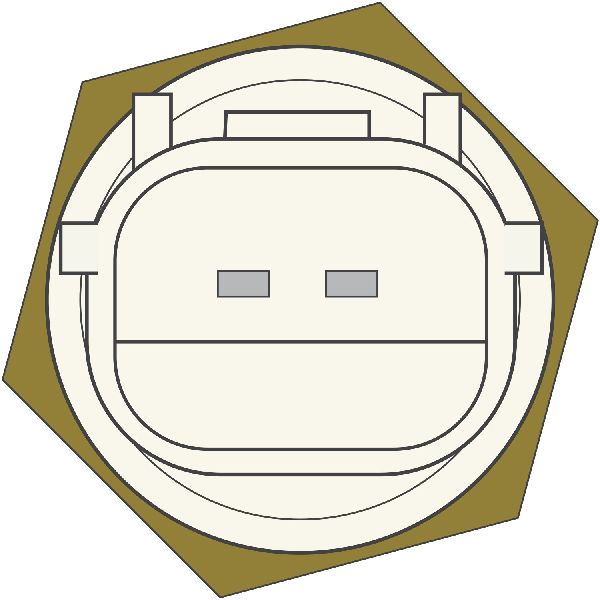
- Inspect Connector and Wiring: Visually inspect the two-wire connector and harness attached to ECT Sensor 1 on the cylinder head. Look for green corrosion, frayed wires, or damage. Ensure the connector is fully seated.
- Test the Circuit: Disconnect the ECT sensor connector. The P0117 code should clear and a P0118 (Circuit High) should appear on your scanner. This indicates the wiring and PCM are likely okay, pointing to a bad sensor as the culprit.
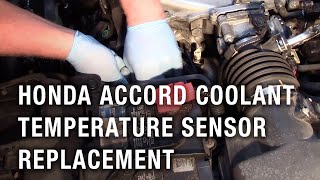
- Test the Sensor: If you have a multimeter, you can test the sensor's resistance. At room temperature (~68°F/20°C), resistance should be around 2-3 kOhms. When hot (194°F/90°C), it should be around 200-300 Ohms. A reading near zero ohms indicates a shorted sensor. 🎬 Watch: How to test and replace the ECT sensor
- Replace the Component: Based on the tests, replace the faulty component, which is most often the ECT sensor itself.
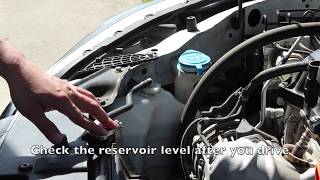
- Bleed Cooling System: After replacing the sensor, top off the coolant and properly bleed the system to remove any air that entered. This involves running the engine with the radiator cap off (using a spill-free funnel is highly recommended) until the cooling fans cycle at least twice. 🎬 Watch: Step-by-step guide to bleeding your cooling system
Parts You'll Likely Need
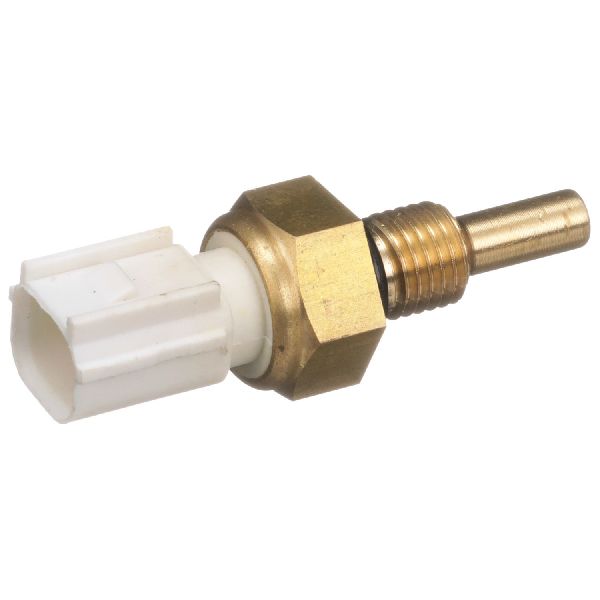
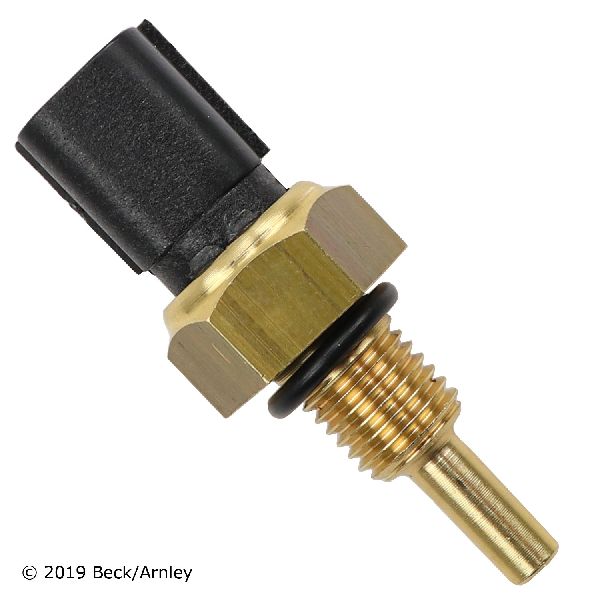
- Engine Coolant Temperature Sensor (ECT Sensor 1)
(OEM #37870-RTA-005)— This is the primary sensor that fails and directly causes the P0117 code. It shorts internally, sending a false low-voltage/high-temp signal to the computer. This part number is used across a wide range of Honda and Acura vehicles.
Trusted brands: Honda (Genuine), Denso (Often the OEM supplier)
OEM price range: $45-$70
Aftermarket price range: $20-$45
Related Codes That Often Appear With This One
- P0118 — This code for 'ECT Circuit High Input' can appear during diagnosis if you disconnect the sensor to test the circuit. Seeing P0118 appear after disconnecting the sensor is a good sign that the wiring to the PCM is intact.
Platform-Specific Known Issues
- source — A user on 2CarPros.com with a 2009 Accord reported a P0117 code along with no heat from the vents. The root cause was a leaking coolant hose which caused the coolant level to drop significantly, creating a large air pocket in the system. This prevented the heater core from getting hot coolant and caused the ECT sensor to read air instead of coolant. The fix was repairing the leak and properly bleeding the system for two full fan cycles.
- Confusion with ECT Sensor 2: → Shop Engine Coolant Temperature Sensor Because this platform has two ECT sensors, a common mistake is replacing the one on the radiator (ECT Sensor 2) instead of the one on the engine block/cylinder head (ECT Sensor 1). P0117 is exclusively for ECT Sensor 1.
Mechanic-Grade Diagnostic Values
- ECT Sensor 1 Resistance (cold engine) — expected: 2,000 - 3,000 Ω (2.0-3.0 kΩ) at ~20°C / 68°F. Failure: A resistance reading near zero ohms indicates an internally shorted sensor.
- ECT Sensor 1 Resistance (hot engine) — expected: 200 - 350 Ω at ~90°C / 194°F. Failure: Reading remains very high (kOhm range) when hot, or near zero if shorted.
- ECT Sensor 1 Signal Voltage (Key On, Engine Off) — expected: ~2.0V - 3.0V on a cold engine, ~0.5V on a fully warm engine.. Failure: Voltage is below 0.14V (often as low as 0.08V), which triggers the P0117 code.
- Scan Tool Live Data for ECT Sensor 1 (Key On, Engine Off) — expected: Should display ambient temperature, matching the IAT sensor reading.. Failure: An immediate, unchanging reading of 284°F (140°C) or higher confirms a shorted sensor or circuit.
Scan Tool Commands That Help
- Honda HDS (or equivalent): PGM-FI Data List > ECT SENSOR 1 — This is the primary live data parameter to monitor. On a cold engine, it should match the Intake Air Temperature (IAT). A value stuck at maximum temperature (e.g., 284°F) instantly confirms the fault condition.
- Honda HDS (or equivalent): Reset ECM/PCM — After the repair is completed, this function is used to clear all trouble codes and reset learned adaptations.
- Honda HDS (or equivalent): ECM/PCM Idle Learn Procedure — This must be performed after resetting the PCM to allow the engine computer to relearn the idle characteristics for smooth operation.
Wiring & Ground Locations
- ECT Sensor 1 Connector — On the cylinder head at the rear of the engine, often below the distributor area on 4-cylinder models.. This 2-pin connector is the primary point of failure for wiring issues due to heat and vibration. The pins are for the signal wire (goes to PCM pin ECT1) and sensor ground (goes to PCM pin SG2).
- G101 — A primary engine-to-chassis ground, typically located on the left rear of the engine, near the thermostat housing or bolted to the cylinder head.. The PCM relies on a solid engine ground reference. A loose or corroded G101 can introduce voltage offsets and instability into sensor circuits, potentially causing erratic readings and codes like P0117.
- PCM (Powertrain Control Module) — Located in the left front of the engine compartment.. The two wires from ECT Sensor 1 terminate here. A short to ground on the signal wire between the sensor and the PCM will cause a P0117.
Real Owner Repair Stories
- YouTube user comment/video (2006 Honda Civic (similar cooling system logic)) — Persistent P0117 code, engine temperature on scan tool was low (150-170°F), failing smog test.
❌ Tried (didn't work) Replacing the ECT sensor
✅ What actually fixed it The thermostat was stuck partially open, preventing the engine from reaching its normal operating temperature of ~195°F. Replacing the thermostat allowed the engine to heat up properly, which satisfied the PCM's parameters and cleared the P0117 code.
When the Usual Fixes Don't Work
- While a failed ECT sensor is the most common cause, P0117 is not always fixed by replacing it. In one documented case, a new sensor did not resolve the code. The root cause was a thermostat that was stuck open, preventing the engine from ever reaching its target operating temperature. The PCM flagged the sensor because the coolant temperature remained too low for too long during operation (around 150-170°F instead of 195°F+). A new thermostat was the ultimate fix.
OEM Part Supersession History
37870-RTA-005→No direct supersession found.
Heads up: This is the correct sensor for ECT Sensor 1 on this platform. Be careful not to confuse it with other Honda ECT sensors like 37870-RWC-A01, which may be for a different location (like the radiator) or a different model. Always verify the part number for the specific sensor location you are replacing.
Model Year Variations Within This Range
- 2008-2012: The 4-cylinder models came with either a K24Z2 (LX, LX-P) or K24Z3 (EX, EX-L) engine. The K24Z3 has a more advanced VTEC system and slightly higher power output. However, the cooling system design, ECT sensor part number (37870-RTA-005), sensor location, and the diagnostic procedure for P0117 are identical for both K24 engines and the J35 V6 engine used in this generation.
Diagnostic Flowchart
Other Known Issues on This Vehicle
Issues unrelated to this code that are worth knowing about as an owner of this generation:
- VTC Actuator Rattle on Cold Start (2.4L K24 Engine) 🟠 Medium — Very common. A brief, loud grinding/rattling noise for 1-2 seconds at cold startup. Caused by a faulty pin in the VTC actuator losing oil pressure overnight. (Ref: Honda TSB #09-010 addresses this issue by recommending replacement of the VTC actuator.)
- Excessive Oil Consumption (3.5L J35 V6 Engine) 🔴 High — Very common, especially on V6 models with Variable Cylinder Management (VCM). The constant switching of cylinders can cause piston rings to become fouled with carbon, leading to oil burning. (Ref: Subject of a class-action lawsuit (settled in 2013) for 2008-2013 models. Honda extended the powertrain warranty but did not issue a full recall.)
- Premature Rear Brake Wear 🟠 Medium — Commonly reported by owners. Rear brake pads and rotors tend to wear out faster than expected. Some attribute this to brake biasing or sticky caliper pins.
- Failing Starter Motor 🟠 Medium — A common failure item as the vehicle ages, typically over 100,000 miles. Symptoms include a no-start condition where the engine only cranks or clicks.
Used vs. New Parts: Buying Guide for This Vehicle
When a used part is the smart pick: For the ECT sensor itself, a used part is generally not recommended. The low cost of a new, high-quality OEM or Denso replacement makes it impractical to spend time sourcing a used part with unknown remaining life.
Donor-vehicle mileage cap: roughly under 80000 miles for the part to have meaningful remaining life.
What to inspect on the donor part:
- No visible cracks in the plastic connector.
- Electrical pins are clean, straight, and free of corrosion.
- The part comes from a vehicle with no known electrical or overheating issues.
OEM-only on this vehicle (don't cheap out):
- Powertrain Control Module (PCM)
Aftermarket brands forum-validated for this vehicle:
- Denso (is the original equipment manufacturer)
- NTK
Brands owners have reported issues with on this vehicle:
- Unbranded, 'white-box' sensors from online marketplaces should be avoided as they have a high rate of premature failure and can have incorrect resistance curves, leading to further diagnostic issues.
Real Owner Stories
Aggregated from forums and TSBs cited above. Mileages and costs reflect what owners reported in those sources.
2009 Honda Accord
Symptoms: P0117 code triggered along with no heat coming from the dashboard vents.
What fixed it: Identified a leaking coolant hose that caused a low coolant level and an air pocket; repaired the leak and bled the system for two full fan cycles.
Source hint: 2CarPros.com: A 2009 Accord owner experienced P0117 with no cabin heat, caused by a coolant leak and subsequent air pocket.
2008 Honda Pilot (3.5L V6)
Symptoms: Fault code P0117 remained active even after the owner replaced both the ECT sensor and the thermostat.
What fixed it: The context suggests the next step was checking the wiring harness for shorts, as the sensor replacement alone did not resolve the circuit low input.
Source hint: Reddit r/MechanicAdvice: A user with a 2008 Honda Pilot (shared V6 platform) replaced the ECT sensor and thermostat but the code remained.
Related OBD-II Codes
Frequently Asked Questions
I have a 2009 Accord with P0117 and my heater is blowing cold air. Is the sensor definitely the problem?
Which sensor do I need to replace for P0117 on my Honda Accord, the one on the radiator or the engine?
What part number should I look for if I need to replace the ECT sensor on my 2010 Accord or 2012 Acura TSX?
My 2008 Accord V6 has P0117 and is also burning a lot of oil. Are these related?
Is there a TSB for the grinding noise I hear on cold starts along with my P0117 code?
How can I be sure the ECT sensor is actually bad before I buy a new one?
Helpful Videos
We Have This Part in Stock


The information in this article is provided for general reference and educational purposes only. Vehicle specifications, procedures, and part compatibility can vary by production date, trim level, and region. Always consult your vehicle's factory service manual and verify part numbers before purchasing or performing repairs. Safety-critical components such as airbags, seat belts, and braking systems should be installed by a qualified professional.
- Honda Accord:
- 🧭 Diagnostic Flowchart
- 🎬 Helpful Videos
- 🛍️ Shop This Part
- What's Unique About the 2008-2012 Honda Accord
- Symptoms You May Notice
- Most Likely Causes
- Rare But Worth Checking
- Diagnosis Steps
- Parts You'll Likely Need
- Related Codes That Often Appear With This One
- Platform-Specific Known Issues
- Mechanic-Grade Diagnostic Values
- Scan Tool Commands That Help
- Wiring & Ground Locations
- Real Owner Repair Stories
- When the Usual Fixes Don't Work
- OEM Part Supersession History
- Model Year Variations Within This Range
- Other Known Issues on This Vehicle
- Used vs. New Parts: Buying Guide for This Vehicle
- Real Owner Stories
- 2009 Honda Accord
- 2008 Honda Pilot (3.5L V6)
- Related OBD-II Codes
- Frequently Asked Questions
- 🎟️ Get 5% Off