

P0117 on 2017-2020 Lincoln Continental: ECT Sensor Circuit Low Causes and Fixes
On a 2017-2020 Lincoln Continental, especially with the 2.7L engine, code P0117 is frequently caused by a poorly seated or damaged Engine Coolant Temperature (ECT) sensor connector. Before replacing any parts, firmly check the connector. If that doesn't work, the ECT sensor itself is the next likely culprit, costing around $25-$60 for the part. On the 2.7L, the sensor is located under the intake manifold, making it a labor-intensive job.
- For a 2017-2020 Lincoln Continental with code P0117, especially a 2.7L model, the first action should always be to check if the ECT sensor's electrical connector is loose.
- This code indicates a 'circuit low' or short, which the car's computer interprets as an extremely high temperature.
- Symptoms include a check engine light, a high temperature gauge reading, and cooling fans that won't turn off.
- If the connector is secure, the next most likely causes are damaged wiring or a failed ECT sensor.
- Do not immediately replace the thermostat, as P0117 is an electrical fault, not a mechanical cooling fault.
What's Unique About the 2017-2020 Lincoln CONTINENTAL
For the 2017-2020 Lincoln Continental, particularly models with the 2.7L twin-turbo V6 engine, this code is the subject of multiple Technical Service Bulletins (TSBs). These bulletins highlight that the root cause is often not the sensor itself, but rather an electrical issue like a connector that isn't fully seated or a problem with the wiring harness. A key factor for the 2.7L engine is the ECT sensor's location: it is buried deep in the engine valley, underneath the intake manifold, making it difficult to access and prone to heat-related wiring issues. This makes a thorough electrical diagnosis paramount before attempting the labor-intensive sensor replacement.
Diagnostic Flowchart
Tap your situation to follow the diagnostic path that matches what you're seeing on this vehicle.
Symptoms You May Notice
- Check Engine Light (Malfunction Indicator Lamp, MIL) is on
- Engine Coolant Over Temperature warning light may illuminate, even if the engine is cold.
- Engine temperature gauge reading is erratically high or stuck at maximum
- Engine may run rough, hesitate, or be hard to start.
- Cooling fans run continuously at high speed.
- Reduced fuel economy.
- Heater may not blow warm air
- Black smoke from the exhaust due to an overly rich fuel mixture.
- Engine may enter a 'limp mode' to prevent perceived damage.
- Replacing the thermostat. While a thermostat can cause cooling system problems, P0117 is an electrical circuit code indicating a short to ground. 🎬 Watch: A quick breakdown of P0117 causes and common fixes. A stuck thermostat typically sets a P0128 code ('Coolant Thermostat Below Regulating Temperature').
Most Likely Causes
- Poorly Seated ECT Sensor Connector 🔴 High Probability → Shop Engine Coolant Temperature Sensor This is a documented issue for 2.7L models in Lincoln TSBs #SSM 47791 and #SSM 46906. The connector can work its way loose, causing a poor connection and triggering the code.
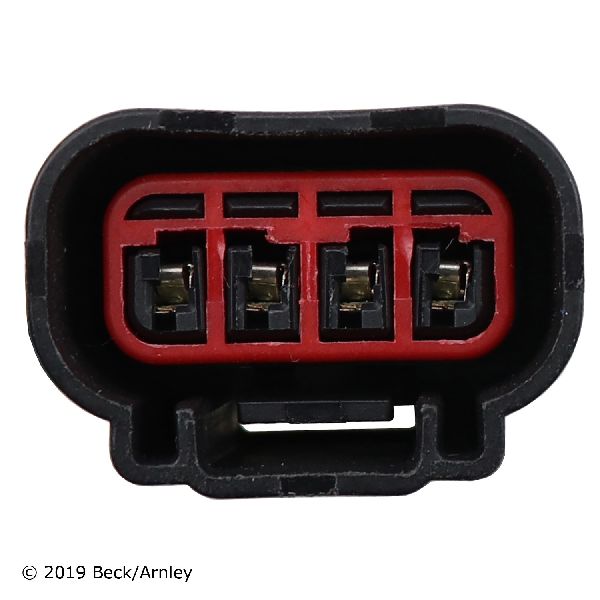
How to confirm: Visually inspect the ECT sensor's electrical connector. Push firmly to ensure it is fully seated and clicks into place. Due to the sensor's location under the intake on the 2.7L, this may be difficult without some disassembly.
Typical fix: Reseat the connector. If the clip is broken, the connector pigtail may need to be replaced.
Est. part cost: $0-$25 - Damaged ECT Sensor Wiring Harness 🟡 Medium Probability → Shop Engine Coolant Temperature Sensor Lincoln TSB #SSM 48991 specifically identifies the ECT sensor and knock sensor wiring harness as a potential cause of this code on 2.7L engines. The harness is located in the hot engine valley and can become brittle or chafed over time.
How to confirm: Visually inspect the wires leading to the ECT sensor for any signs of fraying, chafing, or heat damage. Use a multimeter to check for a short to ground on the signal wire between the sensor connector and the PCM.
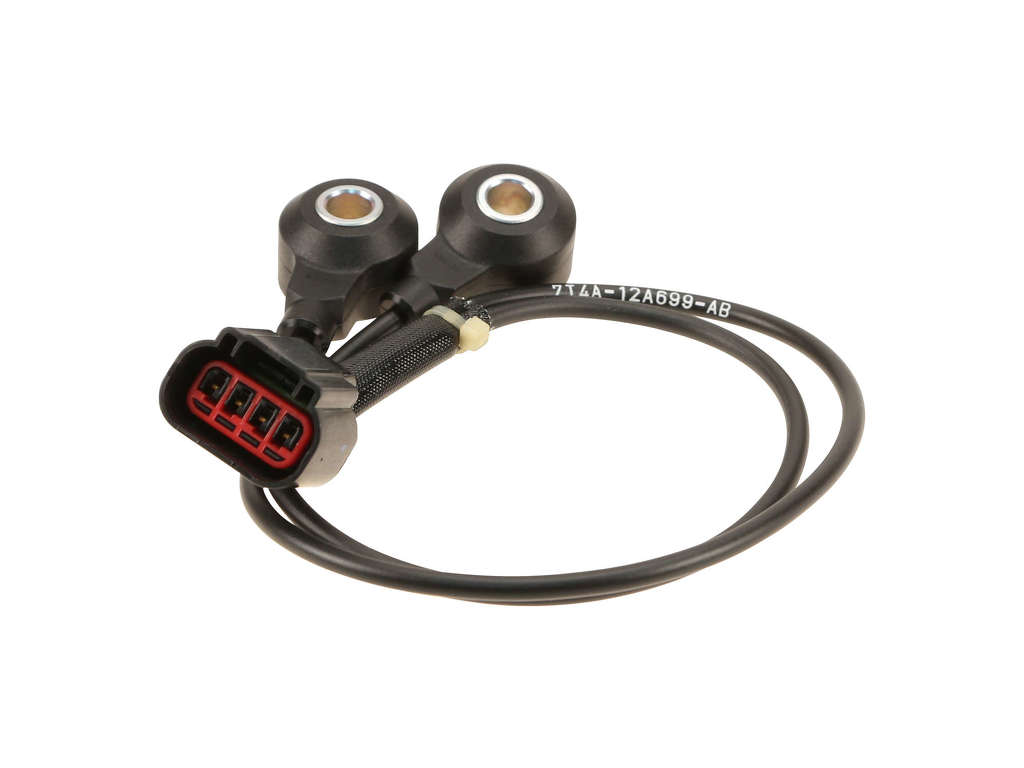
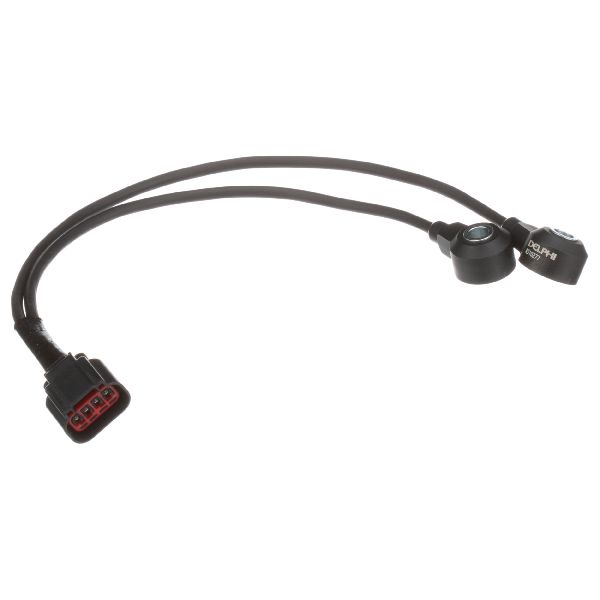
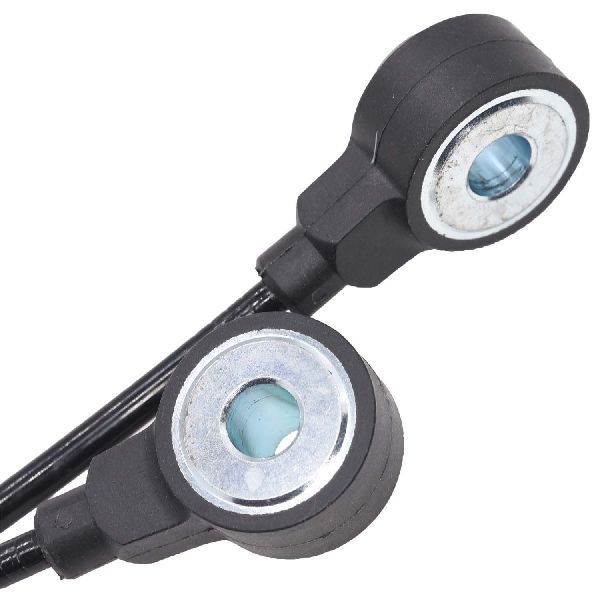
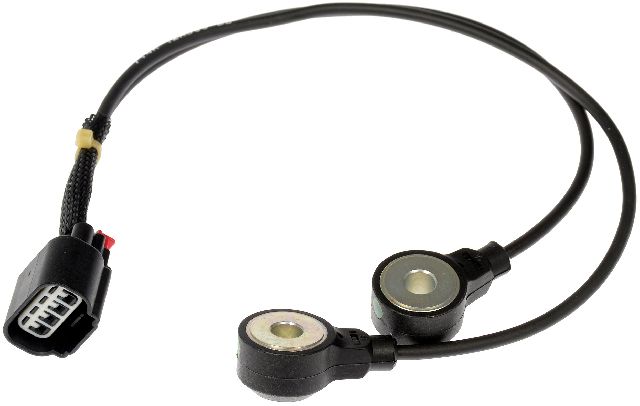
Typical fix: Repair the damaged section of the wire or replace the affected wiring harness. Per TSB 48991, the official repair is to replace the entire knock sensor harness (part #12A699) along with the ECT sensor.
Est. part cost: $10-$150 - Failed Engine Coolant Temperature (ECT) Sensor 🟡 Medium Probability → Shop Engine Coolant Temperature Sensor
How to confirm: If the connector and wiring are good, test the sensor. With a scan tool, check if the ECT reading is stuck at a very high value (e.g., 250°F+) even on a cold engine. You can also test the sensor's internal resistance with a multimeter; at room temperature (~68°F), it should be between 2,000 and 3,000 ohms. 🎬 See how to test and replace the ECT sensor yourself.
Typical fix: Replace the ECT sensor. On the 2.7L engine, this is a labor-intensive job requiring removal of the intake manifold.
Est. part cost: $25-$60 - Low Engine Coolant Level / Air in System ⚪ Low Probability → Shop Engine Coolant / Antifreeze
How to confirm: Check the coolant reservoir to ensure the coolant level is between the 'MIN' and 'MAX' marks when the engine is cold. An air pocket in the system can cause erratic readings, though this more commonly sets other codes.
Typical fix: Top off the coolant with the correct type (Ford/Motorcraft VC-13-G Yellow) and bleed the cooling system to remove any trapped air.
Est. part cost: $20-$40
Rare But Worth Checking
- Faulty Powertrain Control Module (PCM): → Shop Engine Control Module (ECM) This is extremely rare. The PCM should only be considered after all other possibilities, including sensor, wiring, and connections, have been exhaustively ruled out.
Diagnosis Steps
- Scan for all DTCs to see if other codes are present.
- Crucial First Step (2.7L Engine): Locate the ECT sensor and firmly press on its electrical connector to ensure it is fully seated. This is the most common fix per manufacturer TSBs. Note: Accessing the sensor on the 2.7L requires significant effort as it is under the intake manifold.
- Clear the codes and test drive the vehicle to see if P0117 returns. If it does not, the problem is solved.
- If the code returns, visually inspect the wiring harness leading to the ECT sensor for any visible damage, corrosion, or chafing.
- Using a scan tool, observe the live data for the ECT sensor. If it shows a maximum temperature reading (e.g., 250-300°F) on a cold engine, this confirms a short circuit condition.
- Disconnect the ECT sensor. The scan tool reading should now drop to a default low value (e.g., -40°F) and a P0118 code may appear. If this happens, the wiring to the PCM is likely good, and the sensor itself has failed internally.
- If the reading stays high after disconnecting the sensor, there is a short to ground in the wiring between the sensor connector and the PCM. This wiring must be repaired.
- If diagnostics point to the sensor, replace it. For the 2.7L engine, TSB 48991 recommends replacing the knock sensor harness at the same time.
Parts You'll Likely Need
- Engine Coolant Temperature (ECT) Sensor
(OEM #FT4Z-12A648-B)— If the connector and wiring are confirmed to be good, the sensor itself is the component that has failed internally, causing the short circuit.
Trusted brands: Motorcraft, NTK, Delphi
OEM price range: $30-$60
Aftermarket price range: $20-$45 - Knock Sensor Wiring Harness
(OEM #12A699 (Base part number))— For the 2.7L engine, TSB 48991 recommends replacing this harness, which includes the ECT sensor wiring, as the primary fix for recurring P0117 codes.
Trusted brands: Motorcraft
OEM price range: $70-$120
Aftermarket price range: N/A
Related Codes That Often Appear With This One
- P0116 — Indicates an issue with the ECT sensor's range or performance, often set alongside circuit-specific codes.
- P0118 — This is the opposite code ('Circuit High Input'). It can sometimes appear during diagnosis if you disconnect the sensor to test the circuit.
- P0119 — Indicates an intermittent fault in the ECT sensor circuit.
- P1299 — This code indicates a cylinder head over-temperature condition was detected. The PCM may set this based on the faulty high-temperature signal from the P0117 condition.
Technical Service Bulletins (TSBs) & Recalls
- SSM 48991: Notes that P0117 on 2.7L engines may be due to the ECT or knock sensor wiring harness, advising replacement of both.
- SSM 47791: Points to a poorly seated ECT sensor connector or damaged wiring as the cause for P0117 on 2.7L engines.
- SSM 46906: An earlier bulletin with the same guidance as SSM 47791, highlighting the unseated ECT connector issue on 2.7L engines.
Platform-Specific Known Issues
- TSB SSM 48991: On 2.7L models, an illuminated MIL with P0117 can be due to the ECT sensor or knock sensor wiring harness. The official fix is to replace both the ECT sensor (part #12A648) and the knock sensor harness (part #12A699).
- TSB SSM 47791 / 46906: Specifically for the 2.7L engine, these bulletins state that P0117 is often caused by an ECT sensor connector that is not fully seated. Technicians are advised to check this before replacing any parts.
- Sensor Location on 2.7L: The primary ECT sensor is located under the intake manifold in the engine valley, making it very difficult to access for inspection or replacement. This is a significant contributor to higher repair costs on this engine 🎬 Watch: See the 2.7L ECT sensor relocation kit in action. compared to the 3.0L or 3.7L.
Mechanic-Grade Diagnostic Values
- ECT Sensor Resistance vs. Temperature — expected: Approx. 9,420 Ohms at 32°F (0°C); 3,520 Ohms at 68°F (20°C); 973 Ohms at 122°F (50°C); 241 Ohms at 194°F (90°C).. Failure: A reading of near-zero ohms indicates a shorted sensor. An infinite reading indicates an open sensor. Readings that do not correlate with temperature indicate a faulty sensor.
- ECT Sensor Signal Voltage at PCM — expected: Typically 3.0-3.5V on a cold engine, dropping to 0.3-0.5V on a hot engine.. Failure: A voltage reading below 0.14V will trigger code P0117.
- ECT Live Data with Sensor Disconnected — expected: Scan tool should display a default minimum temperature, typically -40°F (-40°C).. Failure: If the temperature reading remains high (e.g., >250°F) with the sensor disconnected, it indicates a short to ground in the wiring harness.
- ECT Live Data with Sensor Connector Jumpered — expected: Scan tool should display a maximum temperature, e.g., 284°F to 302°F.. Failure: If the temperature reading does not go to maximum, it indicates high resistance or an open in the wiring harness or connectors.
Scan Tool Commands That Help
- Ford IDS (Integrated Diagnostic System) or equivalent professional scan tool: DataLogger > Powertrain > ECT PID — This function is used to monitor the live engine coolant temperature reading as reported to the PCM. It is essential for performing the disconnect/jumper wire test to isolate the fault between the sensor and the wiring harness.
Wiring & Ground Locations
- Knock Sensor / ECT Harness (12A699) — On the 2.7L V6, this harness is routed in the engine valley, underneath the intake manifold.. This harness contains the wiring for the ECT sensor. Due to its location in a high-heat area, it is prone to becoming brittle and failing, causing a short circuit. TSB 48991 identifies this entire harness as the primary cause and recommends replacing it as a complete assembly.
- ECT Signal Wire — A yellow wire within the harness running from the ECT sensor connector to the PCM.. This is the specific wire that carries the temperature signal. A short to ground on this wire will cause the P0117 code. Technicians can test for continuity and shorts on this wire between the sensor and PCM connectors.
Real Owner Repair Stories
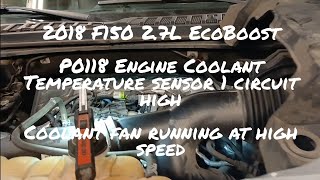
- YouTube video by 'ProDemand' (2018 Ford F-150 with 2.7L EcoBoost (platform mate with same engine and issue)) — Check engine light with codes P0118 (Circuit High) and P1299 (Cylinder Head Over-Temperature). Cooling fans running on high.
❌ Tried (didn't work) The video directly addresses the known high-labor issue of replacing the sensor under the intake manifold.
✅ What actually fixed it The technician installed the official Ford sensor relocation kit per TSB 21-2168. This involved replacing an upper heater hose with a new one that has an integrated ECT sensor port, and running a jumper harness from the new sensor location to the original harness connector at the back of the engine. This converted an 8+ hour job into a ~2 hour job.
"I Checked Everything" — The Actual Cause
- This is an electrical code, so a smoke test is not applicable. However, a similar pattern exists where basic wiring tests can be misleading. A technician might perform a continuity test on the ECT signal wire from end-to-end and find it 'good' when the engine is cold. The actual failure, as identified in TSB 48991, is often an intermittent short to ground within the harness (part #12A699) that only occurs when the engine reaches operating temperature and the harness is heat-soaked. This is why the TSB recommends replacing the entire harness assembly rather than attempting to repair a single wire.
OEM Part Supersession History
FT4Z-12A648-A (also service number DY-1298)→FT4Z-12A648-B (also referenced by service number dy1309)— Not specified, but supersessions are typically for improvements in material, design, or manufacturing.
Heads up: No known incompatibilities; the newer part is the correct replacement for all specified years.
Model Year Variations Within This Range
- 2018-2020 (per related TSB): For the 2.7L EcoBoost engine family, Ford issued TSB 21-2168 for platform mates (like the F-150) that introduced an ECT sensor relocation kit (part #ML3Z-14A411-H). This TSB changes the repair strategy from a difficult under-intake sensor replacement to a much easier relocation to a heater hose. While the TSB is not specific to the Continental, it addresses the identical engine design and problem, making it a highly relevant alternative repair procedure for mechanics working on these later-year models.
Helpful Videos

We Have This Part in Stock


The information in this article is provided for general reference and educational purposes only. Vehicle specifications, procedures, and part compatibility can vary by production date, trim level, and region. Always consult your vehicle's factory service manual and verify part numbers before purchasing or performing repairs. Safety-critical components such as airbags, seat belts, and braking systems should be installed by a qualified professional.
- Lincoln CONTINENTAL:
- 🧭 Diagnostic Flowchart
- 🎬 Helpful Videos
- 🛍️ Shop This Part
- What's Unique About the 2017-2020 Lincoln CONTINENTAL
- Symptoms You May Notice
- Most Likely Causes
- Rare But Worth Checking
- Diagnosis Steps
- Parts You'll Likely Need
- Related Codes That Often Appear With This One
- Technical Service Bulletins (TSBs) & Recalls
- Platform-Specific Known Issues
- Mechanic-Grade Diagnostic Values
- Scan Tool Commands That Help
- Wiring & Ground Locations
- Real Owner Repair Stories
- "I Checked Everything" — The Actual Cause
- OEM Part Supersession History
- Model Year Variations Within This Range
- 🎟️ Get 5% Off