

P0117 on 2016-2018 Lincoln MKX: Engine Coolant Temperature Circuit Low Causes and Fixes
For a 2016-2018 Lincoln MKX, especially with the 2.7L engine, code P0117 is most often caused by a faulty Engine Coolant Temperature (ECT) sensor or a poor connection at the sensor. This is a known issue documented in manufacturer Technical Service Bulletins. The fix is usually replacing the sensor or repairing the wiring, which is an affordable DIY job.
- P0117 on a 2016-2018 Lincoln MKX with the 2.7L engine is very frequently caused by a loose electrical connector on the ECT sensor, a known issue cited by Ford/Lincoln.
- Before replacing any parts, physically inspect and firmly press on the ECT sensor connector to ensure it is fully seated.
- If the connection is secure, the next most likely cause is a failed ECT sensor itself, which is an affordable part but can be labor-intensive to replace on the 2.7L engine.
- Driving with this code is not recommended long-term as it can lead to poor performance, high fuel consumption, and an inability for the PCM to detect a true overheating event.
What's Unique About the 2016-2018 Lincoln MKX
The 2016-2018 Lincoln MKX, particularly models with the 2.7L EcoBoost engine, is specifically called out in multiple manufacturer Technical Service Bulletins (TSBs) for issues that trigger code P0117. These bulletins point directly to problems with the ECT sensor's electrical connector not being fully seated or damage to the wiring harness. This indicates a platform-specific vulnerability beyond typical sensor failure. The issue is also common on its platform-mate, the Ford Edge with the same 2.7L engine.
Diagnostic Flowchart
Tap your situation to follow the diagnostic path that matches what you're seeing on this vehicle.
Symptoms You May Notice
- Check Engine Light (Malfunction Indicator Lamp) is on
- Engine temperature gauge reads maximum hot, even when the engine is cold
- "Engine Coolant Over Temperature" warning message on the dash
- Cooling fans run constantly at high speed
- Rough or hesitant engine performance
- Difficulty starting the engine
- Reduced fuel economy
- A/C system may not function correctly
- Replacing the thermostat. A bad thermostat typically causes overheating or under-heating issues and may trigger a P0128 code, but it does not cause a circuit-low fault like P0117.
Most Likely Causes
- Poor Connection at the ECT Sensor 🔴 High Probability → Shop Engine Coolant Temperature Sensor Multiple TSBs (SSM 47791, SSM 46906) for the 2.7L engine specifically cite the ECT sensor connector not being fully seated as a primary cause. This is a well-documented issue from the factory or due to engine vibration over time.
How to confirm: Visually inspect the ECT sensor connector. Unplug it, check for corrosion on the pins, and plug it back in, ensuring it clicks and is fully seated. Wiggling the connector while monitoring live data on a scan tool may cause the temperature reading to fluctuate, confirming a bad connection. 🎬 Watch: A breakdown of P0117 causes and common fixes.
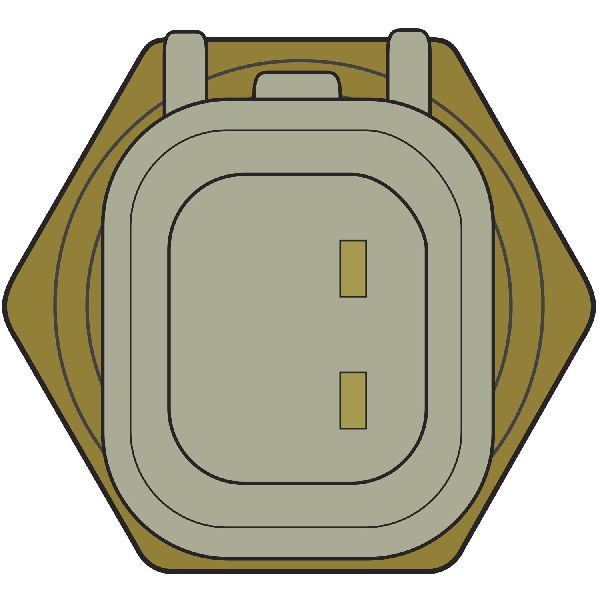
Typical fix: Clean the connector terminals with electrical contact cleaner and ensure it is securely reconnected. If the connector is damaged, it will need to be replaced with a new pigtail. The common pigtail connector is a 2-pin design.
Est. part cost: $15-$40 for a new pigtail connector like Motorcraft WPT-989 (service part number 3U2Z-14S411-HYB). - Faulty Engine Coolant Temperature (ECT) Sensor 🔴 High Probability → Shop Engine Coolant Temperature Sensor The sensor is a common failure point across many vehicles. TSB SSM 48991 acknowledges that the sensor itself may be the cause, sometimes in conjunction with the knock sensor harness it is part of.
How to confirm: With a scan tool, observe the live ECT data. If it shows a maximum temperature (e.g., 280°F+) on a cold engine, the sensor is likely shorted internally. You can also test the sensor's resistance with a multimeter; at room temperature (~68°F/20°C), it should read between 2,000 and 3,520 ohms. A reading far outside this range indicates a bad sensor.
Typical fix: Replace the ECT sensor. This usually involves partially draining the coolant, unscrewing the old sensor, and installing the new one. On the 2.7L engine, the sensor is located under the intake manifold, making access more difficult than on the 3.7L.
Est. part cost: $25-$50 - Damaged Wiring Harness 🟡 Medium Probability TSB SSM 48991 and SSM 47791 both mention the possibility of damaged wiring leading to the ECT sensor, suggesting specific harness routing issues on this platform. The wiring for the ECT and knock sensor are sometimes bundled together, and damage to this harness can trigger the code.
How to confirm: Visually inspect the wires leading to the ECT sensor for any signs of chafing, melting, or breaks. Check for a short to ground by testing for continuity between the signal wire and the chassis ground with a multimeter.
Typical fix: Repair the damaged section of the wire. This may involve soldering in a new piece of wire and protecting it with heat-shrink tubing. In some cases, as suggested by TSB 48991, the entire knock sensor harness which includes the ECT wiring may need replacement.
Est. part cost: $5-$20 for wiring repair supplies
Rare But Worth Checking
- Faulty Powertrain Control Module (PCM): → Shop Engine Control Module (ECM) This is extremely rare. The PCM is the vehicle's main computer. Before condemning the PCM, all other possibilities, including the sensor, connector, and wiring, must be thoroughly ruled out.
Diagnosis Steps
- Connect an OBD-II scanner and confirm P0117 is the active code. Note any other codes present, especially P0116, P0118, P0119, or P1299.
- Using the scanner's live data function, view the Engine Coolant Temperature reading. With a P0117 code, it will likely display an abnormally high value (e.g., 280°F or higher), even with a cold engine.
- Check the engine coolant level to ensure it is full. While low coolant doesn't directly cause P0117, it's a critical safety check.
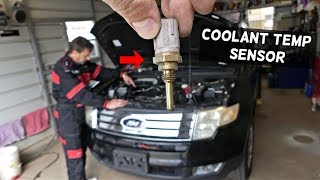
- Locate the ECT sensor. On the 2.7L V6, it is located under the intake manifold. On the 3.7L V6, it is more accessible, typically on a coolant housing. 🎬 See this walkthrough for locating and replacing the sensor.
- Carefully inspect the ECT sensor's electrical connector. Check if it is loose, damaged, or has corroded pins. Per TSBs, this is a very common point of failure on the 2.7L engine.
- Disconnect the connector and inspect the wiring harness for any visible damage, such as chafing or melting.
- If the wiring and connector appear fine, test the sensor. Using a multimeter set to Ohms, measure the resistance across the sensor's pins. At ~68°F (20°C), the reading should be between 2,000-3,520 Ohms. If the reading is far off, the sensor is bad. 🎬 Watch: Two quick DIY methods to fix the P0117 code.
- If the sensor tests good, the issue is likely in the wiring. Check for a short to ground on the signal wire between the connector and the PCM.
- After the repair (securing the connector, replacing the sensor, or fixing the wire), clear the trouble codes with the scanner and perform a drive cycle to ensure the code does not return.
Parts You'll Likely Need
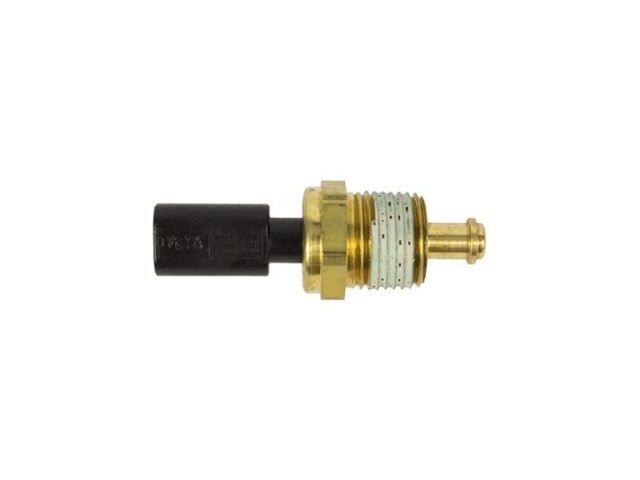
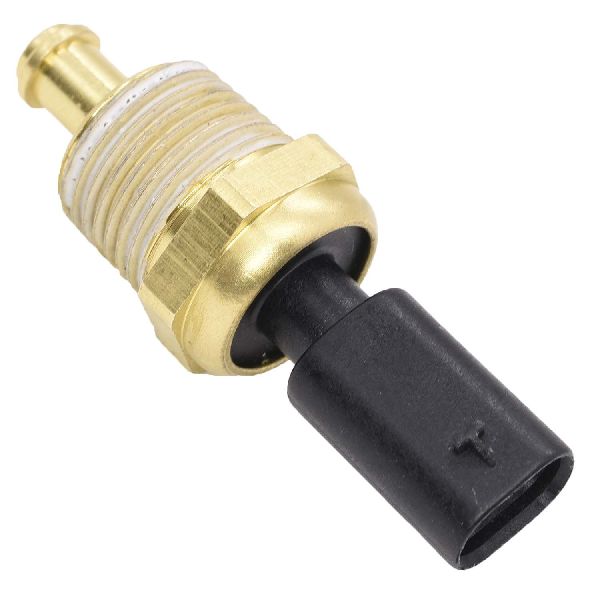
- Engine Coolant Temperature (ECT) Sensor
(OEM #FT4Z-12A648-B)— This sensor is the most common part to fail or be replaced to resolve a P0117 code, especially after confirming the wiring and connector are intact.
Trusted brands: Motorcraft (DY-1298, superseded by FT4Z-12A648-B), Bosch, NTK
OEM price range: $30-$45
Aftermarket price range: $20-$40 - ECT Sensor Connector Pigtail
(OEM #3U2Z-14S411-HYB (Motorcraft WPT-989))— If the connector itself is damaged or corroded, or if the locking tab is broken, it must be replaced to ensure a secure connection, which is the root cause of many P0117 issues on this platform.
Trusted brands: Motorcraft, Dorman
OEM price range: $25-$40
Aftermarket price range: $15-$30
Related Codes That Often Appear With This One
- P0116 — Indicates an issue with the ECT sensor's performance or range, often appearing with circuit faults.
- P0118 — The opposite of P0117, indicating a high circuit voltage (open circuit). These can appear together if the wiring issue is intermittent.
- P0119 — Indicates an intermittent signal from the ECT sensor, which aligns with a loose connector or damaged wire.
- P0217 — This code indicates an engine overheat condition, which the PCM may believe is happening due to the false signal from the P0117 fault.
- P1299 — Indicates Cylinder Head Over-temperature Protection is active, a failsafe mode triggered by the PCM in response to the perceived extreme heat from the P0117 fault.
Technical Service Bulletins (TSBs) & Recalls
- SSM 48991: Malfunction Indicator Lamp (MIL) with various DTCs, including P0117, possibly due to ECT sensor or wiring.
- SSM 47791: MIL with various DTCs, including P0117, on 2.7L engines due to a not fully seated ECT sensor connector or damaged wiring.
- SSM 46906: MIL with various DTCs, including P0117, on 2.7L engines due to a not fully seated ECT sensor connector.
Platform-Specific Known Issues
- TSB SSM 48991: Notes that 2018 models may show P0117 due to issues with the engine coolant temperature (ECT) sensor or related wiring, and in some cases recommends replacing the knock sensor harness which the ECT wiring is part of.
- TSB SSM 47791: Specifically calls out 2017 models with the 2.7L engine, stating P0117 can be caused by an ECT sensor connector that is not fully seated or has damaged wiring. This TSB also applies to the Ford Edge, F-150, and Continental with the same engine.
- TSB SSM 46906: Affects 2016 models with the 2.7L engine and points to the same cause as the later TSB: a poorly seated ECT sensor connector.
- Owner Forum Experience: Owners on forums for the Lincoln MKX and its platform-mate, the Ford Edge, frequently report resolving P0117 simply by locating the ECT sensor and firmly pushing on the connector until it clicks into place, confirming the issue described in the TSBs.
Mechanic-Grade Diagnostic Values
- ECT Sensor Resistance vs. Temperature — expected: Approx. 3520 Ohms at 68°F (20°C), 973 Ohms at 122°F (50°C), 241 Ohms at 194°F (90°C).. Failure: A reading significantly outside the expected range for a given temperature, or an open/short circuit reading.
- ECT Sensor Signal Voltage (at PCM) — expected: The voltage should decrease as the engine warms up. A typical range is ~3.5V when cold to under 1.0V when at operating temperature.. Failure: A voltage reading below ~0.14V indicates a short to ground, triggering P0117.
- KOEO (Key On, Engine Off) ECT Live Data — expected: With a cold engine, the ECT reading on a scan tool should be nearly identical to the Intake Air Temperature (IAT) reading.. Failure: If the ECT reads a maxed-out value (e.g., 284°F) while the IAT reads ambient temperature, it strongly suggests a sensor or circuit fault, not an actual overheat condition.
Scan Tool Commands That Help
- Ford IDS (Integrated Diagnostic System): Datalogger > PID: ECT — This is the dealer-level tool used to monitor and graph the live voltage and temperature readings from the ECT sensor. It can help identify intermittent drops or spikes that a standard OBD-II scanner might miss.
- Ford IDS (Integrated Diagnostic System): Self-Test > All CMDTCs — To retrieve all continuous memory diagnostic trouble codes from all modules. This is more comprehensive than a generic scanner and can reveal related codes that provide more context for the P0117 fault.
Wiring & Ground Locations
- ECT Sensor Connector (C1016 on Ford Edge) — On the 2.7L EcoBoost, the sensor is located under the intake manifold, toward the rear of the engine. It is notoriously difficult to access.. This connector is the most common point of failure, as cited in multiple TSBs. It can be improperly seated from the factory or work its way loose over time, causing the P0117 code.
- PCM Connector C1551E (on Ford Edge) — The Powertrain Control Module (PCM) is located in the engine bay. On the platform-mate Ford Edge, it is on the driver's side, near the firewall.. This is the terminating end of the ECT sensor circuit. Technicians may need to test for continuity or shorts at the specific pins for the ECT sensor on this connector to rule out a wiring problem between the sensor and the PCM.
- ECT Signal Wire (Pin 40 on C1551E - Ford Edge) — This is the specific pin for the ECT sensor signal at the PCM on the platform-mate Ford Edge 2.7L. The wire color is typically Yellow-Green (YE-GN).. When diagnosing a persistent P0117, a technician would test this specific pin for a short to ground. If the wire is shorted anywhere along its path, it will cause the code.
- Signal Return Wire (Pin 51 on C1551E - Ford Edge) — This is the ground or signal return pin for the ECT sensor circuit at the PCM on the platform-mate Ford Edge 2.7L. The wire color is typically Green-Violet (GN-VT).. A break or high resistance in this return wire can also cause incorrect readings, though it more commonly leads to a P0118 (high circuit) code.
Real Owner Repair Stories
- Ford F150 Forum (2019 Ford F-150 2.7L EcoBoost (engine platform-mate)) — Rumble noise, Check Engine Light, "Engine Coolant Over Temperature" warning, and the engine entered limp mode.
❌ Tried (didn't work) The issue temporarily resolved itself after the vehicle sat overnight, but the owner was concerned about it recurring.
✅ What actually fixed it The dealership performed the repair outlined in a TSB (21-2168 for the F-150) which involves relocating the ECT sensor to a new position on a heater hose using a special kit. The owner confirmed this permanently fixed the problem.
OEM Part Supersession History
DY-1298→FT4Z-12A648-A, then FT4Z-12A648-B— Part revisions are common to improve reliability or manufacturing processes. Given the known issues with this circuit, the supersession likely indicates an improved sensor design.
Heads up: FT4Z-12A648-B is the current recommended replacement for the original sensor.
Helpful Videos
![How to Fix P0117 Engine Code in 3 Minutes [2 DIY Methods / Only $7.43]](https://img.youtube.com/vi/0PE930ETa4Y/mqdefault.jpg)

We Have This Part in Stock


The information in this article is provided for general reference and educational purposes only. Vehicle specifications, procedures, and part compatibility can vary by production date, trim level, and region. Always consult your vehicle's factory service manual and verify part numbers before purchasing or performing repairs. Safety-critical components such as airbags, seat belts, and braking systems should be installed by a qualified professional.
- Lincoln MKX:
- 🧭 Diagnostic Flowchart
- 🎬 Helpful Videos
- 🛍️ Shop This Part
- What's Unique About the 2016-2018 Lincoln MKX
- Symptoms You May Notice
- Most Likely Causes
- Rare But Worth Checking
- Diagnosis Steps
- Parts You'll Likely Need
- Related Codes That Often Appear With This One
- Technical Service Bulletins (TSBs) & Recalls
- Platform-Specific Known Issues
- Mechanic-Grade Diagnostic Values
- Scan Tool Commands That Help
- Wiring & Ground Locations
- Real Owner Repair Stories
- OEM Part Supersession History
- 🎟️ Get 5% Off