

P0117 on 2016-2018 Lincoln MKX 2.7L: ECT Sensor Circuit Low Causes and Fixes
On a 2016-2018 Lincoln MKX with the 2.7L engine, code P0117 is most frequently caused by a poorly seated electrical connector at the Engine Coolant Temperature (ECT) sensor. Before replacing parts, physically check this connection. If secure, the sensor itself or the associated wiring harness are the next likely causes, but both are difficult to access under the intake manifold, making the repair labor-intensive.
- P0117 on a 2016-2018 Lincoln MKX with the 2.7L engine is very frequently caused by a loose electrical connector on the ECT sensor, a known issue cited by Ford/Lincoln.
- Before replacing any parts, physically inspect and firmly press on the ECT sensor connector to ensure it is fully seated. Accessing it requires removing the intake manifold.
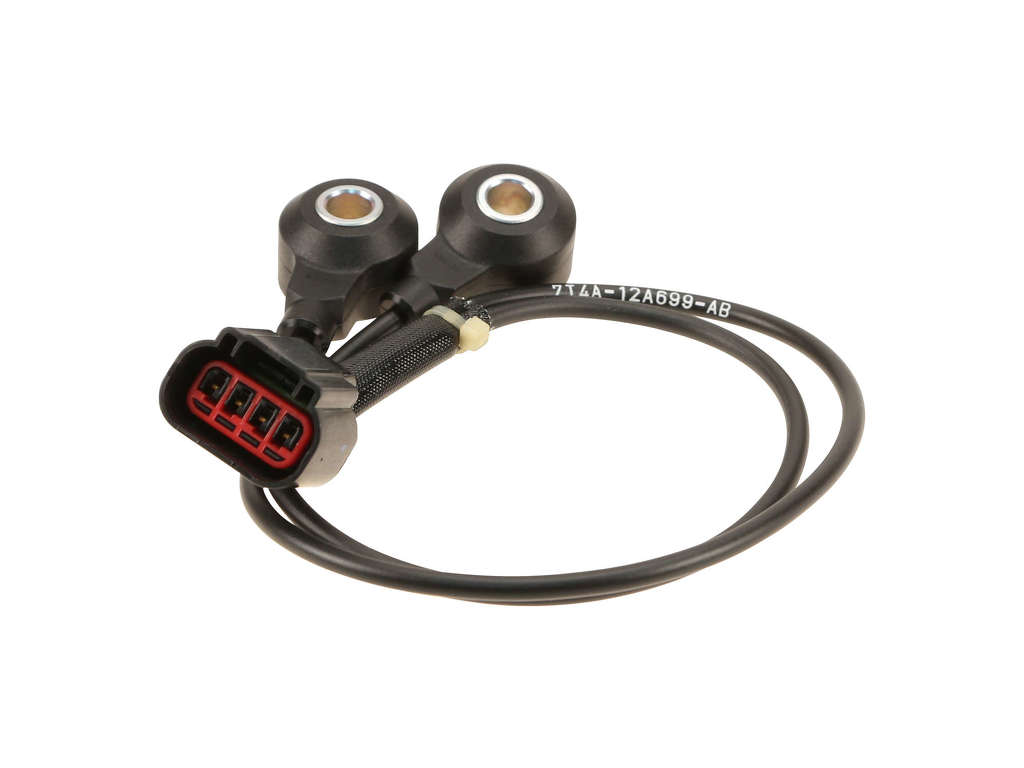
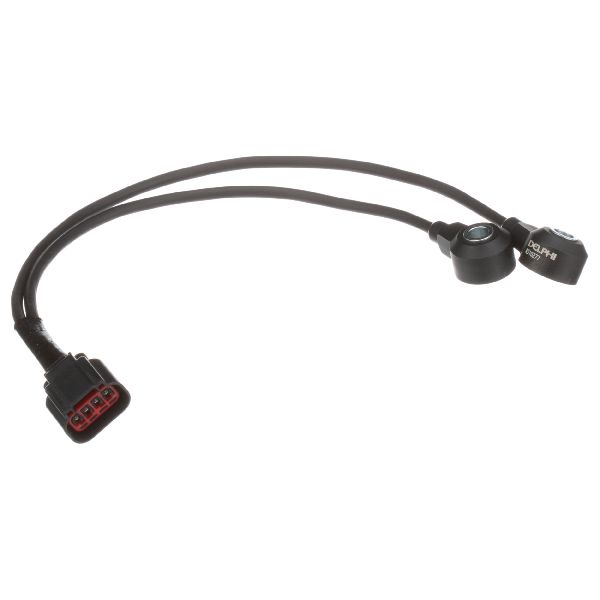
- If the connection is secure, the next most likely cause is a failed ECT sensor or the integrated knock sensor/ECT wiring harness, which Ford recommends replacing as a set per TSB SSM 48991.
- Driving with this code is not recommended long-term as it can lead to poor performance, high fuel consumption, and an inability for the PCM to detect a true overheating event.
What's Unique About the 2016-2018 Lincoln MKX
The 2016-2018 Lincoln MKX with the 2.7L EcoBoost engine is specifically named in multiple Ford/Lincoln Technical Service Bulletins (TSBs) for issues causing P0117. These bulletins highlight a known vulnerability with the ECT sensor's electrical connector (C1016) not being fully seated or the wiring harness being damaged in the engine valley. TSB SSM 48991 further specifies that the ECT sensor wiring is integrated into the knock sensor harness (part #12A699), which is prone to heat degradation, and recommends replacing both the sensor and the harness to resolve persistent issues. This makes a wiring or connection issue a much higher probability on this platform compared to a simple sensor failure on other vehicles.
Symptoms You May Notice
- Check Engine Light is on
- Temperature gauge reads excessively high, often maxed out
- Cooling fans run constantly at high speed, even when the engine is cold
- Engine may run rough, hesitate, or have a hard start, especially when cold.
- Poor fuel economy
- Dashboard message "AC off due to high engine temp" may appear
- Engine Coolant Over Temperature warning light or message on the instrument cluster.
- Replacing the thermostat. P0117 is an electrical circuit fault, not a mechanical cooling system problem like a stuck thermostat (which typically sets a P0128 code).
Most Likely Causes
- Poorly Seated ECT Sensor Connector 🔴 High Probability → Shop Engine Coolant Temperature Sensor This is a widely documented issue in Ford TSBs (SSM 46906, SSM 47791) for the 2.7L engine. The connector (C1016) is in a location subject to vibration and can work itself loose over time, causing a poor connection.
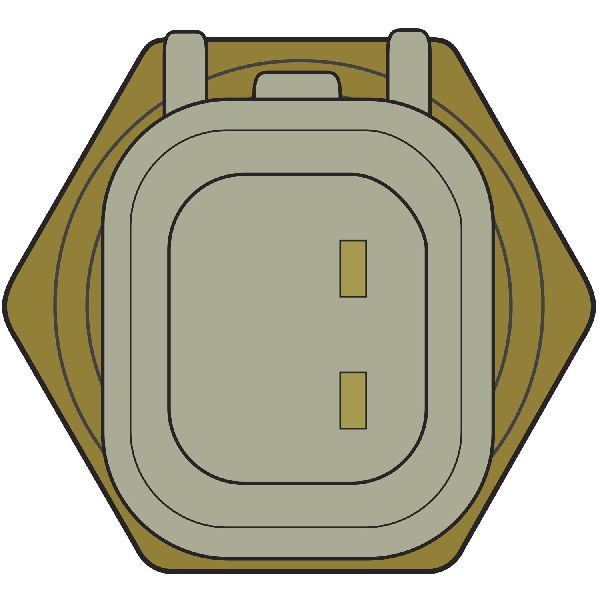
How to confirm: Visually and physically inspect the ECT sensor connector at the back of the engine, under the intake manifold. Ensure it is fully seated and clicks into place. Wiggle the connector while monitoring live ECT data on a scan tool to see if the reading stabilizes from its maxed-out value.
Typical fix: Firmly press the connector until it is fully seated. If the locking tab is broken or terminals are damaged, the connector pigtail should be replaced.
Est. part cost: $0 - $40 - Damaged ECT / Knock Sensor Wiring Harness 🟡 Medium Probability → Shop Engine Wiring Harness TSB SSM 48991 notes that the wiring harness, which is shared with the knock sensor (Ford base part #12A699), can be a point of failure due to heat and vibration in the engine valley. TSB SSM 47791 also points to potential wiring damage between connectors C1016 and C1168.
How to confirm: Visually inspect the wiring harness leading to the ECT sensor for signs of chafing, melting, or breaks. Check for continuity and shorts to ground on the signal wire between the sensor connector and the PCM. A fault in this harness can also trigger knock sensor codes (e.g., P0330).
Typical fix: Repair the damaged section of the wire or replace the affected harness pigtail. TSB SSM 48991 recommends replacing the entire knock sensor harness which includes the ECT wiring, along with the ECT sensor itself, as a complete repair.
Est. part cost: $40 - $100 - Faulty Engine Coolant Temperature (ECT) Sensor 🟡 Medium Probability → Shop Engine Coolant Temperature Sensor Sensors can fail by shorting internally, which causes the low voltage signal that triggers P0117. While less common than the connection/wiring issue on this platform, it is still a frequent failure point.
How to confirm: With a scan tool, observe live ECT data on a cold engine. If it shows an impossibly high temperature (e.g., 280°F+), the sensor is likely shorted. You can also test the sensor's resistance with a multimeter; at room temperature (~68°F/20°C), it should be around 2,000-3,520 ohms. A reading near zero indicates a failed, shorted sensor.
Typical fix: Replace the ECT sensor. On the 2.7L engine, this is a labor-intensive job as the sensor is located under the intake manifold.
Est. part cost: $25 - $60
Rare But Worth Checking
- Faulty Powertrain Control Module (PCM): → Shop Engine Control Module (ECM) This is extremely rare. All other possibilities, especially wiring and sensor issues as documented in TSBs, should be exhaustively ruled out before considering the PCM as the cause.
Diagnosis Steps
- Connect an OBD-II scanner and verify P0117 is present. Check for any other codes, especially P0118, P1299, or P0330.
- View live data from the ECT sensor. If it shows a maximum temperature (e.g., 284°F) on a cold engine, this confirms the 'circuit low' condition.
- Gain access to the rear of the engine to inspect the ECT sensor's electrical connector (designated as C1016). This requires significant disassembly as it is under the intake manifold.
- Firmly press on the connector to ensure it is fully seated. This is the most common fix per multiple TSBs.
- If the code persists, disconnect the connector and inspect the pins for corrosion or damage. Inspect the visible wiring for chafing or melting, particularly where the harness may contact other engine components.
- With the connector disconnected (Key On, Engine Off), the scan tool's ECT reading should drop to its minimum value (e.g., -40°F), which would set a P0118. If it still reads high, there is a short to ground in the harness between the sensor and the PCM. If it drops low, the sensor itself is the most likely cause of the short.
- If the sensor is suspected, test its resistance with a multimeter. It should be around 2,000-3,520 ohms at room temperature. A reading near zero ohms confirms an internally shorted sensor.
- If wiring is suspected, perform a continuity test on the signal and ground wires between the sensor connector and the PCM. Per TSB SSM 48991, the entire knock sensor/ECT harness is often replaced as a unit.
Parts You'll Likely Need
- Engine Coolant Temperature (ECT) Sensor
(OEM #FT4Z-12A648-B)— This sensor can fail internally by shorting out. TSB SSM 48991 recommends replacing it along with the harness for a complete repair. This part number supersedes FT4Z-12A648-A and DY-1298.
Trusted brands: Motorcraft
OEM price range: $30-$45
Aftermarket price range: $20-$40 - Knock Sensor / ECT Wiring Harness
(OEM #12A699 (Base Part Number))— TSB SSM 48991 identifies this integrated harness as a primary failure point due to heat degradation in the engine valley, causing shorts that trigger P0117. Replacement is often required for a permanent fix.
Trusted brands: Motorcraft
OEM price range: $40-$80
Aftermarket price range: $30-$60 - ECT Sensor Connector Pigtail
(OEM #WPT-989)— If the original connector's locking tab is broken or the terminals are damaged, a new pigtail is needed to ensure a secure connection, which is the root cause of this issue on the 2.7L engine.
Trusted brands: Motorcraft, Dorman
OEM price range: $25-$40
Aftermarket price range: $15-$30
Related Codes That Often Appear With This One
- P0118 — The opposite of P0117, indicating a high voltage (open) circuit. If the wiring issue is intermittent (e.g., a loose connector or frayed wire), both codes can appear at different times as the circuit opens and shorts.
- P0217 — This code indicates an engine overheat condition. The PCM may set this code because the P0117 fault is making it believe the engine is genuinely overheating.
- P1299 — This Ford-specific code means 'Cylinder Head Over-temperature Protection Active'. It's a failsafe mode triggered by the PCM in response to the perceived extreme heat signal from the P0117 fault. It is explicitly mentioned in TSBs related to this issue.
- P0330 — Knock Sensor 2 Circuit Malfunction. TSB SSM 48991 notes that the ECT and knock sensor share a wiring harness on the 2.7L engine. A fault in this shared harness can set both ECT and knock sensor codes simultaneously.
Technical Service Bulletins (TSBs) & Recalls
- SSM 48991: For 2016-2018 MKX and platform mates with the 2.7L engine, this TSB notes that P0117 can be due to the ECT sensor or the knock sensor wiring harness, and recommends replacing both.
- SSM 47791: Points to an unseated ECT sensor connector or damaged wiring between connectors C1016 and C1168 as a primary cause for P0117 on 2.7L engines.
- SSM 46906: An earlier TSB similar to SSM 47791, identifying the poorly seated ECT connector as a common fault.
Platform-Specific Known Issues
- A series of Technical Service Bulletins (SSM 46906, SSM 47791, SSM 48991) were issued by Ford/Lincoln specifically addressing P0117 and related codes on the 2.7L EcoBoost engine due to issues with the ECT sensor connector or wiring harness.
- TSB SSM 48991 specifically recommends replacing both the ECT sensor (12A648) and the integrated knock sensor harness (12A699) as a corrective action for a list of codes including P0117.
- The physical location of the ECT sensor, deep in the engine valley under the intake manifold, makes what would be a simple repair on other engines a significantly more labor-intensive job on the 2.7L EcoBoost.
Mechanic-Grade Diagnostic Values
- ECT Sensor Resistance vs. Temperature — expected: Approx. 3520 Ω at 68°F (20°C), 973 Ω at 122°F (50°C), and 241 Ω at 194°F (90°C).. Failure: A reading near zero ohms indicates an internally shorted sensor, causing P0117. An open circuit (infinite resistance) would cause P0118.
- ECT Sensor Signal Voltage at PCM — expected: Should decrease smoothly from ~3.5V (cold) to under 1.0V (hot). The PCM supplies a 5V reference to the circuit.. Failure: A voltage reading below 0.14V indicates a short to ground and will trigger code P0117.
- Voltage Drop on Sensor Ground Wire — expected: Less than 0.1V (100mV) when testing between the sensor's ground wire and the battery's negative terminal with the engine running.. Failure: A reading higher than 0.1V indicates a poor ground connection, which can cause erratic sensor readings.
Scan Tool Commands That Help
- OBD-II Scanner (e.g., FORScan, Autel): Live Data Monitoring (ECT PID) — This is the primary method to confirm the fault. A P0117 will typically show a fixed, maximum temperature reading (e.g., 284°F) even on a cold engine. This confirms the PCM is seeing a 'circuit low' condition.
- OBD-II Scanner + Jumper Wire: Circuit Integrity Test (Manual) — After disconnecting the sensor, jumpering the two pins on the harness-side connector should cause the live data reading to swing from minimum (-40°F) to maximum temperature. If this happens, it confirms the wiring from the connector to the PCM is intact, isolating the fault to the sensor itself.
Wiring & Ground Locations
- C1016 — The electrical connector at the Engine Coolant Temperature (ECT) sensor itself, located under the intake manifold at the rear of the engine valley on the 2.7L EcoBoost.. This connector is cited in multiple TSBs as being prone to not being fully seated, which is a primary cause of P0117 and P0118 codes on this platform.
- C1168 — An inline harness connector located between the ECT sensor connector (C1016) and the Powertrain Control Module (PCM).. TSB SSM 47791 specifically identifies the wiring *between* C1016 and C1168 as a common location for chafing and damage that can cause a short to ground, triggering P0117.
- PCM Connector C1551E (Pin 40 & 51) — This is the main engine connector at the PCM, located in the engine bay. This pinout is from the platform-mate Ford Edge 2.7L and is likely identical.. Pin 40 is the ECT signal wire and Pin 51 is the signal return (ground). These are the specific pins to test for continuity and shorts when diagnosing a harness issue between the sensor and the PCM.
- C1016 Pinout — At the ECT sensor connector.. On related 2.7L/3.0L platforms, Pin 2 (GY-VT wire) is the ECT Signal and Pin 1 (YE-GY wire) is the Signal Return. This allows for precise testing for the 5V reference and ground directly at the connector.
Real Owner Repair Stories
- Consensus from Ford TSBs and Ford Edge/F-150 forums (Ford/Lincoln vehicles with 2.7L EcoBoost engine, various years) — Check engine light with P0117, temperature gauge maxed out, cooling fans running constantly, 'Engine Overtemp' message on dash.
❌ Tried (didn't work) Replacing only the ECT sensor without inspecting the harness., Clearing the code without finding the root cause, leading to its immediate return.
✅ What actually fixed it For a majority of cases, the issue was resolved by either firmly re-seating the C1016 connector at the sensor or, for persistent issues, replacing the entire integrated knock/ECT sensor harness (part #12A699) along with the ECT sensor, as recommended in TSB SSM 48991. - Jaguar Forums user (different vehicle, relevant principle) (2007 Jaguar XK) — Pending P0116 code (ECT range/performance) immediately after replacing the ECT sensor and thermostat.
❌ Tried (didn't work) Testing the new sensor's resistance, which confirmed the part was good.
✅ What actually fixed it Performing a 'hard reset' of the ECU by disconnecting the battery and touching the positive and negative cables together for a few moments to discharge all residual power. Upon reconnection, the code was gone, suggesting the ECU needed to fully reset and relearn sensor values after the new part installation.
OEM Part Supersession History
FT4Z-12A648-A, DY-1298→FT4Z-12A648-B— Standard part revision, likely for improved durability or accuracy.
Heads up: A manufacturer's note for the superseding part FT4Z-12A648-B specifies that it 'Connects To 12A699 Knock Sensor'. This is a critical detail that confirms the integrated nature of the ECT and knock sensor wiring, directly supporting the diagnostic path outlined in TSB 48991.
Model Year Variations Within This Range
- 2016-2018: No significant mechanical or electrical variations affecting this specific fault have been documented for the Lincoln MKX within this model year range. The causes and fixes are consistent across these years.
Diagnostic Flowchart
Used vs. New Parts: Buying Guide for This Vehicle
When a used part is the smart pick: A used Knock Sensor / ECT Wiring Harness (#12A699) can be a cost-effective option if sourced from a low-mileage, front-end collision vehicle where the engine bay was not compromised. The sensor itself is inexpensive and should always be purchased new.
Donor-vehicle mileage cap: roughly under 60000 miles for the part to have meaningful remaining life.
What to inspect on the donor part:
- Check for wiring loom flexibility; avoid any harness that is brittle or stiff.
- Ensure all connector locking tabs are intact and not broken.
- Inspect for any signs of melting, chafing, or previous repairs (e.g., electrical tape splices).
OEM-only on this vehicle (don't cheap out):
- Engine Coolant Temperature (ECT) Sensor: Given the high labor cost to access this part on the 2.7L, using a new OEM Motorcraft sensor is strongly recommended to ensure longevity and prevent a repeat repair.
Aftermarket brands forum-validated for this vehicle:
- ECT Sensor: Bosch, Delphi, and NTK are cited as reliable alternatives to OEM Motorcraft.
- Connector Pigtail: Dorman and Standard Motor Products (SMP) are widely available and acceptable for replacing a broken connector.
Real Owner Stories
Aggregated from forums and TSBs cited above. Mileages and costs reflect what owners reported in those sources.
2016 Ford Edge 2.7L
Symptoms: The vehicle displayed 'Engine Coolant Over Temperature' warnings on the dashboard and had active trouble codes P0117 and P0119.
What fixed it: The problem was not the sensor itself, but rodent damage to the ECT/knock sensor wiring harness located in the engine valley. Repairing the damaged wires resolved the issue.
Source hint: fordedgeforum.com: A user with a 2016 Ford Edge 2.7L (platform mate) reported 'Engine Coolant Over Temperature' warnings and codes P0117 and P0119.
Related OBD-II Codes
Frequently Asked Questions
I have a P0117 code on my 2017 Lincoln MKX. Are there any TSBs for this issue?
Why is the repair for the ECT sensor on my MKX 2.7L so expensive? My mechanic quoted a lot for labor.
My MKX is showing a P0117 code and a knock sensor code (P0330). Are these two problems related?
What is the absolute first thing I should check for a P0117 code on this vehicle?
TSB SSM 48991 recommends a specific repair for P0117. What parts does it say to replace?
My temperature gauge is maxed out and the 'AC off due to high engine temp' message is on, but the engine is cold. Is this a symptom of P0117?
We Have This Part in Stock


The information in this article is provided for general reference and educational purposes only. Vehicle specifications, procedures, and part compatibility can vary by production date, trim level, and region. Always consult your vehicle's factory service manual and verify part numbers before purchasing or performing repairs. Safety-critical components such as airbags, seat belts, and braking systems should be installed by a qualified professional.
- Lincoln MKX:
- 🧭 Diagnostic Flowchart
- 🛍️ Shop This Part
- What's Unique About the 2016-2018 Lincoln MKX
- Symptoms You May Notice
- Most Likely Causes
- Rare But Worth Checking
- Diagnosis Steps
- Parts You'll Likely Need
- Related Codes That Often Appear With This One
- Technical Service Bulletins (TSBs) & Recalls
- Platform-Specific Known Issues
- Mechanic-Grade Diagnostic Values
- Scan Tool Commands That Help
- Wiring & Ground Locations
- Real Owner Repair Stories
- OEM Part Supersession History
- Model Year Variations Within This Range
- Used vs. New Parts: Buying Guide for This Vehicle
- Real Owner Stories
- 2016 Ford Edge 2.7L
- Related OBD-II Codes
- Frequently Asked Questions
- 🎟️ Get 5% Off