

P0117 on 2013-2017 Mazda CX-5: Engine Coolant Temp Sensor Low Causes & Fixes
This code usually means one of the two Engine Coolant Temperature (ECT) sensors has failed, specifically ECT Sensor No. 1. It's a common, DIY-friendly fix costing about $20-$50 for a new sensor. Before replacing, always check the sensor's wiring connector for corrosion or damage, as this can mimic a failed sensor.
- P0117 on your CX-5 points to a problem with the Engine Coolant Temperature Sensor No. 1 or its wiring.
- The most likely cause is a failed sensor, which is an affordable part and relatively easy to replace for a DIYer.
- Before buying parts, inspect the sensor's electrical connector for corrosion or damage, as this can cause the same symptoms.
- Symptoms include the Check Engine Light, cooling fans running constantly, and poor fuel economy.
- Do not confuse this with issues related to the thermostat or ECT Sensor No. 2, which set different trouble codes.
What's Unique About the 2013-2017 Mazda CX-5
The 2013-2017 Mazda CX-5, like many modern Mazda vehicles with Skyactiv technology, uses a two-sensor system to monitor coolant temperature for more precise engine management and to cross-check for faults. One sensor (ECT No. 1) is on the engine block's cylinder head, and the other (ECT No. 2) is on a coolant hose, often near the firewall on the passenger side. This dual-sensor setup allows the PCM to verify warm-up rates and detect inconsistencies, but it also means a failure in either sensor can cause issues. While the Skyactiv engines are generally reliable, this code is a relatively common and straightforward wear-and-tear failure of the sensor itself or its connector.
Generation note: The 2013-2017 year range covers the entire first generation (KE, 2013-2016) and the first model year of the second generation (KF, 2017). Both generations in this period use the 2.0L and 2.5L Skyactiv-G engines with a similar dual ECT sensor setup, so the causes and fixes are consistent across these years.
Symptoms You May Notice
- Check Engine Light is on
- Engine cooling fans run constantly at high speed, even when the engine is cold
- Poor fuel economy because the engine runs in a rich 'cold' mode
- Difficulty starting the engine, especially when cold
- Rough or unstable idle
- Inaccurate or erratic temperature gauge on the dashboard, often pegged at maximum
- Engine may start and then immediately die
- Noticeable loss of engine power
- Replacing the thermostat. While a faulty thermostat can cause other cooling system codes (like P0128 or P0116), it does not directly cause the 'circuit low' electrical fault of P0117. A user on a Mazda forum experienced a P0128 code, replaced the thermostat, and then the code changed to P0117, indicating the sensor itself was the underlying issue.
- Replacing ECT Sensor No. 2. P0117 specifically points to an issue with the circuit for Sensor No. 1. A fault in Sensor No. 2 would typically set a different code, such as P2184 (low input) or P2185 (high input), as outlined in Mazda TSBs.
Most Likely Causes
- Faulty Engine Coolant Temperature (ECT) Sensor No. 1 🔴 High Probability → Shop Engine Coolant Temperature Sensor The sensor is a thermistor that degrades over time with constant heat cycles. Internal failure can cause it to short, sending a continuous low voltage signal to the PCM.
How to confirm: With the engine cold, use a scan tool to read live data for ECT Sensor 1. If it shows an extremely high temperature (e.g., 250°F+), the sensor is almost certainly bad. You can also test the sensor's resistance with a multimeter; the resistance should be high when cold and decrease as it warms up. A shorted sensor will show very low resistance regardless of temperature.
Typical fix: Replace the ECT Sensor No. 1. It is located on the driver's side of the cylinder head, near the thermostat housing and battery. Access can be tight, and removing the battery may be necessary for easier access.
Est. part cost: $20-$50 - Damaged or Corroded Wiring/Connector 🟡 Medium Probability The sensor connector is exposed to engine bay heat and moisture, which can lead to corrosion on the pins (often green or white) or brittleness and damage to the wiring insulation over time.
How to confirm: Visually inspect the ECT sensor's electrical connector and nearby wiring for green/white corrosion, frayed wires, or a loose connection. Wiggling the connector while monitoring live data on a scan tool may cause the temperature reading to fluctuate wildly, confirming a connection issue.
Typical fix: Clean the connector terminals with an electronic cleaner and a small brush. If the connector housing or wiring pigtail is damaged, it will need to be repaired or replaced.
Est. part cost: $5-$30 for a new pigtail connector - Air Pocket in the Cooling System ⚪ Low Probability This typically only occurs after a cooling system service (like a coolant flush, thermostat, or radiator replacement) if the system was not properly bled of air. An air pocket trapped around the sensor will cause it to read incorrectly.
How to confirm: If the P0117 code appeared immediately after cooling system work, this is a likely cause. The engine may also show signs of actual overheating, or the heater may not blow hot air.
Typical fix: Properly bleed the cooling system to remove all trapped air. This involves running the engine with the heater on high and following Mazda's specific air bleeding procedure, which may require a spill-free funnel.
Est. part cost: $0 (if DIY), or cost of Mazda FL22 coolant
Rare But Worth Checking
- Faulty Powertrain Control Module (PCM): → Shop Engine Control Module (ECM) This is extremely rare. The PCM is the last component to suspect after all other possibilities (sensor, wiring, coolant) have been thoroughly ruled out. A PCM failure would likely present with multiple other unrelated codes and symptoms.
Diagnosis Steps
- Verify the code with an OBD-II scanner. Note any other codes present, such as P0118 or P011A.
- Check the engine coolant level in the overflow reservoir. Ensure it is between the F and L lines when cold.
- With the engine completely cold, use the scanner to view live data for 'ECT Sensor 1'. If the reading is abnormally high (e.g., 240°F or higher), the issue is in the sensor or its circuit. Compare it to the Intake Air Temperature (IAT) sensor reading; they should be within a few degrees of each other.
- Locate ECT Sensor No. 1 on the driver's side of the engine block near the thermostat housing. Visually inspect its electrical connector and wiring for any signs of corrosion, damage, or looseness.
- Disconnect the sensor. The live data reading on the scanner should now drop to a default low value (e.g., -40°F). This confirms the wiring from the PCM is likely intact and the PCM is reading the circuit correctly.
- If the reading was stuck high and drops to -40°F when disconnected, the ECT sensor itself has an internal short and is faulty. It should be replaced.
- If the reading remains high even with the sensor disconnected, there is a short to ground in the wiring harness between the sensor and the PCM, which must be traced and repaired.
- As a final wiring check, you can use a jumper wire (or paperclip) to bridge the two terminals in the disconnected sensor connector. The scanner's live data reading should jump to a very high temperature. This confirms the circuit's integrity back to the PCM.
Parts You'll Likely Need
- Engine Coolant Temperature Sensor (ECT)
(OEM #PE01-18-840)— This sensor is the most common failure point for code P0117. It directly measures the coolant temperature, and internal failure causes the incorrect low voltage signal.
Trusted brands: Mazda (OEM), Denso, NGK, Delphi, Standard Motor Products (SMP)
OEM price range: $40-$60
Aftermarket price range: $20-$40
Related Codes That Often Appear With This One
- P0118 — If there is an intermittent short or open in the wiring, or a failing sensor that fluctuates, the PCM might see both low (P0117) and high (P0118) voltage signals at different times.
- P011A — This code indicates a correlation problem between ECT Sensor No. 1 and No. 2. A failing Sensor No. 1 can cause its reading to deviate significantly from Sensor No. 2, triggering P011A alongside P0117. This is common enough that Mazda issued TSB 07-007/17 for poor heater performance which involves diagnosing both sensors for this code.
Technical Service Bulletins (TSBs) & Recalls
- TSB 07-007/17: Addresses poor heater performance and DTC P011A, involving diagnosis of both ECT sensors, confirming the dual-sensor strategy and failure modes.
Platform-Specific Known Issues
- A Technical Service Bulletin (TSB 07-007/17) exists for poor heater performance that may be accompanied by code P011A, which is directly related to a performance problem between the two ECT sensors. Diagnosis for this TSB involves checking both sensors, making it relevant to a P0117 fault.
- There is a warranty extension (SSPD8) for a faulty thermostat on 2018 and newer models, which causes code P0126. This does not apply to the 2013-2017 range or code P0117, but owners sometimes confuse the issues.
- Owner experiences confirm that accessing ECT Sensor No. 1 is tight. Removing the battery and its tray is a common step to create enough room to work, as documented in forum discussions.
Mechanic-Grade Diagnostic Values
- ECT Sensor No. 1 Resistance (Multimeter Test) — expected: Approx. 2,000 - 3,000 Ω at 20°C (68°F); Approx. 250 - 350 Ω at 80°C (176°F). Resistance should decrease smoothly as temperature increases.. Failure: Resistance is near zero (shorted sensor) or infinite (open sensor) regardless of temperature. A reading far outside the expected range indicates a faulty sensor.
- ECT Sensor No. 1 Signal Voltage at PCM — expected: Approx. 3.10V at 20°C (68°F); Approx. 1.40V at 60°C (140°F); Approx. 0.87V at 80°C (176°F).. Failure: Voltage is below 0.2V for more than 5 seconds. This is the specific condition that sets the P0117 code.
- ECT Sensor No. 2 Signal Voltage (for comparison) — expected: Should correlate closely with ECT Sensor No. 1. A detailed voltage-to-temperature chart is available in TSB 07-007/17 (e.g., 3.10V = 20°C, 0.87V = 80°C).. Failure: A significant mismatch between Sensor 1 and Sensor 2 readings can indicate a fault in one of the sensors, often triggering code P011A.
Wiring & Ground Locations
- PCM Pin 1AK — At the Powertrain Control Module (PCM) connector.. This is the specific terminal that receives the signal voltage from ECT Sensor No. 1. Technicians can back-probe this pin to verify the voltage the PCM is seeing, confirming if a fault is in the wiring or the PCM itself.
- PCM Pin 1AM — At the Powertrain Control Module (PCM) connector.. This is the sensor ground reference pin for ECT Sensor No. 1 at the PCM. Verifying continuity from the sensor's ground wire to this pin is crucial for diagnosing an open ground circuit.
- G03 — Main engine compartment ground point, typically located on the chassis in the left front of the engine bay.. While the ECT sensor has a dedicated ground return to the PCM, a poor main engine or chassis ground can introduce voltage offsets and electrical noise, potentially affecting sensor readings. Verifying this ground is clean and tight is a good practice during advanced diagnosis.
OEM Part Supersession History
PE01-18-840→PE01-18-840— No direct supersession found for this specific part number within the 2013-2017 Skyactiv application. It appears to be the consistent part number for this generation.
Heads up: Be cautious of similar-looking sensors from older, non-Skyactiv Mazda models (e.g., part LF01-18-840A). While they may physically fit, their resistance curves can differ, leading to incorrect temperature readings and other codes. Always verify the part number for the Skyactiv engine.
Diagnostic Flowchart
Other Known Issues on This Vehicle
Issues unrelated to this code that are worth knowing about as an owner of this generation:
- LED Daytime Running Light (DRL) Failure 🟡 Low — Common on 2016 models, leading to a recall. Also affects 2014-2015 models. The DRLs may flicker or fail completely. (Ref: Recall 4320A (NHTSA #20V063000) for 2016 models. The cause is a sealing gasket that releases sulfur, corroding the DRL circuit board.)
- Failing Rear Liftgate Supports (Struts) 🟠 Medium — Common across 2013-2016 models. The struts lose pressure and can no longer hold the liftgate open, causing it to fall unexpectedly. (Ref: Recall 9916H for manual liftgates. Power liftgates can also suffer from grinding noises (TSB 09-006/24) or switch corrosion (TSB 09-013/25).)
- Cracked Cylinder Head (2.5L Skyactiv-G) 🔴 High → Shop Engine Cylinder Head — A known issue, though not extremely widespread, primarily affecting 2018+ models but has been reported on earlier models. Can cause an external coolant or oil leak. The 2.5T engine has a different cylinder head issue with an extended warranty. (Ref: TSB exists for later models (e.g., 01-013/21 for 2.5T engines), but no formal recall for the 2013-2017 non-turbo engines.)
- Broken Rear Coil Springs 🟠 Medium — Affects 2013-2016 models. Dust and moisture get trapped between the spring and its seat, causing corrosion that leads to the spring breaking, resulting in a noise or lower rear ride height. (Ref: TSB 02-015/18 describes the issue and repair procedure, which involves replacing the springs with a modified design.)
- Excessive Oil Consumption (2021+ Models) 🔴 High — Primarily documented for 2021 and newer 2.5T engines due to faulty valve stem seals. Not a known issue for the 2013-2017 model years but important context for the platform's history. (Ref: TSB 01-012/21 addresses this for newer models.)
Used vs. New Parts: Buying Guide for This Vehicle
When a used part is the smart pick: For a low-cost, critical electronic sensor like the ECT, a used part is not recommended. The risk of installing a part with significant wear and unknown remaining lifespan outweighs the small cost savings. A new, quality aftermarket or OEM part is the smart choice.
Aftermarket brands forum-validated for this vehicle:
- Delphi
- NGK / NTK
- Beck Arnley
- Standard Motor Products (SMP)
- Hella
- Holstein
Real Owner Stories
Aggregated from forums and TSBs cited above. Mileages and costs reflect what owners reported in those sources.
2014 Mazda CX-5
Symptoms: The user initially had a P011A code and replaced the thermostat, but the light returned. They noted the difficulty of the repair due to the sensor's location.
What fixed it: Replacing the ECT sensor and removing the battery to gain necessary access.
Source hint: mazdas247.com thread titled 'Coolant temperature sensor' from 2015
2013-2017 Mazda CX-5
Symptoms: Coolant was observed boiling in the reservoir, indicating an actual overheating condition that was being masked or misrepresented by the faulty sensor reading.
What fixed it: The PCM triggers P0117 when signal voltage drops below 0.20V; the sensor or circuit must be repaired to restore accurate monitoring.
Source hint: mazdas247.com thread titled 'P0117 Code ECT low circuit input'
Documented NHTSA Reports
Mazda Platform Diagnostic Reference
Symptoms: An owner of a similar Mazda Skyactiv model reported that a coolant leak led to the radiator overheating, which eventually caused the engine to seize. The freeze frame data specifically recorded "P0117 engine coolant temperature sensor 1 circuit low."
What fixed it: While this specific case resulted in engine failure, it highlights that the P0117 code is a critical indicator that the PCM has lost accurate temperature monitoring during a cooling system fault.
Source hint: NHTSA ODI #11429692
Related OBD-II Codes
Frequently Asked Questions
Does TSB 07-007/17 apply to my 2013-2017 Mazda CX-5 if I have a P0117 code?
I heard there is a warranty extension for thermostats; will this cover my P0117 repair?
Where is the ECT Sensor No. 1 located on my CX-5, and is it hard to reach?
Can a cooling system flush cause a P0117 code on this vehicle?
Why are my cooling fans running at high speed when the engine is cold?
Helpful Videos
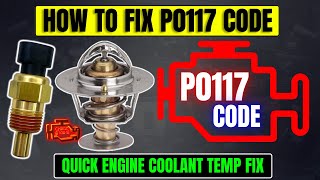
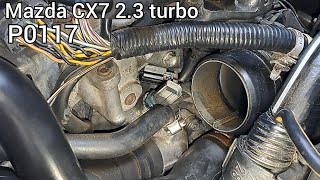
![How to Fix P0117 Engine Code in 3 Minutes [2 DIY Methods / Only $7.43]](https://img.youtube.com/vi/0PE930ETa4Y/mqdefault.jpg)
We Have This Part in Stock

The information in this article is provided for general reference and educational purposes only. Vehicle specifications, procedures, and part compatibility can vary by production date, trim level, and region. Always consult your vehicle's factory service manual and verify part numbers before purchasing or performing repairs. Safety-critical components such as airbags, seat belts, and braking systems should be installed by a qualified professional.
- Mazda CX-5:
- 🧭 Diagnostic Flowchart
- 🎬 Helpful Videos
- 🛍️ Shop This Part
- What's Unique About the 2013-2017 Mazda CX-5
- Symptoms You May Notice
- Most Likely Causes
- Rare But Worth Checking
- Diagnosis Steps
- Parts You'll Likely Need
- Related Codes That Often Appear With This One
- Technical Service Bulletins (TSBs) & Recalls
- Platform-Specific Known Issues
- Mechanic-Grade Diagnostic Values
- Wiring & Ground Locations
- OEM Part Supersession History
- Other Known Issues on This Vehicle
- Used vs. New Parts: Buying Guide for This Vehicle
- Real Owner Stories
- 2014 Mazda CX-5
- 2013-2017 Mazda CX-5
- Documented NHTSA Reports
- Mazda Platform Diagnostic Reference
- Related OBD-II Codes
- Frequently Asked Questions
- 🎟️ Get 5% Off