

P0117 on 2012-2016 Mercedes-Benz E-Class: Engine Coolant Temperature Sensor Causes and Fixes
P0117 on the M276 engine is almost always a failed Engine Coolant Temperature (ECT) sensor. The sensor is located at the back of the driver's side cylinder head and can be difficult to access. Expect to pay around $20-$50 for a new sensor and tackle it as a DIY job if you're patient. The most telling symptom is the radiator fan running at maximum speed immediately upon startup.
- P0117 on your E-Class means the computer thinks the engine is critically overheating due to a shorted coolant temperature sensor circuit.
- The most telling symptom on this specific vehicle is the radiator fan running at full blast immediately after starting the engine.
- The most likely cause is a failed ECT sensor itself, which is located in a very tight spot at the back of the engine on the driver's side.
- This is a DIY-possible repair, but be prepared for a frustrating experience due to the sensor's poor accessibility.
- Do not replace the thermostat; it is a separate part and will not solve this code.
What's Unique About the 2012-2016 Mercedes-Benz E-Class
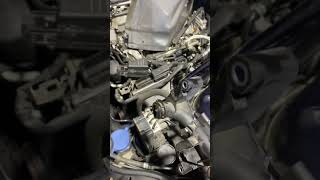
On the Mercedes-Benz M276 engine, the P0117 code has a very distinct and common symptom: the radiator cooling fan runs at maximum speed as soon as the engine is started. This is the engine computer's immediate protective reaction to the perceived overheating signal. The sensor itself is not part of the thermostat housing on this engine; it's a standalone part located in a very tight spot at the rear of the driver's side cylinder head, near the firewall and vacuum pump. Its difficult-to-access location makes replacement more challenging than on many other vehicles, with some owners reporting that they cannot wiggle the sensor free without understanding how it's secured.
Symptoms You May Notice
- Check Engine Light is on.
- Radiator cooling fan runs constantly at high speed, even when the engine is cold.
- Engine temperature gauge may behave erratically, show an extremely high reading, or be stuck at zero/a low value.
- Difficulty starting the engine, especially when cold (long crank).
- Reduced fuel economy due to the ECM defaulting to a rich fuel mixture.
- Rough idle or engine hesitation until it warms up.
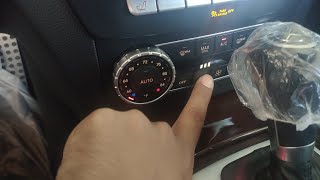
- Air conditioning (A/C) may not blow cold air. 🎬 See how a bad sensor stops A/C and runs the fan on high
- Replacing the thermostat. On the M276 engine, the ECT sensor is a separate component and not integrated into the thermostat housing. Replacing the thermostat will not fix a P0117 code caused by the sensor itself.
Most Likely Causes
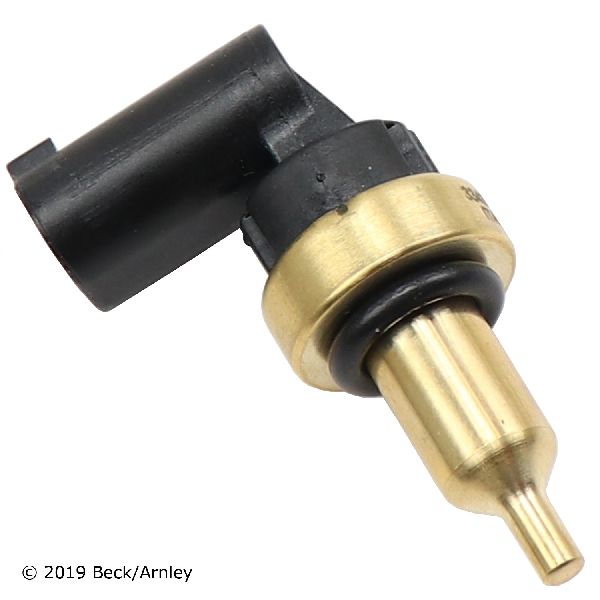
- Failed Engine Coolant Temperature (ECT) Sensor 🔴 High Probability → Shop Engine Coolant Temperature Sensor The sensor is located in a high-heat area at the back of the engine, making it susceptible to failure over time due to extreme heat cycles and vibration. The internal thermistor shorts out, causing the low voltage reading.
How to confirm: Use an OBD-II scanner to monitor live data. If the ECT reading shows an extremely high temperature (e.g., 280°F / 140°C) when the engine is cold, the sensor has likely shorted internally. You can also test the sensor's resistance with a multimeter; it should be around 2,000-3,000 ohms at room temperature (approx. 70°F/20°C). A shorted sensor will show very low or zero resistance.
Typical fix: Replace the Engine Coolant Temperature sensor and its O-ring. Be prepared for a difficult replacement due to the tight access.
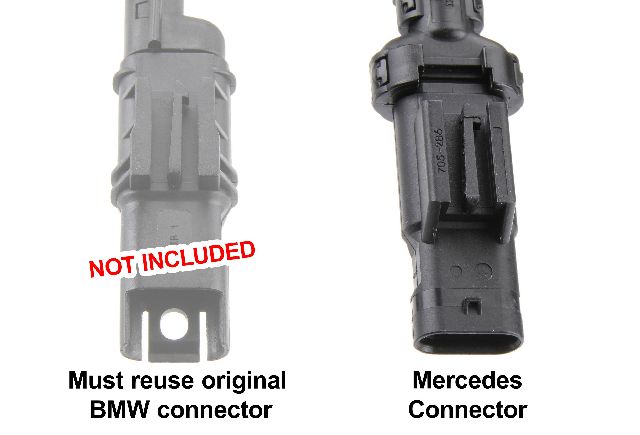
Est. part cost: $20-$60 - Damaged Wiring or Connector 🟡 Medium Probability The wiring harness to the sensor is in a tight, hot location, making it susceptible to brittleness, chafing, or damage over time. The plastic connector can also become brittle and crack.
How to confirm: Visually inspect the wiring and connector for any signs of melting, corrosion, or loose pins. Perform a continuity test on the signal wire between the sensor connector and the ECM to check for a short to ground. Wiggling the harness while monitoring live data can also reveal an intermittent short.
Typical fix: Repair the damaged section of wiring or replace the connector pigtail.
Est. part cost: $10-$30 - Low Engine Coolant / Air Pocket ⚪ Low Probability → Shop Engine Coolant / Antifreeze
How to confirm: Visually inspect the coolant level in the expansion tank when the engine is cold. If the level is low, it can cause erratic readings as an air pocket forms around the sensor. However, this more commonly causes a P0116 (range/performance) or P0128 (thermostat rationality) code.
Typical fix: Top off the coolant with the correct Mercedes-Benz approved fluid (e.g., G48 or G40 spec, depending on production date) and inspect the system for leaks.
Est. part cost: $25-$40
Rare But Worth Checking
- Faulty Engine Control Module (ECM): → Shop Engine Control Module (ECM) This is extremely rare. The ECM should only be considered after all other possibilities, including the sensor and wiring, have been thoroughly tested and ruled out. An ECM failure would likely present with multiple other unrelated codes. 🎬 Watch: How a bad ECM causes the radiator fan to run on high
Diagnosis Steps
- Connect an OBD-II scanner and confirm P0117 is the primary code. Note any other codes present, like P0118 or P0116.
- View live data from the ECT sensor. With a cold engine, the reading should be close to the ambient air temperature. A P0117 fault will typically show a fixed, extreme reading of 280°F (140°C) or higher.
- Turn the engine off. Locate the ECT sensor at the rear of the driver's side cylinder head, near the firewall.
- Inspect the sensor's electrical connector and wiring for any visible damage, corrosion, melting, or loose connections.
- Disconnect the sensor. With the key on, engine off, check the live data again. The reading should now show a very low temperature (e.g., -40°F), indicating an open circuit (which would trigger a P0118). If the reading changes as expected, the wiring is likely okay and the sensor itself is faulty.
- If the reading does not change after disconnecting the sensor, you likely have a short to ground in the wiring harness between the sensor and the ECM.
- To confirm a bad sensor, you can test its internal resistance with a multimeter. At ~70°F (20°C), it should read between 2,000-3,000 Ohms. A shorted sensor will show very low or zero resistance.
- If the sensor and wiring test good, the issue could be a very rare ECM fault.
Parts You'll Likely Need
- Engine Coolant Temperature Sensor
(OEM #A0009056102)— This sensor is the most common point of failure for a P0117 code, typically shorting internally and causing the low voltage signal. The part number A0009056102 is widely confirmed for this application. It may supersede older numbers like 000-905-06-00.
Trusted brands: Genuine Mercedes-Benz, Bosch, Hella, Vemo
OEM price range: $40-$60
Aftermarket price range: $20-$40 - Mercedes-Benz Approved Coolant (Antifreeze) — You will lose some coolant when replacing the sensor. It's essential to top it off with the correct type of fluid (e.g., blue G48 or pink/violet G40, check your specific vehicle) to prevent corrosion and cooling system issues.
Trusted brands: Mercedes-Benz Genuine, Pentofrost E, Zerex G40/G48
OEM price range: $30-$40 per gallon
Aftermarket price range: $25-$35 per gallon
Related Codes That Often Appear With This One
- P0118 — If there is an intermittent short or an open circuit in the wiring, you might also see P0118 (Engine Coolant Temperature Sensor Circuit High). Wiggling the connector or wiring could cause the code to switch between P0117 and P0118, pointing towards a wiring issue rather than a failed sensor.
- P0116 — This code for 'ECT Sensor Circuit Range/Performance' can appear alongside P0117, especially if the sensor is failing intermittently or there are air pockets in the cooling system.
Platform-Specific Known Issues
- Real Owner Experience: Fan Running Full Blast: An owner of a 2010 E350 on MBWorld.org reported the classic P0117 symptoms: as soon as the car is turned on, the radiator fan runs at full speed and the temperature gauge reads below 50°C. This confirms the failsafe mode triggered by the bad sensor reading.
- Real Owner Experience: Multiple Codes and Sensor Location: A 2012 C250 owner (different chassis, similar era) on MBWorld.org experienced both P0116 and P0117 codes, with the temperature gauge stuck at zero and an "unbearably loud" fan at startup. This highlights how these codes often appear together.
- DIY Repair Challenge: A user on MBWorld.org attempting to replace the sensor on a W212 chassis noted the extreme difficulty in accessing it. They were able to remove the electrical connector but could not physically wiggle the sensor out of the engine block, asking if a hidden clip was holding it in place, which is a common point of confusion for this repair. 🎬 Watch: Step-by-step E350 coolant temperature sensor replacement
Mechanic-Grade Diagnostic Values
- ECT Sensor Resistance (cold engine) — expected: 2,000 - 3,000 Ω (at approx. 20°C / 68°F). Failure: Very low or zero resistance indicates a shorted sensor, which causes P0117.
- ECT Sensor Resistance (hot engine) — expected: 200 - 350 Ω (at approx. 90°C / 194°F). Failure: Resistance that does not drop as the engine warms, or remains very low when cold, indicates a faulty sensor.
- ECT Sensor Signal Voltage (Key On, Engine Off, Cold) — expected: ~2.0V - 3.0V. Failure: A voltage reading below ~0.25V will trigger the P0117 code.
- ECT Sensor Signal Voltage (Key On, Engine Off, Sensor Disconnected) — expected: ~5.0V (or system reference voltage, e.g., 4.6V). Failure: If the voltage remains low (under 0.25V) even with the sensor disconnected, the signal wire is shorted to ground between the connector and the ECM.
Scan Tool Commands That Help
- Mercedes-Benz XENTRY/DAS: Guided Tests for P0117 — When diagnosing a P0117, XENTRY does not use a simple bidirectional command but initiates a 'Guided Test'. The software will prompt the technician to perform specific steps, such as checking live data, disconnecting the sensor, and measuring voltage/resistance, while interpreting the results in real-time to pinpoint the fault in the sensor, wiring, or ECM.
Wiring & Ground Locations
- ECT Sensor Connector — At the rear of the driver's side (left-hand drive) cylinder head, below the high-pressure fuel pump and next to the vacuum pump.. This is the primary connection point to inspect for damage, corrosion, or oil contamination from the nearby vacuum pump.
- W16/5 — Described as the 'Left major assembly compartments electronics ground point'. Its exact location on the W212 is poorly documented in official Mercedes literature but is believed to be on the chassis frame rail in the driver's side engine bay.. This is a critical ground point for the Engine Control Module (ECM). A poor connection here can cause various sensor reading issues, including those related to the ECT circuit.
- Undocumented Engine-to-Chassis Ground Strap — Runs from the engine block/bellhousing area to the vehicle chassis, often near the catalytic converter.. This is the main ground path for the entire engine block. Corrosion or a loose connection at this hostile, high-heat location can create unstable ground references for sensors mounted on the engine, leading to erratic behavior and fault codes.
Real Owner Repair Stories
- MBWorld.org Forum User 'S-Prihadi' (Mercedes-Benz with M276 Engine) — Discussion of how to replace the coolant temperature sensor.
❌ Tried (didn't work) Searching for a traditional U-clip to release the sensor.
✅ What actually fixed it The user discovered and documented that on the M276 engine, the sensor is not held by a clip. Instead, a plastic coolant pipe (referred to as 'pipe #1') is installed over the sensor, and a cavity within that pipe presses down on the sensor's shoulder to hold it in place. To replace the sensor, this coolant pipe must be unbolted and lifted off first. This is the definitive fix and explains the common confusion for this repair.
OEM Part Supersession History
000-905-06-00→A0009056102— Standard part revision and consolidation across multiple engine platforms.
Model Year Variations Within This Range
- 2012-2016: The method for securing the ECT sensor on the M276 engine (held by a coolant pipe) is a significant departure from the simpler U-clip used on the previous generation M272 V6 engine that some technicians or DIYers may be familiar with.
Diagnostic Flowchart
Other Known Issues on This Vehicle
Issues unrelated to this code that are worth knowing about as an owner of this generation:
- Timing Chain Tensioner Rattle on Cold Start 🔴 High — Common on early M276 engines (pre-2014). A rattle for 2-10 seconds on cold start due to tensioners losing oil pressure. (Ref: TSB LI05.10-P-056435 was issued to remedy this by installing updated tensioners and non-return check valves.)
- High-Pressure Fuel Pump (HPFP) Failure 🟠 Medium — Becoming more common as vehicles age. Can cause long cranks, rough idle, stalling, and P0087 fault codes.
- Intake Manifold Plastic Component Failure 🟠 Medium → Shop Engine Intake Manifold — The plastic levers and rods controlling the intake runner flaps can become brittle and break, causing the flaps to get stuck. This leads to a rough idle, loss of power, and codes like P2004, P2005, or P2006.
- Oil Leaks from Front Upper Timing Covers 🟠 Medium — A very common oil leak where the sealant for the upper timing covers degrades, allowing oil to drip down onto the alternator and serpentine belt.
- Oil Wicking into Camshaft Position Sensor Harness 🔴 High — The seals on the camshaft position sensors fail, allowing engine oil to leak into the electrical connector and travel ('wick') through the wiring harness, potentially damaging the ECU and other sensors. (Ref: Mercedes offers updated sensors and sacrificial 'pigtail' harnesses to stop the oil from migrating.)
Used vs. New Parts: Buying Guide for This Vehicle
When a used part is the smart pick: For this specific repair, using a used part is almost never a smart choice. The only exception might be sourcing a connector pigtail with a good length of wire from a junkyard if the original is damaged and a new pigtail is unavailable.
Donor-vehicle mileage cap: roughly under 100000 miles for the part to have meaningful remaining life.
What to inspect on the donor part:
- For a connector pigtail: ensure the plastic is not brittle or cracked.
- Check that the locking tab is intact.
- Ensure the wires are flexible and the insulation is not hardened or frayed.
OEM-only on this vehicle (don't cheap out):
- While not strictly 'OEM-only', it is highly recommended to use either a Genuine Mercedes-Benz sensor or one from a reputable OEM supplier like Bosch or Hella. The cost is low and the labor to access it is high, making a gamble on a no-name part unwise.
Aftermarket brands forum-validated for this vehicle:
- Bosch
- Hella
Brands owners have reported issues with on this vehicle:
- Generic, unbranded 'white box' parts from online marketplaces.
Real Owner Stories
Aggregated from forums and TSBs cited above. Mileages and costs reflect what owners reported in those sources.
2010 Mercedes-Benz E350
Symptoms: As soon as the car is turned on, the radiator fan runs at full speed and the temperature gauge reads below 50°C.
What fixed it: Replacement of the Engine Coolant Temperature (ECT) sensor.
Source hint: MBWorld.org: Real Owner Experience: Fan Running Full Blast
2012 Mercedes-Benz C250
Symptoms: Temperature gauge stuck at zero and an "unbearably loud" fan at startup; scanner showed both P0116 and P0117 codes.
What fixed it: Replacement of the coolant temperature sensor.
Source hint: MBWorld.org: Real Owner Experience: Multiple Codes and Sensor Location
Mercedes-Benz E-Class (W212)
Symptoms: Difficulty removing the sensor from the engine block after disconnecting the electrical connector; sensor would not wiggle out despite no visible traditional clip.
What fixed it: The sensor is secured without a traditional clip, requiring a specific removal technique due to the M276 engine design.
Source hint: MBWorld.org - "w212 Coolant Temperature sensor woes.."
Related OBD-II Codes
Frequently Asked Questions
Where is the ECT sensor located on my M276 3.5L V6 engine?
Why is my radiator fan running at full speed as soon as I start my E350?
Is there a specific Mercedes-Benz part number for the replacement sensor?
Can I test the sensor myself with a multimeter before buying a new one?
Is the ECT sensor part of the thermostat assembly on the M276 engine?
Does the M276 engine have a known TSB for cold start issues that might be confused with P0117?
Helpful Videos
![How to Fix P0117 Engine Code in 3 Minutes [2 DIY Methods / Only $7.43]](https://img.youtube.com/vi/0PE930ETa4Y/mqdefault.jpg)

We Have This Part in Stock




The information in this article is provided for general reference and educational purposes only. Vehicle specifications, procedures, and part compatibility can vary by production date, trim level, and region. Always consult your vehicle's factory service manual and verify part numbers before purchasing or performing repairs. Safety-critical components such as airbags, seat belts, and braking systems should be installed by a qualified professional.
- Mercedes-Benz E-Class:
- 🧭 Diagnostic Flowchart
- 🎬 Helpful Videos
- 🛍️ Shop This Part
- What's Unique About the 2012-2016 Mercedes-Benz E-Class
- Symptoms You May Notice
- Most Likely Causes
- Rare But Worth Checking
- Diagnosis Steps
- Parts You'll Likely Need
- Related Codes That Often Appear With This One
- Platform-Specific Known Issues
- Mechanic-Grade Diagnostic Values
- Scan Tool Commands That Help
- Wiring & Ground Locations
- Real Owner Repair Stories
- OEM Part Supersession History
- Model Year Variations Within This Range
- Other Known Issues on This Vehicle
- Used vs. New Parts: Buying Guide for This Vehicle
- Real Owner Stories
- 2010 Mercedes-Benz E350
- 2012 Mercedes-Benz C250
- Mercedes-Benz E-Class (W212)
- Related OBD-II Codes
- Frequently Asked Questions
- 🎟️ Get 5% Off