

P0117 on 2002-2010 Mercury Mountaineer: Engine Coolant Temp Sensor Causes and Fixes
P0117 on a Mercury Mountaineer almost always points to a failed Engine Coolant Temperature (ECT) sensor or its wiring. The PCM thinks the engine is overheating (reading over 250°F), causing fans to run constantly and poor performance. A new sensor is typically under $40 and is a simple DIY replacement, but on 4.0L V6 models, it's often linked to a cracked thermostat housing.
- P0117 means the computer thinks the engine is overheating due to a shorted ECT sensor circuit.
- The most likely fix is replacing the Engine Coolant Temperature (ECT) sensor, which is an inexpensive and simple DIY job.
- On the 4.0L V6 engine, carefully inspect the plastic thermostat housing for coolant leaks, as this is a very common failure that can cause this code.
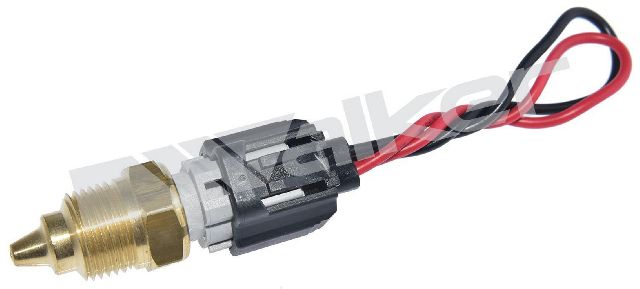
- Do not confuse the two-wire ECT sensor (for the computer) with the one-wire temperature sender (for the dash gauge).
- Before replacing parts, use a scan tool to check live data and disconnect the sensor to see if the reading changes; this is a quick way to confirm if the sensor is the problem.
What's Unique About the 2002-2010 Mercury Mountaineer
The Mercury Mountaineer is a direct sibling to the Ford Explorer, sharing the same engines and cooling system designs. On the 4.0L SOHC V6 engine, a very common issue is the plastic thermostat housing, which is notoriously known to crack or develop leaks over time. This can cause coolant loss and potentially damage the nearby ECT sensor or its wiring by saturating the connector, making it a primary suspect when a P0117 code appears. The 4.6L V8 engines are generally less prone to this specific housing issue, but the ECT sensor itself remains a common failure point.
Generation note: This guide covers the third (2002-2005) and fourth (2006-2010) generations of the Mercury Mountaineer. The diagnostic and repair process for a P0117 code is virtually identical for both generations and across the common 4.0L V6 and 4.6L V8 engines, as the ECT sensor function and common failure modes are consistent.
Symptoms You May Notice
- Check Engine Light is on
- Engine cooling fans run constantly, even when the engine is cold
- Temperature gauge on the dashboard may behave erratically or show maximum heat
- Hard starting, especially when the engine is cold
- Rough or uneven idle
- Poor fuel economy
- Black smoke from the exhaust, particularly on a cold start
- A/C may not blow cold air at idle
- "HOT ENGINE AIR CONDITIONING OFF" message may appear on the dash display.
- Replacing the temperature gauge sending unit. On these vehicles, there are often two separate sensors: a two-wire ECT sensor for the PCM (which causes P0117) and a one-wire sender for the dashboard gauge. Replacing the wrong one will not fix the code.
- Replacing the thermostat. While a faulty thermostat can cause other cooling issues (like P0128), it does not directly cause a 'circuit low' fault and is not the correct fix for P0117.
Most Likely Causes
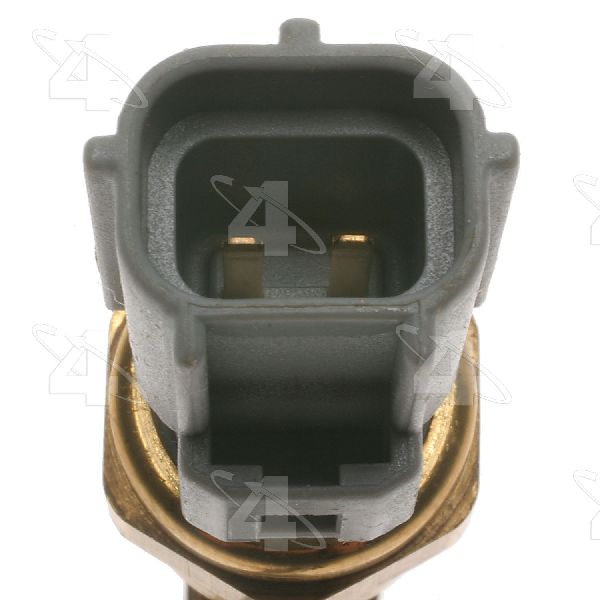
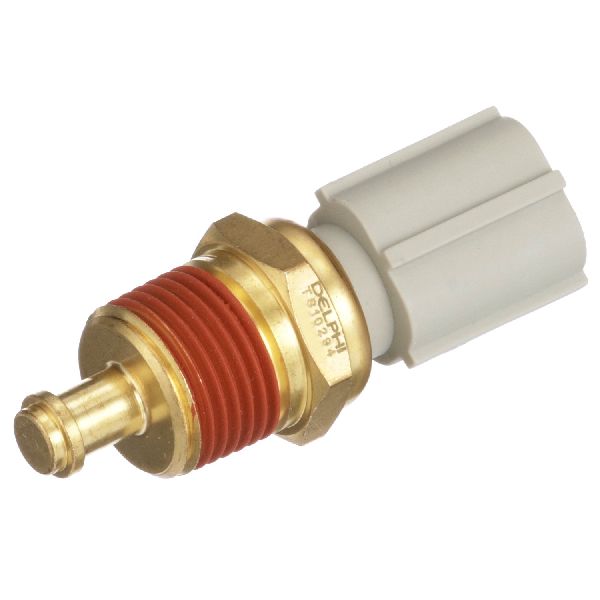
- Failed Engine Coolant Temperature (ECT) Sensor 🔴 High Probability → Shop Engine Coolant Temperature Sensor The ECT sensor is a thermistor that operates in a harsh environment and can fail internally, causing a short circuit that results in the 'low input' voltage reading. This is the most common cause for P0117.
How to confirm: With a scan tool, observe the ECT data. If it shows an extremely high temperature (e.g., 250-284°F) when the engine is cold, the sensor is likely bad. Disconnecting the sensor should cause the reading to change to a default low value (e.g., -40°F) and may set a P0118 code; if this happens, the sensor is confirmed bad. A multimeter test on a cold sensor should show high resistance (approx. 58,750 Ohms for Ford).
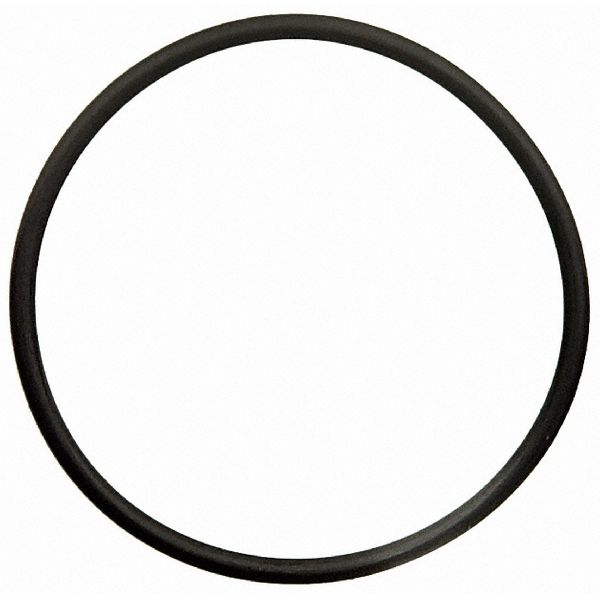
Typical fix: Replace the ECT sensor and its O-ring. 🎬 Watch: How to test and replace the ECT sensor It is highly recommended to use a new O-ring to prevent leaks, even if reusing the old sensor temporarily.
Est. part cost: $20-$50 - Damaged Wiring or Connector 🟡 Medium Probability The wiring to the ECT sensor is located at the top front of the engine and is exposed to heat and vibration. Wires can become brittle, frayed, or the connector pins can corrode, causing a short to ground. Coolant from a leaking thermostat housing can also saturate the connector.
How to confirm: Visually inspect the wiring harness leading to the ECT sensor for any signs of damage, melting, or corrosion. Wiggle the connector and harness with the engine running and scan tool connected to see if the temperature reading changes erratically. Check for a 5-volt reference on one wire and test the signal wire for a short to ground.
Typical fix: Repair the damaged section of wire or replace the connector pigtail. The Motorcraft pigtail is part number WPT-1254.
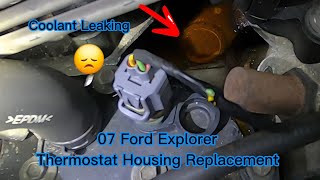
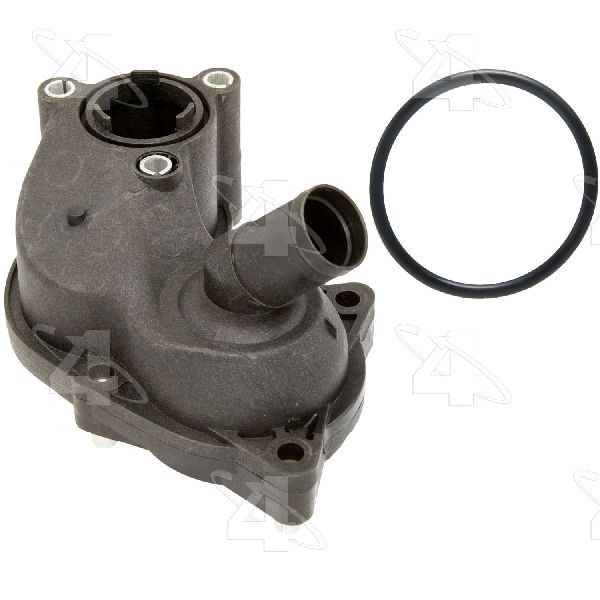
Est. part cost: $15-$30 - Leaking Thermostat Housing (4.0L V6) 🟡 Medium Probability → Shop Integrated Thermostat Housing Assembly The 4.0L SOHC V6 engine uses a plastic thermostat housing that is a notorious failure point. It can crack at the seams and leak coolant directly onto the ECT sensor and its connector, causing a short circuit.
How to confirm: Visually inspect the area around the thermostat housing (at the front, top of the engine) for signs of coolant leaks, white or greenish crusty residue, or visible cracks. The engine valley may be pooled with coolant.
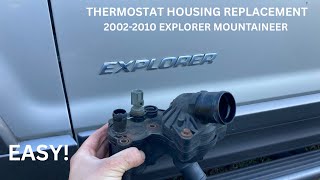
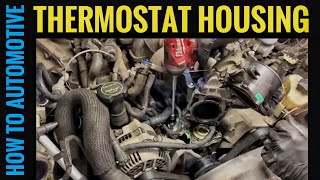
Typical fix: Replace the entire thermostat housing assembly, which often comes as a kit with a new thermostat and sensors. Many owners opt for a more durable one-piece aluminum aftermarket housing, such as the Dorman 902-210, to prevent future failures. 🎬 See this step-by-step thermostat housing replacement walkthrough
Est. part cost: $40-$100 - Low Engine Coolant ⚪ Low Probability → Shop Engine Coolant / Antifreeze
How to confirm: Check the coolant level in the degas bottle (coolant reservoir) when the engine is cool. If it is low, it indicates a leak in the system that needs to be addressed. While low coolant more often causes overheating codes, air pockets in the system can cause erratic sensor behavior.
Typical fix: Top off the coolant with the correct type (Ford Gold) and find and repair the source of the leak.
Est. part cost: $15-$30 for coolant
Rare But Worth Checking
- Faulty Powertrain Control Module (PCM): → Shop Engine Control Module (ECM) This is extremely rare. The PCM should only be considered after all other possibilities, including the sensor and its entire wiring circuit, have been exhaustively tested and ruled out.
Diagnosis Steps
- Verify the code with an OBD-II scanner. Note the live data for the Engine Coolant Temperature (ECT). A P0117 will typically show a reading of 250°F or higher, even with a cold engine.
- Check the engine coolant level in the reservoir. Ensure it is at the 'cold fill' line.
- Visually inspect the ECT sensor and its electrical connector. The sensor is typically located on the thermostat housing at the front of the engine. Look for corrosion, damage, or loose connections.
- On 4.0L V6 models, pay close attention to the plastic thermostat housing for any signs of coolant leaks or cracks.
- With the key on and engine off, disconnect the ECT sensor. The temperature reading on your scan tool should drop to a very low default value (e.g., -40°F) and a P0118 code may appear. If it does, the wiring is likely good, and the sensor itself has failed.
- If the temperature reading does not change when disconnected, there is likely a short to ground in the signal wire between the sensor and the PCM.
- To test the wiring, use a multimeter to check for a 5-volt reference on one wire and a good ground on the other at the sensor connector (with the key on). Then, with the connector unplugged from the PCM, check the signal wire for continuity to ground. There should be no continuity.
- To test the sensor itself, remove it and check its resistance with a multimeter. For Ford sensors, it should be around 58,750 Ohms when cold (approx. 68°F / 20°C) and drop as it heats up.
Parts You'll Likely Need
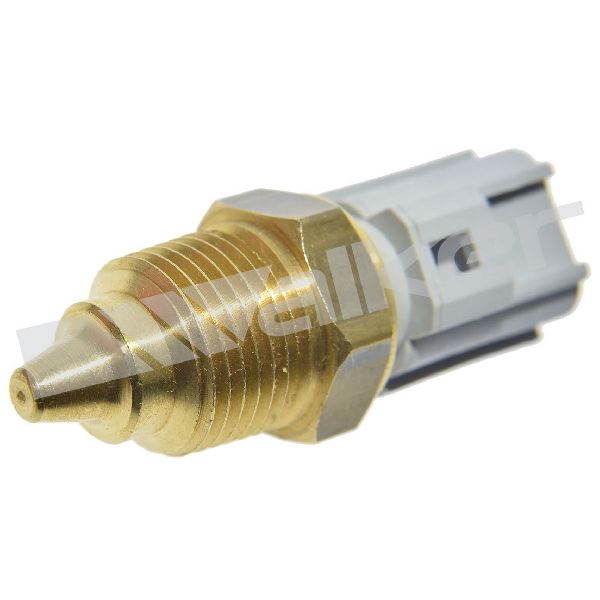
- Engine Coolant Temperature (ECT) Sensor
(OEM #DY1144)— This is the most frequent cause of a P0117 code, as the sensor fails internally causing a short circuit.
Trusted brands: Motorcraft, NTK, Delphi, Standard Motor Products
OEM price range: $30-$50
Aftermarket price range: $15-$35 - Thermostat Housing Assembly (4.0L V6) — On the 4.0L V6, the original plastic housing is prone to cracking and leaking, which can cause this code by damaging the sensor or wiring. It's often replaced as a complete unit.
Trusted brands: Motorcraft (OEM Plastic), Dorman (Plastic or Aluminum Upgrade, e.g., 902-210) 🎬 Watch: How to replace the 4.0L thermostat housing
OEM price range: $70-$120
Aftermarket price range: $40-$100 - ECT Sensor Connector Pigtail
(OEM #WPT-1254)— If the connector or wiring is corroded or damaged, a new pigtail is needed to ensure a solid connection to the new sensor.
Trusted brands: Motorcraft, Dorman
OEM price range: $20-$35
Aftermarket price range: $10-$20
Platform-Specific Known Issues
- Owner Experience with P0117 on a Donor Engine: A user on The Ranger Station forum, working on a project with a 2000 Mercury Mountaineer donor engine, encountered a persistent P0117 code despite replacing the ECT sensor multiple times. The community advised checking for the 5-volt reference signal and testing the return wire voltage to differentiate between a sensor, wiring, or PCM fault. This highlights the importance of electrical testing when a simple part swap doesn't fix the issue.
Mechanic-Grade Diagnostic Values
- ECT Sensor Resistance (Cold) — expected: ~58,750 Ohms at 68°F (20°C). Failure: Near-zero ohms indicates a short (P0117). Infinite resistance (OL) indicates an open circuit (P0118).
- ECT Sensor Resistance (Hot) — expected: ~2,400 Ohms at 176°F (80°C) or ~1,180 Ohms at 212°F (100°C). Failure: Resistance does not drop significantly as the sensor is heated.
- ECT Sensor Signal Voltage (Cold) — expected: ~3.52 Volts. Failure: Voltage significantly below this, approaching 0V, indicates a short to ground.
- ECT Sensor Signal Voltage (Hot) — expected: ~0.28 Volts. Failure: Voltage is stuck low (under ~0.2V) even when the engine is cold.
- PCM Connector Pin Voltage (Key On, Sensor Unplugged) — expected: ~5.0 volts on the VREF (Voltage Reference) pin and < 0.1 volts on the Signal Return pin.. Failure: Absence of 5V points to an open wire to the PCM or a PCM fault. Absence of ground points to an open in the signal return wire.
Scan Tool Commands That Help
- Ford IDS / FORScan: KOEO (Key On, Engine Off) Self-Test — This test can be run to check for hard faults in sensor circuits before starting the engine. It will quickly confirm if the P0117 fault is present without the engine running.
- Ford IDS / FORScan: Live Data PID: COOLANT (°F) — This is the primary diagnostic data point. On a cold engine, the reading should match ambient temperature. With a P0117, it will read an impossibly high temperature, like 250°F or more, confirming the short circuit condition seen by the PCM.
Wiring & Ground Locations
- ECT Signal Return Wire — Runs from the ECT sensor connector directly back to the PCM. It is not grounded to the chassis.. A short to chassis ground anywhere along this wire's path will cause a P0117 code. The wire itself must be intact all the way to the PCM.
- PCM Pin 38 (on some models) — At the Powertrain Control Module connector.. This is a known pin for the ECT signal return on some Ford 4.0L applications. A wiring repair story confirmed a short between this pin's circuit and the sensor connector was the cause of a persistent P0117.
- G106 — Right side of the engine compartment.. This is a primary engine compartment ground. While the ECT sensor itself uses a signal return to the PCM, other sensors share this ground. A poor connection at G106 can cause erratic behavior in various engine systems, though it's not a direct cause of P0117, it's a critical point to check for general electrical health.
- Splice S105 — In the engine control sensor harness, near the breakout to the PCM.. This splice connects multiple sensor grounds. While not directly for the ECT, corrosion or damage here can introduce electrical noise or voltage issues that could potentially affect sensor readings, though it's a less likely cause.
Real Owner Repair Stories
- The Ranger Station forum user (2000 Mercury Mountaineer 4.0L V6 (donor engine)) — Persistent P0117 code that would not clear.
❌ Tried (didn't work) Replacing the ECT sensor (multiple times), Replacing the thermostat
✅ What actually fixed it The final fix was repairing a short in the wiring harness between the PCM (specifically the wire from pin 38) and the ECT sensor connector. - 2CarPros forum user (2007 Ford Explorer (identical platform)) — P0117 code, temperature gauge dropping to cool at idle, A/C blowing warm at idle, traction control light coming on.
❌ Tried (didn't work) Replacing thermostat, Replacing thermostat housing, Replacing ECT sensor, Replacing heater hose assembly
✅ What actually fixed it The user's final post indicated the problem was still unresolved after replacing multiple parts, highlighting a scenario where the cause is likely a difficult-to-find wiring short or a PCM issue, and that simply replacing common parts does not always fix the code.
OEM Part Supersession History
2L2Z-8592-BA→GL2Z-8592-A— This is a common supersession for the plastic thermostat housing assembly on the 4.0L V6. Revisions often aim to improve the plastic composition or molding process to reduce cracking.N/A→Dorman 902-210— This is not a supersession but a popular aftermarket alternative. Many owners choose this aluminum housing to permanently fix the issue of the OEM plastic housing cracking.
Heads up: While a direct fit, some kits may come with sensors that have different resistance curves than OEM. It is often recommended to use a new Motorcraft sensor in the aftermarket housing.
Model Year Variations Within This Range
- 2002-2005: Models with the 4.0L V6 were paired with a 5-speed 5R55W automatic transmission. The optional 4.6L V8 was also paired with a 5-speed automatic.
- 2006-2010: The 4.0L V6 continued with the 5-speed automatic, but the optional 4.6L V8 was upgraded and paired with a new 6-speed 6R automatic transmission, offering improved performance and potentially different PCM software strategies.
Diagnostic Flowchart
Other Known Issues on This Vehicle
Issues unrelated to this code that are worth knowing about as an owner of this generation:
- 4.0L SOHC Timing Chain Cassette Rattle 🔴 High — Very common, especially on 2002-2004 models. Noise often appears as a rattle between 2000-3000 RPM. Failure of the plastic guides can lead to catastrophic engine damage. (Ref: Ford TSB 04-15-4 addresses the issue by replacing tensioners and guides.)
- Cracked Rear Liftgate Applique Panel 🟠 Medium — Extremely common on 2002-2010 models. A cosmetic crack develops in the plastic panel below the rear window, often near the emblem, allowing water intrusion. (Ref: No recall was issued, but it was the subject of a class-action lawsuit.)
- 5R55S/W/E Automatic Transmission Failure 🔴 High — Common across all years. Issues include delayed/harsh shifting, loss of gears (especially reverse), and blinking O/D light, often due to servo bore wear or solenoid failure.
- Heater Blend Door Actuator Failure 🟡 Low — Common issue where the heater gets stuck on the hottest setting, often accompanied by a clicking sound from the dashboard.
- Cracked Plastic Intake Manifold (4.6L V8) 🟠 Medium → Shop Engine Intake Manifold — The composite intake manifold can crack, especially around the coolant crossover passage, leading to coolant leaks and potential overheating.
Used vs. New Parts: Buying Guide for This Vehicle
When a used part is the smart pick: A used wiring harness pigtail for the ECT sensor is a perfectly acceptable choice if it is in good condition with no corrosion or brittle wires. Other major components like the sensor and thermostat housing should be purchased new.
Donor-vehicle mileage cap: roughly under 120000 miles for the part to have meaningful remaining life.
What to inspect on the donor part:
- For a wiring pigtail, ensure at least 6 inches of flexible, non-cracked wire.
- Check connector for green or white crust (corrosion) on the pins.
- The locking tab on the connector should be intact and functional.
Aftermarket brands forum-validated for this vehicle:
- Dorman (for the aluminum thermostat housing upgrade, PN 902-210)
- Motorcraft (for the ECT sensor itself, PN DY-1144)
- NTK, Delphi, Standard Motor Products (for the ECT sensor)
Brands owners have reported issues with on this vehicle:
- Unbranded, 'white-box' sensors included with some cheap online thermostat housing kits have been reported to have incorrect resistance values, causing persistent issues.
Real Owner Stories
Aggregated from forums and TSBs cited above. Mileages and costs reflect what owners reported in those sources.
2000 Mercury Mountaineer 5.0L V8 (Donor Engine)
Symptoms: Persistent P0117 code that would not go away even after replacing the ECT sensor multiple times.
What fixed it: The owner was advised to perform electrical testing for a 5-volt reference signal and return wire voltage to differentiate between a sensor, wiring, or PCM fault rather than continuing to swap parts.
Source hint: TheRangerStation.com thread titled 'Troubleshooting help needed... P0117 won't go away'
Related OBD-II Codes
Frequently Asked Questions
My 4.0L V6 Mountaineer has a P0117 code and I see coolant pooling on the engine. What is the likely cause?
Is there a more durable replacement for the plastic thermostat housing on my Mercury Mountaineer?
What is the specific Motorcraft part number for the ECT sensor connector pigtail?
Why are my cooling fans running constantly even when I first start my Mountaineer in the morning?
What resistance should I see when testing the ECT sensor on my Ford/Mercury vehicle with a multimeter?
Does the timing chain rattle issue on the 2002-2004 Mountaineer relate to the P0117 code?
Helpful Videos
We Have This Part in Stock

The information in this article is provided for general reference and educational purposes only. Vehicle specifications, procedures, and part compatibility can vary by production date, trim level, and region. Always consult your vehicle's factory service manual and verify part numbers before purchasing or performing repairs. Safety-critical components such as airbags, seat belts, and braking systems should be installed by a qualified professional.
- Mercury Mountaineer:
- 🧭 Diagnostic Flowchart
- 🎬 Helpful Videos
- 🛍️ Shop This Part
- What's Unique About the 2002-2010 Mercury Mountaineer
- Symptoms You May Notice
- Most Likely Causes
- Rare But Worth Checking
- Diagnosis Steps
- Parts You'll Likely Need
- Platform-Specific Known Issues
- Mechanic-Grade Diagnostic Values
- Scan Tool Commands That Help
- Wiring & Ground Locations
- Real Owner Repair Stories
- OEM Part Supersession History
- Model Year Variations Within This Range
- Other Known Issues on This Vehicle
- Used vs. New Parts: Buying Guide for This Vehicle
- Real Owner Stories
- 2000 Mercury Mountaineer 5.0L V8 (Donor Engine)
- Related OBD-II Codes
- Frequently Asked Questions
- 🎟️ Get 5% Off