

P0117 on 2003-2010 Porsche Cayenne: Engine Coolant Temp Sensor Fixes
On a first-generation Porsche Cayenne, code P0117 almost always means the Engine Coolant Temperature (ECT) sensor has failed. The sensor is in a very difficult location at the back of the engine, making replacement labor-intensive. Expect to pay a professional for several hours of labor, and use a high-quality OEM part to avoid doing the job twice. On V8 models, this requires removing the intake manifold.
- P0117 on a 2003-2010 Cayenne almost certainly means the Engine Coolant Temperature (ECT) sensor has failed.
- The primary symptoms are a Check Engine Light, cooling fans stuck on high speed, and an erratic temperature gauge.
- This is not a simple DIY job. The sensor is buried at the back of the engine, and replacement is very labor-intensive, especially on V8s where intake manifold removal is standard procedure.
- Due to the high labor cost, use a high-quality OEM or OEM-supplier brand for the replacement sensor to ensure longevity.
- After replacement, the cooling system must be professionally bled with a vacuum tool to prevent air pockets and potential engine damage.
What's Unique About the 2003-2010 Porsche Cayenne
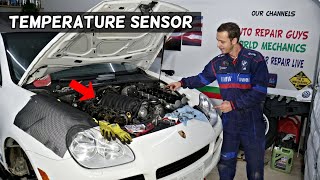
The story of P0117 on the first-generation (9PA) Cayenne is all about location. The code itself points to a simple sensor, but Porsche engineers placed that sensor in an extremely inaccessible spot at the 🎬 Watch: See the exact location of the sensor on the V8 rear of the engine, near the firewall. On V8 models (4.5L and 4.8L), it's buried under the intake manifold, turning a simple part swap into a major, labor-intensive repair. On the V6 (3.2L and 3.6L), while still difficult, it is located near the water pump towards the firewall and may be accessible without removing the intake manifold. The design choice means that while the part is inexpensive, the labor cost to replace it is the dominant factor in the total repair bill, making it a notoriously frustrating job for this specific vehicle.
Generation note: The 2003-2010 range covers the entire first generation of the Porsche Cayenne, known as the 9PA chassis. This includes the pre-facelift 955 models (2003-2006) and the facelifted 957 models (2008-2010). The location of the sensor and the nature of the repair are consistent across this entire generation, though the specific part number may vary between V6 and V8 engines.
Symptoms You May Notice
- Check Engine Light is on.
- Cooling fans run at maximum speed, even when the engine is cold.
- Temperature gauge on the dashboard is erratic, either staying at zero or jumping to the maximum reading.
- Rough or uneven engine idle, especially at startup.
- Reduced fuel economy.
- Difficulty starting the engine, particularly when cold.
- Black smoke from the exhaust on startup due to a rich fuel mixture.
- Engine may run in a reduced power 'limp mode'.
- Replacing the thermostat. While a faulty thermostat can cause cooling issues, it will not typically cause a P0117 'Circuit Low' code or make the fans run at full speed when the engine is cold.
Most Likely Causes
- Failed Engine Coolant Temperature (ECT) Sensor 🔴 High Probability → Shop Engine Coolant Temperature Sensor The sensor is a thermistor that experiences constant, extreme heat cycles, leading to eventual failure. Given the age of the 9PA Cayenne platform, sensor failure is the most common cause of P0117.
How to confirm: The presence of code P0117 combined with symptoms like fans running constantly on a cold engine is a strong indicator. A technician can use a scan tool to view live data from the sensor or test the sensor's resistance. However, due to the difficult access, replacement is often performed based on the code and symptoms alone, especially on V8 models.
Typical fix: Replace the Engine Coolant Temperature sensor and the associated sealing o-ring. It is critical to use a high-quality OEM or OEM-supplier part (e.g., Hella, Genuine Porsche) to avoid premature failure and a repeat of the high-labor repair.
Rare But Worth Checking
- Wiring or Connector Issue: The wiring harness leading to the sensor could be damaged (chafed, corroded) or the connector could be loose, causing a short to ground which triggers the 'Circuit Low' code. A visual inspection of the harness is necessary, though difficult due to the sensor's location. A diagnostic trick is to disconnect the sensor; if the code changes to P0118 (Circuit High), the wiring is likely intact and the sensor is at fault.
- Faulty Engine Control Module (DME): → Shop Engine Control Module (ECM) In very rare cases, the fault may lie within the engine computer itself, where it can no longer correctly interpret the sensor's signal. This should only be considered after the sensor and wiring have been definitively ruled out as the cause.
- Air Pockets in Cooling System: If the cooling system was recently serviced and not bled properly, an air pocket trapped at the sensor can cause erratic readings and potentially trigger a P0117 or P0118 code. This is why using a vacuum bleeder after the repair is critical.
Diagnosis Steps
- Confirm the presence of code P0117 using an OBD-II scanner.
- Observe the symptoms. Note if the cooling fans are running at full speed immediately after a cold start and if the dashboard temperature gauge is behaving erratically.
- For V8 models, accessing the sensor requires removing the intake manifold, which is a significant job involving disconnecting fuel lines, vacuum hoses, and electrical connectors.
- For V6 models, attempt to locate the sensor at the rear of the engine near the water pump and inspect the connector and wiring for damage.
- If access is gained, inspect the wiring and connector for any signs of damage, corrosion, or a loose connection.
- A professional can use a scan tool to monitor the ECT data in real-time. A reading of -40°F/°C or an extremely high temperature on a cold engine points to a sensor or circuit fault.
- Given the high probability of sensor failure and the high labor cost of access on V8s, most professional shops will recommend replacing the sensor based on the code and symptoms alone.
Parts You'll Likely Need
- Engine Coolant Temperature Sensor
(OEM #V6 Models: 95510612501 (supersedes 95510612500). V8 Models (957): 99760642000.)— This is the component that fails and triggers the P0117 code. Its failure provides incorrect data to the engine computer.
Trusted brands: Hella, Vemo, Delphi, Porsche (OEM)
OEM price range: $40-$88
Aftermarket price range: $20-$40 - Intake Manifold Gaskets (V8 Only) — These must be replaced when the intake manifold is removed on V8 models to access the sensor. Reusing old gaskets will cause vacuum leaks.
Trusted brands: Victor Reinz, Elring, Porsche (OEM)
OEM price range: $50-$80 (set)
Aftermarket price range: $25-$50 (set) - Coolant/Antifreeze — Coolant will be lost when the sensor is removed and the system must be topped off and bled. Use Porsche-approved G12++ or G13 coolant.
Trusted brands: Pentosin Pentofrost, Porsche (OEM)
OEM price range: $30-$50 (gallon)
Aftermarket price range: $25-$40 (gallon)
Related Codes That Often Appear With This One
- P0118 — P0118 is 'Engine Coolant Temperature Sensor Circuit High'. These codes can sometimes appear together or alternate if the sensor is failing erratically, sending signals that are both too high and too low.
Platform-Specific Known Issues
- The primary issue for the 2003-2010 Cayenne is the extreme difficulty in accessing the ECT sensor, which is located at the rear of the engine near the firewall. On V8 models, this requires the removal of the intake manifold, significantly increasing labor time and cost.
- Properly bleeding the cooling system after the repair is critical. Using a vacuum-style bleeder (like an Airlift tool) is highly recommended to prevent air pockets, which can lead to overheating and engine damage.
- While intake manifold removal is the official procedure for V8s, some experienced DIYers have managed to replace the sensor without removing it, though it is extremely difficult and requires specialized tools and patience. A detailed account can be found on RennTech.org.
- For V6 models, the job is less intensive but still challenging due to the tight space near the firewall. A 6SpeedOnline forum thread details the process.
Mechanic-Grade Diagnostic Values
- ECT Sensor Resistance (disconnected) — expected: Approximately 2,200 - 3,000 Ω at 20°C (68°F) and 250 - 350 Ω at 80°C (176°F).. Failure: A P0117 (Circuit Low) suggests a resistance value near zero ohms (a short circuit). An open circuit (infinite resistance) would typically cause a P0118. Readings outside the expected range for a given temperature indicate a faulty sensor.
- ECT Sensor Signal Voltage (Key On, Engine Off) — expected: The DME provides a 5V reference. With the sensor connected, voltage should be high when cold (e.g., 3.0 - 3.5V at 20°C) and drop as the engine warms up (e.g., ~1.0V at 80°C).. Failure: A P0117 code is set when the signal voltage is below the expected minimum, often under 0.14V, indicating a short to ground.
Scan Tool Commands That Help
- Porsche PIWIS Tester: Fault Memory / Actual Values — Use the 'Actual Values' function within the DME module to monitor the live coolant temperature reading as seen by the computer. This can instantly confirm if the sensor is sending an illogical value (e.g., -40°C or 140°C). The 'Fault Memory' section will provide details on the P0117 code, including when it occurred.
Wiring & Ground Locations
- DME Connector III, Pin 22 — On the main engine computer (DME), which is typically located in the plenum area (under the cowl cover near the windshield wipers).. This is the specific pin that receives the signal from the engine coolant temperature sensor on the Bosch DME 7.8 system used in some Cayenne models. Testing for continuity or a short-to-ground can be done at this pin to diagnose the wiring harness without accessing the sensor itself.
- Engine Ground Strap — There are multiple ground points. A key one is located on the engine block/bell housing area, often near the starter motor or behind the oil filler cap area. Access can be difficult without removing the intake manifold.. A corroded or loose main engine ground can cause floating voltages and erratic sensor readings, potentially triggering circuit codes like P0117. While less common than sensor failure, it's a valid check during a difficult diagnosis.
Real Owner Repair Stories
- Rennlist user (2003-2010 Porsche Cayenne (955/957)) — Check Engine Light with a code for the thermostat/temp sensor. The temperature gauge would not show a reading until the car was driven for a while and then restarted. This issue was reported to only occur in cold weather.
❌ Tried (didn't work) The user replaced the water pump, thermostat, and coolant temperature sensor.
✅ What actually fixed it The user was still diagnosing the issue after replacing common parts, highlighting that even after replacing the sensor, the problem persisted specifically in cold weather, suggesting a potential wiring or connection issue that is temperature-dependent.
OEM Part Supersession History
95510612500→95510612501— Part revision or supplier change.
Heads up: These parts are generally interchangeable for the V6 models.95560642000→99760642000, then 94860642000— Part revision and consolidation across model lines (997/948 numbers are also used on 911, Panamera, etc.).
Heads up: The part listed as 95560642000 is sometimes misidentified as a backup light switch. The correct application for the V8 coolant sensor is typically 99760642000 or the later 94860642000. Always verify with VIN.
Model Year Variations Within This Range
- 2003-2006 (955 V8): The 4.5L V8 in the 955 models may use a different ECT sensor part number than the 4.8L V8 in the 957 models (2008-2010). While the location and repair procedure are nearly identical, it is critical to verify the correct part number using the vehicle's VIN. The part number 99760642000 is often associated with the later 957 models.
Diagnostic Flowchart
Used vs. New Parts: Buying Guide for This Vehicle
When a used part is the smart pick: Never. The part itself is inexpensive, but the labor to access it is extremely high. The risk of a used electronic sensor failing prematurely far outweighs the small cost savings. It is not a smart choice for this repair.
OEM-only on this vehicle (don't cheap out):
- Engine Coolant Temperature Sensor
Aftermarket brands forum-validated for this vehicle:
- Hella
- Vemo
- Delphi
Brands owners have reported issues with on this vehicle:
- No-name or unbranded sensors from online marketplaces should be avoided due to the high labor cost of a repeat repair.
Real Owner Stories
Aggregated from forums and TSBs cited above. Mileages and costs reflect what owners reported in those sources.
2004 Cayenne V6
Symptoms: Check Engine Light was on, cooling fans sounded like a 'jet engine', and the engine ran rough at startup. Clearing the code provided only temporary relief.
What fixed it: The owner diagnosed the issue as the Coolant Temperature Sensor based on the code and symptoms. The final repair was not confirmed in the thread, but the diagnosis points directly to sensor replacement.
Source hint: RennTech.org - Cayenne P0117 Coolant Temp. Sensor Help
2005 Cayenne — 65000 miles
Symptoms: Random hesitation and difficulty starting, Check Engine Light on, and OBD codes P0117 and P3081 were present.
What fixed it: The owner discovered the P0117 code while diagnosing a starting issue they initially suspected was fuel-pump related. The thread does not conclude with the final fix.
Source hint: RennTech.org - Hesitation Starting - Cayenne
Related OBD-II Codes
Frequently Asked Questions
Where is the Engine Coolant Temperature (ECT) sensor located on my Cayenne, and why is the repair so expensive?
Is it possible to replace the ECT sensor on my V8 Cayenne without removing the intake manifold?
My Cayenne's cooling fans are running at full speed right after I start it. Is this related to code P0117?
What brand of replacement ECT sensor should I buy for my Cayenne?
Is there anything special I need to do after replacing the coolant temperature sensor?
Does this P0117 sensor issue also affect the VW Touareg or Audi Q7?
Helpful Videos
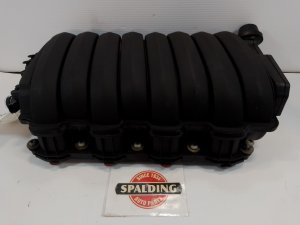
Used OEM Parts in Stock
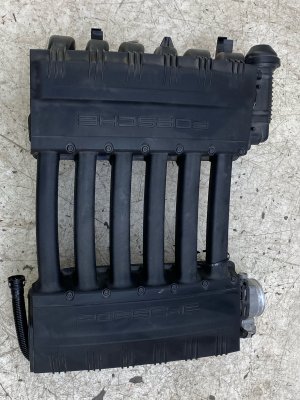
New Aftermarket Parts Available


The information in this article is provided for general reference and educational purposes only. Vehicle specifications, procedures, and part compatibility can vary by production date, trim level, and region. Always consult your vehicle's factory service manual and verify part numbers before purchasing or performing repairs. Safety-critical components such as airbags, seat belts, and braking systems should be installed by a qualified professional.
- Porsche Cayenne:
- 🧭 Diagnostic Flowchart
- 🎬 Helpful Videos
- 🛍️ Shop This Part
- What's Unique About the 2003-2010 Porsche Cayenne
- Symptoms You May Notice
- Most Likely Causes
- Rare But Worth Checking
- Diagnosis Steps
- Parts You'll Likely Need
- Related Codes That Often Appear With This One
- Platform-Specific Known Issues
- Mechanic-Grade Diagnostic Values
- Scan Tool Commands That Help
- Wiring & Ground Locations
- Real Owner Repair Stories
- OEM Part Supersession History
- Model Year Variations Within This Range
- Used vs. New Parts: Buying Guide for This Vehicle
- Real Owner Stories
- 2004 Cayenne V6
- 2005 Cayenne — 65000 miles
- Related OBD-II Codes
- Frequently Asked Questions
- 🎟️ Get 5% Off