

P0117 on 2003-2011 Saab 9-3: Engine Coolant Temperature Sensor Circuit Low Causes and Fixes
On a 2003-2011 Saab 9-3, code P0117 almost always points to a failed Engine Coolant Temperature (ECT) sensor. This is a simple, low-cost DIY fix, with the part costing between $15 and $50. A key symptom is the cooling fan running constantly. Verify your engine (2.0T or 2.8T) before ordering parts.
- P0117 on a Saab 9-3 is an electrical fault code, not a mechanical overheating problem.
- The most likely cause is a bad Engine Coolant Temperature (ECT) sensor, which is an inexpensive and easy part to replace for a DIYer.
- A key symptom specific to this platform is the radiator fan running constantly as a fail-safe measure.
- Ensure you buy the correct sensor for your engine, as the 2.0T 4-cylinder and 2.8T V6 use different parts.
- Always check the wiring and connector for damage before replacing the sensor, as this is the second most likely cause. The connector itself can become brittle and fail.
What's Unique About the 2003-2011 Saab 9-3
The 2003-2011 Saab 9-3 (generation YS3F) uses engines shared with other GM vehicles (Ecotec for the 2.0T and a variant of the High Feature V6 for the 2.8T). While the P0117 code is standard, the location of the sensor and the engine's reaction are specific. As a fail-safe, the Saab's ECM will run the radiator fan continuously when P0117 is active to prevent potential overheating. It's important to note that the 2.0T and 2.8T V6 engines use different ECT sensors in different locations, so verifying your engine before purchasing parts is crucial. On the 2.0T, the sensor is often located in a tight spot near a hard A/C line, which can make access with a standard socket difficult.
Symptoms You May Notice
- Check Engine Light is on.
- Incorrect or erratic temperature gauge reading (may stay at zero or jump to max).
- Radiator/cooling fans run continuously, even when the engine is cold.
- Poor fuel economy due to a rich fuel mixture.
- Black smoke from the exhaust.
- Hard starting, especially when the engine is warm.
- Rough or erratic idle.
- A/C may not work correctly, as the ECM may disable it as a precaution.
- Heater may not blow hot air if the ECM believes the engine is not up to temperature.
- Replacing the thermostat. While a stuck-open thermostat can cause a P0116 (ECT Performance) code, it does not cause the circuit-low fault of P0117. P0117 is an electrical fault, not a mechanical cooling system fault. Owners often replace the thermostat when the temperature gauge reads low, but for P0117, the sensor or wiring is the correct place to start.
Most Likely Causes
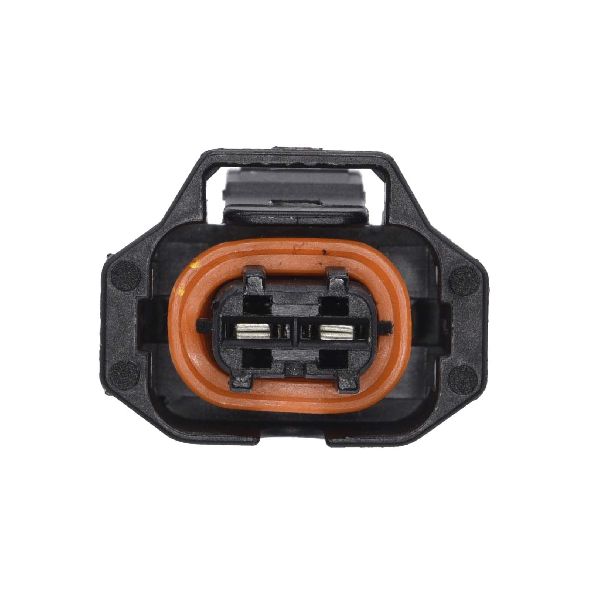
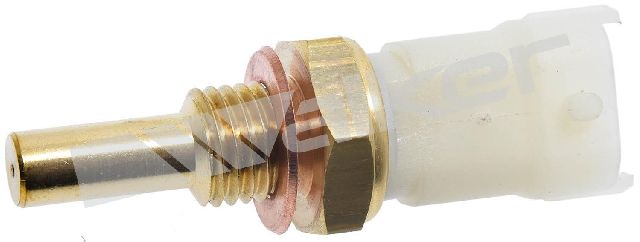
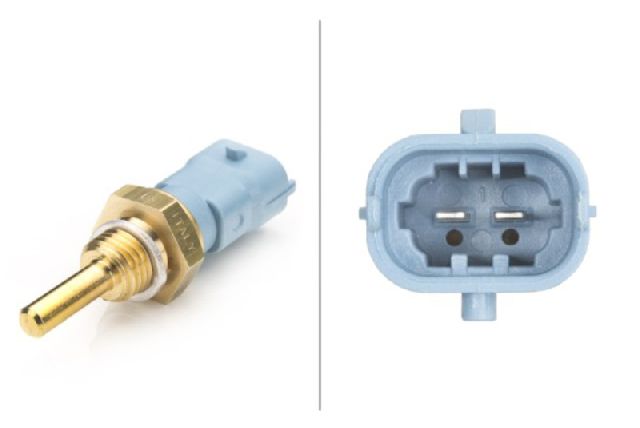
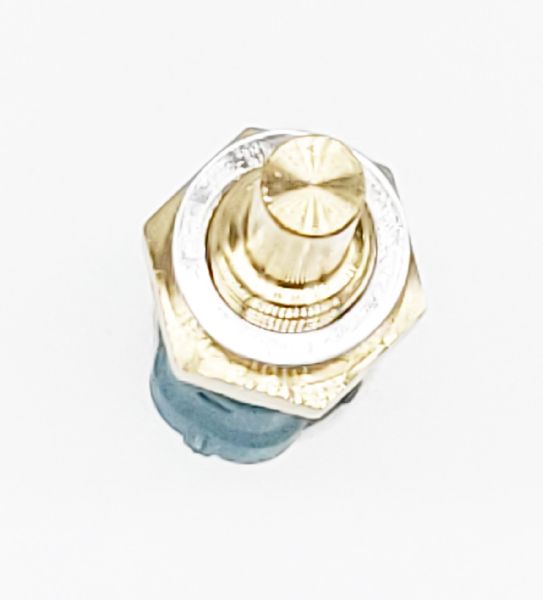
- Failed Engine Coolant Temperature (ECT) Sensor 🔴 High Probability → Shop Engine Coolant Temperature Sensor The ECT sensor is a thermistor that operates in a harsh environment of constant temperature cycles and exposure to coolant, and it simply wears out over time. The plastic housing can crack, allowing coolant to seep in and short the internal electronics. It is the most common point of failure for this code.
How to confirm: With the engine cold, use a scan tool to read the live data for the ECT sensor. If it shows an extremely high temperature (e.g., 250°F or higher), the sensor is faulty. You can also test the sensor's internal resistance with a multimeter. At room temperature (around 68°F/20°C), a good sensor should read between 2,300 and 2,700 Ohms. A reading near zero indicates an internal short.
Typical fix: Replace the Engine Coolant Temperature sensor. This is a straightforward DIY job. Be prepared to quickly swap the new sensor in to minimize coolant loss. It's also recommended to replace the small aluminum or copper crush washer that seals the sensor.
Est. part cost: $15-$50 - Damaged Wiring or Corroded Connector 🟡 Medium Probability Engine bay heat and vibrations can cause wiring insulation to become brittle and crack, or the connector pins can develop green or white corrosion, leading to a short to ground. The plastic locking tab on the connector is also prone to breaking from heat cycles, leading to a poor connection.
How to confirm: Visually inspect the wiring harness leading to the ECT sensor for any signs of melting, chafing, or breaks. Unplug the connector and check for corrosion on the pins and inside the connector housing. Wiggle the harness while monitoring the live data on a scan tool to see if the reading fluctuates, which would indicate an intermittent short.
Typical fix: Repair the damaged section of wire or clean the connector terminals with electrical contact cleaner. If the connector itself is damaged, it will need to be replaced with a new pigtail connector.
Est. part cost: $5-$30 - Low Coolant Level / Air in System ⚪ Low Probability → Shop Engine Coolant / Antifreeze While less common for a 'Circuit Low' code, a significant coolant leak can lead to air pockets in the cooling system. If the sensor is located in an area that becomes exposed to an air pocket, it can no longer read the coolant temperature correctly, potentially leading to erratic signals. This is more likely to cause a P0116 or P0118, but can't be ruled out.
How to confirm: Check the coolant level in the expansion tank when the engine is cold. If it is low, inspect for leaks from hoses, the radiator, water pump, or thermostat housing. After any repair that drains coolant, the system must be properly bled to remove air.
Typical fix: Top off coolant and bleed the system. If the level is low, find and repair the source of the leak.
Est. part cost: $20-$40 (for coolant)
Rare But Worth Checking
- Faulty Engine Control Module (ECM): → Shop Engine Control Module (ECM) This is extremely rare. The ECM should only be considered a potential cause after the sensor and wiring have been thoroughly tested and proven to be good. A faulty ECM typically causes multiple other codes and more severe running issues. An ECM failure is more likely to be an internal circuit fault like a cracked solder joint.
Diagnosis Steps
- Connect an OBD-II scanner and confirm that P0117 is the primary code. Note any other codes present.
- With the engine cold, access the live data stream on your scanner. Check the value for the Engine Coolant Temperature. If it reads an impossibly high temperature (e.g., 250°F / 120°C or higher), the sensor has failed or the circuit is shorted to ground.
- Locate the ECT sensor. On the 2.0T engine, it's on the top left (driver's side) of the cylinder head under the plastic engine cover, often near the thermostat housing. On the 2.8T V6, it is located below the oil pressure switch.
- Inspect the sensor's electrical connector and wiring for any visible damage, corrosion, or loose connections. Pay close attention to the harness for chafing against other engine components.
- Unplug the sensor. The temperature reading on the scan tool should now go to its opposite extreme (e.g., -40°F). If it does, this confirms the wiring to the ECM is likely intact and the sensor itself is the problem.
- If the sensor and connector appear fine, test the sensor with a multimeter set to Ohms. At ~68°F (20°C), resistance should be 2300-2700Ω. A reading near zero ohms indicates a shorted sensor.
- If all else fails, check for a short to ground in the signal wire between the ECT sensor connector and the ECM. This is an advanced step and may require a wiring diagram.
- After replacing the sensor, it is critical to top off any lost coolant and bleed any air from the system to prevent overheating.
Parts You'll Likely Need
- Engine Coolant Temperature Sensor (2.0T 4-Cyl)
(OEM #9198691, 24436779)— This is the most common failure point for a P0117 code. It directly measures coolant temperature and sends the signal to the ECM. This part number is also used on many contemporary Opel/Vauxhall vehicles.
Trusted brands: Bosch (OEM supplier, P/N 0281002473), Delphi, NTK, Meyle
OEM price range: $30-$50
Aftermarket price range: $15-$35 - Engine Coolant Temperature Sensor (2.8T V6)
(OEM #12639899)— This is the correct sensor for the V6 engine, which is the most common failure point for a P0117 code on this specific engine.
Trusted brands: ACDelco (OEM supplier), Bosch, OES
OEM price range: $40-$60
Aftermarket price range: $20-$40 - Crush Washer / Sealing Ring — A new aluminum or copper crush washer is required to ensure a proper seal when installing the new sensor. It is often included with the new sensor but should be verified. Re-using the old washer can lead to coolant leaks.
OEM price range: $1-$3
Aftermarket price range: <$1
Related Codes That Often Appear With This One
- P0118 — This code for 'ECT Circuit High Input' can appear intermittently with P0117 if there is a loose connection or internal sensor failure causing the voltage to fluctuate wildly between open and shorted states.
- P0116 — This code for 'ECT Circuit Range/Performance' can be triggered if the sensor's readings are erratic but not consistently low enough to set P0117. It can also be set if there are air pockets in the cooling system.
Platform-Specific Known Issues
- 2.0T Sensor Access Difficulty: On the 2.0T Ecotec engine, the ECT sensor is located on the driver's side of the cylinder head. While accessible from the top after removing the engine cover, it is often positioned very close to a rigid air conditioning line. This can make it difficult to fit a standard deep socket and ratchet over the sensor. Some owners report needing to use a combination of a 19mm open-end wrench or a crow's foot wrench to loosen it.
Mechanic-Grade Diagnostic Values
- ECT Sensor Resistance vs. Temperature (Saab Specific) — expected: 20°C (68°F): 2,300-2,700 Ω; 40°C (104°F): 1,000-1,300 Ω; 80°C (176°F): 295-365 Ω; 90°C (194°F): 200-240 Ω.. Failure: A reading near zero ohms indicates a shorted sensor. A reading significantly outside the expected range for a given temperature indicates a faulty sensor.
- ECT Sensor Circuit Voltage at Connector (Sensor Unplugged) — expected: Approximately 4.6V to 5.0V on the reference wire with key on, engine off.. Failure: No voltage indicates a problem with the ECM or the wiring from the ECM. Voltage significantly lower than 4.6V could indicate a wiring issue.
- P0117 Fault Trigger Condition — expected: The ECM detects a signal voltage below 0.20V for more than 1.0 second.. Failure: This condition being met will set the code and engage fail-safe mode (e.g., continuous fan operation).
Scan Tool Commands That Help
- Tech2 / Generic OBD-II Scanner: Live Data: Engine Coolant Temperature — This is the primary diagnostic step. With a cold engine, the reading should match ambient temperature. For a P0117 fault, it will likely show a maximum, unrealistic temperature (e.g., >280°F / 140°C), immediately pointing to a shorted circuit or sensor.
- Tech2 / Generic OBD-II Scanner: Clear Fault Codes / Reset ECU — After the repair is completed, the stored P0117 code must be cleared. On some vehicles, even after replacing the sensor, the fail-safe mode (like continuous fan operation) will remain active until the code is manually cleared from the ECM's memory.
Wiring & Ground Locations
- Trionic 8 ECM Connector J1, Pin 39 — On the main engine control module (Trionic 8 for 2.0T), located on the front of the engine. This is the signal/supply wire for the ECT sensor.. This is the specific pin where the ECM receives the temperature data. Advanced diagnostics would involve checking for continuity and shorts to ground on the wire leading to this pin (typically a Brown wire).
- Trionic 8 ECM Connector J1, Pin 9 — On the main engine control module (Trionic 8 for 2.0T), located on the front of the engine. This is the ground return wire for the ECT sensor.. This pin provides the ground reference for the sensor circuit. A break in this wire (typically Blue/Yellow) would cause a P0118 (Circuit High), but a short to chassis ground could cause a P0117.
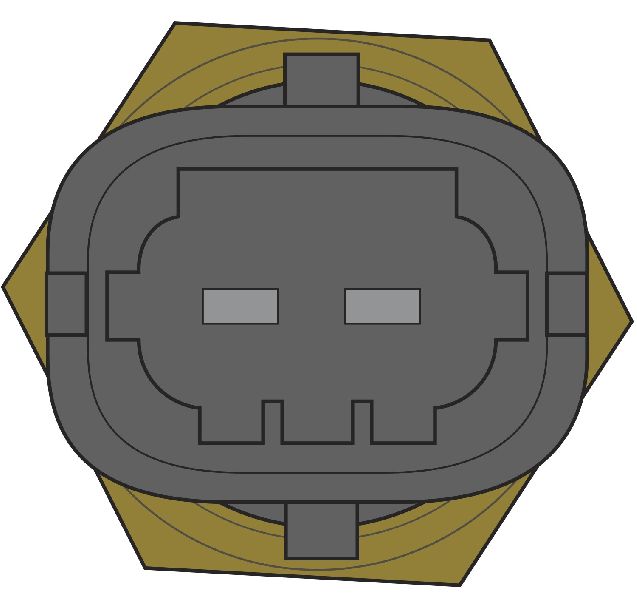
- ECT Sensor Connector — On the sensor itself, located on the driver's side of the cylinder head for the 2.0T engine.. This is the most common location for faults. The plastic can become brittle, and pins can corrode. Testing for voltage and resistance should be performed at this connector first.
Real Owner Repair Stories
- YouTube user Monkey Wrench Mike (2004 Saab 9-3) — Intermittent Check Engine Light with code P0117.
✅ What actually fixed it Replacing the engine coolant temperature sensor. The video details the process, including the need for a 19mm deep well socket and preparing the new sensor with its crush washer to minimize coolant loss during the swap. - YouTube user Auto Autopsy (2003 Saab 9-3 2.0T) — Temperature gauge fluctuating, but not overheating.
✅ What actually fixed it Replaced both the thermostat and the engine coolant temperature sensor as a preventative measure since the parts are inexpensive and located near each other.
OEM Part Supersession History
Multiple OEM PNs exist (e.g., 15393755, 90541520)→Multiple aftermarket cross-references (e.g., Delphi TS10253, Bosch 0281002473)— This is a common GM-family part used across many vehicles, leading to a wide variety of part numbers from different brands and original manufacturers.
Heads up: The primary incompatibility is between the 2.0T 4-cylinder and 2.8T V6 engines; they use physically different sensors. Ensure the correct part is ordered for the specific engine.
Diagnostic Flowchart
Used vs. New Parts: Buying Guide for This Vehicle
When a used part is the smart pick: A used part makes sense for the electrical pigtail connector if the original is broken or corroded. For the sensor itself, a new part is always recommended as it is an inexpensive wear item.
Donor-vehicle mileage cap: roughly under 150000 miles for the part to have meaningful remaining life.
What to inspect on the donor part:
- For a pigtail connector: ensure the plastic is not brittle or cracked.
- Check that the locking tab is intact and functional.
- Inspect the connector pins for any signs of green or white corrosion.
- Ensure there is at least 4-6 inches of wire attached to the pigtail for splicing.
OEM-only on this vehicle (don't cheap out):
- None for this repair. The ECT sensor is a simple, widely available component.
Aftermarket brands forum-validated for this vehicle:
- Bosch
- Delphi
- Hella
- Vemo
- NTK
Real Owner Stories
Aggregated from forums and TSBs cited above. Mileages and costs reflect what owners reported in those sources.
2007 9-3 2.0T
Symptoms: The Check Engine Light was on, the cooling fans were running on full blast, and the temperature gauge read zero.
What fixed it: Replacing the Engine Coolant Temperature (ECT) sensor resolved all the issues.
Source hint: SaabCentral Forums - P0117 on 2007 9-3 2.0T
Related OBD-II Codes
Frequently Asked Questions
Where is the Engine Coolant Temperature (ECT) sensor located on my 2003-2011 Saab 9-3?
Why are my radiator fans running constantly on my Saab 9-3 with a P0117 code?
I'm trying to replace the ECT sensor on my 2.0T, but a metal pipe is in the way. How do I get it out?
Could a low coolant level cause the P0117 code on my 9-3?
My A/C and heater aren't working correctly since the Check Engine Light came on for P0117. Is this related?
How can I test the ECT sensor on my Saab 9-3 to confirm it's bad?
We Have This Part in Stock


The information in this article is provided for general reference and educational purposes only. Vehicle specifications, procedures, and part compatibility can vary by production date, trim level, and region. Always consult your vehicle's factory service manual and verify part numbers before purchasing or performing repairs. Safety-critical components such as airbags, seat belts, and braking systems should be installed by a qualified professional.
- Saab 9-3:
- 🧭 Diagnostic Flowchart
- 🛍️ Shop This Part
- What's Unique About the 2003-2011 Saab 9-3
- Symptoms You May Notice
- Most Likely Causes
- Rare But Worth Checking
- Diagnosis Steps
- Parts You'll Likely Need
- Related Codes That Often Appear With This One
- Platform-Specific Known Issues
- Mechanic-Grade Diagnostic Values
- Scan Tool Commands That Help
- Wiring & Ground Locations
- Real Owner Repair Stories
- OEM Part Supersession History
- Used vs. New Parts: Buying Guide for This Vehicle
- Real Owner Stories
- 2007 9-3 2.0T
- Related OBD-II Codes
- Frequently Asked Questions
- 🎟️ Get 5% Off