

P0117 on 2005-2016 Scion tC: Engine Coolant Sensor Circuit Low Causes and Fixes
Code P0117 on a Scion tC almost always points to a failed Engine Coolant Temperature (ECT) sensor or its wiring. It's an inexpensive part and a straightforward DIY replacement, typically costing $20-$50 for the sensor. The OEM part number is 89422-33030 for both generations.
- P0117 on a Scion tC means the computer thinks the engine is overheating due to a faulty signal from the coolant temperature sensor.
- The most likely cause is a bad Engine Coolant Temperature sensor (Part #89422-33030), which is a simple and cheap DIY fix.
- Other potential causes include damaged wiring to the sensor, low coolant, or air in the cooling system.
- Symptoms include a dead temperature gauge, cooling fans running constantly, and poor fuel economy.
- This issue is common on many Toyota vehicles that share the 2AZ-FE and 2AR-FE engines, such as the Camry and RAV4.
What's Unique About the 2005-2016 Scion tC
On both the first-generation (2AZ-FE) and second-generation (2AR-FE) Scion tC, the P0117 code is a very common and straightforward issue. The Engine Coolant Temperature (ECT) sensor is a simple, accessible part that fails with age. There are no major platform-specific defects that cause this code; it's typically a standard wear-and-tear component failure. The OEM supplier is Denso, making it a reliable choice for replacement, and the part number 89422-33030 is shared across both tC generations and many other Toyota vehicles.
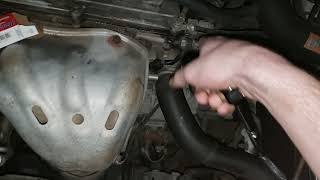
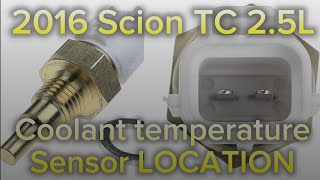
Generation note: This guide covers two generations of the Scion tC: - First Generation (2005-2010) with the 2.4L 2AZ-FE engine. The ECT sensor is located on the side of the cylinder head near the thermostat housing. A 19mm deep socket is typically required for removal. 🎬 Watch: First-gen Scion tC sensor location and replacement guide. - Second Generation (2011-2016) with the 2.5L 2AR-FE engine. The ECT sensor is on the side of the engine near the top, with a gray harness connector, and is very easy to access. 🎬 See this quick video for the 2011-2016 sensor location. The cause and symptoms are identical for both, but the sensor part number and exact location differ slightly. The same OEM part number 89422-33030 is used for both.
Symptoms You May Notice
- Check Engine Light is on
- Inaccurate or non-functional temperature gauge (may be stuck on cold or hot)
- Engine may be hard to start, especially when cold
- Rough idle
- Poor fuel economy.
- Black smoke from the exhaust due to a rich fuel mixture.
- Cooling fans running constantly, even when the engine is cold.
- Replacing the thermostat. While a faulty thermostat can cause overheating issues, it will not directly cause a P0117 'circuit low' code. A thermostat issue would more likely trigger a P0128 code (Coolant Temperature Below Thermostat Regulating Temperature).
Most Likely Causes
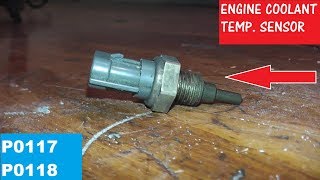
- Defective Engine Coolant Temperature (ECT) Sensor 🔴 High Probability → Shop Engine Coolant Temperature Sensor The sensor is a simple thermistor that wears out over time and with heat cycles, which is a common failure on most vehicles, including the tC.
How to confirm: Use a scan tool to read live data. If the ECT reading is an extreme value (e.g., -40°F or 280°F+) when the engine is at a normal temperature, the sensor is likely bad. You can also test the sensor's resistance with a multimeter; at an ambient temperature of 68°F (20°C), the resistance should be between 2,000 and 3,000 ohms. If the reading is outside this range, the sensor has failed.
Typical fix: Replace the Engine Coolant Temperature sensor.
Est. part cost: $20-$60 - Damaged Wiring or Connector 🟡 Medium Probability Wires can become brittle from engine heat over time, or damage can occur during other engine repairs. The ECT sensor circuit is a simple two-wire connection, but a short to ground on the signal wire will cause the P0117 code.
How to confirm: Visually inspect the wiring harness and connector for the ECT sensor. Look for breaks, corrosion, or melted insulation. Check for a short to ground in the signal wire using a multimeter. A user on Reddit with a 2009 tC confirmed their P0117 was caused by damaged wiring found during a shop repair.
Typical fix: Repair the damaged section of the wire or replace the connector pigtail.
Est. part cost: $5-$25 - Low Engine Coolant or Air in the System ⚪ Low Probability → Shop Engine Coolant / Antifreeze This is not a platform-specific issue but a general cooling system problem. If coolant is low, the sensor may be exposed to an air pocket, giving an inaccurate reading which can sometimes manifest as a circuit code.
How to confirm: Check the coolant level in the radiator (when the engine is cold) and the overflow reservoir. If the system was recently serviced (e.g., thermostat or radiator replacement), it may need to be 'burped' to remove trapped air. A sloshing noise from the dashboard area upon startup is a common sign of air in the system.
Typical fix: Top off the coolant and bleed the air from the cooling system. Find and repair any leaks.
Est. part cost: $15-$30 for coolant
Rare But Worth Checking
- Faulty Powertrain Control Module (PCM): → Shop Engine Control Module (ECM) This is extremely rare. The PCM should only be considered after all other possibilities, including the sensor, wiring, and coolant system, have been thoroughly tested and ruled out.
Diagnosis Steps
- Verify the Check Engine Light is on and code P0117 is present using an OBD-II scanner.
- Using the scanner's live data function, observe the Engine Coolant Temperature reading. If it shows an illogical value (e.g., -40°F or 280°F+) with a cold engine, the sensor or circuit is faulty.
- Turn the engine off. Visually inspect the ECT sensor and its electrical connector for any signs of damage, corrosion, or loose connections.
- Disconnect the sensor. The scan tool reading should change to a different default value (often triggering P0118, Circuit High). If the reading does not change, a short to ground in the wiring is likely.
- If the wiring appears intact, test the sensor. Remove it from the engine and use a multimeter set to Ohms. At 68°F, the resistance should be 2k-3k Ohms. You can also place it in hot water and watch for a smooth decrease in resistance. 🎬 Watch: How to test and replace the ECT sensor.
- Check the coolant level in the radiator and overflow tank to ensure it's full. If it's low, top it off and check for leaks. Ensure no air is trapped in the system.
- If the sensor and wiring test good, and the coolant is full, the problem may be a rare internal issue with the PCM.
Parts You'll Likely Need
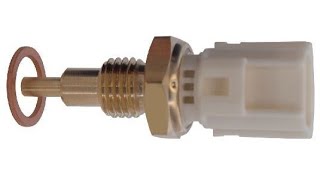
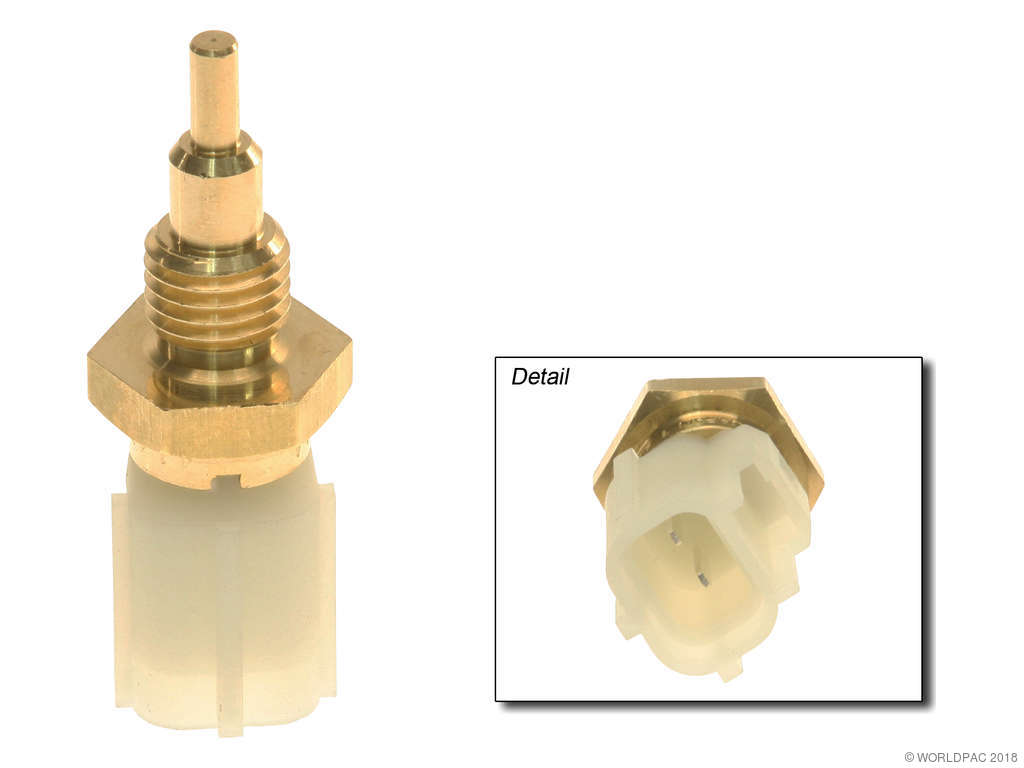
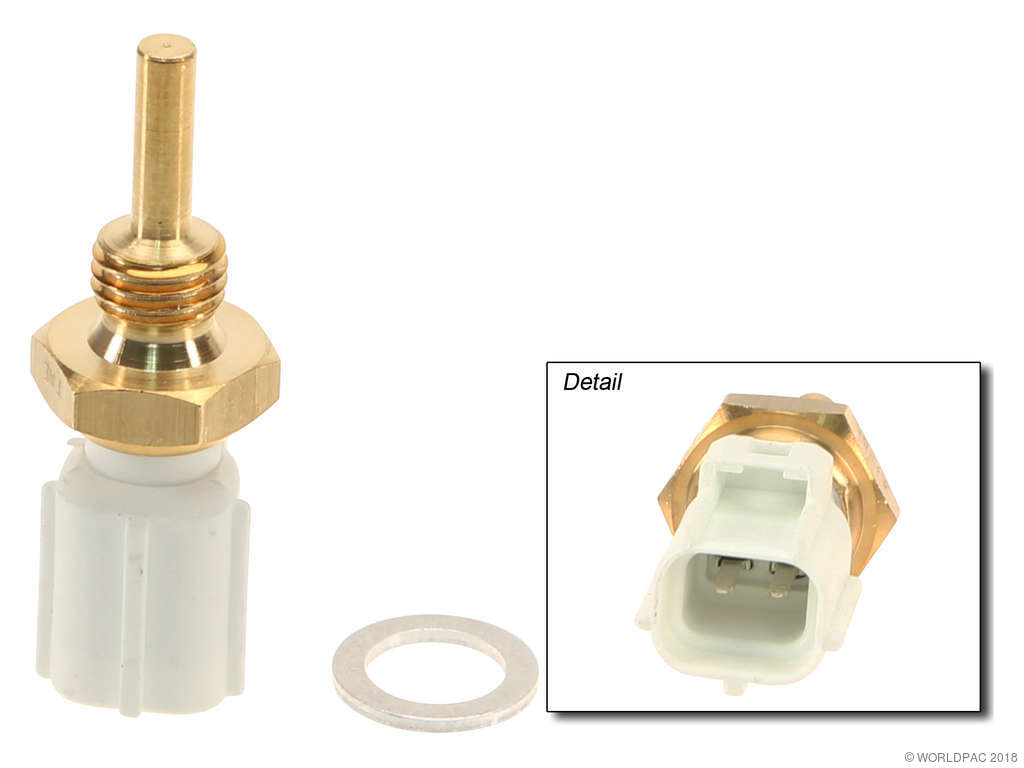
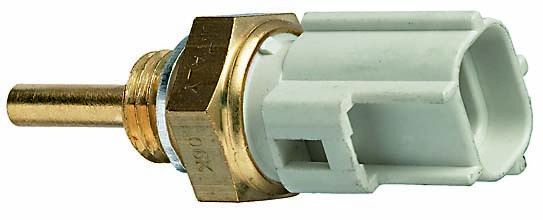
- Engine Coolant Temperature Sensor
(OEM #89422-33030)— This is the most common failure point for code P0117. The sensor's internal thermistor fails, sending an incorrect signal to the computer.
Trusted brands: Denso (OEM), Aisin, Standard Motor Products
OEM price range: $50-$80
Aftermarket price range: $20-$50
Related Codes That Often Appear With This One
- P0118 — This is the opposite code, for 'Circuit High'. It can sometimes appear if you disconnect the sensor to test the circuit, or if the wiring has an intermittent short/open.
Platform-Specific Known Issues
- Persistent Code After Multiple Part Replacements: A user on ScionLife.com with a Scion xB (which shares the 2AZ-FE engine) reported a persistent P0117 and overheating condition even after replacing the ECT sensor, radiator, thermostat, and hoses. This indicates that in some rare cases, the code can be a symptom of a more complex issue like a failing water pump or even a head gasket problem, which requires more in-depth diagnostics.
Mechanic-Grade Diagnostic Values
- ECT Sensor Resistance vs. Temperature — expected: 2,200 - 3,000 Ω at 20°C (68°F); 250 - 350 Ω at 80°C (176°F); 180 - 250 Ω at 100°C (212°F).. Failure: Readings significantly outside these ranges, or an open/shorted reading (infinite/zero ohms).
- ECT Sensor Signal Voltage at ECM (2AZ-FE Engine) — expected: 0.2V to 1.0V with engine at normal operating temperature (80°C / 176°F).. Failure: Voltage below ~0.14V triggers the P0117 code. A reading near 5V indicates an open circuit (P0118).
- Sensor 5V Reference Voltage (VC) — expected: 4.5V to 5.5V at the sensor connector with key on, engine off, sensor unplugged.. Failure: No voltage indicates a wiring problem or an issue from the ECM.
- ECT Circuit Short to Ground Test — expected: Infinite resistance (O.L.) between the signal wire and chassis ground when the sensor and ECM are disconnected.. Failure: Low resistance (e.g., under 100 ohms) indicates a short to ground in the harness.
Scan Tool Commands That Help
- Techstream or professional OBD-II scanner: Live Data / Data Stream for ECT Sensor — This is the primary diagnostic step. With the engine cold, the ECT reading should be very close to the Intake Air Temperature (IAT) reading. A reading of -40°F or 280°F+ on a cold engine immediately points to a circuit or sensor fault.
Wiring & Ground Locations
- ECT Sensor Connector (2AZ-FE) — On the side of the cylinder head, near the thermostat housing.. This is where you test for voltage and resistance. For the 2007 tC, Pin E8-32 (THW, Green wire) is the signal wire, and Pin E8-28 (E2, Red wire) is the sensor ground return to the ECM.
- ECT Sensor Connector (2AR-FE) — On the side of the engine near the top, with a gray harness connector.. This is the physical connection point for testing. It connects to the ECM via connector C4.
- Ground Point EG / EH (2AZ-FE) — EG is on the left side of the cylinder head; EH is on the intake side of the cylinder block.. While the ECT sensor has a dedicated ground return to the ECM (E2), the ECM itself relies on these main engine grounds for a stable reference. A corroded or loose main ground can cause erratic behavior in multiple sensor circuits.
OEM Part Supersession History
89422-33030→No supersession noted. This part number remains current.— N/A
Heads up: This part number is used across a vast range of Toyota, Lexus, and Scion vehicles from 2003 to 2024, including both generations of the Scion tC, indicating wide compatibility.
Diagnostic Flowchart
Used vs. New Parts: Buying Guide for This Vehicle
When a used part is the smart pick: A used wiring pigtail from a junkyard is a smart choice if your original connector is cracked, melted, or has corroded pins. The sensor itself is a wear item and inexpensive, so buying a new sensor is always the recommended path.
Donor-vehicle mileage cap: roughly under 150000 miles for the part to have meaningful remaining life.
What to inspect on the donor part:
- For a wiring pigtail, inspect for brittle or cracked plastic on the connector body.
- Ensure the wire insulation is flexible and not cracking.
- Check that the terminal pins inside the connector are clean, straight, and free of green or white corrosion.
Aftermarket brands forum-validated for this vehicle:
- Denso (OEM supplier)
- Aisin
- Standard Motor Products (SMP)
Brands owners have reported issues with on this vehicle:
- Unbranded, ultra-low-cost sensors from online marketplaces often have poor quality control and may fail prematurely or provide inaccurate readings out of the box.
Real Owner Stories
Aggregated from forums and TSBs cited above. Mileages and costs reflect what owners reported in those sources.
2009 Scion tC
Symptoms: Check engine light with code P0117, temperature gauge 'doesn't move or work at all. It's like turned off'.
What fixed it: A different user in the same thread confirmed their identical issue was caused by damaged wiring leading to the sensor, which was found and repaired by a shop.
Source hint: Reddit r/MechanicAdvice
2006 Scion tC
Symptoms: Radiator pushing water into the overflow, losing water, overheating, and P0117 code.
What fixed it: The owner replaced the thermostat, water pump, and radiator cap without success. The forum thread suggested checking for a blown head gasket with a block test kit, but the final repair was not confirmed by the original poster.
Source hint: ScionLife.com
Scion xB (2AZ-FE)
Symptoms: A persistent P0117 code and an overheating condition remained even after replacing the ECT sensor, radiator, thermostat, and hoses.
What fixed it: The owner's experience suggests the code was a symptom of a more complex problem, such as a failing water pump or a head gasket issue, which requires more advanced diagnostics beyond simple sensor replacement.
Source hint: ScionLife.com thread titled 'P0117? Changed Engine Coolant Temp Sensor but Code Still Show up..'
Related OBD-II Codes
Frequently Asked Questions
My Scion tC's temperature gauge is stuck on cold and the check engine light is on. Is this P0117?
I replaced the ECT sensor on my tC, but the P0117 code came back. What should I check next?
Can low coolant cause a P0117 circuit code on this engine?
Why are my tC's cooling fans running all the time, even right after I start it?
How can I test the ECT sensor on my 2AZ-FE or 2AR-FE engine myself?
I have a Scion xB with the 2.4L engine and a P0117 code. Is the information for the tC applicable?
Helpful Videos
We Have This Part in Stock



The information in this article is provided for general reference and educational purposes only. Vehicle specifications, procedures, and part compatibility can vary by production date, trim level, and region. Always consult your vehicle's factory service manual and verify part numbers before purchasing or performing repairs. Safety-critical components such as airbags, seat belts, and braking systems should be installed by a qualified professional.
- Scion tC:
- 🧭 Diagnostic Flowchart
- 🎬 Helpful Videos
- 🛍️ Shop This Part
- What's Unique About the 2005-2016 Scion tC
- Symptoms You May Notice
- Most Likely Causes
- Rare But Worth Checking
- Diagnosis Steps
- Parts You'll Likely Need
- Related Codes That Often Appear With This One
- Platform-Specific Known Issues
- Mechanic-Grade Diagnostic Values
- Scan Tool Commands That Help
- Wiring & Ground Locations
- OEM Part Supersession History
- Used vs. New Parts: Buying Guide for This Vehicle
- Real Owner Stories
- 2009 Scion tC
- 2006 Scion tC
- Scion xB (2AZ-FE)
- Related OBD-II Codes
- Frequently Asked Questions
- 🎟️ Get 5% Off