

P0117 on 2010-2014 Subaru Legacy: Engine Coolant Temperature Sensor Circuit Low Fixes
This code almost always means the Engine Coolant Temperature (ECT) sensor has failed. It's a common, inexpensive DIY fix located on the coolant crossover pipe on top of the engine. Expect to pay $25-$80 for a new sensor. A hard fault will cause the cooling fans to run constantly and the temp gauge to max out.
- P0117 on a 2010-2014 Legacy means the computer thinks the engine is extremely hot due to a low voltage signal from the ECT sensor.
- The most common cause by far is a failed ECT sensor itself.
- Symptoms include constant running of cooling fans, hard starts, and a maxed-out temperature gauge.
- This is a DIY-friendly repair. The sensor is located on top of the engine and is relatively easy to access and replace with a deep 19mm socket.
- Before buying parts, confirm the failure by checking live data with a scan tool; a very high temp reading on a cold engine points directly to a bad sensor.
- If the code appears after cooling system work, ensure all air is properly bled from the system before replacing parts.
What's Unique About the 2010-2014 Subaru Legacy
On the EJ253 engine used in the fifth-generation Legacy, the P0117 code is straightforward and almost always points to a failed ECT sensor itself. Unlike some other vehicles where wiring or thermostat issues are equally common, Subaru owners report a high success rate by simply replacing the sensor. The sensor is conveniently located on the coolant crossover pipe at the front of the engine, making it more accessible than on many other engine designs. Some owners report the code appearing after other cooling system work (like a radiator replacement), which can indicate air pockets in the system that need to be bled out.
Symptoms You May Notice
- Check Engine Light is on
- Cooling fans run constantly, even when the engine is cold
- Temperature gauge on the dashboard may max out instantly or the red warning light will flash
- Hard starting, especially when the engine is cold
- Rough idle or stalling
- Poor fuel economy
- Black smoke from the exhaust due to a rich fuel mixture
- A/C compressor may intermittently disengage as the system tries to protect the engine from what it perceives as extreme heat.
- Replacing the thermostat. While a faulty thermostat can cause cooling system problems, it typically sets other codes (like P0128) and does not directly cause the 'Circuit Low' electrical fault of P0117. An owner might replace the thermostat thinking the car is actually overheating, when it's just a false reading from the bad sensor.
Most Likely Causes
- Failed Engine Coolant Temperature (ECT) Sensor 🔴 High Probability → Shop Engine Coolant Temperature Sensor The ECT sensor is a thermistor that can fail internally over time, causing its resistance to drop and send a low voltage signal. This is the most common failure point for this code on this platform, with numerous owner accounts confirming a sensor replacement resolves the issue.
How to confirm: With the engine cold, use a scan tool to view live data. If the ECT reading is abnormally high (e.g., 250°F or higher), the sensor is bad. You can also test the sensor's resistance with a multimeter; at ~68°F (20°C), it should be between 2,000 and 3,000 ohms (2-3 kΩ). A failed sensor will often read near zero ohms.
Typical fix: Replace the Engine Coolant Temperature sensor. This requires a deep 19mm socket. Be prepared to top off a small amount of lost coolant.
Est. part cost: $25-$80 - Damaged Wiring or Connector 🟡 Medium Probability The wiring harness is located on top of the engine and is subject to heat and vibration, which can cause wires to become brittle or the connector to fail over time.
How to confirm: Visually inspect the wiring harness and connector for the ECT sensor. Look for breaks, corrosion, or loose pins. Check for a short to ground on the signal wire using a multimeter. With the key on, engine off, unplug the sensor and check for a 5-volt reference signal at the connector.
Typical fix: Repair the damaged section of the wiring harness or clean/replace the connector.
Est. part cost: $5-$50 - Air in Cooling System ⚪ Low Probability Subaru boxer engines can be tricky to bleed properly after cooling system service. Air pockets can get trapped, causing erratic temperature readings if the air passes over the sensor.
How to confirm: This issue often appears immediately after a coolant flush, radiator, or thermostat replacement. If the code appeared after recent service, the system likely needs to be 'burped' again. Some forum users recommend jacking up the front passenger side of the car to help air escape.
Typical fix: Properly bleed the cooling system to remove any air pockets. This may involve using a spill-free funnel and running the engine with the heater on high to cycle coolant through the entire system.
Est. part cost: $0 if you already have coolant
Rare But Worth Checking
- Faulty Engine Control Module (ECM): → Shop Engine Control Module (ECM) This is extremely rare. All other possibilities, especially the sensor and wiring, should be exhaustively ruled out before considering the ECM as the cause.
Diagnosis Steps
- Connect an OBD-II scanner and confirm P0117 is the primary code. Check live data for the Engine Coolant Temperature (ECT) reading with the engine cold. If it reads an impossibly high temperature (e.g., 250°F+), the sensor has almost certainly failed.
- Turn the engine off and let it cool completely. Check the engine coolant level in the radiator (when cool) and overflow tank.
- Locate the ECT sensor on the coolant crossover pipe, on top of the engine toward the front, typically near the oil filler cap. It has a gray electrical connector. 🎬 Watch: Locate every sensor on your Subaru boxer engine
- Inspect the sensor's electrical connector and wiring for any visible damage, corrosion, or loose connections. Ensure the connector is fully seated.
- If the live data check was inconclusive, disconnect the sensor. With the key on and engine off, use a multimeter to check for a 5-volt reference signal at the connector.
- If wiring appears okay, replace the ECT sensor. This is the most probable fix and is often done as the first step by experienced owners. Use a deep 19mm socket for removal.
- After replacing the sensor, top off any lost coolant with Subaru Super Coolant (blue).
- Properly bleed the cooling system to remove all air. A spill-free funnel kit is highly recommended for this. 🎬 Watch: How to properly bleed a Subaru cooling system
- Clear the P0117 code with the scanner and perform a test drive, monitoring live data to ensure the temperature reads correctly and rises smoothly.
Parts You'll Likely Need
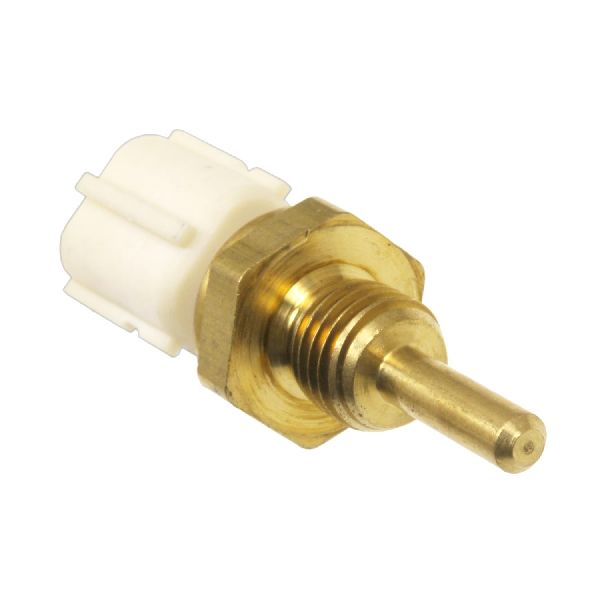
- Engine Coolant Temperature Sensor
(OEM #22630AA210)— This sensor is the primary cause of P0117. It fails internally, sending an incorrect low voltage signal to the computer. Note: Some parts catalogs may show 22630AA161, but that is for older models; 22630AA210 is correct for this generation.
Trusted brands: Subaru (Genuine), Denso (OEM supplier), NTK, Beck/Arnley
OEM price range: $45-$65
Aftermarket price range: $25-$50
Platform-Specific Known Issues
- Owner Experience: Intermittent Overheating and P0117: A 2012 Legacy owner on The Subaru Forums reported a recurring P0117 code accompanied by the temperature gauge rising to 240°F. After replacing the sensor and thermostat, the issue persisted. The fix was ultimately to properly 'burp' the cooling system to remove trapped air, which was causing the erratic readings and actual overheating.
- Owner Experience: P0117 After Radiator Replacement: On The Subaru Forums, a 2011 Impreza owner (same engine family) reported getting a P0117 code immediately after replacing the radiator and ECT sensor. The code would not clear initially. After driving for a few miles, the code disappeared on its own, indicating that an air pocket had worked its way out of the system.
Mechanic-Grade Diagnostic Values
- ECT Sensor Resistance (Cold) — expected: 2,000 - 3,000 Ω (2.0-3.0 kΩ) at 20°C (68°F).. Failure: A reading near zero ohms indicates an internal short. An infinite reading (open circuit) would cause a P0118, not P0117.
- ECT Sensor Resistance (Hot) — expected: 200 - 300 Ω at 90°C (194°F).. Failure: Resistance that does not decrease smoothly as temperature rises, or stays high when the engine is hot.
- ECT Sensor Signal Voltage (KOEO, Cold) — expected: Approximately 2.0V - 3.0V.. Failure: A voltage below approximately 0.27V will trigger the P0117 code.
- ECT Sensor Connector Reference Voltage — expected: ~5.0V with sensor unplugged, Key On Engine Off (KOEO).. Failure: No voltage indicates an open wire between the ECM and the connector. Voltage significantly lower than 5V could indicate a wiring issue or a problem within the ECM.
Scan Tool Commands That Help
- OBD-II Scanner: Disconnect ECT Sensor & Rescan — As a quick logic test. With the sensor disconnected, the circuit becomes open. The ECM should detect this and set the opposite code, P0118 (Circuit High). If P0118 appears, it strongly suggests the wiring to the ECM and the ECM itself are functional, pointing to the sensor as the likely culprit.
- Subaru Select Monitor (SSM) or equivalent: Live Data Monitoring - 'Coolant Temp.' — This is the primary diagnostic step. On a cold engine, the temperature should read ambient temperature. If it immediately shows a very high value (e.g., 250°F+), it confirms a short in the circuit or a failed sensor. During a test drive, the temperature should rise smoothly and stabilize, not jump erratically.
Wiring & Ground Locations
- ECM (Engine Control Module) — Located on the right side of the dash, typically behind the glove box.. The ECM receives the voltage signal from the ECT sensor and provides the 5V reference. All wiring for the sensor terminates here.
- ECM Connector B136 — This is one of the main connectors on the ECM located behind the right side of the dash.. The ECT sensor signal wire runs to a pin on this connector (pin 23 on many similar models). A fault here, such as a corroded pin or loose wire, would cause the code.
- Main Engine Ground — Bolted to the top of the intake manifold, often near the throttle body area.. This is a critical Subaru-specific detail. The ECM receives its primary ground reference from the intake manifold. A poor or corroded ground at this point can cause erratic readings from all engine sensors, including the ECT, leading to false P0117 codes.
Real Owner Repair Stories
- Reddit user on r/WRX (2009 Subaru WRX (similar EJ engine family)) — Instant P0117 code and maxed-out temperature gauge on key-on, even with a cold engine. This occurred immediately after replacing the engine wiring harness.
❌ Tried (didn't work) Replacing the ECT sensor with a new one., Properly bleeding the cooling system with a spill-free funnel., Checking all related fuses.
✅ What actually fixed it The user, who worked at a Subaru dealership, suspected the brand new, VIN-matched OEM wiring harness had an internal short to ground. The issue was isolated to the new harness itself, highlighting that even new OEM parts can be faulty.
OEM Part Supersession History
22630AA210→22630AA210— No supersession found.
Heads up: This part number appears to be stable for the specified vehicle range. Be cautious of using part number 22630AA161, which is for older models and may not be compatible.
Diagnostic Flowchart
Other Known Issues on This Vehicle
Issues unrelated to this code that are worth knowing about as an owner of this generation:
- Excessive Oil Consumption 🔴 High — Common on 2013-2014 models with the 2.5L engine. Can start as early as 30-60k miles. Subaru's official stance is that consumption up to 1 quart per 1,200 miles is 'acceptable'. (Ref: TSB 02-157-14R was issued, which could result in a short block replacement if consumption was verified by a dealer test.)
- Lineartronic CVT Transmission Problems 🔴 High — Affects models from 2010 onwards. Symptoms include shuddering, hesitation, and potential failure, sometimes as early as 60,000 miles. (Ref: Subaru extended the CVT warranty for many models to 10 years/100,000 miles due to widespread issues.)
- Head Gasket Failure 🟠 Medium — While more notorious on earlier EJ25 engines, the EJ253 in the 2010-2012 Legacy can still be susceptible, though less frequently than its predecessors.
- Premature Headlight Burnout 🟡 Low — A widely reported annoyance where headlight bulbs have a very short lifespan.
- Brake Line Corrosion 🔴 High — Affects 2010-2014 models, especially in salt-belt regions. Saltwater can accumulate near the fuel tank, causing brake lines to rust and potentially fail. (Ref: A recall was issued to address this issue.)
Used vs. New Parts: Buying Guide for This Vehicle
When a used part is the smart pick: For this specific repair, using a used Engine Coolant Temperature sensor is NOT recommended. The part is inexpensive, critical for engine management, and a common failure item. The risk of getting a part that is already near the end of its life or is outright faulty is too high for the minimal cost savings.
What to inspect on the donor part:
- Not applicable. A new part should always be used for this repair.
OEM-only on this vehicle (don't cheap out):
- While not strictly 'OEM-only', using the OEM supplier (Denso) or a reputable equivalent is highly recommended over generic, unbranded parts.
Aftermarket brands forum-validated for this vehicle:
- Denso (OEM Supplier)
- NTK
Brands owners have reported issues with on this vehicle:
- Unbranded, 'white-box' sensors from online marketplaces should be avoided due to inconsistent quality and a high likelihood of premature failure.
Real Owner Stories
Aggregated from forums and TSBs cited above. Mileages and costs reflect what owners reported in those sources.
2012 Subaru Legacy 2.5L
Symptoms: Recurring P0117 code accompanied by the temperature gauge rising to 240°F. The issue persisted even after replacing the sensor and thermostat.
What fixed it: Properly 'burping' the cooling system to remove trapped air which was causing erratic readings.
Source hint: Owner Experience: Intermittent Overheating and P0117 / The Subaru Forums
2011 Subaru Impreza 2.5L
Symptoms: P0117 code appeared immediately after replacing the radiator and ECT sensor; the code would not clear initially.
What fixed it: Driving the vehicle for a few miles allowed an air pocket to work its way out of the system, after which the code disappeared on its own.
Source hint: Owner Experience: P0117 After Radiator Replacement / The Subaru Forums
2014 Subaru Outback 2.5L
Symptoms: Intermittent P0117 with a live data reading showing 235°F.
What fixed it: Confirmed a 5V reference signal at the connector and replaced the failed sensor.
Source hint: Reddit r/Subaru_Outback thread titled 'p0117'
2012 Subaru Outback 2.5L
Symptoms: Persistent P0117 that returned immediately after clearing.
What fixed it: Identified as a hard fault in the sensor or circuit (open or short to ground).
Source hint: Reddit r/subaru thread titled 'unclear outback error codes'
Related OBD-II Codes
Frequently Asked Questions
Where is the ECT sensor located on my 2010-2014 Subaru Legacy 2.5L?
What size tools do I need to replace the coolant sensor on my EJ253 engine?
My 2012 Legacy is throwing P0117 and overheating after a thermostat change; could it be air in the system?
Does the excessive oil consumption TSB 02-157-14R apply to my 2013-2014 Legacy?
Why is my A/C compressor turning off when the P0117 code is active?
What type of coolant should I use to top off my Legacy after a sensor replacement?
Helpful Videos
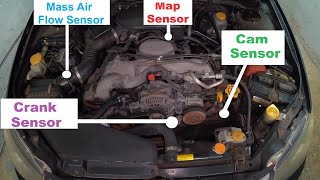
![How to Fix P0117 Engine Code in 3 Minutes [2 DIY Methods / Only $7.43]](https://img.youtube.com/vi/0PE930ETa4Y/mqdefault.jpg)
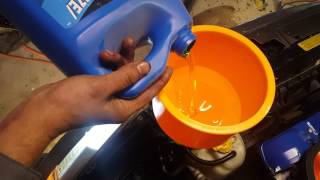
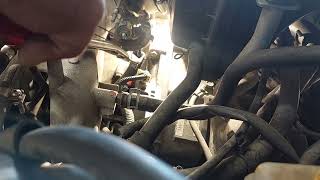
We Have This Part in Stock


The information in this article is provided for general reference and educational purposes only. Vehicle specifications, procedures, and part compatibility can vary by production date, trim level, and region. Always consult your vehicle's factory service manual and verify part numbers before purchasing or performing repairs. Safety-critical components such as airbags, seat belts, and braking systems should be installed by a qualified professional.
- Subaru Legacy:
- 🧭 Diagnostic Flowchart
- 🎬 Helpful Videos
- 🛍️ Shop This Part
- What's Unique About the 2010-2014 Subaru Legacy
- Symptoms You May Notice
- Most Likely Causes
- Rare But Worth Checking
- Diagnosis Steps
- Parts You'll Likely Need
- Platform-Specific Known Issues
- Mechanic-Grade Diagnostic Values
- Scan Tool Commands That Help
- Wiring & Ground Locations
- Real Owner Repair Stories
- OEM Part Supersession History
- Other Known Issues on This Vehicle
- Used vs. New Parts: Buying Guide for This Vehicle
- Real Owner Stories
- 2012 Subaru Legacy 2.5L
- 2011 Subaru Impreza 2.5L
- 2014 Subaru Outback 2.5L
- 2012 Subaru Outback 2.5L
- Related OBD-II Codes
- Frequently Asked Questions
- 🎟️ Get 5% Off