

P0117 on 1996-2002 Toyota 4Runner V6: Engine Coolant Temp Sensor Causes and Fixes
On a 3rd Gen Toyota 4Runner, code P0117 is almost always a failed Engine Coolant Temperature (ECT) sensor. The engine's computer thinks the engine is overheating, causing poor performance. Replacing the sensor costs about $25-$75 for the part and is a moderately difficult DIY job due to its location under the fuel rail.
- P0117 on your 4Runner means the computer thinks the engine is critically overheating, even if it's not.
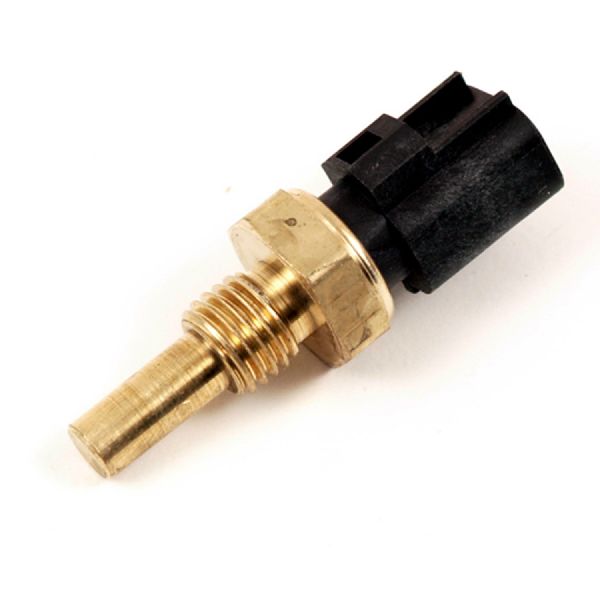
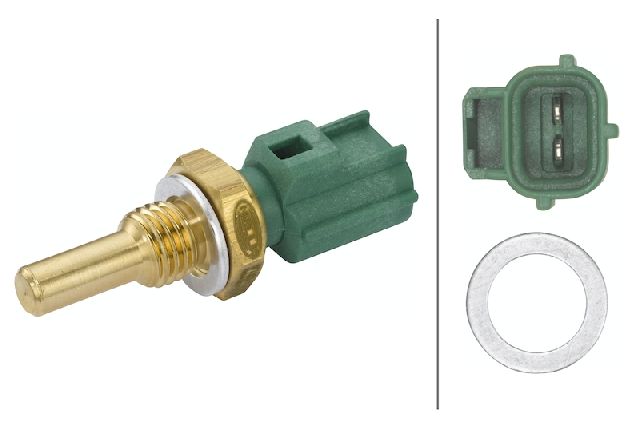
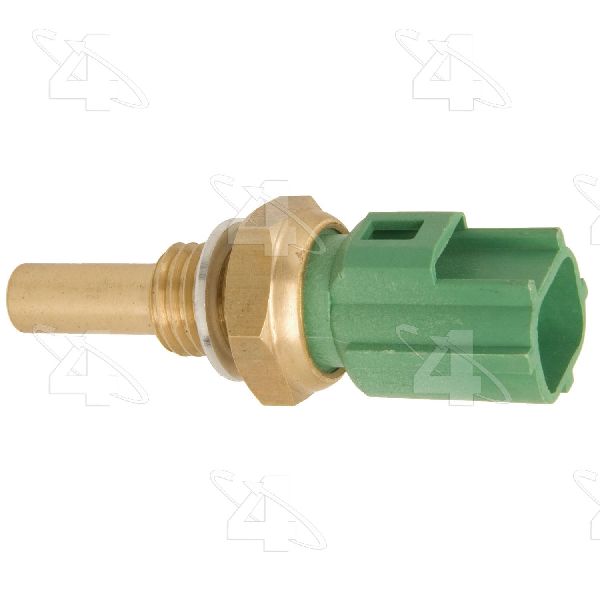
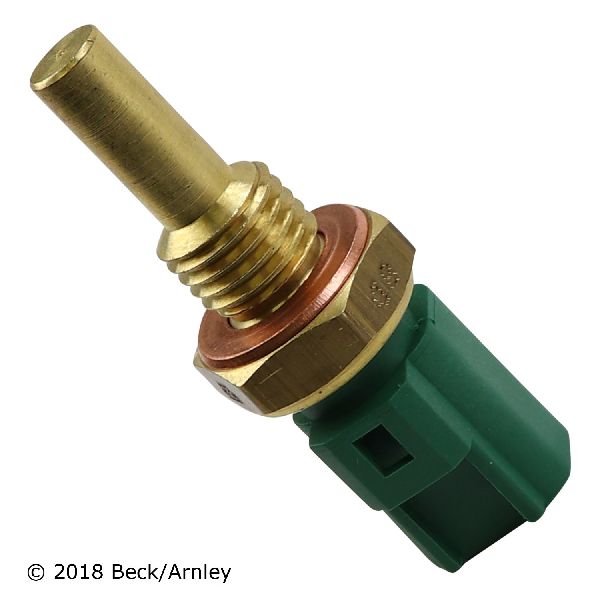
- The most likely cause is a failed Engine Coolant Temperature (ECT) sensor, part number 89422-35010.
What's Unique About the 1996-2002 Toyota 4Runner
On the 3.4L V6 (5VZ-FE) engine in the 3rd Generation 4Runner, the ECT sensor is known to be tricky to access. Unlike some engines where it's easily reachable, here it is located under the intake plenum and fuel rail crossover pipe, just behind the timing belt cover. 🎬 Watch: Finding the tricky ECT sensor location on the 5VZ-FE This specific location turns a simple sensor swap into a more involved job that requires moving fuel lines, making it a common point of discussion and frustration in owner forums.
Symptoms You May Notice
- Check Engine Light is on
- Engine runs rough, may hesitate or stall
- Poor fuel economy (engine runs rich)
- Black smoke from the exhaust
- Difficulty starting the engine, especially when cold
- Cooling fans run constantly, even when the engine is cold
- Temperature gauge on the dashboard may read incorrectly or not work at all (though this is often a separate sensor)
- Replacing the thermostat. While a faulty thermostat can cause heating issues, it will not cause the specific 'Circuit Low Input' electrical fault of P0117. It's a mechanical part, not an electrical one.
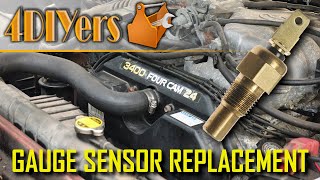
- Replacing the temperature sender for the gauge. On these 4Runners, there are two separate sensors: a two-wire sensor for the ECU (which causes P0117) and a one-wire sender for the dashboard temperature gauge. Replacing the gauge sender will not fix this code. 🎬 See how to replace the dashboard temperature gauge sender instead
Most Likely Causes
- Failed Engine Coolant Temperature (ECT) Sensor 🔴 High Probability → Shop Engine Coolant Temperature Sensor The sensor is a common failure item due to age and millions of heat cycles. After 20+ years, the internal thermistor simply wears out or shorts internally.
How to confirm: With a scan tool, check live data with the engine cold. If the ECT reads an extremely high temperature (e.g., >250°F), the sensor is bad. You can also test the sensor's resistance with a multimeter; at 68°F (20°C), it should be 2,000-3,000 ohms. A reading of near zero ohms indicates a shorted sensor.
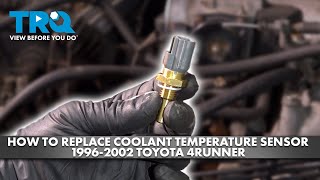
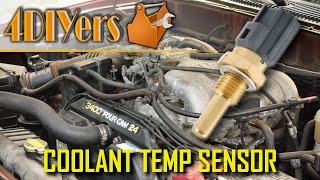
Typical fix: Replace the Engine Coolant Temperature sensor. Owners strongly recommend using a genuine Toyota or Denso part for reliability. 🎬 Watch: Step-by-step guide to replacing the sensor on a 3.4L V6
Est. part cost: $25-$75 - Damaged Wiring or Connector 🟡 Medium Probability The wiring harness is old and can become brittle from engine heat. The connector itself can also corrode or the locking tab can break, leading to a poor connection or a short to ground.
How to confirm: Visually inspect the wiring going to the ECT sensor for any signs of cracking, fraying, or melting. Check the connector for green corrosion or bent pins. Wiggle the connector with the engine running to see if the engine's behavior changes. A short to ground in the signal wire will cause a P0117.
Typical fix: Repair the damaged section of wire or replace the connector pigtail.
Est. part cost: $10-$30 - Air Pocket in the Cooling System ⚪ Low Probability
How to confirm: If the code appeared immediately after coolant was drained and refilled, an air pocket is a likely cause. The temperature gauge may fluctuate wildly. The upper radiator hose may feel cool while the engine is hot.
Typical fix: Properly bleed the cooling system to remove any trapped air. This often involves running the engine with the radiator cap off and the heater on full blast until no more bubbles appear.
Est. part cost: $0
Rare But Worth Checking
- Faulty Engine Control Unit (ECU): This is extremely rare. The ECU should only be considered after all other possibilities, including the sensor and wiring, have been definitively ruled out.
- Stuck Open Thermostat: → Shop Integrated Thermostat Housing Assembly While a stuck thermostat typically causes a P0128 (Coolant Temp Below Thermostat Regulating Temp), in some fringe cases it can contribute to a P0117 if the ECU's logic flags the inconsistent readings as a circuit fault. However, it's much less common than a bad sensor for this specific code.
Diagnosis Steps
- Connect an OBD-II scanner and verify P0117 is the primary code. Check for any other codes.
- View live data on the scanner. With a cold engine (off for several hours), check the ECT reading. It should be close to the ambient air temperature. If it reads a very high temperature (e.g., 250°F+), the sensor or its circuit is shorted, and the sensor is the most likely culprit.
- Visually inspect the ECT sensor connector and its wiring harness. Look for green corrosion, frayed wires, or damage from engine heat. Check for shorts to ground.
- If the wiring looks good, the next step is to replace the ECT sensor, as it is the most common failure point. A user on YotaTech noted a significant improvement in drivability and fuel economy after replacing an aging, but not completely failed, sensor.
- To be 100% certain before replacing, you can disconnect the sensor and test its resistance with a multimeter. At room temperature (~68°F), it should read between 2,000 and 3,000 ohms. A reading of near zero ohms indicates a shorted sensor.
- After replacing the sensor, clear the code with the scanner and perform a test drive to ensure the code does not return.
Parts You'll Likely Need
- Engine Coolant Temperature Sensor
(OEM #89422-35010)— This is the component that fails most often, causing the P0117 code on this vehicle. Owner consensus strongly favors using Genuine Toyota or the OEM supplier, Denso, to avoid issues with inaccurate aftermarket sensors.
Trusted brands: Denso, Aisin, Genuine Toyota
OEM price range: $60-$80
Aftermarket price range: $25-$50 - Fuel Rail Banjo Bolt Crush Washers
(OEM #90430-12026)— To access the sensor, you must loosen a fuel line banjo bolt. The crush washers are single-use and must be replaced to prevent fuel leaks. You will need four.
Trusted brands: Genuine Toyota
OEM price range: $1-$2 each
Aftermarket price range: $0.50-$1 each
Related Codes That Often Appear With This One
- P0118 — P0118 is 'ECT Circuit High Input'. It's the opposite code, indicating an open circuit. If you disconnect the sensor to test it, you may trigger a P0118, confirming the wiring to the ECU is likely intact.
- P0125 — P0125 is 'Insufficient Coolant Temperature for Closed Loop Fuel Control'. The ECU relies on the ECT sensor to know when the engine is warm enough. A bad ECT reading from P0117 can prevent the system from entering closed loop, triggering P0125 as well.
Mechanic-Grade Diagnostic Values
- ECT Sensor Resistance (Cold) — expected: 2,000 - 3,000 Ω at 20°C (68°F). Failure: Near zero Ω (shorted) or infinite/very high Ω (open). A shorted sensor causes P0117.
- ECT Sensor Resistance (Hot) — expected: 200 - 300 Ω at 90°C (194°F). Failure: Resistance does not drop significantly as the engine warms up.
- ECT Sensor Signal Voltage (Cold) — expected: 2.0V - 3.0V on a cold start. Failure: Voltage below 0.14V triggers P0117.
- ECT Sensor Signal Voltage (Hot) — expected: ~0.5V at normal operating temperature. Failure: Voltage remains high (e.g., >1.5V) when the engine is fully warmed.
- ECU Reference Voltage — expected: 5V at the sensor connector (with sensor unplugged, key on). Failure: No voltage or low voltage indicates a problem with the ECU or the wiring between the ECU and the sensor.
Scan Tool Commands That Help
- Toyota Techstream: Data List (Engine and ECT) — To view live ECT sensor data as the ECU sees it. Compare the 'Coolant Temp' value with ambient temperature on a cold engine. A reading of 280°F+ on a cold engine confirms a shorted circuit, most often the sensor itself.
- Toyota Techstream: Active Test — While Techstream has many active tests, there isn't a specific one to directly test the ECT sensor circuit itself. However, related tests like activating the cooling fan can be used to verify fan circuit functionality, which is often commanded ON continuously when a P0117 is present.
Wiring & Ground Locations
- ECU Connector E5, Pin 16 (+B) — At the Engine Control Unit, typically located behind the glove box.. This pin provides switched power to the ECU. While not directly for the ECT, power issues here can cause multiple sensor codes. A YotaTech forum post details this pin for a '93, but wiring is similar.
- ECU Connector (Specifics Vary by Year) — At the Engine Control Unit. The ECT signal wire (THW) and ground wire (E2) connect here.. To perform a definitive wiring check, you must test for continuity from the sensor connector pins back to the corresponding pins at the ECU. A wiring diagram for your specific year is critical as pin locations changed.
- Ground Point EB1 / EC1 — On the front side of the right cylinder head cover, as per the 2002 4Runner service manual.. This is a primary engine ground point for the sensor wiring harness. A loose or corroded ground here can cause erratic readings and various sensor circuit codes, including P0117.
Real Owner Repair Stories
- Tacoma World user (2006 Toyota Tacoma V6 (similar 1GR-FE engine, but same diagnostic principle)) — P0117 code, steam from engine, overflow cap blown off.
❌ Tried (didn't work) Initially suspected a bad thermostat or water pump.
✅ What actually fixed it The user confirmed with a scan tool that the ECT sensor was reading 275°F on a cold engine. A simple diagnostic step was suggested: unplug the sensor. If the temperature reading drops to a very low number (like -40°F), the sensor itself is bad. If the temperature stays high, the wiring is shorted to ground somewhere between the connector and the ECU. This test confirmed a bad sensor.
OEM Part Supersession History
89422-20010→89422-35010— Standard part evolution and consolidation across multiple Toyota platforms.
Model Year Variations Within This Range
- 1999-2002 vs 1996-1998: There were significant updates in 1999. While the P0117 code and its primary cause (ECT sensor) remain the same, the ECU and some wiring harness connectors/pinouts may differ. When diagnosing wiring issues or considering an ECU replacement, it is critical to use a diagram for the correct year range. For example, fuel injectors changed between the '96-'98 and '99-'02 ranges, indicating other engine control electronics were also revised.
Diagnostic Flowchart
Other Known Issues on This Vehicle
Issues unrelated to this code that are worth knowing about as an owner of this generation:
- Automatic Transmission Cooler Failure ('Pink Milkshake') 🔴 High — Common on higher-mileage (100k-200k miles) vehicles with original radiators. The internal transmission cooler in the radiator can rupture, mixing coolant and ATF, which destroys the transmission.
- Lower Ball Joint Failure 🔴 High — A well-documented failure point, especially on 1996-2000 models. Failure can be catastrophic, causing the wheel to separate from the vehicle. A recall was issued for 2001-2002 models. (Ref: Safety Recall 50J (for 2001-2002 models))
- Leaking Rear Axle Seals 🟠 Medium — Very common issue where gear oil leaks past the axle seals, contaminating the rear brake shoes. Often requires replacement of seals, bearings, and brake components.
Used vs. New Parts: Buying Guide for This Vehicle
When a used part is the smart pick: A used wiring harness pigtail from a junkyard is a viable option if only your connector is broken and the wires are otherwise intact. It is almost never a good idea to buy a used ECT sensor itself.
Donor-vehicle mileage cap: roughly under 150000 miles for the part to have meaningful remaining life.
What to inspect on the donor part:
- For a pigtail, ensure the plastic isn't brittle and the locking tab is intact.
- Check for any signs of green corrosion on the pins.
- Ensure there is enough wire length (at least 4-6 inches) to allow for a proper splice.
OEM-only on this vehicle (don't cheap out):
- Engine Coolant Temperature Sensor
Aftermarket brands forum-validated for this vehicle:
- Denso (The OEM supplier)
- Aisin
Brands owners have reported issues with on this vehicle:
- Generic, unbranded 'white-box' sensors from online marketplaces are frequently reported on forums as being inaccurate out of the box or failing prematurely.
Real Owner Stories
Aggregated from forums and TSBs cited above. Mileages and costs reflect what owners reported in those sources.
2000 Toyota 4Runner 3.4L V6 — 93200 miles
Symptoms: Check engine light came on, with a decrease in power and an increase in gasoline consumption. Tests with a vacuum gauge for leaks or exhaust obstructions showed normal results.
What fixed it: Replacement of the Engine Coolant Temperature sensor.
Source hint: automotriz.net report regarding Toyota 4Runner Luz Check Engine + Código P0117
2001 Toyota 4Runner SR5 V6
Symptoms: The truck was very difficult to start on cold mornings and idled roughly; Check Engine Light was on with code P0115.
What fixed it: Replacing the wiring harness pigtail after discovering a rodent had chewed through the connector.
Source hint: Go-Parts forum story regarding 2001 Toyota 4Runner SR5
1996-2002 Toyota 4Runner V6
Symptoms: Poor drivability and bad gas mileage issues that hadn't thrown a code yet.
What fixed it: Replacing the aging Engine Coolant Temperature (ECT) sensor, which resulted in a significant improvement in drivability and fuel economy.
Source hint: YotaTech Forums: A thread titled 'New ECT sensor made noticeable difference'
Related OBD-II Codes
Frequently Asked Questions
Is there a recall for the 1996-2002 Toyota 4Runner that covers the P0117 code?
My temperature gauge is acting weird; does that mean my ECT sensor is causing the P0117?
What brand of ECT sensor should I buy for my 5VZ-FE engine?
Could a recent radiator replacement on my 4Runner cause a P0117 code?
Where is the ECT sensor located on the 3.4L V6 4Runner?
How can I tell if my P0117 is a bad sensor or a wiring problem?
Helpful Videos
We Have This Part in Stock


The information in this article is provided for general reference and educational purposes only. Vehicle specifications, procedures, and part compatibility can vary by production date, trim level, and region. Always consult your vehicle's factory service manual and verify part numbers before purchasing or performing repairs. Safety-critical components such as airbags, seat belts, and braking systems should be installed by a qualified professional.
- Toyota 4Runner:
- 🧭 Diagnostic Flowchart
- 🎬 Helpful Videos
- 🛍️ Shop This Part
- What's Unique About the 1996-2002 Toyota 4Runner
- Symptoms You May Notice
- Most Likely Causes
- Rare But Worth Checking
- Diagnosis Steps
- Parts You'll Likely Need
- Related Codes That Often Appear With This One
- Mechanic-Grade Diagnostic Values
- Scan Tool Commands That Help
- Wiring & Ground Locations
- Real Owner Repair Stories
- OEM Part Supersession History
- Model Year Variations Within This Range
- Other Known Issues on This Vehicle
- Used vs. New Parts: Buying Guide for This Vehicle
- Real Owner Stories
- 2000 Toyota 4Runner 3.4L V6 — 93200 miles
- 2001 Toyota 4Runner SR5 V6
- 1996-2002 Toyota 4Runner V6
- Related OBD-II Codes
- Frequently Asked Questions
- 🎟️ Get 5% Off