

P0117 on 2009-2013 Toyota Corolla: Engine Coolant Sensor Circuit Low Causes and Fixes
P0117 on a 2009-2013 Corolla almost always means the Engine Coolant Temperature (ECT) sensor has failed. It's a simple, inexpensive fix, typically costing $20-$40 for an aftermarket sensor and taking less than an hour to replace with basic tools.
- P0117 means the computer thinks the engine is extremely hot due to a low voltage signal from the coolant sensor.
- The most likely cause is a failed Engine Coolant Temperature (ECT) sensor, which is an affordable and easy part to replace.
- Check for obvious wiring damage near the sensor before buying parts.
- Always check your coolant level. While not a direct cause, low coolant can lead to overheating that damages the sensor.
- This is a DIY-friendly repair; just make sure the engine is completely cold before you start to avoid getting burned by hot coolant.
What's Unique About the 2009-2013 Toyota Corolla
For the 10th generation Corolla (E140/E150), this code is a straightforward electrical fault. There are no widespread design flaws or complex issues that make this platform uniquely prone to P0117. The problem is almost always a simple failure of the ECT sensor itself due to age and heat cycles, or less commonly, a wiring issue near the sensor connector. It's a common and well-documented issue for owners, with a very predictable and easy fix.
Symptoms You May Notice
- Check Engine Light is on
- Engine cooling fans run constantly, even when the engine is cold
- Temperature gauge on the dashboard reads maximum hot or doesn't move at all
- Engine runs rough, especially when first started
- Reduced fuel economy
- Difficulty starting the engine
- Black smoke from the exhaust due to a rich fuel mixture
- Heater may not blow hot air if the engine is actually running too cool due to a separate thermostat issue.
- Replacing the thermostat. While a stuck thermostat can cause overheating, it does not directly cause the P0117 electrical circuit code. However, a severe overheat caused by a bad thermostat can damage the ECT sensor, making it a secondary failure.
Most Likely Causes
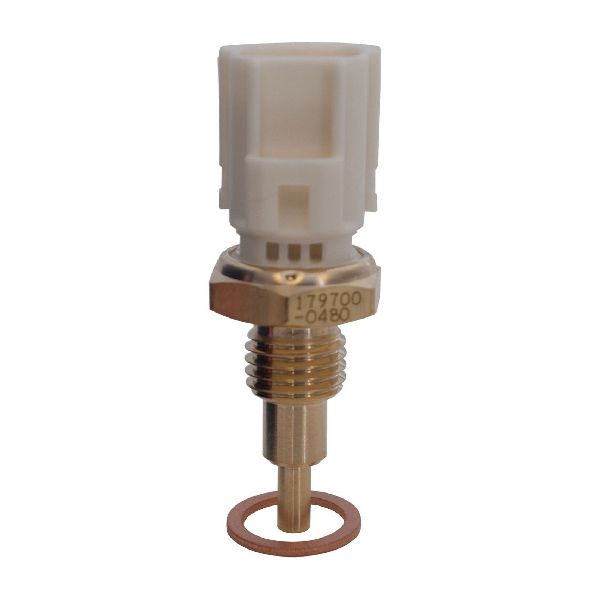
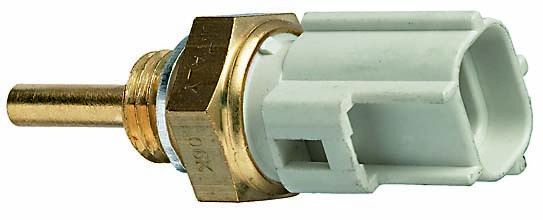
- Failed Engine Coolant Temperature (ECT) Sensor 🔴 High Probability → Shop Engine Coolant Temperature Sensor The sensor is a simple thermistor that wears out over time from constant heat cycles. It's the most common point of failure for this code, often shorting internally.
How to confirm: Use a multimeter to test the sensor's resistance. At room temperature (68°F/20°C), it should read approximately 2,000-3,000 Ohms (2-3 kΩ). A failed, shorted sensor will show very low 🎬 Watch: How to diagnose and fix the P0117 code or near-zero resistance. A definitive test is to unplug the sensor; if the code changes from P0117 (low) to P0118 (high), the sensor is bad.
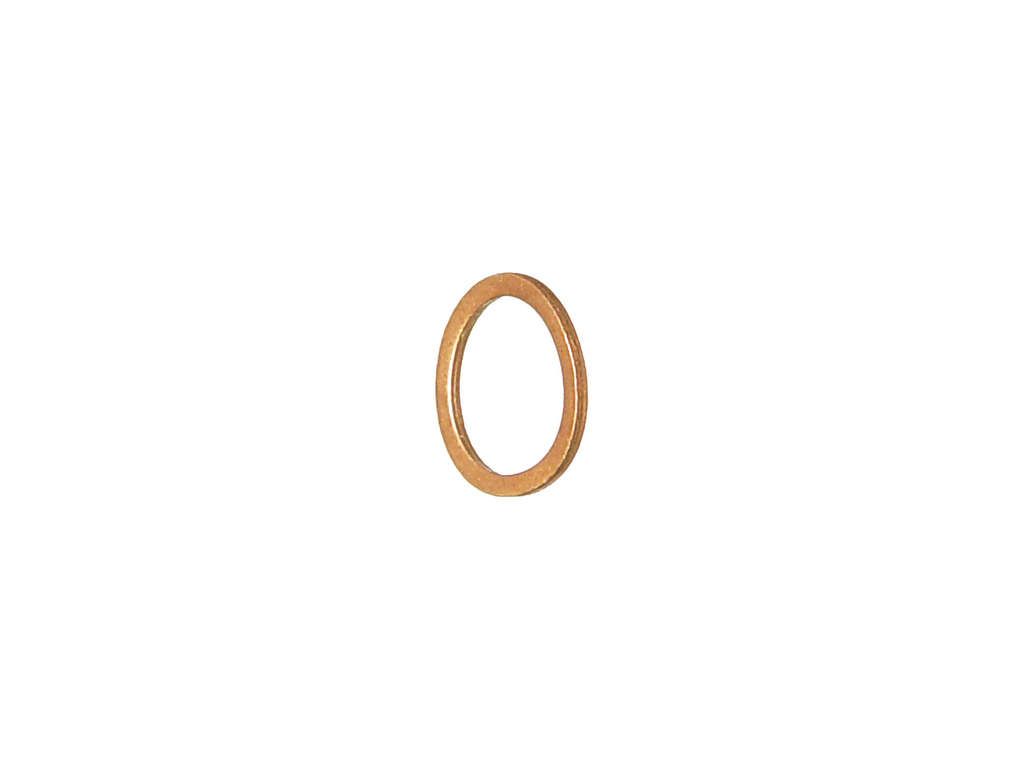
Typical fix: Replace the ECT sensor and its gasket. Ensure the engine is completely cool before starting the repair to avoid burns from hot coolant.
Est. part cost: $20-$60 - Damaged Wiring or Connector 🟡 Medium Probability The wiring harness near the sensor can become brittle and crack from engine heat and vibration, leading to a short circuit in the signal wire to ground. The plastic connector itself can also degrade and fail to make a secure connection.
How to confirm: Visually inspect the wiring going to the ECT sensor for any signs of cracks, melting, or corrosion. Wiggle the connector and harness with the engine running (if safe) to see if the temperature reading on a scan tool fluctuates. Test for a short to ground on the signal wire using a multimeter.
Typical fix: Repair the damaged section of wire or replace the connector pigtail. Applying dielectric grease to the new connector can help prevent future moisture intrusion.
Est. part cost: $5-$25 - Low Engine Coolant or Air in the System ⚪ Low Probability → Shop Engine Coolant / Antifreeze If the coolant level is very low, the sensor may be exposed to air instead of coolant, causing erratic readings. A severe overheating event from low coolant can also damage the sensor, triggering the code as a secondary failure.
How to confirm: Check the coolant level in the radiator (when the engine is cold) and the overflow reservoir. If low, there is a leak that must be found and fixed. A user with a similar vehicle experienced the code after a radiator replacement; the code cleared after driving for a few miles, suggesting an air pocket was the cause.
Typical fix: Top off the coolant with Toyota Super Long Life Coolant (pink) and bleed any air from the system. If the code persists, the sensor was likely damaged by the overheating and needs replacement.
Est. part cost: $15-$30 for coolant
Rare But Worth Checking
- Faulty Engine Control Module (ECM): → Shop Engine Control Module (ECM) This is extremely rare. The ECM should only be considered after the sensor and wiring have been thoroughly tested and proven to be good. An ECM failure is the least likely cause.
Diagnosis Steps
- Verify the code with an OBD-II scanner. Note any other codes present.
- Check the live data stream on the scanner. With a P0117, the ECT reading will likely be an impossibly high value (e.g., 284°F or 140°C or higher).
- Turn the engine off and let it cool completely. Check the coolant level in the radiator and overflow tank.
- Locate the ECT sensor. On the 1.8L 🎬 Watch: Locate the ECT sensor on your 1.8L engine (2ZR-FE) engine, it is on the driver's side of the cylinder head, near the thermostat housing where the upper radiator hose connects.
- Inspect the sensor's electrical connector and nearby wiring for any visible damage, corrosion, or loose connections.
- Key Test: Disconnect the sensor's electrical connector. Turn the ignition ON (engine OFF). Check the live data on your scanner. The ECT reading should now show a very low temperature (e.g., -40°F) and the code should change to P0118 (Circuit High). If this happens, the wiring and ECM are good, and the original sensor is faulty.
- With the sensor still disconnected, test the sensor itself. Set a multimeter to measure resistance (Ohms) and connect the probes to the two pins on the sensor. At 68°F (20°C), the resistance should be 2-3 kΩ. A reading near zero ohms indicates a shorted sensor.
- If the sensor and wiring test good, the final and least likely possibility is a fault within the ECM.
Parts You'll Likely Need
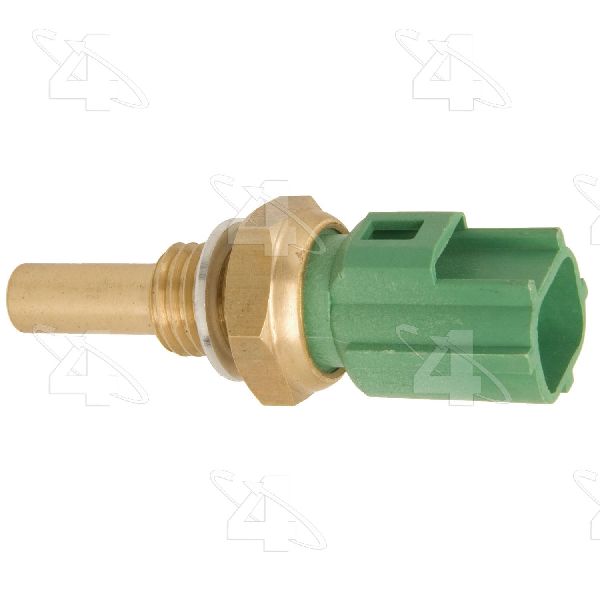
- Engine Coolant Temperature Sensor
(OEM #89422-33030, supersedes to 89422-0H010)— This sensor is the most common failure point that directly causes the P0117 code by shorting internally.
Trusted brands: Denso (OEM supplier), NTK, Walker Products, ACDelco
OEM price range: $60-$80
Aftermarket price range: $20-$40
Related Codes That Often Appear With This One
- P0118 — P0118 is 'ECT Circuit High Input'. It will almost always appear during diagnosis if you disconnect the sensor to test the circuit, as this creates an open circuit condition which the ECM reads as maximum low temperature (-40°F/C).
- P0128 — P0128 is 'Coolant Thermostat (Coolant Temperature Below Thermostat Regulating Temperature)'. This can occur if the ECT sensor is providing erratic (but not fully shorted) readings, confusing the ECM about engine warm-up times.
Platform-Specific Known Issues
- The wiring connector for the ECT sensor is known to become brittle from heat and age. It's common for the locking tab to break off during removal, or for the wires to break right at the back of the connector. Be prepared to potentially replace the pigtail connector (e.g., Dorman 645-906 or equivalent).
Mechanic-Grade Diagnostic Values
- ECT Sensor Resistance (Thermistor Test) — expected: At 20°C (68°F): 2.0-3.0 kΩ. At 80°C (176°F): 0.25-0.35 kΩ (250-350Ω). The resistance should decrease smoothly as temperature increases.. Failure: Near zero resistance indicates an internal short (causes P0117). Infinite resistance (open circuit) indicates a broken sensor (causes P0118).
- ECT Sensor Connector Voltage (Key On, Engine Off, Connector Unplugged) — expected: One pin should have a 5V reference from the ECM. The other pin is the signal return (ground) and should read near 0V.. Failure: No 5V reference points to a problem with the ECM or the wiring between the ECM and the sensor. If both pins show voltage or both show ground, there is a short in the harness.
- ECM Pin Voltage (at the ECM connector) — expected: Normal operating voltage between the THW (coolant temp) and E2 (sensor ground) pins should be between 0.5V (hot) and 3.5V (cold).. Failure: A voltage reading below 0.14V for more than 0.5 seconds will trigger P0117.
Scan Tool Commands That Help
- Toyota Techstream: Data List -> Coolant Temp — Use this to monitor the live engine coolant temperature as seen by the ECM. When P0117 is active, this value will typically display 140°C (284°F) or higher. If you disconnect the sensor, it should display -40°C (-40°F). This confirms the wiring and ECM are likely okay.
Wiring & Ground Locations
- ECT Sensor Connector — On the 1.8L (2ZR-FE), it's on the driver's side of the cylinder head, near the thermostat housing. It's a two-wire connector.. This is the primary point of failure. The connector itself or the wires leading to it can become brittle and short, causing the P0117 code. The two pins are the signal (THW) and ground (E2).
- ECM Pins (THW, E2) — At the Engine Control Module (ECM), which is located in the engine bay on the driver's side. The ECT signal wire (THW) and sensor ground wire (E2) terminate here.. To perform a definitive wiring check, you must test for continuity between the sensor connector pins and these specific ECM pins to rule out a break or short in the harness.
- Engine Block Ground Points — There are multiple ground points on the engine block and chassis (often designated AA, AB, BA, etc. in diagrams) where the main engine harness is grounded.. The ECT sensor's ground circuit (E2) ultimately connects to one of these points. A corroded or loose main ground can cause erratic readings on multiple sensors, though it's less likely to cause a specific P0117 short-circuit code.
Real Owner Repair Stories
- Go-Parts.com Sienna Article (similar Toyota platform) (2011-2020 Toyota Sienna (uses similar ECT sensor logic)) — P0117 code present.
❌ Tried (didn't work) Initially suspected only the sensor was bad.
✅ What actually fixed it The root cause was a stuck thermostat that led to a true overheating event. The extreme heat damaged the ECT sensor, causing it to fail and trigger the P0117 code. Replacing both the thermostat and the ECT sensor, followed by a proper coolant bleed, resolved the issue.
OEM Part Supersession History
89422-33030→89422-0H010— Standard part update for improved reliability or manufacturing process change. The parts are functionally identical and interchangeable for this application.
Heads up: While 89422-33030 is listed for many Toyota vehicles, some sources indicate it's primarily for pre-2009 models. The 89422-0H010 is the correct superseding part for the 2009-2013 Corolla. Using other similar-looking part numbers (e.g., 89422-20010, 89422-35010) is not recommended as they may have different resistance curves.
Diagnostic Flowchart
Other Known Issues on This Vehicle
Issues unrelated to this code that are worth knowing about as an owner of this generation:
- Excessive Oil Consumption (2.4L 2AZ-FE Engine) 🔴 High — Very common on the 2.4L engine found in XRS models. Caused by defective piston ring design. Can lead to engine failure if oil level is not frequently monitored. (Ref: T-SB-0158-14 (Inspection) & T-SB-0030-15 (Repair). Toyota also initiated Warranty Enhancement Program ZE7.)
- Water Pump Failure (1.8L 2ZR-FE Engine) 🟠 Medium → Shop Engine Water Pump — The water pump bearing or seal can fail, sometimes prematurely (60k-100k miles), leading to coolant leaks and potential overheating. Look for pink, crusty residue on the passenger side of the engine. (Ref: T-TT-0578-19 Rev provides diagnostic tips for non-electric water pumps.)
- Sticky / Melting Dashboard 🟡 Low — In climates with high heat and humidity, the dashboard material can degrade, becoming shiny, sticky, or cracked over time. This can cause a distracting glare on the windshield. (Ref: Toyota offered a Warranty Enhancement Program (ZE6) to replace affected dashboards.)
- Power Window Master Switch Failure 🟠 Medium — The driver's side master window switch assembly can feel notchy or sticky and may fail. It was subject to a safety recall due to a lack of proper lubricant from the factory, which could lead to a short circuit and fire risk. (Ref: NHTSA Campaign ID: 12V491000 (Recall))
- Brief Cam Gear Rattle on Cold Start (1.8L 2ZR-FE) 🟡 Low — A brief rattle or grinding noise for 1-2 seconds on a cold start is a known issue, particularly on 2009-2010 models. It is caused by a faulty VVT-i camshaft timing gear assembly. (Ref: T-SB-0087-09)
Used vs. New Parts: Buying Guide for This Vehicle
When a used part is the smart pick: For this specific P0117 repair, a used part rarely makes sense for the sensor itself, as a new aftermarket sensor is inexpensive ($20-$40) and a primary wear item. A used part makes sense for a connector pigtail if the original is broken, or for a larger component like an engine wiring harness if a short is found deep within the loom.
Donor-vehicle mileage cap: roughly under 80000 miles for the part to have meaningful remaining life.
What to inspect on the donor part:
- For a connector pigtail, ensure the plastic is not brittle, the locking tab is intact, and there are several inches of wire to splice.
- Inspect for any signs of corrosion (green crust) on the metal pins.
- Avoid any parts from a vehicle that shows signs of a major engine fire or has been sitting with the hood open in the elements.
OEM-only on this vehicle (don't cheap out):
- While not strictly required, using Toyota Super Long Life Coolant (pink) is highly recommended when refilling the system to prevent corrosion issues.
Aftermarket brands forum-validated for this vehicle:
- Denso (OEM supplier for Toyota)
- NTK
- Walker Products
Brands owners have reported issues with on this vehicle:
- Unnamed, no-brand 'white box' sensors from online marketplaces can have incorrect resistance curves, leading to persistent issues even after replacement.
Real Owner Stories
Aggregated from forums and TSBs cited above. Mileages and costs reflect what owners reported in those sources.
2010 Toyota Corolla
Symptoms: The temperature gauge went to Hot and the heater blew cold air. The owner discovered the coolant level was low.
What fixed it: Added coolant to resolve the temperature and heater issues; however, the P0117 code remained, indicating the sensor was likely damaged by the overheating event and required replacement.
Source hint: reddit.com/r/MechanicAdvice - Post by u/Waste_Iron_2542 (2010 Toyota Corolla)
2003 Pontiac Vibe (Toyota Matrix twin)
Symptoms: The owner initially suspected a bad thermostat and was planning to change it to fix the P0117 code.
What fixed it: The issue was identified as a sensor or circuit fault rather than a mechanical thermostat failure, as the service manual specifically links P0117 to an open/short in the circuit or a bad sensor.
Source hint: GenVibe.com - Thread 'P0117/changing stat'
2009-2013 Toyota Corolla
Symptoms: A user experienced a P0117 code immediately following a radiator replacement.
What fixed it: The code cleared on its own after driving for a few miles, which suggested an air pocket in the cooling system was the culprit.
Source hint: Article Context - Common Causes (Low Engine Coolant or Air in the System)
Related OBD-II Codes
Frequently Asked Questions
Where is the ECT sensor located on my 2009-2013 Corolla with the 1.8L engine?
My 2010 Corolla's temperature gauge is pinned to 'Hot' but the heater is blowing cold air. Is this P0117?
Is there a specific replacement part recommended for the electrical connector?
Can I use any coolant to top off my system if low coolant caused the code?
How can I tell if the sensor is actually bad or if it's just a wiring problem?
Does the 2.4L engine in the Corolla XRS have any related cooling issues I should know about?
Helpful Videos
![How to Fix P0117 Engine Code in 3 Minutes [2 DIY Methods / Only $7.43]](https://img.youtube.com/vi/0PE930ETa4Y/mqdefault.jpg)
We Have This Part in Stock


The information in this article is provided for general reference and educational purposes only. Vehicle specifications, procedures, and part compatibility can vary by production date, trim level, and region. Always consult your vehicle's factory service manual and verify part numbers before purchasing or performing repairs. Safety-critical components such as airbags, seat belts, and braking systems should be installed by a qualified professional.
- Toyota Corolla:
- 🧭 Diagnostic Flowchart
- 🎬 Helpful Videos
- 🛍️ Shop This Part
- What's Unique About the 2009-2013 Toyota Corolla
- Symptoms You May Notice
- Most Likely Causes
- Rare But Worth Checking
- Diagnosis Steps
- Parts You'll Likely Need
- Related Codes That Often Appear With This One
- Platform-Specific Known Issues
- Mechanic-Grade Diagnostic Values
- Scan Tool Commands That Help
- Wiring & Ground Locations
- Real Owner Repair Stories
- OEM Part Supersession History
- Other Known Issues on This Vehicle
- Used vs. New Parts: Buying Guide for This Vehicle
- Real Owner Stories
- 2010 Toyota Corolla
- 2003 Pontiac Vibe (Toyota Matrix twin)
- 2009-2013 Toyota Corolla
- Related OBD-II Codes
- Frequently Asked Questions
- 🎟️ Get 5% Off