

P0117 on 2004-2009 Toyota Prius: Engine Coolant Temperature Sensor Circuit Low Causes and Fixes
On a 2004-2009 Prius, code P0117 is most often caused by a failed Engine Coolant Temperature (ECT) sensor or a short in its wiring. However, it can also be triggered by a genuine overheating condition from a failing electric water pump or low coolant. Expect to pay $20-$60 for a new sensor, with DIY difficulty being moderate due to its tight location.
- P0117 means the computer sees a 'short circuit' signal from the coolant sensor, indicating extreme heat.
- Before replacing the sensor, confirm the engine is not actually overheating. Check for low coolant and lack of cabin heat, which point to a circulation problem (leak, air, or bad water pump).
- The ECT sensor is located on the driver's side of the engine and is difficult to access, making the repair a 1-3 hour job.
- If the car is truly overheating, the most likely culprits on a Gen 2 Prius are a failing water pump or a significant coolant leak.
- Always use the correct pink Toyota Super Long Life Coolant when refilling the system.
What's Unique About the 2004-2009 Toyota Prius
The Gen 2 Prius has a complex cooling system that includes a coolant heat storage tank, making it sensitive to air pockets and low coolant levels. While P0117 is a generic code, on this platform it can be triggered not just by a simple sensor failure, but also by a failing electric water pump, which is a known issue. Owners often report a loss of cabin heat simultaneously, which is a key symptom pointing towards a coolant circulation or level problem rather than just a bad sensor. The P0117 code can be a direct consequence of an actual overheat event caused by the water pump failing, not just a sensor electrical fault.
Symptoms You May Notice
- Check Engine Light and the red 'Triangle of Death' warning on the dashboard.
- Engine overheating warning light is illuminated or flashing.
- No heat coming from the cabin vents, even when set to high.
- Engine is actually overheating, with steam or coolant coming from the engine bay or overflowing from the reservoir.
- Coolant seen leaking or overflowing from the reservoir.
- Cooling fans run continuously or do not turn on when they should.
- Rough engine operation, stuttering, or difficulty starting.
- Engine may refuse to shut down normally.
- Immediately replacing the ECT sensor without checking for an actual overheating condition. If the car is genuinely overheating due to a bad water pump or low coolant, a new sensor will not fix the problem.
- Confusing the engine cooling system with the separate inverter cooling system. The Gen 2 Prius has two separate coolant reservoirs; ensure you are checking and filling the correct one for the engine.
- Using an aftermarket water pump. A PriusChat member reported installing an aftermarket pump from Autozone which was faulty out of the box, forcing them to pay a dealership to install a genuine Toyota pump to fix the issue.
Most Likely Causes
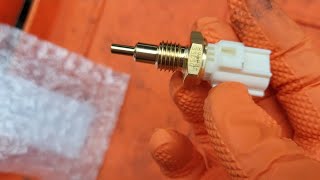
- Faulty Engine Coolant Temperature (ECT) Sensor 🔴 High Probability → Shop Engine Coolant Temperature Sensor The sensor is a thermistor that can fail over time, developing an internal short that causes the low voltage reading. It's a common failure point across many Toyota models.
How to confirm: With a cold engine, use a scan tool to read live data. If the coolant temperature shows an extremely high value (e.g., 284°F+) immediately, the sensor is likely bad. You can also test the sensor's resistance with a multimeter; it should be around 2-3 kΩ at room temperature (~68°F/20°C). As temperature increases, resistance decreases.
Typical fix: Replace the Engine Coolant Temperature sensor and its gasket. Top off coolant lost during the replacement. It is recommended to use an OEM Denso part.
Est. part cost: $20-$60 - Wiring Harness or Connector Issue 🟡 Medium Probability The wiring is located in a hot engine bay and can become brittle or damaged over time, leading to a short circuit to ground. The connector itself can be difficult to remove after many years and can be damaged.
How to confirm: Visually inspect the wiring and connector for the ECT sensor for any signs of damage, melting, or corrosion. Disconnect the sensor; if the code changes to P0118 (Circuit High), the wiring is likely good and the sensor is bad. If P0117 remains, there is a short in the harness between the ECM and the connector.
Typical fix: Repair the damaged section of the wiring harness or replace the connector pigtail.
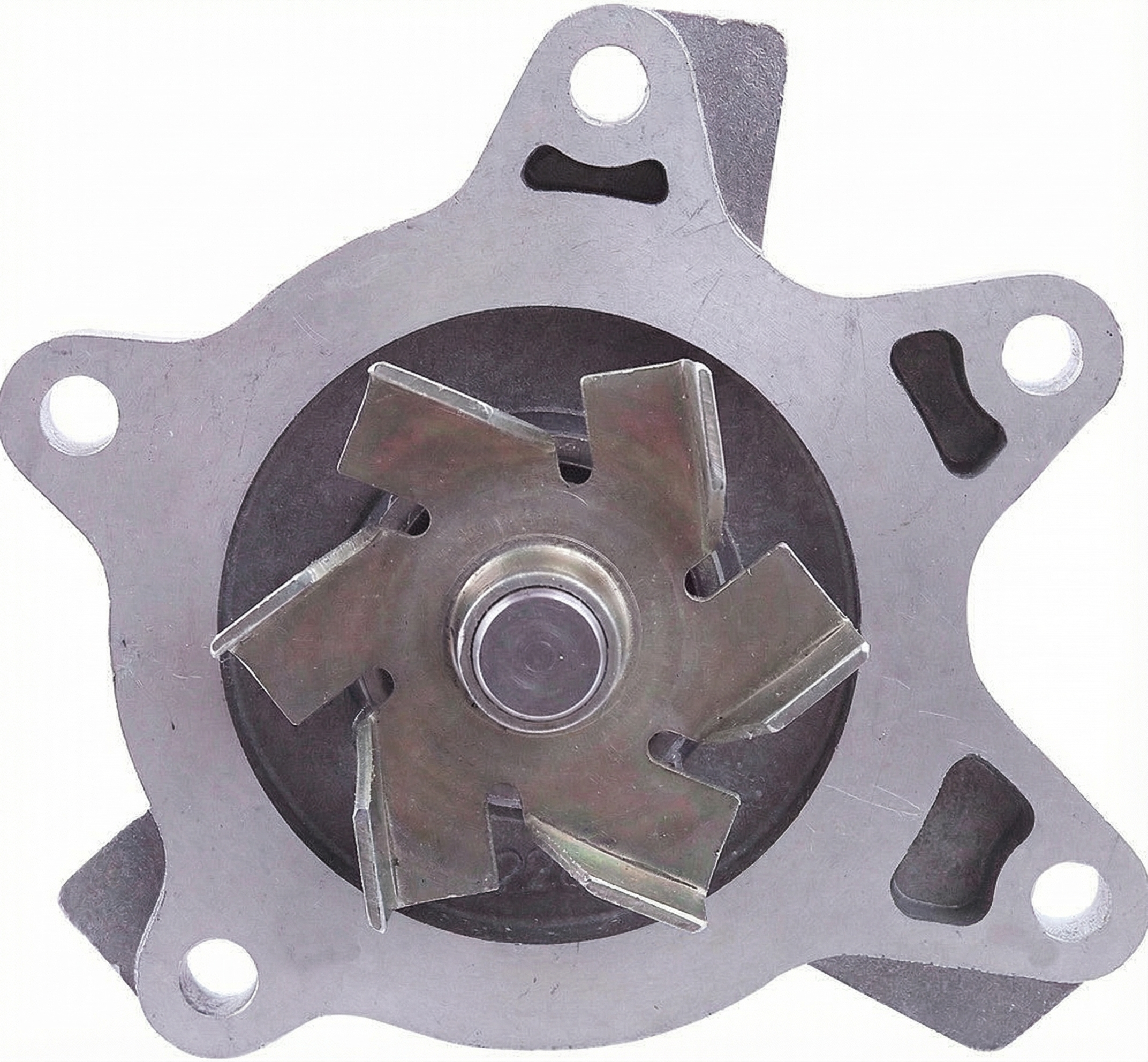
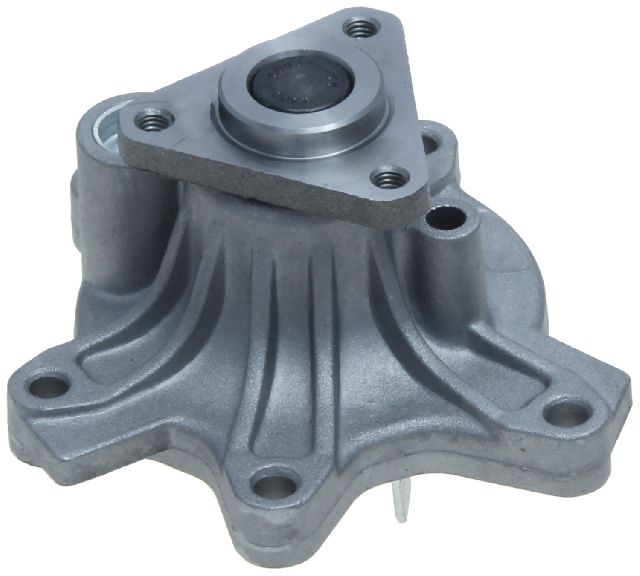
Est. part cost: $10-$30 - Failing Engine Water Pump 🟡 Medium Probability → Shop Engine Water Pump The electric water pump is a known failure point on this generation of Prius, subject to a warranty enhancement program. When it fails, it causes a genuine and rapid overheating condition, which drops the ECT sensor's resistance and triggers a P0117.
How to confirm: This is a cause of genuine overheating. If the engine is truly hot and coolant is boiling over, but coolant isn't circulating (check for flow in the reservoir), the water pump is a likely suspect. Often accompanied by water pump-specific codes like P261B. A user on PriusChat experienced a P0117 that was followed by a P261B, confirming the water pump was the root cause.
Typical fix: Replace the engine water pump. It is highly recommended to use a genuine Toyota/Aisin OEM part, as aftermarket pumps have a high failure rate, as one owner discovered after having to do the job twice. 🎬 See this step-by-step guide for replacing the engine water pump.
Est. part cost: $100-$250 - Low Engine Coolant / Air in System ⚪ Low Probability → Shop Engine Coolant / Antifreeze The complex cooling system can be difficult to bleed properly, and leaks can develop over time. If the coolant level drops below the sensor, it will read steam/air temperature, which can be erratic and trigger the code.
How to confirm: Check the coolant level in the radiator (when cool) and the overflow tank. A low level confirms a leak or consumption issue. No cabin heat is a strong indicator of air in the system.
Typical fix: Find and repair the source of the coolant leak. Refill and properly bleed the cooling system. This may require putting the Prius in 'Maintenance Mode' to run the engine continuously and using a spill-free funnel kit.
Est. part cost: $25-$35 for coolant
Rare But Worth Checking
- Stuck-Closed Thermostat: → Shop Integrated Thermostat Housing Assembly While less common than a sensor or water pump failure, a stuck thermostat will cause rapid overheating, which can legitimately trigger the P0117 code as the temperature skyrockets past the sensor's normal range. Often replaced as a precaution when doing a water pump job.
- Faulty Engine Control Module (ECM): → Shop Engine Control Module (ECM) This is extremely rare. The ECM itself could be failing, but this should only be considered after every other possible cause has been ruled out by a professional. The diagnostic tree includes checking for shorts within the ECM.
Diagnosis Steps
- Check for physical signs of overheating: steam, boiling sounds, or the smell of hot coolant.
- Verify the engine coolant level in both the radiator (only when the engine is completely cool) and the overflow reservoir. Top off if low and check for leaks.
- Connect an OBD-II scanner and check for any other stored trouble codes, particularly P261B, P1121, or P0118.
- View the live data for the Engine Coolant Temperature (ECT). On a cold start, it should be close to the ambient air temperature. If it reads an extremely high value (e.g., 284°F / 140°C) immediately, the sensor or its circuit is shorted. Note that if the code is active, the ECM may default to showing 80°C (176°F) regardless of the actual temperature.
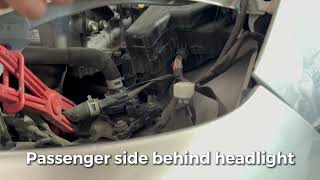
- Inspect the ECT sensor's electrical connector and wiring for any visible damage, corrosion, or loose connections. The sensor is on the driver's side of the engine, near the cylinder head. 🎬 Watch: See the exact ECT sensor location on a 2007 Prius.
- Disconnect the ECT sensor connector. The code should change to P0118 (Circuit High). If it does, the sensor is faulty. If P0117 remains, the wiring harness is shorted to ground between the ECM and the connector.
- If the sensor and wiring test good, but the car is overheating, diagnose the cooling system itself. The primary suspect is the electric engine water pump. Check for circulation and listen for pump operation.
Parts You'll Likely Need
- Engine Coolant Temperature Sensor
(OEM #89422-35010)— This is the most common component to fail and directly cause the P0117 code by sending a low voltage signal.
Trusted brands: Denso (OEM), NTK
OEM price range: $50-$70
Aftermarket price range: $20-$40 - Engine Water Pump
(OEM #161A0-29015)— A failing water pump is a common cause of overheating on the Gen 2 Prius, which can trigger a P0117 code as a symptom of the extreme heat. Aftermarket pumps are known to be unreliable.
Trusted brands: Aisin (OEM), Toyota Genuine
OEM price range: $150-$200
Aftermarket price range: $80-$130 - Toyota Super Long Life Coolant (Pink)
Related Codes That Often Appear With This One
- P0118 — If you disconnect a faulty ECT sensor that was causing a P0117, the ECM will then see an open circuit (voltage > 4.91V) and set P0118 (Circuit High). This is a useful diagnostic step.
- P1121 — This code relates to the 'Coolant Flow Control Valve Position Sensor Circuit Stuck'. A problem in this area can be related to coolant circulation issues that might also contribute to overheating and a P0117 code.
- P261B — This code directly indicates a 'Coolant Pump 'A' Performance' issue. If you see P0117 and P261B together, the water pump is almost certainly the root cause of the overheating that triggered the P0117.
Mechanic-Grade Diagnostic Values
- ECT Sensor Resistance — expected: 2,000-3,000 Ω at 20°C (68°F); 200-300 Ω at 90°C (194°F).. Failure: A reading near zero ohms indicates a short. An infinite reading indicates an open circuit. A reading that doesn't change with temperature is also a failure.
- ECT Sensor Signal Voltage at ECM — expected: Approximately 2-3V on a cold engine, decreasing to around 0.5V at normal operating temperature.. Failure: A voltage below 0.14V for more than 0.5 seconds will trigger P0117.
- Scan Tool Live Data (Shorted Circuit) — expected: A properly functioning sensor should display a temperature close to ambient when cold.. Failure: If the scan tool immediately reads 140°C (284°F) or higher, it indicates a short circuit, which is the direct cause of a P0117 code.
Scan Tool Commands That Help
- Toyota Techstream: Active Test: Control the Coolant Pump Speed — This is used when a failing water pump is suspected as the root cause of overheating that led to the P0117 code. The command allows a technician to run the pump at a set speed (e.g., 3000 rpm) and compare the commanded speed to the actual speed reported by the pump, confirming if it's underperforming or has failed.
Wiring & Ground Locations
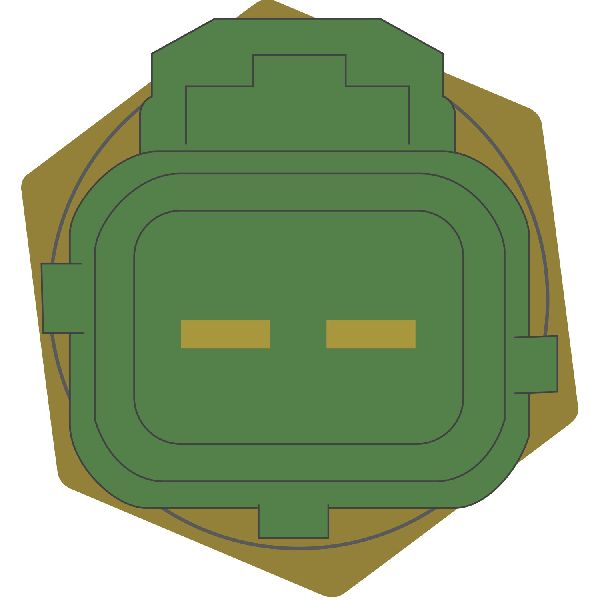
- E1 (ECT Sensor) to ECM — The ECT sensor is on the driver's side of the cylinder head. Its two wires run to the Engine Control Module (ECM).. Pin 2 of the sensor connector (THW) is the signal wire, and Pin 1 (E2) is the sensor ground. A short on the THW wire to the E2 wire or to chassis ground will cause the P0117 code.
- Ground Point EB — Located on the right side of the engine compartment.. This is a primary grounding point for the engine wire harness. While the ECT sensor has a dedicated ground return (E2) to the ECM, a poor main engine ground can sometimes introduce electrical noise or voltage offsets that affect sensor readings. Toyota often uses brown wires for dedicated sensor grounds to isolate them from electrical noise.
Real Owner Repair Stories
- PriusChat Forum Member (2010 Prius III, 132k miles (Note: Gen 3, but same P0117 logic applies)) — Engine overheat light (flashing or solid), no cabin heat, and a P0117 code was scanned. Coolant temperature on a scan tool would climb to 250-275°F.
❌ Tried (didn't work) Replacing the radiator (for a separate leak), Replacing the thermostat
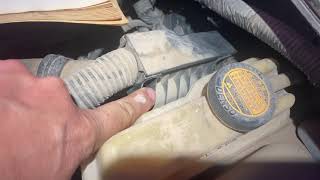
✅ What actually fixed it The owner took the car to a dealership, which diagnosed a malfunctioning engine water pump. The owner then replaced the water pump themselves, which resolved all symptoms and the P0117 code. - YouTube - Hybrid and Electric Car Sales LLC (2010 Toyota Prius (Gen 3)) — History code for P0117, coolant blowing out from the radiator cap (overheating).
❌ Tried (didn't work) Inspected the new water pump that had been recently installed, it was not leaking.
✅ What actually fixed it The root cause was a faulty Engine Coolant Temperature sensor. The video explains that a bad sensor can cause an overheat condition, leading to the P0117 code. Replacing the $40 sensor fixed the issue.
OEM Part Supersession History
Not specified, but multiple revisions exist→89422-35010— Standard part evolution and consolidation across many Toyota/Lexus models.
Heads up: This part number is widely used across many Toyota vehicles from the 1990s to the 2010s, indicating high compatibility within this generation.161A0-39015→161A0-29015— Part revision and update by Toyota, likely for improved reliability.
Heads up: 161A0-29015 is the current correct OEM part number for the engine water pump for the 2004-2009 Prius. Note: Do not confuse with the inverter water pump, which has part number G9020-47031.
Diagnostic Flowchart
Other Known Issues on This Vehicle
Issues unrelated to this code that are worth knowing about as an owner of this generation:
- Combination Meter (Dashboard Display) Failure 🟠 Medium — Very common, especially in 2004-2007 models. The display goes blank, preventing the driver from seeing speed, fuel level, or gear. Can also cause the car to not shut off properly. (Ref: No recall, but a well-documented failure of a specific capacitor on the circuit board. Repair services and DIY guides are widely available.)
- Hybrid Inverter Coolant Pump Failure 🔴 High → Shop Engine Coolant / Antifreeze — Common failure. This is a separate pump from the engine water pump. Failure can cause the hybrid system to overheat and shut down, setting code P0A93. (Ref: Subject of a recall and warranty extension program by Toyota. It is crucial to distinguish this from the engine water pump.)
- Brake Actuator Assembly Failure 🔴 High — A frequent and expensive failure. The ABS pump motor wears out, leading to a loss of braking assist, multiple brake-related warning lights, and a loud, frequent buzzing noise from under the hood. (Ref: Toyota issued a Warranty Enhancement Program (not a full recall) for this part on some models, but many owners experience failure outside the extended coverage period.)
- High-Voltage (HV) Hybrid Battery Degradation 🔴 High — Inevitable with age and mileage, typically after 10-15 years or 150k-200k miles. Symptoms include poor fuel economy, sluggish performance, and the P0A80 trouble code.
- HID Headlight Failure (on equipped models) 🟡 Low — Common for HID-equipped models (2006-2009). The bulbs or ballasts fail, causing intermittent or total loss of one or both headlights. Can be expensive to repair at a dealership. (Ref: NHTSA investigated numerous complaints, but no formal recall was issued.)
Used vs. New Parts: Buying Guide for This Vehicle
When a used part is the smart pick: A used OEM ECT sensor from a low-mileage donor vehicle is a reasonable choice, as they are generally reliable. Other components like wiring harness connectors or the coolant reservoir are also good candidates for used parts.
Donor-vehicle mileage cap: roughly under 80000 miles for the part to have meaningful remaining life.
What to inspect on the donor part:
- For sensors/connectors: Check for non-brittle plastic and clean, corrosion-free electrical pins.
- For water pumps: Visually inspect for any signs of weeping/leaks around the seal or housing. Check for smooth rotation of the impeller if possible.
- Verify the part number on the component matches the required OEM number or its supersession.
OEM-only on this vehicle (don't cheap out):
- Engine Water Pump: Forum and mechanic consensus strongly advises against aftermarket engine water pumps for the Prius. They have a high rate of premature failure, leading to repeat repairs. Always use a genuine Toyota or OEM Aisin pump.
Aftermarket brands forum-validated for this vehicle:
- Denso (for ECT Sensor - often the original OEM)
- Aisin (for Water Pump - the original OEM)
Brands owners have reported issues with on this vehicle:
- Unbranded/generic water pumps from major auto parts stores have been reported to fail out of the box or shortly after installation.
Real Owner Stories
Aggregated from forums and TSBs cited above. Mileages and costs reflect what owners reported in those sources.
2004-2009 Toyota Prius 1.5L Hybrid
Symptoms: The owner received a P0117 code which was immediately followed by a P261B code. The engine was experiencing a genuine overheat condition where coolant was not circulating.
What fixed it: Replacement of the engine water pump with a genuine Toyota/Aisin OEM part after an aftermarket pump failed.
Source hint: PriusChat: P0117,P261B. A cautionary tale
2004-2009 Toyota Prius 1.5L Hybrid
Symptoms: Difficulty removing the ECT sensor connector due to age and heat brittleness; needed to verify if the code was caused by the sensor or the harness.
What fixed it: Diagnostic testing by disconnecting the sensor to see if the code flipped to P0118, confirming a sensor-side fault.
Source hint: PriusChat: Engine coolant temperature sensor replacement - P0117
Related OBD-II Codes
Frequently Asked Questions
Can a failed engine water pump cause the P0117 code on my 2004-2009 Prius?
Why does my Prius dashboard go blank and refuse to shut down when I have cooling issues?
Should I use an aftermarket water pump to fix the P0117 and overheating issues?
Is the P0117 code related to the Hybrid Inverter Coolant Pump?
How can I tell if P0117 is a sensor failure or a wiring short on my Prius?
What is the correct resistance for a new ECT sensor at room temperature?
Helpful Videos
Used OEM Parts in Stock
New Aftermarket Parts Available


The information in this article is provided for general reference and educational purposes only. Vehicle specifications, procedures, and part compatibility can vary by production date, trim level, and region. Always consult your vehicle's factory service manual and verify part numbers before purchasing or performing repairs. Safety-critical components such as airbags, seat belts, and braking systems should be installed by a qualified professional.
- Toyota Prius:
- 🧭 Diagnostic Flowchart
- 🎬 Helpful Videos
- 🛍️ Shop This Part
- What's Unique About the 2004-2009 Toyota Prius
- Symptoms You May Notice
- Most Likely Causes
- Rare But Worth Checking
- Diagnosis Steps
- Parts You'll Likely Need
- Related Codes That Often Appear With This One
- Mechanic-Grade Diagnostic Values
- Scan Tool Commands That Help
- Wiring & Ground Locations
- Real Owner Repair Stories
- OEM Part Supersession History
- Other Known Issues on This Vehicle
- Used vs. New Parts: Buying Guide for This Vehicle
- Real Owner Stories
- 2004-2009 Toyota Prius 1.5L Hybrid
- 2004-2009 Toyota Prius 1.5L Hybrid
- Related OBD-II Codes
- Frequently Asked Questions
- 🎟️ Get 5% Off