

P0117 on 2013-2018 Toyota RAV4 2.5L: Engine Coolant Temperature Sensor Causes and Fixes
On a 2013-2018 RAV4, code P0117 is almost always caused by a failed Engine Coolant Temperature (ECT) sensor. This is a simple DIY fix with a part cost of about $20-$50 for an aftermarket sensor or $65-$100 for an OEM part. The sensor failure causes the ECM to see a short circuit, resulting in a false high-temperature reading.
- P0117 on your RAV4 means the computer is getting a bad signal from the Engine Coolant Temperature (ECT) sensor, making it think the engine is severely overheating.
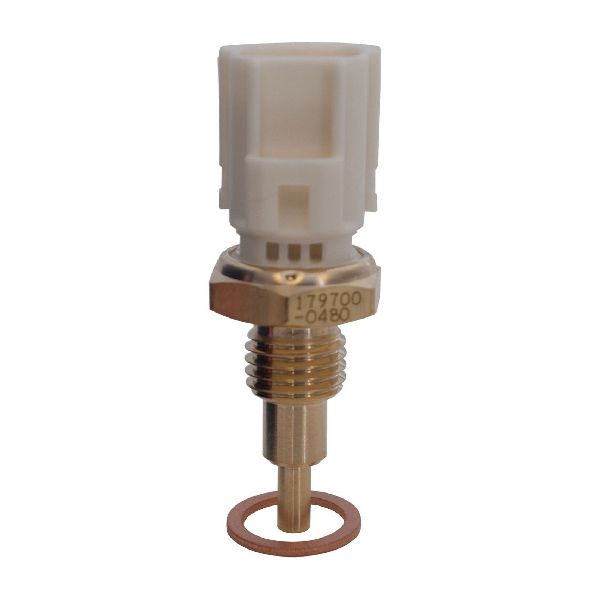
- The most likely fix is to replace the ECT sensor itself. It's an affordable part (OEM #89422-33030) and a manageable DIY job with basic tools.
- Common symptoms include the Check Engine Light, cooling fans that won't shut off, and a faulty temperature gauge.
- Before buying parts, quickly check your coolant level and inspect the sensor's wiring for obvious damage.
- Be aware of the separate, unrelated safety recall for the 12V battery clamp on all 2013-2018 RAV4s, which poses a fire risk if the wrong battery is installed.
What's Unique About the 2013-2018 Toyota RAV4
The 2013-2018 RAV4 (XA40 generation) with the 2AR-FE engine uses a common and generally reliable cooling system design shared across many Toyota models like the Camry, Highlander, and Scion tC. For this platform, the P0117 code is not indicative of a complex systemic issue but almost always points directly to the ECT sensor itself having failed. The sensor is a straightforward, two-wire thermistor that is easy to access and replace, making it a common and well-documented DIY repair for owners.
Symptoms You May Notice
- Check Engine Light is on
- Engine cooling fans run constantly, even when the engine is cold
- Temperature gauge on the dashboard reads erratically, is maxed out (stuck on 'H'), or doesn't move.
- Reduced fuel economy
- Difficulty starting the engine, particularly when cold
- Engine runs rough or hesitates before it's fully warmed up
- Black smoke from the exhaust on startup (due to rich fuel mixture)
- Replacing the thermostat. A stuck thermostat typically causes overheating (P0125) or the engine not warming up (P0128), but it does not directly cause a sensor circuit fault code like P0117.
- Replacing the radiator or water pump. These components are usually replaced due to leaks or mechanical failure, not as a fix for an electrical circuit code.
Most Likely Causes
- Defective Engine Coolant Temperature (ECT) Sensor 🔴 High Probability → Shop Engine Coolant Temperature Sensor This is the most common failure point for this code across all vehicles, including this RAV4. The internal thermistor simply wears out over time, creating a short circuit.
How to confirm: With a multimeter, disconnect the sensor and measure its resistance when the engine is cold. 🎬 Watch: Two simple DIY methods to fix the P0117 code. At 68°F (20°C), it should be between 2.0 and 3.0 kΩ. If it's far outside this range (e.g., near zero ohms), it's shorted and bad. Alternatively, use a scan tool to watch the live temperature data; if it reads an absurdly high value (like 284°F/140°C) on a cold engine, the sensor or its circuit is shorted.
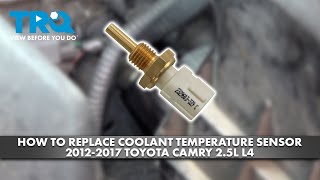
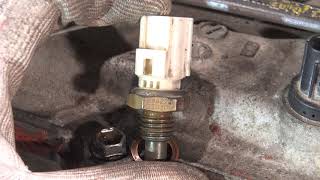
Typical fix: Replace the Engine Coolant Temperature sensor. This is a simple repair that involves draining a small amount of coolant, unscrewing the old sensor (typically with a 19mm deep socket), and installing the new one. 🎬 See this step-by-step sensor replacement walkthrough for the 2.5L engine. It's wise to also replace the O-ring or gasket at the same time.
Est. part cost: $20-$100 - Damaged Wiring or Connector 🟡 Medium Probability Engine bay heat can make wires and connectors brittle over time. Damage can also occur during unrelated maintenance. The two wires to the sensor can chafe and short to each other or to ground.
How to confirm: Visually inspect the two wires leading to the ECT sensor for any signs of cracking, melting, or breaks. Check the connector for corrosion, bent pins, or a loose fit. A short to ground on the signal wire will cause a P0117 code. You can test the circuit integrity by disconnecting the sensor and using a jumper wire between the two terminals on the harness connector; a scan tool should show the temperature swing from extremely high to extremely low, confirming the wiring to the ECM is likely intact.
Typical fix: Repair the damaged section of wire or replace the connector pigtail.
Est. part cost: $5-$25 - Low Engine Coolant or Air in the System ⚪ Low Probability → Shop Engine Coolant / Antifreeze While possible, this is a less common cause for a *circuit low* code. A low coolant level or a large air pocket can cause the sensor to read air instead of coolant, leading to inaccurate readings.
How to confirm: Check the coolant level in the overflow reservoir and the radiator (only when the engine is completely cool). If the level is low, there is a leak that needs to be addressed. An air pocket around the sensor can cause erratic readings, though it more commonly causes a P0118 (high voltage/open circuit) or P0115 (general fault) code.
Typical fix: Top off the coolant with Toyota Super Long Life Coolant and bleed the cooling system to remove any air pockets. Find and repair the source of the coolant leak.
Est. part cost: $15-$30 for coolant
Rare But Worth Checking
- Faulty Engine Control Module (ECM): → Shop Engine Control Module (ECM) This is extremely rare. The ECM should only be considered after all other possibilities, including the sensor and wiring, have been definitively ruled out. A diagnostic center would need to verify this by testing the ECM's internal circuits.
Diagnosis Steps
- Check the engine coolant level in the reservoir and radiator (when the engine is cold). A low level must be addressed, but is not the likely cause of the circuit code.
- Connect an OBD-II scanner and view the live data for the Engine Coolant Temperature. If it shows an extremely high value (e.g., 284°F or 140°C) even when the engine is cold, this confirms a short in the circuit or a failed sensor.
- Visually inspect the ECT sensor's wiring harness and connector. Look for any obvious signs of damage, corrosion, or loose connections.
- If the wiring looks good, the most likely culprit is the sensor itself. You can test it by disconnecting it and measuring the resistance across its two pins with a multimeter. At room temperature (~68°F/20°C), it should read between 2,000 and 3,000 Ohms.
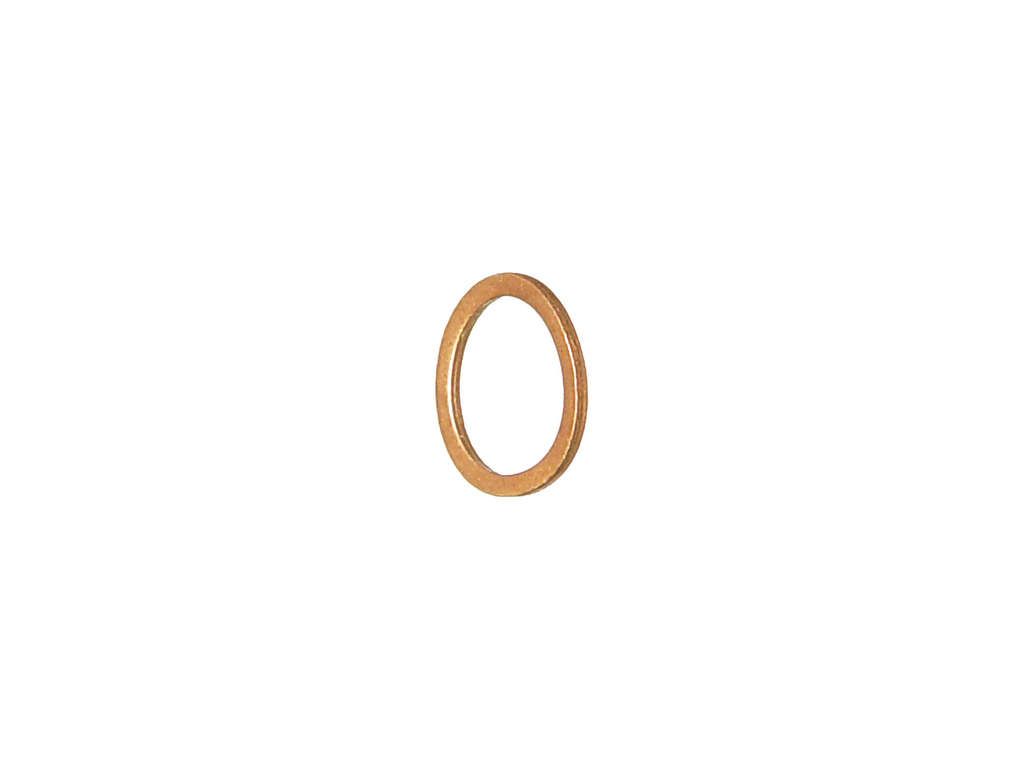
- If the sensor tests bad, replace it. Be sure to also replace the gasket/O-ring (Part No. 90430-12221).
- If the sensor tests good, the fault lies in the wiring. You will need to check for a short to ground on the signal wire between the sensor connector and the ECM. 🎬 Watch: A breakdown of common causes and fixes for P0117.
- After the repair, clear the trouble code with the scanner and perform a test drive to ensure the code does not return.
Parts You'll Likely Need
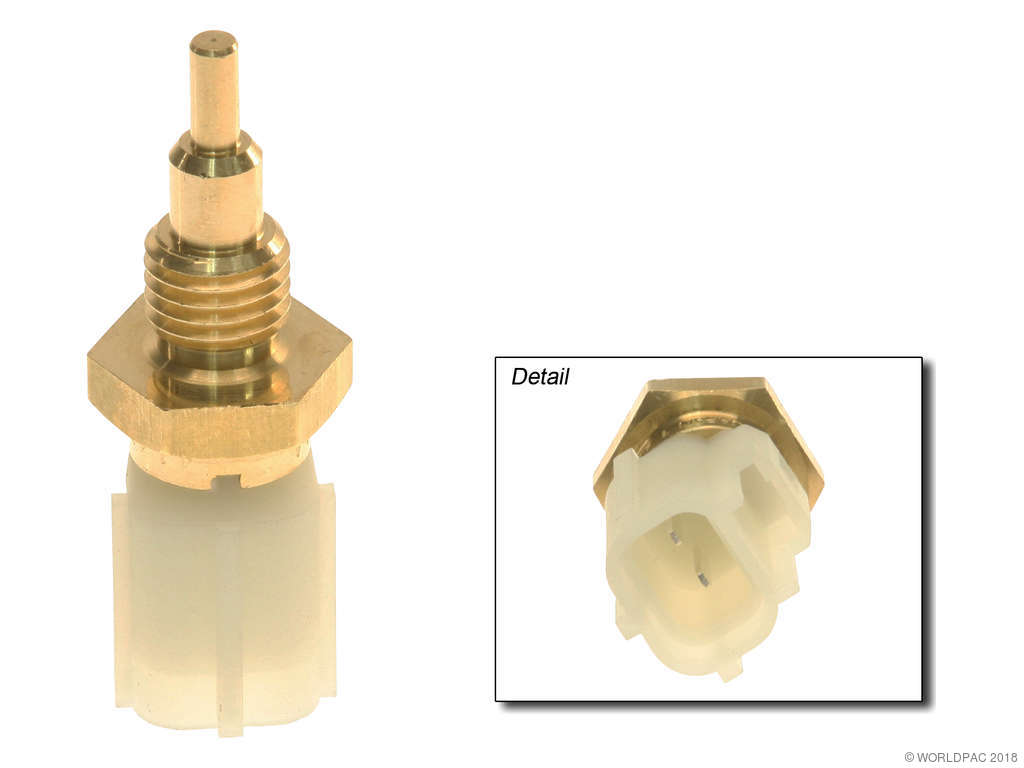
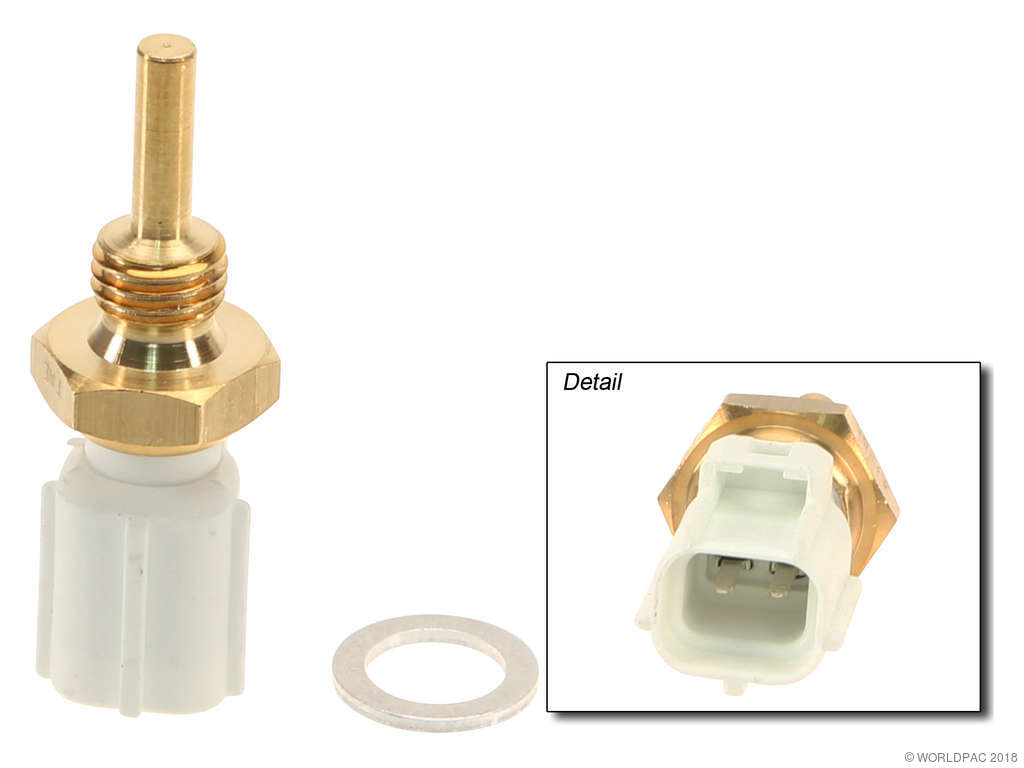
- Engine Coolant Temperature Sensor
(OEM #89422-33030)— This is the most frequent cause of code P0117. The sensor's internal thermistor fails, causing an electrical short that the ECM reads as low voltage.
Trusted brands: Denso (OEM supplier), NTK, Standard Motor Products (SMP)
OEM price range: $65-$100
Aftermarket price range: $20-$50 - Engine Coolant Temperature Sensor O-Ring
(OEM #90430-12221)— This gasket should always be replaced when the sensor is replaced to prevent coolant leaks. It is an inexpensive part that provides critical sealing.
Trusted brands: Toyota (OEM)
OEM price range: $2-$5
Aftermarket price range: $1-$3
Related Codes That Often Appear With This One
- P0118 — If the wiring is intermittent or has a poor connection, you might see both P0117 (short circuit) and P0118 (open circuit) codes logged at different times. A common diagnostic trick is to disconnect the sensor; if a P0118 code appears, it confirms the wiring to the ECM is likely intact.
- P0128 — While less common with P0117, if the sensor is failing erratically it could lead the ECM to believe the engine is not reaching operating temperature within the expected time, triggering a P0128 code.
Technical Service Bulletins (TSBs) & Recalls
- T-SB-0023-15: Addresses torque converter shudder on 2013-2015 models by replacing the torque converter and reprogramming the ECM.
- T-SB-0041-13: Addresses a brief engine rattle at cold startup by replacing the intake camshaft timing gear assembly.
- T-TT-0628-20: A Tech Tip acknowledging the common issue of clogged A/C evaporator drain tubes across many Toyota models, including the RAV4.
Platform-Specific Known Issues
- A notable issue for all 2013-2018 RAV4s is a safety recall regarding the 12-volt battery hold-down clamp. Using an aftermarket battery with smaller top dimensions can allow the battery to shift during turns, causing the positive terminal to short against the metal clamp, creating a fire risk. While not a direct cause of P0117, it's a critical safety check for any owner working in the engine bay.
Mechanic-Grade Diagnostic Values
- ECT Sensor Resistance vs. Temperature — expected: At 68°F (20°C): ~3520 Ω. At 176°F (80°C): ~332 Ω. At 212°F (100°C): ~177 Ω.. Failure: A reading near zero ohms indicates a short circuit. An infinite reading (OL) indicates an open circuit. Readings that don't correspond to the temperature chart indicate a faulty sensor.
- ECT Sensor Signal Voltage (at sensor connector, back-probed) — expected: Cold engine (~20°C): 3.0V - 3.5V. Warm engine (~80°C): 1.0V - 1.3V.. Failure: A voltage reading below 0.14V indicates a short to ground in the wiring or a shorted sensor, triggering P0117.
- Scan Tool Live Data (ECT) — expected: Should display ambient temperature on a cold engine and rise to ~180-210°F on a fully warmed-up engine.. Failure: A reading of 140°C (284°F) or higher indicates a short circuit (P0117). A reading of -40°C (-40°F) indicates an open circuit (P0118).
Scan Tool Commands That Help
- Toyota Techstream: Data List > Coolant Temp — This is the primary function for viewing live ECT data. If P0117 is active, Techstream will display 140°C (284°F) or higher. If the sensor is disconnected, it will display -40°C (-40°F), which is a useful test to confirm the wiring to the ECM is intact.
- Toyota Techstream: Utility > All Readiness — After a repair, this function can be used to check the DTC judgment result and confirm that the monitor for the ECT circuit has run and passed, ensuring the fix is complete without needing an extensive drive cycle.
Wiring & Ground Locations
- E2 (ECM Ground) — This is a terminal on the ECM connector, not a chassis ground point. It serves as the ground reference for multiple sensors.. If other trouble codes related to different sensors are present along with P0117, it could indicate an open circuit on the shared E2 ground terminal at the ECM, rather than a fault with the individual sensors or their wiring.
- ECT Sensor Connector — On the 2AR-FE engine, the ECT sensor is located on the cylinder head, near the thermostat housing.. This is the primary point for testing. The two pins are the signal wire (THW) and the ground reference (E2). A short between these two wires or a short from the THW wire to chassis ground will cause P0117.
OEM Part Supersession History
89422-33030→No supersession found. This part number remains current.— N/A
Heads up: This part number has a very wide range of applications across the Toyota/Lexus/Scion lineup from the early 2000s to current models, indicating a standardized and consistent design.
Model Year Variations Within This Range
- 2016-2018: The RAV4 received a facelift for the 2016 model year which included revised exterior styling, interior updates like a new instrument cluster, and the introduction of a Hybrid model. However, the conventional gasoline models continued to use the same 2AR-FE engine, and there is no evidence to suggest any changes to the ECT sensor, its location, or the diagnostic procedure for P0117.
Diagnostic Flowchart
Other Known Issues on This Vehicle
Issues unrelated to this code that are worth knowing about as an owner of this generation:
- Torque Converter Shudder 🟠 Medium — Common on 2013-2015 models. A brief shudder/vibration is felt under light load between 25-50 mph. (Ref: Toyota issued TSB T-SB-0023-15 and a subsequent Warranty Enhancement Program (ZE8) to address this by replacing the torque converter and reprogramming the ECM.)
- Brief Engine Rattle at Cold Startup 🟡 Low — A brief (1-second) rattle or knock may be heard immediately after a cold start. This is due to the VVT-i gear lock pin. (Ref: Toyota TSB T-SB-0041-13 addresses this by replacing the intake camshaft timing gear assembly.)
- Clogged A/C Evaporator Drain Tube 🟠 Medium — Common across many Toyota models. Leads to a musty/mildew smell from the vents and can cause water to leak onto the passenger-side floorboard. (Ref: Toyota Tech Tip T-TT-0628-20 (NHTSA ID 10183281) describes the issue and cleaning procedure.)
- Weak Sound Insulation 🟡 Low — A very common owner complaint is excessive road and tire noise, particularly from the wheel wells and floor, which gets worse over time.
- Power Liftgate Failure 🟠 Medium — Reported on 2015-2017 models, the power liftgate can become glitchy or fail entirely, especially in cold weather.
Used vs. New Parts: Buying Guide for This Vehicle
When a used part is the smart pick: For a low-cost, critical wear item like an ECT sensor, buying a used part is not recommended. The cost savings are minimal compared to a new aftermarket part, and the risk of premature failure is high.
What to inspect on the donor part:
- Not applicable as used purchase is not advised.
OEM-only on this vehicle (don't cheap out):
- No parts for this repair require OEM-only sourcing. The sensor itself is a simple thermistor.
Aftermarket brands forum-validated for this vehicle:
- Denso (OEM supplier)
- NTK
- Standard Motor Products (SMP)
Brands owners have reported issues with on this vehicle:
- No-name, unbranded sensors from online marketplaces should be avoided due to inconsistent quality control and a high likelihood of premature failure or inaccurate readings.
Real Owner Stories
Aggregated from forums and TSBs cited above. Mileages and costs reflect what owners reported in those sources.
2012 Toyota Camry 2AR-FE 2.5L
Symptoms: The temperature gauge was maxed out and there were signs of coolant shooting out/steaming.
What fixed it: The owner identified the P0117 code which indicates a coolant temperature sensor circuit low fault.
Source hint: Reddit r/MechanicAdvice - 'P0117 code with signs of coolant shooting out'
2013-2015 Toyota RAV4
Symptoms: A brief shudder or vibration felt under light load between 25-50 mph.
What fixed it: Replacing the torque converter and reprogramming the ECM as per TSB T-SB-0023-15.
Source hint: T-SB-0023-15
2013-2018 Toyota RAV4
Symptoms: A brief (1-second) rattle or knock immediately after a cold start.
What fixed it: Replacing the intake camshaft timing gear assembly.
Source hint: T-SB-0041-13
Related OBD-II Codes
Frequently Asked Questions
Does TSB T-SB-0023-15 apply to my 2013-2018 RAV4 regarding the P0117 code?
What is the specific resistance I should look for when testing the ECT sensor on my 2.5L 2AR-FE engine?
Is there a specific part number for the gasket when I replace the coolant sensor?
My 2014 RAV4 rattles for a second when I start it cold; is this related to the P0117 code?
What tool do I need to remove the ECT sensor on my RAV4?
Could a battery issue cause problems while I'm fixing the P0117 code?
Helpful Videos
![How to Fix TOYOTA P0117 Engine Code in 3 Minutes [2 DIY Methods / Only $7.43]](https://img.youtube.com/vi/UHULPKXHPrU/mqdefault.jpg)

We Have This Part in Stock


The information in this article is provided for general reference and educational purposes only. Vehicle specifications, procedures, and part compatibility can vary by production date, trim level, and region. Always consult your vehicle's factory service manual and verify part numbers before purchasing or performing repairs. Safety-critical components such as airbags, seat belts, and braking systems should be installed by a qualified professional.
- Toyota RAV4:
- 🧭 Diagnostic Flowchart
- 🎬 Helpful Videos
- 🛍️ Shop This Part
- What's Unique About the 2013-2018 Toyota RAV4
- Symptoms You May Notice
- Most Likely Causes
- Rare But Worth Checking
- Diagnosis Steps
- Parts You'll Likely Need
- Related Codes That Often Appear With This One
- Technical Service Bulletins (TSBs) & Recalls
- Platform-Specific Known Issues
- Mechanic-Grade Diagnostic Values
- Scan Tool Commands That Help
- Wiring & Ground Locations
- OEM Part Supersession History
- Model Year Variations Within This Range
- Other Known Issues on This Vehicle
- Used vs. New Parts: Buying Guide for This Vehicle
- Real Owner Stories
- 2012 Toyota Camry 2AR-FE 2.5L
- 2013-2015 Toyota RAV4
- 2013-2018 Toyota RAV4
- Related OBD-II Codes
- Frequently Asked Questions
- 🎟️ Get 5% Off