

P0117 on 2016-2018 Toyota RAV4 Hybrid: Engine Coolant Temp Sensor Fixes
For a 2016-2018 RAV4 Hybrid, code P0117 is most often a failed Engine Coolant Temperature (ECT) sensor. A new OEM sensor is about $75-$105, and it's a DIY-friendly fix for many owners, with a difficulty of 2/5.
- P0117 on your RAV4 Hybrid almost always points to a problem with the Engine Coolant Temperature (ECT) sensor or its wiring.
- The most likely fix is replacing the ECT sensor, which is a relatively inexpensive part and a manageable DIY job for many.
- Before replacing parts, check the sensor's wiring and connector for obvious damage or corrosion.
- Use a scan tool to read live data; an extremely high temperature reading on a cold engine is the classic sign of a shorted ECT sensor circuit.
What's Unique About the 2016-2018 Toyota RAV4 Hybrid
The 2AR-FXE engine in the RAV4 Hybrid is known for its reliability, and the cooling system is generally robust. There are no widespread, unique design flaws that make this specific model prone to P0117. The causes are typical for most modern vehicles: a sensor failing with age or a wiring issue. While later 2019-2020 models with a similar 2.5L engine were recalled for engine block porosity that could cause coolant leaks, this specific issue is not officially documented for the 2016-2018 model years but is worth noting if significant coolant loss is observed. The P0117 fault on this platform almost always points directly to the sensor or its immediate circuit rather than a more complex systemic failure.
Symptoms You May Notice
- Check Engine Light is on
- Engine cooling fans run constantly, even when the engine is cold
- Temperature gauge on the dashboard may show an inaccurate reading (either maxed out hot or, in some cases, dropped to cold)
- Reduced fuel economy
- Engine may run rough, hesitate, or be difficult to start, especially when cold
- In some cases, the heater may not blow warm air correctly
- AC may blow warm air as the system tries to shed engine heat.
- Replacing the thermostat immediately. While a thermostat can fail, it's less likely to cause a 'circuit low' code than the sensor or wiring itself.
- Replacing the radiator or water pump without proper diagnosis. These components are not typically associated with a P0117 electrical circuit fault.
Most Likely Causes
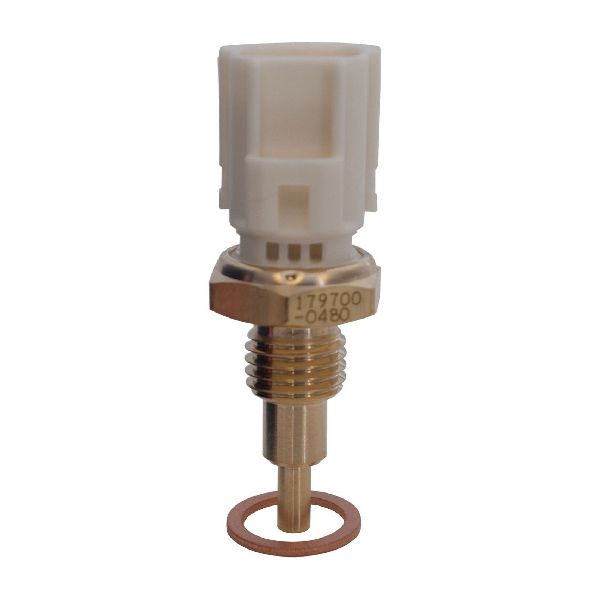
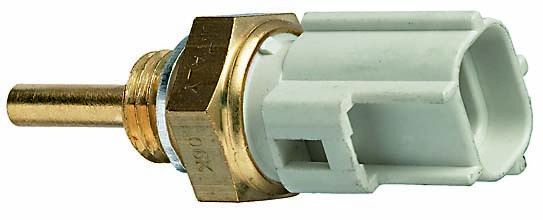
- Failed Engine Coolant Temperature (ECT) Sensor 🔴 High Probability → Shop Engine Coolant Temperature Sensor Sensors are electronic components that can fail over time due to thermal stress and age. This is the most common failure point for this code, as the internal thermistor shorts out. 🎬 Watch: Learn more about the causes and fixes for P0117.
How to confirm: With a scan tool, observe the ECT reading. If it shows an extremely high temperature (e.g., 280°F+/140°C+) on a cold engine, the sensor or its circuit is faulty. You can also test the sensor's internal resistance with a multimeter; it should be around 2.0-3.0 kΩ (2,000-3,000 Ohms) at room temperature (68°F/20°C). A reading near zero ohms indicates a shorted sensor.
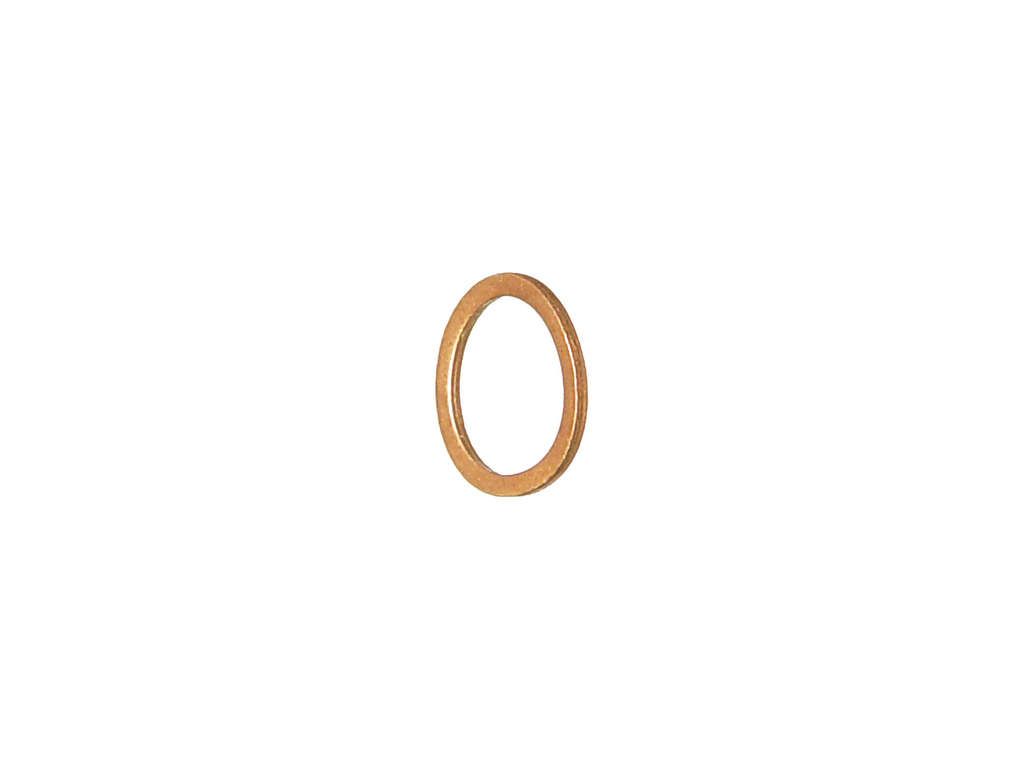
Typical fix: Replace the Engine Coolant Temperature sensor. It is typically located on the cylinder head near the thermostat housing. Always replace the O-ring or gasket to prevent leaks.
Est. part cost: $20-$105 - Wiring or Connector Issue 🟡 Medium Probability The wiring harness near the engine is exposed to heat and vibration, which can cause wires to fray, short to ground, or for the connector pins to corrode over time. The connector itself can become brittle and fail to make a solid connection.
How to confirm: Visually inspect the wiring harness and connector for the ECT sensor. Look for any signs of damage, corrosion, or loose pins. With the sensor disconnected, check for a short to ground on the signal wire using a multimeter. A user on PriusChat noted the difficulty in accessing and releasing the connector, highlighting its tight location.
Typical fix: Repair the damaged section of the wiring harness or clean/replace the connector. Ensure the connector clicks securely into place upon reinstallation.
Est. part cost: $5-$50 - Low Engine Coolant Level / Air in System ⚪ Low Probability → Shop Engine Coolant / Antifreeze While not a direct cause of a 'circuit low' code, if the coolant level drops below the sensor, it can cause erratic readings that may, in some instances, lead to a fault code. This is more likely to cause a P0118 (Circuit High) but is worth checking as a basic maintenance step. A ClubLexus forum member experienced a P0117 code after a radiator cap failure caused significant coolant loss.
How to confirm: Check the coolant level in the reservoir and radiator (when the engine is cold). If it is low, there is a leak that needs to be found and repaired.
Typical fix: Top off the coolant with Toyota Super Long Life Coolant and bleed the system of any air. Find and repair the source of the coolant leak.
Est. part cost: $20-$40 (for coolant)
Rare But Worth Checking
- Faulty Thermostat: → Shop Integrated Thermostat Housing Assembly A thermostat stuck open is more likely to cause a P0128 code (Coolant Temperature Below Thermostat Regulating Temperature), but in rare cases, it can contribute to conditions that trigger other ECT-related codes. A stuck-closed thermostat would cause genuine overheating, which could potentially damage the sensor or wiring, leading to a P0117.
- Engine Control Module (ECM) Failure: → Shop Engine Control Module (ECM) This is extremely rare. The ECM is the last component to suspect after all other possibilities (sensor, wiring, coolant system) have been thoroughly ruled out.
Diagnosis Steps
- Verify the code with an OBD-II scanner.
- With the scanner's live data function, view the Engine Coolant Temperature reading with the engine cold. If it reads an abnormally high temperature (e.g., 250°F+), the issue is likely the sensor or its circuit.
- Turn the vehicle off. Inspect the ECT sensor's electrical connector and wiring for any visible damage, corrosion, or loose connections. The sensor is typically located on the engine block near where the upper radiator hose connects.
- If the wiring looks good, disconnect the sensor. The temperature reading on the scan tool should now drop to its lowest possible value (e.g., -40°F). If it does, this strongly suggests the sensor itself has failed by shorting internally.
- If the code persists with the sensor disconnected, inspect the wiring harness for a short to ground. This indicates a wiring fault between the sensor connector and the ECM.
- Check the engine coolant level in the reservoir and radiator (only when the engine is completely cool) to rule out any issues from low coolant.
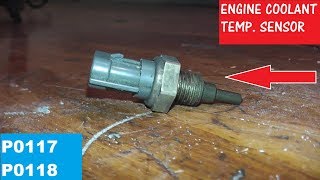
- If all other steps fail, test the sensor's resistance with a multimeter. At ~68°F (20°C), it should read between 2.0-3.0 kΩ. 🎬 See this walkthrough on how to test and replace the sensor. If the reading is significantly lower or near zero, the sensor is bad.
- Replace the faulty component (usually the ECT sensor and its gasket), clear the code, and test drive to confirm the fix.
Parts You'll Likely Need
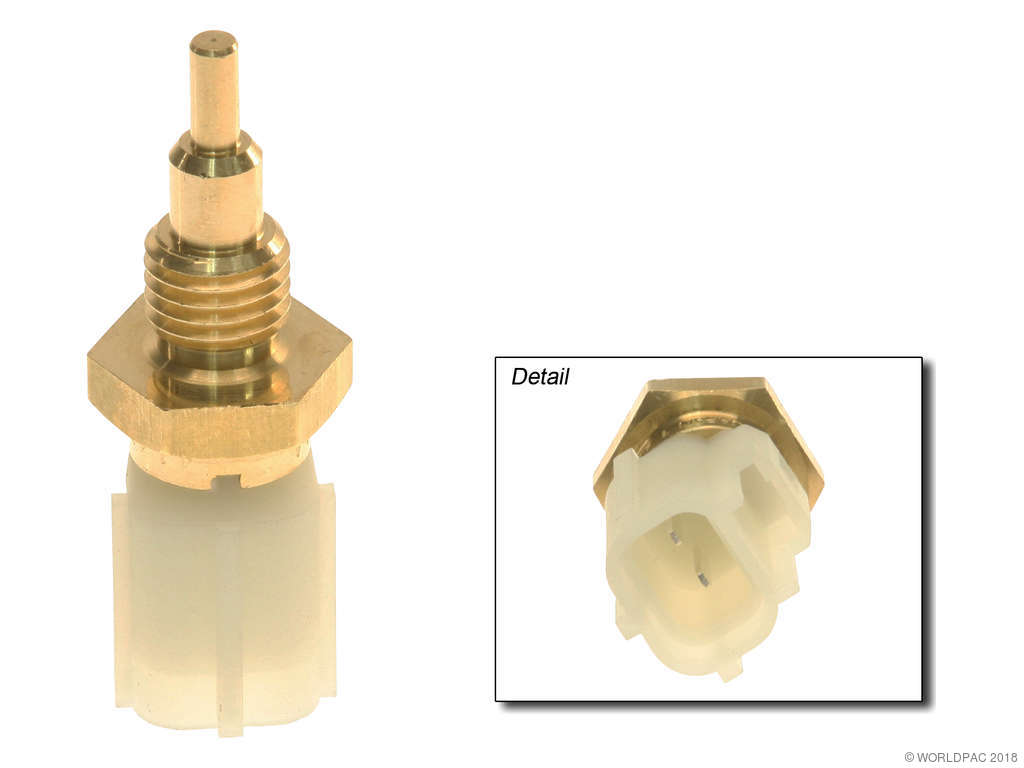
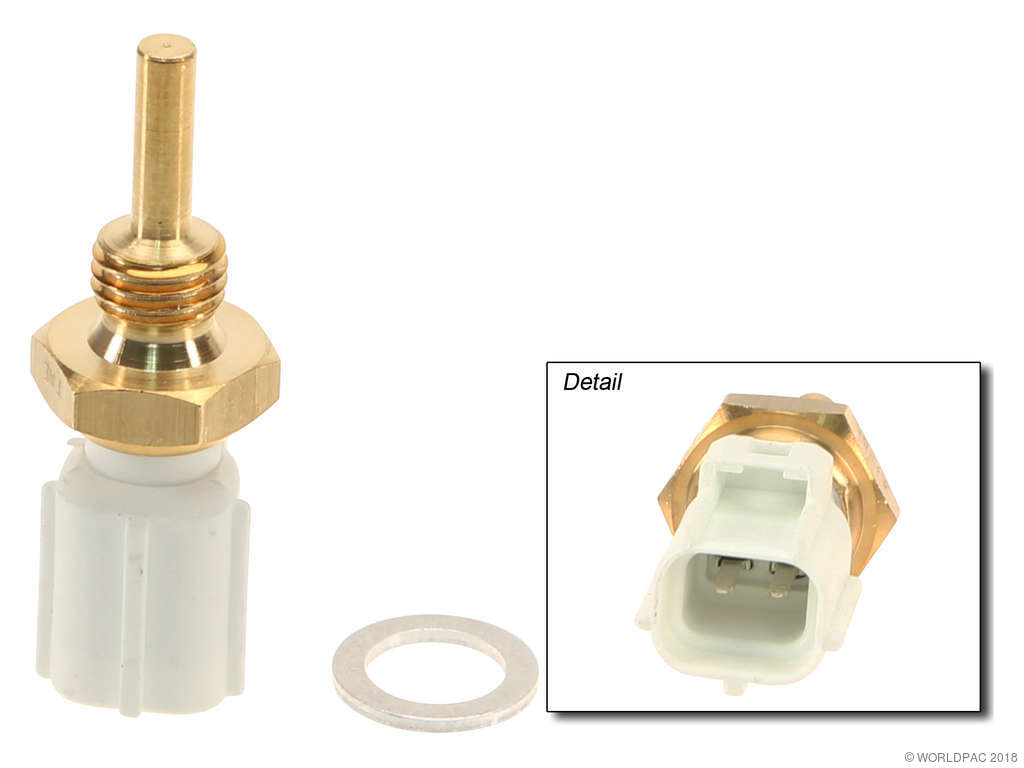
- Engine Coolant Temperature Sensor
(OEM #89422-0R010)— This sensor is the most common point of failure for the P0117 code. It is an electronic component that fails over time from heat cycles, causing an internal short circuit.
Trusted brands: Denso (OEM Supplier), Aisin, Genuine Toyota
OEM price range: $75-$105
Aftermarket price range: $20-$60 - ECT Sensor Gasket / O-Ring
(OEM #90430-12221)— This should be replaced whenever the sensor is removed to ensure a proper seal and prevent coolant leaks. 🎬 Watch: A quick 3-minute guide to fixing the Toyota P0117 code. It is an inexpensive but critical part for the repair.
Trusted brands: Genuine Toyota
OEM price range: $2-$5
Aftermarket price range: $1-$3
Technical Service Bulletins (TSBs) & Recalls
- T-SB-0062-20: While not for P0117 specifically, this TSB addresses potential blockage of the HV battery intake filter or cooling fan on hybrid models up to 2020. An owner experiencing cooling system issues should be aware of all cooling circuit maintenance requirements.
Mechanic-Grade Diagnostic Values
- ECT Sensor Resistance vs. Temperature — expected: Approx. 2.2-3.0 kΩ at 20°C (68°F), 0.25-0.35 kΩ at 80°C (176°F), and 0.18-0.25 kΩ at 100°C (212°F).. Failure: A resistance reading near zero ohms indicates an internal short, which is the direct cause of a P0117 code.
- ECT Sensor Signal Voltage (THW) at ECM — expected: 3.0V - 3.5V on a cold engine (~20°C/68°F). Voltage should decrease smoothly as the engine warms up, to around 1.0V - 1.3V at normal operating temperature (80°C/176°F).. Failure: A voltage reading below 0.14V for more than 0.5 seconds will trigger the P0117 code.
- Scan Tool Live Data: Cold Soak Comparison — expected: After sitting overnight (cold soak), the Engine Coolant Temperature and Intake Air Temperature (IAT) readings should be within a few degrees of each other and the ambient air temperature.. Failure: If the ECT reads an impossibly high value (e.g., 140°C / 284°F) while the IAT reads ambient temperature, the ECT sensor or its circuit is faulty.
Scan Tool Commands That Help
- Toyota Techstream: Data List > Coolant Temp — This is the primary and most crucial diagnostic step. Viewing the live data for 'Coolant Temp' will immediately confirm the fault condition. If the engine is cold and the value is 140°C (284°F), it confirms the P0117 condition of a shorted circuit.
- Toyota Techstream: Utility > All Readiness — After a repair, this function can be used to check the DTC judgment result and confirm that the monitor for the ECT circuit has run and passed, ensuring the fix is complete without needing multiple drive cycles.
- Toyota Techstream: Active Test > Control the Cooling Fan — While not a direct test for P0117, if the fans are running constantly due to the fail-safe mode, this command allows a technician to manually control the fan speed. If the fan responds to the command after the code is cleared, it confirms the fan control circuit is working properly and the constant operation was indeed a symptom of the P0117 fail-safe.
Wiring & Ground Locations
- ECT Sensor Connector — On the 2AR-FXE, the sensor is located on the cylinder head, near the thermostat housing, where the upper radiator hose connects to the engine.. This 2-pin connector is a common point for corrosion or damage. The pins are THW (Signal) and E2 (Sensor Ground). A short between these two wires, or from the THW wire to chassis ground, will cause P0117.
- E04 — This is a primary engine ground point. On the 2AR-FE/FXE family, there are multiple ground points on the engine block and cylinder head. A key ground point is often located on the left side of the cylinder head, near the transmission housing.. The ECT sensor's ground reference (E2) ultimately connects to the ECM, which is grounded to the chassis via main engine ground points like E04. A poor engine ground can cause floating voltage references and lead to various sensor errors, although it would typically cause multiple codes, not just P0117.
Real Owner Repair Stories
- Tacoma World user 'danthone' (2006 Toyota Tacoma V6 (Different vehicle, but identical P0117 diagnostic logic)) — Steam from engine bay, overflow cap blown off, but temp gauge showed normal. Later scanned and found P0117.
❌ Tried (didn't work) Initially assumed actual overheating due to steam.
✅ What actually fixed it Using a new scan tool to read live data, the user confirmed the ECT read 275°F on a cold engine. This pointed directly to a failed sensor or circuit, not actual overheating. The final fix was replacing the ECT sensor.
OEM Part Supersession History
89422-35010→89422-0R010— Part consolidation and potential minor internal revisions for reliability across multiple Toyota platforms.
Heads up: While older numbers like 89422-20010 or 89422-16010 may physically fit, they may have different resistance curves. Always use the specified part number for the vehicle to ensure correct temperature readings by the ECM.
Diagnostic Flowchart
Other Known Issues on This Vehicle
Issues unrelated to this code that are worth knowing about as an owner of this generation:
- High-Voltage Cable Corrosion ('Cablegate') 🔴 High — More common on 2019+ models, but the underlying design concept is relevant. Affects vehicles in 'salt-belt' regions most severely. Can lead to 'Hybrid System Malfunction' warnings and no-start conditions. (Ref: Customer Support Program (CSP) 22TE09 for later models, extending warranty to 8yr/100k miles.)
- Exploding/Shattering Sunroof 🟠 Medium — Multiple owner complaints of the sunroof glass shattering spontaneously without impact.
- Unexpected Engine Stalling 🔴 High — A number of owners have reported the vehicle shuddering and losing all power while driving.
- HV Battery Cooling Filter/Fan Blockage 🟡 Low — Dust, lint, and debris can clog the hybrid battery cooling intake, reducing cooling efficiency over time. Regular inspection/cleaning is recommended. (Ref: T-SB-0062-20)
- Auto-High Beam Malfunction 🟡 Low — Some owners report the automatic high beam system shutting off unexpectedly for brief moments.
Used vs. New Parts: Buying Guide for This Vehicle
When a used part is the smart pick: For the P0117 code, a used part is generally not recommended for the sensor itself due to its low cost and critical function. However, a used wiring harness 'pigtail' connector from a junkyard is an excellent choice if only the connector is damaged, as it provides an OEM-quality connector for splicing.
Donor-vehicle mileage cap: roughly under 80000 miles for the part to have meaningful remaining life.
What to inspect on the donor part:
- For a pigtail connector, ensure the plastic is not brittle or cracked.
- Check that the locking tab is intact and functional.
- Inspect the wires for at least 4-6 inches of clean, uncorroded copper for a solid splice.
- Avoid connectors from vehicles with signs of engine fire or severe front-end damage.
OEM-only on this vehicle (don't cheap out):
- While not strictly 'OEM-only', using a Genuine Toyota or Denso (the OEM supplier) sensor is highly recommended. The cost difference is minimal, and it eliminates the risk of an aftermarket sensor having a slightly different resistance curve, which could affect fuel economy and performance.
Aftermarket brands forum-validated for this vehicle:
- Denso (OEM supplier)
- Aisin
Brands owners have reported issues with on this vehicle:
- Unknown, no-name brands from online marketplaces. While they may work initially, their long-term reliability and accuracy are questionable for such a critical sensor.
Real Owner Stories
Aggregated from forums and TSBs cited above. Mileages and costs reflect what owners reported in those sources.
2013-2018 Lexus GS (4th Gen) 2AR-FXE
Symptoms: The coolant temperature gauge paradoxically dropped to full cold instead of showing hot, following a radiator cap failure and subsequent coolant loss.
What fixed it: Replacing the radiator cap and addressing the coolant loss.
Source hint: ClubLexus thread titled 'Odd Response From Coolant Temp Gauge'
2010-2012 Lexus HS 250h (2AR-FXE platform mate)
Symptoms: Occurred after heavy rain; the A/C began blowing warm air and the temperature gauge maxed out at the top of the scale.
What fixed it: Replacement of the Engine Coolant Temperature (ECT) sensor.
Source hint: ClubLexus thread titled 'P0117 - Engine Coolant Temperature Circuit Low Input'
Toyota Hybrid (2AR-FXE)
Symptoms: Owner noted the physical difficulty of accessing and releasing the sensor connector due to its tight location near the cylinder head.
What fixed it: Engine coolant temperature sensor replacement.
Source hint: PriusChat thread titled 'Engine coolant temperature sensor replacement - P0117'
Related OBD-II Codes
Frequently Asked Questions
Does T-SB-0062-20 apply to my 2016-2018 RAV4 Hybrid's cooling system?
Why is my RAV4 Hybrid's AC blowing warm air when the P0117 code is active?
I have a P0117 and my temperature gauge dropped to cold instead of hot. Is this normal for a Toyota?
What is the correct resistance for a new ECT sensor on the 2AR-FXE engine?
Is the P0117 issue on my RAV4 Hybrid the same as on a Camry Hybrid?
Could a bad radiator cap cause a P0117 code on my Toyota hybrid?
Helpful Videos

![How to Fix TOYOTA P0117 Engine Code in 3 Minutes [2 DIY Methods / Only $7.43]](https://img.youtube.com/vi/UHULPKXHPrU/mqdefault.jpg)
We Have This Part in Stock


The information in this article is provided for general reference and educational purposes only. Vehicle specifications, procedures, and part compatibility can vary by production date, trim level, and region. Always consult your vehicle's factory service manual and verify part numbers before purchasing or performing repairs. Safety-critical components such as airbags, seat belts, and braking systems should be installed by a qualified professional.
- Toyota RAV4 Hybrid:
- 🧭 Diagnostic Flowchart
- 🎬 Helpful Videos
- 🛍️ Shop This Part
- What's Unique About the 2016-2018 Toyota RAV4 Hybrid
- Symptoms You May Notice
- Most Likely Causes
- Rare But Worth Checking
- Diagnosis Steps
- Parts You'll Likely Need
- Technical Service Bulletins (TSBs) & Recalls
- Mechanic-Grade Diagnostic Values
- Scan Tool Commands That Help
- Wiring & Ground Locations
- Real Owner Repair Stories
- OEM Part Supersession History
- Other Known Issues on This Vehicle
- Used vs. New Parts: Buying Guide for This Vehicle
- Real Owner Stories
- 2013-2018 Lexus GS (4th Gen) 2AR-FXE
- 2010-2012 Lexus HS 250h (2AR-FXE platform mate)
- Toyota Hybrid (2AR-FXE)
- Related OBD-II Codes
- Frequently Asked Questions
- 🎟️ Get 5% Off