

P0117 on 2005-2015 Toyota Tacoma: Engine Coolant Temp Sensor Causes and Fixes
P0117 on a 2nd Gen Tacoma is almost always a failed Engine Coolant Temperature (ECT) sensor or its wiring. The PCM sees a short circuit, reads an impossibly high temperature, and turns the cooling fans on full blast. The sensor is located under the intake manifold on both the 4.0L V6 and 2.7L I4 engines, making replacement a labor-intensive job (3-5 hours). Expect to pay $20-$60 for an aftermarket sensor and $70-$100 for an OEM one.
- P0117 indicates your Tacoma's computer thinks the engine is severely overheating due to a sensor circuit fault.
- The most likely cause is a failed ECT sensor, but wiring should always be checked, especially for rodent damage.
- The biggest challenge of this repair is the sensor's location under the intake manifold, making it a difficult DIY job.
What's Unique About the 2005-2015 Toyota Tacoma
On both the 4.0L V6 (1GR-FE) and 2.7L I4 (2TR-FE) engines in the 2nd Generation Tacoma, the ECT sensor is notoriously difficult to access. Unlike many vehicles where the sensor is easily reachable, Toyota placed it on a coolant crossover pipe at the rear of the engine, underneath the entire upper intake manifold. This design turns a simple sensor replacement into a much more involved and labor-intensive job, as the intake manifold must be removed to gain access. This is the single most important factor for owners to know before tackling this repair.
Generation note: The 2005-2015 model years cover the entire second generation (2nd Gen) of the Toyota Tacoma. The information provided is applicable to all vehicles within this range, including both the 4.0L V6 and 2.7L 4-cylinder engines.
Symptoms You May Notice
- Check Engine Light is illuminated
- Engine cooling fans run constantly, even when the engine is cold
- Engine temperature gauge may read erratically, show maximum heat, or drop to cold during an actual overheat event
- Difficulty starting the engine, especially when cold
- Noticeably reduced fuel economy
- Engine runs rough or hesitates
- Black smoke from the exhaust, indicating a rich fuel mixture
- Steam from the engine bay and coolant overflow if an actual overheat occurs and is masked by the faulty sensor reading
- Replacing the thermostat. While a faulty thermostat can cause cooling issues, it will not directly cause a P0117 'Circuit Low' code. A stuck thermostat typically sets other codes related to engine temperature performance (like P0128).
- Replacing the wrong sensor. The ECT sensor (two-wire) sends data to the computer for engine management. There is a separate, single-wire temperature *sender* for the dashboard gauge on some vehicles. P0117 is specifically for the two-wire sensor that communicates with the PCM.
Most Likely Causes
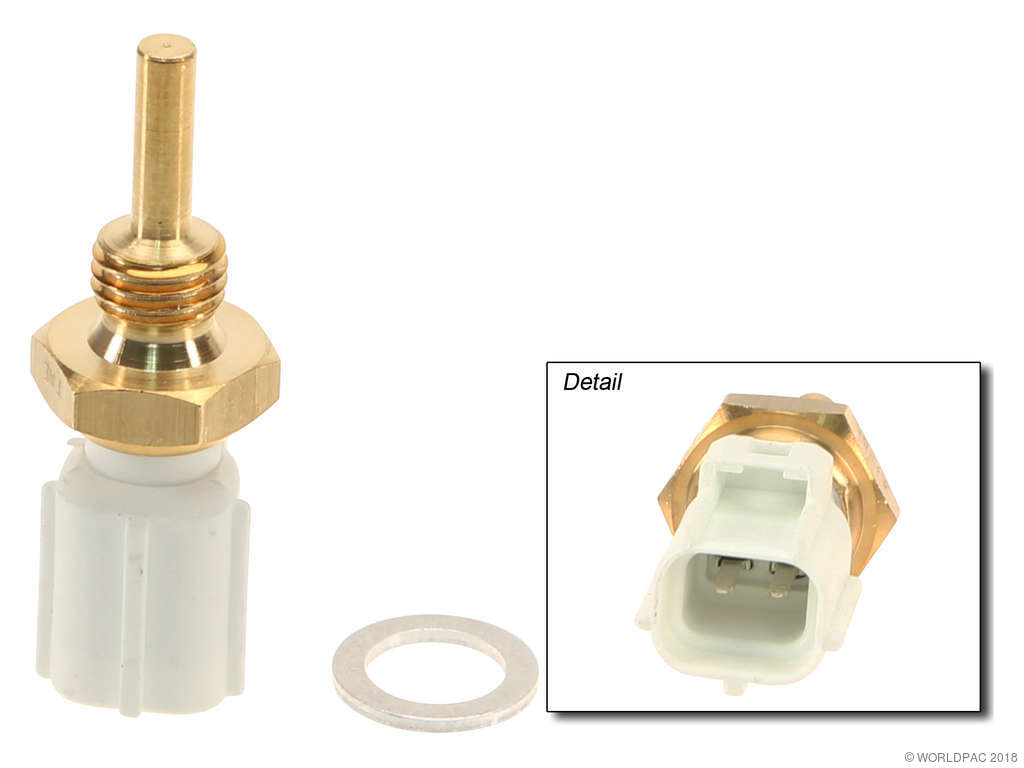
- Failed Engine Coolant Temperature (ECT) Sensor 🔴 High Probability → Shop Engine Coolant Temperature Sensor The sensor's internal thermistor can short out over time, which is a common failure mode for this type of component. This causes the signal voltage to drop to near zero, triggering the P0117 code.
How to confirm: With a cold engine, use an OBD-II scanner to view live data. If the ECT reading is an impossibly high number (e.g., 275°F or higher) while the Intake Air Temperature (IAT) reads ambient temperature, the sensor is almost certainly bad. Another definitive test is to unplug the sensor; if the code changes from P0117 (Circuit Low) to P0118 (Circuit High), the sensor is confirmed faulty. You can also test the sensor with a multimeter; at 68°F (20°C), its resistance should be between 2,000 and 3,000 ohms. 🎬 See this guide on diagnosing P0117 codes and sensor failures.
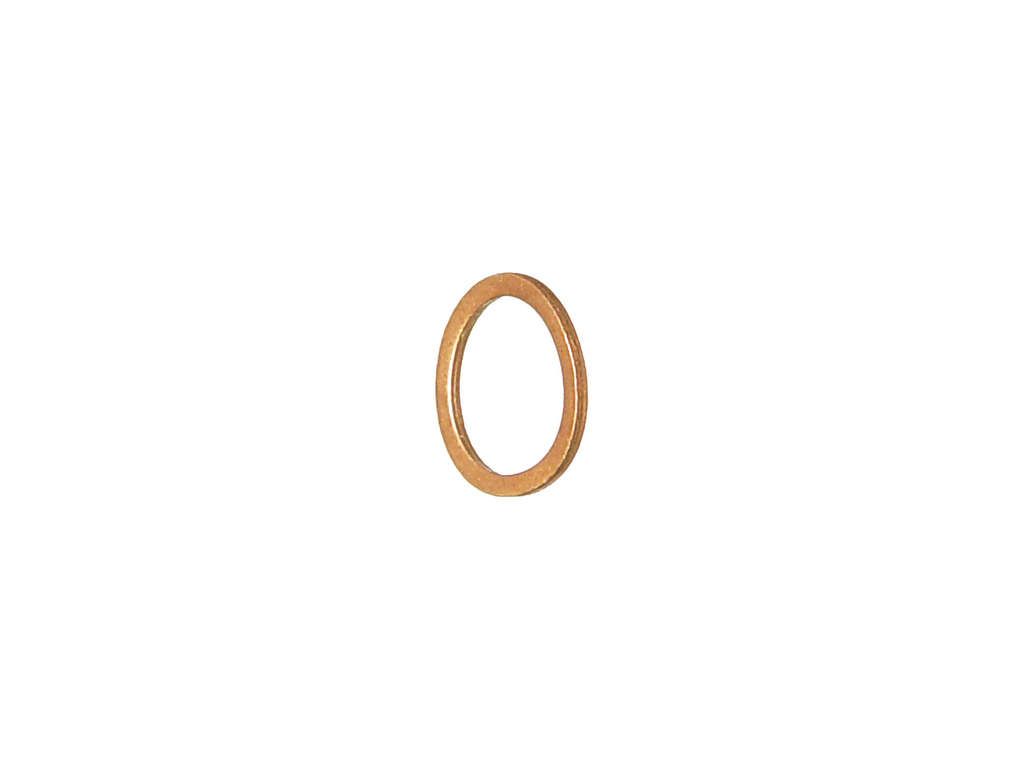
Typical fix: Replace the Engine Coolant Temperature sensor and its gasket. This requires removing the upper intake manifold.
Est. part cost: $20-$100 - Shorted Wiring or Damaged Connector 🟡 Medium Probability The wiring harness is exposed to significant heat and vibration in the engine bay. More specifically, some Toyota models use soy-based wire insulation which can attract rodents, leading to chewed wires. This can cause the signal wire to short to ground.
How to confirm: Visually inspect the wiring harness leading to the ECT sensor for any signs of damage, melting, corrosion, or rodent chew marks. If you unplug the sensor and the P0117 code remains active, it confirms the signal wire is shorted to ground somewhere between the connector and the PCM.
Typical fix: Repair the damaged section of the wiring harness or replace the connector pigtail. In cases of rodent damage, some owners wrap the new harness in capsaicin-infused tape or stainless steel braid sleeving as a deterrent.
Est. part cost: $5-$30 for a pigtail, potentially much higher for harness repair - Low Engine Coolant / Air in Cooling System ⚪ Low Probability → Shop Engine Coolant / Antifreeze If the coolant level drops to the point where the sensor is exposed to an air pocket instead of coolant, it can send erratic readings. This is less likely to cause a 'Circuit Low' code and more likely to cause other overheating codes (like P0125 or P0128), but it is a possible contributing factor.
How to confirm: Check the coolant level in the radiator (when the engine is cool) and the overflow reservoir. If low, the system should be topped off, properly bled to remove air, and checked for leaks.
Typical fix: Top off and bleed the cooling system. Find and fix any leaks that caused the low coolant condition.
Est. part cost: $15-$30 for coolant
Rare But Worth Checking
- Faulty Powertrain Control Module (PCM): → Shop Engine Control Module (ECM) This is extremely rare. The PCM should only be considered after all other possibilities, including the sensor and wiring, have been exhaustively tested and ruled out.
Diagnosis Steps
- Connect an OBD-II scanner and confirm P0117 is the active code. Note if it is listed as current, pending, or history.
- View live data on the scanner. With the engine cold (off for several hours), compare the Engine Coolant Temperature (ECT) reading to the Intake Air Temperature (IAT) reading. They should be within a few degrees of each other and ambient temperature.
- If the ECT reads an extremely high, fixed value (e.g., 275-284°F) on a cold engine, the sensor or its circuit is shorted.
- Visually inspect the ECT sensor connector and wiring harness for any obvious damage, corrosion, melting, or signs of rodent activity.
- Unplug the ECT sensor connector. The scanner's live data reading for ECT should now show an extremely low value (e.g., -40°F) and the code should change to P0118 (Circuit High). If this happens, the wiring and PCM are good, and the sensor itself has failed and must be replaced.
- If the code remains P0117 and the temperature still reads high after unplugging the sensor, the signal wire is shorted to ground. The wiring harness must be inspected and repaired.
- If the sensor and wiring test good, check the coolant level and condition to ensure the system is full and free of air pockets.
- As a final check, the sensor's resistance can be tested with a multimeter. At 68°F (20°C), it should read approximately 2-3 kΩ.
Parts You'll Likely Need
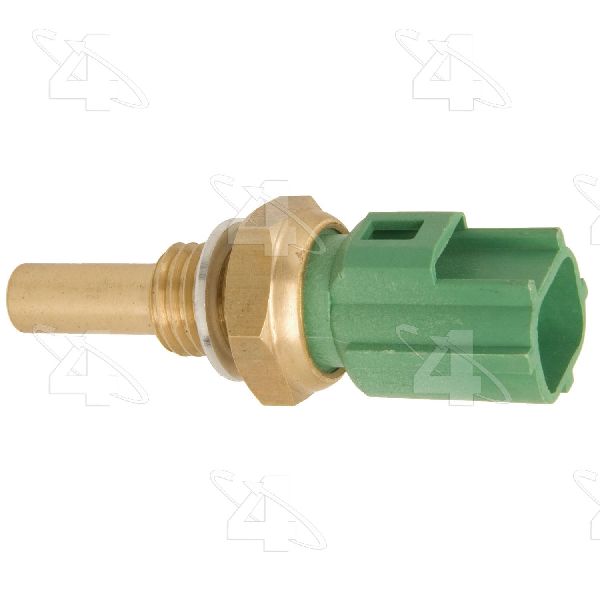
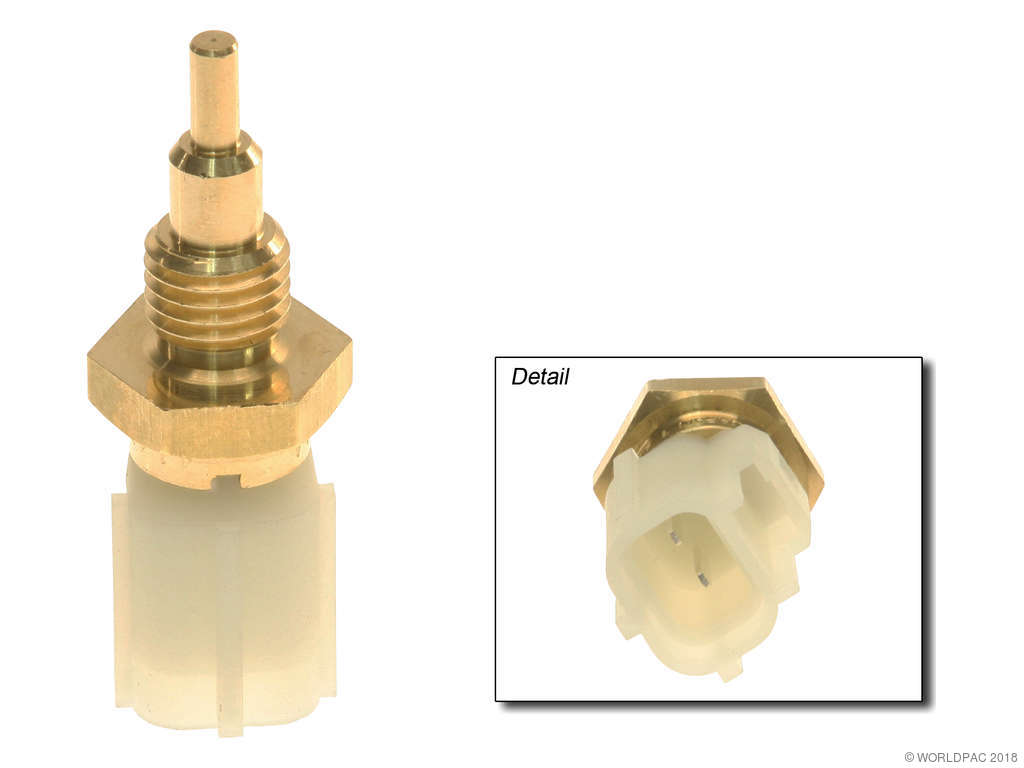
- Engine Coolant Temperature Sensor
(OEM #89422-33030)— This is the most common cause of failure for a P0117 code, as the internal thermistor shorts out.
Trusted brands: Denso (OEM Manufacturer), Toyota Genuine, Standard Motor Products
OEM price range: $70-$100
Aftermarket price range: $20-$60 - Upper Intake Manifold Gasket Set
(OEM #17176-0P021 (For 4.0L V6, example))— Required for re-installing the intake manifold, which must be removed to access the ECT sensor on both the 4.0L and 2.7L engines.
Trusted brands: Fel-Pro, Mahle, Toyota OEM
OEM price range: $40-$60
Aftermarket price range: $20-$40
Platform-Specific Known Issues
- The primary vehicle-specific issue is the difficult location of the ECT sensor on both the 4.0L V6 and 2.7L I4 engines. It is located under the intake manifold at the rear of the engine on a coolant bypass pipe, requiring 3-5 hours of labor for replacement.
- Some owners report that Toyota's use of soy-based wiring insulation can attract rodents, leading to chewed wires on various harnesses, including the one for the ECT sensor. This can be an expensive repair if the damage is extensive.
Mechanic-Grade Diagnostic Values
- ECT Sensor Resistance at 20°C (68°F) — expected: 2,000 - 3,000 Ω (2.0 - 3.0 kΩ). Failure: A reading significantly outside this range, especially near zero ohms (short) or infinite (open), indicates a failed sensor.
- ECT Sensor Resistance at 80°C (176°F) — expected: ~300 Ω. Failure: Sensor fails to drop resistance into this range as it warms up.
- ECT Sensor Signal Voltage at ECM (THW pin) — expected: 0.14V to 4.91V. Failure: A voltage reading below 0.14V for more than 0.5 seconds will trigger P0117.
- Scan Tool Live Data - ECT (Cold Engine) — expected: Should be within a few degrees of Intake Air Temperature (IAT) and ambient air temperature.. Failure: A reading fixed at an extreme high (e.g., 275-284°F) indicates a short circuit (P0117). A reading at an extreme low (e.g., -40°F) indicates an open circuit (P0118).
Scan Tool Commands That Help
- Toyota Techstream: Data List (Powertrain -> Engine and ECT -> Data List -> Coolant Temp) — This is the primary function used to diagnose P0117. It allows the technician to view the exact temperature value the ECM is receiving from the sensor in real-time to confirm if it is irrational (e.g., 284°F on a cold engine).
- Toyota Techstream: Active Test — While there is no direct 'Test ECT' command, a technician can use the Active Test menu to command other components, like the cooling fans, to verify their operation. This helps confirm if the ECM is commanding the fans on due to the false high temperature reading from the P0117 code.
Wiring & Ground Locations
- THW (Terminal) — Pin at the Engine Control Module (ECM) connector. For the 1GR-FE, this is often pin 29 on the E5 connector.. This is the specific terminal where the ECM receives the temperature signal voltage from the ECT sensor. A technician can back-probe this pin to measure the voltage directly at the ECM, bypassing the entire harness to determine if the fault is in the wiring or the ECM itself.
- E2 (Terminal) — Pin at the Engine Control Module (ECM) connector. For the 1GR-FE, this is often pin 30 on the E5 connector.. This is the dedicated sensor ground (signal return) provided by the ECM for the ECT sensor. A poor connection at this pin or an open circuit on this wire will cause a P0118 (Circuit High), not a P0117, but is critical for circuit integrity testing.
- Eg / Eh (Ground Points) — Physical ground points located on the rear of the cylinder head(s).. These are the primary ground points for the engine control module and its associated wiring harnesses. A corroded or loose ground at these locations can introduce electrical noise or voltage offsets, potentially causing erratic sensor readings, though it is less likely to cause a hard P0117 short circuit code.
Real Owner Repair Stories
- TacomaWorld.com user 'danthone' (2006 Tacoma V6 4WD) — Steam from engine compartment, overflow reservoir cap blown off, CEL on. Temperature gauge on the dash read normal the entire time.
❌ Tried (didn't work) Initial OBD-II scanner purchased did not have live data capability.
✅ What actually fixed it After getting a proper scanner, the user confirmed the live data for the ECT sensor read 275°F on a cold engine (ambient was 37°F). This confirmed a faulty sensor or shorted circuit. The forum advice was to replace the sensor, which is the standard fix for this reading.
OEM Part Supersession History
89422-33030→89422-33030 (current)— N/A
Heads up: This part number has remained stable and fits a very wide range of Toyota vehicles from 2003 to 2025, including the entire 2005-2015 Tacoma generation. There are no known supersession issues or incompatibilities to be aware of.
Diagnostic Flowchart
Other Known Issues on This Vehicle
Issues unrelated to this code that are worth knowing about as an owner of this generation:
- Frame Rust Perforation 🔴 High — Very common on vehicles in the 'Salt Belt'. Affects 2005-2010 models most severely, but can occur on later years. (Ref: Warranty Enhancement Program ZH6 / Limited Service Campaign K0D covered frame inspection and replacement for eligible vehicles, but these programs have largely expired.)
- Rear Leaf Spring Fracture 🔴 High — Common on 2005-2011 4x4 and PreRunner models with the original 3-leaf spring packs. (Ref: Safety Recall E02 was issued because a fractured leaf could puncture the fuel tank. Dealers replaced the 3-leaf packs with a revised 4-leaf design.)
- Secondary Air Injection Pump Failure 🟠 Medium — Common failure, particularly on 2012 models. The pump and/or valves can fail, forcing the truck into limp mode. (Ref: TSB-0078-12 was issued for this problem, which could be an expensive repair out of warranty.)
- Timing Chain Cover Oil Seep/Leak 🟡 Low — A slow oil seep from the timing chain cover is a known issue on the 4.0L 1GR-FE engine. It is often minor and monitored by owners.
- Melting Daytime Running Light (DRL) Lens 🟡 Low — The plastic headlight housing can bubble or melt directly in front of the DRL bulb due to heat.
- Manual Transmission Release Bearing Noise 🟡 Low — The clutch release bearing on V6 manual transmission models can become noisy. The aluminum quill (input shaft sleeve) that the bearing rides on can wear, causing chatter.
Used vs. New Parts: Buying Guide for This Vehicle
When a used part is the smart pick: For this repair, a used part only makes sense for a wiring harness connector (pigtail) or a section of the engine harness if the original is physically damaged by rodents or heat. The sensor itself is an inexpensive wear item and should always be purchased new.
Donor-vehicle mileage cap: roughly under 50000 miles for the part to have meaningful remaining life.
What to inspect on the donor part:
- For a wiring pigtail, inspect for brittle plastic, corrosion on the pins, or any signs of melting.
- Ensure the locking tab on the connector is intact and functional.
- Check that there is at least 4-6 inches of wire attached to allow for proper splicing.
OEM-only on this vehicle (don't cheap out):
- Powertrain Control Module (PCM/ECM) - Due to programming and security requirements, a new OEM unit or a professionally refurbished unit with a warranty is the only reliable option.
Aftermarket brands forum-validated for this vehicle:
- Denso (This is the original equipment manufacturer for Toyota)
- NGK/NTK
- Standard Motor Products (SMP)
Brands owners have reported issues with on this vehicle:
- No-name, unbranded sensors from online marketplaces without significant positive reviews. While they may be cheap, their thermistor accuracy and longevity are questionable.
Real Owner Stories
Aggregated from forums and TSBs cited above. Mileages and costs reflect what owners reported in those sources.
2006 Toyota Tacoma V6 4WD
Symptoms: The P0117 code was accompanied by actual overheating and steam venting from the coolant overflow reservoir. A scan tool showed the engine temperature at 275°F even when the engine was cold.
What fixed it: Replacement of the Engine Coolant Temperature (ECT) sensor.
Source hint: TacomaWorld.com: Thread 'P0117 Code on '06 V6 4WD'
2005-2015 Toyota Tacoma (General)
Symptoms: A P0328 knock sensor code was triggered after rodents chewed through the wiring harness.
What fixed it: Repair of the wiring harness at the dealership.
Cost: $1,000-$1,000
Source hint: Reddit.com r/ToyotaTacoma: 'Mouse Chewed Wires'
2005-2015 Toyota Tacoma 4.0L V6
Symptoms: Owner confirmed the sensor's location at the rear of the 1GR-FE engine under the intake and noted the labor-intensive nature of the repair.
What fixed it: Replacement of the ECT sensor and its gasket, which required removing the upper intake manifold.
Source hint: TacomaWorld.com: Thread 'P0117 on a 4L - how do you get to this sensor?'
Related OBD-II Codes
Frequently Asked Questions
Where is the ECT sensor located on my 4.0L V6 Tacoma, and is it easy to replace?
Why would my Tacoma's temperature gauge drop to 'Cold' while the engine is actually overheating?
Can rodents cause the P0117 code on a 2005-2015 Tacoma?
What should the resistance of the ECT sensor be if I test it with a multimeter?
If I unplug the sensor and the code changes to P0118, what does that mean for my Tacoma?
Are there any other major known issues for the 2005-2015 Tacoma I should be aware of while fixing this?
Helpful Videos
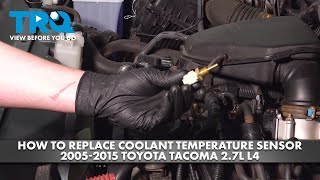

We Have This Part in Stock


The information in this article is provided for general reference and educational purposes only. Vehicle specifications, procedures, and part compatibility can vary by production date, trim level, and region. Always consult your vehicle's factory service manual and verify part numbers before purchasing or performing repairs. Safety-critical components such as airbags, seat belts, and braking systems should be installed by a qualified professional.
- Toyota Tacoma:
- 🧭 Diagnostic Flowchart
- 🎬 Helpful Videos
- 🛍️ Shop This Part
- What's Unique About the 2005-2015 Toyota Tacoma
- Symptoms You May Notice
- Most Likely Causes
- Rare But Worth Checking
- Diagnosis Steps
- Parts You'll Likely Need
- Platform-Specific Known Issues
- Mechanic-Grade Diagnostic Values
- Scan Tool Commands That Help
- Wiring & Ground Locations
- Real Owner Repair Stories
- OEM Part Supersession History
- Other Known Issues on This Vehicle
- Used vs. New Parts: Buying Guide for This Vehicle
- Real Owner Stories
- 2006 Toyota Tacoma V6 4WD
- 2005-2015 Toyota Tacoma (General)
- 2005-2015 Toyota Tacoma 4.0L V6
- Related OBD-II Codes
- Frequently Asked Questions
- 🎟️ Get 5% Off