

P0118 on 2009-2017 Audi Q5 2.0T: Causes and Fixes for ECT Sensor Circuit High
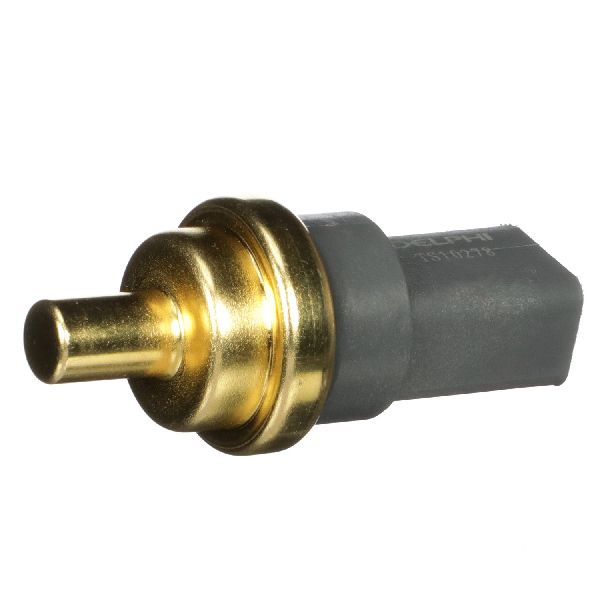
For a 2009-2017 Audi Q5 2.0T, code P0118 almost always points to a failed Engine Coolant Temperature (ECT) sensor, also known as the G62 sensor. This is a common failure item. On this specific engine, the G62 sensor is located in the plastic water pump/thermostat housing under the intake manifold. Because accessing it is labor-intensive, it is often replaced as part of a larger water pump assembly job. Replacing the sensor alone is possible, with the part costing between $20 and $60.
- P0118 on your Q5 2.0T means the engine computer thinks the coolant is freezing cold due to a high voltage signal from the ECT (G62) sensor.
- The most common cause by far is a failed ECT sensor itself. It's an inexpensive part and relatively easy to replace.
- Before buying parts, check the wiring and connector near the sensor for any obvious damage, as this is the second most likely cause.
- Symptoms like cooling fans running constantly, hard starting, and poor fuel economy are classic signs of this specific code.
- Do not confuse this electrical fault with a mechanical problem like a stuck thermostat, which typically triggers a different code (P0128).
What's Unique About the 2009-2017 Audi Q5
The 2009-2017 Audi Q5 (Type 8R) with the 2.0T EA888 engine uses a well-known Engine Coolant Temperature (ECT) sensor, designated G62. Unlike many vehicles where the ECT sensor is easily accessible, on the EA888 Gen 2 engine, the G62 sensor is integrated into the plastic water pump and thermostat housing, which is located under the intake manifold. This location makes replacement more difficult and labor-intensive. While the sensor itself can fail, a P0118 code can also be triggered by wiring damage or, more commonly on this platform, be a secondary symptom of a leaking water pump assembly, which is a notorious failure point.
Symptoms You May Notice
- Check Engine Light is on
- Cooling fans run constantly, even when the engine is cold.
- Difficulty starting the engine, especially when cold.
- Engine runs rough or idles high until it warms up.
- Noticeably reduced fuel economy.
- Black smoke from the exhaust, particularly during a cold start, due to an overly rich fuel mixture.
- Temperature gauge on the dashboard may read incorrectly, often staying at the lowest position or giving an impossibly high reading immediately on startup.
- In some cases, the EPC (Electronic Power Control) light may also illuminate.
- Replacing the thermostat when the issue is the sensor or wiring. A P0118 code is an electrical fault code, not a mechanical cooling system performance code.
- Replacing the wrong temperature sensor. The 2.0T engine has another coolant sensor at the radiator outlet (G83). P0118 specifically refers to the main engine coolant temperature sensor (G62) that reports to the ECM.
Most Likely Causes
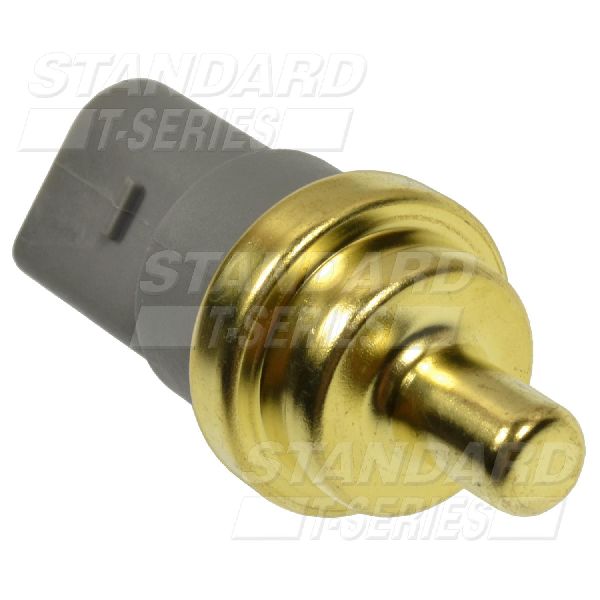
- Failed Engine Coolant Temperature (ECT) Sensor (G62) 🔴 High Probability → Shop Engine Coolant Temperature Sensor The ECT sensor is a known failure point on many VW/Audi models of this era. Older black-colored sensors were particularly prone to failure and were superseded by more reliable green-colored sensors. The sensor contains two elements: one for the ECU (G62) and one for the gauge cluster (G2). A P0118 code specifically relates to the G62 element.
How to confirm: With a cold engine, use a scan tool to compare the ECT reading to the Intake Air Temperature (IAT) reading. They should be very close to ambient temperature. If the ECT reads an illogical low value (like -40°), the sensor has failed. You can also test the sensor's internal resistance with a multimeter; an open circuit (infinite resistance) confirms failure for a 'Circuit High' code.
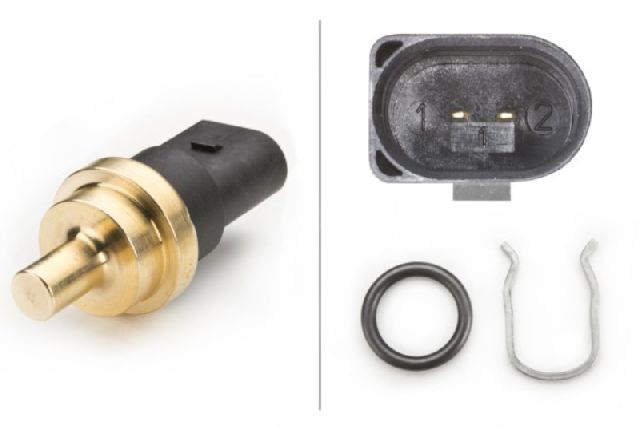
Typical fix: Replace the ECT sensor, its o-ring, and the retaining clip. On the 2.0T EA888, the sensor is located in the water pump/thermostat housing under the intake manifold, making access difficult. Due to the high labor involved, it is strongly recommended to replace the entire water pump and thermostat assembly at the same time, as they are a very common failure item that causes coolant leaks.
Est. part cost: $20-$60 for the sensor only; $200-$450 for the complete water pump assembly. - Damaged Wiring or Connector 🟡 Medium Probability The wiring harness can become brittle from heat cycles and may chafe against engine components or hot coolant pipes, causing an open circuit. The connector pins can also corrode or break. Coolant from a leaking water pump assembly can also wick into the connector, causing a fault.
How to confirm: Visually inspect the wiring leading to the ECT sensor for any signs of melting, chafing, or breaks. Check the connector for corrosion, damage, or signs of coolant intrusion. With the sensor disconnected and ignition on, test for a 5-volt reference signal and a good ground at the connector with a multimeter. An absence of either points to a wiring issue upstream towards the ECM.
Typical fix: If the connector is damaged, replace it with a new pigtail connector kit. If the wire is broken, repair the damaged section with new wire and heat-shrink tubing. Ensure the repair is sealed against moisture.
Est. part cost: $15-$40 for a connector pigtail
Rare But Worth Checking
- Faulty Thermostat: → Shop Integrated Thermostat Housing Assembly While a bad thermostat more commonly causes a P0128 or P2181 code (Cooling System Performance), its failure is often linked. On the 2.0T, the thermostat is part of the integrated water pump assembly that also houses the G62 sensor. A catastrophic failure of the plastic housing could damage the sensor or its wiring, but it's an unlikely direct cause for a P0118 electrical code.
- Faulty Engine Control Module (ECM): This is extremely rare. The ECM's internal circuit for reading the sensor could fail, but all other possibilities, including the entire wiring harness from the sensor to the ECM, should be exhaustively tested before considering ECM replacement.
Diagnosis Steps
- Connect an OBD-II scanner and confirm the P0118 code is present. Note any other cooling system codes like P0117 or P2181.
- With the engine cold, access the live data stream on the scanner. Compare the 'Engine Coolant Temperature' and 'Intake Air Temperature' values. They should be within a few degrees of each other and ambient temperature. If the ECT shows a nonsensical low value (e.g., -40°F), the sensor or its circuit is faulty.
- Turn the vehicle off. Locate the ECT sensor (G62). On the 2.0T EA888 engine, it is on the driver's side of the engine, under the intake manifold, as part of the plastic water pump/thermostat assembly. Inspect the area below it on top of the transmission for signs of pink/white crusty coolant residue, which indicates a leaking water pump assembly.
- Inspect the sensor's electrical connector and the nearby wiring for any signs of corrosion, damage, or loose connections. Coolant wicking into the connector is a known issue. Wiggle the harness while observing the live data (if possible) to check for intermittent faults.
- If the visual inspection reveals no issues, disconnect the sensor. Use a multimeter to test the sensor's resistance between the appropriate pins. An open circuit (infinite resistance) indicates a failed sensor, which is consistent with a P0118 code.
- To test the wiring, turn the ignition to the 'On' position (engine off). Use a multimeter to check for a 5-volt reference signal and a good ground at the connector pins leading to the ECM. If either is missing, the fault is in the wiring harness or the ECM itself.
- If the sensor tests bad, replace it. Given the labor involved, it is highly advisable to replace the entire water pump/thermostat assembly (which includes a new sensor) if any leaks are present or if the vehicle has high mileage. If the wiring tests bad, repair the open or shorted circuit. If both the sensor and wiring are good, the fault may lie within the ECM, which is very rare.
Parts You'll Likely Need
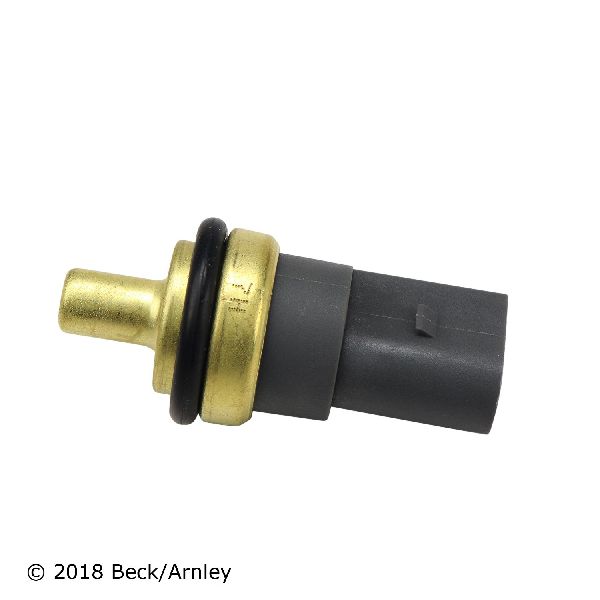
- Engine Coolant Temperature Sensor (G62)
(OEM #06A919501A)— This sensor is the most common failure point for a P0118 code on this platform. It is often superseded by newer part numbers.
Trusted brands: Bosch, Delphi, Hella, Vemo, Genuine VW/Audi
OEM price range: $40-$60
Aftermarket price range: $20-$40 - Water Pump & Thermostat Assembly
(OEM #Varies by year, e.g., 06H121026DD)— This is the most common related failure. The plastic housing is prone to cracking and leaking. Since the G62 sensor is located within it and access is difficult, replacing the entire assembly is the recommended and most robust repair. Aftermarket versions with metal housings are available as an upgrade.
Trusted brands: Graf (Metal Housing), Rein, Pierburg, Genuine VW/Audi
OEM price range: $350-$450
Aftermarket price range: $200-$350 - ECT Sensor Connector Pigtail — Needed if the original connector is corroded, melted, or has broken locking tabs or wires.
Trusted brands: Uro Parts, Dorman
OEM price range: $30-$50
Aftermarket price range: $15-$30
Related Codes That Often Appear With This One
- P0117 (ECT Circuit Low Input): Can appear if the wiring fault is intermittent, causing both open and short circuit conditions.
- P2181 (Cooling System Performance): Often indicates a problem with the thermostat, which is housed in the same assembly as the G62 sensor. A failure of the assembly can trigger multiple codes.
Platform-Specific Known Issues
- The G62 sensor is located within the water pump/thermostat housing, under the intake manifold. This makes what is a simple job on many cars a 3-5 hour job on the 2.0T Q5.
- The original plastic water pump assembly is a well-documented
Mechanic-Grade Diagnostic Values
- G62 ECT Sensor Resistance — expected: Approx. 2,000 - 3,000 Ω at 20°C (68°F); Approx. 275 - 375 Ω at 80°C (176°F).. Failure: An open circuit (infinite resistance) will cause a P0118. A reading significantly outside the expected range for a given temperature also indicates failure.
- G62 ECT Sensor Connector Voltage (Key On, Engine Off, Sensor Unplugged) — expected: One pin should have a ~5V reference from the ECM, and the other pin should show a good ground (near 0V).. Failure: Absence of the 5V reference or lack of a good ground points to a wiring harness or ECM issue, not a sensor failure.
- G62 ECT Sensor Connector Pinout — expected: On the 2-pin connector, one wire (often Gray/Brown) is the 5V reference from the ECM, and the other (often Green/Black) is the ground.. Failure: If testing, ensure voltage and ground are present on the correct pins. Swapping them during a pigtail repair can cause issues.
Hidden / Shadow Codes Worth Checking
- 16502/000280: This is the VAG-specific fault code equivalent to the generic P0118 code, often displayed by tools like VCDS. It explicitly points to 'Engine Coolant Temperature Sensor (G62): Signal too High'. (see via VCDS (VAG-COM) or other advanced VAG diagnostic tools.)
Scan Tool Commands That Help
- VCDS (VAG-COM): Measuring Value Blocks (MVB) — Use this to compare live data from multiple sensors. In [Engine - 01], check block 001 to see the G62 reading. Compare it with the Intake Air Temp (G71) and Radiator Outlet Temp (G83) to see if the G62 reading is logical. A reading of -40°C on a cold start while other sensors show ambient temperature confirms the fault.
Wiring & Ground Locations
- G62 Sensor Connector — On the 2.0T EA888 Gen 2, the sensor is located in the water pump/thermostat assembly, which is under the intake manifold on the driver's side of the engine.. This is the direct connection point for the sensor. Damage here from heat, oil leaks, or leaking coolant from the water pump itself is a common cause of an open circuit (P0118).
- Engine Block / Cylinder Head Ground Points — While there are multiple ground points, a common issue on EA888 engines is poor grounding at the ignition coil studs on the cam cover, which can cause various electrical issues. While not directly for the G62, ensuring all engine grounds are clean and tight is good practice when diagnosing any electrical fault.. A poor engine ground can create floating voltages and unstable sensor readings. While less likely to cause a specific 'Circuit High' code, it can contribute to intermittent and confusing electrical problems.
Real Owner Repair Stories
- YouTube user 'Live Free' (2006 Audi A4 2.0T (B7 generation, similar sensor setup)) — P0118 code present.
❌ Tried (didn't work) The user immediately diagnosed the issue without trying other parts.
✅ What actually fixed it A visual inspection of the sensor connector revealed that one of the pins had pushed back out of the connector body, creating an open circuit. The fix was to disassemble the connector's 90-degree housing, push the wire and pin back into place, and secure it with epoxy to prevent it from backing out again. - Ross-Tech Forums user 'AudiDave' (2007 Audi A4 2.0T Cabriolet) — P0118 code, coolant temp reading -40.0°C, fans running at 88% duty cycle, rough startup.
❌ Tried (didn't work) Replacing the ECT sensor with an aftermarket part., Replacing the aftermarket sensor with a genuine Audi sensor.
✅ What actually fixed it The problem occurred immediately after the user replaced the coolant flange and the sensor connector pigtail. The root cause was determined to be an open circuit between the sensor and the ECU, as a -40°C reading is the default for an open loop. The user confirmed 4.7V at the harness, meaning the issue was likely in the connection itself or the ground path, despite the new parts.
OEM Part Supersession History
06A919501→06A919501A— Minor revision. The parts are functionally identical and interchangeable. The 'A' suffix is the most commonly available and specified replacement.
Heads up: The original black sensor was known for higher failure rates; it was superseded by a green or grey sensor which is considered more reliable.06H121026 (various suffixes like AB, AF, BA, CF, CQ)→06H121026DD (and others)— Multiple revisions to address the rampant issue of the plastic housing cracking and leaking. Later part numbers represent improved designs.
Heads up: While most are interchangeable for a given engine generation, it is critical to use a VIN lookup to confirm the correct part number. Aftermarket all-aluminum housings (e.g., from Graf) are a popular upgrade to permanently fix the plastic cracking issue.
Model Year Variations Within This Range
- 2013-2017: For the 2013 model year, the 2.0T engine's power was increased from 211 hp to 220 hp. This was primarily a software change and does not affect the diagnosis or physical parts related to the P0118 code, as the G62 sensor and water pump assembly remained the same EA888 Gen 2 components.
- 2009-2012: Early 2.0T engines in the Q5 (approx. 2011-2012) were subject to a class-action lawsuit for timing chain tensioner failure and another for excessive oil consumption due to piston ring issues. While unrelated to P0118, a vehicle from this era may have these historical issues, and it's worth checking service history for the related repairs.
Diagnostic Flowchart
Other Known Issues on This Vehicle
Issues unrelated to this code that are worth knowing about as an owner of this generation:
- Excessive Oil Consumption 🔴 High — Very common on 2009-2012 models with the 2.0T EA888 engine. Often requires new piston rings to resolve. Can start as early as 30,000-50,000 miles. (Ref: Subject of a class-action lawsuit and subsequent settlement which extended warranties, though most vehicles are now past the coverage period.)
- Timing Chain Tensioner Failure 🔴 High — Affects early EA888 Gen 2 engines (approx. 2009-2013). The original tensioner can fail without warning, causing the timing chain to jump, leading to catastrophic engine damage. (Ref: Subject of a class-action lawsuit and settlement (TimingChainLitigation.com). An updated tensioner design resolves the issue.)
- Water Pump / Thermostat Assembly Failure 🟠 Medium → Shop Integrated Thermostat Housing Assembly — Extremely common across all 2009-2017 2.0T models. The plastic housing becomes brittle and cracks, causing coolant leaks. Typically fails between 50,000 and 90,000 miles. (Ref: A class-action lawsuit addressed this, leading to an extended warranty for some vehicles (typically 8 years/80,000 miles).)
- Intake Manifold Carbon Buildup 🟠 Medium — A consequence of direct injection engines. Carbon deposits build up on the intake valves over time, causing rough idle, misfires, and reduced performance. Typically requires cleaning every 60,000-80,000 miles.
- PCV Valve Failure 🟠 Medium — The diaphragm in the Positive Crankcase Ventilation (PCV) valve can tear, leading to high oil consumption, rough running, and a whistling noise. A common failure point.
Used vs. New Parts: Buying Guide for This Vehicle
When a used part is the smart pick: For this specific repair, buying used parts is generally not recommended. The key failure components—the ECT sensor and the water pump assembly—are wear items with known lifespans. The cost savings of a used part do not justify the high labor cost to replace it again if it fails prematurely.
Donor-vehicle mileage cap: roughly under 50000 miles for the part to have meaningful remaining life.
What to inspect on the donor part:
- If forced to buy a used water pump assembly, look for one that is a name-brand aftermarket aluminum version (e.g., Graf, Rein), not an OEM plastic one.
- Check for any signs of pink/white coolant residue, which indicates a past leak.
- Ensure the electrical connector for the thermostat is intact and not damaged.
- For the sensor, there is no reliable way to assess remaining life, making used purchase a gamble.
OEM-only on this vehicle (don't cheap out):
- While not strictly required, using a Genuine VW/Audi ECT sensor (or one from an OE supplier like Bosch or Hella) is a safe bet for a low-cost, critical sensor.
Aftermarket brands forum-validated for this vehicle:
- Water Pump Assembly: Graf, Pierburg, Rein, and INA are well-regarded. Graf is particularly known for its all-aluminum upgrade version.
- ECT Sensor: Bosch, Hella, Delphi, Vemo.
Brands owners have reported issues with on this vehicle:
- Avoid unbranded, 'white-box' water pump assemblies and sensors from online marketplaces. The failure of these parts can be catastrophic (overheating) or require a repeat of a very labor-intensive job. The small initial savings are not worth the risk.
Real Owner Stories
Aggregated from forums and TSBs cited above. Mileages and costs reflect what owners reported in those sources.
2007 Audi A4 1.8T
Symptoms: The user noted that the 4-pin sensor was causing a P0118 code for the ECU, but they were confused because the dashboard gauge (G2) was behaving differently than the ECU data (G62).
What fixed it: Clarified that the sensor contains two separate elements and the G62 element specifically triggers the P0118 code.
Source hint: AudiWorld Forums: "Code P0118"
2008 Audi A4 (B6) 1.8T
Symptoms: Check engine light was on with code P0118. The owner replaced the sensor, but the code returned along with fan issues.
What fixed it: The discussion suggested checking for water in the ECU box as a possible cause for persistent fan and sensor faults.
Source hint: AudiWorld Forums: "Check Engine light is on and the code is P0118...."
2011 Audi Q5 2.0T
Symptoms: Owner was struggling to locate the engine coolant sensor on the 2.0T engine to address a cooling system fault.
What fixed it: Confirmed the sensor is located on the driver's side of the engine, under the intake manifold, as part of the plastic water pump/thermostat assembly.
Source hint: AudiWorld Forums: "2011 q5 2.0T engine coolant sensor location"
Related OBD-II Codes
Frequently Asked Questions
Why does my 2.0T Q5 temperature gauge stay at the bottom while the cooling fans run at full speed?
I heard older Audi sensors were unreliable; is there a better part for my 2011 Q5?
Can I just replace the sensor itself on my EA888 engine to save money?
Could a coolant leak cause my P0118 'Circuit High' code?
Is it true that water in the ECU box can cause P0118 symptoms on an Audi?
Helpful Videos

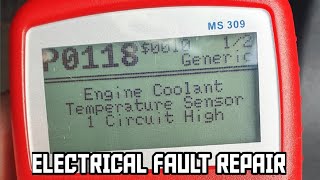
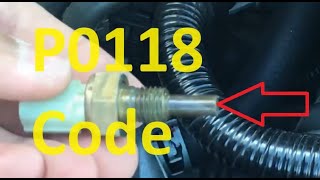
![How to Fix P0118 Engine Code in 3 Minutes [2 DIY Methods / Only $7.33]](https://img.youtube.com/vi/ZP0EHZOET0Q/mqdefault.jpg)

We Have This Part in Stock


The information in this article is provided for general reference and educational purposes only. Vehicle specifications, procedures, and part compatibility can vary by production date, trim level, and region. Always consult your vehicle's factory service manual and verify part numbers before purchasing or performing repairs. Safety-critical components such as airbags, seat belts, and braking systems should be installed by a qualified professional.
- Audi Q5:
- 🧭 Diagnostic Flowchart
- 🎬 Helpful Videos
- 🛍️ Shop This Part
- What's Unique About the 2009-2017 Audi Q5
- Symptoms You May Notice
- Most Likely Causes
- Rare But Worth Checking
- Diagnosis Steps
- Parts You'll Likely Need
- Related Codes That Often Appear With This One
- Platform-Specific Known Issues
- Mechanic-Grade Diagnostic Values
- Hidden / Shadow Codes Worth Checking
- Scan Tool Commands That Help
- Wiring & Ground Locations
- Real Owner Repair Stories
- OEM Part Supersession History
- Model Year Variations Within This Range
- Other Known Issues on This Vehicle
- Used vs. New Parts: Buying Guide for This Vehicle
- Real Owner Stories
- 2007 Audi A4 1.8T
- 2008 Audi A4 (B6) 1.8T
- 2011 Audi Q5 2.0T
- Related OBD-II Codes
- Frequently Asked Questions
- 🎟️ Get 5% Off