

P0118 on 2015-2017 Chrysler 200 2.4L: Engine Coolant Temp Sensor Causes and Fixes
This code almost always points to a failed Engine Coolant Temperature (ECT) sensor. The sensor sends a false, extremely cold reading to the computer, causing starting issues and constant fan operation. A new sensor is affordable and the repair is DIY-friendly, typically taking under an hour.
- P0118 on your Chrysler 200 is overwhelmingly likely to be a bad Engine Coolant Temperature (ECT) sensor.
- Symptoms include a Check Engine Light, cooling fans that won't shut off, and potential starting issues.
- Diagnosis is straightforward with a basic OBD-II scanner that can read live data; look for a reading of -40°.
- The repair is DIY-friendly, located on the passenger side of the 2.4L engine, and requires minimal tools.
- Before buying parts, always inspect the sensor's wiring and connector for obvious damage.
What's Unique About the 2015-2017 Chrysler 200
The 2.4L MultiAir (Tigershark) engine is used across many Chrysler, Dodge, and Jeep vehicles, making this a well-documented issue. The ECT sensor is a known common failure point. For the 2015-2017 Chrysler 200 specifically, it's important to differentiate P0118 from other coolant-related codes. For instance, a TSB (18-023-16 REV. C) exists for code P0116 on 2015 2.4L models, which requires a PCM software update, not necessarily a new sensor. However, for P0118, which indicates a hard circuit fault (high voltage/open circuit), the cause is almost always a faulty sensor or its wiring, not a software glitch.
Symptoms You May Notice
- Check Engine Light is on
- Radiator cooling fans run constantly, even when the engine is cold
- Difficulty starting the engine, especially when warm
- Poor fuel economy
- Rough idle or engine stalling
- Black smoke from the exhaust, especially on startup
- Temperature gauge on the dashboard may read incorrectly (often stuck on cold) or not at all
- An 'Engine Temperature Too Hot' message may appear on the dash, even if the engine is cold, due to the illogical sensor reading.
- Replacing the thermostat. A bad thermostat typically causes a P0128 code (Coolant Temperature Below Thermostat Regulating Temperature) or actual overheating, not a P0118 circuit code.
Most Likely Causes
- Failed Engine Coolant Temperature (ECT) Sensor 🔴 High Probability → Shop Engine Coolant Temperature Sensor The ECT sensor is a very common failure item on the 2.4L MultiAir engine across multiple platforms. The internal thermistor fails, creating an open circuit which the PCM reads as maximum high voltage.
How to confirm: Use an OBD-II scanner to check live data. If the ECT reading is a static, extremely low value (like -40°F/-40°C) even when the engine is warm, the sensor has failed. You can also test the sensor's resistance with a multimeter; it should be around 2000-3000 Ohms at room temperature (68°F) and drop to 200-300 Ohms when hot (194°F). An open circuit (infinite resistance) confirms failure.
Typical fix: Replace the ECT sensor. This involves partially draining the coolant, unscrewing the old sensor from the thermostat housing, and installing the new one. Ensure the system is properly bled of air afterward.
Est. part cost: $20-$50 - Damaged Wiring or Connector 🟡 Medium Probability The wiring harness is exposed to engine heat and vibration, which can cause wires to break or insulation to fray over time, leading to a short to power or an open circuit. The connector pins can also corrode or become loose.
How to confirm: Visually inspect the wiring harness and connector leading to the ECT sensor for any signs of corrosion, melting, or physical damage. With the key on and sensor unplugged, check for a 5-volt reference signal at the connector. Wiggle the harness while watching live data on a scanner to see if the reading fluctuates, indicating an intermittent connection.
Typical fix: Repair the damaged section of wire or replace the connector pigtail.
Est. part cost: $15-$30 for a pigtail connector - Low Engine Coolant / Air in System ⚪ Low Probability While less common for a 'Circuit High' code, if the coolant level drops so low that the sensor is exposed to an air pocket instead of coolant, it can cause erratic readings that the PCM may interpret as a fault. This can happen after incomplete bleeding of the cooling system.
How to confirm: Check the coolant level in the reservoir and radiator (when the engine is cold). If it is low, there is a leak in the system that needs to be found and repaired. If the level is fine, the system may need to be properly bled to remove trapped air.
Typical fix: Top off the coolant, bleed the cooling system, and find and repair the source of any leaks.
Est. part cost: $20-$40 for coolant
Rare But Worth Checking
- Faulty Powertrain Control Module (PCM): This is extremely rare. Before condemning the PCM, all other possibilities, including the sensor, wiring, and connections, must be exhaustively tested and ruled out. A PCM failure is the least likely cause for this specific code.
Diagnosis Steps
- Connect an OBD-II scanner and confirm the P0118 code is present. Note any other codes.
- View the live data stream for the Engine Coolant Temperature (ECT) sensor. A reading of -40°F or a similarly low, unchanging value strongly suggests a sensor or circuit failure.
- Turn the engine off and let it cool completely.
- Locate the ECT sensor. On the 2.4L MultiAir engine, it is on the right (passenger) side of the engine, threaded into the black plastic thermostat housing.
- Inspect the sensor's electrical connector and wiring for any visible damage, corrosion, or loose pins. Ensure the red locking tab on the connector is secure.
- Disconnect the sensor. With the key in the 'On' position (engine off), use a multimeter to check for a 5-volt reference signal at one pin of the connector harness and a good ground on the other.
- If the 5V reference and ground are present, the sensor is the most likely culprit. If there is no voltage, there is a problem in the wiring harness or the PCM.
- To confirm a wiring issue vs. a sensor issue, you can use a paperclip to jump the two terminals in the connector pigtail (with the sensor unplugged). The scanner's live data reading should jump from -40°F to a very high temperature (e.g., 250°F+). If it does, the wiring and PCM are good, and the sensor is bad.
- Replace the ECT sensor. It is recommended to partially drain the coolant from the radiator petcock first to minimize spillage. Use a 19mm deep socket for removal and installation.
- Refill the lost coolant and properly bleed the cooling system to remove any air pockets.
- Clear the trouble code with the scanner and perform a drive cycle to ensure the code does not return.
Parts You'll Likely Need
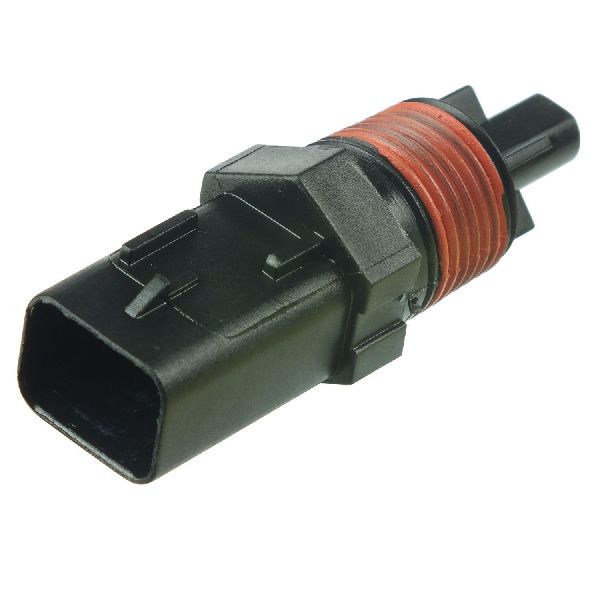
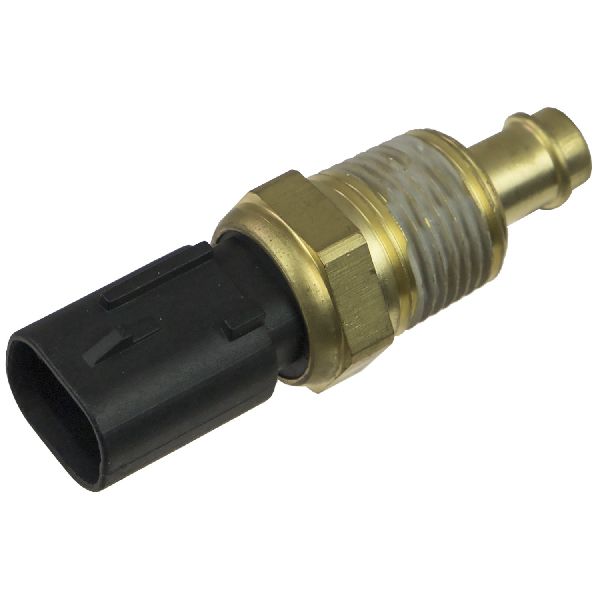
- Engine Coolant Temperature Sensor
(OEM #5149077AB)— This is the most common failure point for a P0118 code on this vehicle. The internal thermistor fails, causing the circuit to read high voltage. This part number is widely used across many Chrysler, Dodge, and Jeep vehicles.
Trusted brands: Mopar, Delphi, NTK, Standard Motor Products
OEM price range: $45-$70
Aftermarket price range: $20-$45 - Engine Coolant Temperature Sensor Connector Pigtail
(OEM #68064995AA)— If the original connector is corroded, melted, or the locking tab is broken, it will not make a secure connection with the new sensor, requiring replacement.
Trusted brands: Mopar, Dorman
OEM price range: $25-$40
Aftermarket price range: $15-$30
Related Codes That Often Appear With This One
- P0117 — This code is for 'ECT Sensor Circuit Low'. It's the opposite of P0118 but relates to the same sensor and circuit. Seeing both could indicate an intermittent wiring problem where the signal wire is shorting to ground and also has an open.
- P0128 — This code indicates the engine is not reaching operating temperature quickly enough. While often a thermostat issue, a faulty ECT sensor providing incorrect readings can also trigger it, though P0128 is more commonly associated with a stuck-open thermostat.
Technical Service Bulletins (TSBs) & Recalls
- 18-023-16 REV. C - This TSB addresses a P0116 code on 2015 2.4L models by reprogramming the PCM. While not directly for P0118, it highlights PCM sensitivity to coolant sensor inputs on this platform.
Platform-Specific Known Issues
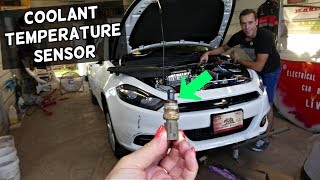
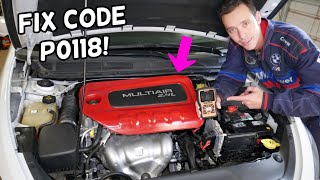
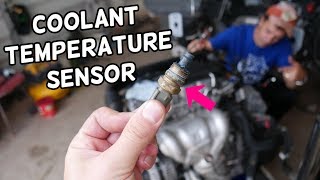
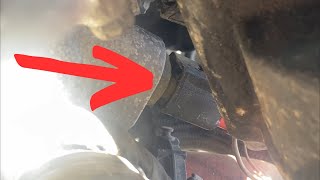
- Real-World Repair Confirmation: Multiple YouTube videos from channels like 'Electrical Car Repair LIVE' and 'worldmechanics' demonstrate the P0118 fault on a 2.4L MultiAir engine, confirm the -40 degree reading on a scanner, and show that replacing the ECT sensor resolves the code and restores a normal temperature reading.
- Forum Discussion on Platform Mate: A Reddit user with a 2015 Dodge Dart (which shares the 2.4L engine) reported a no-start condition accompanied by code P0118, confirming the issue is not isolated to the Chrysler 200 and presents with similar symptoms across the platform.
Mechanic-Grade Diagnostic Values
- ECT Sensor Resistance — expected: ~2000-3000 Ohms at 20°C (68°F), dropping to ~200-300 Ohms at 90°C (194°F).. Failure: Infinite resistance (Open Loop/OL), near-zero resistance (short), or a value that doesn't change with temperature indicates a bad sensor.
- ECT Sensor Signal Voltage (at connector, plugged in) — expected: Approximately 2.0V - 3.5V on a cold engine (20°C/68°F), dropping to around 0.5V - 1.3V at operating temperature (90°C/194°F).. Failure: Voltage stuck near 5.0V indicates an open circuit (P0118). Voltage stuck near 0V indicates a short circuit (P0117).
- PCM 5V Reference (at sensor connector, unplugged) — expected: A steady 5 Volts on one of the two pins with the Key On, Engine Off.. Failure: Absence of 5V points to a problem in the wiring harness or the PCM itself.
- Sensor Ground Circuit (at sensor connector, unplugged) — expected: Near 0 Ohms resistance when tested for continuity back to the corresponding ground pin at the PCM. This is a dedicated sensor ground, not a chassis ground.. Failure: High or infinite resistance (OL) indicates an open in the ground wire between the sensor and the PCM.
Wiring & Ground Locations
- (K2) ECT Signal Circuit — On a 2015 2.4L, this is a Violet/Brown wire running from Pin 1 of the ECT sensor connector to Pin 11 of the C2 (middle) PCM connector.. This is the signal wire the PCM monitors. An open circuit on this wire is a direct cause of P0118. Knowing the pin location allows for end-to-end continuity testing between the sensor and the PCM.
- (K900) Sensor Ground Circuit — This wire runs from Pin 2 of the ECT sensor connector back to the PCM. It is not a chassis ground.. The sensor requires this dedicated ground path through the PCM to function. An open in this ground wire will also cause a P0118 code because the circuit becomes open, resulting in a high voltage reading.
- ECT Sensor Connector — On the black plastic thermostat housing, located on the right (passenger) side of the 2.4L engine.. This is the primary point for all electrical testing of the sensor and circuit. It has a red locking tab that must be secured for a good connection.
Real Owner Repair Stories
- YouTube channel 'Electrical Car Repair LIVE' (2015 Dodge Dart with 2.4L MultiAir engine (platform mate)) — Check Engine Light on, radiator fan running constantly, scan tool shows P0118 and live data for ECT is -40°C.
❌ Tried (didn't work) The video directly diagnoses the issue without showing failed attempts.
✅ What actually fixed it Replacing the engine coolant temperature sensor located on the thermostat housing and clearing the code resolved all symptoms. The live data began reading correctly immediately after replacement.
OEM Part Supersession History
5149096AB→5149077AB— Part number consolidation and potential minor revision by the manufacturer.
Heads up: The new part number 5149077AB is the correct and direct replacement for the original. There are no known incompatibility issues.
Diagnostic Flowchart
Other Known Issues on This Vehicle
Issues unrelated to this code that are worth knowing about as an owner of this generation:
- ZF 9-Speed Transmission Problems 🔴 High — Very common on 2015 models, less so on later years. Can occur at any mileage. (Ref: Multiple TSBs (e.g., 21-019-17, 21-021-15) and recall S55 / NHTSA 16V-529 address harsh shifting, sudden shifts to neutral, and software logic.)
- Excessive Oil Consumption (2.4L Tigershark) 🔴 High — Widespread issue, often noted as consuming a quart of oil per 1,000-2,000 miles. Can start early in the vehicle's life. (Ref: Subject of class-action lawsuits. FCA has been accused of calling the consumption 'normal' to avoid recalls.)
- Engine Stalling / Shutting Off While Driving 🔴 High — Common complaint, particularly for the 2015 model year. Can be related to low oil levels from consumption or transmission faults.
- Electronic Parking Brake (EPB) Malfunctions 🟠 Medium — Numerous owner complaints of the EPB failing to release, engaging while driving, or showing a 'Service Parking Brake' message. (Ref: A TSB exists for reprogramming the EPB module on some models.)
- Head Gasket / Coolant Leaks (2.4L Tigershark) 🟠 Medium — Less common than oil consumption, but a known flaw where the head does not seal well to the block, causing coolant leaks. (Ref: No specific TSB, but noted by independent repair shops as a design flaw.)
Used vs. New Parts: Buying Guide for This Vehicle
When a used part is the smart pick: For this repair, buying a used part is not recommended. The primary failure part, the ECT sensor, is an inexpensive electronic component that degrades with heat cycles and age. The cost savings of a used sensor are minimal and not worth the risk of premature failure.
What to inspect on the donor part:
- Not applicable as new parts are strongly recommended.
OEM-only on this vehicle (don't cheap out):
- While not strictly 'OEM-only', using a Mopar sensor (5149077AB) or a reputable OEM-supplier brand like NTK or Delphi is highly advised for reliability. Cheap, unbranded sensors are known to fail quickly or provide inaccurate readings.
Aftermarket brands forum-validated for this vehicle:
- Mopar
- NTK
- Delphi
- Standard Motor Products (SMP)
Brands owners have reported issues with on this vehicle:
- Generic, no-name brands from online marketplaces should be avoided due to a high rate of failure and poor quality control.
Real Owner Stories
Aggregated from forums and TSBs cited above. Mileages and costs reflect what owners reported in those sources.
2015 Dodge Dart SE 2.4L
Symptoms: Vehicle would not start or crank, accompanied by the P0118 code.
What fixed it: Replacing the Engine Coolant Temperature (ECT) sensor.
Source hint: Reddit r/MechanicAdvice thread titled '2015 dodge dart se 2.4l wont start/no crank all'
2015 Chrysler 200 2.4L MultiAir
Symptoms: Scanner showed a static -40 degree temperature reading; Check Engine Light was illuminated.
What fixed it: Replacing the ECT sensor using a 19mm deep socket after partially draining the coolant.
Source hint: YouTube channels 'Electrical Car Repair LIVE' and 'worldmechanics'
Related OBD-II Codes
Frequently Asked Questions
My 2015 Chrysler 200 2.4L has a P0116 code; is this the same as P0118?
Why are my radiator fans running constantly on my Chrysler 200 even when the engine is cold?
Where is the ECT sensor located on the 2.4L MultiAir engine?
Can a bad ECT sensor cause my Chrysler 200 to stall or not start?
What should the resistance be for a healthy ECT sensor on this vehicle?
Is the P0118 code related to the ZF 9-speed transmission issues on the 2015 Chrysler 200?
Helpful Videos
We Have This Part in Stock


The information in this article is provided for general reference and educational purposes only. Vehicle specifications, procedures, and part compatibility can vary by production date, trim level, and region. Always consult your vehicle's factory service manual and verify part numbers before purchasing or performing repairs. Safety-critical components such as airbags, seat belts, and braking systems should be installed by a qualified professional.
- Chrysler 200:
- 🧭 Diagnostic Flowchart
- 🎬 Helpful Videos
- 🛍️ Shop This Part
- What's Unique About the 2015-2017 Chrysler 200
- Symptoms You May Notice
- Most Likely Causes
- Rare But Worth Checking
- Diagnosis Steps
- Parts You'll Likely Need
- Related Codes That Often Appear With This One
- Technical Service Bulletins (TSBs) & Recalls
- Platform-Specific Known Issues
- Mechanic-Grade Diagnostic Values
- Wiring & Ground Locations
- Real Owner Repair Stories
- OEM Part Supersession History
- Other Known Issues on This Vehicle
- Used vs. New Parts: Buying Guide for This Vehicle
- Real Owner Stories
- 2015 Dodge Dart SE 2.4L
- 2015 Chrysler 200 2.4L MultiAir
- Related OBD-II Codes
- Frequently Asked Questions
- 🎟️ Get 5% Off