

P0118 on 2009-2020 Dodge Journey: Causes, Symptoms, and Fixes
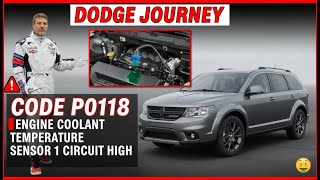
P0118 on a Dodge Journey most often means the Engine Coolant Temperature (ECT) sensor has failed. This causes a Check Engine Light, poor running, and the cooling fans to run constantly. Replacing the sensor is a simple, low-cost DIY fix, typically under $40 for the part.
- P0118 on a Dodge Journey is almost always caused by a bad Engine Coolant Temperature (ECT) sensor.
- Key symptoms are a Check Engine Light and cooling fans that won't turn off, combined with a temperature gauge reading -40°F on a scan tool.
- On 2.4L models, check for wiring damage near the brake booster vacuum hose before replacing parts, as noted in TSB 05-002-12.
- This is a very DIY-friendly repair that can be done with basic tools in under an hour.
- Do not mistake this electrical code for a mechanical overheating problem or a bad thermostat.
What's Unique About the 2009-2020 Dodge Journey
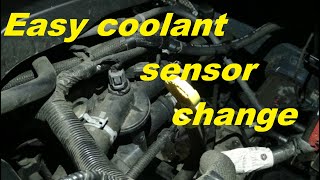
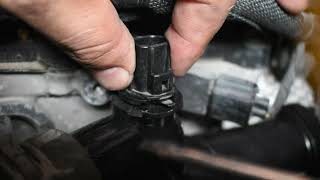
The Dodge Journey was produced for a single generation with several engine options, primarily the 2.4L 4-cylinder 'World Engine' and the 3.6L V6 'Pentastar'. The cause of P0118 is almost always the same across these engines—a failed sensor or wiring—but the sensor's location differs. On the 3.6L V6, the sensor is located on the front of the engine, near the cooling fan assembly. On the 2.4L 4-cylinder, it is on the driver's side of the engine in the water outlet housing. 🎬 Watch a 4-cylinder coolant temperature sensor replacement walkthrough. For some 2.4L models, a Technical Service Bulletin (TSB 05-002-12) exists, noting that the brake booster vacuum hose could rub against and damage the ECT sensor's wiring, making a visual inspection of that specific area a critical first step.
Symptoms You May Notice
- Check Engine Light is on
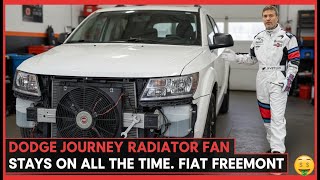
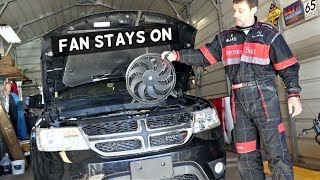
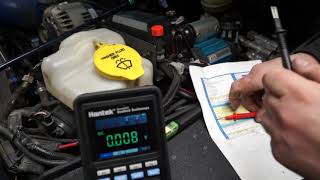
- Cooling fans running constantly at high speed, even when the engine is cold 🎬 See why your radiator fan won't turn off.
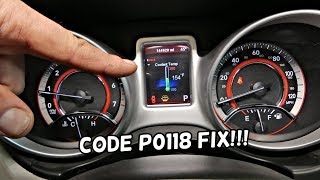
- Inaccurate or non-functional temperature gauge on the dashboard (may read cold or show no reading)
- Engine running rough, hesitating, or stalling, especially when cold
- Decreased fuel economy due to the PCM defaulting to a rich fuel mixture
- Difficulty starting the engine
- Black smoke from the exhaust on startup
- Replacing the thermostat. While a thermostat can cause other temperature-related codes like P0128, it will not cause a P0118 'Circuit High' fault, which is purely electrical in nature.
Most Likely Causes
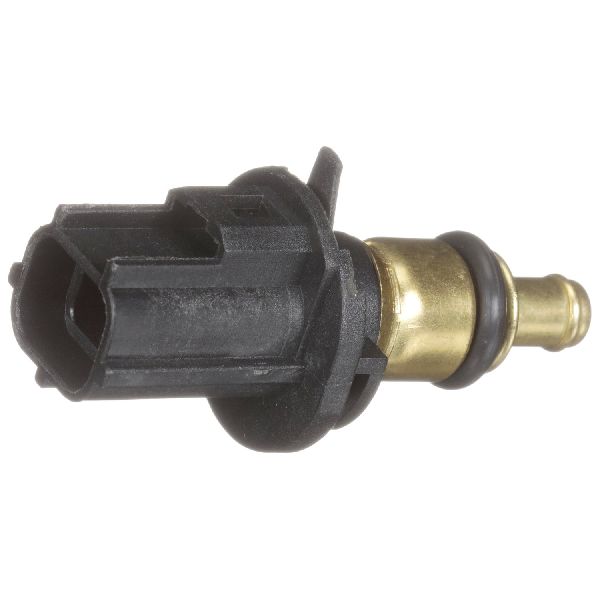
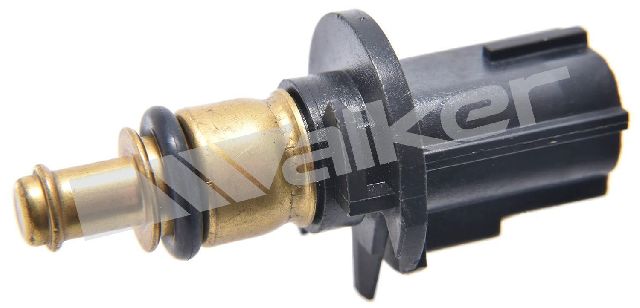
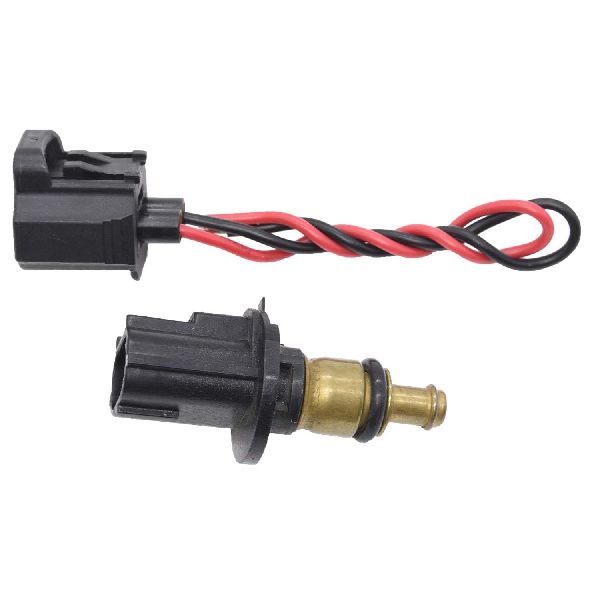
- Faulty Engine Coolant Temperature (ECT) Sensor 🔴 High Probability → Shop Engine Coolant Temperature Sensor Sensors are electronic components that can fail over time due to extreme heat cycles and age. An internal open circuit within the sensor is a common failure mode leading to a P0118 code.
How to confirm: With a scan tool, check the live data for the ECT sensor. If it reads an impossibly low temperature (like -40°F) when the engine is at ambient temperature, the sensor is the primary suspect. You can also test the sensor's internal resistance with a multimeter; an open circuit (infinite resistance) confirms failure. A healthy sensor should have a resistance of approximately 2,500 Ohms at room temperature (20°C / 68°F).
Typical fix: Replace the ECT sensor. This usually involves draining a small amount of coolant, unplugging the old sensor, unscrewing it, and installing the new one.
Est. part cost: $15-$40 - Damaged Wiring or Connector 🟡 Medium Probability For 2.4L engines, TSB 05-002-12 specifically calls out that the brake booster vacuum hose can rub against the ECT connector, causing chafing and damage to the wires. General corrosion, bent pins, or a broken locking tab on the connector can also cause a poor connection.
How to confirm: Visually inspect the wiring harness and connector for signs of damage, corrosion, or looseness. Pay special attention to the area near the brake booster hose on 2.4L models. Wiggle the connector while watching the live data on a scan tool; if the reading flickers, you have a bad connection.
Typical fix: Repair the damaged section of wire or replace the connector pigtail.
Est. part cost: $10-$25 - Open Circuit ⚪ Low Probability
How to confirm: Test for 5V reference and ground at the sensor connector using a multimeter. If either is missing, trace the wiring back to the PCM to find the break. Shorting the two pins in the harness-side connector with a jumper wire should cause the scan tool reading to jump to a very high temperature (e.g., 250-300°F); if it doesn't, the wiring is faulty.
Typical fix: Find and repair the break in the wire.
Est. part cost: $5-$15
Rare But Worth Checking
- Faulty Powertrain Control Module (PCM): This is extremely rare. The PCM should only be considered after all other possibilities (sensor, wiring, connections) have been exhaustively tested and ruled out. A faulty PCM driver can fail to correctly interpret the sensor's signal.
Diagnosis Steps
- Connect an OBD-II scanner and confirm P0118 is the active code.
- View live data on the scanner. Look at the Engine Coolant Temperature reading. A reading of -40°F or another extreme low value points directly to this circuit.
- Turn the engine off. Visually inspect the ECT sensor and its connector for obvious damage, corrosion, or loose wires. On 2.4L models, pay close attention to the area near the brake booster vacuum hose, per TSB 05-002-12.
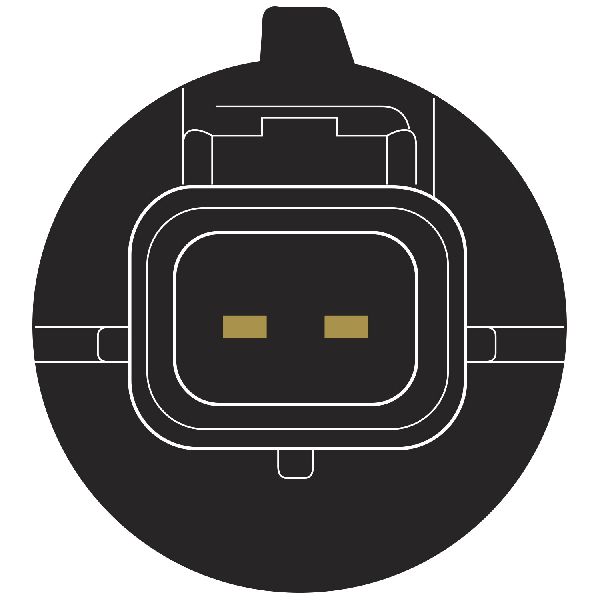
- Unplug the sensor. The scan tool reading should remain at -40°F. Use a jumper wire to connect the two terminals in the wiring harness connector. The scan tool reading should now jump to a very high temperature (e.g., 284°F+).
- If the reading jumps to high as expected, the wiring and PCM are good. The problem is a faulty ECT sensor. Replace it.
- If the reading does not change when the terminals are jumped, there is an open in the signal or ground wire between the connector and the PCM, or a faulty PCM (rare).
- After repair, clear the code and test drive to ensure the fix was successful and the temperature gauge reads normally.
Parts You'll Likely Need
- Engine Coolant Temperature (ECT) Sensor
(OEM #Mopar 5149077AB (Fits many 3.6L and 2.4L applications))— This sensor is the most frequent point of failure for code P0118, as it is an electronic component exposed to constant heat cycles.
Trusted brands: Mopar, Standard Motor Products (SMP), Delphi, NTK
OEM price range: $45-$70
Aftermarket price range: $15-$40 - ECT Sensor Connector Pigtail — Needed if the original connector is corroded, melted, or has broken locking tabs or wires, especially on 2.4L models where rubbing from the brake booster hose can occur.
Trusted brands: Dorman, Mopar
OEM price range: $20-$35
Aftermarket price range: $10-$25
Technical Service Bulletins (TSBs) & Recalls
- 05-002-12: Notes potential for brake booster vacuum hose to damage ECT sensor wiring on 2011 2.4L models, causing P0117 or P0118.
Platform-Specific Known Issues
- TSB 05-002-12 for 2011 Dodge Journey 2.4L models indicates that the brake booster vacuum hose may be routed too close to the ECT sensor, causing damage to the connector or wiring and triggering P0117 or P0118 codes. Owners should inspect this area carefully before replacing any parts.
Mechanic-Grade Diagnostic Values
- ECT Sensor Resistance vs. Temperature — expected: Approx. 100,000Ω at -40°C (-40°F), 2,500Ω at 20°C (68°F), 300Ω at 80°C (176°F), 180Ω at 100°C (212°F).. Failure: Infinite resistance (open circuit) or a reading that does not change with temperature indicates a failed sensor.
- ECT Sensor Connector Voltage (Key On, Engine Off) — expected: One pin should have a 5-volt reference from the PCM; the other is the ground return.. Failure: Absence of the 5V reference points to a wiring or PCM issue. Absence of ground points to a wiring issue.
Wiring & Ground Locations
- ECT Signal at PCM (2.4L Engine) — Pin 20 of the C2 connector (Black/Orange) at the Powertrain Control Module. The wire is typically Tan with a Black stripe.. Allows for continuity testing of the signal wire directly from the PCM, bypassing the rest of the harness to isolate a break.
- ECT Signal at PCM (3.6L Engine) — Pin 12 of the C2 connector at the Powertrain Control Module. The wire is typically Violet with an Orange stripe.. Allows for continuity testing of the signal wire directly from the PCM, which is crucial for differentiating a wiring fault from a sensor failure.
- G903 (Sensor Ground) — For 3.6L engines, this ground point is located on the top of the transmission. For 2.4L engines, it is on the left rear of the engine.. This is a primary grounding point for engine components. A corroded or loose connection at G903 can cause an open or high resistance on the sensor's ground side, directly leading to a P0118 code.
Real Owner Repair Stories
- YouTube Channel 'Electrical Car Repair LIVE' (Dodge Journey with 3.6L V6 engine, model year within 2009-2019 range.) — Check Engine Light on, radiator fan running constantly, and temperature gauge not working.
❌ Tried (didn't work) The video proceeds directly to diagnosis, not mentioning prior failed attempts.
✅ What actually fixed it Diagnosis with a scan tool showed an engine coolant temperature of -40°F. The ECT sensor was identified as the faulty component. Replacing the ECT sensor and clearing the codes resolved all symptoms, with the scan tool then showing a normal temperature reading.
OEM Part Supersession History
5149096ab→5149077AB— Standard part update/revision by Mopar.
Model Year Variations Within This Range
- 2011 (specifically): TSB 05-002-12 was issued for 2011 2.4L models regarding the brake booster vacuum hose potentially chafing the ECT sensor wiring harness, causing P0117 or P0118. While possible on other years, it was officially documented for 2011.
Diagnostic Flowchart
Other Known Issues on This Vehicle
Issues unrelated to this code that are worth knowing about as an owner of this generation:
- Cracked/Leaking Oil Filter Housing (3.6L V6) 🔴 High — Very common, typically occurs between 60,000-120,000 miles. Can cause major oil and/or coolant leaks.
- Premature Brake Wear 🟠 Medium — Extremely common on 2009-2012 models, with owners reporting replacement of pads and rotors as early as 12,000-20,000 miles. Less frequent on later models with upgraded brake components. (Ref: Warranty extension was offered for early models, but no formal recall.)
- Transmission Issues (62TE 6-Speed) 🟠 Medium — Reports of harsh shifting, shuddering, or solenoid pack failure are common. Regular fluid changes every 25,000-30,000 miles are critical.
- Electrical Problems (WIN Module / Key Fob) 🟡 Low — Common reports of the vehicle not starting or the remote keyless entry failing to work. Often traced to the Wireless Ignition Node (WIN) module needing a software update or replacement. (Ref: Recall R61 for some models related to ignition switch.)
- Water Leaks into Cabin 🟠 Medium — Frequently reported on earlier models (2009-2012), often from clogged sunroof drains, bad door seals, or improperly sealed firewall grommets.
- Faulty Throttle Body (2.4L) 🟠 Medium — Failure is common, leading to stalling or limp mode. Often triggers codes like P2110 or P2112.
Used vs. New Parts: Buying Guide for This Vehicle
When a used part is the smart pick: For this repair, a used part is only recommended for the connector pigtail if it needs to be replaced. A junkyard pigtail with a few inches of wire can be spliced in to fix a damaged connector.
Donor-vehicle mileage cap: roughly under 150000 miles for the part to have meaningful remaining life.
What to inspect on the donor part:
- For a connector pigtail, inspect for any signs of melting, cracking, or brittleness.
- Ensure the locking tab is intact and functional.
- Check that the wire insulation is not frayed or exposed.
- Avoid connectors from vehicles with obvious signs of engine fire or severe front-end damage.
Aftermarket brands forum-validated for this vehicle:
- Standard Motor Products (SMP)
- Delphi
- NTK
Brands owners have reported issues with on this vehicle:
- No-name, ultra-low-cost sensors from online marketplaces are frequently reported on forums as being inaccurate or failing prematurely.
Real Owner Stories
Aggregated from forums and TSBs cited above. Mileages and costs reflect what owners reported in those sources.
2014 Dodge Journey 2.4L
Symptoms: The owner reported getting a P0118 code.
What fixed it: Replacing the Engine Coolant Temperature (ECT) sensor resolved the issue.
Source hint: Dodge Journey Forum - 'help help'
2011 Dodge Journey 2.4L
Symptoms: Check Engine Light on with code P0118, likely accompanied by cooling fans running constantly and an inaccurate temperature gauge reading cold.
What fixed it: Repairing the chafed wiring and/or replacing the damaged ECT sensor connector where the brake booster vacuum hose had rubbed against it.
Source hint: TSB 05-002-12
Related OBD-II Codes
Frequently Asked Questions
My 2011 Dodge Journey has the 2.4L engine and a P0118 code. Is there a known issue I should check first?
Why are my cooling fans running constantly at full speed, even when I just started the car?
My scan tool shows the coolant temperature is -40°F. Is the scanner broken?
How can I test the wiring to the ECT sensor on my Journey?
What's the difference between code P0118 and P0117?
Besides a scan tool, can I test the ECT sensor itself?
Helpful Videos
We Have This Part in Stock


The information in this article is provided for general reference and educational purposes only. Vehicle specifications, procedures, and part compatibility can vary by production date, trim level, and region. Always consult your vehicle's factory service manual and verify part numbers before purchasing or performing repairs. Safety-critical components such as airbags, seat belts, and braking systems should be installed by a qualified professional.
- Dodge Journey:
- 🧭 Diagnostic Flowchart
- 🎬 Helpful Videos
- 🛍️ Shop This Part
- What's Unique About the 2009-2020 Dodge Journey
- Symptoms You May Notice
- Most Likely Causes
- Rare But Worth Checking
- Diagnosis Steps
- Parts You'll Likely Need
- Technical Service Bulletins (TSBs) & Recalls
- Platform-Specific Known Issues
- Mechanic-Grade Diagnostic Values
- Wiring & Ground Locations
- Real Owner Repair Stories
- OEM Part Supersession History
- Model Year Variations Within This Range
- Other Known Issues on This Vehicle
- Used vs. New Parts: Buying Guide for This Vehicle
- Real Owner Stories
- 2014 Dodge Journey 2.4L
- 2011 Dodge Journey 2.4L
- Related OBD-II Codes
- Frequently Asked Questions
- 🎟️ Get 5% Off