

P0118 on 2011-2018 Ford Focus 2.0L: Engine Coolant Temperature Sensor Circuit High Causes and Fixes
On a 2011-2018 Ford Focus 2.0L, code P0118 is almost always caused by a failed Engine Coolant Temperature (ECT) sensor. This results in a high voltage signal to the computer, which the PCM interprets as an extremely cold temperature (like -40°F). Replacing the sensor, an inexpensive part located on the back of the cylinder head, typically resolves the issue.
- P0118 on this Focus is an electrical fault, not a mechanical cooling problem.
- The most likely cause is a failed ECT sensor, followed by damaged wiring near the sensor connector.
- Diagnosis is confirmed by a -40°F reading on a scan tool.
- The repair is inexpensive but can be difficult due to the sensor's tight location behind the engine.
What's Unique About the 2011-2018 Ford Focus
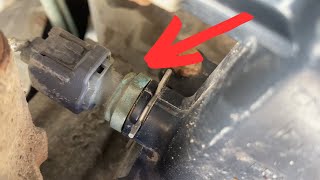
The 2011-2018 Ford Focus (Mk3) with the 2.0L GDI engine uses a specific ECT sensor located on the back of the cylinder head, between the engine and firewall, which can be difficult to access. 🎬 Watch: Locate and replace this hard-to-reach sensor The issue is overwhelmingly an electrical fault in the sensor or its circuit, not a mechanical cooling system problem. Unlike some other Ford engines that use a Cylinder Head Temperature (CHT) sensor for this reading, the 2.0L GDI has a dedicated ECT sensor that directly measures coolant temperature. A user on Reddit confirmed that simply unplugging the sensor will immediately trigger the P0118 code, demonstrating the circuit-based nature of the fault.
Symptoms You May Notice
- Check Engine Light is on
- Engine cooling fans run continuously, even when the engine is cold
- Hard starting, especially when the engine is cold
- Rough or erratic idle
- Reduced fuel economy
- Temperature gauge on the dashboard may not work or may read cold (often drops to 'C' suddenly)
- Black smoke from exhaust due to a rich fuel mixture.
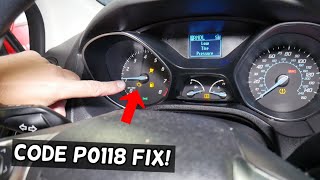
- Replacing the thermostat. A P0118 code is an electrical circuit fault (high voltage/open circuit), not a mechanical cooling system fault like a stuck-open thermostat (which would typically set a P0128 code). 🎬 Watch: How to diagnose and fix a P0118 code
Most Likely Causes
- Failed Engine Coolant Temperature (ECT) Sensor 🔴 High Probability → Shop Engine Coolant Temperature Sensor The sensor is a common failure item that can develop an internal open circuit over time, causing it to send a high voltage signal back to the PCM.
How to confirm: Use an OBD-II scanner with live data. A reading of -40°F or -40°C for the coolant temperature on a car that isn't frozen solid definitively points to a circuit issue. You can also test the sensor with a multimeter; if it shows infinite resistance (open circuit) when disconnected, it has failed. At room temperature (~70°F/20°C), resistance should be between 2,000-3,000 Ohms.
Typical fix: Replace the Engine Coolant Temperature sensor.
Est. part cost: $20-$50 - Damaged Wiring or Connector 🟡 Medium Probability The wiring harness is in a tight space behind the engine and can be susceptible to heat damage, chafing, or corrosion over time. The sheathing around the wire near the plug can perish, exposing the wires.
How to confirm: Visually inspect the wiring harness and the connector going to the ECT sensor for any signs of breaks, corrosion, or loose pins. Wiggling the harness while monitoring live data on a scan tool may cause the temperature reading to fluctuate, indicating a wiring fault. A user on a Ford forum noted that the plug itself is part of a larger loom, making a pigtail repair more practical than replacing the whole harness.
Typical fix: Repair the broken wire or replace the connector pigtail.
Est. part cost: $15-$30
Rare But Worth Checking
- Faulty Powertrain Control Module (PCM): This is very rare and should only be considered after the sensor and wiring have been exhaustively tested and ruled out. A technician confirmed a case where accidentally injecting 12V into the sensor circuit damaged the PCM, causing it to be stuck reading -60°C.
Diagnosis Steps
- Connect an OBD-II scanner and confirm P0118 is the active code.
- View the live data stream for the Engine Coolant Temperature (ECT). If it reads -40°F or -40°C, this confirms the PCM is seeing an open circuit.
- Turn the vehicle off and let it cool down completely.
- Locate the ECT sensor. It is on the back of the cylinder head, between the engine and the firewall, often tucked under other components.
- Inspect the sensor's electrical connector and wiring for any visible damage, corrosion, or loose connections. Pay close attention to the area where the wires enter the connector.
- If the wiring looks good, disconnect the sensor. Test the sensor's resistance with a multimeter. At room temperature (around 70°F/20°C), it should have a resistance of approximately 2,000-3,000 Ohms. If it reads as an open circuit (infinite resistance), the sensor is bad and needs to be replaced.
- If the sensor tests good, check for 5V reference voltage at the connector with the key on. If voltage is present, the problem is likely in the signal return wire or the ground circuit between the sensor and the PCM. The ground for the ECT sensor is provided by the PCM through the harness, not through the engine block.
- As a quick wiring check, you can use a jumper wire to connect the two pins in the sensor's electrical connector. With the connector jumped, the scan tool's live data should show a very high temperature (e.g., >280°F). This confirms the wiring to the PCM is intact.
Parts You'll Likely Need
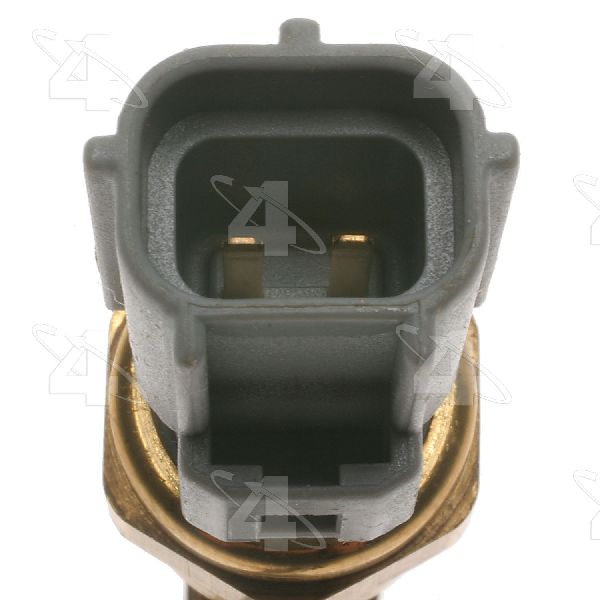
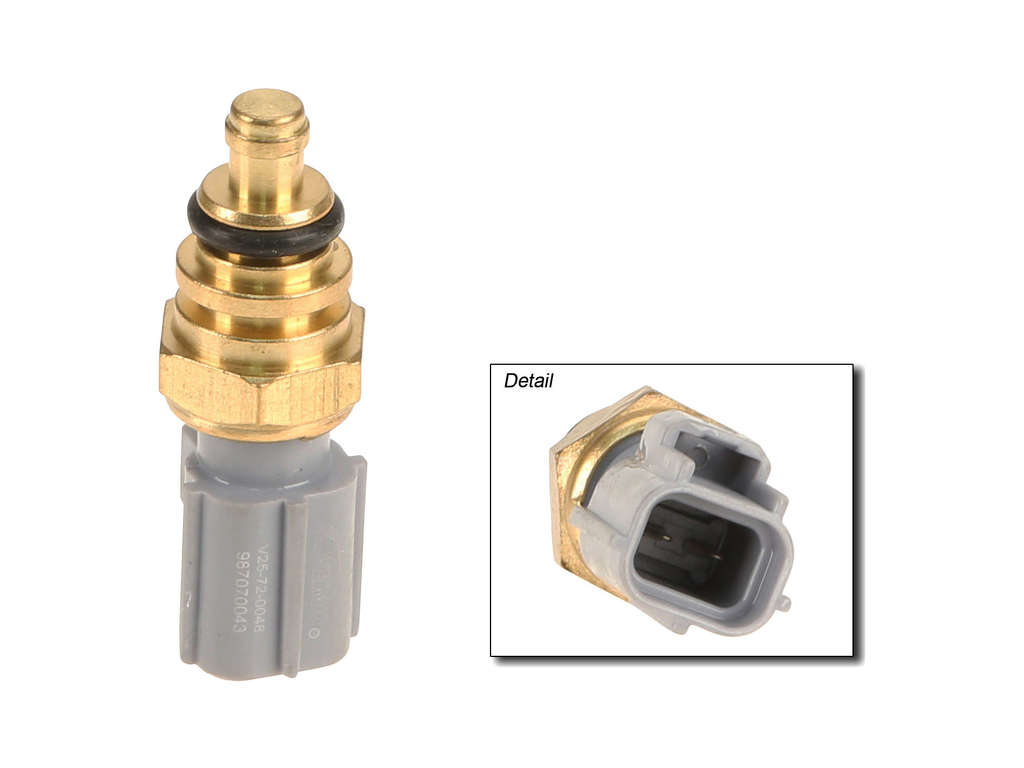
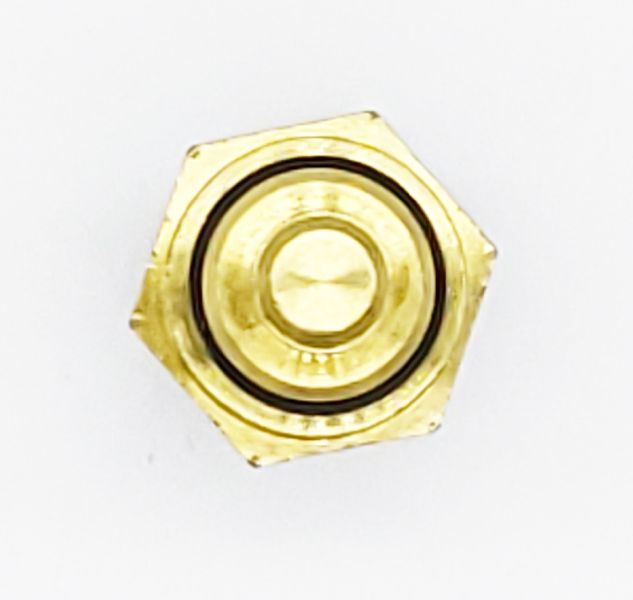
- Engine Coolant Temperature Sensor
(OEM #CM5Z-12A648-A)— This is the most common failure point for a P0118 code. The sensor fails internally, creating an open circuit.
Trusted brands: Motorcraft (DY-1162), Bosch, Delphi, NTK
OEM price range: $35-$55
Aftermarket price range: $20-$40 - ECT Sensor Retaining Clip
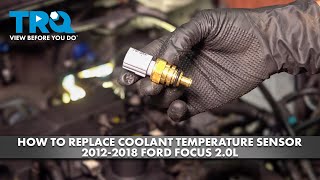
(OEM #YL8Z-14197-AA)— The original plastic clip can become brittle from heat cycles and often breaks during removal. 🎬 See this step-by-step sensor replacement walkthrough It's wise to have a new one on hand to ensure the sensor is properly secured.
Trusted brands: Motorcraft
OEM price range: $5-$10
Aftermarket price range: $3-$8 - ECT Sensor Connector Pigtail
(OEM #WPT-118)— If the connector itself is corroded, melted, or the wires are broken right at the connector body, replacing the pigtail is the standard repair.
Trusted brands: Motorcraft, Dorman
OEM price range: $25-$40
Aftermarket price range: $15-$25
Technical Service Bulletins (TSBs) & Recalls
- 18-2062 — For 2012-2014 Focus models, this TSB addresses a wiring harness that can chafe against the intake manifold near ground G103. While not specific to P0118, damage to the ECT circuit within this harness could be a potential cause.
Platform-Specific Known Issues
- Real Repair Story from Reddit: A user on r/MechanicAdvice with a 2014 Focus reported the temperature gauge randomly dropping to cold, followed by a P0118 code. The community correctly identified it as a high resistance (open circuit) issue, likely the sensor or wiring, and confirmed the vehicle was safe to drive in the short term.
- Repair Confirmation on YouTube: The YouTube channel 'Electrical Car Repair LIVE' demonstrated the fix on a 2013 Focus, confirming the sensor location on the back of the 2.0L engine and showing that replacing the failed sensor resolved the P0118 code.
Mechanic-Grade Diagnostic Values
- ECT Sensor Resistance — expected: Approximately 2,000-3,000 Ω at 20°C (68°F), decreasing to 200-300 Ω at 90°C (194°F).. Failure: Infinite resistance (Open Loop) or a value significantly outside the expected range for a given temperature indicates a failed sensor.
- ECT Sensor Signal Voltage (at PCM or connector) — expected: A high voltage (approx. 2.0V - 3.0V) when the engine is cold, dropping to a low voltage (approx. 0.5V) when the engine is at operating temperature.. Failure: A constant voltage reading at or above 4.6V - 4.9V, regardless of engine temperature, triggers the P0118 code.
- ECT Connector Reference Voltage (Key On, Engine Off) — expected: One pin should show a steady 5V reference supplied by the PCM.. Failure: Absence of the 5V reference points to a problem with the wiring harness or the PCM itself, not the sensor.
Scan Tool Commands That Help
- OBD-II Scanner with Live Data: Live Data Monitoring (ECT PID) — This is the primary diagnostic method. A reading of -40°F/-40°C instantly confirms the PCM is seeing an open circuit fault. It is also used during the 'jumper wire test' to see if the reading goes to maximum temperature, which confirms wiring integrity.
Wiring & Ground Locations
- ECT Sensor Ground Path — The ground is not a direct connection to the chassis or engine block. It is a dedicated 'Signal Return' wire that runs from the ECT sensor connector directly back to a specific pin on the Powertrain Control Module (PCM).. Technicians should not look for a loose ground bolt on the engine for this sensor. The fault, if in the ground circuit, will be a break in the wire between the sensor and the PCM.
- ECT Connector Pins — The 2-pin connector at the ECT sensor on the back of the cylinder head.. One pin is the 5V reference from the PCM, the other is the signal return (ground). Testing for voltage and continuity happens at these two pins.
- G102 / G104 / G107 — Main engine compartment ground points. G102 and G104 are on the left (driver's) side of the motor compartment, and G107 is on the right side.. While the ECT sensor itself doesn't use these grounds directly, a poor main ground for the PCM at one of these locations could cause erratic behavior and floating voltages across multiple sensor circuits.
Real Owner Repair Stories
- Ford Owners Club forum user 'stevetdcifocus' (2007 Ford Focus 1.6 TDCi (Note: different engine, but identical electrical fault principle)) — Engine management light on with code P0118.
✅ What actually fixed it The sheathing around the wire coming out of the sensor plug had perished, exposing the wire very close to the plug, causing an open circuit. The user soldered on a new connector pigtail to resolve the issue. - 2CarPros forum user (2015 Ford Focus) — Radiator fan would not turn on, scan tool showed coolant temperature stuck at -60°C.
❌ Tried (didn't work) Testing fan directly (it worked), Checking continuity between sensor connector and PCM (wires were good), Checking for ground at the PCM pins (was good)
✅ What actually fixed it The PCM itself was internally shorted and had failed. This was caused by a friend accidentally injecting 12 volts into one of the ECT sensor wires with a power probe. The final repair was to replace the PCM with a cloned unit.
OEM Part Supersession History
CM5Z-12A648-A→CM5Z-12A648-A (current)— No supersession found for this specific part number within the vehicle's generation. It has remained consistent.
Heads up: Beware of parts catalog errors. The corresponding Motorcraft part number, DY-1162, is sometimes incorrectly listed as an oxygen sensor by online retailers, which can lead to ordering the wrong part. Always verify the part description is 'Engine Coolant Temperature Sensor'.
Model Year Variations Within This Range
- 2012-2014: A Technical Service Bulletin (TSB 18-2062) was issued for these years regarding a wiring harness that could chafe against the intake manifold bracket near ground G103. While not specific to P0118, this known chafe point increases the likelihood of a wiring-related cause for this code on these specific model years.
Diagnostic Flowchart
Other Known Issues on This Vehicle
Issues unrelated to this code that are worth knowing about as an owner of this generation:
- DPS6 'PowerShift' Dual-Clutch Transmission Failure 🔴 High — Extremely common on automatic models from 2012-2016. Symptoms include shuddering, jerking, hesitation from a stop, and complete loss of drive. (Ref: Multiple lawsuits and warranty extensions were issued, but no permanent recall fix. The issue is a fundamental design flaw.)
- Sticking Canister Purge Valve (CPV) 🟠 Medium — Widespread across 2012-2018 models, leading to stalling, rough idle, and difficulty starting after refueling. (Ref: Recalls 18V735/19S22 and Customer Satisfaction Program 24N07 were issued to reprogram the PCM and/or replace the valve.)
- Failed Passenger-Side Engine Mount 🟠 Medium — Very common failure item. The hydraulic mount collapses, causing excessive vibration in the cabin, especially at idle and in gear.
- Engine Stalling / Power Loss 🔴 High — Often related to the canister purge valve issue, but can also be caused by other fuel system or electrical problems. (Ref: Recalls 18V735 and 19V515 address the most common cause.)
Used vs. New Parts: Buying Guide for This Vehicle
When a used part is the smart pick: For the ECT sensor itself, buying used is not recommended as it is an inexpensive but high-failure-rate electronic part. However, sourcing a used connector pigtail from a junkyard vehicle is a very practical and cost-effective repair if only the connector is damaged.
Donor-vehicle mileage cap: roughly under 100000 miles for the part to have meaningful remaining life.
What to inspect on the donor part:
- For a pigtail: ensure the plastic isn't brittle or cracked.
- Check that the locking tab on the connector is intact.
- Inspect the wire insulation for at least a few inches back from the connector; it should be flexible and not cracked or hardened.
- Look for clean, corrosion-free metal terminals inside the connector.
OEM-only on this vehicle (don't cheap out):
- No parts for this specific repair are strictly OEM-only.
Aftermarket brands forum-validated for this vehicle:
- Motorcraft (OEM)
- NTK
- Bosch
- Delphi
Brands owners have reported issues with on this vehicle:
- Unbranded 'white-box' sensors from online marketplaces. The thermistor's resistance-to-temperature curve is critical for proper engine management, and cheap, poorly calibrated sensors can cause performance issues even if they don't trigger a P0118 code.
Real Owner Stories
Aggregated from forums and TSBs cited above. Mileages and costs reflect what owners reported in those sources.
2014 Ford Focus SE 2.0L
Symptoms: The sensor reads correctly on the dash for about 5 seconds after clearing the code, then drops. The owner had already replaced the PCM, ECT sensor, and AC pressure switch but the code returned.
What fixed it: The owner was advised to check for 5V reference and ground at the connector to identify a fault in the signal return wire or ground circuit.
Source hint: owner_reports source r/MechanicAdvice
2014 Ford Focus 2.0L
Symptoms: Temperature gauge randomly dropping to cold, followed by a P0118 code.
What fixed it: The community identified it as a high resistance (open circuit) issue in the sensor or wiring.
Source hint: r/MechanicAdvice thread '14 Ford Focus temperature issues?'
2013 Ford Focus 2.0L
Symptoms: Active P0118 code and check engine light.
What fixed it: Replacing the failed Engine Coolant Temperature (ECT) sensor located on the back of the engine.
Source hint: YouTube channel 'Electrical Car Repair LIVE'
2012 Ford Focus 2.0L
Symptoms: Constant fan operation and P0118 code, even after the sensor was replaced.
What fixed it: Diagnostic steps to check for 5V reference and ground at the connector to find a wiring issue.
Source hint: PassionFord Forum thread 'OBD P0118 engine temp High output'
Related OBD-II Codes
Frequently Asked Questions
Where is the ECT sensor located on my 2011-2018 Ford Focus 2.0L?
My 2012 Focus has a wiring issue near ground G103; could this cause P0118?
Why are my cooling fans running constantly even when the engine is cold?
Can I just replace the connector instead of the whole engine harness?
What should the resistance reading be for a healthy sensor on my Focus?
Is the P0118 code related to the common stalling issues on this vehicle?
Helpful Videos
We Have This Part in Stock


The information in this article is provided for general reference and educational purposes only. Vehicle specifications, procedures, and part compatibility can vary by production date, trim level, and region. Always consult your vehicle's factory service manual and verify part numbers before purchasing or performing repairs. Safety-critical components such as airbags, seat belts, and braking systems should be installed by a qualified professional.
- Ford Focus:
- 🧭 Diagnostic Flowchart
- 🎬 Helpful Videos
- 🛍️ Shop This Part
- What's Unique About the 2011-2018 Ford Focus
- Symptoms You May Notice
- Most Likely Causes
- Rare But Worth Checking
- Diagnosis Steps
- Parts You'll Likely Need
- Technical Service Bulletins (TSBs) & Recalls
- Platform-Specific Known Issues
- Mechanic-Grade Diagnostic Values
- Scan Tool Commands That Help
- Wiring & Ground Locations
- Real Owner Repair Stories
- OEM Part Supersession History
- Model Year Variations Within This Range
- Other Known Issues on This Vehicle
- Used vs. New Parts: Buying Guide for This Vehicle
- Real Owner Stories
- 2014 Ford Focus SE 2.0L
- 2014 Ford Focus 2.0L
- 2013 Ford Focus 2.0L
- 2012 Ford Focus 2.0L
- Related OBD-II Codes
- Frequently Asked Questions
- 🎟️ Get 5% Off