

P0118 on 2003-2007 Honda Accord: Engine Coolant Temp Sensor Guide
P0118 on a 2003-2007 Accord almost always means the Engine Coolant Temperature (ECT) sensor on the cylinder head has failed. It's a common, inexpensive DIY fix. Do not confuse it with the sensor on the radiator. The part number differs for 4-cylinder and V6 engines.
- P0118 points specifically to the Engine Coolant Temperature (ECT) sensor on the cylinder head, not the one on the radiator.
- The most common fix is to replace this sensor. Ensure you get the right part: 37870-PNA-003 for the 2.4L 4-cylinder and 37870-RCA-A01 for the 3.0L V6.
- Before buying parts, use a scanner to check live data. A reading of -40°F is a strong confirmation of the issue.
- The repair is very easy on the 4-cylinder but more involved on the V6 due to sensor location.
- Always use Honda Type 2 (blue) coolant and properly bleed the system after the repair.
What's Unique About the 2003-2007 Honda Accord
The 7th generation Accord (2003-2007) has two coolant temperature sensors that are easily confused. The one that causes P0118 is ECT Sensor #1, located on the engine's cylinder head, which reports to the ECM. There is a second sensor (ECT #2) at the bottom of the radiator that primarily controls the cooling fans and can trigger different codes like P2183. Owners often mistakenly replace the radiator sensor when P0118 is present, without fixing the problem. Furthermore, on the 3.0L V6, the ECT #1 sensor is located under the throttle body assembly, making it significantly more difficult to access than on the 2.4L 4-cylinder engine where it is easily reachable.
Symptoms You May Notice
- Check Engine Light is on
- Engine is hard to start, especially when warm
- Rough or high idle
- Noticeably worse fuel economy
- Black smoke from the exhaust, especially on startup
- Cooling fans run all the time, even when the engine is cold
- Cooling fans do not turn on, leading to potential overheating
- Inaccurate or dead temperature gauge reading on the dashboard
- Replacing the coolant temperature sensor at the bottom of the radiator. This is ECT Sensor #2 and is related to codes P2183/P2185, not P0118.
- Replacing the thermostat. While a stuck thermostat can cause cooling issues, it will not directly cause the 'Circuit High' electrical fault of P0118.
Most Likely Causes
- Failed Engine Coolant Temperature (ECT) Sensor #1 🔴 High Probability → Shop Engine Coolant Temperature Sensor This sensor is a very common failure item due to age and constant exposure to extreme temperature cycles. It is one of the most frequent causes for a CEL on this platform.
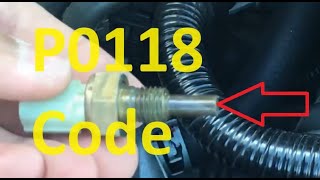
How to confirm: Use an OBD-II scanner to view live data. With a cold engine (at ambient temperature), check the ECT reading. If it shows -40°F or another impossibly low number, the sensor or its circuit is bad. 🎬 Watch: How to diagnose and fix a P0118 code Given the high failure rate, replacing the sensor is the most direct diagnostic step after confirming the live data reading.
Typical fix: Replace the ECT sensor located on the cylinder head. This requires partially draining the coolant or being prepared for some spillage as the old sensor is removed. The location on the V6 is significantly more difficult to access than on the 4-cylinder.
Est. part cost: $15-$70 - Damaged Wiring or Connector 🟡 Medium Probability The wiring harness and two-wire connector can become brittle, corroded, or damaged from engine heat and vibration over 15-20 years.
How to confirm: Visually inspect the two-wire connector and harness leading to the ECT sensor on the cylinder head. Look for green/white corrosion, frayed wires, or a loose connection. If the sensor is new and the code returns, test for 5V reference and a good ground at the connector with a multimeter. Wiggling the harness while watching live data can also reveal an intermittent connection. A broken wire right at the pigtail is also a known issue.
Typical fix: Clean the connector terminals or repair/replace the damaged section of the wiring harness. A replacement connector pigtail is often available (e.g., Dorman 645-205, Standard Motor Products S2333).
Est. part cost: $10-$30
Rare But Worth Checking
- Low Engine Coolant: If the coolant level is so low that the sensor is exposed to air instead of coolant, it can send erratic readings. This usually triggers other overheating symptoms first and is less likely to cause a static 'Circuit High' fault.
- Faulty Powertrain Control Module (PCM): This is extremely rare. The PCM should only be considered if a new OEM sensor and verified wiring do not resolve the code.
- Poor PCM Ground (G101): The main ECU ground, designated G101, is located on the thermostat housing area. If this ground is loose or corroded, it can create a voltage offset, causing the PCM to see a higher-than-normal voltage from the ECT sensor, triggering P0118 even with a good sensor and wiring.
Diagnosis Steps
- Connect an OBD-II scanner and confirm P0118 is the active code.
- View live data on the scanner. Check the 'ECT' or 'Engine Coolant Temperature' value. If the engine is cold, it should be close to the ambient air temperature. If it reads -40°F or a similarly low, fixed value, proceed.
- Turn off the vehicle. Locate ECT Sensor #1 on the cylinder head. For the 2.4L 4-cylinder, it's on the right side of the head, near the upper radiator hose connection. For the 3.0L V6, it's on the rear cylinder head, under the throttle body assembly.
- Inspect the sensor's electrical connector and wiring for any signs of corrosion, damage, or loose pins.
- If the wiring looks good, the most likely cause is the sensor itself. Prepare a drain pan for coolant spillage.
- Unplug the connector. Using a 17mm deep socket or wrench, remove the old sensor.
- Quickly install the new sensor with its new O-ring to minimize coolant loss. Do not overtighten.
- Reconnect the electrical connector.
- Top off the coolant system with Honda Type 2 blue coolant. Bleed the air from the system afterward by running the engine with the radiator cap off (and heater on full blast) until the cooling fans cycle twice.
- Clear the trouble code with the scanner and start the engine. Monitor the live ECT data to ensure it rises normally as the engine warms up.
Parts You'll Likely Need
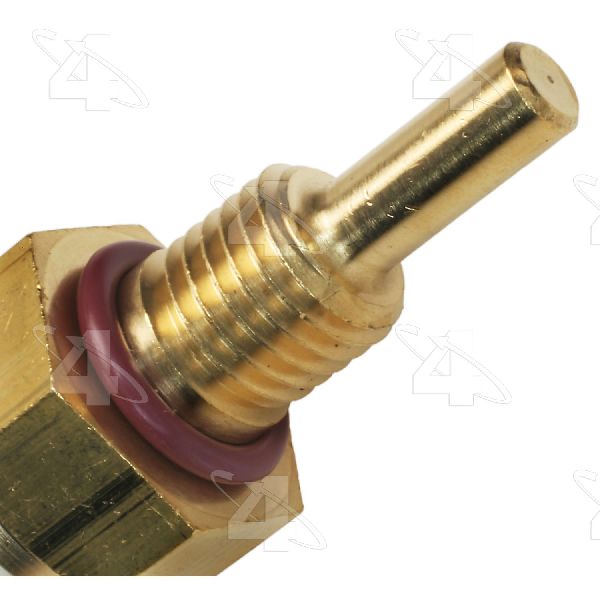
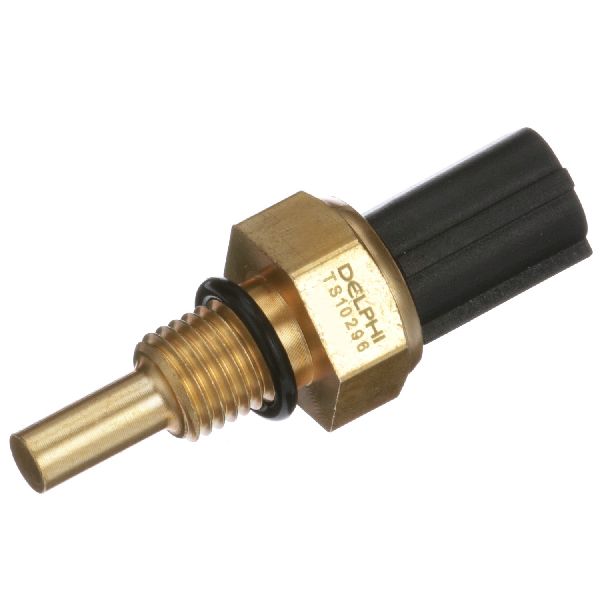
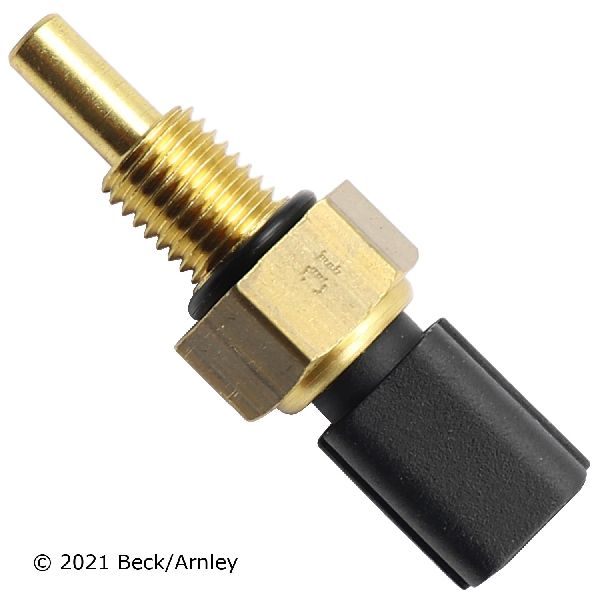
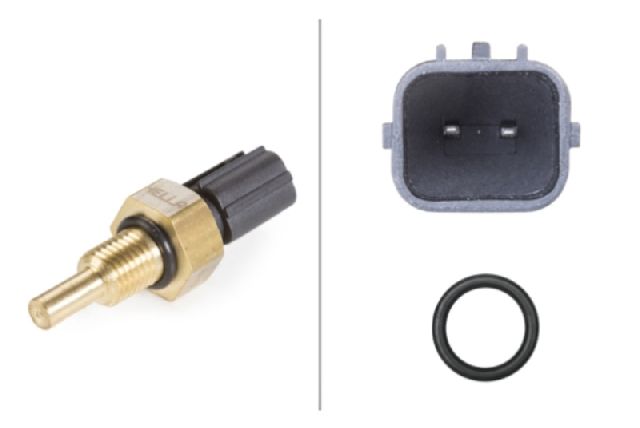
- Engine Coolant Temperature Sensor (ECT #1 for 2.4L I4)
(OEM #37870-PNA-003)— This is the sensor for the 4-cylinder engine that reports to the ECM and is the primary cause of code P0118. Its failure is a very common issue.
Trusted brands: Honda (Genuine), Denso (OEM supplier), NTK
OEM price range: $50-$70
Aftermarket price range: $15-$40 - Engine Coolant Temperature Sensor (ECT #1 for 3.0L V6)
(OEM #37870-RCA-A01)— This is the specific sensor for the V6 engine. The 4-cylinder part will not work. Its location makes the replacement more labor-intensive.
Trusted brands: Honda (Genuine), Denso (OEM supplier)
OEM price range: $50-$70
Aftermarket price range: $20-$45 - Connector Pigtail — If the original connector is corroded, brittle, or the locking tab is broken, a new pigtail is needed to ensure a solid connection to the new sensor.
Trusted brands: Dorman 645-205, Standard Motor Products S2333
OEM price range: N/A
Aftermarket price range: $10-$30
Platform-Specific Known Issues
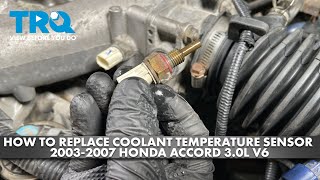
- V6 (J30A4/J30A5) ECT Sensor Location: The sensor is buried under the throttle body and intake components, making a simple sensor swap a more involved job requiring removal of these parts for access. 🎬 Watch: Step-by-step V6 coolant sensor replacement walkthrough
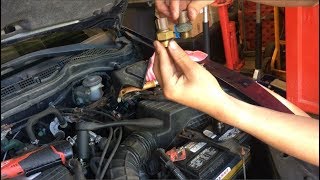
- 4-Cylinder (K24A4/K24A8) ECT Sensor Location: The sensor is very easy to access on the side of the cylinder head, making it a quick 15-30 minute job. 🎬 See this 4-cylinder coolant sensor replacement guide
Mechanic-Grade Diagnostic Values
- ECT Sensor Resistance — expected: Approx. 2,000 - 3,500 Ω at 20°C (68°F) and 250 - 400 Ω at 80°C (176°F).. Failure: Infinite resistance (open circuit), zero resistance (short), or a value significantly outside the expected range for a given temperature.
- ECT Connector Voltage (Key On, Engine Off, Connector Unplugged) — expected: Approx. 5.0V reference on one pin and a good ground on the other.. Failure: No voltage indicates a problem with the PCM or the wiring from the PCM. No ground indicates a break in the ground wire.
- ECT Live Data (Connector Unplugged) — expected: Scan tool should display the lowest possible temperature, typically -40°F/-40°C.. Failure: If the temperature does not default to -40°F, it may indicate a short to ground in the signal wire.
- ECT Live Data (Connector Pins Jumpered) — expected: Scan tool should display the highest possible temperature, e.g., 250-302°F.. Failure: If the temperature does not max out, it indicates an open or high resistance in the signal or ground wire between the connector and the PCM.
Scan Tool Commands That Help
- Honda Diagnostic System (HDS) or equivalent: Live Data / Data Stream > ECT Sensor 1 Parameter — This is the primary function used to diagnose P0118. A voltage reading stuck above 4.9V or a temperature reading of -40°F confirms the fault condition the PCM is seeing.
Wiring & Ground Locations
- G101 — The primary PCM and sensor ground. On the 2.4L engine, it is located at the top middle of the engine, on or near the thermostat housing. On the 3.0L V6, it is located at the rear of the engine.. A loose or corroded G101 ground can cause a voltage offset in the entire sensor circuit. This can make the PCM read a higher-than-actual voltage from the ECT sensor, triggering a P0118 code even if the sensor and wiring are perfectly fine.
- ECT Sensor Connector (2-Pin) — On the ECT sensor itself, located on the cylinder head.. This is where all circuit tests are performed. Pin 1 is typically the sensor signal (may be Green/Yellow wire) which goes to PCM connector A, pin A10. Pin 2 is the sensor ground path back to the PCM (may be Red/White wire). Note: Wire colors can vary.
Real Owner Repair Stories
- Honda-Tech forum user (Honda Accord (generation not specified, but behavior is relevant)) — After replacing a temp switch, the car would start but then idle down and die. It would not stay running without applying throttle.
❌ Tried (didn't work) The user had just replaced the ECT switch and spark plugs.
✅ What actually fixed it The user suspected, and other users confirmed, that the issue was the G101 ground wire on the thermostat housing which had been loosened during the repair. Properly securing the G101 ground is critical for stable engine operation. - YouTube video by 'fordtecha' (2006 Honda Accord 2.4L) — Check Engine Light with codes P2183 and P2185 (related to ECT sensor correlation, but the diagnostic is relevant).
❌ Tried (didn't work) Initial diagnosis pointed to a bad sensor.
✅ What actually fixed it Upon inspecting the connector for the ECT #2 sensor on the radiator, the technician found a wire was broken right at the connector pigtail. The fix was to get a new pigtail and splice it in, not replace the sensor itself. This highlights the importance of inspecting the connector and wiring harness thoroughly.
OEM Part Supersession History
37870-PNA-002, 37870-PLC-004→37870-PNA-003— Part consolidation and potential minor revisions by the manufacturer.
Heads up: 37870-PNA-003 is the correct and most current part number for the 2.4L 2003-2007 Accord. The older numbers should no longer be used.
Model Year Variations Within This Range
- 2003-2007: No significant variations have been documented for the ECT #1 sensor circuit within the 7th generation, other than the major difference between the 2.4L I4 and 3.0L V6 engines (part number and location).
Diagnostic Flowchart
Other Known Issues on This Vehicle
Issues unrelated to this code that are worth knowing about as an owner of this generation:
- Automatic Transmission Failure 🔴 High — Very common, especially in 2003-2004 V6 models. Less frequent but still occurs on 4-cylinder models. Often happens before 100,000 miles. (Ref: NHTSA Recall #04V176000; Honda extended the warranty on some models.)
- Power Steering Hose Leak 🟠 Medium — Common across all models. The high-pressure hose deteriorates and leaks onto the subframe and exhaust, causing a burning smell and loss of power steering fluid. (Ref: Honda issued a safety recall for V6 models and TSB 07-005 for others.)
- Clogged EGR Passages (V6 Models) 🟠 Medium — The EGR port inside the intake manifold is prone to clogging with carbon, leading to code P0401 (Insufficient EGR Flow), rough idle, and poor performance.
- Excessive Oil Consumption (4-Cylinder K24) 🟠 Medium — Many K24 engines in this generation consume oil, sometimes as much as a quart every 1,000-2,000 miles. It's often due to piston ring design and requires frequent oil level checks to prevent engine damage.
- Excessive Rear Brake Pad Wear 🟡 Low — A common complaint where rear brake pads wear out prematurely, sometimes faster than the front pads. Attributed to brake proportioning and caliper design. (Ref: TSB 03-088 was issued to address this.)
Used vs. New Parts: Buying Guide for This Vehicle
When a used part is the smart pick: For this repair, a used part only makes sense for the wiring connector pigtail. If your original connector is broken or corroded and you can find a clean one at a salvage yard, it is a cost-effective fix.
Donor-vehicle mileage cap: roughly under 150000 miles for the part to have meaningful remaining life.
What to inspect on the donor part:
- For a pigtail: Check that the plastic is not brittle or cracked.
- Ensure the locking tab clicks firmly.
- Look for clean, corrosion-free metal terminals inside the connector.
- Ensure there is at least 4-6 inches of wire attached to make splicing easy.
OEM-only on this vehicle (don't cheap out):
- Engine Coolant Temperature Sensor
Aftermarket brands forum-validated for this vehicle:
- Denso (often the OEM supplier)
- NTK / NGK
Brands owners have reported issues with on this vehicle:
- Generic, unbranded 'white-box' sensors from online marketplaces are a gamble. Failure rates can be high, and they may not have the correct resistance curve, leading to persistent performance issues even if the code is resolved.
Real Owner Stories
Aggregated from forums and TSBs cited above. Mileages and costs reflect what owners reported in those sources.
2003-2007 Honda Accord 2.4L I4
Symptoms: The owner followed a guide to address a P0118 code specifically on the 4-cylinder engine variant.
What fixed it: Replacement of the ECT1 sensor located on the right side of the cylinder head near the upper radiator hose.
Source hint: DriveAccord.net thread titled 'DIY - P0118 - ECT1 Sensor Replacement (I4)'
2003-2007 Honda Accord
Symptoms: The owner was trying to determine if the P0118 code was caused by the ECT#1 sensor, the fan switch, or the gauge sender.
What fixed it: Correctly identifying and replacing the ECT#1 sensor rather than the cooling fan switch or the dashboard gauge sender.
Source hint: Honda Accord Forum thread titled 'P0118 engine coolant temp sensor'
2003-2007 Honda Accord
Symptoms: The owner was confused whether the P0118 code was being triggered by a failing thermostat or the coolant temperature sensor.
What fixed it: Diagnosing the ECT sensor circuit rather than replacing the thermostat.
Source hint: Honda-Tech thread titled 'Help!! P0118 code'
Related OBD-II Codes
Frequently Asked Questions
Is there a difference in replacing the ECT sensor on the V6 Accord versus the 4-cylinder model?
My 2003-2007 Accord has a P0118 code; could this be related to the common transmission issues or power steering leaks?
Which specific replacement sensor should I use for my Honda Accord to ensure the P0118 code stays away?
Could a bad thermostat be causing my P0118 code?
What should I look for if I suspect the wiring is the cause of P0118 on my Accord?
How do I properly bleed the cooling system after replacing the sensor to avoid further issues?
Helpful Videos
We Have This Part in Stock


The information in this article is provided for general reference and educational purposes only. Vehicle specifications, procedures, and part compatibility can vary by production date, trim level, and region. Always consult your vehicle's factory service manual and verify part numbers before purchasing or performing repairs. Safety-critical components such as airbags, seat belts, and braking systems should be installed by a qualified professional.
- Honda Accord:
- 🧭 Diagnostic Flowchart
- 🎬 Helpful Videos
- 🛍️ Shop This Part
- What's Unique About the 2003-2007 Honda Accord
- Symptoms You May Notice
- Most Likely Causes
- Rare But Worth Checking
- Diagnosis Steps
- Parts You'll Likely Need
- Platform-Specific Known Issues
- Mechanic-Grade Diagnostic Values
- Scan Tool Commands That Help
- Wiring & Ground Locations
- Real Owner Repair Stories
- OEM Part Supersession History
- Model Year Variations Within This Range
- Other Known Issues on This Vehicle
- Used vs. New Parts: Buying Guide for This Vehicle
- Real Owner Stories
- 2003-2007 Honda Accord 2.4L I4
- 2003-2007 Honda Accord
- 2003-2007 Honda Accord
- Related OBD-II Codes
- Frequently Asked Questions
- 🎟️ Get 5% Off