

P0118 on 2008-2012 Honda Accord: Engine Coolant Sensor Causes and Fixes
For a 2008-2012 Honda Accord with either the 2.4L 4-cylinder or 3.5L V6 engine, code P0118 almost always means the primary Engine Coolant Temperature (ECT) Sensor 1 has failed. This results in the computer seeing a false, extremely low temperature (like -40°F), causing a rich fuel mixture. It is an inexpensive and highly accessible DIY fix, with the OEM part costing between $45 and $65.
- P0118 on a 2008-2012 Accord is almost always a failed Engine Coolant Temperature (ECT) Sensor 1, located on the engine head, not the radiator.
- Confirm the failure by checking for a -40°F reading on a scan tool with a cold engine.
- The correct OEM part number for both the 2.4L and 3.5L engines is 37870-RTA-005.
- This is a very DIY-friendly repair that can be done in under 30 minutes with basic tools, saving significant money over a shop visit.
- Always use Honda Type 2 (blue) coolant to top off the system after the repair.
What's Unique About the 2008-2012 Honda Accord
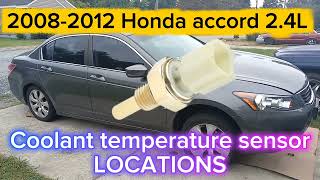
The 8th generation Honda Accord (both 2.4L K24 and 3.5L J35 engines) uses two separate coolant temperature sensors. ECT Sensor 1, which triggers the P0118 code, is located on the cylinder head and provides the primary temperature reading to the computer for fuel and timing calculations. ECT Sensor 2 is located at the bottom of the radiator and is mainly used for controlling the cooling fans. A very common and well-documented mistake is to replace the wrong sensor 🎬 Watch: Locate both coolant temperature sensors on your Accord (ECT 2 on the radiator) when P0118 is present. This code specifically points to a fault with ECT Sensor 1 or its circuit.
Symptoms You May Notice
- Check Engine Light is on
- Hard starting, especially when the engine is cold
- Poor fuel economy
- Black smoke coming from the tailpipe
- Cooling fans run continuously, even when the engine is cold
- Rough or high idle
- In some cases, harsh or delayed automatic transmission shifting, as the transmission controller relies on engine temperature data.
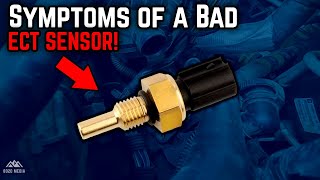
- Engine temperature gauge on the dashboard may behave erratically or show no reading. 🎬 Watch: Learn the common symptoms of a bad ECT sensor
- Replacing ECT Sensor 2, which is located at the bottom of the radiator. This sensor is for the cooling fans and will not fix a P0118 code.
- Replacing the thermostat. A faulty thermostat typically causes overheating or slow warm-up issues and would set different codes (like P0128), not an electrical circuit code like P0118.
Most Likely Causes
- Failed Engine Coolant Temperature (ECT) Sensor 1 🔴 High Probability → Shop Engine Coolant Temperature Sensor This is a common failure part across many Honda models of this era due to age and constant exposure to extreme heat cycles. The internal thermistor fails, creating an open circuit.
How to confirm: With a cold engine, use a scan tool to view live data. If the ECT reading is an illogical, very low temperature (e.g., -40°F) while the Intake Air Temp (IAT) shows ambient temperature, the sensor has failed. Resistance across the two pins of the disconnected sensor should be around 2000-3000 ohms at room temperature (~68°F); an infinite resistance reading confirms failure.
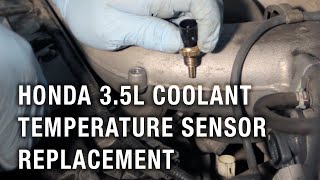
Typical fix: Replace the ECT sensor. On the 2.4L K24 engine, it's located on the right side of the cylinder head near the upper radiator hose housing. On the 3.5L J35 engine, it's on the front cylinder head, near the throttle body. The repair involves unplugging the connector, unscrewing the old sensor (a deep 17mm socket is often required), and quickly installing the new one to minimize coolant loss.
Est. part cost: $15-$65 - Damaged Wiring or Connector 🟡 Medium Probability The wiring harness and connector are exposed to engine heat and vibration, which can cause wires to become brittle and break or the connector to corrode over time. Rodent damage is also a possible cause.
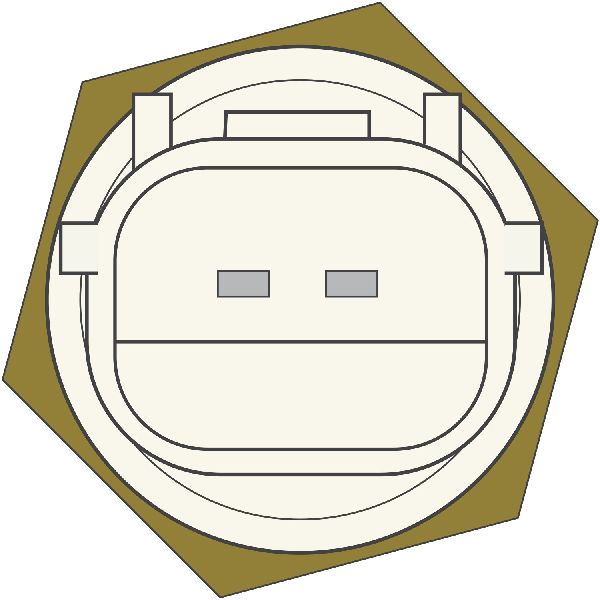
How to confirm: Visually inspect the two-wire connector and harness for frayed wires, corrosion, or loose pins. To test the circuit, unplug the sensor and use a paperclip to jump the two terminals in the connector. The scan tool's temperature reading should swing from -40°F to a very high temperature (250°F+). If it does, the wiring and PCM are good.
Typical fix: Repair the broken wire or replace the connector pigtail. The pigtail for this sensor is a common part available at auto parts stores.
Est. part cost: $10-$30 - Low Engine Coolant or Air Pocket ⚪ Low Probability This is less likely to cause a 'Circuit High' code (which indicates an open circuit) and more likely to cause erratic readings or a 'Circuit Low' code (P0117). However, if a significant air pocket from a recent coolant service or leak envelops the sensor, it can't read the coolant temperature correctly and may throw a fault.
How to confirm: Check the coolant level in the radiator (when the engine is cold) and the overflow reservoir. If the level is low, there is a leak in the system that must be found and repaired.
Typical fix: Top off the coolant with Honda Type 2 blue coolant and properly bleed the cooling system to remove any air pockets. Find and repair the source of the coolant leak.
Est. part cost: $20-$40 for Honda Type 2 coolant
Rare But Worth Checking
- Faulty Powertrain Control Module (PCM): This is extremely rare. The PCM should only be considered after all other possibilities (sensor, wiring, connections) have been exhaustively tested and ruled out.
Diagnosis Steps
- Connect an OBD-II scanner and confirm P0118 is the active code. Note any other codes present.
- Using the scanner's live data function, check the Engine Coolant Temperature (ECT) reading with the engine cold and off. It should be close to the Intake Air Temperature (IAT) and ambient outside temperature.
- If the ECT reads an illogical low number like -40°F or -4°F, the sensor or its circuit is faulty.
- Visually inspect the ECT Sensor 1 connector and wiring. It is a two-wire sensor located on the cylinder head. Check for obvious damage, corrosion, rodent chew marks, or loose connections.
- Disconnect the sensor connector. With the key on, engine off, use a multimeter to verify there is a 5-volt reference on one wire and a good ground on the other.
- If voltage and ground are present, the wiring is likely good. A definitive test is to use a paperclip or jumper wire to connect the two pins in the harness connector. The scan tool's ECT reading should swing to a very high temperature (e.g., 250°F+). If it does, the wiring and PCM are confirmed to be good, and the sensor itself is the fault.
- If the scan tool reading does not change when jumping the connector, there is a break in the wiring between the connector and the PCM that must be traced and repaired.
- If the sensor is confirmed to be the issue, replace it. It's wise to have the new sensor ready to swap in quickly to minimize coolant loss.
Parts You'll Likely Need
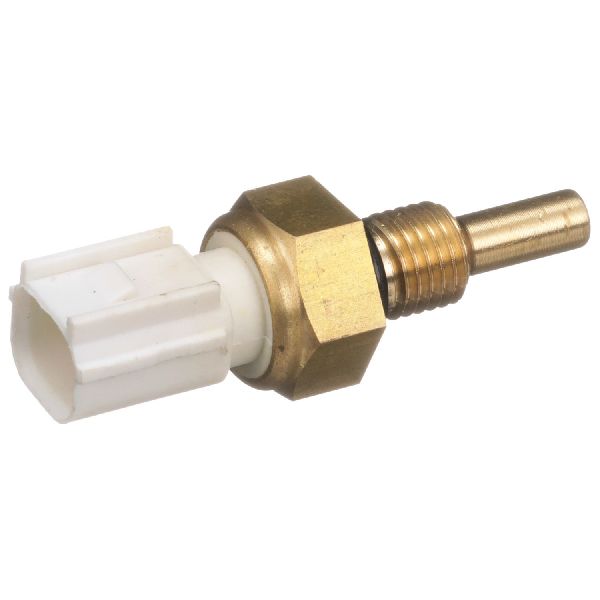
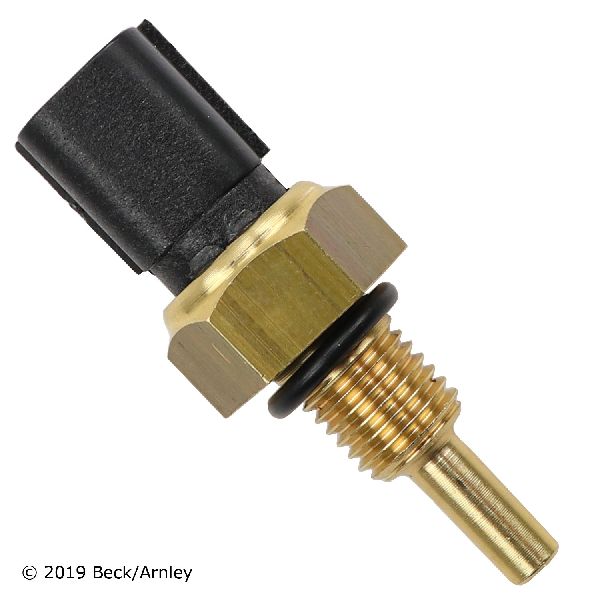
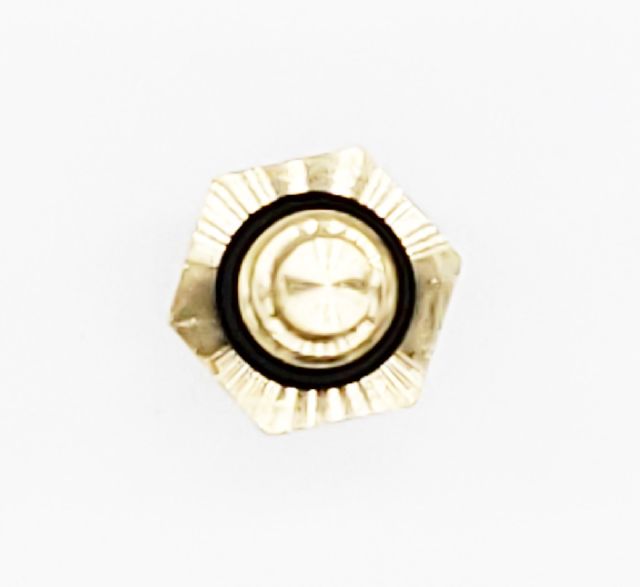
- Engine Coolant Temperature Sensor (ECT Sensor 1)
(OEM #37870-RTA-005)— This is the primary sensor that provides data to the engine computer. It is the most common point of failure for a P0118 code. This part number is widely used across many Honda and Acura vehicles and applies to both the 2.4L and 3.5L engines for this generation.
Trusted brands: Honda (Genuine OEM), Denso (OEM Manufacturer), Standard Motor Products (SMP), NTK
OEM price range: $45-$65
Aftermarket price range: $15-$35 - Honda Type 2 Antifreeze / Coolant
(OEM #OL999-9011)— A small amount of coolant will be lost when replacing the sensor. It is critical to top off the system with the correct blue Honda Type 2 coolant to prevent cooling system issues and corrosion.
Trusted brands: Honda OEM, Pentofrost A3, Beck/Arnley
OEM price range: $20-$30 per gallon
Aftermarket price range: $18-$25 per gallon
Related Codes That Often Appear With This One
- P0117 — This code for 'ECT Circuit Low' may appear during diagnosis. If you unplug the sensor to test it, the open circuit creates a P0118. If you then jump the connector pins to test the wiring, the short circuit creates a P0117. Seeing these codes appear and disappear during testing is a good sign the wiring to the PCM is intact.
- P0700 — On some Honda/Acura models, a faulty ECT sensor can trigger a generic transmission control system malfunction code (P0700) and cause a flashing 'D' light because the transmission's computer needs an accurate engine temperature reading to manage shift points and torque converter lockup.
Platform-Specific Known Issues
- source — A user on DriveAccord.net reported triggering a P0118 code immediately after replacing the V6 engine's spool valve gaskets. The cause was simply forgetting to plug the ECT sensor connector back in during reassembly, as it is located nearby. This highlights the importance of double-checking all connections after performing adjacent repairs.
Mechanic-Grade Diagnostic Values
- ECT Sensor Resistance vs. Temperature — expected: ~2000-3000 Ω at 20°C (68°F) and ~250-400 Ω at 80°C (176°F).. Failure: An infinite resistance reading (open circuit) or a value significantly outside the expected range for a given temperature.
- ECT Sensor Connector Voltage (Key On, Engine Off) — expected: Approximately 5.0 Volts reference from the PCM on one pin, and a good ground (<0.1V) on the other.. Failure: No 5V reference suggests a PCM or wiring issue. High voltage on the ground wire indicates a bad ground connection.
- ECT Sensor Signal Voltage (Warm Engine) — expected: On a fully warmed-up Honda engine, the signal voltage sent to the ECM should be under 1.0 Volt.. Failure: A signal voltage that remains high (e.g., over 4.5V) even when the engine is hot confirms a fault in the sensor or circuit.
Scan Tool Commands That Help
- Honda Diagnostic System (HDS) or equivalent: Live Data / Data List for ECT Sensor 1 — This is the primary function used for diagnosis. It allows the technician to see the exact temperature value the PCM is receiving. A reading of -40°F or a voltage stuck at ~5V immediately confirms the P0118 fault condition.
Wiring & Ground Locations
- G101 — On the engine cylinder head or thermostat housing area, typically a bundle of ground wires secured by a single bolt.. G101 serves as the main power and logic ground termination point for the ECU. A corroded, loose, or frayed connection at G101 can interrupt the ground path for the ECT sensor circuit, causing the voltage to float high and trigger a P0118 code. This is a common point of failure due to heat and vibration.
- PCM Connector C, Pin C26 (Example for older models) — At the Powertrain Control Module (PCM), which is typically located in the passenger footwell area.. On some Honda models, the ECT sensor signal wire runs to a specific pin on the PCM connector (e.g., C26 on older Accords). Knowing this pin allows for continuity testing of the signal wire between the sensor connector and the PCM to rule out a wire break in the harness.
Real Owner Repair Stories
- Honda-Tech forum user (Honda with G101 ground issues) — Car would randomly die and not restart, especially in cold weather.
❌ Tried (didn't work) Cleaning the ground terminal and bolt at the thermostat housing.
✅ What actually fixed it The G101 ground wire was frayed inside the wiring loom, even though the connection at the thermostat housing looked good. The final fix was to run a new test wire from the G101 pin at the ECU directly to a chassis ground, which solved the problem, confirming the break was in the original wire.
OEM Part Supersession History
37870-PK2-015→37870-RTA-005— Part consolidation and minor design updates over many model years.
Model Year Variations Within This Range
- 2011-2012: The 2011 model year brought a mid-cycle refresh with revised exterior styling, some interior changes, and minor tweaks to the engine and transmission for better fuel economy. However, these changes did not affect the part number, location, or diagnostic procedure for the ECT Sensor 1 and the P0118 code.
Diagnostic Flowchart
Other Known Issues on This Vehicle
Issues unrelated to this code that are worth knowing about as an owner of this generation:
- VTC Actuator Rattle on Cold Start (2.4L K24 Engine) 🟠 Medium — Very common. A loud, brief rattle or grinding noise for 1-2 seconds upon cold startup. Caused by a faulty pin in the Variable Timing Control (VTC) actuator. (Ref: Honda TSB 09-010.)
- Excessive Oil Consumption (Both Engines) 🔴 High — Common on both 2.4L and especially the 3.5L V6 with Variable Cylinder Management (VCM). Piston rings can become clogged with carbon, leading to high oil consumption. A class-action lawsuit was settled regarding this issue for V6 models. (Ref: Honda TSB 11-033 addresses a software update for oil life, but the mechanical issue is more complex. The class action settlement extended the powertrain warranty.)
- Torque Converter Judder / Shudder (V6 Automatic) 🟠 Medium — A noticeable vibration or shudder is felt during light acceleration, typically between 20-45 mph. Often caused by deteriorated automatic transmission fluid. (Ref: Multiple TSBs exist, including 12-029. The fix often involves a software update and multiple transmission fluid flushes with Honda ATF-DW1. The warranty was also extended for the torque converter.)
- Premature Rear Brake Wear 🟡 Low — Very common on 2008-2009 models, but affects the whole generation. Rear brake pads wear out much faster than expected, sometimes in as little as 15,000-20,000 miles. (Ref: No TSB, but it was a subject of a class-action lawsuit. Using updated aftermarket pads often provides a better solution than OEM.)
- Failing Starter Motor 🟡 Low — A common wear item after 100,000 miles. Symptoms include a no-start condition where the engine only cranks or makes a single click.
Used vs. New Parts: Buying Guide for This Vehicle
When a used part is the smart pick: For this specific repair, a used part from a junkyard is NEVER a smart choice. The part is a low-cost wear item, and the labor to replace it again if the used part fails quickly outweighs any initial savings.
What to inspect on the donor part:
- Not applicable. Do not buy this part used.
OEM-only on this vehicle (don't cheap out):
- While not strictly 'OEM-only', using a Genuine Honda sensor or one from the original equipment manufacturer (Denso) is highly recommended for guaranteed fitment and accurate temperature readings.
Aftermarket brands forum-validated for this vehicle:
- Denso (often the OEM supplier for Honda)
- NTK
Brands owners have reported issues with on this vehicle:
- Unnamed, no-brand, or 'white-box' sensors from online marketplaces should be avoided as they often have poor quality control, leading to inaccurate readings or premature failure.
Real Owner Stories
Aggregated from forums and TSBs cited above. Mileages and costs reflect what owners reported in those sources.
2008-2012 Honda Accord V6
Symptoms: Check engine light P0118 triggered immediately after a repair.
What fixed it: The owner realized they had forgotten to plug the ECT sensor connector back in after replacing the spool valve gaskets.
Source hint: driveaccord.net - Corroborated the existence of two separate ECT sensors and the common confusion between them. A user specifically triggered the code by forgetting to reconnect the sensor after another repair.
Honda Accord (Older Model)
Symptoms: P0118 code present; owner attempted to fix it by replacing the thermostat.
What fixed it: Replacing the thermostat did not fix the issue, reinforcing that P0118 is an electrical circuit fault, not a mechanical cooling issue.
Source hint: honda-tech.com - A user with an older Accord confirmed that replacing the thermostat did not fix their P0118 code, reinforcing that it's an electrical, not mechanical, fault.
Related OBD-II Codes
Frequently Asked Questions
Where is the ECT sensor located on my 2008-2012 Honda Accord with the 2.4L K24 engine?
I have a V6 Accord; is the sensor in the same place as the 4-cylinder?
Can I use any coolant to top off my Accord after replacing the sensor?
My Accord is rattling for a second when I start it cold; is this related to the P0118 code?
Could a recent repair on my V6 spool valve cause a P0118 code?
Will a P0118 code affect how my Accord shifts?
Helpful Videos
We Have This Part in Stock


The information in this article is provided for general reference and educational purposes only. Vehicle specifications, procedures, and part compatibility can vary by production date, trim level, and region. Always consult your vehicle's factory service manual and verify part numbers before purchasing or performing repairs. Safety-critical components such as airbags, seat belts, and braking systems should be installed by a qualified professional.
- Honda Accord:
- 🧭 Diagnostic Flowchart
- 🎬 Helpful Videos
- 🛍️ Shop This Part
- What's Unique About the 2008-2012 Honda Accord
- Symptoms You May Notice
- Most Likely Causes
- Rare But Worth Checking
- Diagnosis Steps
- Parts You'll Likely Need
- Related Codes That Often Appear With This One
- Platform-Specific Known Issues
- Mechanic-Grade Diagnostic Values
- Scan Tool Commands That Help
- Wiring & Ground Locations
- Real Owner Repair Stories
- OEM Part Supersession History
- Model Year Variations Within This Range
- Other Known Issues on This Vehicle
- Used vs. New Parts: Buying Guide for This Vehicle
- Real Owner Stories
- 2008-2012 Honda Accord V6
- Honda Accord (Older Model)
- Related OBD-II Codes
- Frequently Asked Questions
- 🎟️ Get 5% Off