

P0118 on 2016-2018 Lincoln MKX: ECT Sensor Circuit Causes and Fixes
For a 2016-2018 Lincoln MKX with the 2.7L engine, code P0118 is most often caused by a faulty Engine Coolant Temperature (ECT) sensor connector or damaged wiring, as noted in manufacturer TSBs. The sensor is located under the intake manifold, making it very difficult to access. Therefore, inspecting the connector and harness near the sensor is the critical first step before attempting sensor replacement.
- On a 2016-2018 Lincoln MKX with a 2.7L engine, P0118 is very likely a wiring or connector issue, not a bad sensor.
- Always inspect the ECT sensor connector for a secure fit and the nearby wiring for damage before buying any parts.
- Symptoms include a check engine light, faulty temperature gauge, and cooling fans that won't turn off.
- Driving with this code is not recommended long-term as it can mask a true overheating condition and cause poor engine performance.
- This is a relatively simple and inexpensive DIY fix if it's a loose connector or a bad sensor.
What's Unique About the 2016-2018 Lincoln MKX
The 2016-2018 Lincoln MKX with the 2.7L EcoBoost engine has an ECT sensor that is notoriously difficult to access, as it is buried under the intake manifold. Because of this, the multiple Technical Service Bulletins (TSBs) from Ford/Lincoln are especially important. These bulletins highlight a known tendency for the ECT sensor's electrical connector to be improperly seated or for the shared ECT/knock sensor wiring harness to become damaged. This makes a wiring or connector issue a much higher probability and a more critical diagnostic step compared to other vehicles where simply replacing the sensor is an easy first step.
Diagnostic Flowchart
Tap your situation to follow the diagnostic path that matches what you're seeing on this vehicle.
Symptoms You May Notice
- Check Engine Light is on
- Engine temperature gauge reads incorrectly (either stuck on cold or suddenly jumps to hot)
- "Engine Coolant Over Temperature" warning message may appear on the dash (as noted in TSB SSM 48991).
- Cooling fans run constantly at high speed, even when the engine is cold.
- Reduced fuel economy due to the PCM defaulting to a rich fuel mixture.
- Engine may be hard to start when cold.
- Rough or hesitant running, especially before the engine warms up.
- A/C system may be disabled by the PCM as a protective measure.
- Replacing the thermostat. A thermostat is a mechanical part that regulates coolant flow. While a stuck thermostat can cause overheating or overcooling issues (often setting a P0128 code), it will not cause a P0118 'circuit high' electrical fault.
Most Likely Causes
- Damaged or Improperly Seated ECT Sensor Connector 🔴 High Probability → Shop Engine Coolant Temperature Sensor This is specifically called out in Lincoln's Technical Service Bulletins (SSM 47791 and SSM 46906) for the 2.7L engine. The connector can become loose or the pins can be damaged, creating an open circuit that triggers P0118.
How to confirm: Visually inspect the ECT sensor connector. Ensure it is fully clicked into place and free of corrosion or damage. Wiggle the connector with the engine running and live data on a scan tool to see if the temperature reading fluctuates wildly from -40°F to a normal reading.
Typical fix: Reseat the connector securely. If the connector or its locking tab is broken, it will need to be replaced with a new pigtail connector, such as Motorcraft p/n WPT-1282.
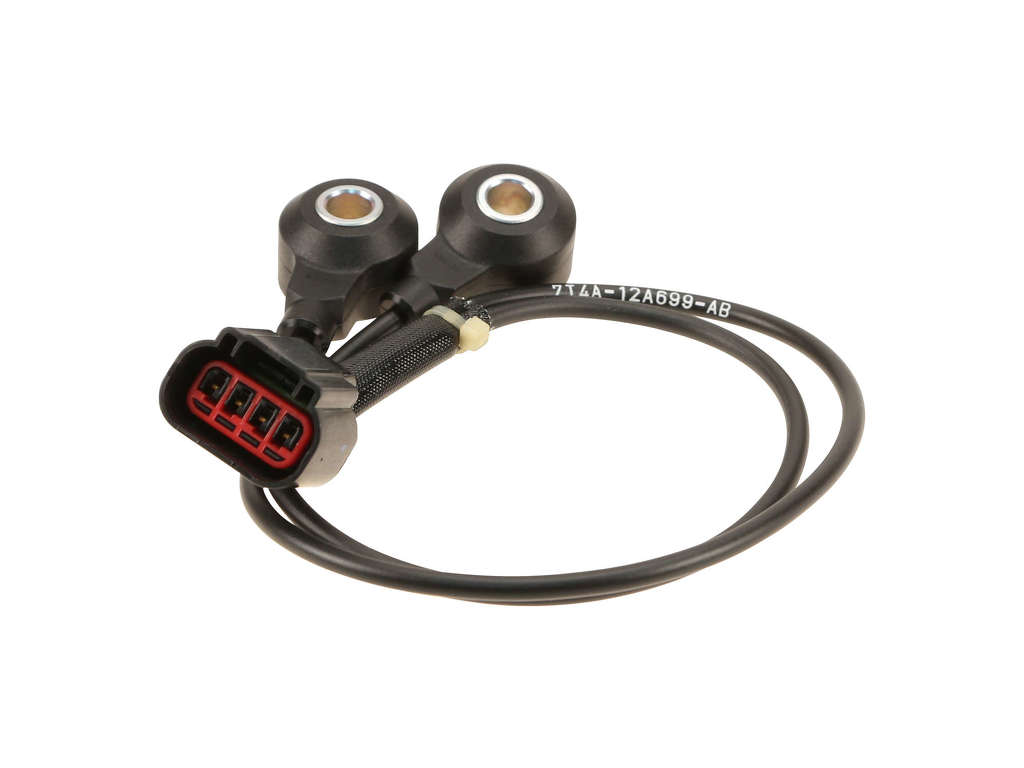
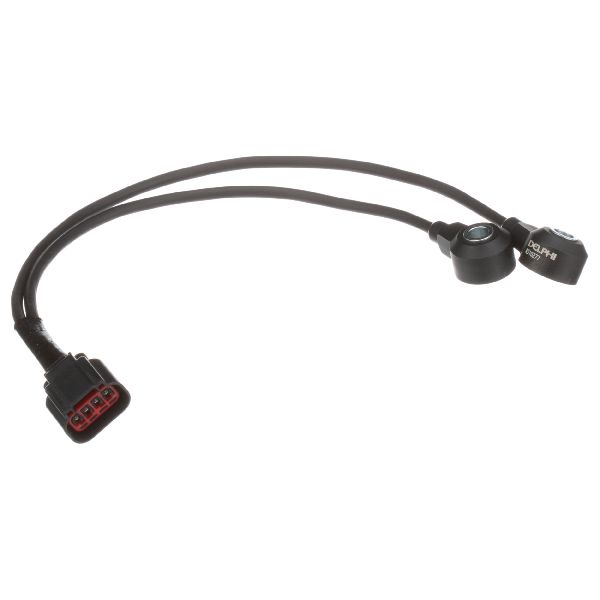
Est. part cost: $25-$50 - Damaged ECT / Knock Sensor Wiring Harness 🟡 Medium Probability → Shop Engine Wiring Harness TSB SSM 48991 explicitly states this code can be due to the ECT or knock sensor wiring harness. The harness (p/n 12A699) routes through the hot engine valley, making it susceptible to heat damage over time, causing wires to become brittle and break.
How to confirm: Visually inspect the wiring harness leading to the ECT sensor for any signs of chafing, melting, or breaks. Perform a continuity test on the signal and ground wires from the PCM connector to the sensor connector to check for an open circuit.
Typical fix: If a single wire is broken near the connector, a repair may be possible. However, TSB 48991's official repair is to replace the entire knock sensor harness (which includes the ECT wiring) along with the ECT sensor itself. 🎬 See how this TSB repair and relocation kit are installed.
Est. part cost: $50-$100 for the harness - Faulty Engine Coolant Temperature (ECT) Sensor 🟡 Medium Probability → Shop Engine Coolant Temperature Sensor
How to confirm: With a scan tool, check the live data for the ECT sensor with the engine cold. The reading should be close to the ambient air temperature and the Intake Air Temperature (IAT) sensor reading. If it reads an extreme negative value (like -40°F), the sensor has likely failed open. You can also test the sensor's internal resistance with a multimeter; an open circuit (infinite resistance) indicates failure.
Typical fix: Replace the ECT sensor. On the 2.7L engine, this is a significant job requiring removal of the intake manifold. 🎬 Watch: This walkthrough shows the difficult 2.7L sensor access. For this reason, it is often done at the same time as a wiring harness replacement.
Est. part cost: $25-$70
Rare But Worth Checking
- Faulty Powertrain Control Module (PCM): This is very rare. The PCM should only be considered after all other possibilities, including the sensor, connector, and all wiring, have been thoroughly tested and proven to be good.
Diagnosis Steps
- Connect an OBD-II scanner and confirm P0118 is the active code. Note any other codes present, especially P0116, P0117, or P1299.
- View live data on the scanner. With the engine cold and key on, compare the Engine Coolant Temperature (ECT) and Intake Air Temperature (IAT) readings. They should be within a few degrees of each other. If the ECT shows an extremely low value (e.g., -40°F/°C), this confirms an open circuit. 🎬 Watch: EricTheCarGuy explains how to diagnose P0118 circuit high codes.
- Locate the ECT sensor wiring. The sensor itself is buried under the intake manifold on the 2.7L engine, but the connector and harness may be accessible for inspection at the rear of the engine.
- Thoroughly inspect the ECT sensor's electrical connector. Check if it's loose, cracked, or has corroded/damaged pins. Per TSBs, this is a very common failure point. Wiggle the connector and harness while watching the live data to see if the reading changes.
- Inspect the wiring harness leading to the sensor for any visible signs of damage, such as chafing against other components or melting from heat.
- To test the wiring from the connector, disconnect it. Use a fused jumper wire to connect the two pins in the harness-side connector. The temperature reading on the scan tool should jump to a very high value (e.g., over 250°F). If it does, the wiring to the PCM is likely okay, and the fault is in the sensor or the connection itself. If the reading does not change from -40°F, there is a break in the wiring between the connector and the PCM.
- If wiring and connector checks pass, the sensor itself is the likely culprit. However, given its location, replacement is labor-intensive. TSB 48991 recommends replacing the ECT sensor and the knock sensor harness (12A699) at the same time.
- If all wiring and the sensor have been replaced and the code persists, the issue could be an extremely rare internal PCM fault.
Parts You'll Likely Need
- Engine Coolant Temperature (ECT) Sensor
(OEM #FT4Z-12A648-B)— If the sensor itself has failed internally by creating an open circuit, it will need to be replaced. This is often done in conjunction with the harness due to its difficult-to-access location under the intake manifold.
Trusted brands: Motorcraft, NTK, Dorman
OEM price range: $30-$45
Aftermarket price range: $20-$35 - ECT Sensor Connector Pigtail
(OEM #WPT-1282)— As identified in manufacturer TSBs, the connector itself is a primary point of failure. If the locking tab is broken or the terminals are damaged, replacing the connector with a pigtail is necessary.
Trusted brands: Motorcraft, Dorman, Standard Motor Products
OEM price range: $35-$50
Aftermarket price range: $15-$30 - Knock Sensor / ECT Wiring Harness
(OEM #FT4Z-6C038-A (Base P/N: 12A699))— TSB SSM 48991 identifies this harness, which integrates the ECT sensor wiring, as a common cause of the fault. The official repair procedure often involves replacing this harness along with the sensor.
Trusted brands: Motorcraft
OEM price range: $50-$80
Related Codes That Often Appear With This One
- P0117 — P0117 is 'ECT Circuit Low Input'. Seeing both intermittently could point to a loose connection or frayed wire that is shorting to ground (P0117) and then going open circuit (P0118).
- P0116 — P0116 is 'ECT Circuit Range/Performance'. This code can be set if the PCM sees the sensor's readings change in an illogical way, which can happen with an intermittent wiring fault that also causes P0118.
- P1299 — P1299 is 'Cylinder Head Over Temperature Protection Active'. The PCM may set this code as a protective measure when it receives the nonsensical -40°F reading from the ECT sensor, as it can't trust the temperature input. This code is specifically listed in TSB 48991 along with P0118.
- P0128 — P0128 is 'Coolant Thermostat (Coolant Temperature Below Thermostat Regulating Temperature)'. If the PCM receives a false, extremely cold reading from the ECT sensor due to a P0118 fault, it may incorrectly conclude that the engine is not warming up as expected and set P0128 as well.
Technical Service Bulletins (TSBs) & Recalls
- SSM 48991: Mentions P0118 in a list of DTCs that can result from a faulty ECT sensor or knock sensor wiring harness on 2.7L EcoBoost engines. Advises replacing both the sensor and the harness.
- SSM 47791: Points to a not fully seated or damaged ECT sensor connector as the cause for P0118 on 2.7L engines.
- SSM 46906: Similar to SSM 47791, identifies a poorly seated or damaged ECT sensor connector as a primary cause for P0118 on the 2.7L engine.
Platform-Specific Known Issues
- TSB SSM 48991: Ford/Lincoln issued this bulletin for 2016-2018 MKX models with the 2.7L engine that exhibit P0118 (and other codes). The cause is identified as a fault in the engine coolant temperature (ECT) sensor or the knock sensor wiring harness. The recommended fix is to replace both the ECT sensor (p/n 12A648) and the knock sensor harness (p/n 12A699).
- TSB SSM 47791 & SSM 46906: These bulletins apply to 2016-2018 MKX models with the 2.7L engine and point to a more common and simpler cause: the ECT sensor connector is not fully seated or the wiring between connectors C1016 and C1168 is damaged. This should be the first inspection before attempting to replace parts under the intake manifold.
Mechanic-Grade Diagnostic Values
- ECT Sensor Resistance — expected: 2,000 to 3,000 Ohms (Ω) at 68°F (20°C).. Failure: Infinite resistance (open circuit) or a value significantly outside the expected range indicates a faulty sensor.
- ECT Sensor Circuit Voltage at PCM — expected: Between 0.5V (hot) and 4.5V (cold).. Failure: A voltage reading greater than 4.91V will trigger the P0118 code, confirming an open in the sensor or circuit.
Wiring & Ground Locations
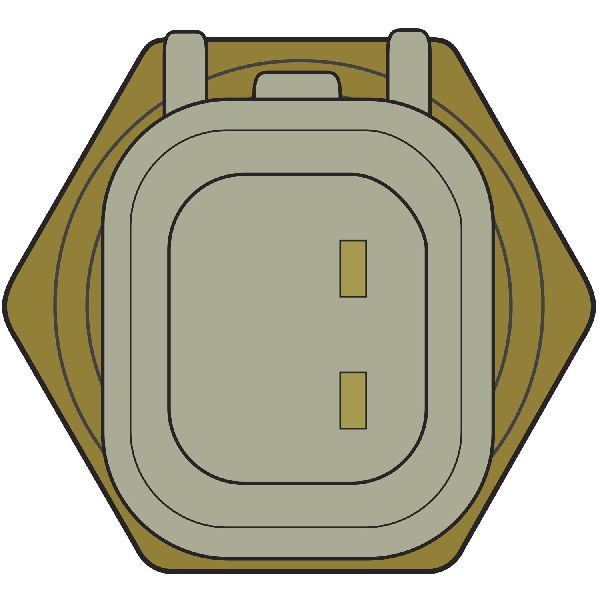
- C1016 — The electrical connector at the Engine Coolant Temperature (ECT) sensor itself, located under the intake manifold.. This is the primary connection point that is cited in TSBs SSM 47791 & 46906 as being prone to not being fully seated, causing an open circuit and triggering P0118.
- C1168 — A harness-to-harness connector in the engine bay, downstream from the ECT sensor.. TSB SSM 47791 specifically mentions to check for damaged wiring between the sensor connector (C1016) and this connector, indicating a potential chafe or break point in the harness run.
- ECT Sensor Connector Pins (at C1016) — At the sensor connector.. For testing, Pin 2 (GY-VT wire) is the ECT Sensor Signal wire going to the PCM, and Pin 1 (YE-GY wire) is the Signal Return/Ground. Testing for voltage, ground, and continuity at these specific pins is essential for isolating the fault between the sensor, wiring, and PCM.
Real Owner Repair Stories
- Ford Edge Forum (2016 Ford Edge Sport 2.7L EcoBoost (mechanically similar to Lincoln MKX)) — Got an "ENGINE COOLANT OVER TEMP" warning light on the dash just 5 minutes into a drive.
❌ Tried (didn't work) Initial diagnosis by a mechanic was inconclusive.
✅ What actually fixed it The user posted a wiring diagram for the ECT sensor circuit, implying the final fix was related to a wiring or connector fault, which aligns with the known TSBs for this engine.
OEM Part Supersession History
FT4Z-12A648-A→FT4Z-12A648-B— Part revision by the manufacturer. The new part is the current replacement.
Heads up: The parts are interchangeable; FT4Z-12A648-B is the correct service part to order.DY-1298→FT4Z-12A648-B— Part number consolidation. DY-1298 was a previous service number.
Heads up: FT4Z-12A648-B is the correct replacement for DY-1298.
Model Year Variations Within This Range
- 2018+: On some Ford models with the 2.7L EcoBoost starting in 2018 (primarily the F-150), the ECT sensor was moved to a highly inaccessible location, prompting Ford to issue a relocation kit (TSB 21-2168) as the official repair. While this TSB doesn't explicitly list the 2018 MKX, it highlights a known design issue with the sensor's location on this engine family around that time.
Helpful Videos

We Have This Part in Stock


The information in this article is provided for general reference and educational purposes only. Vehicle specifications, procedures, and part compatibility can vary by production date, trim level, and region. Always consult your vehicle's factory service manual and verify part numbers before purchasing or performing repairs. Safety-critical components such as airbags, seat belts, and braking systems should be installed by a qualified professional.
- Lincoln MKX:
- 🧭 Diagnostic Flowchart
- 🎬 Helpful Videos
- 🛍️ Shop This Part
- What's Unique About the 2016-2018 Lincoln MKX
- Symptoms You May Notice
- Most Likely Causes
- Rare But Worth Checking
- Diagnosis Steps
- Parts You'll Likely Need
- Related Codes That Often Appear With This One
- Technical Service Bulletins (TSBs) & Recalls
- Platform-Specific Known Issues
- Mechanic-Grade Diagnostic Values
- Wiring & Ground Locations
- Real Owner Repair Stories
- OEM Part Supersession History
- Model Year Variations Within This Range
- 🎟️ Get 5% Off