

P0118 on 2016-2018 Lincoln MKX 2.7L: Engine Coolant Temperature Circuit High Fixes
On a 2016-2018 Lincoln MKX 2.7L, code P0118 is almost always caused by a wiring issue, not a bad sensor. Before buying parts, check the Engine Coolant Temperature (ECT) sensor's electrical connector to ensure it's fully seated, as specified in Lincoln TSBs. If that doesn't work, the issue is likely the shared ECT/knock sensor wiring harness, a well-documented failure point.
- For a P0118 code on this Lincoln, ALWAYS check the ECT sensor's electrical connector first. It is a known issue that it can be loose, and securing it may fix the problem for free.
- The problem is more likely to be in the wiring harness than the sensor itself, as documented in multiple TSBs.
- The ECT sensor and its wiring are located under the intake manifold, making this repair more labor-intensive than on many other vehicles. This increases the DIY difficulty and professional labor cost.
- Driving with this code is risky because you cannot tell if the engine is actually overheating, which could lead to catastrophic engine failure.
What's Unique About the 2016-2018 Lincoln MKX
For this specific Lincoln MKX with the 2.7L EcoBoost engine, the P0118 code is strongly linked to known wiring and connector problems documented in multiple Technical Service Bulletins (TSBs). Unlike many other vehicles where the sensor itself is the most common failure, on this platform, the issue is frequently a poorly seated electrical connector (designated C1016) at the sensor or a fault within the shared ECT and knock sensor wiring harness. The sensor's location deep under the intake manifold makes checking this connector and its related wiring first a critical, time-saving diagnostic step.
Symptoms You May Notice
- Check Engine Light is on
- Temperature gauge reads cold and does not move, or is inaccurate
- Engine cooling fans run constantly at high speed, even when the engine is cold
- Reduced fuel economy
- Rough idling or poor engine performance
- Difficulty starting the engine, especially in cold conditions
- "Engine Coolant Over Temperature" warning on the dash, despite the gauge reading cold (a paradoxical symptom caused by the failsafe mode)
- Replacing the ECT sensor without first checking the connector and wiring harness. On this specific vehicle, the wiring is a more frequent failure point than the sensor itself, and the labor to access the sensor is significant.
Most Likely Causes
- ECT Sensor Electrical Connector Not Fully Seated 🔴 High Probability → Shop Engine Coolant Temperature Sensor This is a well-documented issue in Ford/Lincoln Technical Service Bulletins (SSM 47791 & 46906) for the 2.7L EcoBoost engine, indicating a potential factory assembly or design flaw. The connector is in a hard-to-see location, making it easy to misalign during service.
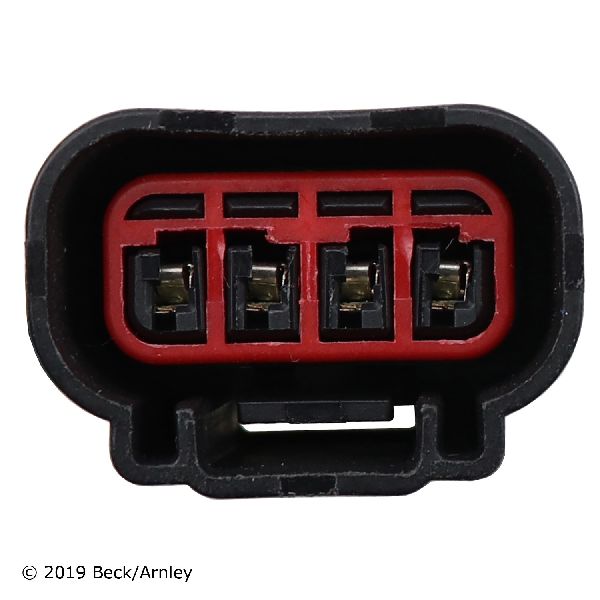
How to confirm: Visually and physically inspect the ECT sensor connector (C1016) located under the intake manifold at the rear of the engine. Push firmly on the connector to ensure it is fully clicked into place. Wiggle the connector while observing live data on a scan tool to see if the temperature reading fluctuates.
Typical fix: Secure the connector. If the lock tab is broken, the connector pigtail may need to be replaced.
Est. part cost: $0 - $30 - Damaged ECT / Knock Sensor Wiring Harness 🟡 Medium Probability → Shop Engine Wiring Harness TSB SSM 48991 specifically calls out faults in the shared wiring harness for the ECT and knock sensors as a cause for this code. The harness is routed in the high-heat engine valley, making it susceptible to heat degradation and chafing over time.
How to confirm: With the engine off, disconnect the harness at the PCM and the sensors. Check for continuity on both the signal and ground wires. Inspect the harness for any visible signs of melting, chafing, or broken wires, especially near the connectors.
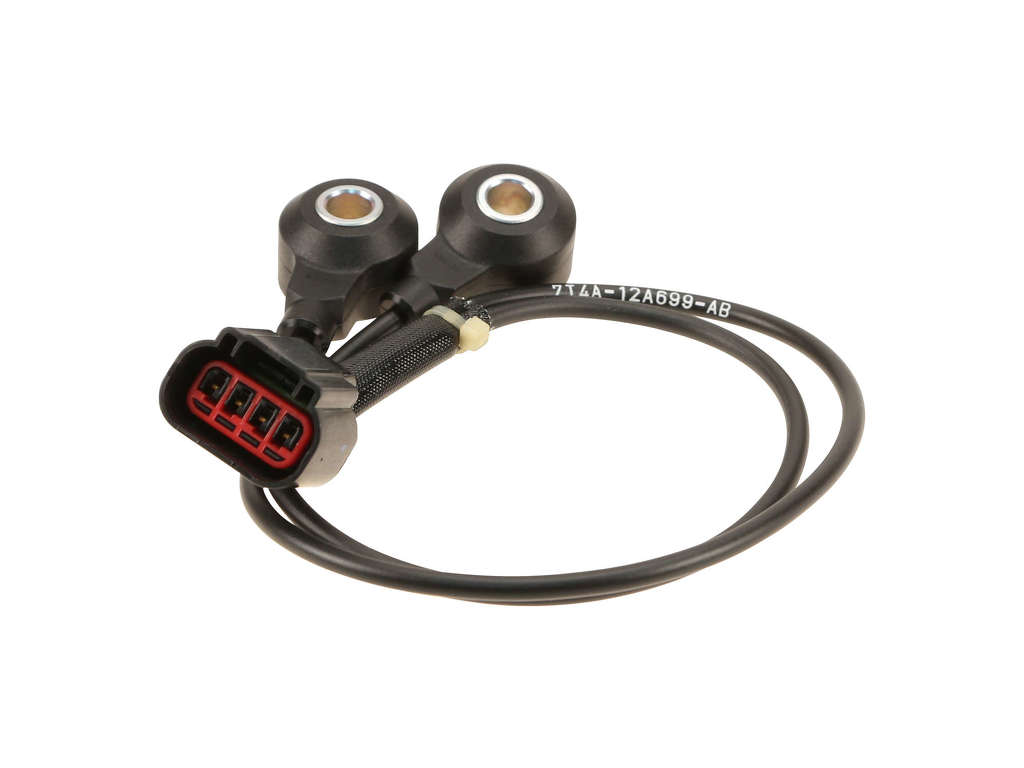
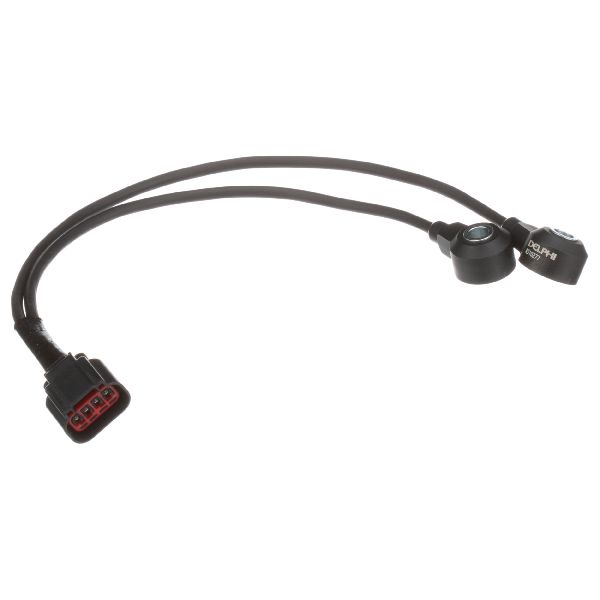
Typical fix: Replace the ECT/knock sensor wiring harness. The TSB recommends replacing both the harness (Ford part base 12A699) and the ECT sensor at the same time.
Est. part cost: $50 - $120 - Failed Engine Coolant Temperature (ECT) Sensor ⚪ Low Probability → Shop Engine Coolant Temperature Sensor While less common than wiring issues on this platform, the sensor itself can fail internally, creating an open circuit. TSB SSM 48991 recommends replacing it along with the harness as a complete repair, acknowledging that the high labor cost of access makes it wise to replace both components at once.
How to confirm: With the engine cold, use a multimeter to measure the resistance across the sensor's two pins. It should be high at cold temperatures (e.g., ~37,000 Ohms at 50°F/10°C) and drop as it warms. An infinite resistance reading (OL) means the sensor is open and has failed.
Typical fix: Replace the ECT sensor. Due to its location under the intake manifold, this is a labor-intensive job (often quoted at 4+ hours).
Est. part cost: $20 - $60
Rare But Worth Checking
- Faulty Powertrain Control Module (PCM): This is extremely rare. The PCM should only be considered after all other possibilities, including the entire sensor circuit (wiring, connectors, and sensor), have been thoroughly tested and proven to be good.
Diagnosis Steps
- Scan for other codes. Note if P0117, P0119, P0330, or P1299 are also present, as this strongly suggests a wiring harness issue per TSB SSM 48991.
- Check Live Data. With a scan tool, view the Engine Coolant Temperature (ECT) reading. A value of -40°F or -40°C is a definitive sign of an open circuit and a P0118 fault.
- Inspect the ECT Sensor Connector (C1016): This is the most critical first step. Even though it's hard to reach under the intake manifold, you must verify it is fully and securely connected. A loose connector is the most common cause per TSBs.
- Test the Circuit: If the connector is secure, disconnect it. Use a scan tool to read the live ECT data. With the connector unplugged (open circuit), the temperature should read extremely low (e.g., -40°F), and a P0118 code should be active. Then, use a jumper wire to connect the two terminals in the harness-side connector. This should cause the temperature reading to jump to its maximum value (e.g., 250°F+) and set a P0117 code. If the circuit behaves as expected, the wiring to the PCM is likely good, and the sensor itself is the problem.
- Test the Sensor: If the circuit test in step 4 fails, test the sensor itself. With the engine cold, measure the resistance between the two sensor pins. It should be in the range of 30,000-40,000 ohms at around 50°F. If you get an infinite reading (open circuit), the sensor is bad.
- Inspect the Wiring Harness: If the sensor and connector are good, carefully inspect the entire ECT/knock sensor harness (part #12A699) for any signs of damage, melting, or chafing, as indicated by TSB SSM 48991.
Parts You'll Likely Need
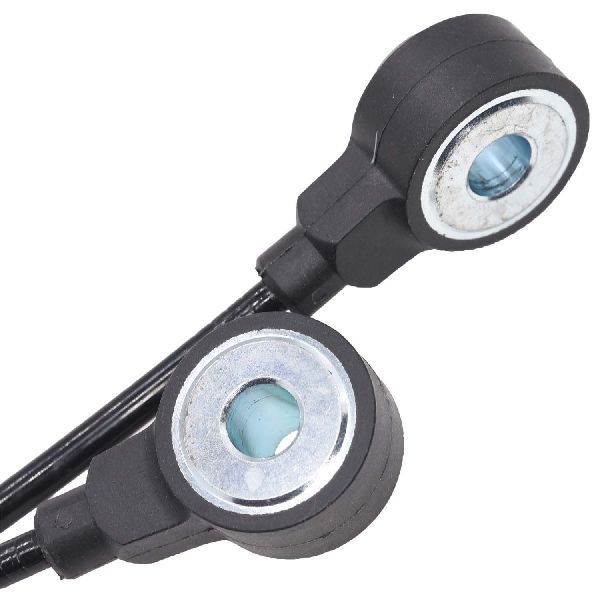
- ECT / Knock Sensor Wiring Harness
(OEM #7T4Z-12A699-A (Base part 12A699))— Cited in TSB SSM 48991 as a primary cause of P0118 and related codes on the 2.7L EcoBoost. This TSB recommends replacing the harness and sensor together.
Trusted brands: Motorcraft
OEM price range: $70-$120
Aftermarket price range: $50-$90 - Engine Coolant Temperature (ECT) Sensor
(OEM #FT4Z-12A648-B (Base part 12A648))— While less common than wiring, the sensor can fail. TSBs often recommend replacing it along with the harness for a complete repair due to the difficult access.
Trusted brands: Motorcraft, Bosch, Delphi
OEM price range: $30-$60
Aftermarket price range: $20-$40
Related Codes That Often Appear With This One
- P0117 — This code for 'ECT Circuit Low' is the opposite of P0118. If there's an intermittent wiring short/open, both codes can appear at different times.
- P0119 — This code for 'ECT Circuit Intermittent' points directly to the same root causes of loose connectors or damaged wiring that trigger P0118.
- P0330 — This code for 'Knock Sensor 2 Circuit Malfunction' often appears with P0118 because the ECT and knock sensors share the same wiring harness, which is a known failure point according to TSB SSM 48991.
- P1299 — This code for 'Cylinder Head Over-temperature Protection Active' can be triggered by the PCM's failsafe strategy in response to the faulty ECT signal from P0118.
Technical Service Bulletins (TSBs) & Recalls
- SSM 47791 / 46906: Point to the ECT sensor connector (C1016) not being fully seated or wiring damage as a primary cause for P0118 on 2016-2018 MKX models.
- SSM 48991: Identifies a fault in the shared ECT sensor and knock sensor wiring harness, recommending replacement of the harness (12A699) and the ECT sensor (12A648) as a complete repair for a list of codes including P0118.
Platform-Specific Known Issues
- The 2.7L EcoBoost engine is subject to multiple TSBs (SSM 46906, 47791, 48991) that directly address the causes of P0118, pointing to the ECT sensor connector (C1016) not being fully seated or a fault in the shared ECT/knock sensor wiring harness.
Mechanic-Grade Diagnostic Values
- ECT Sensor Resistance (disconnected, measured across sensor pins) — expected: ~37,000 Ω at 32°F (0°C), ~9,420 Ω at 68°F (20°C), ~2,238 Ω at 176°F (80°C). Resistance should decrease smoothly as temperature increases.. Failure: An infinite resistance (OL) reading indicates an open/failed sensor. A reading that doesn't change with temperature also indicates failure.
- Reference Voltage at ECT Connector (Key On, Engine Off) — expected: Approximately 5.0 volts on one pin (VREF) and a good ground on the other (Signal Return).. Failure: No voltage or less than ~4.8V on the reference pin indicates a problem with the wiring from the PCM or the PCM itself.
- PCM Voltage Trigger for P0118 — expected: The PCM will set code P0118 when it sees a voltage greater than ~4.9 volts from the ECT sensor circuit for more than a few seconds.. Failure: This reading confirms an open circuit condition.
Scan Tool Commands That Help
- Ford IDS / FORScan: Wiggle Test during Live Data Monitoring — While observing the ECT PID, wiggle the harness connector (C1016) and the main harness leading into the engine valley. If the -40°F reading flickers or changes, it confirms an intermittent connection or wire break, which is extremely common on this platform.
Wiring & Ground Locations
- C1016 — The electrical connector at the Engine Coolant Temperature (ECT) sensor itself, located deep under the intake manifold at the rear of the 2.7L engine.. This is the primary point of failure cited in TSBs SSM 47791 & 46906. It is frequently not fully seated from the factory or during prior service, causing the open circuit that triggers P0118.
- C1168 — A harness-to-harness inline connector located in the engine bay, between the ECT sensor and the PCM.. TSB SSM 47791 specifically highlights the wiring *between* C1016 and C1168 as a common area for chafing and damage. This connector can be used as a test point to isolate the fault to the inaccessible part of the harness.
- C1047 — An inline harness connector located near the driver's side valve cover, before the harness drops into the engine valley.. This is another critical test point mentioned in service literature. Testing for voltage and continuity here can help determine if the fault is in the engine valley portion of the harness without removing the intake manifold.
- PCM (Powertrain Control Module) — Located in the engine compartment. Fuses related to the PCM are in the under-hood fuse box (Power Distribution Box).. The PCM supplies the 5V reference voltage and receives the signal from the ECT sensor. While rare, a fault in the PCM's internal driver circuit can cause P0118. All wiring must be confirmed good before suspecting the PCM.
Real Owner Repair Stories
- Ford Edge Forum user (2016 Ford Edge Sport 2.7L EcoBoost (platform mate to MKX) with 29,000 miles) — Sudden "ENGINE COOLANT OVER TEMP" warning light 5 minutes into a drive, despite the engine being cold. Towed to a mechanic.
❌ Tried (didn't work) Initial assumption was a real overheating event, but the car was cold., Mechanic initially could not find the issue.
✅ What actually fixed it The final diagnosis was a faulty ECT sensor and/or its wiring harness, consistent with the known TSBs for the 2.7L engine. The paradoxical "over temp" warning is a known failsafe reaction by the PCM to the P0118 open circuit/high voltage signal.
OEM Part Supersession History
FT4Z-12A648-A→FT4Z-12A648-B (also sold as Motorcraft DY-1309)— Standard part revision by the manufacturer.
Heads up: The new part number (FT4Z-12A648-B) is the correct replacement for the original.7T4Z-12A699-AA, 7T4Z-12A699-AB→7T4Z-12A699-A— Standard part revision for the shared ECT/Knock sensor harness.
Heads up: The latest part number (7T4Z-12A699-A) replaces previous versions and is the correct service part.
Diagnostic Flowchart
Other Known Issues on This Vehicle
Issues unrelated to this code that are worth knowing about as an owner of this generation:
- Engine Oil Pan Gasket Leak 🟠 Medium — Widespread on early 2.7L EcoBoost engines. The original RTV sealant is prone to failure, leading to oil seepage. Later designs switched to a press-in-place gasket. (Ref: TSB 19-2387 (for 2018 MKX), TSB 24-2345 (for 2016-2017 MKX).)
- Intake Valve Carbon Buildup 🟠 Medium — Common on all 2016-2017 direct-injection engines. The 2018 model year for the 2.7L added port injection to mitigate this. Can cause rough idle, hesitation, and misfires over 50k-80k miles.
- Defective Cylinder Head Valve Guides 🔴 High — Affects a specific production range of 2.7L engines built from April 2016 to January 2017. Can cause excessive oil consumption (e.g., 1 quart per 3000 miles), exhaust smoke, and misfires. (Ref: TSB 19-2243)
- Warped Plastic Oil Pan 🟠 Medium — Related to the oil pan leak, the original composite plastic oil pans are known to warp from heat cycles, contributing to the failure of the RTV seal. (Ref: TSB 23-2083 (F-150, but same principle applies).)
Used vs. New Parts: Buying Guide for This Vehicle
When a used part is the smart pick: For this specific repair, using used parts is generally not recommended. The primary failure points are a wiring harness subject to extreme heat-cycling in the engine valley and a relatively inexpensive sensor. The risk of a used harness having the same heat degradation is high, and the labor to replace it is too significant to justify the risk.
Donor-vehicle mileage cap: roughly under 30000 miles for the part to have meaningful remaining life.
What to inspect on the donor part:
- If considering a used harness, inspect it meticulously for any signs of brittleness, melting, or chafing, especially around the connectors.
- Verify the locking tabs on all connectors are intact and functional.
- Avoid parts from vehicles with high mileage or from climates with extreme heat.
OEM-only on this vehicle (don't cheap out):
- ECT / Knock Sensor Wiring Harness (Motorcraft)
Aftermarket brands forum-validated for this vehicle:
- Motorcraft (for both sensor and harness)
- Bosch (for sensor)
- Delphi (for sensor)
Brands owners have reported issues with on this vehicle:
- Unnamed or 'white box' generic parts from online marketplaces. The labor cost to access these components is too high to risk using a part with questionable quality control.
Real Owner Stories
Aggregated from forums and TSBs cited above. Mileages and costs reflect what owners reported in those sources.
2016 Ford Edge Sport 2.7L EcoBoost
Symptoms: The owner experienced a paradoxical 'Engine Coolant Over Temp' warning light while the vehicle was operating, which aligns with the P0118 failsafe symptoms.
What fixed it: The discussion pointed toward a wiring or sensor issue, specifically aligning with the TSBs regarding the ECT circuit.
Source hint: Ford Edge Forum thread titled 'ENGINE COOLANT OVER TEMP warning light'
Related OBD-II Codes
Frequently Asked Questions
My 2016 Lincoln MKX shows an 'Engine Coolant Over Temperature' warning, but the gauge is on cold. Is my engine actually overheating?
Which Ford Technical Service Bulletins address the P0118 code for the 2016-2018 Lincoln MKX?
Where is the ECT sensor located on the 2.7L EcoBoost engine?
Can a loose plug cause the P0118 code on my Lincoln MKX?
Is the P0118 code related to the knock sensor on this vehicle?
What is the estimated cost to fix the P0118 issue on a 2017 MKX?
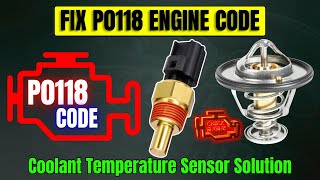
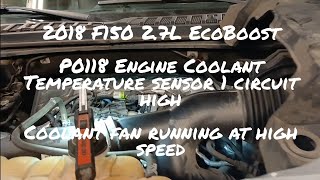
Helpful Videos

We Have This Part in Stock


The information in this article is provided for general reference and educational purposes only. Vehicle specifications, procedures, and part compatibility can vary by production date, trim level, and region. Always consult your vehicle's factory service manual and verify part numbers before purchasing or performing repairs. Safety-critical components such as airbags, seat belts, and braking systems should be installed by a qualified professional.
- Lincoln MKX:
- 🧭 Diagnostic Flowchart
- 🎬 Helpful Videos
- 🛍️ Shop This Part
- What's Unique About the 2016-2018 Lincoln MKX
- Symptoms You May Notice
- Most Likely Causes
- Rare But Worth Checking
- Diagnosis Steps
- Parts You'll Likely Need
- Related Codes That Often Appear With This One
- Technical Service Bulletins (TSBs) & Recalls
- Platform-Specific Known Issues
- Mechanic-Grade Diagnostic Values
- Scan Tool Commands That Help
- Wiring & Ground Locations
- Real Owner Repair Stories
- OEM Part Supersession History
- Other Known Issues on This Vehicle
- Used vs. New Parts: Buying Guide for This Vehicle
- Real Owner Stories
- 2016 Ford Edge Sport 2.7L EcoBoost
- Related OBD-II Codes
- Frequently Asked Questions
- 🎟️ Get 5% Off