

P0118 on 2013-2016 Mazda CX-5: Engine Coolant Temperature Sensor Fixes
This code means the Engine Coolant Temperature (ECT) sensor is sending a high voltage signal, making the car's computer think the engine is extremely cold. This is often due to an internal failure in the sensor or an open circuit in the wiring. The most common fix is replacing the faulty ECT sensor itself, which is an affordable part and a straightforward DIY job.
- P0118 on a 2013-2016 CX-5 means the engine computer thinks the coolant is extremely cold due to a high voltage signal from the Engine Coolant Temperature (ECT) sensor.
- The most likely culprit is a failed ECT sensor, which is an affordable and accessible part for a DIY repair.
- Before replacing parts, always check the sensor's wiring and connector for damage or corrosion, as this can cause the same code.
- Use a scan tool to watch the live temperature data; an illogical, extreme negative reading on a cold start is a clear sign of a bad sensor or circuit.
- This vehicle has two ECT sensors; P0118 usually points to the primary one (ECT1) located near the thermostat housing.
What's Unique About the 2013-2016 Mazda CX-5
The first-generation Mazda CX-5 (2013-2016) with Skyactiv-G engines uses two Engine Coolant Temperature sensors to monitor the system's performance. ECT Sensor 1 (the primary sensor for the PCM) is located on the engine block near the thermostat housing, by the battery. ECT Sensor 2 is located on a heater hose near the firewall on the passenger side. The purpose of the dual-sensor system is to allow the PCM to cross-check temperatures for more accurate engine management and to diagnose issues like poor heater performance. A failure in either one can trigger a code. While P0118 specifically points to a 'Circuit High' fault, usually with Sensor 1, these 🎬 Watch: Understanding the P0118 high input code vehicles are also known to set a P011A code, which indicates a performance problem or mismatch between the two sensors.
Symptoms You May Notice
- Check Engine Light is on
- Poor fuel economy due to a rich fuel mixture
- Rough or erratic idle, especially when cold
- Hard starting or extended cranking
- Cooling fans running continuously, even when the engine is cold
- Cooling fans not turning on, leading to potential overheating
- Black smoke from the exhaust due to an excessively rich fuel mixture
- Inaccurate or non-functional engine temperature gauge on the dashboard
- Replacing the thermostat. While a faulty thermostat can cause other cooling system codes (like P0126 or overheating), it is a mechanical part and does not directly cause the 'circuit high' electrical fault of P0118.
Most Likely Causes
- Failed Engine Coolant Temperature (ECT) Sensor 🔴 High Probability → Shop Engine Coolant Temperature Sensor The sensor is a common failure point on many vehicles as it ages. An internal open circuit within the sensor will cause the high voltage reading that triggers P0118.
How to confirm: With a cold engine, use a scan tool to compare the ECT reading to the Intake Air Temperature (IAT) reading. They should be within a few degrees of each other. If the ECT shows an extreme negative value (like -40°F), the sensor has an internal open circuit and is bad. You can also test the sensor's internal resistance with a multimeter; an open or out-of-spec reading indicates failure.
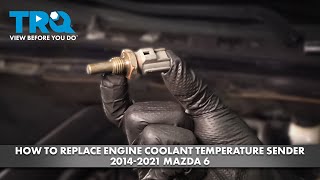
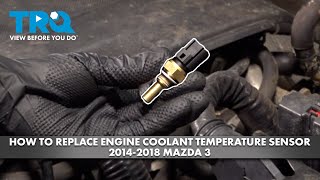
Typical fix: Replace the faulty ECT sensor. P0118 almost always refers to ECT Sensor 1, located near the thermostat housing. 🎬 Watch: Mazda Skyactiv ECT sensor replacement walkthrough
Est. part cost: $25-$70 - Wiring or Connector Issue 🟡 Medium Probability Vibrations and heat in the engine bay can cause wiring to break or connectors to become loose or corroded. A broken wire or a pin pushed out of the connector creates an open circuit, which the PCM reads as high voltage.
How to confirm: Visually inspect the ECT sensor's connector and wiring for any signs of damage, corrosion, or loose pins. With a scan tool monitoring live data, wiggle the connector and harness to see if the temperature reading fluctuates wildly, indicating a bad connection. Check for 5-volt reference and ground signals at the connector with a multimeter.
Typical fix: Clean the connector terminals with an electronic cleaner. If a wire is broken, it may need to be repaired with a new pigtail connector, especially if the break is close to the connector itself. Repair any damaged section of the wiring harness.
Est. part cost: $15-$50 for a new connector pigtail - Low Engine Coolant ⚪ Low Probability While not specific to the CX-5, any vehicle can develop coolant leaks. If the level is low enough that the sensor tip is exposed to air instead of coolant, it can send inaccurate readings, though this is less likely to cause a 'circuit high' fault than a performance code.
How to confirm: With the engine cool, check the coolant level in the overflow reservoir and the radiator. If the level is very low, the sensor may not be submerged in coolant.
Typical fix: Top off the coolant to the correct level and inspect the cooling system for leaks (hoses, radiator, water pump, etc.). Use Mazda-specified FL-22 coolant.
Est. part cost: $20-$40 for coolant
Rare But Worth Checking
- Faulty Powertrain Control Module (PCM): This is extremely rare and should only be considered after all other possibilities (sensor, wiring, coolant level) have been exhaustively ruled out. A faulty PCM driver circuit could fail to read the sensor signal correctly.
Diagnosis Steps
- Connect an OBD-II scanner to verify the P0118 code is present.
- Using the scanner's live data function, observe the reading for Engine Coolant Temperature (ECT). On a cold engine, it should be close to the ambient air and Intake Air Temperature (IAT) readings. If it shows an impossibly low number (e.g., -40°F or -40°C), this indicates an open circuit and points strongly to a bad sensor or broken wire.
- Visually inspect the ECT Sensor 1 connector and wiring harness for any obvious damage, corrosion, or loose connections. The sensor is located on the engine block near the battery and thermostat housing.
- If the wiring looks good, disconnect the sensor. The scan tool reading should not change from its extreme low value. Use a fused jumper wire to bridge the two terminals in the harness connector; this should make the temperature reading on the scan tool go to its maximum value (e.g., 250°F+). If it does, the wiring and PCM are okay, and the sensor is confirmed to be the problem.
- If the jumper wire test does not change the reading from -40°F, there is an open circuit (break) in the wiring between the sensor connector and the PCM.
- If the sensor and wiring are confirmed to be good, check the engine coolant level to ensure the sensor is properly submerged.
- If all else fails, the issue may be with the PCM, but this is highly unlikely and should be the last resort.
Parts You'll Likely Need
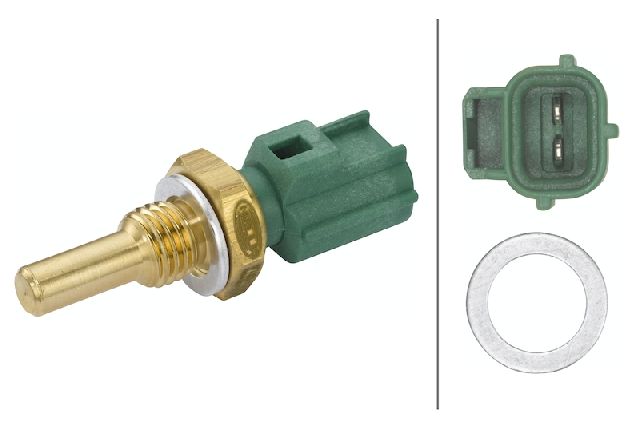
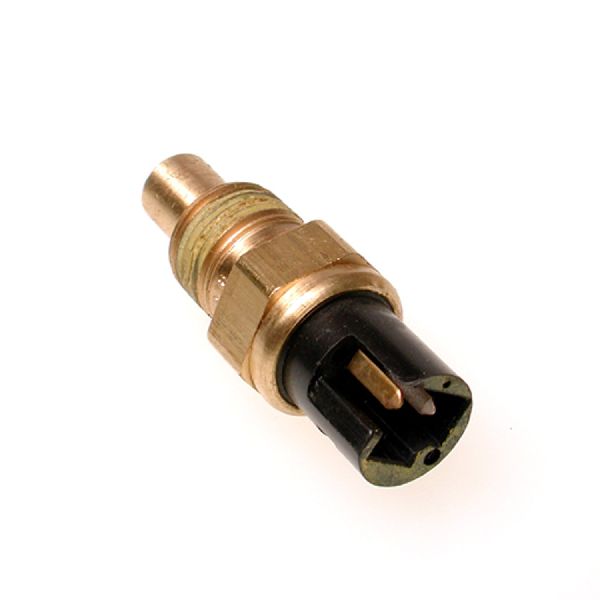
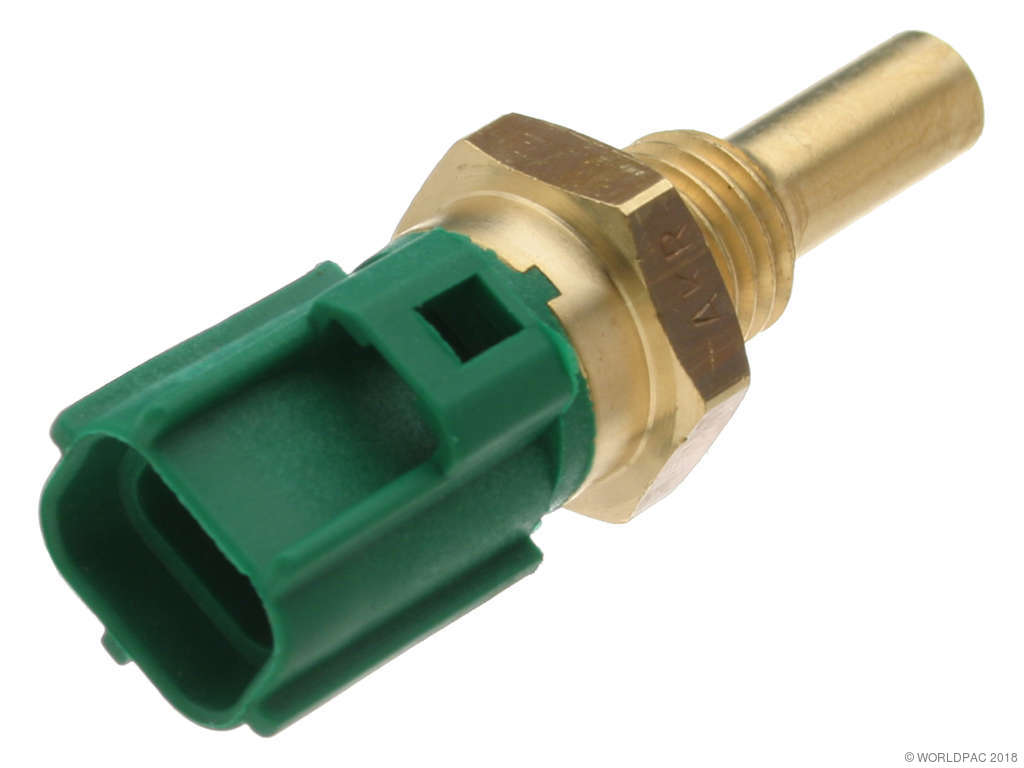
- Engine Coolant Temperature Sensor (ECT Sensor 1)
(OEM #PE01-18-840)— This is the primary sensor for the PCM and the most common cause of the P0118 code due to internal failure.
Trusted brands: Mazda (OEM), Denso, NGK/NTK, Standard Motor Products (SMP)
OEM price range: $50-$70
Aftermarket price range: $25-$50 - Engine Coolant Temperature Sensor (ECT Sensor 2)
(OEM #PE01-18-845A)— Less common to fail, but can be a source of P011A codes. Located on the heater hose against the firewall.
Trusted brands: Mazda (OEM), Beck Arnley
OEM price range: $40-$60
Aftermarket price range: $20-$40
Related Codes That Often Appear With This One
- P0117 — P0117 is 'ECT Circuit Low', the opposite of P0118. Seeing them together or intermittently could point to an erratic wiring short or a failing sensor that is fluctuating between an open and shorted state.
- P011A — On this specific vehicle, P011A indicates a correlation problem between ECT Sensor 1 and ECT Sensor 2. A fault in one sensor (causing P0118) will cause its reading to differ significantly from the other sensor, leading the PCM to also flag a mismatch between the two.
Technical Service Bulletins (TSBs) & Recalls
- 07-007/17 & 07-007/19 - Poor Heater Performance and/or DTC P011A:00 Stored. This TSB discusses issues related to the dual ECT sensors, often caused by a clogged heater core creating a temperature differential. It applies to the CX-5 and other Skyactiv models.
Platform-Specific Known Issues
- Mazda issued Technical Service Bulletin 07-007/17 (later superseded by 07-007/19) for poor heater performance that could also trigger DTC P011A:00 (ECT sensor correlation). The TSB notes that a clogged heater core can cause a temperature discrepancy between the two ECT sensors, triggering the code. While not directly for P0118, its diagnostic steps involve checking the output of both sensors, highlighting the system's sensitivity.
Mechanic-Grade Diagnostic Values
- ECT Sensor Resistance — expected: Approx. 2.45 kΩ at 20°C (68°F) and Approx. 0.32 kΩ at 80°C (176°F).. Failure: Infinite resistance (open circuit) or a reading that does not change as temperature changes.
- ECT Sensor Voltage (via Scan Tool PID 'ECT_VOLT') — expected: Approx. 3.10V at 20°C (68°F), dropping to Approx. 0.87V at 80°C (176°F).. Failure: A voltage reading stuck high (near 5V) indicates an open circuit, which triggers P0118.
- PCM Fail-Safe Operation for P0118 — expected: When P0118 is set, the PCM fixes the water temperature for engine control at 40°C (104°F) and for idle air control at 80°C (176°F). It also forces the cooling fan to run at high speed.. Failure: N/A - this is the default computer behavior during the fault.
Hidden / Shadow Codes Worth Checking
- P0118:00: This is the standard format for this DTC on Mazda vehicles, viewable with Mazda-specific scan tools like MDARS or high-end generic scanners. The ':00' suffix does not typically indicate a sub-fault but is part of the standard reporting format. (see via Mazda Dealer Scanners (MDARS/IDS), some advanced aftermarket scan tools.)
Wiring & Ground Locations
- G07 — On the left rear of the engine.. This is a primary engine ground point. A loose or corroded connection here can affect the reference ground for various sensors, including the ECT sensor, potentially causing erratic or high voltage readings.
- Ground below battery tray — A ground wire connection point located on the chassis below the battery tray, near the engine mount bracket.. A forum user on Mazda-Forum.com reported finding this ground wire dangling after previous work was done, which can cause various electrical issues. Ensuring all grounds in this area are secure is a critical step if a wiring fault is suspected.
Real Owner Repair Stories
- Mazda-Forum.com user '2014CX5GTAWD25' (2014 Mazda CX-5 GT AWD 2.5L) — User was replacing the thermostat and noticed previous, shoddy repair work.
✅ What actually fixed it The user discovered a dangling ground wire below the battery tray. After cleaning the contact surfaces and securing the ground bolt, the connection was restored. While not explicitly chasing P0118, this is a documented case of a critical ground in the ECT sensor's vicinity being left disconnected, which is a potential root cause for the code.
OEM Part Supersession History
PE01-18-840→PE18-18-840— Part revision by manufacturer. Functionality remains the same.
Heads up: The original part number for many older Mazdas was B593-18-840A. While physically similar, always use the part number specified for the Skyactiv engine (PE01-18-840 or its successor) to ensure correct resistance curves.
Diagnostic Flowchart
Other Known Issues on This Vehicle
Issues unrelated to this code that are worth knowing about as an owner of this generation:
- Leaking Serpentine Belt Tensioner 🟠 Medium — Common issue, often noticed after 60,000 miles. The hydraulic tensioner leaks fluid, which can look like soot or oil on the component and surrounding area, leading to belt slippage and noise. (Ref: TSB 01-019/19 describes the issue of oil leakage from the tensioner under high heat and load conditions and introduces an improved part.)
- Infotainment System Malfunctions ('Ghost Touch') 🟡 Low — Widespread problem where the Mazda Connect screen freezes, reboots, or registers phantom touches. It can be an annoyance that escalates to making the system unusable. (Ref: Not a recall, but a class-action lawsuit led to a Customer Service Program (CSP13) and warranty extension for the Connectivity Master Unit (CMU) on affected models, including the 2016 CX-5.)
- Premature Rear Brake Wear / Sticking Calipers 🟠 Medium — More common in regions using road salt. The rear brake calipers can corrode and stick, causing accelerated wear of pads and rotors.
- Daytime Running Light (DRL) Failure 🟡 Low — Primarily affects 2016 models. The LED DRLs in one or both headlights may flicker or fail completely. The repair requires replacing the entire headlamp assembly. (Ref: Mazda issued Safety Recall 4320A for this specific issue.)
- Intake Valve Carbon Buildup 🟠 Medium — A long-term potential issue inherent to all direct-injection (GDI) engines, including Skyactiv-G. Oil vapors from the PCV system can bake onto the intake valves over many miles, potentially causing misfires or reduced performance. It is not considered a widespread problem on Skyactiv engines compared to some other GDI engines, but can occur with high mileage or specific driving patterns (e.g., many short trips). (Ref: Mazda has procedures for chemical cleaning, but there is no recall.)
Used vs. New Parts: Buying Guide for This Vehicle
When a used part is the smart pick: A used ECT sensor is generally not recommended. It's an inexpensive electronic component where age and heat cycles are the primary failure modes. The cost savings of a used part (a few dollars) do not outweigh the risk of it failing soon after installation, requiring the labor to be done again. It only makes sense if pulled from a very low-mileage, late-model year donor vehicle as part of a larger component assembly.
Donor-vehicle mileage cap: roughly under 40000 miles for the part to have meaningful remaining life.
What to inspect on the donor part:
- Check the plastic connector housing for any cracks, brittleness, or signs of overheating.
- Ensure the electrical pins are straight, clean, and free of corrosion.
- Avoid sensors from engines that show signs of severe overheating (discolored plastics, burnt oil residue).
OEM-only on this vehicle (don't cheap out):
- While not strictly OEM-only, using a known, reputable brand for the ECT sensor is critical. The PCM is calibrated to the specific resistance curve of the OEM sensor.
Aftermarket brands forum-validated for this vehicle:
- Denso (often the original OEM supplier)
- NGK/NTK
- Standard Motor Products (SMP)
- Beck Arnley
- Delphi
Brands owners have reported issues with on this vehicle:
- Generic, no-name brands from online marketplaces. These often have incorrect resistance curves, which can cause persistent performance issues, poor fuel economy, or trigger other codes like P011A even if they clear the P0118 code.
Real Owner Stories
Aggregated from forums and TSBs cited above. Mileages and costs reflect what owners reported in those sources.
2014 Mazda CX-5 2.0L/2.5L Skyactiv
Symptoms: The owner was dealing with a recurring diagnostic code and needed to locate the specific sensors for testing.
What fixed it: The owner successfully located ECT Sensor 1 near the thermostat housing/battery and ECT Sensor 2 on the passenger side firewall to perform diagnostics.
Source hint: Mazdas247 - A forum thread titled 'Coolant temperature sensor' from 2015
Related OBD-II Codes
Frequently Asked Questions
Where is the ECT Sensor 1 located on my 2014 Mazda CX-5?
Does TSB 07-007/19 apply to my P0118 code?
What type of coolant should I use to top off my CX-5 if the level is low?
Why are my cooling fans running constantly even though I just started the car?
Can a bad infotainment screen cause engine codes like P0118?
Is there a second coolant sensor I should check?
Helpful Videos

We Have This Part in Stock


The information in this article is provided for general reference and educational purposes only. Vehicle specifications, procedures, and part compatibility can vary by production date, trim level, and region. Always consult your vehicle's factory service manual and verify part numbers before purchasing or performing repairs. Safety-critical components such as airbags, seat belts, and braking systems should be installed by a qualified professional.
- Mazda CX-5:
- 🧭 Diagnostic Flowchart
- 🎬 Helpful Videos
- 🛍️ Shop This Part
- What's Unique About the 2013-2016 Mazda CX-5
- Symptoms You May Notice
- Most Likely Causes
- Rare But Worth Checking
- Diagnosis Steps
- Parts You'll Likely Need
- Related Codes That Often Appear With This One
- Technical Service Bulletins (TSBs) & Recalls
- Platform-Specific Known Issues
- Mechanic-Grade Diagnostic Values
- Hidden / Shadow Codes Worth Checking
- Wiring & Ground Locations
- Real Owner Repair Stories
- OEM Part Supersession History
- Other Known Issues on This Vehicle
- Used vs. New Parts: Buying Guide for This Vehicle
- Real Owner Stories
- 2014 Mazda CX-5 2.0L/2.5L Skyactiv
- Related OBD-II Codes
- Frequently Asked Questions
- 🎟️ Get 5% Off