

P0118 on 2005-2010 Pontiac G6: Engine Coolant Temp Sensor Causes and Fixes
On a 2005-2010 Pontiac G6, code P0118 is almost always caused by a failed Engine Coolant Temperature (ECT) sensor. This is a very common and inexpensive DIY fix, with the part costing between $20 and $70. The failure of this sensor is a widely documented issue for this vehicle.
- P0118 on a Pontiac G6 almost always points to a bad Engine Coolant Temperature (ECT) sensor.
- This is a DIY-friendly repair that can be done in under an hour with basic tools, most notably a 19mm deep socket.
- Symptoms include a Check Engine Light, an incorrect temperature gauge, poor gas mileage, and cooling fans acting strangely (either always on or never on).
- Before buying parts, verify your engine size (2.4L, 3.5L, etc.) to locate the sensor correctly.
- A quality aftermarket sensor from a known brand is a reliable and cost-effective fix for this issue.
What's Unique About the 2005-2010 Pontiac G6
While P0118 is a generic code, it is a particularly common problem on the 2005-2010 Pontiac G6 and its platform mates like the Chevrolet Malibu and Saturn Aura. There are no official recalls for this specific issue, but the factory Engine Coolant Temperature (ECT) sensor is a widely documented failure point among owners. The sensor's frequent exposure to extreme heat cycles causes its internal components and plastic housing to degrade and eventually fail, making it the most probable cause for this code on the G6, often more so than wiring or other issues.
Symptoms You May Notice
- Check Engine Light is on
- Temperature gauge is erratic, stuck on cold, or reads high
- Cooling fans run continuously, even when the engine is cold
- Cooling fans do not turn on at all, leading to potential overheating
- Reduced fuel economy
- Engine is difficult to start, especially when cold
- Rough or unstable idle
- Black smoke from the exhaust due to a rich fuel mixture
- A/C system may not function
- Replacing the thermostat. While a faulty thermostat can cause cooling issues and trigger other codes like P0128, it does not cause the specific 'Circuit High Input' electrical fault of P0118.
- Replacing the PCM without proper diagnosis. This is an expensive and rarely necessary repair for this code.
Most Likely Causes
- Failed Engine Coolant Temperature (ECT) Sensor 🔴 High Probability → Shop Engine Coolant Temperature Sensor The original sensor is a known common failure point on the G6, degrading over time due to engine heat cycles. It is the most frequent culprit for a P0118 code.
How to confirm: With a scan tool, check the live data for the ECT sensor. If it shows an illogical, extremely low temperature (e.g., -38°F or -40°F) after the engine has run, the sensor has failed. You can also test the old sensor's resistance with a multimeter; if it shows an open loop (infinite resistance), it is definitively bad. 🎬 See how to test a sensor's resistance with a multimeter. A good sensor should show resistance between 2,000 and 3,000 ohms at room temperature (~68°F/20°C).
Typical fix: Replace the Engine Coolant Temperature sensor. This is a straightforward repair that involves partially draining the coolant, disconnecting the battery, unplugging the sensor's electrical connector, and unscrewing the old sensor with a 19mm deep socket. Apply sealant to the new sensor's threads if not pre-applied and torque to approximately 15 ft-lbs. 🎬 Watch: Step-by-step removal and installation for the 3.5L engine.
Est. part cost: $20-$70 - Wiring Harness or Connector Issue 🟡 Medium Probability Wires and connectors in the engine bay are subject to heat and vibration, which can lead to corrosion, breaks, or loose connections over time. The wire can break right at the back of the connector shell.
How to confirm: Visually inspect the wiring and connector for the ECT sensor for any signs of damage, corrosion, or loose pins. A broken wire may be visible entering the connector. With the engine running and a scan tool connected, wiggle the connector and harness to see if the temperature reading fluctuates wildly, which would indicate a bad connection.
Typical fix: Repair the damaged section of wire or replace the connector pigtail if the break is too close to the connector. Clean any corrosion from the connector pins.
Est. part cost: $10-$30
Rare But Worth Checking
- Low Engine Coolant: If the coolant level is so low that the sensor is exposed to air instead of coolant, it can send an inaccurate signal. This usually triggers other codes or overheating symptoms first.
- Faulty Powertrain Control Module (PCM): This is extremely rare. The PCM should only be considered after all other possibilities, including the sensor and wiring, have been thoroughly tested and ruled out.
Diagnosis Steps
- Connect an OBD-II scanner and confirm that P0118 is present.
- View the live data stream on the scanner. Check the Engine Coolant Temperature (ECT) reading. On a cold engine, it should be close to the ambient air and Intake Air Temperature (IAT) readings.
- Start the engine. If the ECT reading is an illogical, fixed low value (like -40°F), the sensor has likely failed or the circuit is open.
- If the reading is plausible, wiggle the sensor's connector and wiring harness. If the reading jumps or drops out, you have a connection issue.
- If the wiring seems okay, turn off the engine. Disconnect the ECT sensor.
- Use a fused jumper wire to connect the two terminals in the sensor's electrical connector. Turn the ignition on (engine off). The scanner's temperature reading should now be extremely high (e.g., 250°F+). If it is, the wiring and PCM are good, and the sensor is bad.
- If the reading does not go high, there is an open circuit (broken wire) in the harness between the connector and the PCM.
- If the sensor is suspected, remove it and test its resistance with a multimeter. At room temperature, it should be around 2-3 kOhms. If it reads as an open circuit (OL), it is faulty.
Parts You'll Likely Need
- Engine Coolant Temperature (ECT) Sensor
(OEM #19236568)— This is the most common failure part for code P0118 on the Pontiac G6. Note: GM has superseded part numbers over time; 12608814 is also a related number, but 19236568 (and its ACDelco equivalent 213-4514) is commonly cited for this application.
Trusted brands: ACDelco, NGK, Delphi, Standard Motor Products
OEM price range: $35-$70
Aftermarket price range: $20-$40
Related Codes That Often Appear With This One
- P0117 — P0117 is 'ECT Circuit Low Input'. It's the opposite of P0118 but relates to the same sensor. Seeing both or intermittent switching between them strongly points to a faulty sensor or wiring.
- P0128 — P0128 means 'Coolant Temperature Below Thermostat Regulating Temperature'. A bad ECT sensor can cause this code by reporting that the engine isn't warming up correctly, even if the thermostat is fine.
- P0119 — P0119 is 'ECT Circuit Intermittent'. This code often appears alongside P0118, indicating the signal is not just high, but also unstable, further pointing towards a failing sensor or a loose/corroded connection.
Platform-Specific Known Issues
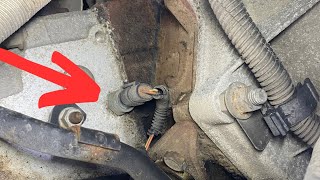
- The location of the ECT sensor varies by engine. On the 3.5L V6, it is on the driver's side of the engine, on the rear cylinder head near the transmission, below the ignition coil pack. On the 2.4L I4, it is on the right rear (passenger side) of the engine block. On the 3.9L, it is below the throttle actuator control module. Always verify the location for your specific engine before starting the repair.
Mechanic-Grade Diagnostic Values
- ECT Sensor Resistance vs. Temperature — expected: Approx. 90k-100kΩ at -40°C, 8k-10kΩ at 0°C, 2.2k-3kΩ at 20°C (68°F), 250-350Ω at 80°C (176°F), 180-250Ω at 100°C (212°F).. Failure: An open circuit (infinite resistance) at any temperature indicates a failed sensor. Readings that are dramatically outside this curve also indicate failure.
- ECT Sensor Circuit Voltage at Connector (Key On, Engine Off) — expected: Approximately 5.0 volts on the reference wire and a good ground (near 0 volts) on the low-reference wire.. Failure: No voltage on the reference wire indicates an open circuit from the PCM. Voltage present on the ground wire indicates a bad ground.
- ECT Sensor Signal Voltage (Live Data) — expected: High voltage when cold (e.g., 3.0-3.5V at 20°C) and low voltage when hot (e.g., ~0.5V-1.3V at operating temp).. Failure: A fixed voltage reading near 5.0V (typically >4.9V) regardless of engine temperature indicates an open circuit, which triggers P0118.
Wiring & Ground Locations
- ECT Sensor Wires (Typical GM Colors) — At the two-pin connector for the Engine Coolant Temperature sensor.. One wire is the 5-volt reference (often Yellow) and the other is the low-reference/ground (often Tan or Black). A break in either wire will cause a P0118. A technician must test for 5V on one pin and good ground on the other to validate the circuit before condemning the sensor.
- G105 / G106 (Engine Grounds) — For the 3.5L engine, G105 is on the left rear of the engine compartment, on a transmission stud. G106 is on the front of the engine at a transmission stud. For the 2.4L, G105/G106 are on the left rear of the engine. These grounds serve the ECM and various sensors.. The ECT sensor's low-reference wire ultimately connects to ground through the PCM. A corroded or loose main engine ground can create a voltage offset, disrupting the sensor's reading and potentially causing intermittent P0118 or other sensor codes. A video for a G6 with a bad ground at G105 showed it affected the Park/Neutral switch, ECM, and TCM.
- ECM Connector Pins (Example) — At the main Engine Control Module (ECM) connectors, located on the left side of the engine compartment.. For advanced diagnosis, a technician can test continuity from the sensor connector back to the ECM. For example, on some GM models, the ECT signal wire (Yellow) goes to pin 74 and the ground wire (Gray) to pin 63 of the blue ECM connector. This allows isolation of a wire break between the sensor and the computer.
Real Owner Repair Stories
- The Truck Stop forum user (GM Truck (similar OBD-II logic)) — P0118 code present, scan tool reads a fixed -40°F, but dash gauge reads correctly. High idle.
❌ Tried (didn't work) Replacing the ECT sensor
✅ What actually fixed it The connector pigtail for the ECT sensor was faulty. Replacing the connector resolved the code and the incorrect scan tool reading. - Chevrolet Cobalt SS Forum user (Chevrolet Cobalt LSJ (shares Epsilon platform architecture)) — Low coolant temperature readings on scan tool (153-165°F), reduced fuel economy. No specific codes mentioned, but symptoms align with a skewed ECT sensor.
❌ Tried (didn't work) Replacing the thermostat (twice)
✅ What actually fixed it Replacing the original, high-mileage ECT sensor restored correct temperature readings (176-181°F). The old sensor was visibly gummed up with deposits.
OEM Part Supersession History
19236563→19236568— Standard part number update by GM.
Heads up: The ACDelco equivalent for 19236568 is 213-4514. These are widely cross-compatible on many GM vehicles, including the Pontiac G6.12608814→19236568— Part consolidation.
Heads up: 12608814 is another related part number that is often replaced by 19236568 / ACDelco 213-4514. While they may look similar, always verify fitment for the specific engine, as some forum discussions note that certain numbers were intended for different engine families (e.g., 4-cyl vs V6).
Diagnostic Flowchart
Other Known Issues on This Vehicle
Issues unrelated to this code that are worth knowing about as an owner of this generation:
- Electric Power Steering (EPS) Failure 🔴 High — Very common, especially on 2005-2009 models. Can occur suddenly, often around 70,000-100,000 miles. (Ref: Multiple recalls issued, including NHTSA #14V153000, #15V064000, and #14772, to replace the torque sensor assembly or other components.)
- Brake Light Malfunction / BCM Connector Corrosion 🟠 Medium — Common issue where corrosion in a Body Control Module (BCM) connector causes brake lights to work erratically (stay on or not light up). (Ref: Recall NHTSA #14V252000 was issued for increased resistance in the BCM connection affecting the Brake Apply Sensor (BAS).)
- Transmission Shift Cable Failure 🟠 Medium — Affects models with the 4-speed automatic transmission. The plastic tabs on the shift cable end can fracture, causing a mismatch between the gear selector and the actual transmission gear. (Ref: Recall issued (e.g., NHTSA #12V460000) to reinforce the shift cable end.)
- Clunking from Intermediate Steering Shaft 🟡 Low — A common problem causing a clunking or popping noise in the steering column, especially at low speeds. Often requires lubrication or replacement of the intermediate shaft. (Ref: A recall (#14E044000) was issued by Dorman for certain aftermarket replacement shafts, but the issue is also prevalent with OEM parts.)
- Oil Consumption and Timing Chain Issues (2.4L Ecotec) 🟠 Medium — The 2.4L Ecotec engine can suffer from high oil consumption due to piston ring issues and timing chain stretch/failure, typically noticeable after 100,000 miles.
- VVT Solenoid Failure (2.4L Ecotec) 🟡 Low — Failure of the variable valve timing (VVT) solenoids is common, leading to a rough idle, stalling, and a check engine light. Regular oil changes are key to prevention.
Used vs. New Parts: Buying Guide for This Vehicle
When a used part is the smart pick: Never. The ECT sensor is an inexpensive electronic part that is a known common failure item due to wear and heat cycles. The cost savings of a used sensor are minimal and not worth the risk of premature failure or inaccurate readings.
What to inspect on the donor part:
- Not applicable as used parts are not recommended.
Aftermarket brands forum-validated for this vehicle:
- ACDelco (OEM supplier)
- Delphi
- NGK/NTK
- Standard Motor Products (SMP)
Brands owners have reported issues with on this vehicle:
- Unbranded, 'white-box' sensors. Multiple forum users across different GM platforms report issues with cheap aftermarket sensors failing quickly or providing inaccurate temperature readings right out of the box.
Real Owner Stories
Aggregated from forums and TSBs cited above. Mileages and costs reflect what owners reported in those sources.
Pontiac G6 3.5L
Symptoms: The cooling fans would not turn on when the sensor was connected, but would run constantly as soon as the sensor was disconnected.
What fixed it: The owner described this as a multi-year mystery that remained unresolved, suggesting complex failure modes are possible.
Source hint: Reddit r/MechanicAdvice
2003 Chevrolet Malibu
Symptoms: The vehicle had a persistent P0118 code for 'coolant temperature circuit high input'.
What fixed it: The owner still had the code after replacing both the sensor and the connector, which indicated the problem was a deeper wiring issue within the harness.
Source hint: 2CarPros.com
Related OBD-II Codes
Frequently Asked Questions
Where is the Engine Coolant Temperature (ECT) sensor located on my Pontiac G6?
My scan tool is showing a coolant temperature of -40°F. Does this confirm the ECT sensor is bad?
Why are my cooling fans always running, even right after I start the car cold?
I replaced the ECT sensor and connector, but the P0118 code came back. What else could it be?
What tools are needed to replace the ECT sensor on a G6?
Is this P0118 sensor failure a common problem on cars other than the G6?
How can I test my old ECT sensor to be 100% sure it's faulty?
Helpful Videos

The information in this article is provided for general reference and educational purposes only. Vehicle specifications, procedures, and part compatibility can vary by production date, trim level, and region. Always consult your vehicle's factory service manual and verify part numbers before purchasing or performing repairs. Safety-critical components such as airbags, seat belts, and braking systems should be installed by a qualified professional.
- Pontiac G6:
- 🧭 Diagnostic Flowchart
- 🎬 Helpful Videos
- What's Unique About the 2005-2010 Pontiac G6
- Symptoms You May Notice
- Most Likely Causes
- Rare But Worth Checking
- Diagnosis Steps
- Parts You'll Likely Need
- Related Codes That Often Appear With This One
- Platform-Specific Known Issues
- Mechanic-Grade Diagnostic Values
- Wiring & Ground Locations
- Real Owner Repair Stories
- OEM Part Supersession History
- Other Known Issues on This Vehicle
- Used vs. New Parts: Buying Guide for This Vehicle
- Real Owner Stories
- Pontiac G6 3.5L
- 2003 Chevrolet Malibu
- Related OBD-II Codes
- Frequently Asked Questions
- 🎟️ Get 5% Off