

P0118 on 2001-2006 Porsche 911: Engine Coolant Temperature Sensor Causes and Fixes
P0118 on a 2001-2006 Porsche 911 most often means the Engine Coolant Temperature (ECT) sensor has failed. This causes an erratic temperature gauge, hard starting, and poor fuel economy. Replacing the sensor, which costs between $25 and $80 for the part, is the most common fix. The sensor is located behind the alternator and requires removing the airbox for access.
- P0118 on your 911 almost always points to a bad Engine Coolant Temperature (ECT) sensor.
- Before buying parts, always check your coolant level first, as a low level can trigger similar dashboard warnings.
- Symptoms include a Check Engine Light, an erratic temperature gauge, and poor engine performance.
- The repair is DIY-friendly for those comfortable with basic tools, but requires removing the airbox to access the sensor.
- The 2001-2006 range covers two 911 generations (996 and 997), so verify the correct sensor part number for your specific year.
What's Unique About the 2001-2006 Porsche 911
On the Porsche 911 (996/997.1), this code is frequently accompanied by an erratic temperature gauge that may drop to its minimum position or spike to maximum, along with a flashing red warning light and a 'failure' message on the instrument display. While the cause is almost always a simple sensor failure, owners should first rule out low coolant, as the same dashboard warnings can be triggered by a low coolant level. The repair access is tight, requiring the removal of the airbox to reach the sensor, which is located vertically behind the alternator. Some owners report needing child-sized hands or a tall O2 sensor-style socket to easily access and replace it.
Generation note: The 2001-2006 model years span two distinct Porsche 911 generations: the 996 (2001-2004) and the 997.1 (2005-2006). While the symptoms and primary causes of P0118 are the same for both, the exact part number for the ECT sensor may differ based on the specific model year and engine (3.4L vs 3.6L). For instance, early 996 models may use a 4-pin sensor (part # 996-606-405-01) while later 996 and 997.1 models use a 2-pin sensor (part # 99660641000). Always verify the part number with your vehicle's VIN before purchasing.
Symptoms You May Notice
- Check Engine Light is on
- Temperature gauge behaves erratically, dropping to zero, or spiking to maximum
- Flashing red warning light and/or a 'failure' message on the dashboard display
- Engine is difficult to start, especially when warm
- Reduced fuel economy
- Cooling fans running constantly at high speed, even when the engine is cold
- Black smoke from the exhaust due to an overly rich fuel mixture
- Replacing the thermostat. A faulty thermostat typically causes overheating or slow warm-up issues and may set different codes (like P0128). While a cooling system problem can exist, it's not the direct cause of a 'circuit high' electrical fault like P0118.
Most Likely Causes
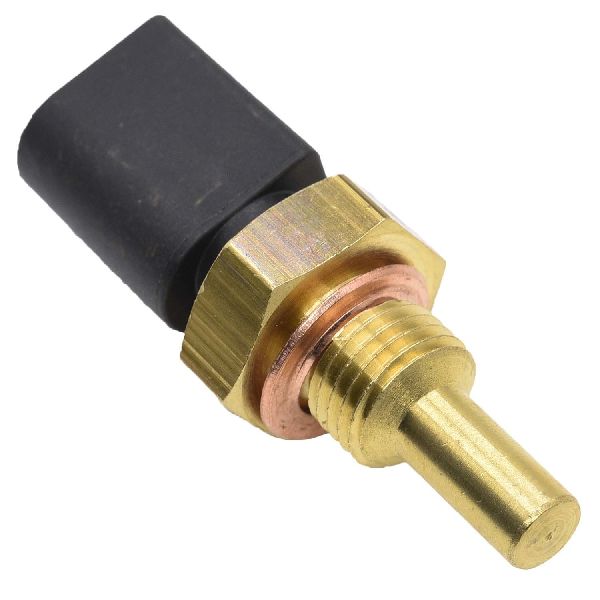
- Failed Engine Coolant Temperature (ECT) Sensor 🔴 High Probability → Shop Engine Coolant Temperature Sensor The ECT sensor is a thermistor that degrades over time from constant heat cycles. Eventually, it can fail internally, creating an open circuit. This open circuit results in the maximum possible voltage reading being sent to the DME, triggering the 'Circuit High' P0118 code.
How to confirm: Using a scan tool, check the live data for the ECT sensor. If it shows an illogical, extremely low temperature (like -40°F) when the engine is at ambient temperature or warm, the sensor has failed. You can also test the sensor's internal resistance with a multimeter; an open circuit (infinite resistance or 'OL') confirms failure. A healthy sensor's resistance should change with temperature—high resistance when cold, low resistance when hot. A difference of at least 200 ohms between a cold and warm engine is expected.
Typical fix: Replace the engine coolant temperature sensor and its O-ring. This requires removing the airbox for access. 🎬 Watch: Step-by-step guide to installing the 996 coolant sensor It is also wise to check the coolant hose elbow the sensor screws into, as they are known to come loose.
Est. part cost: $25-$80 - Damaged Wiring or Connector 🟡 Medium Probability The engine bay is a harsh environment. Wires can become brittle from heat and age, and insulation can chafe or melt, leading to an open circuit or a short to voltage. The connector's pins can also corrode or break, causing an intermittent or total loss of signal.
How to confirm: Visually inspect the wiring harness leading to the ECT sensor for any signs of damage, corrosion, or melting. Unplug the connector and check for a 5-volt reference signal on one pin and a good ground on the other using a multimeter with the key on, engine off. Wiggle the harness while observing live data on a scan tool to see if the reading changes, which would indicate a loose connection or a break in the wire.
Typical fix: Repair the damaged section of the wire or replace the pigtail connector.
Est. part cost: $15-$50 - Low Engine Coolant ⚪ Low Probability While not a direct cause of the P0118 electrical fault code, if the coolant level drops to where the sensor is exposed to an air pocket, it cannot read the temperature correctly. This can sometimes trigger faults and will trigger the same flashing red light on the dashboard as a sensor failure.
How to confirm: Visually check the coolant level in the expansion tank when the engine is cold. A flashing red light on the dash is a primary indicator of low coolant on these models.
Typical fix: Top off the coolant with the correct Porsche-specified type (e.g., G40) and pressure test the system to find and repair the source of the coolant loss. Common leak points include the expansion tank and water pump.
Est. part cost: $30-$50 for coolant
Rare But Worth Checking
- Faulty Digital Motor Electronics (DME) / Engine Computer: This is extremely uncommon. Before condemning the expensive DME, all other possibilities (sensor, wiring, connections) must be exhaustively ruled out by a professional technician.
Diagnosis Steps
- Check the coolant level in the expansion tank (when the engine is cold) to rule out a simple low coolant warning.
- Connect an OBD-II scanner and confirm P0118 is the active code. Note any other codes present.
- View the live data stream for the Engine Coolant Temperature sensor. If the engine is cold, the reading should be close to the ambient air temperature. If it shows an extremely low, fixed value (e.g., -40°F/-40°C), the sensor or its circuit is faulty.
- Turn the engine off. Locate the ECT sensor at the rear of the engine, positioned vertically behind the alternator. 🎬 See this walkthrough for replacing the sensor in tight spaces You will need to remove the air intake box for access.
- Inspect the sensor's electrical connector and wiring for any visible damage, corrosion, or loose pins.
- If wiring looks good, disconnect the sensor. With the ignition on (engine off), use a multimeter to test for a 5-volt reference signal on one pin of the connector and a good ground on the other.
- If voltage and ground are present, the sensor itself is the most likely culprit. You can confirm by testing the resistance across the two pins of the sensor itself. An open circuit (infinite resistance or 'OL') confirms it's bad. A good sensor should show high resistance when cold (e.g., ~2000-3000 ohms at room temp) and low resistance when hot.
- If voltage or ground is missing at the connector, trace the wiring back to the DME to find the break or short in the circuit.
- After replacing the sensor, it may be necessary to bleed the cooling system to remove any air introduced during the repair.
Parts You'll Likely Need
- Engine Coolant Temperature Sensor
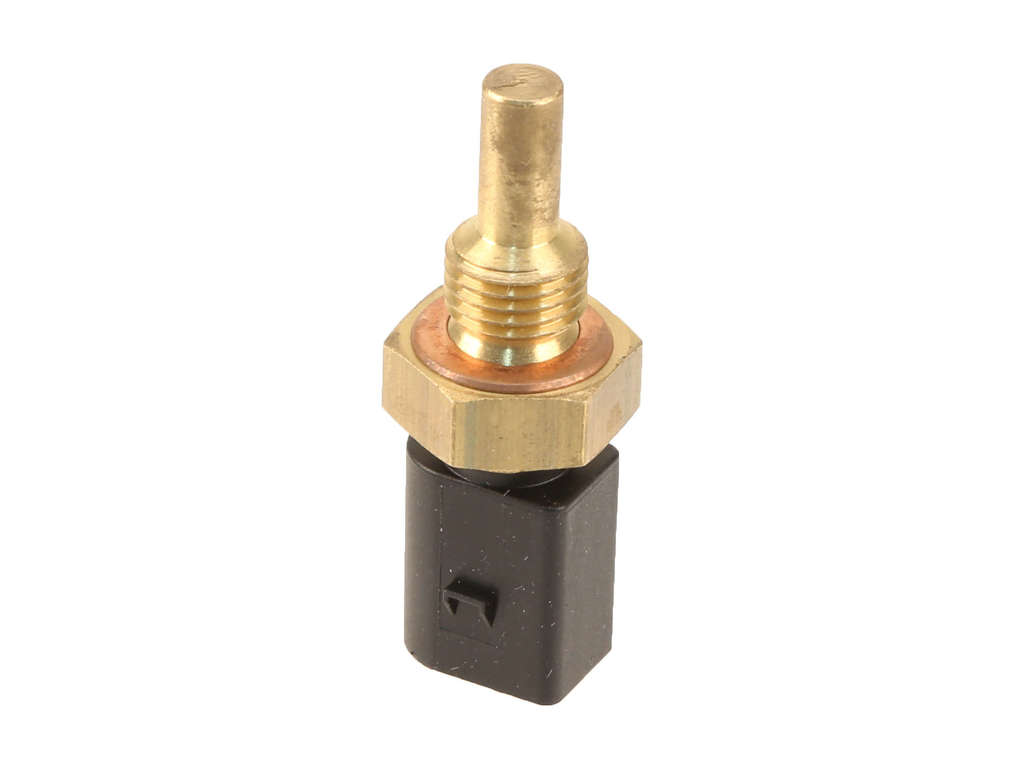
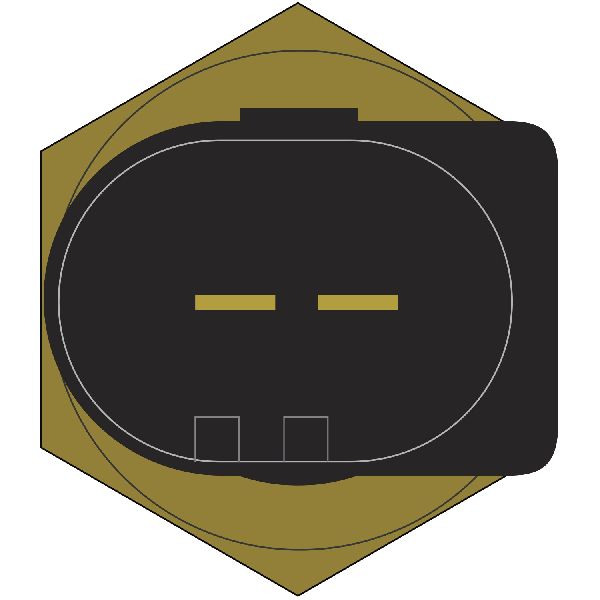
(OEM #99660641000 (2-pin, common on 3.6L 996 & 997.1) or 996-606-405-01 (4-pin, some 3.4L 996))— This sensor is the most common failure point for code P0118. It directly measures coolant temperature and sends the reading to the DME.
Trusted brands: Porsche (Genuine), Bosch, Hella, VEMO, OE Supplier
OEM price range: $60-$80
Aftermarket price range: $25-$50 - Sensor O-Ring / Seal
(OEM #Included with some sensors, or sold separately.)— Should always be replaced with the sensor to prevent coolant leaks. It is inexpensive and ensures a proper seal.
Trusted brands: Porsche, Bosch
OEM price range: $5-$10
Aftermarket price range: $2-$5
Related Codes That Often Appear With This One
- P3081 — This is a Porsche-specific code that is often stored along with P0118, as it also relates to an engine coolant temperature sensor malfunction.
- P0117 — This code is for 'ECT Circuit Low Input'. It's the opposite of P0118 but relates to the same sensor. Seeing it intermittently with P0118 could point to a wiring issue causing fluctuating readings between an open circuit 🎬 Watch: Diagnosing flashing temp lights and related sensor codes and a short to ground.
Platform-Specific Known Issues
- Accessing the Sensor: The ECT sensor is located on the coolant elbow behind the alternator. Access requires removing the entire airbox assembly. Even then, the space is tight, and using a deep socket or an O2 sensor socket can make removal and installation much easier.
- Coolant Bleeding: When the sensor is removed, a small amount of coolant will be lost. After installing the new sensor, it's important to top off the coolant and properly bleed the system to remove any air pockets, which can cause cooling issues if not addressed.
Mechanic-Grade Diagnostic Values
- ECT Sensor Resistance (disconnected from harness) — expected: Approx. 2000-3000 Ω at ambient temperature (20°C / 68°F), dropping to approx. 200-350 Ω at operating temperature (80-90°C / 176-194°F).. Failure: Infinite resistance ('OL' on multimeter) indicates an open circuit, which is the direct cause of a P0118 code. No change in resistance when heated also indicates failure.
- ECT Sensor Signal Voltage (at the connector, backprobed, key on) — expected: Approx. 3.0-3.5V on a cold engine. Should drop to approx. 1.0V or less as the engine warms up.. Failure: A reading of ~5.0V indicates an open circuit between the sensor and the DME, or a failed sensor. This high voltage reading is what triggers the P0118 code.
Scan Tool Commands That Help
- OBD-II Scan Tool (PIWIS, Durametric, or generic): Live Data / Data Stream for Engine Coolant Temperature — This is the first diagnostic step. It allows you to see the exact temperature the DME is reading. A value of -40°F or an unchanging cold temperature on a warm engine instantly points to a sensor or circuit fault, confirming the P0118 code's origin.
- OBD-II Scan Tool (PIWIS, Durametric, or generic): Clear Fault Codes / Quick Erase — Used after the repair is completed to turn off the Check Engine Light. A short drive cycle should be performed to ensure the code does not return.
Wiring & Ground Locations
- DME Pin 74 — On the main connector for the DME (engine computer), which is located in the rear of the vehicle.. This is the specific pin that receives the signal from the Engine Coolant Temperature sensor. If voltage is missing here despite being present at the sensor, it confirms a break in the signal wire.
- DME Pin 34 — On the main connector for the DME (engine computer).. This is the sender ground pin for various sensors, including the ECT. A bad ground connection at this pin or in the harness leading to it can cause erratic or high voltage readings, triggering a P0118.
- 4-Pin Sensor Connector — On the ECT sensor itself, for early model year 996s (approx. up to 2001).. On these sensors, Pins 1 and 4 send the temperature signal to the DME, while Pins 2 and 3 send a separate signal to the instrument cluster gauge. A fault in the Pin 1 or 4 circuit will trigger P0118.
Real Owner Repair Stories
- AKI'S GARAGE LTD (YouTube) (Porsche 911 997 Carrera) — Check Engine Light with code P0118, temperature gauge going up and down erratically.
✅ What actually fixed it The mechanic diagnosed the code, confirmed the location of the sensor, and replaced the faulty Engine Coolant Temperature sensor with a new genuine Porsche part. After clearing the codes, the Check Engine Light did not return and the temperature gauge functioned normally. - Rennlist forum user 'Batteaux' (2001 Porsche 911 C2) — Temperature gauge was slow to respond and eventually stayed at the zero peg, even on a hot day after a long drive. No Check Engine Light was initially present.
❌ Tried (didn't work) Initially thought it might be related to a low-temperature thermostat and cold weather.
✅ What actually fixed it The cause was a failed engine coolant temperature sensor. Replacing the sensor resolved the issue. This case highlights that the sensor can fail in a way that affects the gauge without immediately triggering a CEL.
OEM Part Supersession History
996-606-405-01→N/A, this part is for a different system design than the later part.— This is a 4-pin sensor used on earlier 996 models (approx. 1999-2001 3.4L). It provides two separate outputs: one for the DME (ECU) and one directly for the instrument cluster gauge.
Heads up: This 4-pin sensor is not interchangeable with the later 2-pin sensor. The vehicle's wiring harness and DME/gauge logic are different.99660641000→N/A— This is a 2-pin sensor used on later 996 models (approx. 2002-2004 3.6L) and 997.1 models (2005-2006). It sends a single signal to the DME, which then transmits the temperature data to the gauge via the CAN bus.
Heads up: This 2-pin sensor cannot be used in a vehicle originally equipped with the 4-pin sensor without significant wiring modifications.
Model Year Variations Within This Range
- 2001 (3.4L engine): Early 2001 models with the 3.4L engine typically use the 4-pin ECT sensor (PN 996-606-405-01). This sensor has dedicated circuits for both the DME and the dashboard gauge. Diagnosis must account for two separate potential failure points within one sensor.
- 2002-2006 (3.6L engine): These models use the 2-pin ECT sensor (PN 99660641000). The sensor reports only to the DME, which then sends the temperature reading to the gauge over the CAN bus. A gauge issue with no P0118 code is less likely to be the sensor and more likely to be a cluster or communication problem.
Diagnostic Flowchart
Other Known Issues on This Vehicle
Issues unrelated to this code that are worth knowing about as an owner of this generation:
- Intermediate Shaft (IMS) Bearing Failure 🔴 High — Affects M96/M97 engines from ~1997-2008. Failure rates are debated but are a significant concern, especially for 2000-2005 models with the smaller, single-row bearing. Failure can be sudden and catastrophic, often requiring a full engine replacement.
- Cylinder Bore Scoring 🔴 High — A known issue on M96/M97 engines, particularly in colder climates. It involves the breakdown of the cylinder liner, leading to piston slap, increased oil consumption, and eventual engine failure. Often presents as a ticking noise from the engine.
- Rear Main Seal (RMS) Leak 🟡 Low — A very common oil leak found between the engine and transmission. While not mechanically critical, it can be a persistent annoyance and is often addressed when the transmission is removed for other service, like a clutch replacement or IMS bearing upgrade.
- Water Pump Failure 🟠 Medium — The water pump is a common failure item. The original pumps sometimes used a plastic impeller that can degrade and break apart, sending fragments into the cooling system. A failing pump can cause overheating or a distinct metallic ticking/grinding noise.
Used vs. New Parts: Buying Guide for This Vehicle
When a used part is the smart pick: Buying a used ECT sensor is not recommended due to its low new price and its nature as a wear item. However, sourcing a used wiring harness pigtail (connector) from a salvage yard is a smart and cost-effective choice if the original connector is cracked, corroded, or has brittle wires.
Donor-vehicle mileage cap: roughly under 150000 miles for the part to have meaningful remaining life.
What to inspect on the donor part:
- For a pigtail connector: ensure the plastic is not brittle and the locking tab is intact.
- Check that the wire insulation is still flexible and not cracked or peeling.
- Inspect the metal pins inside the connector for any signs of green or white corrosion.
OEM-only on this vehicle (don't cheap out):
- Coolant Expansion Tank - While not directly related to P0118, if a leak is found during diagnosis, aftermarket tanks for the 996/997 are widely reported on forums to fail prematurely; using a Genuine Porsche tank is strongly advised.
Aftermarket brands forum-validated for this vehicle:
- Bosch
- Hella
- VEMO (often an OE supplier)
Brands owners have reported issues with on this vehicle:
- Unbranded, generic parts from online marketplaces should be avoided for this critical sensor, as their accuracy and longevity are questionable.
Real Owner Stories
Aggregated from forums and TSBs cited above. Mileages and costs reflect what owners reported in those sources.
2004 Porsche 911 (996)
Symptoms: The temperature gauge was behaving erratically and a flashing red warning light appeared on the dashboard.
What fixed it: The issue was resolved by replacing the engine coolant temperature (ECT) sensor located behind the alternator.
Source hint: Rennlist: 'Coolant Temperature Sensor Location'
Related OBD-II Codes
Frequently Asked Questions
Where is the engine coolant temperature (ECT) sensor located on my 2001-2006 Porsche 911?
My temperature gauge is going crazy and I have a flashing red light on the dash. Is it definitely the sensor causing the P0118 code?
How can I test the ECT sensor myself to confirm it's bad before buying a new one?
My cooling fans are running constantly at high speed, even right after starting the car. Is this related to P0118?
What special tool makes replacing the ECT sensor easier in that tight space?
I replaced the sensor for P0118. Do I need to do anything with the coolant?
Does this P0118 sensor failure also happen on the Porsche Boxster or Cayman?
Helpful Videos
We Have This Part in Stock


The information in this article is provided for general reference and educational purposes only. Vehicle specifications, procedures, and part compatibility can vary by production date, trim level, and region. Always consult your vehicle's factory service manual and verify part numbers before purchasing or performing repairs. Safety-critical components such as airbags, seat belts, and braking systems should be installed by a qualified professional.
- Porsche 911:
- 🧭 Diagnostic Flowchart
- 🎬 Helpful Videos
- 🛍️ Shop This Part
- What's Unique About the 2001-2006 Porsche 911
- Symptoms You May Notice
- Most Likely Causes
- Rare But Worth Checking
- Diagnosis Steps
- Parts You'll Likely Need
- Related Codes That Often Appear With This One
- Platform-Specific Known Issues
- Mechanic-Grade Diagnostic Values
- Scan Tool Commands That Help
- Wiring & Ground Locations
- Real Owner Repair Stories
- OEM Part Supersession History
- Model Year Variations Within This Range
- Other Known Issues on This Vehicle
- Used vs. New Parts: Buying Guide for This Vehicle
- Real Owner Stories
- 2004 Porsche 911 (996)
- Related OBD-II Codes
- Frequently Asked Questions
- 🎟️ Get 5% Off