

P0118 on 2003-2011 Saab 9-3: Engine Coolant Temperature Sensor Fixes
On a 2003-2011 Saab 9-3, code P0118 almost always points to a failed Engine Coolant Temperature (ECT) sensor. This is an inexpensive part, typically costing $15-$40 for an aftermarket replacement, and is a simple DIY fix for most owners. The ECU misinterprets the sensor fault as an extremely cold engine, causing constant fan operation, poor fuel economy, and hard starting.
- P0118 on your Saab 9-3 means the Engine Coolant Temperature (ECT) sensor circuit is open, which the car interprets as an extremely cold engine.
- The most common cause by far is a failed ECT sensor, which is an inexpensive and easy part to replace yourself.
- Symptoms include a constant running cooling fan, poor fuel economy, a dead temperature gauge, and difficulty starting.
- You will need basic tools: a T30 Torx driver to remove the engine cover and a 19mm deep socket to remove the sensor. Be prepared for the connector clip to be brittle.
- Ignoring this code will lead to poor performance and fuel waste, but it is unlikely to cause immediate, severe engine damage.
What's Unique About the 2003-2011 Saab 9-3
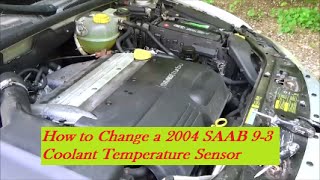
The 2003-2011 Saab 9-3 (second generation) uses a standard GM-style thermistor ECT sensor that is a very common failure point but is also easy to access and replace. On the 4-cylinder B207 engines, the sensor is located on the driver's side of the engine, near the thermostat housing, making it visible and accessible from the top. On the less common 2.8T V6 (B284) engine, the sensor is in a tighter spot but still manageable for a DIY repair. This accessibility makes it a straightforward and common first repair 🎬 Watch: A quick guide to changing the 9-3 temp sensor. for many owners experiencing these symptoms.
Symptoms You May Notice
- Check Engine Light is on.
- Cooling fans running constantly at high speed, even when the engine is cold.
- Hard starting, especially when the engine is cold, or extended cranking time.
- Poor fuel economy.
- Black smoke from the exhaust, indicating a rich fuel mixture.
- Rough idle or hesitation, particularly before the engine warms up.
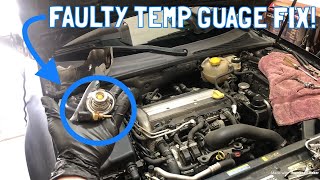
- Inaccurate or non-functional temperature gauge on the dashboard (may drop to 'C' or not move at all).
- Replacing the thermostat. While it's sometimes replaced at the same time as a 'while you're in there' job, a bad thermostat will not cause a P0118 'circuit high' code. A stuck-open thermostat usually causes P0128 (Coolant Temperature Below Thermostat Regulating Temperature) or slow warm-up, while a stuck-closed one causes overheating.
Most Likely Causes
- Failed Engine Coolant Temperature (ECT) Sensor 🔴 High Probability → Shop Engine Coolant Temperature Sensor The ECT sensor is a common failure item due to age and constant exposure to thousands of heat cycles, which eventually causes the internal thermistor to fail open.
How to confirm: Use a scan tool to check live data. If the ECT reading shows an impossibly low temperature (like -40°F) on a cool or warm engine, the sensor has failed open. You can also test the sensor's resistance with a multimeter. At room temperature (~70°F/20°C), it should read approximately 2,200-3,000 Ohms. An open circuit (infinite resistance) confirms failure.
Typical fix: Replace the Engine Coolant Temperature sensor. It's a simple screw-in part, though you will lose a small amount of coolant.
Est. part cost: $15-$40 - Damaged Wiring or Connector 🟡 Medium Probability The wiring connector sits on top of the engine and can become brittle from heat, leading to cracks or corrosion on the pins. The locking tab is notoriously fragile and often breaks when unplugging the sensor.
How to confirm: Visually inspect the connector for cracks, corrosion, or broken wires. Wiggle the connector while monitoring live data from the scan tool; if the temperature reading flickers between -40°F and a real value, the connection is bad. Check for 5V reference and ground at the connector with the key on, engine off.
Typical fix: Repair the wiring or replace the connector pigtail. If the connector housing is just cracked but still makes contact, it can often be secured with a zip tie as a temporary or permanent fix.
Est. part cost: $10-$25
Rare But Worth Checking
- Faulty Engine Control Module (ECM): This is extremely rare for this specific code. The Trionic 8 ECM on these cars can fail, but it usually presents with other codes like P0601 (Internal Control Module Malfunction) or no-start/cutting-out issues when hot. The ECM should only be considered after definitively ruling out the sensor and wiring.
- Critically Low Coolant: If the coolant level is so low that the sensor is exposed to air instead of coolant, it can cause erratic readings. However, this typically triggers other codes or obvious overheating symptoms first and is less likely to cause a static 'circuit high' fault.
Diagnosis Steps
- Check the Check Engine Light with an OBD-II scanner to confirm P0118 is the primary code. 🎬 Watch: EricTheCarGuy explains what P0118 means for your engine.
- Using the scanner's live data function, view the Engine Coolant Temperature. If it reads an extremely low value (e.g., -40°F/-40°C) regardless of the actual engine temperature, this strongly indicates an open circuit.
- Turn the engine off and let it cool. Locate the ECT sensor. On 4-cylinder B207 engines, it is on the driver's side of the engine block, below the main charge air pipe, with a two-wire connector.
- Inspect the sensor's electrical connector and wiring for any signs of damage, corrosion, or looseness. Ensure it is plugged in securely. These connectors can become brittle.
- If the wiring looks good, the most likely culprit is the sensor itself. Unplug the sensor and test the resistance across its two pins with a multimeter. A reading of infinite resistance ('OL' or open loop) means the sensor is bad. For reference, a good sensor should read around 250-350 Ohms at operating temperature (80°C) and 2,200-3,000 Ohms at room temperature (20°C).
- To test the wiring, you can jump the two pins in the harness-side connector with a paperclip or jumper wire. With the key on, the scan tool's live data should now show a very high temperature (e.g., 250°F+). If it does, the wiring and ECU are good, confirming the sensor is faulty.
- If the sensor and wiring test okay, you would then need to check for a 5V reference signal and a good ground at the connector with the key on, engine off, to diagnose a potential (but rare) ECM issue.
Parts You'll Likely Need
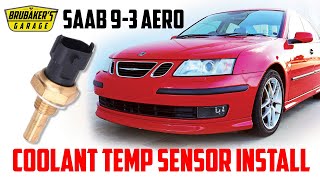
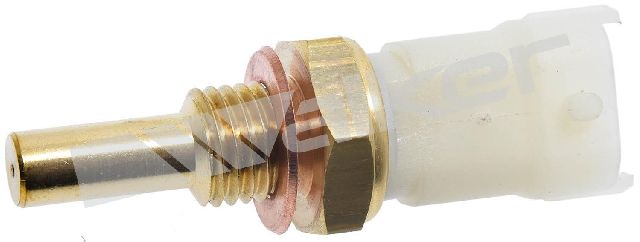
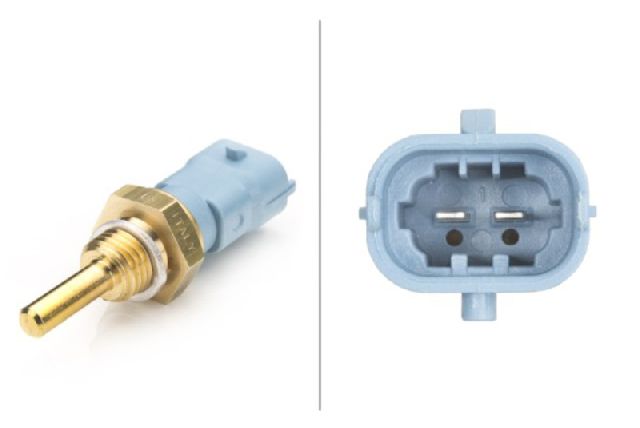
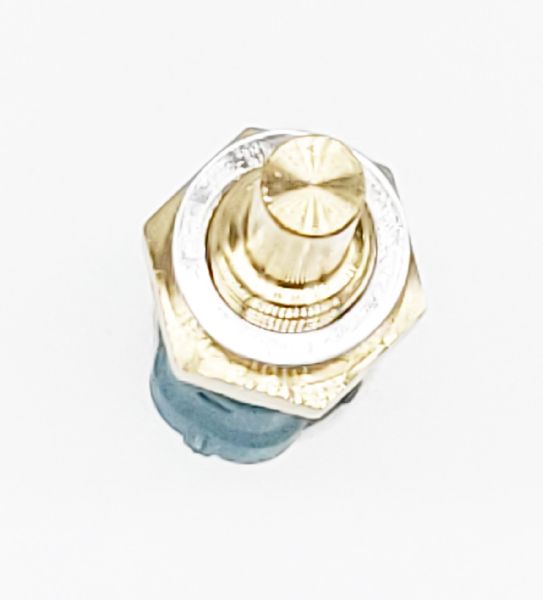
- Engine Coolant Temperature Sensor
(OEM #12566778, 93183623)— This is the component that fails internally, creating the open circuit that triggers the P0118 code. It is a standard GM part used across many vehicles.
Trusted brands: Bosch, Hella, ACDelco, Genuine Saab/Orio, Facet
OEM price range: $30-$50
Aftermarket price range: $15-$35
Platform-Specific Known Issues
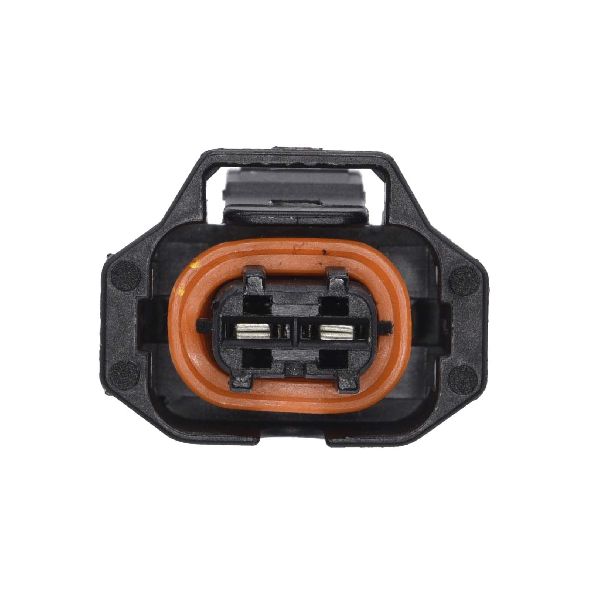
- Brittle Connector Clip: A very common complaint on forums like SaabCentral is that the plastic retaining clip on the ECT sensor's electrical connector becomes brittle with age and heat, breaking off during removal. Owners often resort to using a small zip tie to secure the connector back onto the new sensor, which is generally an effective long-term solution.
- Access on V6 (B284) vs I4 (B207): While the sensor is easily accessible on the 4-cylinder B207 engine, access on the 2.8T V6 model is tighter. It is located in a similar position but may require removal of other components for comfortable access, slightly increasing the repair time.
Mechanic-Grade Diagnostic Values
- P0118 Trigger Condition — expected: Voltage on the ECT signal circuit must be less than 4.974V.. Failure: Voltage exceeds 4.974 V for more than 0.52 seconds.
- ECT Sensor Resistance — expected: Approx. 2,200-3,000 Ω at 20°C (68°F); Approx. 250-350 Ω at 80°C (176°F); Approx. 180-250 Ω at 100°C (212°F).. Failure: Infinite resistance (Open Loop / 'OL') at any temperature.
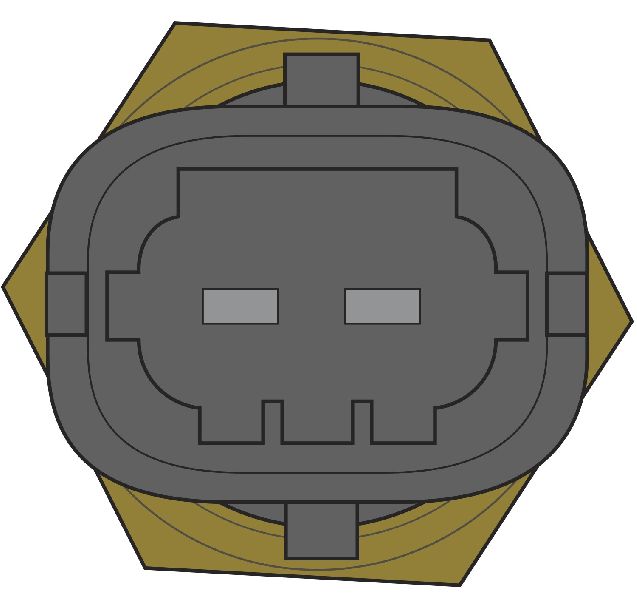
- ECT Connector Voltage (Key On, Engine Off) — expected: Approx. 5.0V on the reference wire (Pin 1, Brown) and a good ground on the return wire (Pin 2, Blue/Yellow).. Failure: No voltage on the reference wire, or high resistance to ground on the return wire.
- ECT Signal Voltage (Live Data) — expected: Should read approx. 3.0-3.5V on a cold start (~20°C) and drop to approx. 1.0V at normal operating temperature (~80°C).. Failure: Stuck at or near 5.0V, indicating an open circuit.
Scan Tool Commands That Help
- Saab Tech 2: Read DTCs in All Systems — Use this to verify that P0118 is the only code present. A generic OBD-II scanner may miss codes from other modules (like ABS or TCM) that could provide additional diagnostic context, even if they seem unrelated.
- Saab Tech 2: Read Values > Engine Coolant Temperature — To monitor the live temperature reading as seen by the ECU. This is the primary data point for diagnosing the fault. The reading should be plausible and change as the engine warms up.
Wiring & Ground Locations
- ECT Sensor Connector (Component 202) — On the ECT sensor itself, located on the driver's side of the cylinder head on B207 engines.. This is the most common point of failure, either from a failed sensor or a damaged connector/pins. All electrical tests for the sensor begin here.
- Trionic 8 ECU Connector J1, Pin 39 — On the main engine computer (Trionic 8), which is mounted on the front of the engine. Pin 39 corresponds to the ECT signal wire (typically Brown).. If the sensor and connector are good, a continuity test from this pin to the sensor connector pin will confirm if the signal wire is intact.
- Trionic 8 ECU Connector J1, Pin 9 — On the main engine computer (Trionic 8). Pin 9 is the ground return for the ECT sensor (typically Blue/Yellow wire).. A break in this ground wire will cause an open circuit and trigger P0118. Testing continuity from this pin to the sensor connector's ground pin is a critical step if a new sensor doesn't fix the issue.
- Ground Point G2 — On the side of the left-hand structural member in the engine bay, near the battery and connector bracket.. This is a primary chassis ground point. While not directly in the sensor circuit, a poor or corroded main ground can cause floating voltages and unpredictable electrical issues across multiple systems.
- Ground Point G25 — Connects the battery ground cable directly to the left-hand engine mounting or gearbox.. This is the main engine ground. A poor connection here can affect the ground reference for all sensors mounted on the engine, including the ECT, potentially causing erratic readings or faults.
Real Owner Repair Stories
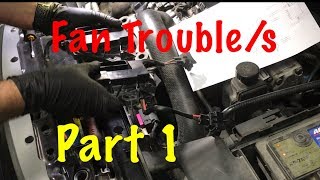
- YouTube channel 'Seats & Wheels' (Vauxhall/Opel (shared GM platform with Saab 9-3)) — Engine management light on, cooling fans running constantly from a cold start, P0118 code present.
❌ Tried (didn't work) Replacing the primary engine coolant temperature sensor., Replacing a second temperature sensor on the radiator.
✅ What actually fixed it After the new sensors did not resolve the issue, a wiring inspection revealed that the ECT sensor harness had been rubbing against a hot coolant pipe. This melted the insulation and caused a break in the wire, creating the open circuit. Repairing the broken wire and re-routing it away from the pipe permanently fixed the fault.
When the Usual Fixes Don't Work
- While a failed ECT sensor is the cause of P0118 in over 90% of cases, there are documented instances where replacing the sensor does not fix the problem. In one such case, after two new sensors failed to resolve the constant fan operation and CEL, the root cause was discovered to be a section of the wiring harness that had melted from contact with a hot coolant pipe. This created an open circuit that mimicked a failed sensor. This highlights the importance of testing the wiring for continuity back to the ECU if a new sensor does not resolve the code.
OEM Part Supersession History
12566778→93183623, 15393755— Standard GM part number updated for Saab's parts catalog.
Heads up: These part numbers are generally interchangeable for the specified application. However, be cautious of part number 93179551, which is a coolant LEVEL sensor for the expansion tank and is not the correct part for a P0118 code.
Diagnostic Flowchart
Other Known Issues on This Vehicle
Issues unrelated to this code that are worth knowing about as an owner of this generation:
- CIM Module Failure 🔴 High — Common issue, especially on earlier 2003-2006 models. Can occur at any mileage.
- Fuel Level Sender Failure 🟠 Medium — Very common across all years. The fuel gauge becomes erratic or reads empty permanently.
- Intake Valve Failure (B207 Engine) 🔴 High — A known weakness, particularly on 2007-2009 models, often appearing after 80,000 miles. Not guaranteed to happen but is a significant potential repair.
- Cracked Intake Air Duct / PCV Hoses 🟡 Low — Common with age as rubber and plastic components become brittle from heat.
- Convertible Top Hydraulic Leaks/Failures 🟠 Medium — Common on convertible models as they age. Hydraulic lines can chafe and leak, or the pump/latches can fail.
Used vs. New Parts: Buying Guide for This Vehicle
When a used part is the smart pick: For the sensor itself: never. It is a low-cost wear item and a used part has no predictable lifespan. For the connector: a used pigtail from a junkyard is an excellent, cost-effective repair if your original connector's locking tab or housing is broken but the wiring is otherwise intact.
Donor-vehicle mileage cap: roughly under 150000 miles for the part to have meaningful remaining life.
What to inspect on the donor part:
- For a connector pigtail, inspect for any signs of cracking or brittleness in the plastic.
- Ensure the locking tab is present and functional.
- Check the wire insulation for flexibility; avoid any that feel hard or stiff.
- Look at the metal pins inside the connector for any green or white corrosion.
Aftermarket brands forum-validated for this vehicle:
- Bosch
- Hella
- ACDelco
Real Owner Stories
Aggregated from forums and TSBs cited above. Mileages and costs reflect what owners reported in those sources.
2006 Saab 9-3 2.0T
Symptoms: The check engine light came on, the cooling fans were running on high speed constantly, and the temperature gauge on the dashboard was dead.
What fixed it: Replacing the engine coolant temperature (ECT) sensor resolved all the symptoms and cleared the code.
Source hint: SaabCentral Forums
2004 Saab 9-3
Symptoms: While replacing the ECT sensor to fix a P0118 code, the plastic retaining clip on the electrical connector crumbled and broke off because it was so brittle from heat and age.
What fixed it: The new sensor was installed and the connector was secured firmly using a small zip tie, which held it in place perfectly.
Source hint: Vehicle-specific issue noted from SaabCentral forum complaints
Saab 9-3 2.0T (B207)
Symptoms: Needed to replace the ECT sensor, but access to it was very tight because of a hard line running in front of it.
What fixed it: The nearby hard line had to be unbolted and moved aside to create enough space to get a tool on the old sensor and install the new one.
Source hint: YouTube - Auto Autopsy, 'Saab 9-3 2.0T Thermostat and Temperature Sensor Replacement'
Related OBD-II Codes
Frequently Asked Questions
Where is the engine coolant temperature (ECT) sensor located on my Saab 9-3?
The plastic clip on my ECT sensor connector broke off. Do I need to replace the whole wiring harness?
My temperature gauge is stuck on cold and the cooling fans run constantly. Is this definitely a bad ECT sensor?
How can I test the ECT sensor myself before buying a new one?
What scan tool reading confirms the P0118 code is caused by an open circuit?
How can I test the wiring to the ECT sensor to rule it out as the problem?
Helpful Videos
We Have This Part in Stock


The information in this article is provided for general reference and educational purposes only. Vehicle specifications, procedures, and part compatibility can vary by production date, trim level, and region. Always consult your vehicle's factory service manual and verify part numbers before purchasing or performing repairs. Safety-critical components such as airbags, seat belts, and braking systems should be installed by a qualified professional.
- Saab 9-3:
- 🧭 Diagnostic Flowchart
- 🎬 Helpful Videos
- 🛍️ Shop This Part
- What's Unique About the 2003-2011 Saab 9-3
- Symptoms You May Notice
- Most Likely Causes
- Rare But Worth Checking
- Diagnosis Steps
- Parts You'll Likely Need
- Platform-Specific Known Issues
- Mechanic-Grade Diagnostic Values
- Scan Tool Commands That Help
- Wiring & Ground Locations
- Real Owner Repair Stories
- When the Usual Fixes Don't Work
- OEM Part Supersession History
- Other Known Issues on This Vehicle
- Used vs. New Parts: Buying Guide for This Vehicle
- Real Owner Stories
- 2006 Saab 9-3 2.0T
- 2004 Saab 9-3
- Saab 9-3 2.0T (B207)
- Related OBD-II Codes
- Frequently Asked Questions
- 🎟️ Get 5% Off