

P0118 on 1999-2010 Saab 9-5: Engine Coolant Temperature Sensor Fixes
On a 1999-2010 Saab 9-5 with a 4-cylinder engine, code P0118 is almost always caused by a failed Engine Coolant Temperature (ECT) sensor. This is an inexpensive part (around $20-$50) and a simple DIY replacement with a 19mm deep socket. The ECU defaults to a -40°F reading, causing continuous fan operation, poor fuel economy, and a disabled A/C.
- P0118 on your Saab 9-5 means the engine computer thinks the engine is extremely cold (-40°F) due to an electrical fault.
- The most likely cause is a bad Engine Coolant Temperature (ECT) sensor, which is a cheap and easy part to replace yourself.
- Symptoms include the cooling fans always running, a dead temperature gauge, hard starting, and poor fuel economy.
- You will need a 19mm deep socket to replace the sensor, which is located on the side of the cylinder head.
- Don't mistake this for a bad thermostat; P0118 is an electrical code pointing directly at the sensor or its wiring.
What's Unique About the 1999-2010 Saab 9-5
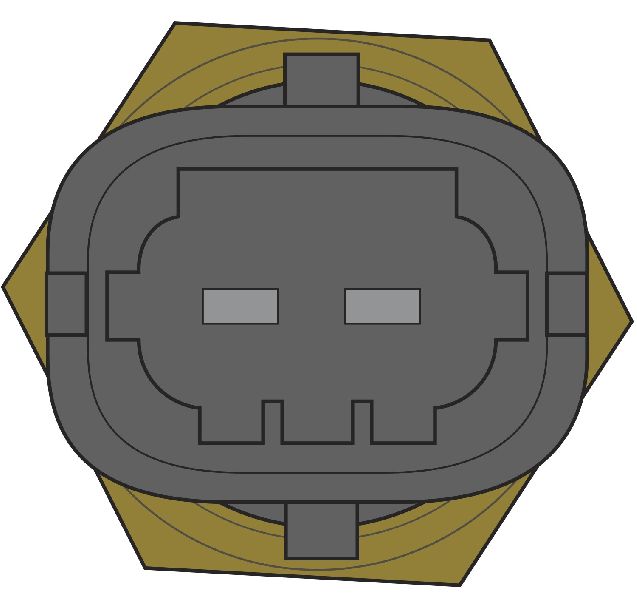
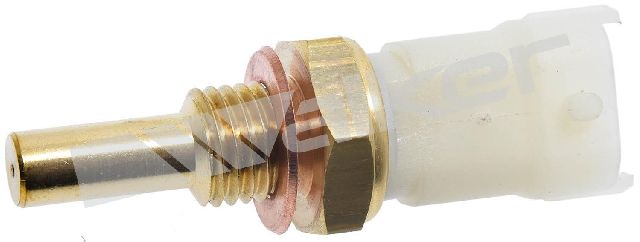
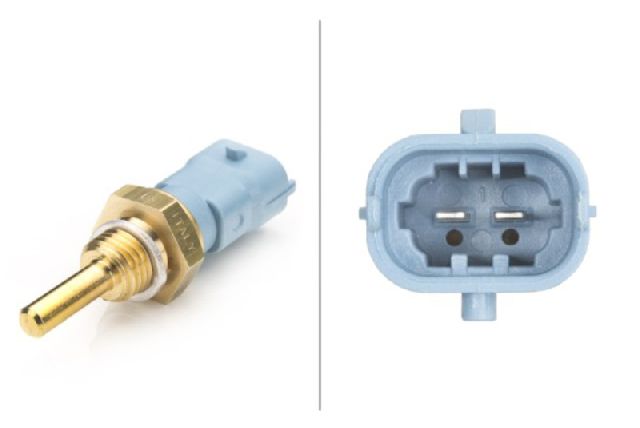
While P0118 is a standard code, Saab's Trionic engine management system has a specific response. It disables the A/C compressor, runs the cooling fans continuously, and uses a substitute temperature value (e.g., -20°C on start and +60°C when running, or a calculated value on later models) to keep the engine operational. The failure is very common due to the age of these vehicles, but the fix is straightforward and well-documented by the Saab community. The issue is almost always the sensor itself, not the more complex wiring or ECU. The sensor is a simple 2-pin thermistor that screws into the cylinder head.
Generation note: The 1999-2010 year range primarily covers the first generation (YS3E) of the Saab 9-5. A very small number of 2010 models were the second generation (YS3G). This guide is specific to the 4-cylinder petrol engines (B205, B235) used in the first generation, which is the vast majority of these cars. The V6 models use a different sensor.
Symptoms You May Notice
- Check Engine Light is on.
- Engine cooling fans run continuously as soon as the ignition is on.
- Temperature gauge on the dashboard reads incorrectly (usually stays on cold or drops to zero).
- Hard starting, especially when the engine is warm, because the ECU injects too much fuel (cold start enrichment).
- Poor fuel economy.
- Black smoke from the exhaust due to the rich fuel mixture.
- Air conditioning (A/C) may not work as the ECU disables it in fail-safe mode.
- Rough idle or hesitation until the engine warms up.
- Replacing the thermostat. A stuck-open thermostat can cause the engine to run cool and the temperature gauge to read low, especially on the highway. However, a thermostat is a mechanical part and will not cause a P0118 electrical circuit code. If you have P0118, the problem is electrical (sensor or wiring), not a stuck thermostat. 🎬 Watch: How to replace both the thermostat and the sensor.
Most Likely Causes
- Failed Engine Coolant Temperature (ECT) Sensor 🔴 High Probability → Shop Engine Coolant Temperature Sensor The sensor is a simple electronic component (thermistor) that fails with age and countless heat cycles. It's a very common failure point on these vehicles, often failing in an 'open circuit' state which results in the high voltage reading.
How to confirm: Use an OBD-II scanner to check live data. If the coolant temperature reads an extremely low value (e.g., -40°F) even on a warm engine, the sensor has failed internally in an open-circuit state. You can also test the sensor's resistance with a multimeter; it should have high resistance when cold and low resistance when hot. An open circuit (infinite resistance) confirms failure.
Typical fix: Replace the Engine Coolant Temperature sensor. This is a simple DIY job requiring a 19mm deep socket. The sensor is located on the side of the cylinder head. 🎬 Watch: Step-by-step coolant temperature sensor replacement on a 9-5 Arc.
Est. part cost: $15-$50 - Damaged Wiring or Connector 🟡 Medium Probability The wiring harness in the engine bay is exposed to heat and vibration, which can cause wires to become brittle, insulation to crack, or pins in the connector to corrode over time.
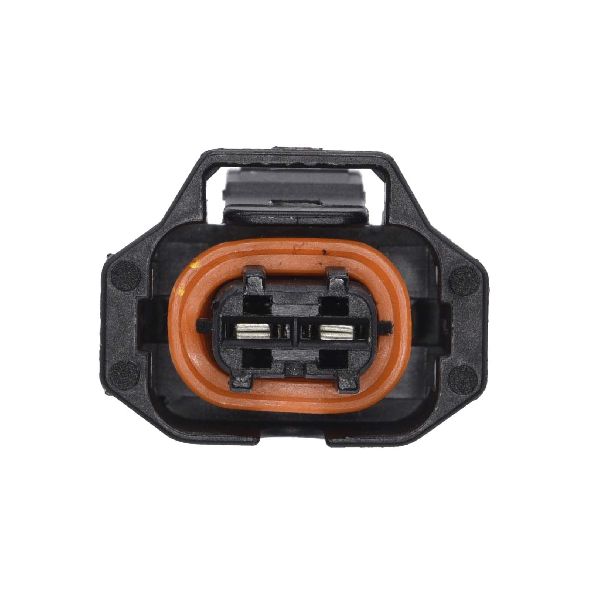
How to confirm: Visually inspect the wiring and the two-pin connector going to the ECT sensor for any signs of corrosion, damage, or loose pins. The Saab WIS suggests gently wiggling the connector and harness with the engine running while observing live data to see if the temperature reading changes, indicating an intermittent connection. Rodent damage to the harness is also a possibility.
Typical fix: Clean the connector terminals with electrical contact cleaner or repair the damaged section of the wiring harness. The connector itself can also be replaced.
Est. part cost: $5-$25
Rare But Worth Checking
- Faulty Engine Control Unit (ECU): This is extremely rare. The Trionic ECU is generally robust. It should only be considered a cause after the sensor and wiring have been thoroughly tested and ruled out. A faulty ECU might not be able to correctly process the signal from a perfectly good sensor.
Diagnosis Steps
- Confirm the code with an OBD-II scanner. Note any other codes present.
- Using the scanner's live data function, view the Engine Coolant Temperature. If it shows an impossibly low number like -40°F or -40°C, the sensor or its circuit is open.
- Turn the engine off. Locate the ECT sensor on the side of the cylinder head, near the thermostat housing and below the upper radiator hose.
- Inspect the electrical connector and wiring for any visible damage, corrosion, or loose connections. Wiggle the harness to check for intermittent faults.
- Disconnect the sensor. With the key on, engine off, check for a 5-volt reference on one pin and a good ground on the other pin of the connector using a multimeter.
- If wiring provides proper voltage and ground, the sensor is the primary suspect. You can test the old sensor by checking its resistance with a multimeter. It should show high resistance when cold and low resistance when hot. An infinite resistance reading means it's internally open and faulty.
- A quick wiring check is to jump the two pins on the harness connector with a paperclip or fused jumper wire. The scanner's live data should show a very high temperature (e.g., 250°F+), confirming the wiring to the ECU is intact.
- If the sensor and wiring both test good, the final, very rare possibility is a fault in the ECU.
Parts You'll Likely Need
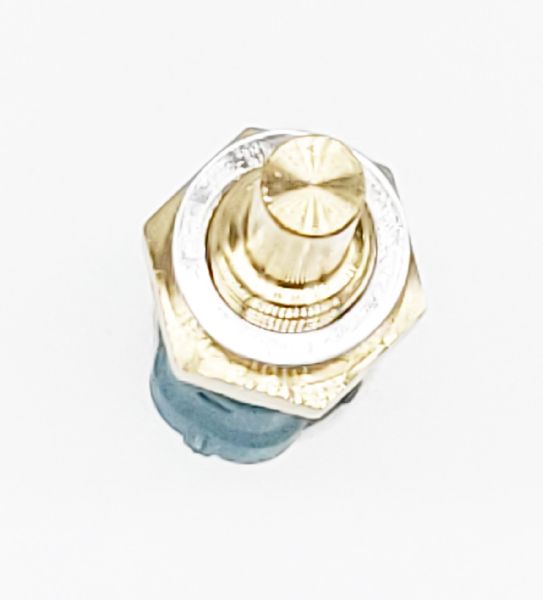
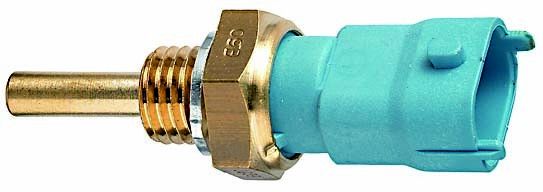
- Engine Coolant Temperature Sensor
(OEM #15393755)— This sensor is the most common failure point for code P0118. It directly provides the temperature reading to the ECU, and an internal failure causes the open circuit condition.
Trusted brands: Genuine Saab, Bosch, Hella, Delphi, Rein
OEM price range: $30-$50
Aftermarket price range: $15-$30
Related Codes That Often Appear With This One
- P0117 — P0117 is 'ECT Circuit Low Input'. It's the opposite of P0118 and indicates a short circuit. Seeing them together or intermittently could point to a wiring problem where the circuit is alternating between open and shorted, perhaps due to chafing.
- P0116 — P0116 is 'ECT Circuit Range/Performance'. This code can appear if the sensor readings are erratic or don't correlate with other engine sensors, which can happen as the ECT sensor begins to fail or if there's a loose connection.
Platform-Specific Known Issues
- No specific TSBs or recalls are noted for this specific P0118 fault, as it is considered a standard wear-and-tear failure for a part of this age.
- Owner Experience: Quick Swap: Owners on forums like SaabCentral confirm this is a very fast repair. One user noted you can quickly swap the sensor with minimal coolant loss by having the new sensor ready to screw in as soon as the old one is removed. Using a finger to temporarily plug the hole can also work.
- Tool Required: 19mm Deep Socket: Multiple DIY guides and videos confirm that a 19mm deep socket is required 🎬 See this walkthrough for replacing the sensor on various Saab models. to fit over the sensor's body and electrical connector for removal and installation.
Mechanic-Grade Diagnostic Values
- ECT Sensor Resistance vs. Temperature — expected: Approx. 2.3-2.7 kΩ at 20°C (68°F); Approx. 0.29-0.37 kΩ at 80°C (176°F).. Failure: Infinite resistance (open circuit) or values significantly outside the expected range for a given temperature.
- ECT Sensor Connector Voltage (Key On, Engine Off) — expected: One pin should show a ~5V reference from the ECU; the other is the ground return path.. Failure: No voltage indicates a wiring issue from the ECU. Voltage on both pins can indicate an open ground wire.
- ECU Fault Trigger Threshold — expected: Voltage from the sensor must remain below 4.91V.. Failure: If the ECU sees a voltage higher than 4.910V for more than 1 second, it will set code P0118.
Scan Tool Commands That Help
- Saab Tech 2 / ISAT: Read Values > COOLANT TEMP — This is the primary function to observe the live temperature data as seen by the ECU. It is used to confirm the '-40 degree' default reading when P0118 is active and to verify the fix after replacing the sensor.
Wiring & Ground Locations
- Trionic 7 ECU Pin 39 — On the main ECU connector.. This pin supplies the 5V reference voltage to the ECT sensor. A fault in the wire from this pin would cause a loss of signal.
- Trionic 7 ECU Pin 22 — On the main ECU connector.. This pin provides the ground path for the ECT sensor. A break in the wire to this pin will cause an open circuit, resulting in a high voltage reading and triggering P0118.
- G7 — On the side of the intake manifold, near cylinder 4.. This is a primary grounding point for engine management components. While the ECT sensor grounds through the ECU, a poor G7 ground can cause erratic behavior in the entire engine management system, potentially affecting sensor readings.
Real Owner Repair Stories
- YouTube channel 'SwedeSource Canada' (2008 Saab 9-5 (B235R engine)) — Overheating and a Check Engine Light.
❌ Tried (didn't work) The video directly addresses replacing both the thermostat and the ECT sensor as a combined job to resolve cooling issues.
✅ What actually fixed it Replacing the ECT sensor (a Hella brand aftermarket part) and the thermostat resolved the check engine light and overheating symptoms. The old sensor, a genuine Saab part, had failed after approximately 7 years and 40,000 km.
OEM Part Supersession History
9177213→15393755— Standard part number consolidation and updates by the manufacturer.5959283→15393755— Standard part number consolidation and updates by the manufacturer.
Model Year Variations Within This Range
- 2001 and earlier: Factory-fill coolant was a G48 (blue/green) formula.
- 2002 and later: Factory-fill coolant was Dex-Cool (orange). Mixing coolant types is not recommended.
Diagnostic Flowchart
Other Known Issues on This Vehicle
Issues unrelated to this code that are worth knowing about as an owner of this generation:
- Engine Oil Sludge / PCV System Failure 🔴 High — Very common on 1999-2003 models with B205/B235 engines, especially if oil changes were neglected or non-synthetic oil was used. Can lead to oil starvation and catastrophic engine failure. (Ref: Saab released multiple updated PCV (Positive Crankcase Ventilation) kits over the years to combat this. TSB 210-2417 describes the final updated kit.)
- Direct Ignition Cassette (DIC) Failure 🔴 High — A notorious weak point. The black DIC (part #55559955) used on T7 engines (B205/B235) fails regularly, often without warning, causing misfires or a no-start condition. Many owners carry a spare in the trunk. (Ref: Recalls were issued for earlier models (2000-2003) but failures are common across all years using the cassette.)
- Saab Information Display (SID) Pixel Failure 🟡 Low — Extremely common on 1998-2004 models. The ribbon cable connecting the LCD screen to the circuit board degrades, causing lines of pixels or the entire display to become unreadable.
- Sticking/Failed Thermostat 🟠 Medium → Shop Integrated Thermostat Housing Assembly — Commonly fails in the open position, leading to the engine not reaching full operating temperature, poor heater performance, and a low reading on the temp gauge (but does not cause code P0118).
- Leaking Valve Cover Gasket 🟡 Low — A common oil leak source as the gasket becomes hard and brittle with age. Often misdiagnosed when high crankcase pressure from a clogged PCV system is the root cause.
Used vs. New Parts: Buying Guide for This Vehicle
When a used part is the smart pick: For this specific repair, buying a used ECT sensor is strongly discouraged. The part is inexpensive new, fails with age and heat cycles, and is a critical input for engine management. A used sensor has unknown remaining life and is not worth the risk. A used wiring harness pigtail from a junkyard is a viable option if only the connector is damaged.
Donor-vehicle mileage cap: roughly under 150000 miles for the part to have meaningful remaining life.
What to inspect on the donor part:
- For a connector pigtail: check for flexible, uncracked wire insulation.
- Ensure the connector's locking tab is intact and not brittle.
- Look for clean, corrosion-free metal pins inside the connector.
OEM-only on this vehicle (don't cheap out):
- While not strictly OEM-only, using a known OE-supplier brand for the ECT sensor is highly recommended for reliability.
Aftermarket brands forum-validated for this vehicle:
- Bosch
- Hella
- Delphi
Brands owners have reported issues with on this vehicle:
- Unnamed, no-brand 'white box' parts from online marketplaces should be avoided as their resistance curves may not match OEM specifications, leading to incorrect temperature readings even if they don't set a code.
Real Owner Stories
Aggregated from forums and TSBs cited above. Mileages and costs reflect what owners reported in those sources.
1999-2010 Saab 9-5
Symptoms: Owner was surprised that multiple issues appeared at once, including the cooling fans running constantly, the A/C not working, and poor fuel mileage, all triggered by the Check Engine Light.
What fixed it: Replacement of the Engine Coolant Temperature (ECT) sensor resolved all the symptoms.
Source hint: saabcentral.com: Multiple threads discuss P0118, almost universally concluding with the replacement of the ECT sensor.
Related OBD-II Codes
Frequently Asked Questions
What specific tool do I need to replace the Engine Coolant Temperature (ECT) sensor on my Saab 9-5?
My cooling fans are always on and my A/C isn't working. Could this be related to the P0118 code?
Where is the ECT sensor located on the B205/B235 engine in my 9-5?
Can I replace the ECT sensor without draining all the engine coolant?
My engine is hard to start when it's warm. Is this a symptom of P0118?
Is there a recall or Technical Service Bulletin (TSB) for the P0118 code on the 1999-2010 Saab 9-5?
My temperature gauge sometimes works and sometimes drops to zero. Is the sensor definitely bad?
Helpful Videos
We Have This Part in Stock

The information in this article is provided for general reference and educational purposes only. Vehicle specifications, procedures, and part compatibility can vary by production date, trim level, and region. Always consult your vehicle's factory service manual and verify part numbers before purchasing or performing repairs. Safety-critical components such as airbags, seat belts, and braking systems should be installed by a qualified professional.
- Saab 9-5:
- 🧭 Diagnostic Flowchart
- 🎬 Helpful Videos
- 🛍️ Shop This Part
- What's Unique About the 1999-2010 Saab 9-5
- Symptoms You May Notice
- Most Likely Causes
- Rare But Worth Checking
- Diagnosis Steps
- Parts You'll Likely Need
- Related Codes That Often Appear With This One
- Platform-Specific Known Issues
- Mechanic-Grade Diagnostic Values
- Scan Tool Commands That Help
- Wiring & Ground Locations
- Real Owner Repair Stories
- OEM Part Supersession History
- Model Year Variations Within This Range
- Other Known Issues on This Vehicle
- Used vs. New Parts: Buying Guide for This Vehicle
- Real Owner Stories
- 1999-2010 Saab 9-5
- Related OBD-II Codes
- Frequently Asked Questions
- 🎟️ Get 5% Off