

P0118 on 2010-2014 Subaru Outback 2.5L: Engine Coolant Temp Sensor Causes & Fixes
P0118 on a 2010-2014 Outback almost always means the Engine Coolant Temperature (ECT) sensor has failed or its wiring is damaged. This causes the cooling fans to run constantly and can lead to hard starting. Replacing the sensor is the most common fix, costing about $25-$75 for the part. The repair difficulty varies greatly depending on whether you have the 2010-2012 EJ253 engine (difficult) or the 2013-2014 FB25 engine (easier).
- P0118 on your Outback means the computer thinks the engine is frozen, usually due to a bad Engine Coolant Temperature (ECT) sensor or wiring.
- The most obvious symptom is the radiator fans running at full blast all the time, even right after a cold start.
- Before buying parts, check the sensor's wiring for damage, especially from rodents, as this is a known issue.
- The repair is much harder on 2010-2012 models than on 2013-2014 models due to the sensor's location.
- Do not replace the thermostat for this code; it is an electrical circuit fault, not a mechanical cooling issue.
What's Unique About the 2010-2014 Subaru Outback
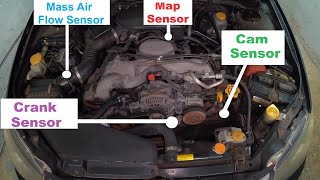
The 2010-2014 Outback spans a key engine change. Models from 2010-2012 use the EJ253 engine, while 2013-2014 models use the newer FB25 engine. This is critical because the ECT sensor part number and location are different. On the earlier EJ engine, the sensor is notoriously difficult to access, as it's located on a coolant crossover pipe under the intake manifold, behind the alternator. On the later FB engine, it is generally easier to reach. 🎬 See this video guide on Subaru sensor locations Owners frequently report wiring damage from rodents as a cause for this code on Subarus, as the soy-based wiring insulation can attract them.
Symptoms You May Notice
- Check Engine Light is on
- Cooling fans run constantly at high speed, even when the engine is cold
- Temperature gauge on the dashboard may behave erratically, read max hot, or not work at all
- Difficulty starting the engine, especially when cold
- Poor fuel economy
- Black smoke from the exhaust due to an overly rich fuel mixture
- Rough or hesitant idling
- Flashing AT OIL TEMP light may accompany the CEL in some cases
- Replacing the thermostat. While a thermostat can cause other coolant-related codes like P0128, it will not cause a P0118 'Circuit High' code, which specifically points to an electrical fault.
- Replacing the cooling fans or relays. The fans are running because the ECM is commanding them to, based on the faulty sensor data indicating an extreme temperature. The fans themselves are likely working as designed.
Most Likely Causes
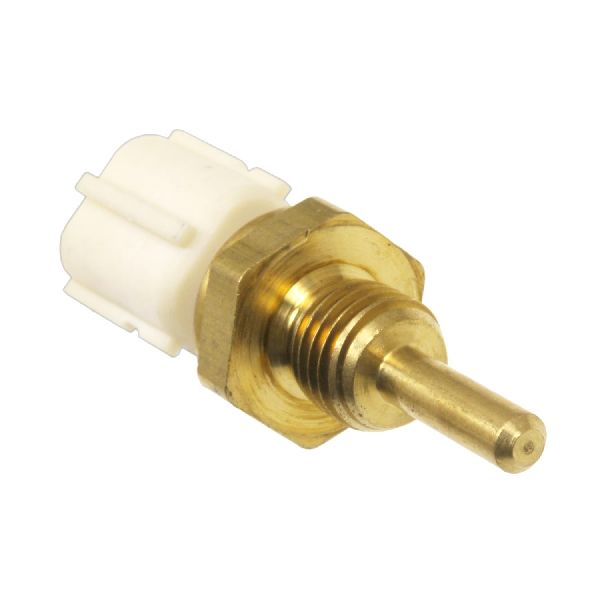
- Failed Engine Coolant Temperature (ECT) Sensor 🔴 High Probability → Shop Engine Coolant Temperature Sensor Sensors fail over time due to thermal stress and corrosion. It's a common failure point on many vehicles, including this Outback generation.
How to confirm: Use a scan tool to view live data. If the ECT reading is illogical (e.g., -40°F) when the engine is at ambient temperature, the sensor is likely bad. You can also test the sensor's internal resistance with a multimeter; an open circuit (infinite resistance) confirms failure. A good sensor typically has a resistance of 2-3 kOhms at room temperature (~70°F).
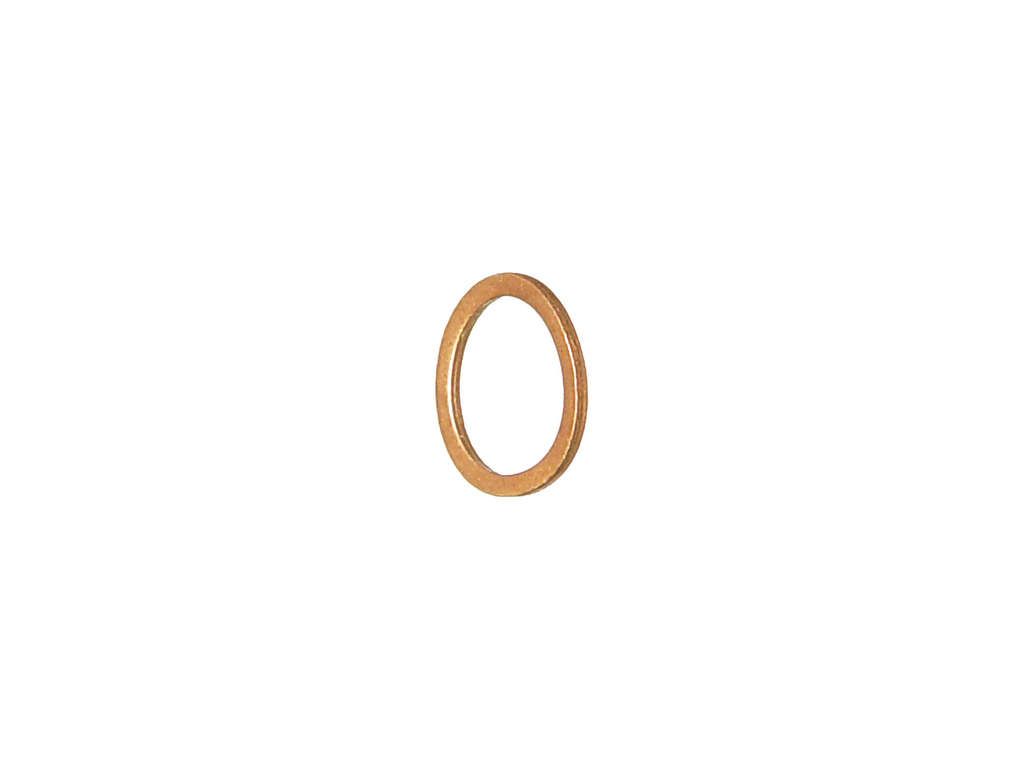
Typical fix: Replace the ECT sensor and its gasket/o-ring. Coolant will be lost during the swap, so be prepared to top it off and bleed any air from the system.
Est. part cost: $25-$75 - Damaged Wiring or Connector 🟡 Medium Probability Subaru owners on forums frequently report finding chewed wires from rodents in the engine bay, which can cause an open circuit (high resistance) and trigger P0118. The connector itself can also suffer from corrosion or broken locking tabs, leading to a poor connection.
How to confirm: Visually inspect the wiring harness leading to the ECT sensor for any signs of breaks, chafing, or rodent damage. Check the connector for corrosion, bent pins, or a loose fit.
Typical fix: Repair the damaged section of wire or replace the connector pigtail. If corrosion is found, clean the terminals or replace the connector.
Est. part cost: $5-$30 for a pigtail connector - Air Pocket in the Cooling System ⚪ Low Probability Improperly bleeding the cooling system after service (like a thermostat or radiator replacement) can leave air trapped near the sensor, causing it to read incorrectly and potentially trigger a circuit code if the sensor is left dry.
How to confirm: This is difficult to confirm directly but is a strong suspect if the code appeared immediately after a coolant service. One user on a forum reported the code appearing after a thermostat change and resolving after properly 'burping' the system.
Typical fix: Properly bleed the cooling system to remove all trapped air. This often involves running the engine with the radiator cap off and a spill-proof funnel attached until all bubbles are purged.
Est. part cost: $0 (if performed DIY)
Rare But Worth Checking
- Faulty Engine Control Module (ECM): This is extremely rare. The ECM should only be considered after all other possibilities, including the sensor and all wiring, have been thoroughly tested and ruled out. A faulty ECM is the least likely cause.
Diagnosis Steps
- Connect an OBD-II scanner and confirm P0118 is the active code. Note any other codes present.
- View live data on the scanner. With a cold engine (off overnight), compare the Engine Coolant Temperature (ECT) reading to the Intake Air Temperature (IAT) reading. They should be within a few degrees of each other. If the ECT shows an extreme low value like -40°F, the problem is in the ECT circuit.
- Visually inspect the ECT sensor's electrical connector and wiring for any obvious damage, corrosion, or loose connections. Pay close attention to signs of rodent damage (chewed wires, droppings).
- If the wiring looks good, disconnect the sensor. Use a multimeter set to Ohms (Ω) to test the resistance across the sensor's two pins. A healthy sensor will have a specific resistance based on temperature (typically 2,000-3,000 ohms at room temp). An open circuit (infinite resistance) means the sensor is bad.
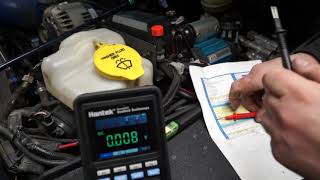
- To test the wiring to the ECM, you can jump the two pins in the disconnected harness connector with a paperclip or jumper wire. The scan tool reading should change from -40°F to an extreme high temperature. If it does, the wiring is good, confirming the sensor is the fault. 🎬 Watch how to diagnose a P0118 high voltage code
- If the sensor and wiring test good, the issue could be an air pocket in the cooling system, especially if coolant service was recently performed. Ensure the coolant is full and properly bled.
- If all else fails, the problem may be a faulty ECM, but this is highly unlikely.
Parts You'll Likely Need
- Engine Coolant Temperature Sensor (2013-2014, FB25 Engine)
(OEM #22630AA230)— This is the most common failure point for this code on models with the FB25 engine. It is a direct replacement part.
Trusted brands: Subaru (Genuine), Denso, NGK/NTK, Beck/Arnley
OEM price range: $50-$75
Aftermarket price range: $25-$50 - Engine Coolant Temperature Sensor (2010-2012, EJ253 Engine)
(OEM #22630AA161)— This is the most common failure point for this code on models with the EJ253 engine. Note: This part is harder to access, increasing labor time. 🎬 Watch this step-by-step EJ253 coolant temp sensor replacement This part number supersedes 22630AA160, 22630AA100, and 22630AA11A.
Trusted brands: Subaru (Genuine), Denso, NGK/NTK
OEM price range: $40-$60
Aftermarket price range: $20-$40 - ECT Sensor Connector Pigtail — Needed if the original connector or wiring is damaged by heat, corrosion, or rodents.
Trusted brands: Dorman, Standard Motor Products
OEM price range: N/A
Aftermarket price range: $10-$30
Technical Service Bulletins (TSBs) & Recalls
- No Technical Service Bulletins (TSBs) specifically addressing code P0118 for this vehicle and engine combination were found during research. However, TSBs do exist for other common issues on these vehicles, such as oil consumption (02-157-14R) and CVT performance.
Platform-Specific Known Issues
- The difficulty of this repair varies significantly by engine. For 2010-2012 models with the EJ253 engine, the sensor is located under the intake manifold and behind the alternator, making it much more labor-intensive to replace. Some mechanics may remove the alternator for better access. For 2013-2014 models with the FB25 engine, the sensor is more accessible.
Mechanic-Grade Diagnostic Values
- ECT Sensor Resistance — expected: Approximately 2.0-3.0 kΩ at 68°F (20°C) and 0.25-0.35 kΩ at 176°F (80°C). Resistance should decrease smoothly as temperature increases.. Failure: Infinite resistance (Open circuit) or zero resistance (short circuit). A reading that doesn't change with temperature also indicates failure.
- ECT Sensor Circuit Voltage (at ECM) — expected: A range between 0.5V (hot) and 4.7V (cold).. Failure: A reading above 4.7V - 4.9V will trigger the P0118 code, indicating an open circuit.
- ECT Connector Reference Voltage (Key On, Engine Off) — expected: One pin should have a 5V reference signal from the ECM.. Failure: If the 5V signal is missing, there is a problem with the wiring back to the ECM or the ECM itself.
- ECT Connector Ground — expected: The other pin should have a good ground connection back to the ECM.. Failure: High resistance to ground indicates a broken or corroded ground wire.
Scan Tool Commands That Help
- Any OBD-II Scanner with Live Data: Live Data Stream Comparison — This is the first diagnostic step. With the engine cold (off overnight), compare the ECT and Intake Air Temperature (IAT) readings. They should be within a few degrees of each other. A P0118 fault will typically show the ECT at an extreme low like -40°F while the IAT shows ambient temperature, immediately pointing to a fault in the ECT circuit.
Wiring & Ground Locations
- ECT Sensor Connector — On the ECT sensor itself. For EJ253 (2010-12), it's under the intake manifold. For FB25 (2013-14), it's on the front of the engine near the thermostat housing.. This 2-pin connector is a common failure point due to corrosion, rodent damage, or broken wires right at the connector body.
- ECM Connector Pins (Generic Subaru) — At the Engine Control Module (ECM).. For advanced diagnosis, you can test continuity from the sensor connector to the ECM. Based on generic Subaru wiring, the 5V reference may be on pin 74 (yellow wire) and the sensor ground on pin 63 (gray wire) of the ECM's blue plug. This allows checking the entire wire length for breaks.
Real Owner Repair Stories
- Multiple Subaru forums and YouTube videos (2010-2014 Subaru Outback (and other models)) — Check Engine Light on with P0118, cooling fans running constantly, and a flashing 'AT OIL TEMP' light on the dashboard.
❌ Tried (didn't work) Checking transmission fluid level., Replacing the transmission fluid temperature sensor., Focusing diagnostics solely on the transmission because of the AT OIL TEMP light.
✅ What actually fixed it The flashing 'AT OIL TEMP' light was a secondary symptom. The root cause was the P0118 fault. The ECM, in failsafe mode due to the bad ECT signal, fails to send a valid temperature signal to the Transmission Control Module (TCM). The TCM, lacking this critical data, triggers the AT warning light as a precaution. Fixing the P0118 cause (bad ECT sensor or wiring) also resolved the flashing AT light.
OEM Part Supersession History
22630AA100, 22630AA11A, 22630AA160→22630AA161— Standard part revision and consolidation by the manufacturer.
Heads up: These part numbers apply to the 2010-2012 EJ253 engine. They are not compatible with the 2013-2014 FB25 engine.
Diagnostic Flowchart
Other Known Issues on This Vehicle
Issues unrelated to this code that are worth knowing about as an owner of this generation:
- Excessive Oil Consumption (FB25 Engine) 🔴 High — Common on 2013-2014 models. Caused by defective piston rings. Can be as high as 1 quart per 1,000-1,200 miles. Led to a class-action lawsuit. (Ref: TSB 02-157-14R; Class-action lawsuit settled in 2016.)
- CVT Transmission Failure/Issues 🔴 High — Common in the early years of this generation (2010-2014). Symptoms include shuddering, hesitation, stalling, and noise. Failures of the torque converter or valve body solenoids are documented. (Ref: Subaru extended the CVT warranty to 10 years/100,000 miles for many vehicles. TSBs 16-90-13R and 16-103-16R address some issues.)
- Head Gasket Failure (EJ253 Engine) 🟠 Medium — While less common on the 2010-2012 multi-layer steel (MLS) gasket EJ253s than prior model years, it can still occur at higher mileage. Symptoms include coolant loss and overheating.
- Steering Wheel Shake / Vibration 🟡 Low — Some 2010-2011 owners reported a vibration in the steering wheel at highway speeds. (Ref: TSB 05-48-10 was issued to address this with modifications to suspension and steering components.)
- Leaking Center High Mount Stop Light (CHMSL) 🟡 Low — The third brake light at the top of the rear hatch can develop a leak, allowing water into the cabin.
- Frequently Burnt-Out Headlight Bulbs 🟡 Low — Owners report that low-beam headlight bulbs fail frequently and are difficult to replace due to tight access through the wheel well. (Ref: Subaru offered an extended warranty for this issue on some models, but not a full recall.)
Used vs. New Parts: Buying Guide for This Vehicle
When a used part is the smart pick: A used part is generally not recommended for the sensor itself due to the low cost of a new, reliable aftermarket part. However, sourcing a used connector pigtail from a junkyard is a perfectly acceptable repair if the connector body is intact and there is sufficient wire length to splice.
Donor-vehicle mileage cap: roughly under 100000 miles for the part to have meaningful remaining life.
What to inspect on the donor part:
- For a connector pigtail, inspect for brittle plastic, broken locking tabs, or corrosion on the pins.
- Ensure there are at least 4-6 inches of wire attached to the connector for easier splicing.
- Avoid connectors from engine bays that show heavy corrosion or signs of fire/melting.
OEM-only on this vehicle (don't cheap out):
- No parts for this specific repair are strictly OEM-only; quality aftermarket sensors are widely available and reliable.
Aftermarket brands forum-validated for this vehicle:
- Denso
- NTK / NGK
- Standard Motor Products (SMP)
- Beck/Arnley
Brands owners have reported issues with on this vehicle:
- Unnamed, no-brand 'white box' parts from online marketplaces, as their internal thermistors can be inaccurate, leading to poor performance even if they clear the code.
Real Owner Stories
Aggregated from forums and TSBs cited above. Mileages and costs reflect what owners reported in those sources.
2010 Subaru Impreza EJ25
Symptoms: Code P0118 triggered by rats chewing electrical wiring in the engine bay.
What fixed it: Repairing the damaged section of wire caused by rodent damage.
Source hint: reddit.com/r/MechanicAdvice: A thread titled '“Rats”….. 2010 Subaru Impreza EJ25 code P0118 from rats chewing electrical'
2010 Subaru Outback 2.5L
Symptoms: P0118 error along with several warning lights; visual inspection showed frayed wires near the ECT connector.
What fixed it: Repairing the frayed wiring leading to the ECT sensor connector.
Source hint: reddit.com/r/MechanicAdvice: A post titled '2010 Subaru Outback, P0118 error along with several warning lights'
2010-2014 Subaru Outback 2.5L
Symptoms: The owner replaced the ECT sensor, but the P0118 code returned shortly after.
What fixed it: Properly bleeding ('burping') the cooling system to remove a trapped air bubble.
Source hint: reddit.com/r/auto: A user with a Subaru experiencing P0118 replaced the sensor, but the code returned. The fix was properly bleeding ('burping') the cooling system
Related OBD-II Codes
Frequently Asked Questions
Is there a TSB for code P0118 on my 2013-2014 Subaru Outback?
Why are my cooling fans running at high speed even when my Outback is cold?
How difficult is it to replace the ECT sensor on a 2010-2012 Outback 2.5L?
Can an air bubble in the cooling system cause a P0118 code on my Subaru?
What part number is typically used for the ECT sensor in the 2010-2012 Legacy or Outback?
Why is my AT OIL TEMP light flashing along with the Check Engine Light?
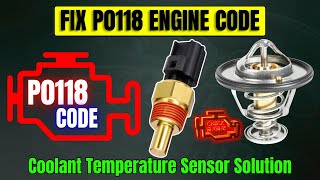
Helpful Videos
We Have This Part in Stock


The information in this article is provided for general reference and educational purposes only. Vehicle specifications, procedures, and part compatibility can vary by production date, trim level, and region. Always consult your vehicle's factory service manual and verify part numbers before purchasing or performing repairs. Safety-critical components such as airbags, seat belts, and braking systems should be installed by a qualified professional.
- Subaru Outback:
- 🧭 Diagnostic Flowchart
- 🎬 Helpful Videos
- 🛍️ Shop This Part
- What's Unique About the 2010-2014 Subaru Outback
- Symptoms You May Notice
- Most Likely Causes
- Rare But Worth Checking
- Diagnosis Steps
- Parts You'll Likely Need
- Technical Service Bulletins (TSBs) & Recalls
- Platform-Specific Known Issues
- Mechanic-Grade Diagnostic Values
- Scan Tool Commands That Help
- Wiring & Ground Locations
- Real Owner Repair Stories
- OEM Part Supersession History
- Other Known Issues on This Vehicle
- Used vs. New Parts: Buying Guide for This Vehicle
- Real Owner Stories
- 2010 Subaru Impreza EJ25
- 2010 Subaru Outback 2.5L
- 2010-2014 Subaru Outback 2.5L
- Related OBD-II Codes
- Frequently Asked Questions
- 🎟️ Get 5% Off