

P0118 on 2003-2009 Toyota 4Runner: Engine Coolant Temp Sensor Causes and Fixes
On a 2003-2009 4Runner, P0118 is almost always a failed Engine Coolant Temperature (ECT) sensor. On the 4.7L V8, it's an easy, inexpensive DIY fix. On the 4.0L V6, the sensor is in a very difficult location, making the repair much more labor-intensive and costly.
- P0118 means your 4Runner's computer thinks the engine is extremely cold due to a faulty signal from the ECT sensor.
- The most likely cause is a failed ECT sensor itself.
- Repair is very easy on the 4.7L V8 but very difficult and labor-intensive on the 4.0L V6 due to sensor location.
- Check for simple issues like a loose connector or low coolant before attempting a difficult repair.
- Driving with this code is not recommended due to poor performance and risk of overheating.
What's Unique About the 2003-2009 Toyota 4Runner
For the 4th generation Toyota 4Runner, the story of code P0118 is a tale of two engines. The cause is almost always the same—a failed sensor—but the repair difficulty and cost vary dramatically between the 4.0L V6 (1GR-FE) and the 4.7L V8 (2UZ-FE). On the V8, the sensor is conveniently located at the top front of the engine on the coolant crossover pipe, making for a quick fix. 🎬 See how to replace the sensor on the V8 engine On the V6, however, the sensor is buried at the rear of the engine under the intake manifold, turning a simple part swap into a significant labor-intensive job that is not recommended for beginners.
🎬 Watch: 4.0L V6 coolant temperature sensor replacement walkthroughSymptoms You May Notice
- Check Engine Light is on
- Poor fuel economy
- Hard starting, especially when the engine is warm
- Rough idle or stalling
- Black smoke from the exhaust
- Cooling fans running constantly or not at all
- Erratic or non-functional temperature gauge on the dashboard
- Engine overheating
- Replacing the thermostat. While a thermostat can cause cooling system problems, it will not directly cause a P0118 'circuit high' code. A stuck thermostat typically causes overheating or under-heating issues, which might trigger different codes (e.g., P0128).
Most Likely Causes
- Failed Engine Coolant Temperature (ECT) Sensor 🔴 High Probability → Shop Engine Coolant Temperature Sensor The sensor is a thermistor that can fail internally with age and heat cycles, causing an open circuit which results in a high voltage signal. This is the most common failure point for this code.
How to confirm: Use an OBD-II scanner to view live data. If the ECT reading is an illogical, extremely low number (like -40°F) even when the engine is warm, the sensor has failed. You can also test the sensor's resistance with a multimeter; an open circuit (infinite resistance) confirms failure. 🎬 Watch: How to diagnose and fix a P0118 code At room temperature (~68°F/20°C), a good sensor should have a resistance between 2,000-3,000 ohms.
Typical fix: Replace the Engine Coolant Temperature sensor. It is highly recommended to use an OEM (Toyota) or OEM-supplier (Denso) part, especially for the V6 engine due to the high labor cost of the repair.
Est. part cost: $20-$80 - Damaged Wiring or Connector 🟡 Medium Probability Engine bay heat and vibrations can cause wires to become brittle and break, or the connector pins can corrode over time. The sensor being unplugged or having a loose connection is also a common cause.
How to confirm: Visually inspect the wiring harness and the connector going to the ECT sensor for any signs of corrosion, breaks, or loose pins. Wiggle the connector and wiring while watching live data on a scan tool to see if the reading changes. With the sensor unplugged and key on, check for a 5V reference and a good ground at the connector with a multimeter.
Typical fix: Repair the broken wire or replace the pigtail connector.
Est. part cost: $10-$30 - Low Engine Coolant / Air in System ⚪ Low Probability If the coolant level is very low, the sensor may be exposed to an air pocket instead of coolant, causing it to send an incorrect reading. This can happen after a coolant service if the system is not properly bled.
How to confirm: Check the coolant level in the radiator (when the engine is cold) and the overflow reservoir. If it's low, there is a leak that needs to be addressed. A user on a forum with a similar Toyota engine reported a P0118 code appeared the day after a coolant change, which then resolved itself after a few days, suggesting an air pocket was the cause.
Typical fix: Top off the coolant and bleed the system to remove air. Find and fix the source of the coolant leak.
Est. part cost: $15-$30 for coolant
Rare But Worth Checking
- Faulty Engine Control Module (ECM): This is extremely rare. The ECM should only be considered as the culprit after all other possibilities (sensor, wiring, connections) have been exhaustively tested and ruled out.
Diagnosis Steps
- Connect an OBD-II scanner and confirm the P0118 code is present.
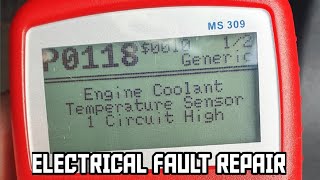
- View the live data stream for the Engine Coolant Temperature (ECT). A reading of -40°F or a similarly extreme low temperature indicates the fault is active.
- Turn the engine off. Locate the ECT sensor. On the 4.7L V8, it's on the front coolant crossover pipe. On the 4.0L V6, it's at the rear of the engine, under the intake manifold.
- Inspect the sensor's electrical connector and wiring for any visible damage, corrosion, or loose connections.
- If access allows, unplug the sensor. Use a multimeter to test the sensor's resistance. A healthy sensor should have a resistance between 2,000-3,000 ohms at room temperature (~68°F). An infinite resistance reading (open circuit) means the sensor is bad and needs replacement.
- Test the connector harness. With the key on and engine off, check for a 5-volt reference on one pin and a good ground on the other. If either is missing, the problem is in the wiring or the ECM.
- If the sensor tests bad, replace it. If the wiring and sensor test good, the issue may be a rare ECM fault.
Parts You'll Likely Need
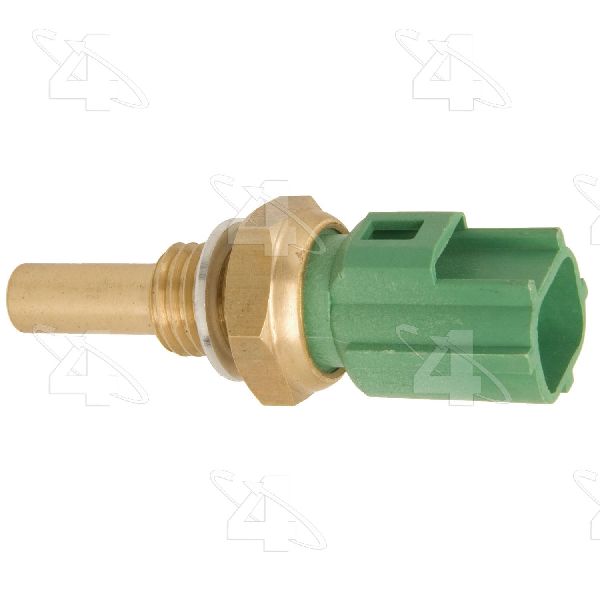
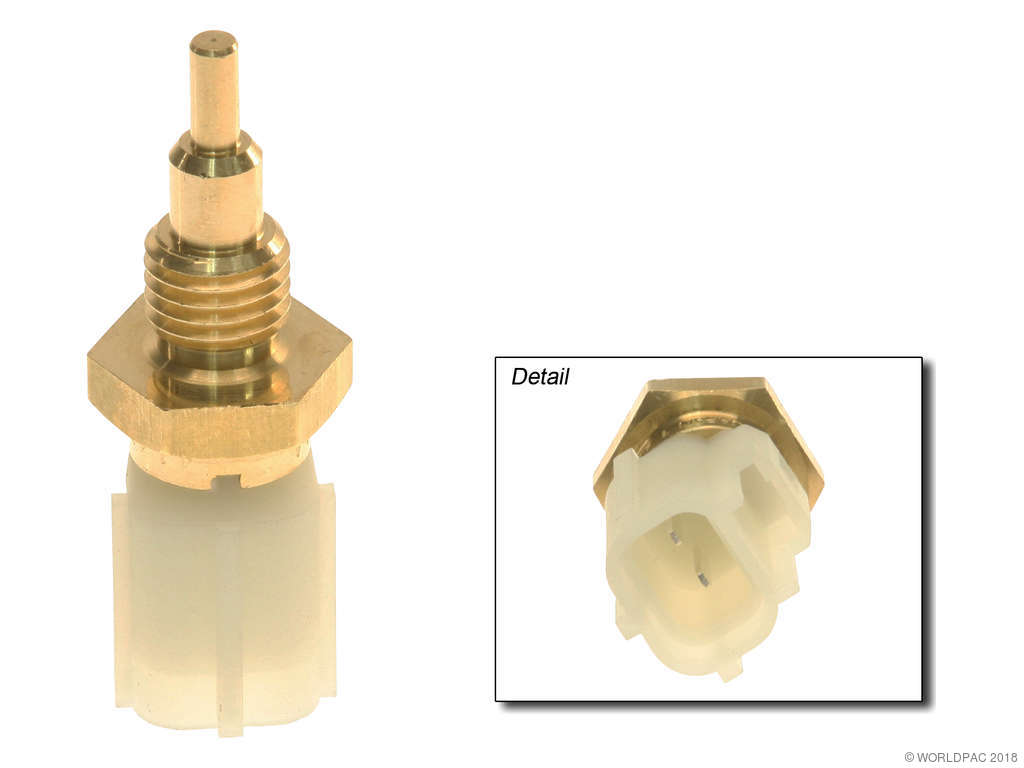
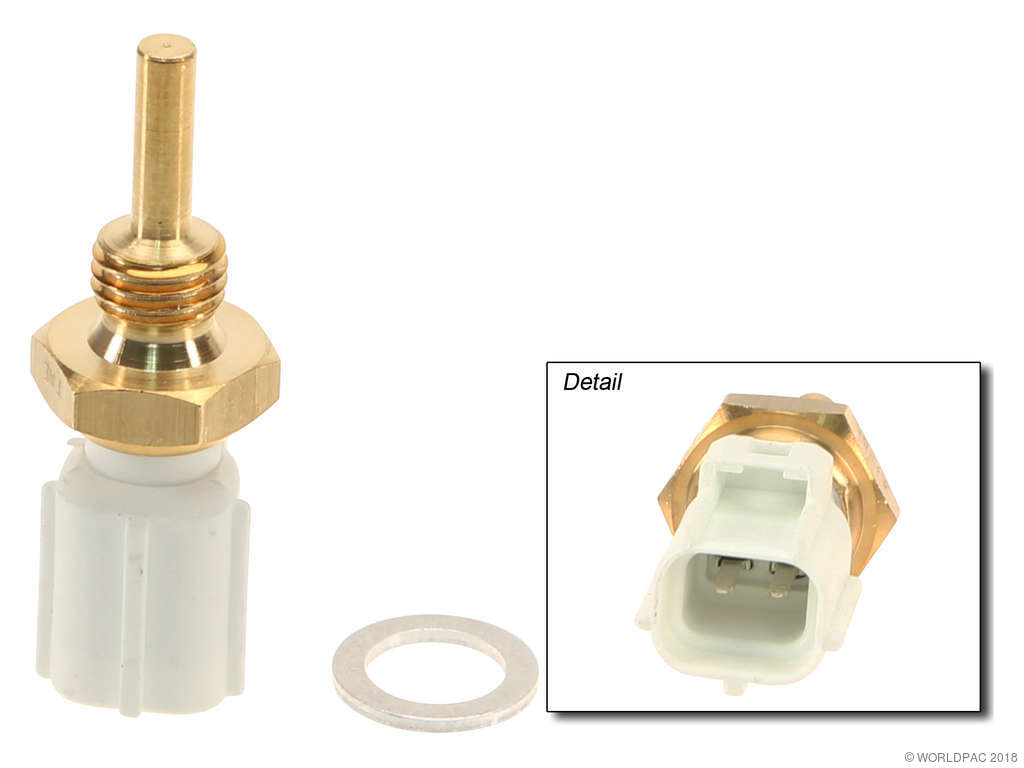
- Engine Coolant Temperature Sensor
(OEM #89422-35010)— This sensor is the most common point of failure for a P0118 code, as it can fail internally and create an open circuit.
Trusted brands: Toyota (OEM), Denso
OEM price range: $45-$70
Aftermarket price range: $20-$40
Related Codes That Often Appear With This One
- P0117 — P0117 is 'ECT Circuit Low Input'. Seeing both codes intermittently could point to a wiring issue where the circuit is shorting and opening at different times.
- P0113 — P0113 is 'Intake Air Temperature (IAT) Circuit High Input'. Seeing P0118 and P0113 simultaneously can point to a shared ground or power supply issue in the wiring harness, rather than two separate sensor failures.
Platform-Specific Known Issues
- The primary issue for this platform is the extreme difference in repair difficulty based on the engine. For the 4.0L V6, the ECT sensor is in a notoriously difficult-to-access location at the rear of the cylinder head, requiring the removal of the intake manifold for access. This significantly increases labor time and cost compared to the 4.7L V8, where the sensor is easily accessible at the front of the engine. Because of the high labor cost for the V6, using a high-quality OEM or Denso sensor is critical to avoid repeat repairs.
Mechanic-Grade Diagnostic Values
- ECT Sensor Resistance — expected: ~2.2-3.0 kΩ at 68°F (20°C), ~0.25-0.35 kΩ at 176°F (80°C). Failure: Infinite resistance (open circuit) or a reading far outside the expected range for a given temperature.
- ECT Sensor Connector Voltage (Key On, Engine Off) — expected: ~5.0V reference on one pin, and a good ground (near 0V) on the other pin.. Failure: No voltage or low voltage indicates a problem with the ECM or wiring. No ground indicates a broken ground wire.
- ECT Circuit Jumper Test (Key On, Engine Off, Connector Unplugged) — expected: Jumping the two pins of the harness connector should cause the live data temperature reading on a scan tool to go to its maximum value (e.g., 250°F+).. Failure: If the temperature reading does not change, it confirms a wiring or ECM issue, ruling out the sensor itself.
Scan Tool Commands That Help
- Toyota Techstream: Live Data / Data List for Engine ECT — This is the primary function used to monitor the temperature value the ECM is receiving from the sensor in real-time. A reading of -40°F is a definitive sign of a high circuit fault (P0118).
- Toyota Techstream: Health Check — Performs a comprehensive scan of all vehicle modules to see if other codes are present that might be related (e.g., IAT sensor codes, other circuit faults) which could indicate a wider wiring or power supply issue.
Wiring & Ground Locations
- E01, E02, GE01 (1GR-FE V6) — These are ECM ground points. On the 1GR-FE, a key engine ground is located on the rear of the right cylinder head.. The ECT sensor circuit relies on a clean ground path back to the ECM. A corroded or loose engine ground can cause voltage fluctuations and trigger circuit codes like P0118.
- Engine Ground (2UZ-FE V8) — A primary ground strap runs from the battery negative terminal to the engine block. Another key ground is located on the passenger side, near the rear of the engine, connecting to the firewall/chassis.. A poor engine ground connection forces the sensor's return path through other, less ideal routes, which can alter the voltage the ECM sees and cause a P0118 fault.
- ECT Sensor Connector (Both Engines) — A 2-pin connector directly on the sensor. On the V8, it's at the front coolant crossover. On the V6, it's at the rear under the intake.. The connector itself is a common failure point. The pins for the 5V reference and ground (E2) from the ECM can corrode or become loose, creating an open circuit which is the direct cause of a P0118 code.
Real Owner Repair Stories
- YotaTech Forums (1995 Toyota 4Runner (with similar engine sensor logic)) — Failing emissions test with high CO/CO2.
❌ Tried (didn't work) Initially misread the Factory Service Manual (FSM) resistance chart, leading to confusion about whether the new and old sensors were faulty.
✅ What actually fixed it The user realized they were misinterpreting the diagnostic chart. The original sensor was actually within spec. This highlights the importance of correctly reading diagnostic data before replacing parts. The user continued their diagnosis elsewhere. - TacomaWorld Forums (similar 1GR-FE engine) (Toyota Tacoma 4.0L V6) — P0118 code appeared one day after a coolant change.
❌ Tried (didn't work) Initial thought was that the sensor was damaged during the service.
✅ What actually fixed it The code disappeared on its own after a few days of driving. The consensus was that an air pocket was trapped near the sensor after the coolant service, causing it to read incorrectly. Once the air pocket worked its way out, the sensor began reading correctly again and the code cleared.
OEM Part Supersession History
89422-20010→89422-35010— Standard part consolidation and minor revisions over a long production life.
Heads up: The part is widely interchangeable across a vast range of Toyota, Lexus, and Scion vehicles from the 1990s through the late 2010s, indicating no significant compatibility issues.
Model Year Variations Within This Range
- 2005-2009 (V8 Only): The 4.7L 2UZ-FE engine received VVT-i starting in the 2005 model year. While this was a major engine update, the location and function of the ECT sensor on the front coolant crossover pipe remained the same and does not affect the diagnosis of P0118.
Diagnostic Flowchart
Other Known Issues on This Vehicle
Issues unrelated to this code that are worth knowing about as an owner of this generation:
- Frame Rust/Corrosion 🔴 High — Very common, especially in the salt belt. Can become structurally unsafe. Class-action lawsuits were filed regarding this issue for 2005-2011 models. (Ref: No official recall for the 4Runner, but Toyota settled a $3.4 billion lawsuit for similar issues on Tacoma, Tundra, and Sequoia models.)
- Cracked Dashboard 🟡 Low — Extremely common on 2003-2005 models due to defective materials. Cracks form around the glove box and instrument cluster. (Ref: Toyota issued a Warranty Enhancement Program (ZE6) which has since expired, leaving owners to use aftermarket covers or expensive replacements.)
- Head Gasket Failure (4.0L V6 1GR-FE) 🔴 High — A known weakness, particularly on 2003-2006 models, often failing at cylinder #6. Toyota reportedly updated the gasket design mid-2006.
- Cracked Exhaust Manifolds (4.7L V8 2UZ-FE) 🟠 Medium — Common issue causing a ticking noise, especially when the engine is cold. The noise may disappear as the engine warms and the metal expands.
- Seized Front Brake Calipers 🟠 Medium — Common across all 4th generation years. Pistons in the calipers can seize, causing brake drag, pulling to one side, and excessive brake dust on one wheel.
Used vs. New Parts: Buying Guide for This Vehicle
When a used part is the smart pick: A used wiring harness pigtail from a junkyard is a perfectly acceptable and cost-effective fix if only your connector is damaged. A complete used engine wiring harness can also be an option for widespread corrosion or damage, but is a much larger job.
Donor-vehicle mileage cap: roughly under 150000 miles for the part to have meaningful remaining life.
What to inspect on the donor part:
- For a pigtail: check for brittle plastic, ensure the locking tab is intact, and look for clean, corrosion-free pins.
- For a full harness: inspect for any cuts, melted sections, or previous amateur repairs (indicated by non-OEM tape or connectors).
OEM-only on this vehicle (don't cheap out):
- Engine Coolant Temperature Sensor (for the 4.0L V6). Given the 3-4 hours of labor required to access the sensor under the intake manifold, the small cost saving of an aftermarket sensor is not worth the risk of premature failure and having to do the job twice. Use an OEM Toyota or OEM-supplier (Denso) part.
Aftermarket brands forum-validated for this vehicle:
- Denso (often the OEM supplier for Toyota electrical parts)
Brands owners have reported issues with on this vehicle:
- Generic, unbranded, or 'white-box' sensors from online marketplaces are a gamble, especially for the labor-intensive V6 application.
Real Owner Stories
Aggregated from forums and TSBs cited above. Mileages and costs reflect what owners reported in those sources.
2005 Toyota Tacoma 4.0L V6
Symptoms: The P0118 code appeared immediately after performing a bunch of maintenance including a coolant change.
What fixed it: The issue resolved itself after a few days, suggesting an air pocket in the cooling system was the cause.
Source hint: TacomaWorld Forum - 'P0118 Code Engine Coolant Temperature Circuit Fault' (Jan 26, 2015)
Related OBD-II Codes
Frequently Asked Questions
Is there a recall for the frame rust issue on my 2003-2009 4Runner?
Why is the labor cost so much higher for a P0118 fix on the 4.0L V6 compared to the V8?
Which replacement brand should I use for the ECT sensor on my V6 4Runner?
Can a recent coolant flush cause a P0118 code on my Toyota?
Is my cracked dashboard covered under a Toyota warranty program?
What resistance should I look for when testing the ECT sensor with a multimeter?
Helpful Videos
We Have This Part in Stock


The information in this article is provided for general reference and educational purposes only. Vehicle specifications, procedures, and part compatibility can vary by production date, trim level, and region. Always consult your vehicle's factory service manual and verify part numbers before purchasing or performing repairs. Safety-critical components such as airbags, seat belts, and braking systems should be installed by a qualified professional.
- Toyota 4Runner:
- 🧭 Diagnostic Flowchart
- 🎬 Helpful Videos
- 🛍️ Shop This Part
- What's Unique About the 2003-2009 Toyota 4Runner
- Symptoms You May Notice
- Most Likely Causes
- Rare But Worth Checking
- Diagnosis Steps
- Parts You'll Likely Need
- Related Codes That Often Appear With This One
- Platform-Specific Known Issues
- Mechanic-Grade Diagnostic Values
- Scan Tool Commands That Help
- Wiring & Ground Locations
- Real Owner Repair Stories
- OEM Part Supersession History
- Model Year Variations Within This Range
- Other Known Issues on This Vehicle
- Used vs. New Parts: Buying Guide for This Vehicle
- Real Owner Stories
- 2005 Toyota Tacoma 4.0L V6
- Related OBD-II Codes
- Frequently Asked Questions
- 🎟️ Get 5% Off