

P0118 on 2003-2008 Toyota Corolla: Engine Coolant Temperature Sensor Fixes
On a 2003-2008 Toyota Corolla, code P0118 is almost always caused by a failed Engine Coolant Temperature (ECT) sensor. It's a simple DIY fix with the part costing between $15 for an aftermarket sensor and $80 for an OEM version.
- P0118 on your Corolla means the computer thinks the engine is freezing cold, usually due to a bad sensor or wire.
- The most likely fix is replacing the Engine Coolant Temperature (ECT) sensor, which is an inexpensive part. Using an OEM or Denso brand sensor is recommended.
- This is a good DIY repair for beginners; the sensor is accessible on the driver's side of the engine and requires basic tools.
- Do not confuse this electrical fault with a mechanical cooling system problem like a bad thermostat.
- Check live data with a scan tool first. A reading of -40° is the classic sign of this problem.
What's Unique About the 2003-2008 Toyota Corolla
For the 9th generation Toyota Corolla with the 1ZZ-FE engine, the P0118 code is a straightforward electrical fault. There are no widespread, unique design flaws that cause this code. The issue is almost always a simple failure of the sensor itself due to age or a break in the wiring. Unlike some other codes, it is not typically related to thermostat performance or actual coolant level on this vehicle. The same issue is common on its platform mates, the Toyota Matrix and Pontiac Vibe, which use the identical 1ZZ-FE engine.
Symptoms You May Notice
- Check Engine Light is on
- Difficulty starting the engine, especially when cold
- Poor fuel economy
- Engine runs rough or hesitates until it warms up
- Cooling fans run continuously, even with a cold engine
- Cooling fans do not turn on when the engine is hot
- Black smoke from the exhaust during a cold start
- Engine temperature gauge reads cold and does not move
- Replacing the thermostat. A thermostat issue typically causes the engine to warm up too slowly (P0128) or overheat, but it will not cause the P0118 'circuit high' electrical fault. Some general repair guides incorrectly list this as a cause. 🎬 Watch: EricTheCarGuy explains the P0118 code and its causes
Most Likely Causes
- Failed Engine Coolant Temperature (ECT) Sensor 🔴 High Probability → Shop Engine Coolant Temperature Sensor The sensor is a simple thermistor that can fail internally (creating an open circuit) after many years and heat cycles. This is the most common cause by a wide margin for this specific trouble code.
How to confirm: With a scan tool, check live data. If the coolant temperature reads -40°F or another fixed, illogical low temperature, the sensor has likely failed. You can also test the sensor's resistance with a multimeter; an open circuit (infinite resistance) confirms failure. At room temperature (~68°F/20°C), resistance should be 2,000-3,000 ohms.
Typical fix: Replace the Engine Coolant Temperature sensor. The sensor is located on the driver's side of the engine near the thermostat housing.
Est. part cost: $15-$80 - Damaged Wiring or Connector 🟡 Medium Probability Wiring can become brittle with age and heat, leading to breaks. The connector itself can become brittle and the locking tab can break, causing a loose connection. Rodents are also known to chew on the wires in this location.
How to confirm: Visually inspect the sensor's connector and the wiring harness leading to it for any signs of damage, corrosion, or loose pins. Perform a 'wiggle test' on the connector and wiring while observing live data on a scan tool; if the temperature reading flickers, a wiring issue is present. A Reddit user reported the code returning instantly after a sensor replacement, which points to a persistent wiring or connector issue.
Typical fix: Repair the broken wire or replace the damaged connector pigtail.
Est. part cost: $5-$25
Rare But Worth Checking
- Faulty Engine Control Module (ECM): This is extremely rare. The ECM should only be considered after all other possibilities, including the sensor and wiring, have been definitively ruled out. Note that 2005-2008 models were subject to a recall for potential ECM circuit board cracks, but this typically caused stalling or harsh shifting, not specifically a P0118 code.
Diagnosis Steps
- Connect an OBD-II scanner and confirm the P0118 code is present.
- View live data on the scanner. Check the value for 'Engine Coolant Temperature'. If it shows -40°F (-40°C) or another extremely low, static value, it confirms the fault the ECM is seeing.
- Turn the engine off. Visually inspect the ECT sensor and its connector. The sensor is located on the driver's side of the cylinder head, near the thermostat housing. Look for unplugged connectors, corroded pins, or damaged wires (chewed, frayed).
- Perform a 'wiggle test': with the key on and scanner connected, gently wiggle the connector and nearby wires. If the temperature reading on the scanner changes, you have a bad connection or wire.
- If the visual inspection passes, unplug the sensor. Use a multimeter to test the resistance across the two pins of the sensor itself. Compare the reading to a temperature/resistance chart. An infinite reading (OL) means the sensor is open and must be replaced. Resistance Chart (Approximate Values): * -4°F (-20°C): ~16,150 ohms * 32°F (0°C): ~5,875 ohms * 68°F (20°C): ~2,400-3,500 ohms * 104°F (40°C): ~1,180 ohms * 176°F (80°C): ~332 ohms
- If the sensor tests good, the problem is in the wiring or ECM. To test the wiring, use a paperclip or jumper wire to connect the two terminals in the harness connector (with the sensor unplugged). Turn the key to the 'ON' position. The temperature on the scan tool should now read a maximum value (e.g., 250°F+). If it does, the wiring and ECM are likely good, and the original sensor was faulty despite testing. If the reading does not change, there is an open in the wiring between the connector and the ECM.
- As a final wiring check, use a multimeter to test the connector itself (unplugged, key on). One pin should have a 5V reference signal from the ECM, and the other should be a ground. If either is missing, trace the wiring back to the ECM.
Parts You'll Likely Need
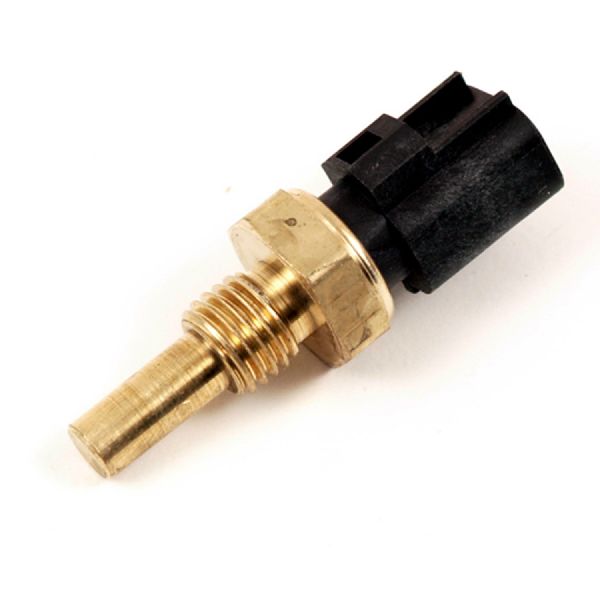
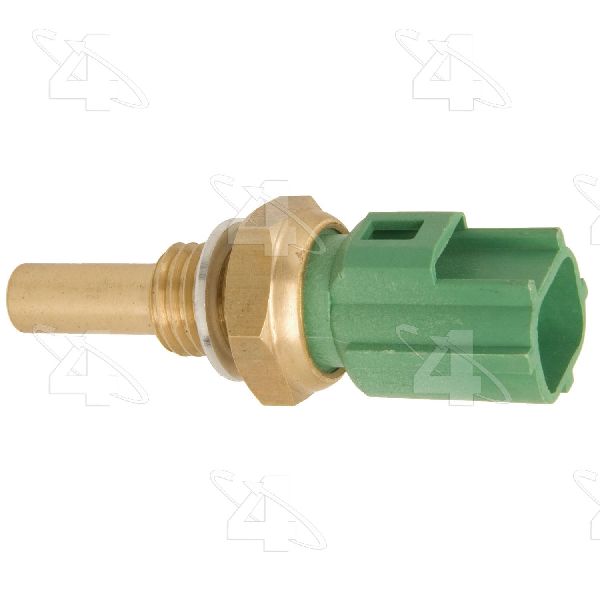
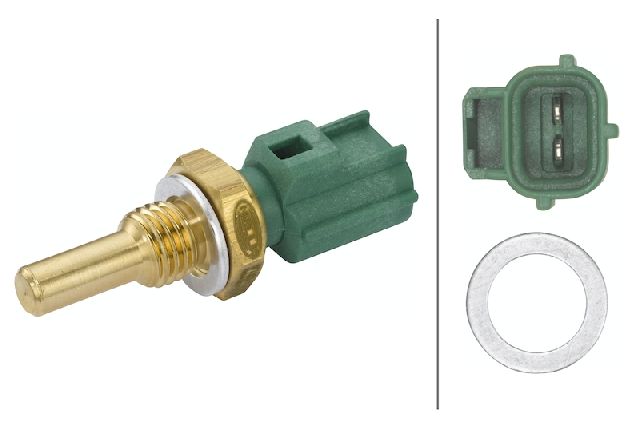
- Engine Coolant Temperature Sensor
(OEM #89422-35010)— This sensor is the most common failure point for a P0118 code, typically failing open internally after years of service. This part number is widely confirmed for this application. 🎬 Watch: How to replace the coolant temperature sensor
Trusted brands: Denso (OEM supplier), Delphi, NTK, ACDelco (for Pontiac Vibe)
OEM price range: $65-$80
Aftermarket price range: $15-$40
Related Codes That Often Appear With This One
- P0117 — P0117 is 'ECT Circuit Low Input,' the opposite fault. Seeing them together intermittently could point to a severe wiring short or internal sensor failure.
- P0171 — A P0171 (System Too Lean) code can sometimes appear alongside P0118. This is because the ECM is operating on a default (cold) temperature map, which can throw off the long-term fuel trim calculations. The P0118 code should always be addressed first.
Platform-Specific Known Issues
- On high-mileage examples, the plastic connector locking tab often becomes brittle and breaks, leading to a poor connection that can trigger a P0118 code even with a good sensor. Securing the connector with a zip tie can be a temporary fix, but replacing the pigtail is the correct repair.
Mechanic-Grade Diagnostic Values
- ECT Sensor Signal Voltage (at sensor connector, key on, engine cold) — expected: ~3.0V - 3.5V at 68°F (20°C). Failure: Voltage is near 5.0V (indicates open circuit or bad ground) or near 0V (short to ground).
- ECT Sensor Signal Voltage (at sensor connector, engine at operating temp) — expected: ~1.0V - 1.3V at 176°F (80°C). Failure: Voltage remains high (e.g., >2.0V) when the engine is fully warmed up.
- ECT Sensor Resistance — expected: ~2.45k Ohms at 68°F (20°C), ~332 Ohms at 176°F (80°C). Failure: Infinite resistance (Open Loop), or resistance does not decrease as temperature increases.
Scan Tool Commands That Help
- Toyota Techstream: Data List & Freeze Frame Data — This is the primary function for P0118. Use the Data List to monitor the 'Coolant Temp' PID in real-time. Freeze Frame data is critical as it shows the exact sensor reading and other vehicle parameters at the moment the P0118 fault was logged by the ECM. A value of -40°F is a definitive sign of an open circuit.
- Toyota Techstream: Active Test: Control the Electric Cooling Fan — This is an indirect test. If a symptom is that the cooling fans run constantly or not at all, this command allows you to manually turn the fans on and off. If the fans respond correctly, it proves the fan motors and their control circuit are working, further isolating the P0118 fault to the sensor or its wiring.
Wiring & Ground Locations
- ECT Sensor Connector — On the driver's side of the cylinder head, near the thermostat housing, with a two-wire connector.. This is the primary point of failure. The connector pins can corrode, and the wiring can fray or break from heat and vibration. Pin 1 is the signal wire (THW) to the ECM, and Pin 2 is the sensor ground (E2) from the ECM.
- E2 (Sensor Ground) — This is not a chassis ground point, but rather a dedicated sensor ground circuit that terminates inside the Engine Control Module (ECM).. A break in the E2 wire between the sensor and the ECM will cause an open circuit and trigger P0118. Testing for continuity between the ground pin on the sensor connector and the corresponding pin at the ECM is a definitive test.
- EC (Engine Ground) — A primary engine ground point on the cylinder head.. While the ECT sensor has a dedicated ground return to the ECM, a poor main engine ground can cause electrical noise and potentially lead to erratic sensor readings, although it is not a direct cause of P0118.
Real Owner Repair Stories
- Reddit r/MechanicAdvice (2006 Toyota Corolla, 275,000 miles) — Check Engine Light with P0118. Code would reappear instantly after being cleared.
❌ Tried (didn't work) Replacing the ECT sensor
✅ What actually fixed it The resolution was not posted, but the immediate return of the code after sensor replacement strongly indicates the fault was in the wiring harness or the connector itself, not the sensor. This is a classic example of needing to test the circuit after a part replacement fails to fix the issue. - YouTube user 'Car Problems Fixed' (Toyota Corolla (year not specified, but 9th gen)) — Check Engine Light with codes P0118 and P0125. Scan tool live data showed -40°.
❌ Tried (didn't work) Plugging in a new ECT sensor without installing it (the reading remained at -40°).
✅ What actually fixed it The problem was a broken wire inside the insulation right at the back of the ECT sensor connector. The wire looked intact from the outside, but a wiggle test would have revealed the intermittent connection. The final fix was to replace the connector pigtail.
OEM Part Supersession History
89422-20010→89422-35010— Standard part consolidation and minor revisions over a long production run.
Heads up: The part is a widely used Toyota sensor with broad compatibility across many models and years, including the entire 2003-2008 Corolla range. No known incompatibility issues exist between the old and new part numbers for this vehicle.
Diagnostic Flowchart
Other Known Issues on This Vehicle
Issues unrelated to this code that are worth knowing about as an owner of this generation:
- Excessive Oil Consumption 🔴 High — Common in pre-2005 models. Caused by a design flaw with piston rings and insufficient oil drainage holes in the pistons, leading to oil burning. Some engines can consume a quart of oil every 1,000 miles. (Ref: Toyota issued TSB EG014-05 and later TSB-0134-08, which involved an updated piston design for repairs and a redesigned dipstick to increase the operating oil level.)
- Stripped Cylinder Head Bolt Threads 🔴 High — A known weak point in the 1ZZ-FE engine block, where the threads for the head bolts can pull out or strip during head gasket replacement or due to overheating. This requires a thread repair insert (like a Time-Sert) to fix properly.
- Leaking Timing Chain Tensioner O-ring 🟡 Low — The O-ring on the timing chain tensioner is known to degrade over time, causing a persistent oil leak on the passenger side of the engine. It's a common, but relatively minor, repair.
- Intake Manifold Gasket Leak 🟠 Medium — The intake manifold gasket can fail, creating a vacuum leak that leads to a rough idle, hesitation, and lean trouble codes (like P0171). It is an inexpensive part and a common DIY repair.
- Faulty Starter Motor 🟠 Medium — The starter motor commonly fails after 100,000 miles, resulting in a no-start condition.
Used vs. New Parts: Buying Guide for This Vehicle
When a used part is the smart pick: A used part is generally not recommended for this repair. The ECT sensor is an inexpensive wear item, and the primary failure mode is internal failure due to age and heat cycles. A used sensor from a junkyard has unknown remaining life and offers minimal cost savings compared to a new aftermarket part.
Donor-vehicle mileage cap: roughly under 100000 miles for the part to have meaningful remaining life.
What to inspect on the donor part:
- If buying a used connector pigtail, inspect for any brittleness in the plastic.
- Ensure the locking tab is intact and clicks firmly.
- Check for any signs of corrosion (green or white powder) on the metal pins inside the connector.
OEM-only on this vehicle (don't cheap out):
- While not strictly 'OEM-only', using the OEM supplier (Denso) for the ECT sensor is highly recommended. Some forum users report that off-brand, no-name sensors can be out of calibration and cause persistent issues even when new.
Aftermarket brands forum-validated for this vehicle:
- Denso (OEM)
- NTK
- Delphi
Brands owners have reported issues with on this vehicle:
- Unnamed or 'white-box' sensors from online marketplaces should be avoided due to potential quality control and calibration issues.
Real Owner Stories
Aggregated from forums and TSBs cited above. Mileages and costs reflect what owners reported in those sources.
2007 Toyota Corolla LE 1.8L
Symptoms: Check engine light came on, coolant temperature sensor gauge was jumping up and down all over the place, and the engine's idle was unstable.
What fixed it: Replacing the alternator (Note: Owner observed the temperature gauge stabilized after this repair).
Source hint: Reddit r/MechanicAdvice
2006 Toyota Corolla 1.8L — 275000 miles
Symptoms: The P0118 code returned immediately after the ECT sensor was replaced.
What fixed it: The source highlights that the fault can be in the wiring or connector when a new sensor doesn't fix it.
Source hint: Reddit r/MechanicAdvice - Thread '2006 Corolla P0118 (275,000 miles)'
Related OBD-II Codes
Frequently Asked Questions
Where is the Engine Coolant Temperature (ECT) sensor located on my 2003-2008 Corolla?
My 2003-2008 Corolla is also burning a lot of oil; are P0118 and oil consumption related?
Can I just zip-tie the connector if the plastic tab broke?
What should the resistance reading be for a healthy ECT sensor at room temperature?
Why are my cooling fans running constantly even when the engine is cold?
Is it true that non-OEM sensors cause issues on this platform?
Helpful Videos
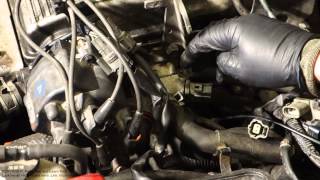
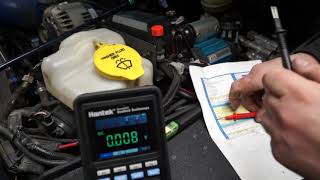
![How to Fix TOYOTA P0118 Engine Code in 3 Minutes [2 DIY Methods / Only $7.33]](https://img.youtube.com/vi/HDE_4QgbrVM/mqdefault.jpg)
We Have This Part in Stock


The information in this article is provided for general reference and educational purposes only. Vehicle specifications, procedures, and part compatibility can vary by production date, trim level, and region. Always consult your vehicle's factory service manual and verify part numbers before purchasing or performing repairs. Safety-critical components such as airbags, seat belts, and braking systems should be installed by a qualified professional.
- Toyota Corolla:
- 🧭 Diagnostic Flowchart
- 🎬 Helpful Videos
- 🛍️ Shop This Part
- What's Unique About the 2003-2008 Toyota Corolla
- Symptoms You May Notice
- Most Likely Causes
- Rare But Worth Checking
- Diagnosis Steps
- Parts You'll Likely Need
- Related Codes That Often Appear With This One
- Platform-Specific Known Issues
- Mechanic-Grade Diagnostic Values
- Scan Tool Commands That Help
- Wiring & Ground Locations
- Real Owner Repair Stories
- OEM Part Supersession History
- Other Known Issues on This Vehicle
- Used vs. New Parts: Buying Guide for This Vehicle
- Real Owner Stories
- 2007 Toyota Corolla LE 1.8L
- 2006 Toyota Corolla 1.8L — 275000 miles
- Related OBD-II Codes
- Frequently Asked Questions
- 🎟️ Get 5% Off