

P0118 on 2001-2007 Toyota Highlander: Engine Coolant Temperature Sensor Causes and Fixes
On a 2001-2007 Highlander, P0118 almost always means the Engine Coolant Temperature (ECT) sensor has failed. The engine's computer sees an impossibly cold temperature, causing issues like the cooling fans to run constantly. Replacing the sensor is the most common fix, costing about $20-$50 for an aftermarket part or $60-$80 for an OEM part, and is a simple DIY job.
- P0118 on a 2001-2007 Highlander is a straightforward code almost always caused by a failed Engine Coolant Temperature (ECT) sensor.
- Symptoms include the Check Engine Light, cooling fans running constantly, and poor fuel mileage.
- Before replacing parts, use a scanner to check live data. A reading of -40°F strongly points to a bad sensor or an open wire.
- The correct OEM part number is likely 89422-35010 or 89422-20010. The sensor is relatively inexpensive and easy to replace, making it a good DIY task.
- Always inspect the wiring and connector for damage before buying a new sensor, as this is the second most common cause.
What's Unique About the 2001-2007 Toyota Highlander
For the first-generation Toyota Highlander, the P0118 code points to a very common and straightforward electrical fault. There are no major design flaws that make this vehicle uniquely prone to the issue; rather, it's a typical failure for a sensor of this age. The diagnostic process is simple, and the sensor is generally easy to access on both the 4-cylinder and V6 engines, making it a common DIY repair for owners.
Symptoms You May Notice
- Check Engine Light is on
- Cooling fans run continuously at high speed, even when the engine is cold
- Reduced fuel economy due to the engine running a rich fuel mixture
- Engine performance issues like rough idling, hesitation, or stalling
- Difficulty starting the engine, particularly when cold
- Temperature gauge on the dashboard may not work or may read incorrectly (often stays on 'Cold')
- Black smoke from the exhaust due to an overly rich fuel mixture
- Replacing the thermostat. A thermostat stuck open would cause the engine to warm up slowly and might set a different code (like P0128), but it will not cause the 'Circuit High' fault of P0118.
- Replacing the wrong sensor. Some vehicles have a separate temperature sender for the dashboard gauge. P0118 is for the two-wire sensor that sends information to the ECM. On this Highlander, the same sensor typically feeds both the ECM and the gauge.
Most Likely Causes
- Failed Engine Coolant Temperature (ECT) Sensor 🔴 High Probability → Shop Engine Coolant Temperature Sensor Sensors are wear items that fail over time due to age and constant thermal stress. The most common failure mode is an internal open circuit, which directly causes the high voltage reading of a P0118 code.
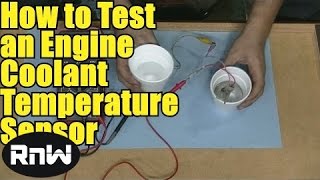
How to confirm: With a cold engine, use a scan tool to check live data. If the ECT reading is -40°F or a similarly low, illogical number, the sensor or circuit is open. You can also test the sensor's resistance with a multimeter; it should be around 2-3 kΩ at room temperature (~68°F/20°C). An infinite resistance reading (OL) confirms a bad sensor. 🎬 Watch: How to test the sensor with a multimeter
Typical fix: Replace the Engine Coolant Temperature sensor. It is a single component that unscrews from the engine's coolant housing. Be prepared for a small amount of coolant to spill; have the new sensor ready to swap in quickly.
Est. part cost: $20-$80 - Damaged Wiring or Connector 🟡 Medium Probability The wiring harness is exposed to engine heat and vibration, which can cause wires to break or insulation to become brittle and crack over time. The connector pins can also corrode or wires can be damaged by rodents.
How to confirm: Visually inspect the wiring harness leading to the ECT sensor for any signs of damage, chafing, or breaks. Check the connector for corrosion, bent pins, or a loose fit. Wiggle the connector and wiring while monitoring the live data on a scan tool to see if the temperature reading changes or flickers.
Typical fix: Repair the broken wire or replace the connector pigtail. If corrosion is present, clean the connector terminals with an electrical contact cleaner.
Est. part cost: $10-$30
Rare But Worth Checking
- Faulty Engine Control Module (ECM): This is extremely rare. The ECM should only be considered after all other possibilities, including the sensor and wiring, have been thoroughly tested and ruled out. An ECM failure is unlikely to only affect this single circuit.
Diagnosis Steps
- Connect an OBD-II scanner and confirm the P0118 code is present.
- View live data on the scanner. With a cold engine (off for several hours), compare the Engine Coolant Temperature (ECT) reading to the Intake Air Temperature (IAT) reading. They should be within a few degrees of each other and ambient temperature.
- If the ECT reading is an illogical low value like -40°F, this confirms an open circuit.
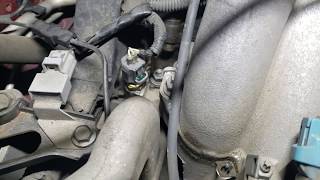
- Locate the ECT sensor. On V6 engines (3.0L/3.3L), it is on the water outlet housing where the upper radiator hose connects, between the engine and firewall. 🎬 Watch: How to replace the sensor on a V6 Highlander On 2.4L I4 engines, it is on the driver's side of the cylinder head, near the transmission.
- Inspect the sensor's electrical connector and wiring for any visible damage, corrosion, or loose connections.
- If the wiring looks good, disconnect the sensor. With the key on and engine off, use a multimeter to check for a ~5-volt reference on one pin of the connector and a good ground (near 0 volts) on the other.
- As a quick wiring check, you can use a jumper wire to connect the two pins in the harness connector. The scan tool's live data for ECT should now read a very high temperature (e.g., 250°F+). If it does, the wiring to the ECM is good, and the sensor is bad.
- If voltage and ground are present, test the sensor itself. With the sensor removed or accessible, measure its resistance with a multimeter. At approximately 68°F (20°C), the resistance should be between 2.0 and 3.0 kΩ. If the reading is infinite (open circuit), the sensor is faulty and must be replaced.
- If the sensor and wiring test good, the problem may be an intermittent connection or, in very rare cases, the ECM itself.
Parts You'll Likely Need
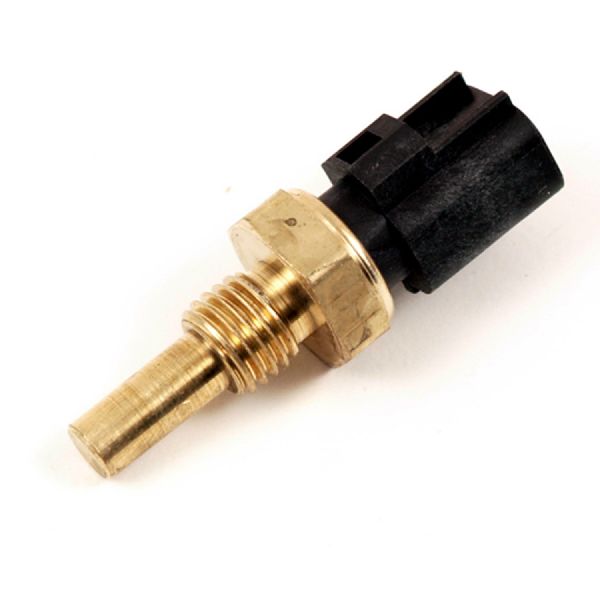
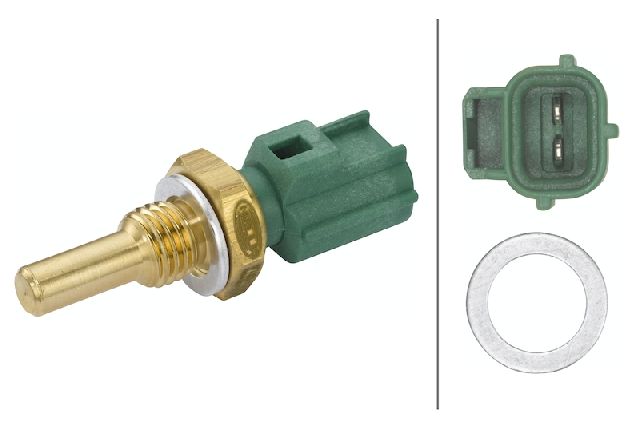
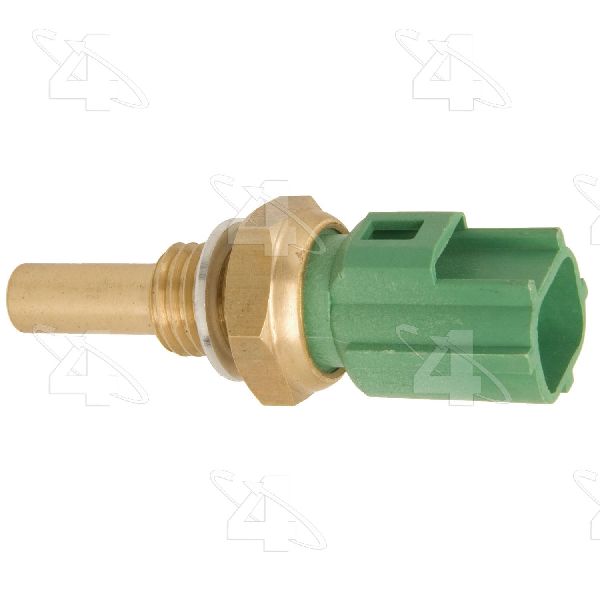
- Engine Coolant Temperature Sensor
(OEM #89422-35010 or 89422-20010)— This sensor is the most common failure point for a P0118 code. It fails internally, creating an open circuit that the ECM reads as high voltage. Part number can vary, so it's best to confirm with VIN, but 89422-35010 is most common.
Trusted brands: Denso (OEM supplier), Aisin, Beck/Arnley
OEM price range: $60-$80
Aftermarket price range: $20-$50
Platform-Specific Known Issues
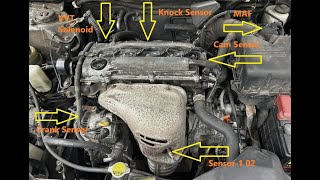
- Sensor Location Varies by Engine: The location of the ECT sensor is different between the V6 and I4 engines. On V6 models (3.0L 1MZ-FE and 3.3L 3MZ-FE), the sensor is located on the water outlet housing near the thermostat, between the engine block and the firewall. On the 4-cylinder (2.4L 2AZ-FE), it is found on the driver's side of the cylinder head.
Mechanic-Grade Diagnostic Values
- ECT Sensor Resistance — expected: At 68°F (20°C): 2.0 - 3.0 kΩ. At 176°F (80°C): 0.25 - 0.35 kΩ (250 - 350 Ω).. Failure: An infinite resistance (Open Line or OL) reading indicates an internally open and failed sensor.
- ECT Sensor Circuit Voltage at ECM — expected: Between 0.14V (hot) and 4.91V (cold).. Failure: A sustained voltage reading above 4.91V for more than 0.5 seconds will trigger DTC P0118.
- ECT Connector Voltage (Key On, Engine Off, Connector Unplugged) — expected: One pin should have a ~5V reference from the ECM; the other pin should show near 0V for ground.. Failure: Absence of the 5V reference or a high voltage reading on the ground pin indicates a wiring problem between the connector and the ECM.
Scan Tool Commands That Help
- Toyota Techstream: Fail-Safe Mode Check — When P0118 is active, the ECM enters a fail-safe mode. Techstream can be used to observe this behavior, where the ECM substitutes a fixed engine coolant temperature value, typically 80°C (176°F), to allow the engine to run. This confirms the ECM is reacting to the fault as designed.
Wiring & Ground Locations
- E11 (V6 Engines) — In the engine compartment harness, located at the left rear of the engine.. This is a shared ground point for several components, including the ECT sensor. Corrosion or a loose connection at this specific point can cause an open in the ground side of the ECT circuit, leading to a P0118 code even if the sensor and the rest of the wiring are good.
- ECT Sensor Connector (2-pin) — Directly on the ECT sensor.. The two pins are the 5V reference from the ECM and the sensor ground. On some models, the 5V reference wire is yellow, and the ground wire is gray or tan. Knowing the pin functions is critical for testing the harness side for correct voltage and ground.
Real Owner Repair Stories
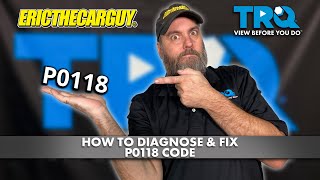
- EricTheCarGuy YouTube Channel (Vehicle with symptoms consistent with P0118 (cooling fan always on, -38°F reading on scan tool)) — Check Engine Light on, cooling fan runs constantly on high from startup, scan tool shows ECT at -38°F while IAT and ambient are ~75°F.
❌ Tried (didn't work) The technician tested the sensor's resistance and found it was within a plausible range (0.722 kΩ), suggesting the sensor itself was not completely open and might be functional.
✅ What actually fixed it A visual inspection revealed a broken wire right at the base of the ECT sensor connector. The final fix was to replace the connector pigtail, which resolved all symptoms and cleared the code.
OEM Part Supersession History
89422-20010→89422-35010— Part consolidation and potential minor design updates over a long production run. Both part numbers are often listed as compatible for the same wide range of Toyota vehicles.
Heads up: While 89422-35010 is the more commonly cited replacement for the Highlander, 89422-20010 is also a valid OEM part number that fits many of the same applications. Both are functionally identical for this vehicle. The key is to ensure the replacement is a genuine Toyota/Denso part with the correct two-pin connector.
Diagnostic Flowchart
Other Known Issues on This Vehicle
Issues unrelated to this code that are worth knowing about as an owner of this generation:
- Stripped Cylinder Head Bolt Threads (2.4L 2AZ-FE Engine) 🔴 High — Common, especially on 2001-2006 models. Often occurs after an overheat event or during head gasket service. Can lead to coolant consumption and head gasket failure. (Ref: Toyota issued a warranty enhancement (ZE7) and TSB-0015-11 which details a procedure to repair the threads using Time-Sert inserts.)
- Engine Oil Sludge/Gelling (3.0L 1MZ-FE V6) 🔴 High — Very common on 2001-2003 models, particularly if oil change intervals were extended. Can lead to blocked oil passages, oil starvation, and catastrophic engine failure. (Ref: Toyota addressed this with TSB EG018-02 and a warranty extension program (SSC 90K). A known fix involves cleaning the engine and installing updated valve covers from the later 3MZ-FE engine.)
- Automatic Transmission Failure (U140E/F, early models) 🟠 Medium — More prevalent in 2001-2003 models. Symptoms include harsh shifting, hesitation, and eventual failure of planetary gears. (Ref: TSB SU002-02 was issued to address some shift quality complaints, but widespread durability issues were reported by owners.)
- Faulty EVAP Charcoal Canister 🟡 Low — A common cause for check engine lights (e.g., P0446). The canister assembly can be expensive to replace, though sometimes only a vacuum switching valve is needed.
Used vs. New Parts: Buying Guide for This Vehicle
When a used part is the smart pick: A used ECT sensor is generally not recommended. The cost of a new, reliable aftermarket sensor is very low ($20-$30), making the savings from a used part negligible. Given that the sensor is a common failure item due to age and heat cycles, a used sensor has an unknown remaining lifespan and carries a high risk of premature failure.
Donor-vehicle mileage cap: roughly under 100000 miles for the part to have meaningful remaining life.
What to inspect on the donor part:
- If buying used is the only option, visually inspect the plastic connector housing for cracks or brittleness.
- Check the metal threads for cross-threading or damage.
- Test the resistance with a multimeter before purchase; it should read between 2-3 kΩ at room temperature.
OEM-only on this vehicle (don't cheap out):
- While not strictly 'OEM-only', using the OEM supplier (Denso) is highly recommended. The cost difference is minimal, and Denso sensors are known for their reliability and accurate temperature curves, which is critical for proper engine management.
Aftermarket brands forum-validated for this vehicle:
- Denso (OEM)
- Aisin
- Beck/Arnley
Brands owners have reported issues with on this vehicle:
- Unnamed, no-brand 'white box' parts from online marketplaces should be avoided. They often have incorrect resistance curves, leading to persistent performance issues even if they clear the P0118 code.
Real Owner Stories
Aggregated from forums and TSBs cited above. Mileages and costs reflect what owners reported in those sources.
2002 Highlander V6
Symptoms: The cooling fans were running constantly and the temperature gauge on the dashboard stayed at zero.
What fixed it: Replacing the ECT sensor (part #89422-35010).
Source hint: ToyotaNation Forum - 'P0118 on 2002 Highlander V6'
2005 Highlander V6
Symptoms: The P0118 code was triggered and the radiator fans were running non-stop.
What fixed it: Replacing the sensor with a Denso brand unit; the owner advised having the new sensor ready to swap quickly to minimize coolant loss.
Source hint: Highlander Forum - 'P0118 Code, Fans Running'
1999-2003 Lexus RX300 (Platform Mate)
Symptoms: The temperature gauge read very low even after driving the vehicle for a significant amount of time.
What fixed it: Replacement of the coolant temperature sensor.
Source hint: ClubLexus - 'If coolant temp sensor is bad.....'
Related OBD-II Codes
Frequently Asked Questions
Where is the ECT sensor located on my 2002 Highlander V6?
My 2005 Highlander's cooling fans are running non-stop and the temp gauge is at zero. Is there a specific part I should look for?
Is the P0118 code related to the common oil sludge issues on the 2001-2003 V6 models?
I have a 4-cylinder 2.4L Highlander; is the sensor in the same place as the V6?
Can I test the sensor myself before buying a new one?
Does the P0118 code mean I have the stripped head bolt issue mentioned for the 2.4L engine?
Helpful Videos
We Have This Part in Stock


The information in this article is provided for general reference and educational purposes only. Vehicle specifications, procedures, and part compatibility can vary by production date, trim level, and region. Always consult your vehicle's factory service manual and verify part numbers before purchasing or performing repairs. Safety-critical components such as airbags, seat belts, and braking systems should be installed by a qualified professional.
- Toyota Highlander:
- 🧭 Diagnostic Flowchart
- 🎬 Helpful Videos
- 🛍️ Shop This Part
- What's Unique About the 2001-2007 Toyota Highlander
- Symptoms You May Notice
- Most Likely Causes
- Rare But Worth Checking
- Diagnosis Steps
- Parts You'll Likely Need
- Platform-Specific Known Issues
- Mechanic-Grade Diagnostic Values
- Scan Tool Commands That Help
- Wiring & Ground Locations
- Real Owner Repair Stories
- OEM Part Supersession History
- Other Known Issues on This Vehicle
- Used vs. New Parts: Buying Guide for This Vehicle
- Real Owner Stories
- 2002 Highlander V6
- 2005 Highlander V6
- 1999-2003 Lexus RX300 (Platform Mate)
- Related OBD-II Codes
- Frequently Asked Questions
- 🎟️ Get 5% Off